I like that statement. It’s empowering. Tell. Your. Truth.
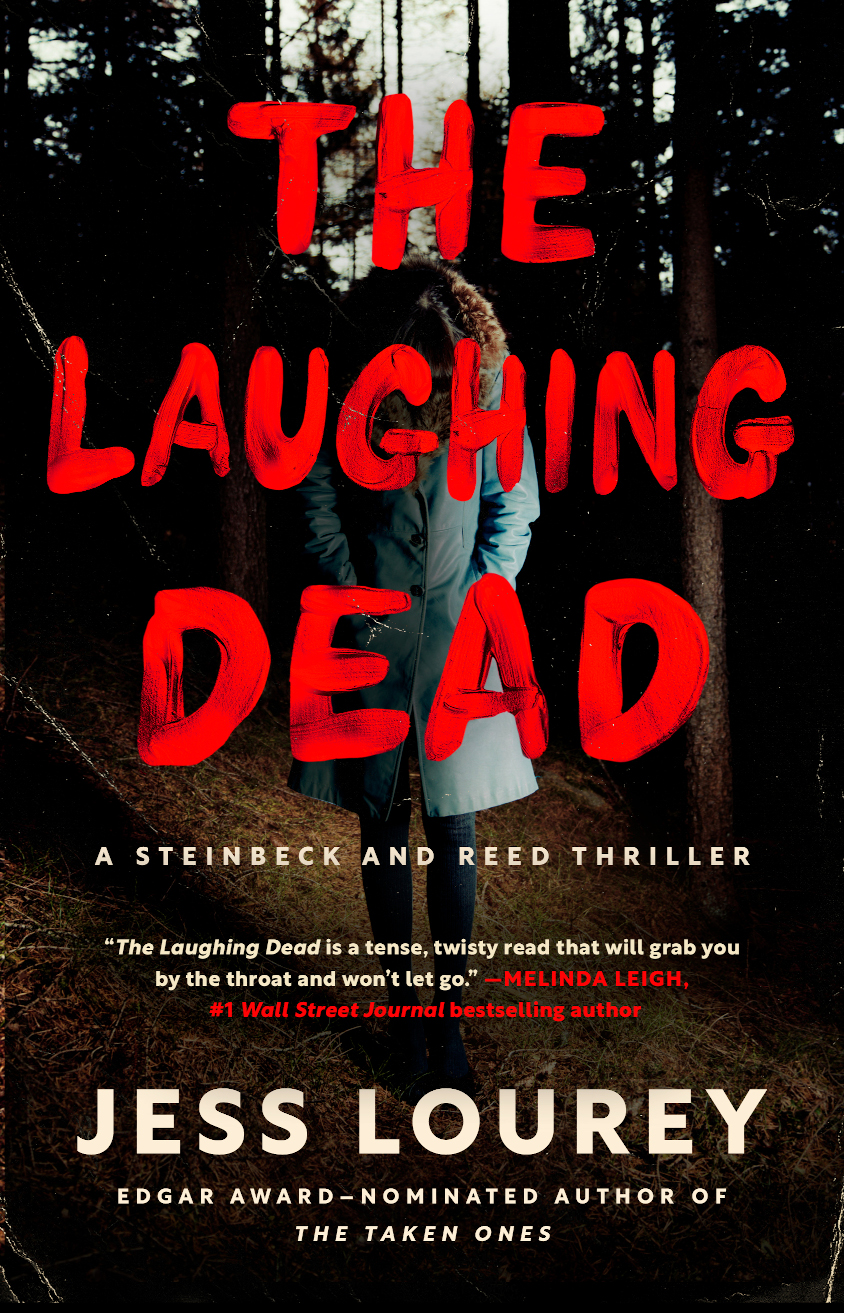
In her newest book, The Laughing Dead, the third in her fictional “A Steinbeck and Reed Thriller” series, Lourey writes about three cold case murders of young women and two current-day murders. Bureau of Criminal Apprehension Agent Evangeline “Van” Reed and forensic scientist Harry Steinbeck once again team up to work the cases, one that becomes deeply personal for Reed.
In typical Lourey writing, the plot twists and turns and screams and scares as the story unfolds. At times I truly did not understand what was real and what wasn’t. That comes as no surprise given secrets theme many of Lourey’s books. The Laughing Dead is no exception.
But what stuck with me throughout the book was the strength of Van Reed, born into a cult led by abusive, controlling and narcissistic Frank Roth. When he was arrested, the “Mothers” and “Sisters” scattered, some remaining devotedly loyal while others like Reed escaped and severed ties. She then went into law enforcement. In The Laughing Dead, Reed confronts her past, the secrets she keeps and the trauma she’s endured.
Yet, this book goes beyond a fictional character in a thriller. This story is, more broadly, about domestic abuse and violence, a reality for too many women (and, yes, some men also). It was absolutely fitting that I should read The Laughing Dead during National Domestic Violence Awareness Month in October. Lourey, in her book, writes about the power, manipulation and control used by abusers to entrap and silence their victims. Abusers, just like the fictional Frank Roth, will act loving and doting then turn into oppressive, abusive, overpowering, violent and controlling individuals. Sort of like a nightmarish chameleon.
Lourey, through her writing, is doing more than entertaining readers who appreciate a good thriller. She is raising awareness about domestic abuse and violence. And she is showing, via main character Van Reed, that it is possible to escape domestic abuse and violence, to rise above trauma. To tell your truth. And survive.
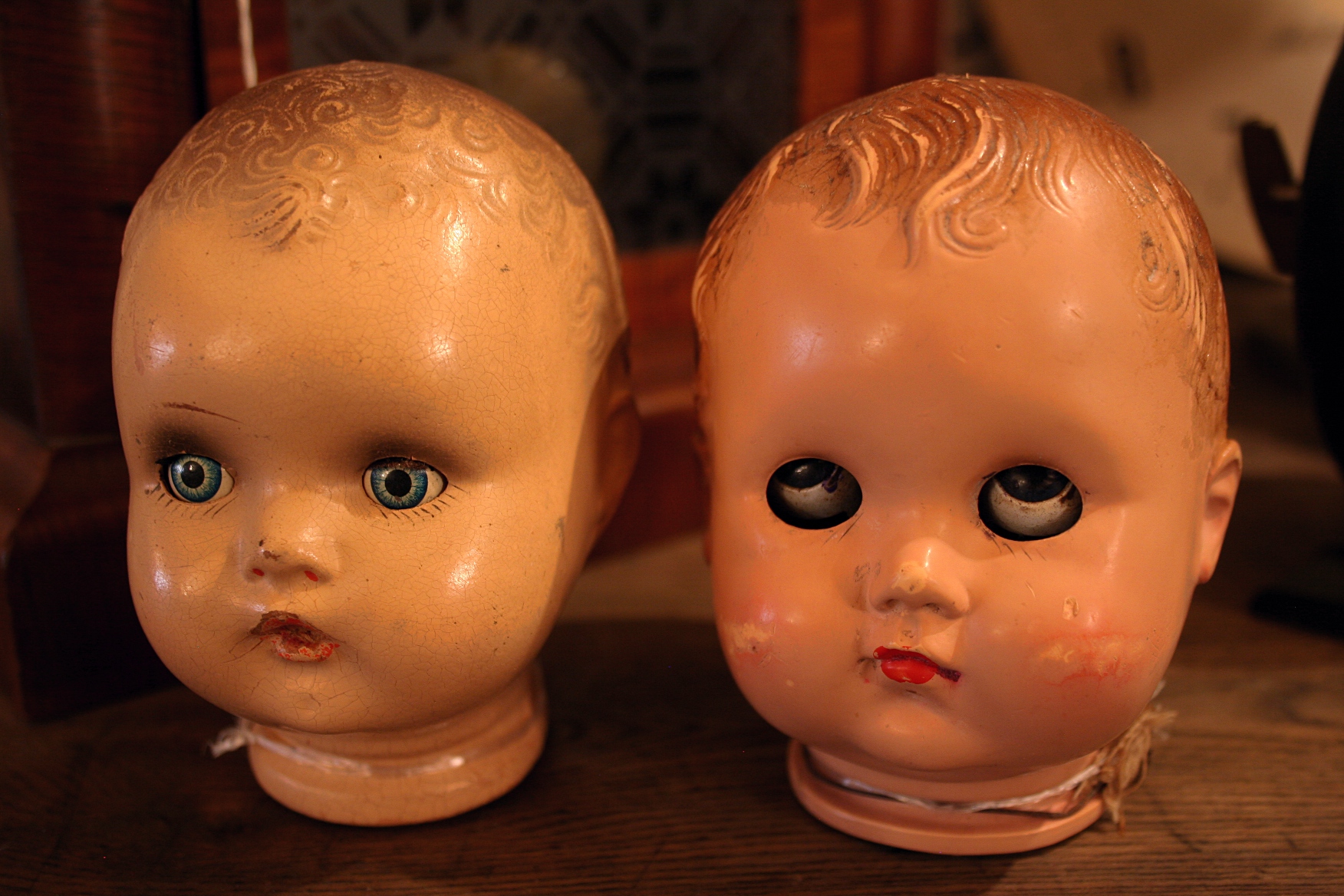
Dolls with appropriate eye-rolling and blank staring. (Minnesota Prairie Roots copyrighted file photo)
ONCE UPON A TIME in The Land of Plenty there lived a ruler who, once he took office, commenced to ruthlessly flaunt his authority (which fits, given his self-proclaimed ruler status). He really didn’t care what he said or did as long as it fit his agenda to make his kingdom—more precisely himself—great. The forceful leader promised that the “golden age” of Acirema would start on the day he assumed power. Perhaps he was referencing the opulent gold décor in his redecorated palace office.
The ruler gathered his team of loyalists and followers, assuring them that as long as they followed his plans, his instructions, his actions, his orders, he would reward them, or at least keep them out of the dungeon. Threats and intimidation have a way of instilling self-preservation and obedience.
But not everyone much cared for the self-centered leader or his policies. They never fell under his spell, his control. They were willing to stand up to him, question him, even at the risk of raising his ire. Or worse. They began to rise up and challenge him and his underlings. That didn’t sit well with the ruler. I mean, how would you like the courts calling you out, gray-haired ladies protesting, students criticizing you in schoolyards? Nope, can’t have that happening in Acirema. Never mind that The Land of Plenty was a land of freedom, of laws, of due process, of balanced powers. Or at least it was before the authoritarian ruler took over.
And so, 100 days into his reign, the ruler underwent a job review of sorts. Job reviews held no sway with him, although he should have understood their importance based on his previous experiences as a land baron who banished many a worker. Whatever. He was above everyone. All of them. He didn’t believe multiple reports of his declining popularity. He was doing a great job, he proclaimed. Great! And that was that. Don’t tell him otherwise for fear of being branded a liar. Or worse, banished from the kingdom. Just nod and agree that everything is going great and the ruler would call you a friend rather than a foe.
But you can only push people so far before they break and stop believing you, if they ever did in the first place. And many in the kingdom never did take this man at his word. He had a habit of distorting the truth, in other words lying. Now name-calling is not nice. But truth is truth.
One windfall apple, that will eventually rot. (Minnesota Prairie Roots copyrighted file photo)
BULLYING AND BLAMING
Many in the kingdom were weary of the bullying coming from the palace. No one likes a bully. No one likes decrees that harm, rather than help, the kingdom. When the ruler levied new taxes on goods, promising to enrich his subjects, many did not believe him. (It should be noted that some—too many—still believed him.) He urged patience and calm as anger rose both inside and outside the kingdom. The ruler had upset the marketplace apple cart. Yet, he would hear none of the verbal resistance. As was his usual reaction, he blamed the previous overseer of The Land of Plenty for the rising costs of food and for marketplace shortages. “It was him, not me!” the ruler shouted. He used that blame tactic often.
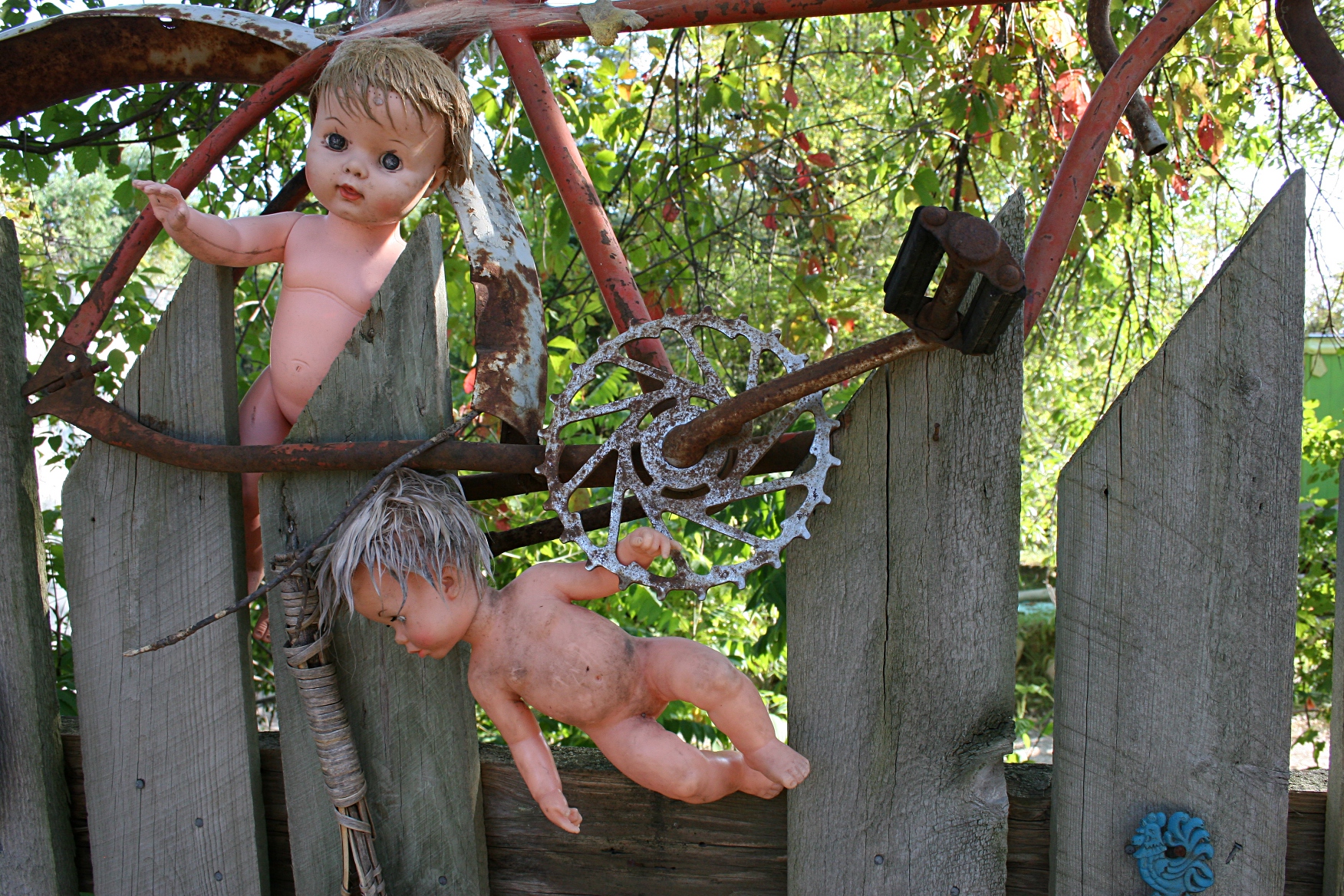
Dolls, dolls and more dolls.(Minnesota Prairie Roots copyrighted file photo)
2 DOLLS, 30 DOLLS, 900 DOLLS
But then he said something that deeply upset his subjects. “Well, maybe the children will have two dolls instead of 30 dolls,” the ruler responded when asked about rising prices and marketplace shortages. Outrage ensued. Thirty dolls? It was then that the people of the kingdom realized how disconnected the leader was from reality. Many of them now lived in poverty due to his policies. Their children had no dolls, unless you counted those crafted from corn cobs. The ruler’s grandchildren, however, had an entire playroom filled with imported dolls. Lovely dolls. Thirty times thirty. That’s 900 if you’re counting.
By this time the citizens of The Land of Plenty were counting only one thing—the number of days until they could vote in a new leader of Acirema. If that would even be an option. If they weren’t all banished. If they still had a country.
#
NOTE: While this is a fictional story, it is rooted in truth. Feel free to leave a comment, understanding that I moderate all comments on this, my personal blog.
I did not expect this reaction when I randomly pulled the novel from the shelf, drawn by its catchy title printed in a colorful font, drawn by the simple cover art of a lakeside Northwoods cabin. I do, indeed, judge a book by its covers, front and then back synopsis. These covers hit all the marks for me, someone who appreciates stories rooted in rural. Stories that are simple, yet complex. Stories that make me think, that tap into my empathy, that move me. Stories that are strong in place.
(Book cover sourced online)
In some ways, this book reminds me of the writing of Minnesotan Lorna Landvik, author of the popular Patty Jane’s House of Curls, The Tall Pine Polka, Once in a Blue Moon Lodge and more, most of which I have read. But the author of The Funeral Ladies of Ellerie County hails from neighboring Wisconsin, which is similar to Minnesota, but different.
These are what we call bars (the kind you eat) in Minnesota and Wisconsin. Maybe elsewhere. (Minnesota Prairie Roots copyrighted file photo)
At the heart of this story are the funeral ladies, a group of long-time friends who prepare meals for mourners at St. Anne’s Catholic Church. Casseroles—not hotdish as we call casseroles in Minnesota—concocted with canned cream soups. Shredded beef. Peanut butter bars. Pies made with Door County cherries. Food for the body and soul. This reminded me of the Reception Committee in my childhood home church on the southwestern Minnesota prairie. That group of Lutheran women prepared funeral hotdishes comprised of hamburger, pasta, a vegetable and assorted canned cream soups with salt and pepper for seasoning. The recipes are published in the 1985 St. John’s Anniversary Cookbook. The covers of that cookbook have fallen off my tattered copy. A cookbook is central to Swinarski’s novel.
The point here is that The Funeral Ladies of Ellerie County is absolutely relatable for me. I felt comfortably at home with the story initially, even when I learned of a heartbreaking scam involving main character Esther Larson. That shapes the story. Then the story-line focus shifts from friendship, faith and family to tough topics after a Food Network star and his children arrive to bury his estranged wife in her hometown.
Mental health gets attention in this book. (Minnesota Prairie Roots copyrighted file photo)
Without revealing too much of the plot, know that family relationships, love and trauma weave into this novel. That trauma is post traumatic stress disorder, experienced by paramedic Cooper Welsh after participating in a holiday parade interrupted by a deadly shooting. In real-life, six people died in November 2021 when a driver plowed his SUV into a Christmas parade in Waukesha, Wisconsin, killing six and injuring many others. I expect Swinarski patterned her fictional tragedy loosely after this event or the many other mass shootings this country experiences.
I appreciate that the author, even in this fictional account of such violence and its personal aftermath, writes with authenticity. As a reader, I felt emotionally invested. I was rooting for Cooper and for those who love him. Swinarski doesn’t just touch on PTSD. She dives into it head on, writing in her acknowledgments that she talked to individuals dealing with PTSD to craft Cooper’s life story. That research shows.
A sign along the interstate advertises Ishnala Supper Club in Lake Delton near the Wisconsin Dells. (Minnesota Prairie Roots copyrighted file photo)
She writes, too, in an authentic Wisconsin voice with a strong sense of place. Noodles in chili (yes, it’s a thing in Wisconsin). Beer not wine. Brandy old-fashioneds, Wisconsin’s signature drink. Supper clubs. And eating at the popular Wisconsin-based fast food chain, Culver’s.
There are so many reasons to love The Funeral Ladies of Ellerie County. Even if you’re a Lutheran from Minnesota who eats hotdishes, not casseroles.
Lots of jelly beans and other candy were sold in a Minnesota shop I visited years ago. (Minnesota Prairie Roots copyrighted file photo used for illustration only)
ONCE UPON A TIME in The Land of Plenty, there lived a ruler who, before he took office, declared that he would be king for a day, or some such wordage. He relished power and absolute control with the zeal of a kid unleashed in a candy store. Except even kids in a candy shop realize they can’t devour every piece of sticky taffy, every morsel of chocolate, every jelly bean in sight. Their stomachs would hurt. And they would soon be barfing all over the kingdom.
But the narcissistic leader, who promised to make the country the best it had ever been (because he craved praise and power), apparently did not understand this about consuming too much candy. Or he didn’t care. Once in office, the-man-who-would-be-king gathered his team, granting unfettered powers to one of them in particular. He pulled out his guidebook and magical pen and scrawled his signature across endless pieces of paper imprinted with orders to create an even more wonderful and efficient Land of Plenty, at least in his eyes. Such was his insatiable desire for adoration, domination and control. His plan to become king for a day extended well beyond a day into mindless infinity.
Candy galore in another Minnesota candy shop. (Minnesota Prairie Roots copyrighted file photo used for illustration only)
He proposed acquiring more land to add to his empire, focusing his efforts on the countries of Adanac and Dnalneerg, both of which wanted nothing to do with him, understandably so. But that didn’t stop the ruler from obsessing on the topic, for he was a determined man. Do this. Do that. Say this. Say that. Toss out an endless stream of threats and vitriol and perhaps some of it would stick like gum to the bottom of a shoe.
On and on it went. Each day something new. More taxes, which he called “tariffs” and a good thing for his subjects. He advised those who farmed the land to “have fun.” He fooled no one (OK, maybe some too many) with his spin on tariffs. Mass firings, deportations, funding cuts, closures and more (too many actions to count really) happened daily under the ruler’s authoritarian hand.
If anyone protested, spoke up or voiced opposition, the ruthless leader worked to quiet them. There were street snatchings and threats. Intimidation. Disrespect. Denial. Deflection. Distraction. Lies. Verbal attacks. He used all sorts of tactics to create fear, to suppress anyone who disagreed with him, his team and his/their words and actions. That included bullying the printers, lawyers and judges of the land, calling them all sorts of derogatory names. He threatened to come after them, to silence them, to show them who held the power. Sometimes he succeeded, sometimes not.
In this fictional story, chocolates are banned from candy shops. (Minnesota Prairie Roots copyrighted file photo used for illustration only)
Yet, one plan appealed to the unsuspecting masses. And that was the opening of more candy stores, with promises to give away millions, perhaps even billions, of pounds of candy. To qualify, subjects needed only to sign an irrevocable loyalty pledge, which seemed reasonable on the surface. But there’s always the fine print. They would need to agree with the mighty ruler’s ideology and actions or risk losing four years of a free candy supply or, worse yet, be locked up for rebellious attitudes or other so-called subversive acts. If the subjects looked even closer at the fine print, they would see that candy shops were forbidden from carrying chocolate. Surely that would be the deal breaker for most because, well, who doesn’t love chocolate? All candy, in fact, was to be colorless.
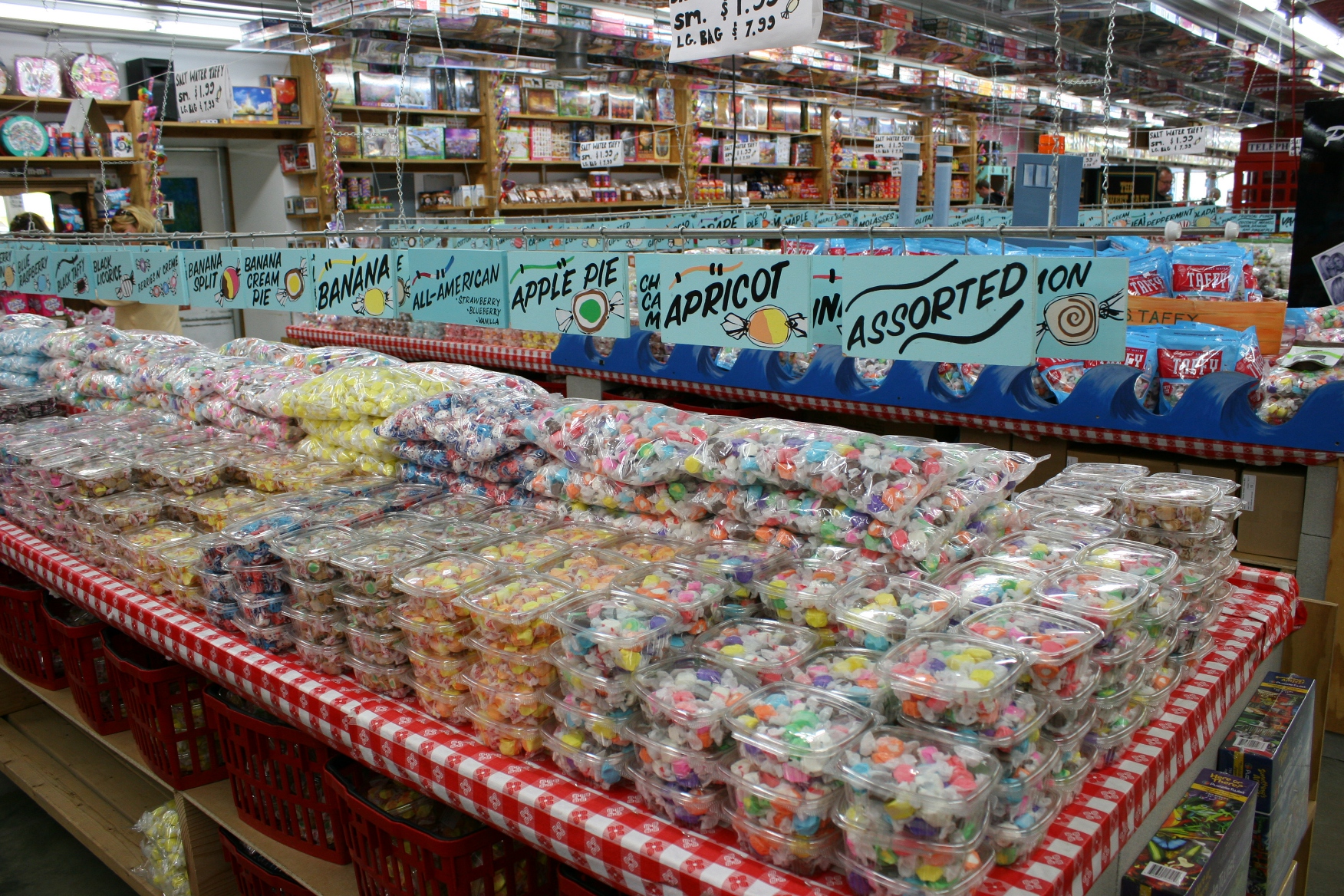
Nearly endless flavors of taffy and candy are sold in this mega Minnesota candy shop. (Minnesota Prairie Roots copyrighted file photo used for illustration only)
But most failed to read the fine print, so focused were they on a four-year supply of free candy. Such a sweet deal. They trusted that the ruler had their best interests in mind. He didn’t. Even kids understand that too much candy can cause a tummy ache that leaves them regretting their selfish gluttony.
This, my friends, is no April Fool’s Day joke.
#
FYI: While this short story is written as fiction, it is (as is most fiction) rooted in truth. It is also a commentary, a way for me to use my voice. Whether you agree or disagree with the content is your prerogative and right. Just note, though, that this is my personal blog and that I moderate all comments and have the final say in those I choose to publish or not.
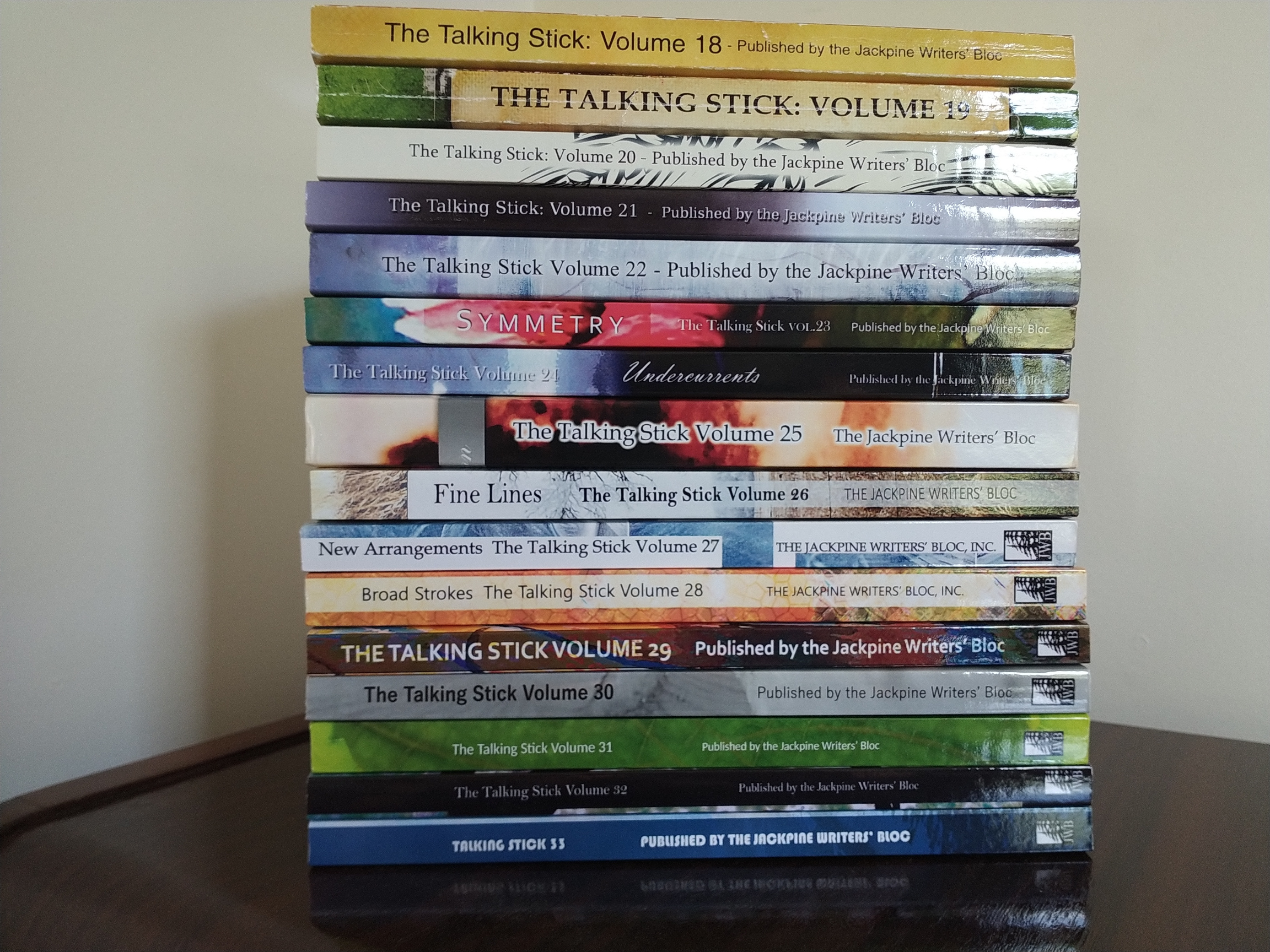
My fiction, creative nonfiction and poetry has published in all these volumes of The Talking Stick, plus volumes 32 and 33 not pictured here. (Minnesota Prairie Roots copyrighted file photo)
WITH ONLY WEEKS until the deadline for an annual writing contest, I am stretching my mind to come up with short stories and poetry that will please not only me, but also the editors of a Minnesota-based literary anthology. It’s not easy, this creative writing. Yet, I enjoy the challenge.
I can’t always explain from whence my fictional stories spring. I’ve written some really dark stuff that has landed me publication and sometimes prizes. Stories with undertones of darkness and violence. Nothing like I’ve experienced in real life, although certainly I’ve faced plenty of dark and trying days.
When I read my second place winning fictional story, “Dear Mother,” at last fall’s Talking Stick 33—Earth Signsbook launch party in northern Minnesota, I qualified my reading with “I don’t know where this dark story came from.” It was implied that the main character killed her abusive mother. The writer who followed me as the first place winner in fiction also wrote a dark story. I don’t recall if Tara or some other writer explained that, in order to reach the light, we need to go through darkness. That resonated with me.
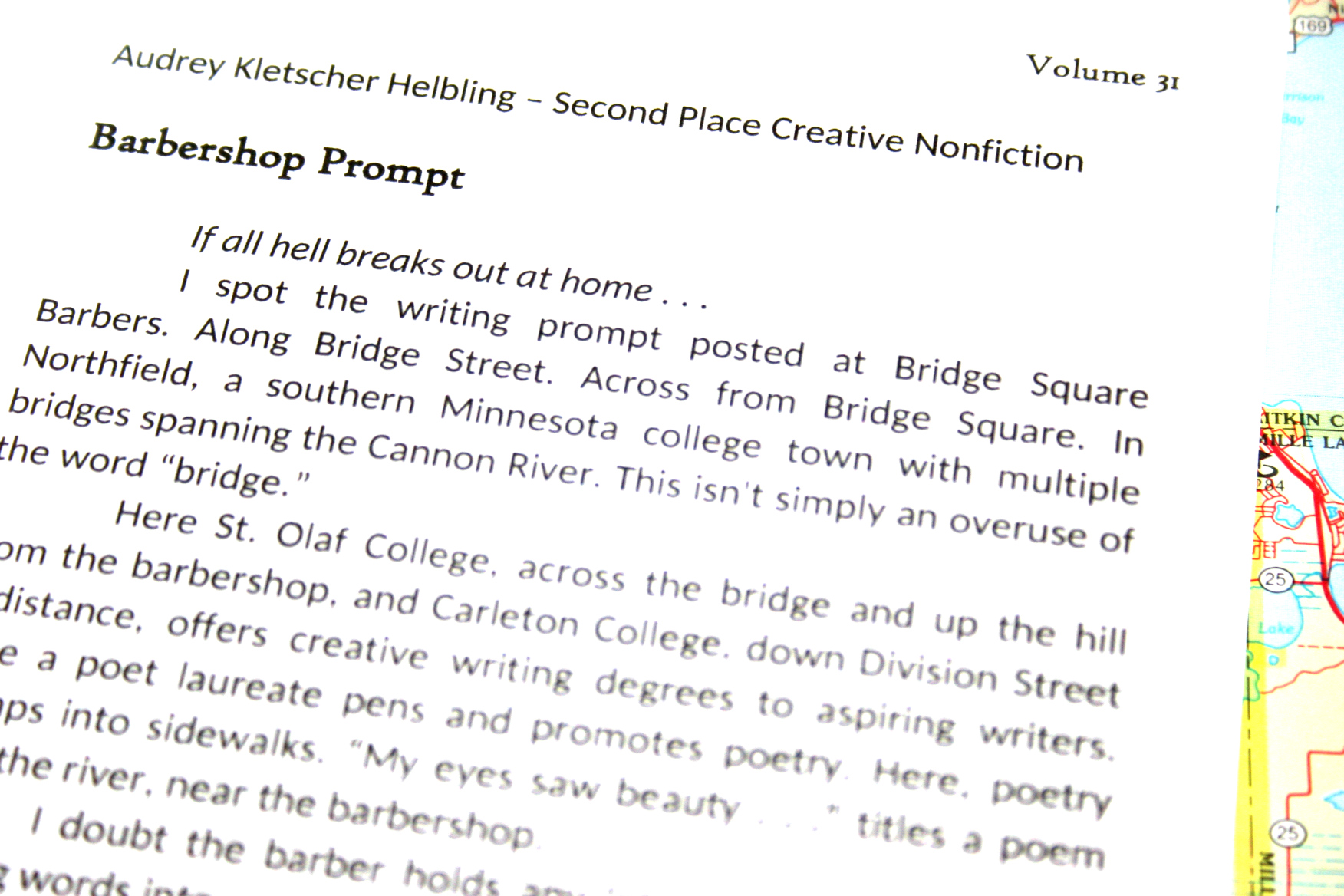
The beginning of “Barbershop Prompt,” published in Talking Stick 31–Escapes. (Minnesota Prairie Roots copyrighted file photo)
I’ve completed the initial draft of my first piece of fiction for this year’s contest. It, too, includes some dark elements. The community calendar in my local newspaper prompted the story, which I realize may seem rather odd. But, hey, inspiration can strike in the most unlikely of places. A previous work prompted by a sign at Bridge Square Barbers in Northfield earned me a second place in creative nonfiction in 2022.
Now three years later, with the printed community calendar of events lying on my office desk, I glanced from newspaper to computer screen as the idea of a story began to take shape. Once I finished the intro, words began to fly (OK, admittedly not always) from my brain to the keyboard to the screen. The draft is saved, awaiting a second look in a few days.
This sharing library in Pine River is inspiring my next creative work. (Minnesota Prairie Roots copyrighted photo July 2024)
Now I’m on to my next piece of writing. A photo I took of a sharing library (like a Little Free Library) in Pine River is serving as my inspiration for a story that has yet to unfold. But I see the possibilities in the many love-themed/titled books shelved inside that library adorned with a Peace/Love/Books sticker.
Romeo and Juliet by Shakespeare. Lunkers Love Nightcrawlers, author unknown to me. Tuesdays with Morrie by Mitch Albom, packed with life lessons, including that of love. Sin Killer by Larry McMurtry, a book of adventure, humor and romance on the American frontier. And then Absolute Power by David Baldacci, about a President “caught” with a billionaire’s wife. That title seems so relatable to today. Absolute power. But writing contest rules call for no political or religious rants, meaning I will need to steer clear of politics.
And so I’ll see where this idea goes. If a plot develops in my mind, if a story flows into something that may, or may not, be dark.
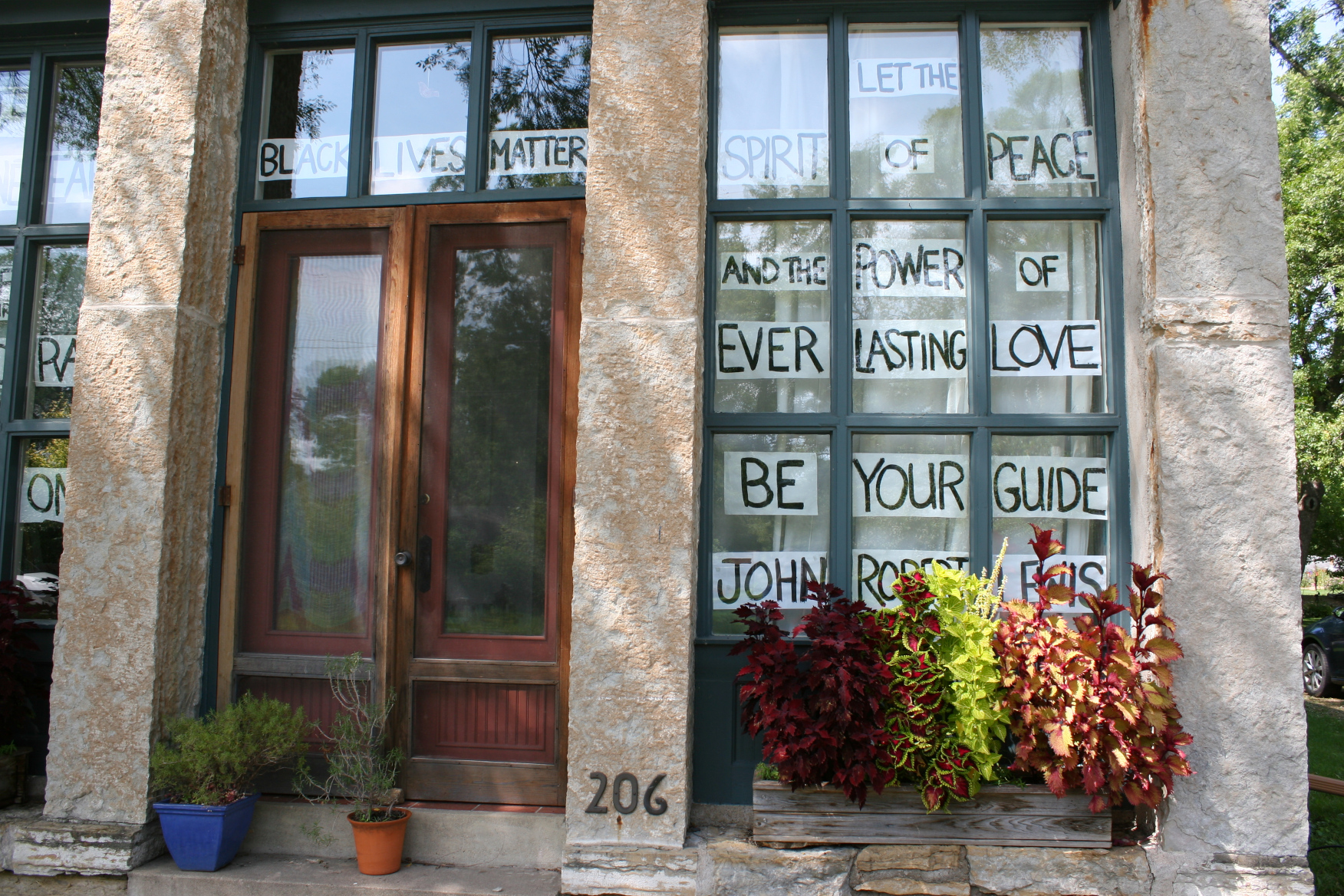
Inspiring messages on a house in small town Dundas, Minnesota. (Minnesota Prairie Roots copyrighted file photo August 2020)
I’M FOLLOWING UP on yesterday’s post focusing on the book Our Hidden Conversations—What Americans Really Think About Race and Identity by Michele Norris to recommend four related books. But before I get to those books, I must share that Norris will be in Minnesota on Monday, January 20, as the keynote speaker for the Martin Luther King Jr. Holiday Breakfast at the Minneapolis Convention Center (Exhibit Hall A). The event begins with networking and mingling from 7-7:30 a.m., breakfast from 7:30-8 a.m. and a program from 8-9:30 a.m. The celebration also includes music by Grammy award-winning Sounds of Blackness and a special collaborative performance by Threads Dance Project and Vocalessence. For more information about this 35th annual MLK breakfast, click here.
Now the books:
Book cover sourced online.
1959 (reprinted) Edition of The Negro Travelers’ Green Book—Guide for Travel and Vacations
I checked this facsimile of The Negro Travelers’ Green Book out from my local library. This guidebook lists, state by state (and in Canada), the hotels, motels, restaurants, tourist homes and vacation resorts where Blacks were welcome in 1959. This list is revealing and sometimes surprising. And clearly, it’s unsettling to read, understanding the discrimination against Blacks that existed not all that long ago.
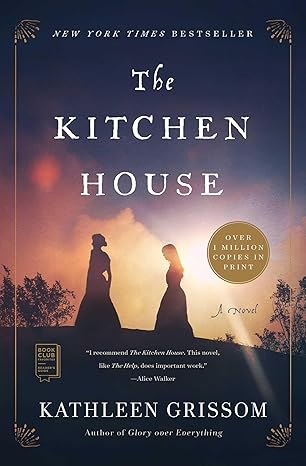
This New York Times bestseller published in 2010 tells the fictional story of life on a tobacco plantation beginning in the late 1700s from the perspectives of a slave (the daughter of a White master and his slave) and an indentured servant (an orphan from Ireland). Although a work of fiction, The Kitchen House is historical fiction, thus rooted in truth. This is a difficult read. But it’s also an inspiring book that speaks to the strength of the human spirit, the love of family and resilience.
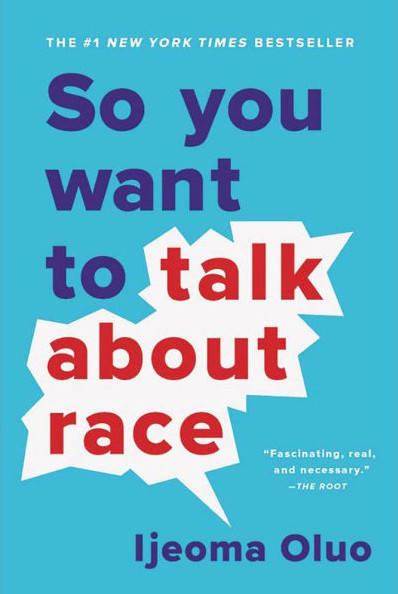
Another New York Times bestseller, this one published in 2019, is in my reading stack. The title, So you want to talk about race, pretty much explains the content. The book was gifted to me by someone who left it in my church mailbox. I am grateful. I expect I will gain new insights from reading this book about race.
Book cover sourced online
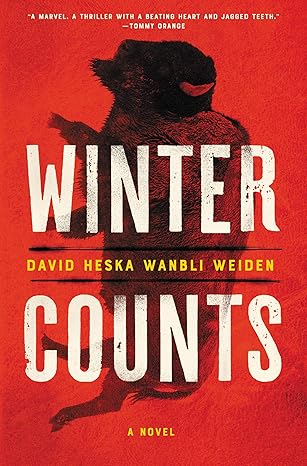
Winter counts by David Heska Wanbli Weiden
This award-winning book published in 2020 has been in my reading stack for some time. I am half way through reading Winter Countsand already know I need to recommend this fictional book. Why? The storyline takes the reader onto the Indian Reservations of South Dakota. But what stands out for me is the authenticity of the writing. Author David Heska Wanbli Weiden, an enrolled citizen of the Sicangu Lakota Nation, knows of what he writes.
I am not only reading an intriguing novel about a vigilante set on justice for the Lakota community in dealing with illegal drugs and other issues. But I am learning about Lakota culture, beliefs, language and challenges, and a reclaiming of Native identity. This book has proven both educational and eye-opening.
TELL ME: Have you read similar books that you recommend I read? Please feel free to share with a brief summary of the book (s). I’m interested in any genre and in books for children to middle and high schoolers to adults.
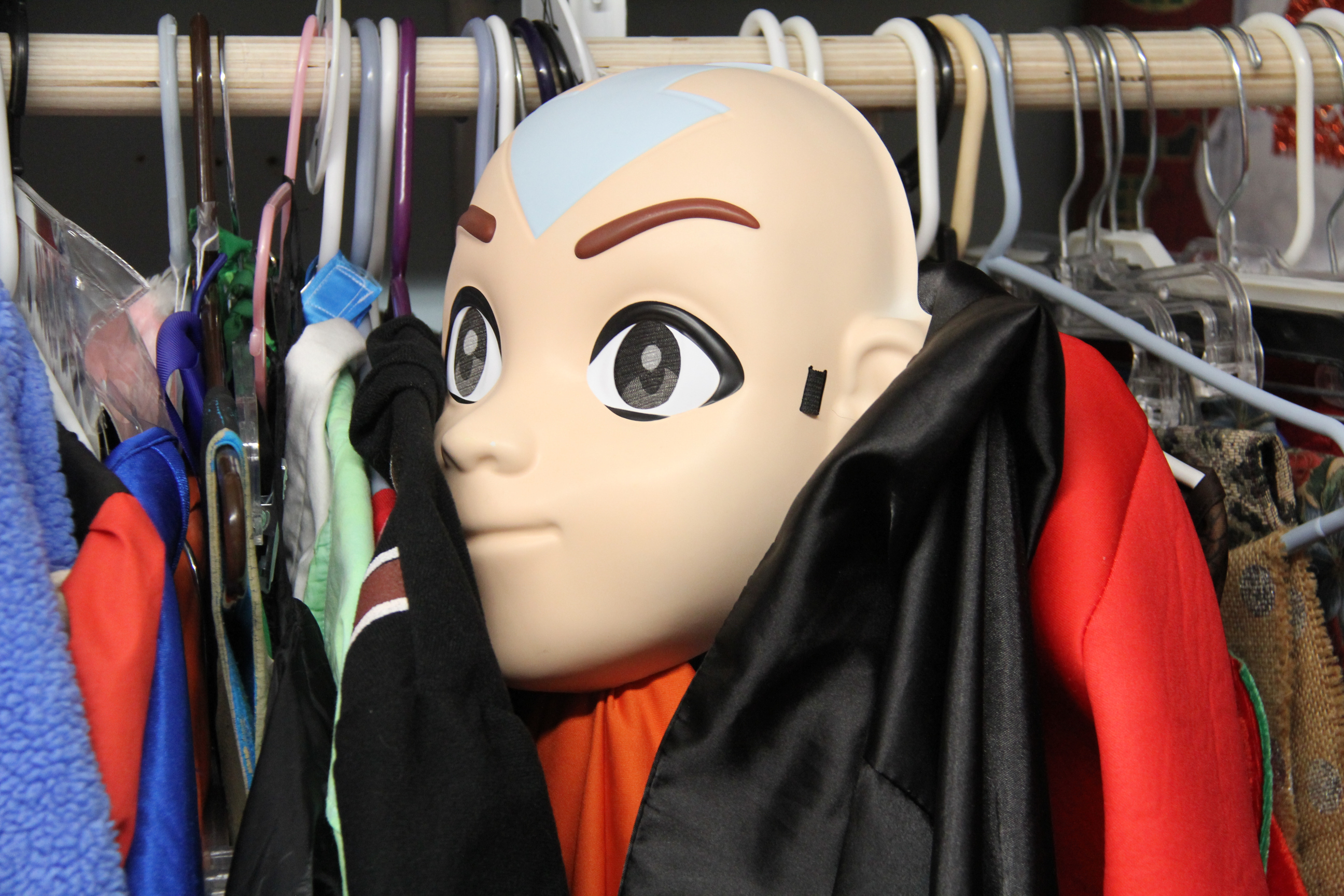
A Halloween mask and costumes for sale at Something for All, a thrift shop in Lonsdale, MN. (Minnesota Prairie Roots copyrighted photo October 2024)
OCTOBER 31. Halloween, the one day when scary is celebrated in a big way. But October 31 also marks another notable day, the final day in Domestic Violence Awareness Month. Domestic violence is far scarier than any ghoulish, frightening, unsettling costume or event. Domestic violence and abuse are real. Real scary.
Warning signs of relationship abuse from an event held in Faribault many years ago.
Abuse can be physical, psychological/mental and/or emotional. Death, injuries, scars, trauma and so much more result from abuse which is, at its core, all about manipulation, power and control. Those can be insidious or blatant.
My fictional story, “Evidence,” is published in this anthology.
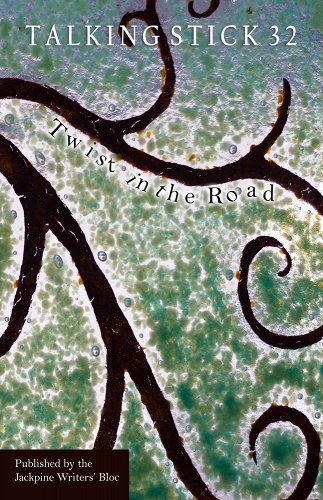
With that brief background, I am sharing a fictional story printed in Talking Stick 32—Twist in the Road, a literary anthology published by northern Minnesota based Jackpine Writers’ Bloc. I wrote “Evidence,” which won an honorable mention in the 2023 Talking Stick writing competition. Please read my story and then my comments following.
Some victims of domestic abuse/violence flee with minimal belongings in a single bag or suitcase. Some leave with nothing at all. Leaving marks the most dangerous time period when exiting an abusive relationship. (Minnesota Prairie Roots copyrighted file photo)
Evidence
She waited inside the bus station, body molded into a hard plastic chair, battered suitcase at her feet nudging shoes that needed a good polishing. Beverly felt restless, lost, as if at any moment she would awaken from her nightmare of a life. She pressed her right thumb into her sweaty left palm, a soothing habit that sometimes helped calm her. But not today.
Only hours earlier she’d fled to this place after tossing several changes of clothing alongside her diary in the bag now resting on the sticky, worn floor soiled by a thousand feet, a thousand stories. Today her story.
Her mind drifted to those first years when she wrote in flowery script, embellishing her writing with hearts. Love, so much love. He cherished her, loved her, embraced her with words and flowers and praise. Until he didn’t.
It was all so subtle, how Thomas, not Tom, chose to slip hurtful words into conversations, wearing her down. Day by day. Complaints of undone laundry and cold dinner and dirty dishes. And then the accusations flew. Where were you? Why were you speaking to him? Why can’t you ever do anything right? Then he slapped her. Repeatedly. Often.
She felt beaten. Weak. Exhausted. Trapped. Her writing reflected that, emotional words looping across the lined paper. Uneven and running together and sometimes nearly unreadable. Tears traced through the ink and wrinkled the pages.
For the longest time, she endured, pulled inside herself, determined she could do better, be better, love him more. Yet, it was never enough. Thomas continued to berate her, to find fault in everything she said and did. And she recorded it all in the journal zippered inside the suitcase stuffed in the back of their closet, the suitcase now at her feet. Evidence.
Beverly pulled herself back to reality, checked the time on the massive clock inside the bus station. Soon the Greyhound would roll in. She grabbed the worn handle of the battered bag, rose from the uncomfortable chair, and headed toward the boarding area. The momentum of hurrying passengers, their shoes slapping against the speckled linoleum, carried her. The bus doors pulsed open. Beverly stepped inside, handing her ticket to the driver. Her mood shifted, lightened with each step down the aisle until she saw him through the window, face flashing anger, fists clenched at his sides.
#
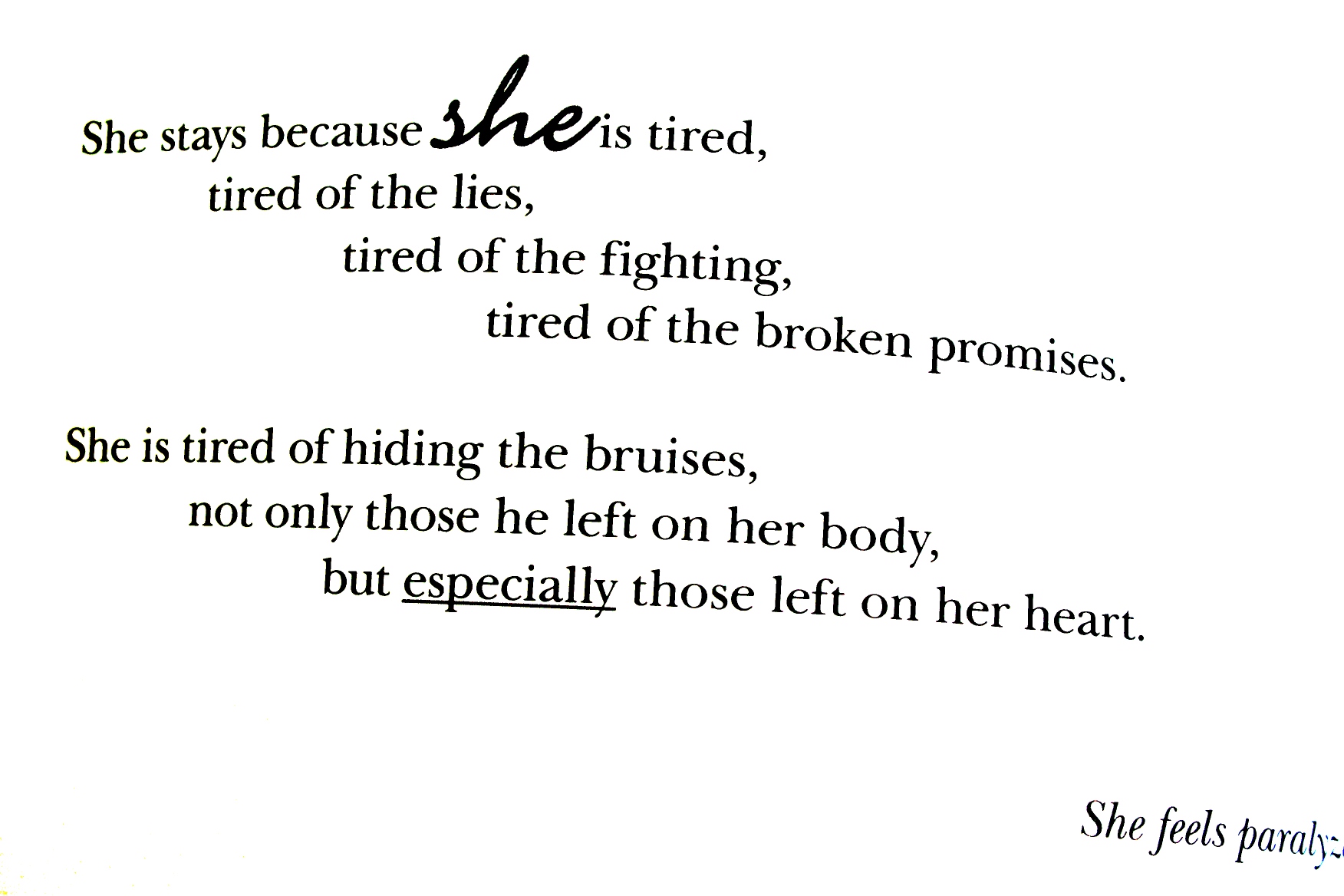
This text was published in a book, “She Stays,” by Eric Staab-Absher, director of HOPE Center in Faribault.(Text copyright of Erica Staab-Absher)
COMMENTS: If you recognize yourself or someone you love in my fictional story, first know that you are not alone. Help is available through organizations that will support you and/or your family. That may be a shelter or an advocacy/outreach organization focused on preventing domestic violence, providing education and resources, and simply being there for you. If you’re not ready for that step, talk to a trusted friend or family member.Seek help.
Leaving an abuser is not easy. It’s scary and difficult. Even dangerous. But you (or someone you love) are so worth living a life free from manipulation, control, abuse and/or violence.
VIOLENCE FREE MINNESOTAhas released its “2023 Homicide Report: Relationship Abuse in Minnesota.” In 2023, there were 40 confirmed victims of intimate partner and domestic violence-related homicides in the state. That’s the highest number since tracking began in 1989. Gunshot is the leading cause of deaths. This report honors victims across Minnesota with photos and information. It’s packed with statistics and other valuable information and is well worth your read. Click here to read the full report or a summary of it.
Getting published in this anthology is a competitive process with blind-judging. The judges—this year a university English professor and writer, a writer who moved to Minnesota for a rural artist-in-residency, and the author of a cozy mystery series—have no idea whose work they are considering for honors. The Jackpine editorial team chooses their top pieces to pass along to the judges for review and awards.
There were 280 submissions from 121 Minnesota writers or writers with a strong connection to our state in the 2024 writing competition. Of those, 113 works from 72 writers were published. That includes 63 poems, 22 creative twist pieces, 15 creative nonfiction stories and 13 fictional stories.
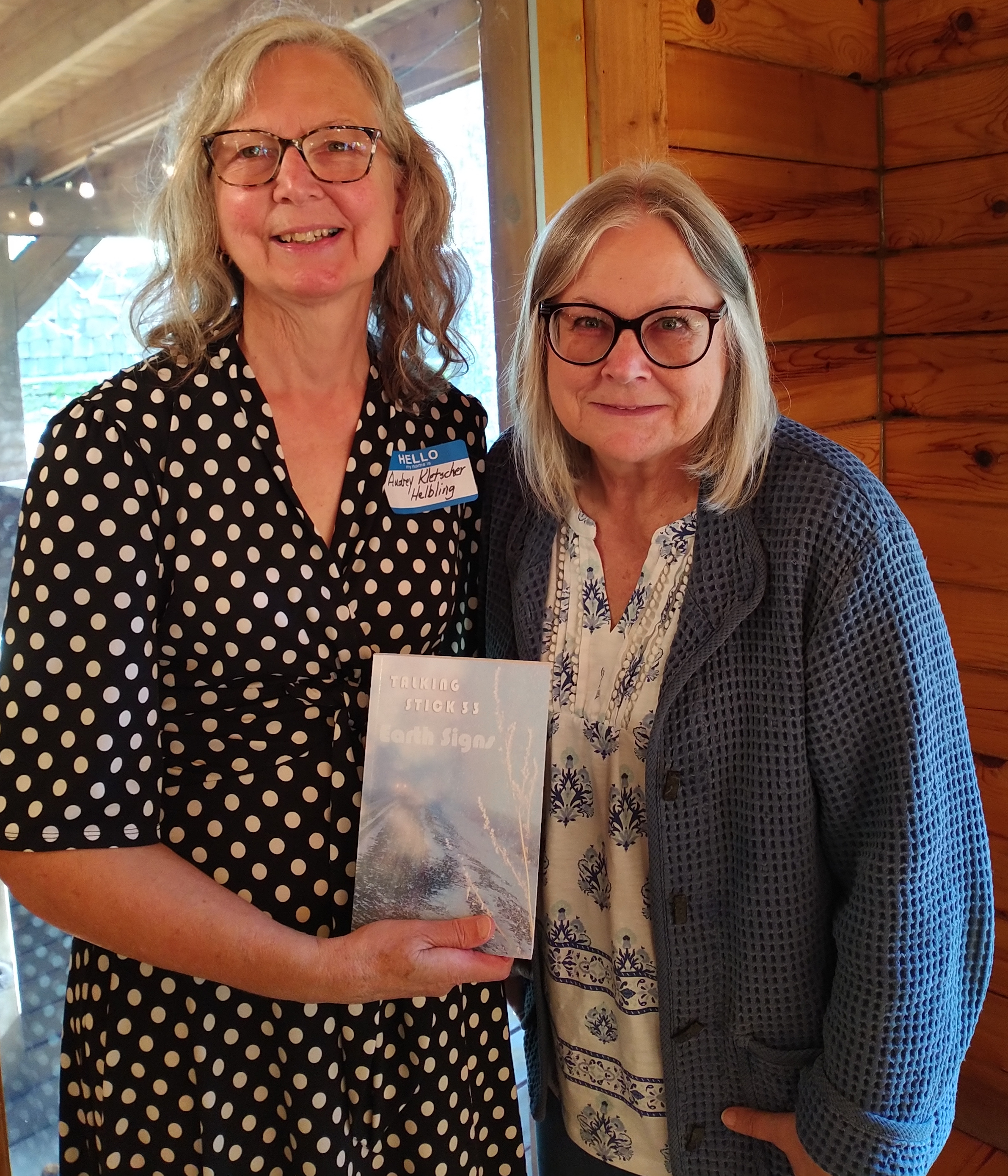
Me with author and fiction judge Jeanne Cooney, right. (Photo credit: Randy Helbling)
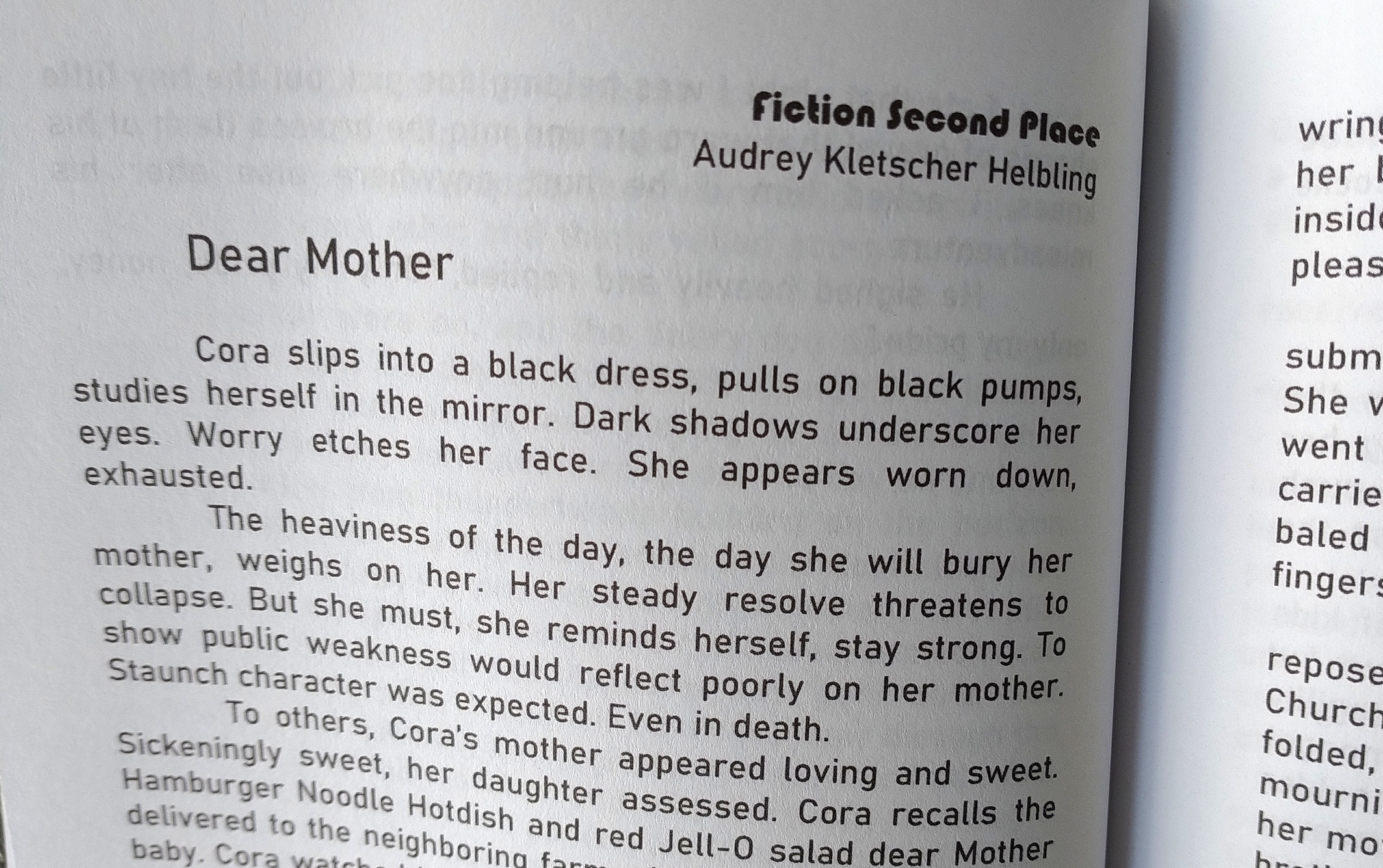
My short story, “Dear Mother,” earned second place in fiction as decided by author Jeanne Cooney. She’s written “A Hot Dish Heaven Mystery” series and has launched a new “It’s Murder” series. Did my mention of Hamburger Noodle Hotdish and red Jell-O salad in my story influence Cooney’s decision? I’d like to think not, but I suppose subconsciously it could have. When I wrote my short story, though, I had no idea who would be judging the fiction category. Hotdish simply fit into the storyline.
The beginning of my prize-winning fictional story, “Dear Mother.” (Minnesota Prairie Roots copyrighted photo September 2024)
Cooney called “Dear Mother” a “Very good story. But needs to be clearer.” She was right. Her comments helped me shape a stronger, better piece of writing. Dark writing. Mine is a story that begins seemingly ordinary enough, wrapping up in a surprise ending. Or rather an inferred dark ending.
Congratulations to everyone whose work published in “Talking Stick 33.” Those include readers of this blog. Thanks also to Managing Editors Sharon Harris and Tarah L. Wolff for their ongoing dedication to the craft of writing. (Minnesota Prairie Roots copyrighted photo September 2024)
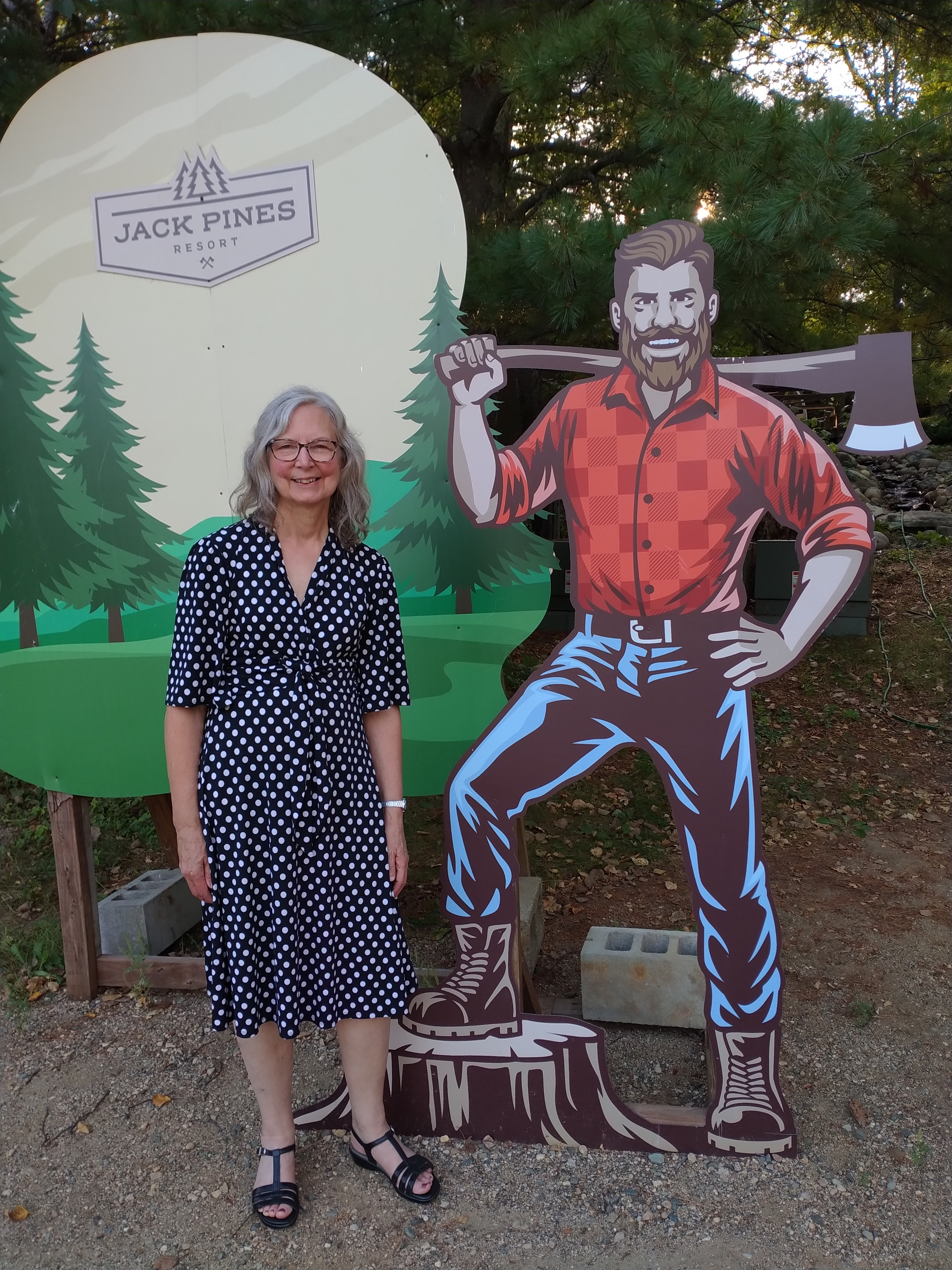
Last Saturday afternoon, I gathered with other writers and supporters for a party launching publication of Talking Stick 33—Earth Signs at Jack Pines Resort (no connection to the writers’ group) in rural Osage, a four-hour drive from Faribault. The event included a writing workshop (which I did not attend), book reading and socializing.
I’m not especially comfortable reading to a roomful of people, even though I’ve done so many times. But I practiced and then read “Dear Mother” with dramatic inflections and soft tones in just the right spots, managing to convey exactly what I wrote. There’s something to be said for hearing a poem or story read aloud. The piece comes alive via the voice of the writer.
As I listened to all these writers, I felt a strong sense of community. I felt encircled by a group of incredibly talented and supportive creatives. People who care about language and emotion and damn good writing.
My collection of “Talking Stick” books. I’ve been published in 15 of these 16 volumes. (Minnesota Prairie Roots copyrighted photo September 2024)
This marks the 15th consecutive year my writing has published in Talking Stick. A poem, “Misunderstood,” and a work of creative nonfiction, “Lessons Inside the Dome,” were also selected for publication in the 2024 volume. Both are Faribault-rooted. My poem focuses on the connection between the Wahpekute and today’s homeless population living in woods along the Straight River. In “Lessons,” I write about walking inside the Shattuck-St. Mary’s School dome during the winter and lessons I learned there.
My writing is often rooted in experiences, in observations, in overheard conversations, in memories. I’ve covered everything from farming, to aging to domestic abuse, trauma, Minnesota Nice and more. Writing prompts have come from a vintage family photo, a sign on a barbershop window in Northfield, a painting by Andy Warhol… There are stories everywhere.
I’m grateful to the Jackpine Writers’ Bloc for repeatedly choosing my work for publication in Talking Stick. That includes 15 poems, 10 short stories, nine creative nonfiction stories and two creative twist stories (written using a list of pre-selected words). I’ve thrice been awarded second place (poetry, fiction and creative nonfiction). I’ve also earned eight honorable mentions (four for fiction, two for creative nonfiction, and one each in poetry and creative twist). Winning those awards is validating to me as a writer.
But just as validating is being among other writers. Writers who appreciate the craft of writing and the hard work it takes to shape a poem or a short story. Writers who understand the importance of word choice. Writers who recognize the power of words. Writers who don’t settle for the mundane, the cliché, the everyday. Writers who will spend several hours together on a glorious September afternoon in the northwoods celebrating the release of Talking Stick, a stellar literary anthology. We have much to celebrate in Minnesota, in this place that produces a remarkable number of talented writers.
Buckham Memorial Library, Faribault. (Minnesota Prairie Roots copyrighted file photo December 2022)
I DIDN’T INTEND to write a follow-up about an author event Thursday evening at my local library. So I didn’t take notes initially. I planned to just sit back, listen and maybe ask a few questions. Turns out I asked a lot of questions of Jess Lourey and Nicole Kronzer. About then I decided I best start taking notes.
I found kindred spirits in Jess Lourey and Nicole Kronzer, in the commonality of needing to write. (Minnesota Prairie Roots copyrighted file photo 2012)
What energy, knowledge and passion these writers brought to the Buckham Memorial Library Great Hall. It’s clear they love the craft of writing. I could feel, as much as hear, their passion.
To be in their presence, to recognize that I was among wordsmiths who deeply love the written word, writing and reading, energized me.
The promo for Thursday’s event. Author John Lee Clark was unable to attend.
I actually pulled myself away from Lourey’s riveting crime thriller/mystery The Taken Ones to attend the author event, Moving Words: Writers Across Minnesota. It’s part of The Friends of the Saint Paul Public Library’s program to bring Minnesota Book Award-winning authors to communities like Faribault. I, for one, appreciate this programming, which included a Friends moderator. She asked questions of Lourey and Kronzer and invited the seven audience members to do the same.
Lourey has 28 books to her credit, mostly fiction, but also nonfiction and children’s books. Kronzer has published two young adult novels. I’ve read many of Lourey’s books and will soon read Kronzer’s. She’s a relatively-new author.
Yet, they share similar experiences and didn’t sugarcoat the difficult process to publication, which starts first with an idea, then outlining, then writing and research and rewriting and rewriting some more and editing and… They struggled to find agents, had their queries and manuscripts rejected by publishers, Lourey some 400 times. But she persisted. And today she’s an accomplished award-winning author. Kronzer holds the same determination to get her work in print. Her best work. They both acknowledged some of their writing hasn’t been all that good. Lourey even went so far as to steal her master’s thesis from her university’s library…until her Minnesota guilt kicked in and she returned it.
Book cover sourced online. This is Kronzer’s second young adult novel, published in January.
Both have taught/teach writing. Kronzer draws on her interactions with teens as a high school English teacher and her theatrical experience in shaping her books. She enthuses about today’s teens, noting she feels hopeful in this generation. In response to a question, Kronzer said the take-away from her books is a sense of belonging, the theme in Unscripted and The Roof Over Our Heads. She was, she said, bullied. I can relate. We write what we know.
Book cover sourced online. The cover is similar to the real-life scene of abandoned bikes found in a rural road ditch at the site of Jacob Wetterling’s abduction.
Lourey, who is inspired by dark true crime, centers her fictional books on secrets. She grew up in Paynesville in central Minnesota, where eight boys were attacked and assaulted in the late 1980s. (Secrets.) Authorities investigated a suspect who later pled guilty to the 1989 kidnapping, assault and murder of Jacob Wetterling in nearby St. Jospeh. Lourey’s fictional book, Unspeakable Things, is based on what happened in Paynesville. Her experiences as a pre-teen and teen at the time weave into Unspeakable. Write what you know.
Even though her books theme around secrets, Lourey wants readers to take away the importance of community. “Find your people and tell your truth,” she said.
This was posted in a recent display on banned books at my library. (Minnesota Prairie Roots copyrighted photo September 2023)
And for Kronzer, her stand-out statement of the evening, at least for me, was this: “Reading makes you nicer.” In saying that, she referenced the diversity of characters found in books. (Both authors emphasized character development in their writing.) Kronzer’s statement really resonated with me as I thought of a recent banned books display in my library. Not books banned from Buckham Memorial Library, but rather books that have been banned elsewhere. I chose one from the shelf, Lawn Boy by Jonathan Evison, and read it. It’s not a book I would otherwise have chosen. But I needed to read it, to learn, to widen my world, to put myself in the shoes of others.
We can learn so much by reading, by writing, by asking, by listening. And sometimes we are validated. When I asked Lourey and Kronzer whether they eavesdrop (specifically in grocery stores), they admit they do. Some of what they’ve overheard has made it into their books. Just as some of what I’ve overheard has woven into my writing. Write what you know. And sometimes, write what you hear.
Book cover sourced online.
FYI: Lourey and Kronzer suggested two must-read books on the craft of writing: Save the Cat! Writes a Novel—The Last Book on Novel Writing You’ll Ever Need by Jessica Brody and Stephen King’s On Writing—A Memoir of the Craft. I’ve read King’s writing guide and highly-recommend it. I also highly-recommend attending author events, whether you’re a writer, a reader or both.
Lights glow purple on the Rice County Government Services building in Faribault in recognition of Domestic Violence Awareness Month. The moody sky fits the topic, the arrow on the pavement (from my perspective) pointing to hope, a way out of an abusive relationship. (Minnesota Prairie Roots copyrighted photo October 2023)
BEVERLY BOARDED THE GREYHOUND BUS, battered suitcase in hand, journal and hastily grabbed clothes zippered inside. She felt worn down. Exhausted. On this day, she chose to leave, to flee her husband’s physical, emotional and verbal abuse. As Beverly walked down the aisle to her seat, her mood lightened. But then she spotted Thomas approaching the bus, face flashing anger, clenched fists threatening.
This anthology, featuring Minnesota writers or those with a connection to Minnesota, includes my short story about domestic abuse. (Book cover image sourced online)
Every day across Minnesota and beyond, scenarios like Beverly’s unfold in real life. The faces and places and circumstances differ. But the threat is real, as real as my fictional version aimed to not only provide a suspenseful read but also to raise awareness about domestic abuse.
A promo for the “2022 Homicide Report.” (Source: Violence Free Minnesota Facebook page)
October marks Domestic Violence Awareness Month. And that began in Minnesota with the release of the “2022 Homicide Report: Relationship Abuse in Minnesota” by Violence Free Minnesota. The report states that “at least 24 people were killed due to intimate partner homicide in 2022.” A further break-down of that shows at least 20 women and one man died from intimate partner violence and at least three bystanders/intervenors also died. Their ages ranged from 13 to 66. They lived in all areas of Minnesota from rural to urban.
Margie Brown Holland (my former neighbor’s daughter) and her unborn daughter, Olivia, were murdered in 2013 in an act of domestic violence. Information about Margie was displayed on a t-shirt as part of The Clothesline Project exhibit I saw in Owatonna in 2015. This exhibit is available for display through Violence Free Minnesota. (Minnesota Prairie Roots copyrighted file photo July 2015)
While statistics and summaries matter, it is the stories which make the greatest impact. This report includes those, along with photos of nearly every homicide victim. Those stories begin on page 47, well into the 66-page report which is packed with powerful information that really should be read by every adult.
I focused my attention first on Chandra Lanae Pelch of nearby Medford. The 18-year-old was shot six times by her boyfriend in a murder-suicide on June 3, 2022. While the profile on Chandra is short, it is enough to break my heart. She leaves behind an infant son and loving family and friends.
I was also drawn to the story of Isaac Jon Hoff, 13, stabbed to death by his mother’s boyfriend, now serving 17 years in prison for his murder. It’s another heartbreaking case of domestic violence, of a woman attempting to defend herself, of a man grabbing a knife from her hand, of a son stabbed as he stood behind his mother. They were under an order of protection against their attacker. Isaac, who was described as “spunky, big-hearted and loved,” managed to call 911. He died later at the hospital. Isaac was from small town Olivia in southern Minnesota.
And then there’s Kimberly Ann Robinson, 41, who was found dead from a gunshot wound and blunt force trauma injuries on the side of a road in Rochester. Her boyfriend has been charged in her murder. She was a mother of three.
An excerpt from the 2016 book “She Stays” by HOPE Center Director Erica Staab-Absher explains why a woman stays in an abusive relationship. (Text copyright of Erica Staab-Absher)
Each story in this report deserves attention, for each person lived and loved and was loved. None were to blame for their horrific deaths, just like Beverly in my fictional story did nothing to deserve the physical and emotional abuse inflicted upon her by her husband. Domestic abuse, at its core, is about power and control. Too often, people ask, “Why didn’t she just leave?” That, in essence, shifts blame to the victim. This report explains “why” in “VICTIM’S ATTEMPT TO LEAVE THE ABUSER.”
The “2022 Homicide Report” does a good job of revealing the “whys” and of expanding on domestic abuse/violence-related topics within the legal system, racial disparities, healthcare, economic abuse, public/workplace violence and more. The report also includes recommendations in each of those target areas. One section even makes recommendations to the media about covering domestic violence.
Inspirational and honoring words are embedded in a mosaic honoring Barb Larson, killed in an act of domestic violence at her workplace, the Faribault Area Chamber of Commerce and Tourism, on December 23, 2016. (Minnesota Prairie Roots copyrighted file photo)
In the all of this, in the awfulness of these 24 deaths in Minnesota in 2022, we can all learn, grow our compassion, support and understanding, begin to recognize the warning signs of domestic abuse. There is hope and help available through advocacy groups and organizations, shelters and more. But it takes courage to seek help while under the power and control of an abuser. In my fictional story, Beverly found that courage on the day she grabbed her battered suitcase with her documenting journal zippered inside and boarded that Greyhound bus. But did she survive? The truth is, I don’t know.
#
FYI:Talking Stick 32, Twist in the Road includes not only my fictional story about domestic abuse, but four other fictional short stories and two poems on the topic. Particularly powerful is the poem “At the Cafe” by Mary Scully Whitaker in which the author and a waitress witness emotional abuse and threats of violence against a woman, then intervene. The anthology, published by the Jackpine Writers’ Bloc, is available through Amazon.
If you are a victim of domestic abuse, know that help is available. Have a plan in place to leave safely, recognizing that leaving an abuser is a particularly dangerous time. You are not alone. And you are not to blame.
Commentary: 100 days in & he’s talking dolls May 2, 2025
Tags: America, fiction, opinion, political commentary, short story, The Land of Plenty, thoughts
ONCE UPON A TIME in The Land of Plenty there lived a ruler who, once he took office, commenced to ruthlessly flaunt his authority (which fits, given his self-proclaimed ruler status). He really didn’t care what he said or did as long as it fit his agenda to make his kingdom—more precisely himself—great. The forceful leader promised that the “golden age” of Acirema would start on the day he assumed power. Perhaps he was referencing the opulent gold décor in his redecorated palace office.
The ruler gathered his team of loyalists and followers, assuring them that as long as they followed his plans, his instructions, his actions, his orders, he would reward them, or at least keep them out of the dungeon. Threats and intimidation have a way of instilling self-preservation and obedience.
But not everyone much cared for the self-centered leader or his policies. They never fell under his spell, his control. They were willing to stand up to him, question him, even at the risk of raising his ire. Or worse. They began to rise up and challenge him and his underlings. That didn’t sit well with the ruler. I mean, how would you like the courts calling you out, gray-haired ladies protesting, students criticizing you in schoolyards? Nope, can’t have that happening in Acirema. Never mind that The Land of Plenty was a land of freedom, of laws, of due process, of balanced powers. Or at least it was before the authoritarian ruler took over.
A JOB REVIEW 100 DAYS IN
And so, 100 days into his reign, the ruler underwent a job review of sorts. Job reviews held no sway with him, although he should have understood their importance based on his previous experiences as a land baron who banished many a worker. Whatever. He was above everyone. All of them. He didn’t believe multiple reports of his declining popularity. He was doing a great job, he proclaimed. Great! And that was that. Don’t tell him otherwise for fear of being branded a liar. Or worse, banished from the kingdom. Just nod and agree that everything is going great and the ruler would call you a friend rather than a foe.
But you can only push people so far before they break and stop believing you, if they ever did in the first place. And many in the kingdom never did take this man at his word. He had a habit of distorting the truth, in other words lying. Now name-calling is not nice. But truth is truth.
BULLYING AND BLAMING
Many in the kingdom were weary of the bullying coming from the palace. No one likes a bully. No one likes decrees that harm, rather than help, the kingdom. When the ruler levied new taxes on goods, promising to enrich his subjects, many did not believe him. (It should be noted that some—too many—still believed him.) He urged patience and calm as anger rose both inside and outside the kingdom. The ruler had upset the marketplace apple cart. Yet, he would hear none of the verbal resistance. As was his usual reaction, he blamed the previous overseer of The Land of Plenty for the rising costs of food and for marketplace shortages. “It was him, not me!” the ruler shouted. He used that blame tactic often.
2 DOLLS, 30 DOLLS, 900 DOLLS
But then he said something that deeply upset his subjects. “Well, maybe the children will have two dolls instead of 30 dolls,” the ruler responded when asked about rising prices and marketplace shortages. Outrage ensued. Thirty dolls? It was then that the people of the kingdom realized how disconnected the leader was from reality. Many of them now lived in poverty due to his policies. Their children had no dolls, unless you counted those crafted from corn cobs. The ruler’s grandchildren, however, had an entire playroom filled with imported dolls. Lovely dolls. Thirty times thirty. That’s 900 if you’re counting.
By this time the citizens of The Land of Plenty were counting only one thing—the number of days until they could vote in a new leader of Acirema. If that would even be an option. If they weren’t all banished. If they still had a country.
#
NOTE: While this is a fictional story, it is rooted in truth. Feel free to leave a comment, understanding that I moderate all comments on this, my personal blog.
© Copyright 2025 Audrey Kletscher Helbling