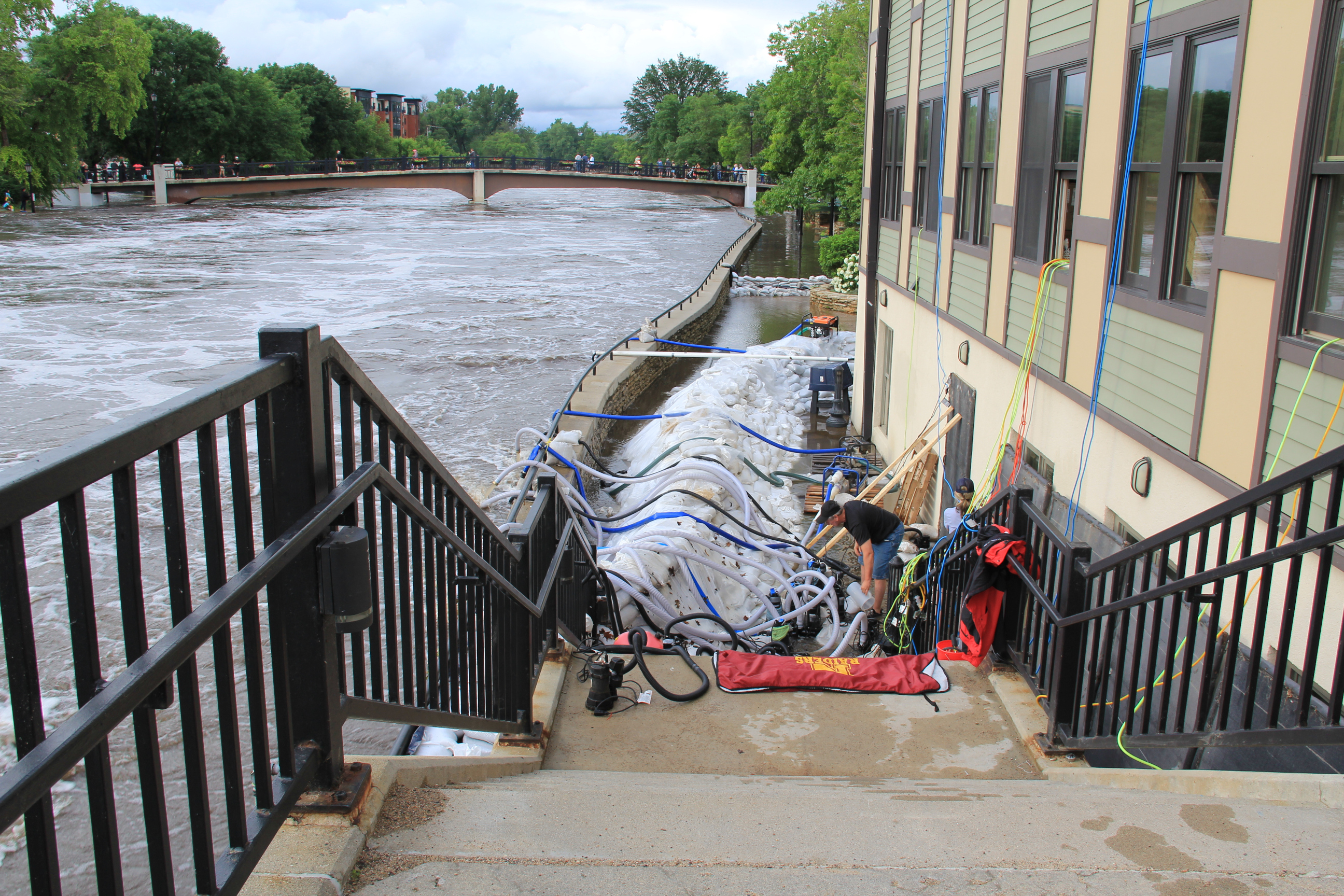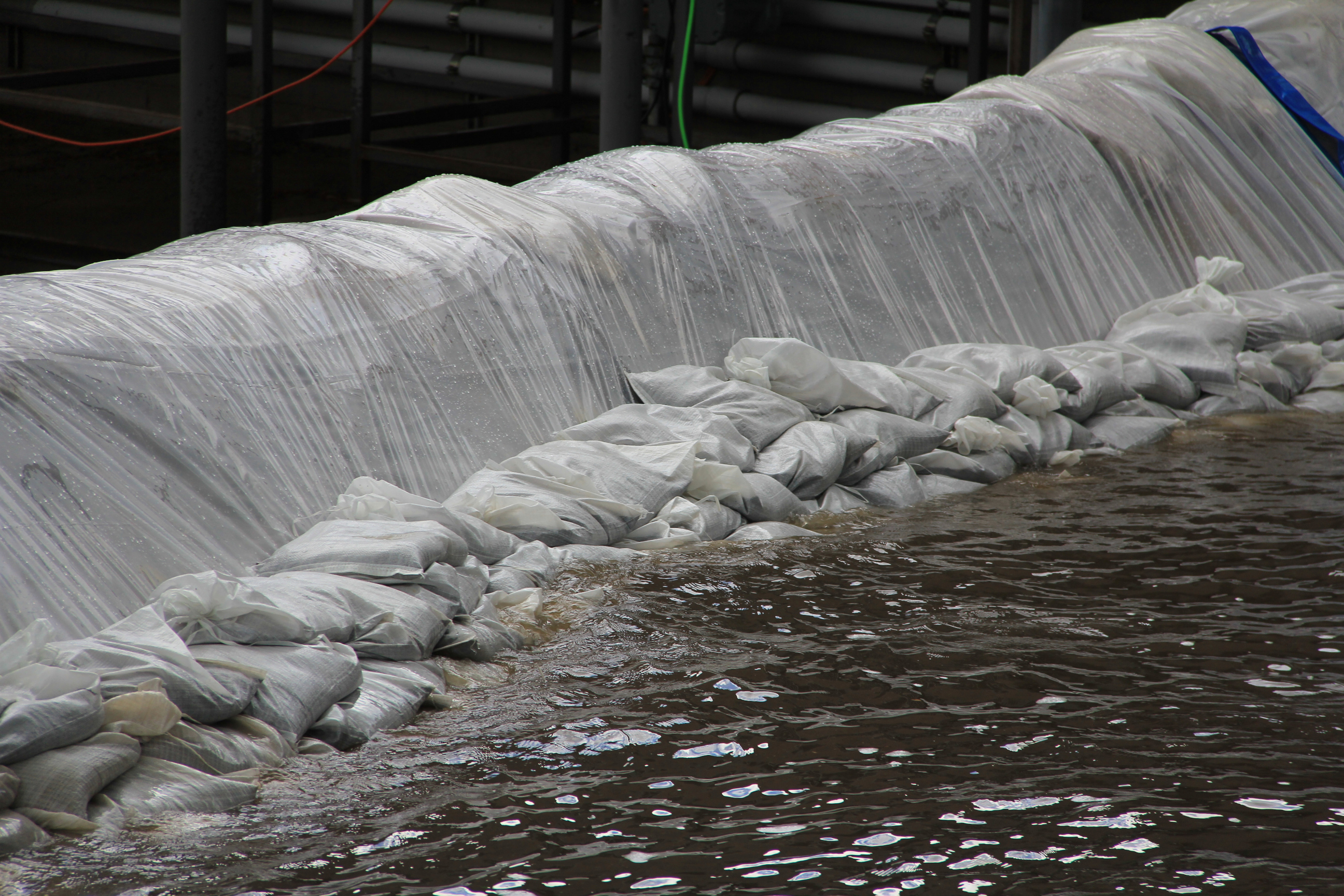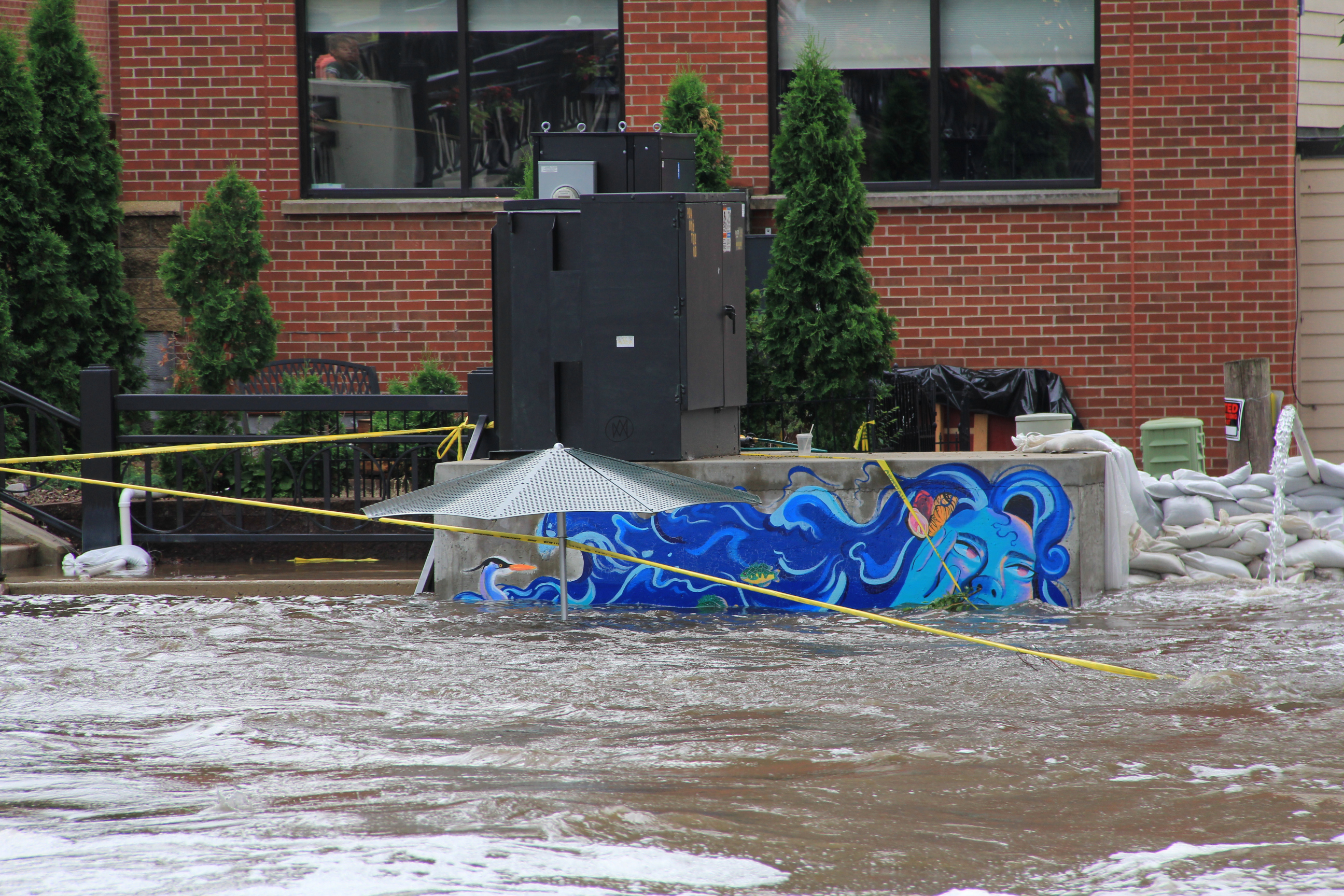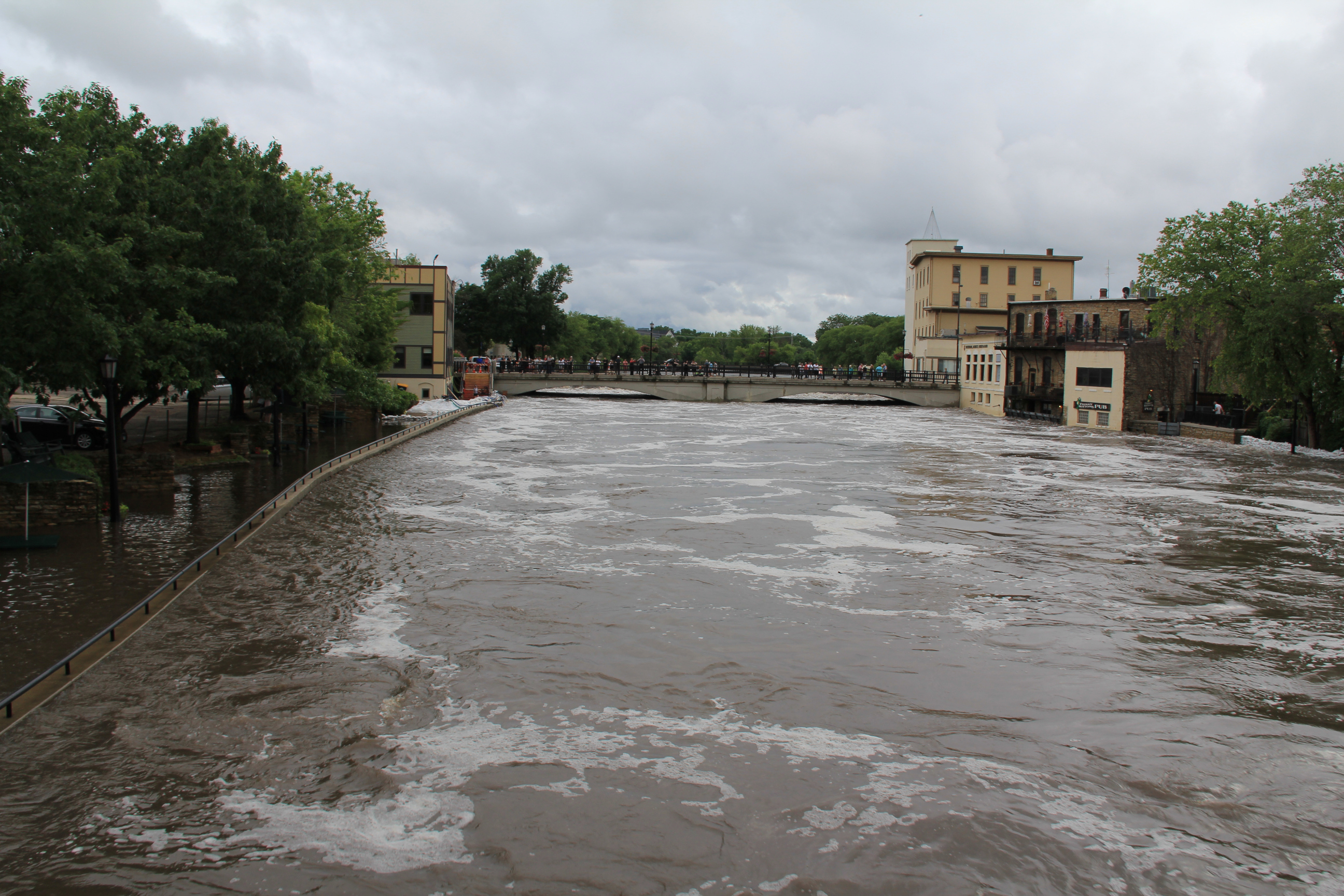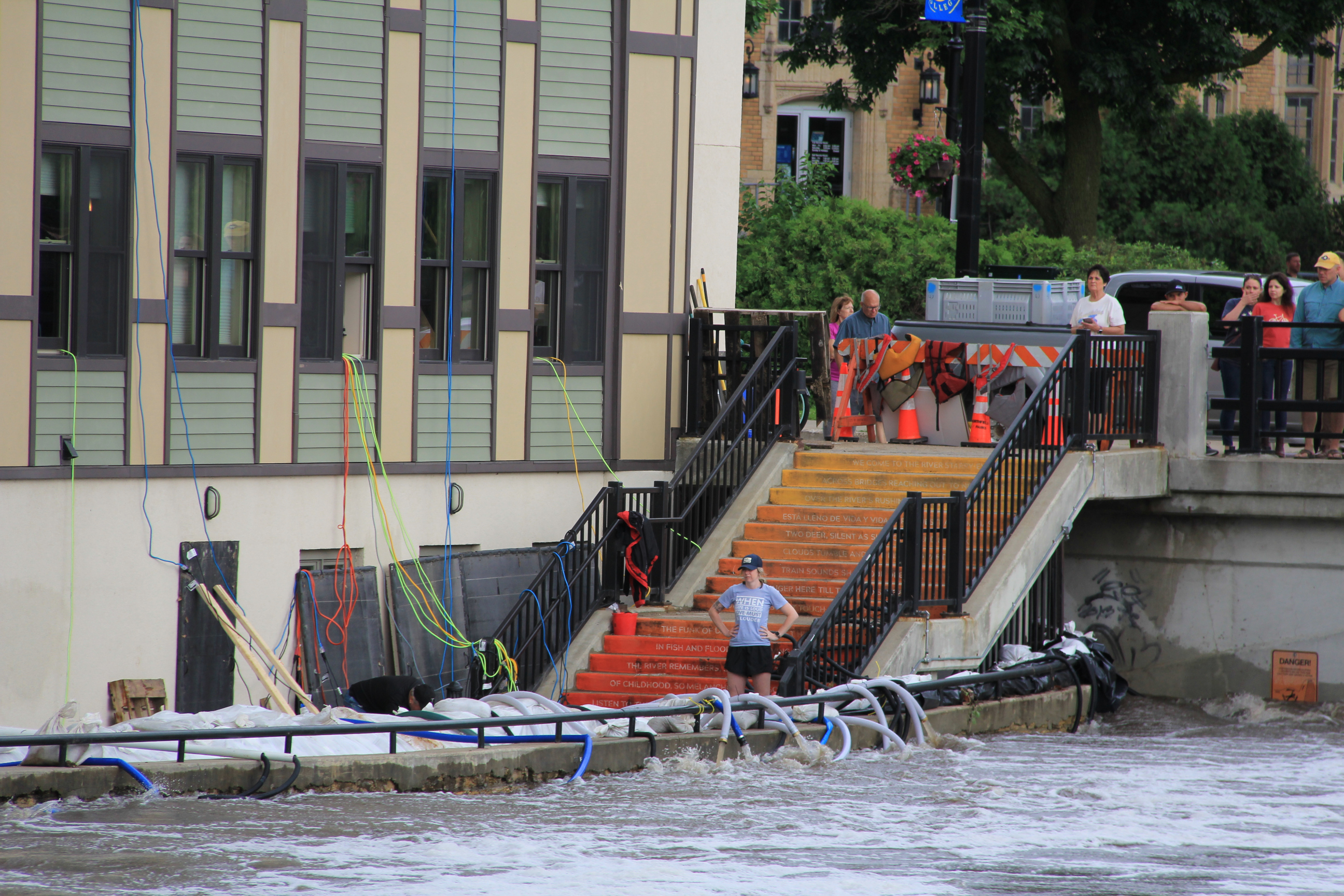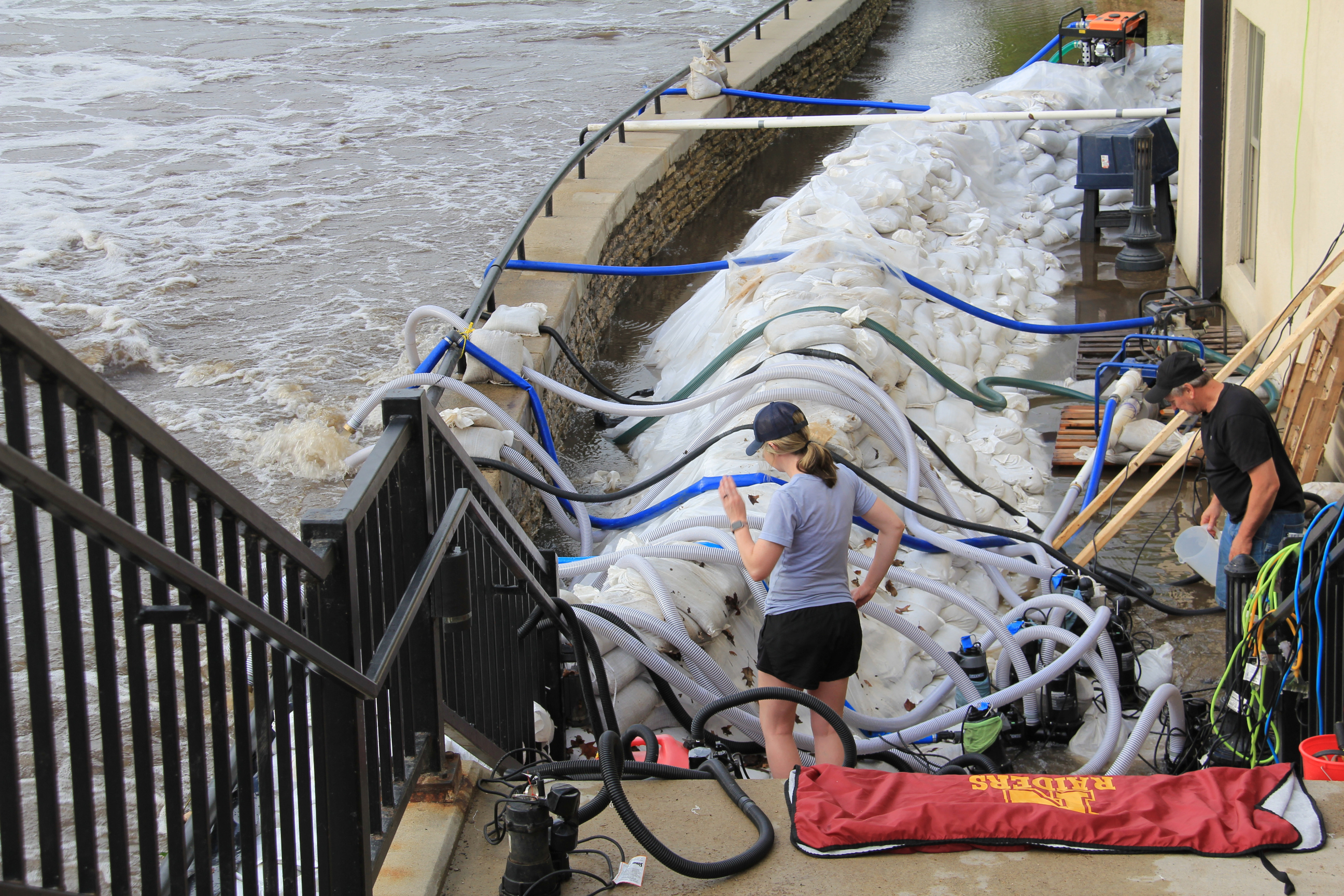
A crew works to protect the Carlson Capital Management building along the east bank of the Cannon River. This is by the “Poem Steps” leading to the Riverwalk, now flooded. (Minnesota Prairie Roots copyrighted photo June 22, 2024)
MANY AREAS OF SOUTHERN MINNESOTA, including my county of Rice, have been inundated with torrential rain during the past week. That’s led to flooding of rivers and property and to road closures. Like so many others, I’ve been out and about observing, taking photos.
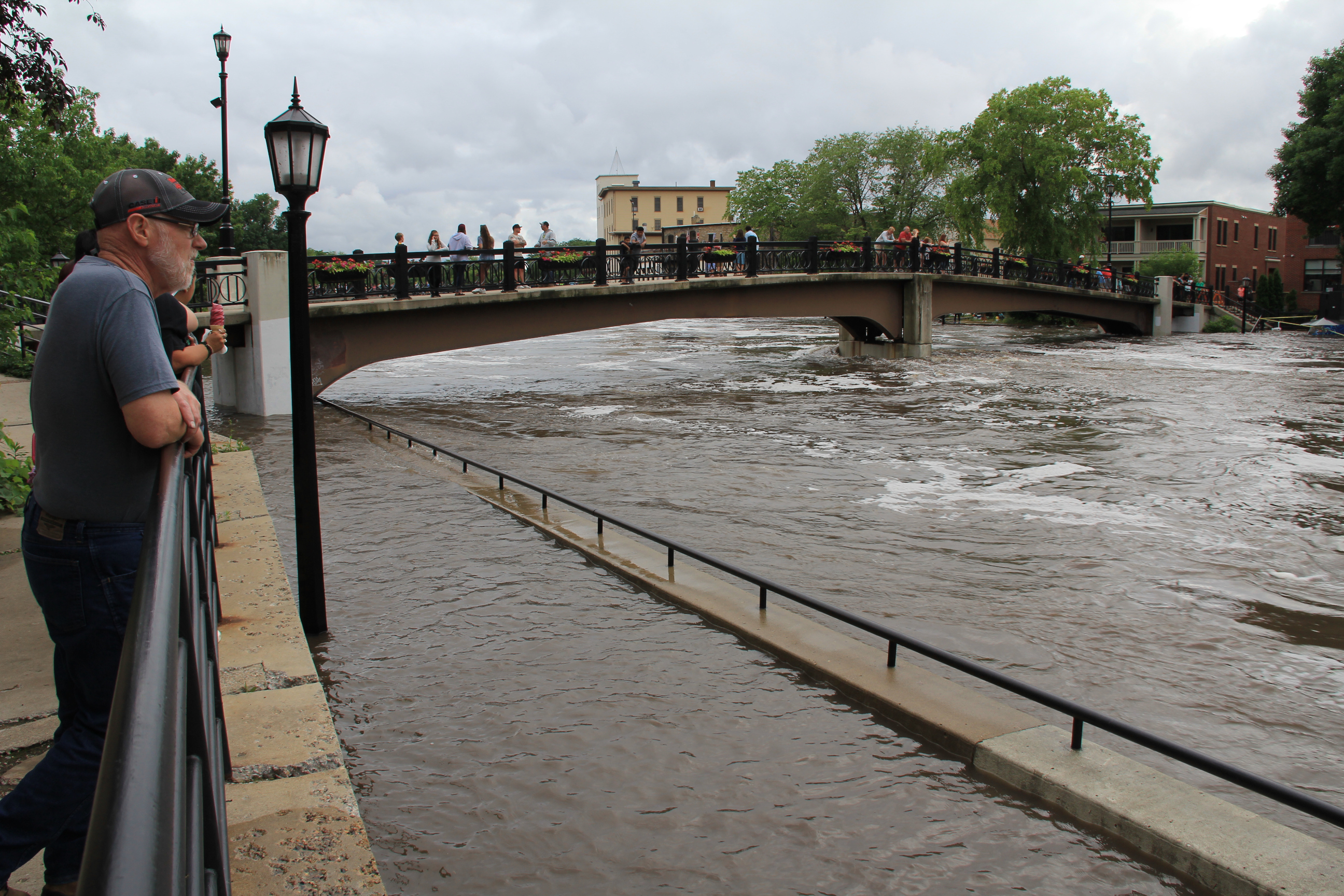
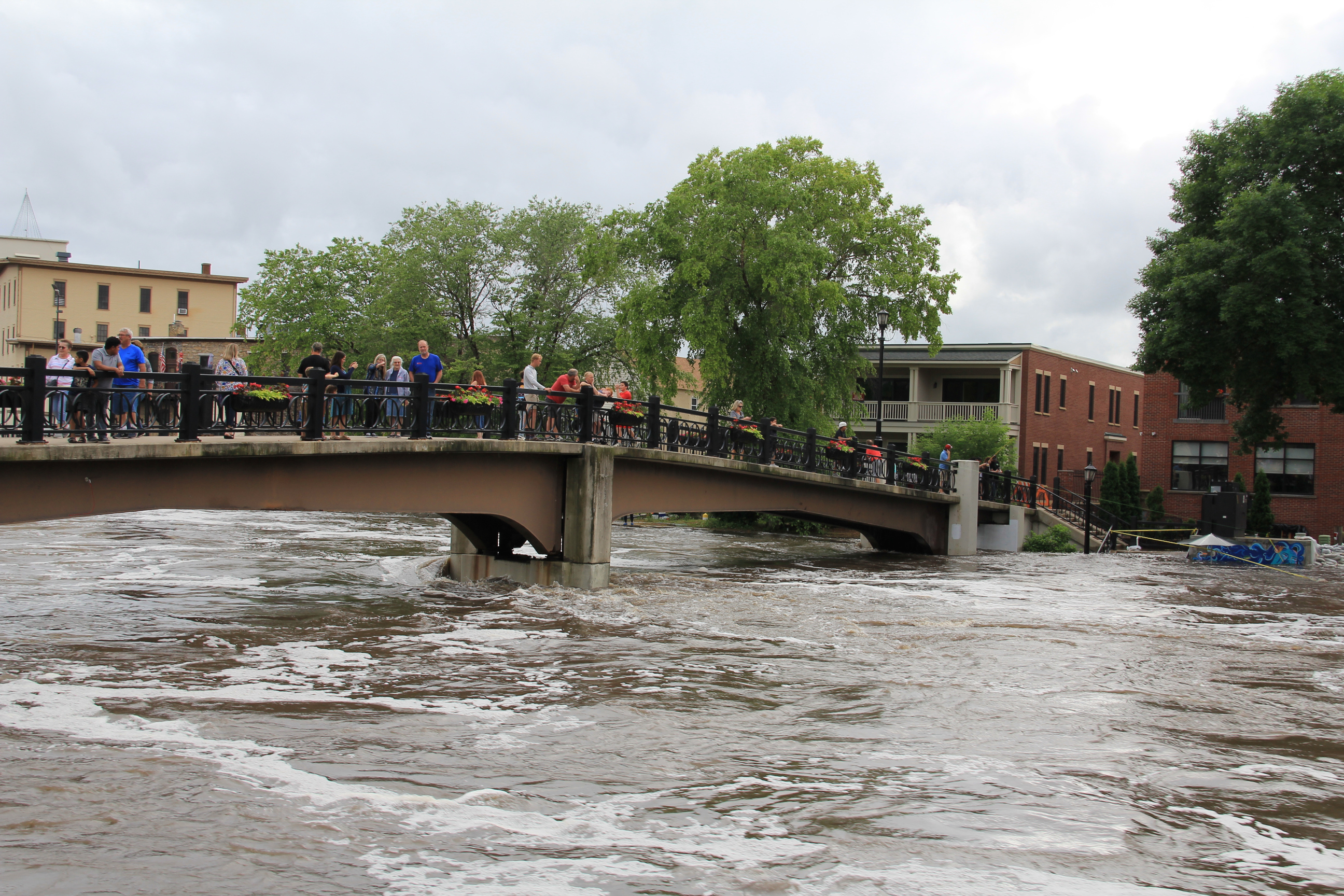
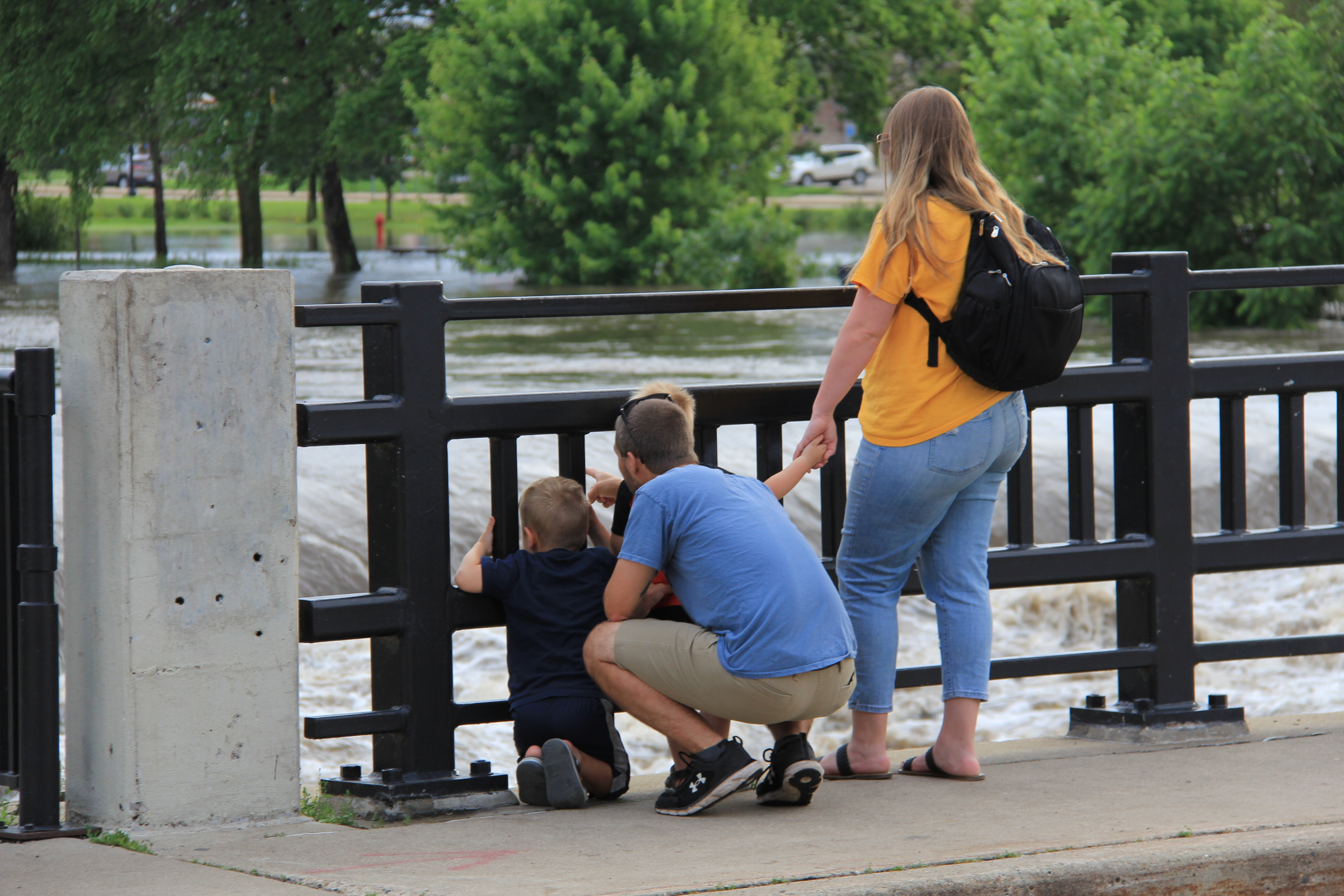
People gather on the pedestrian bridge and along a sidewalk above the Riverwalk to see flooding along the Cannon River. (Minnesota Prairie Roots copyrighted photo June 22, 2024)
Saturday evening, on our way home from visiting family in Lakeville, Randy and I drove through Northfield and stopped to walk along the Cannon River. The river runs through the heart of this historic downtown, which features a waterside river walk.
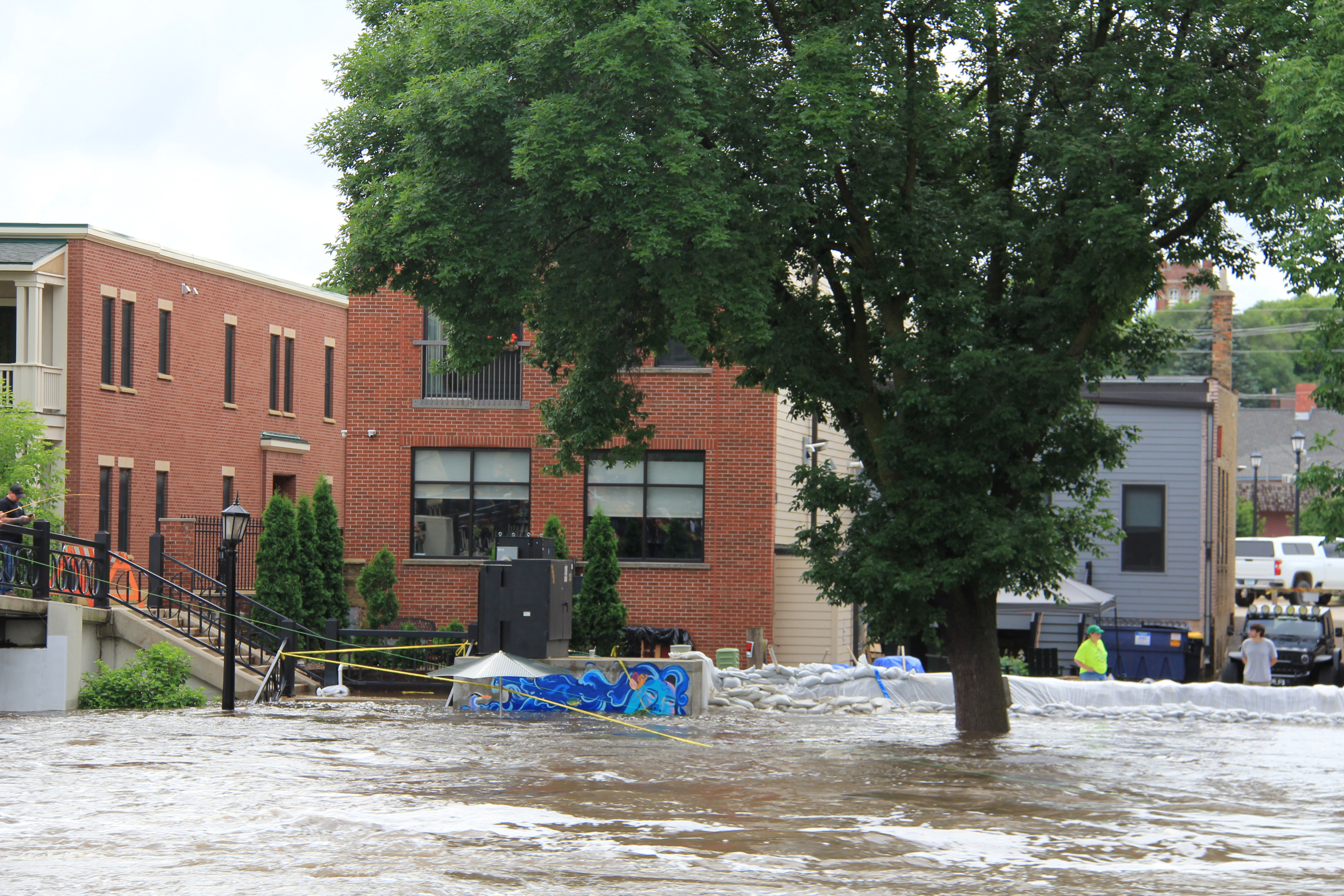
Flooding and sandbagging along the west bank of the Cannon near the Lady Cannon mural.
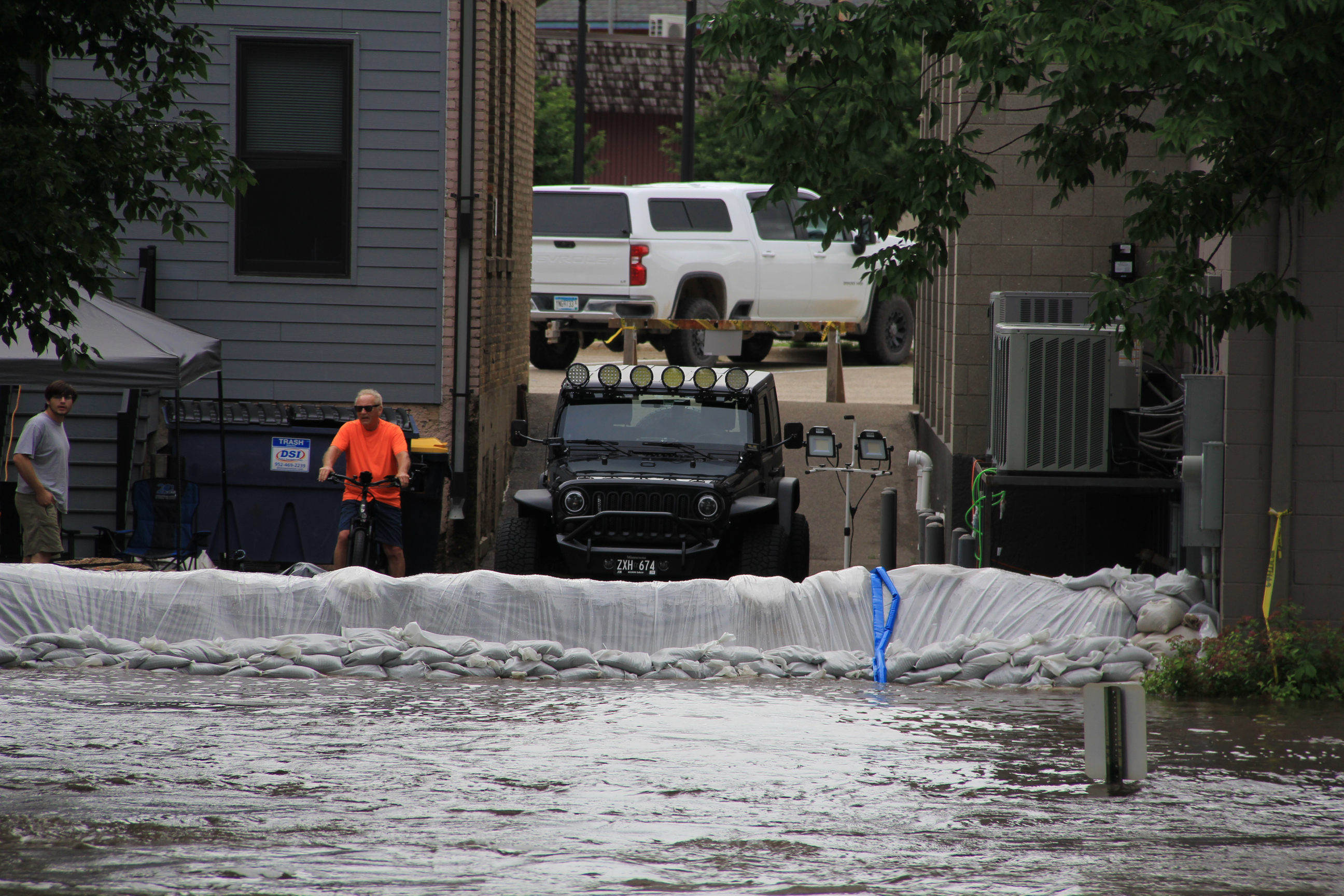
Sandbag wall on the west side of the river. (Minnesota Prairie Roots copyrighted photo June 22, 2024)
Lady Cannon is nearly swimming in the river. (Minnesota Prairie Roots copyrighted photo June 22, 2024)
The Cannon has spilled over its banks, flooding the river walk and adjacent land and threatening buildings at water’s edge. Sandbags are in place. Pumping is underway.
People line the pedestrian bridge across the Cannon for a wide perspective of the river and the flooding. (Minnesota Prairie Roots copyrighted photo June 22, 2024)
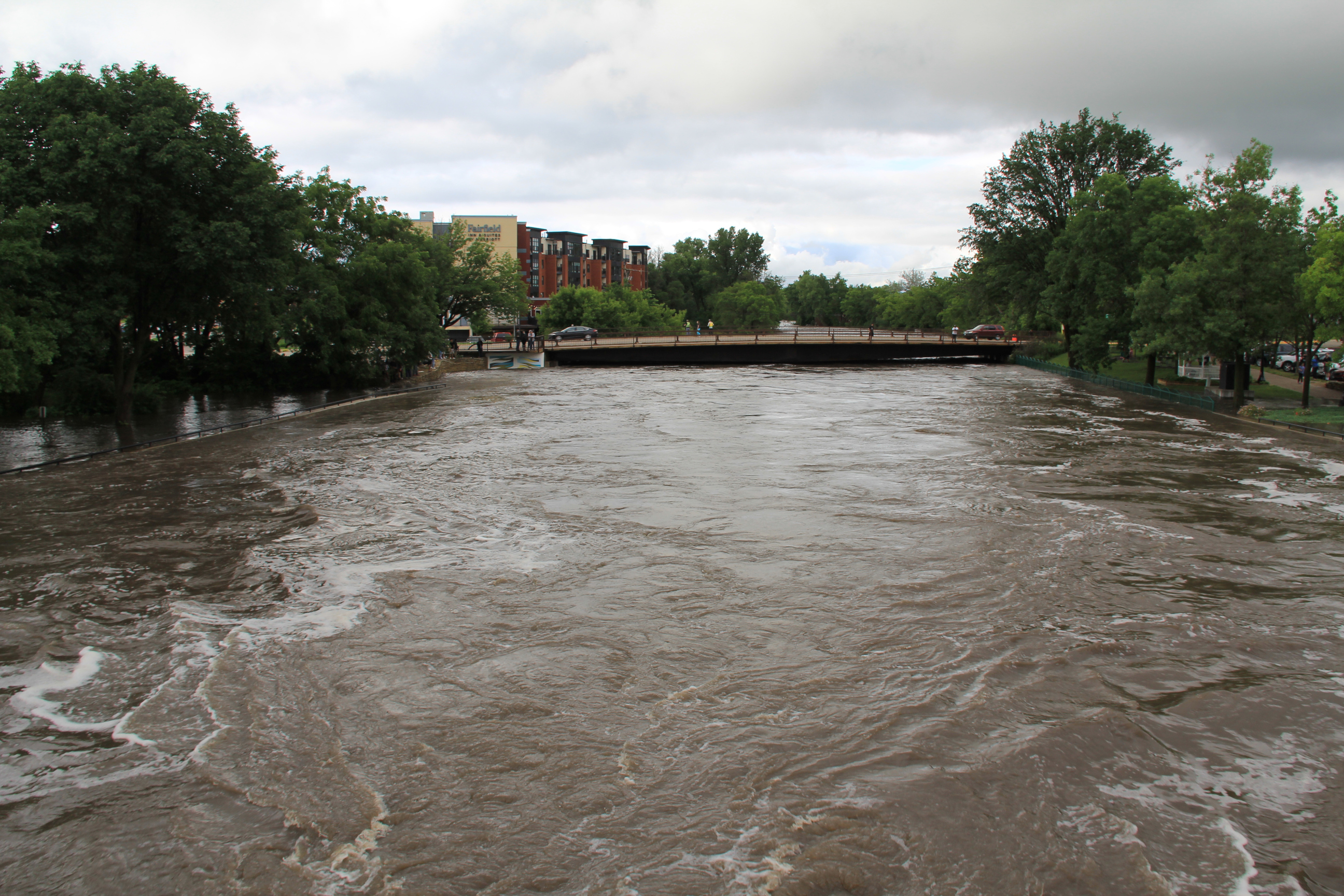
Looking north from the pedestrian bridge to the Second Street/State Highway 19 bridge. (Minnesota Prairie Roots copyrighted photo June 22, 2024)
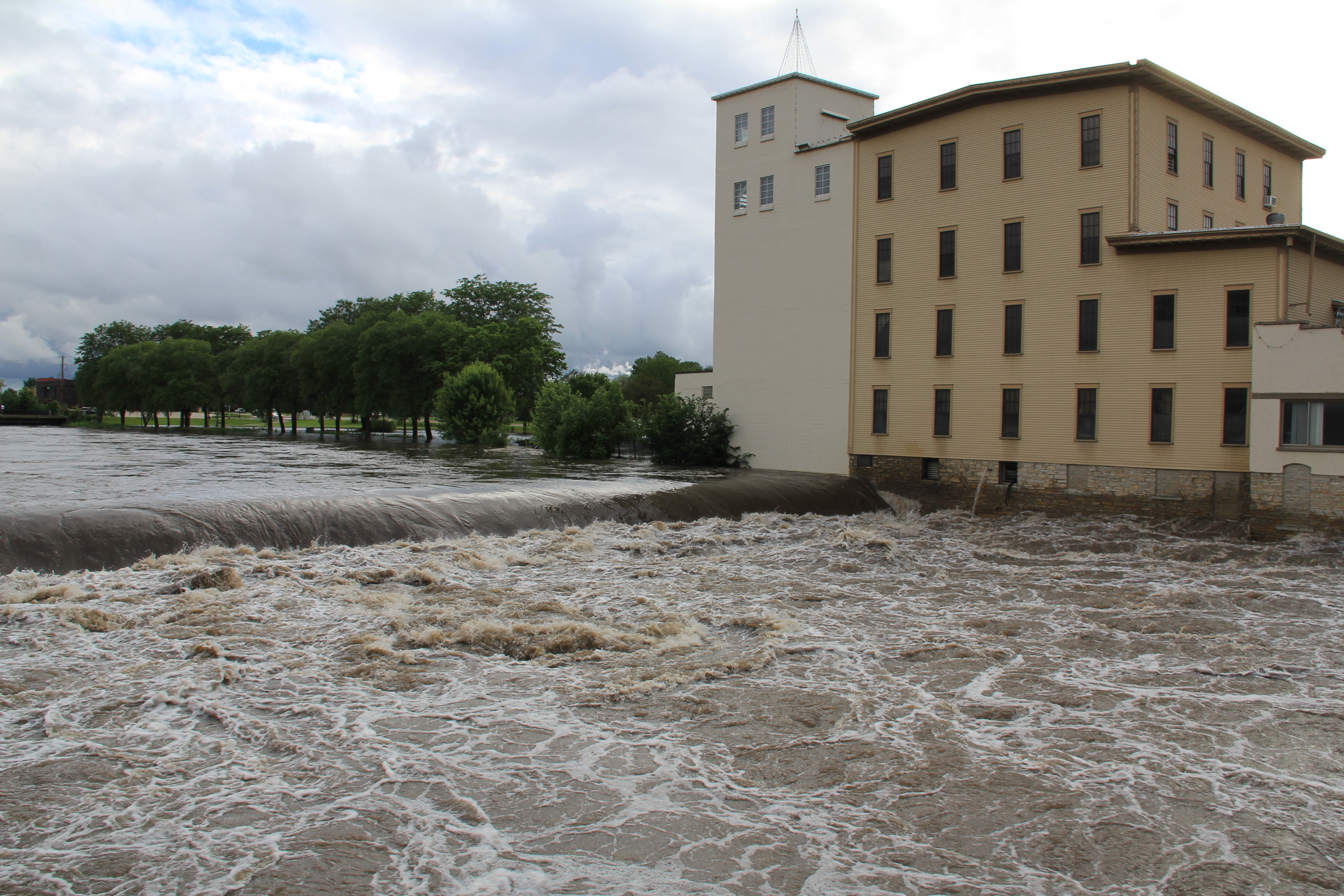
Looking south from the pedestrian bridge toward the Water Street bridge by the Ames Mill Dam. (Minnesota Prairie Roots copyrighted photo June 22, 2024)
And people are coming to the river by the hundreds to view its raging power. A pedestrian bridge high above the water offers a unique perspective.
The dam is barely visible by the historic Ames Mill. (Minnesota Prairie Roots copyrighted photo June 22, 2024)
Among the many people viewing the river at the dam site. (Minnesota Prairie Roots copyrighted photo June 22, 2024)
And a bridge across the river by the historic Ames Mill provides a close-up view of the Cannon roaring over the dam.
Protecting Carlson Capital Management. (Minnesota Prairie Roots copyrighted photo June 22, 2024)
A maze of hoses channel water out of the Carlson building while sandbags protect it. (Minnesota Prairie Roots copyrighted photo June 2024)
Froggy Bottoms on the west bank floods whenever the river floods. A neon green poster on the building reads: “This Frog Swims Again.” (Minnesota Prairie Roots copyrighted photo June 22, 2024)
It is impressive, all of it. The nauseating movement of the water. The speed. The danger. The feeling of overwhelming respect and awe in the presence of such power.
Fitting words on the door of the Froggy Bottoms building. (Minnesota Prairie Roots copyrighted photo June 22, 2024)
This I felt as I took in the scene unfolding before me on a Saturday evening in Northfield.
A sandbag wall protects property along the west bank of the Cannon River. (Minnesota Prairie Roots copyrighted photo June 22, 2024)
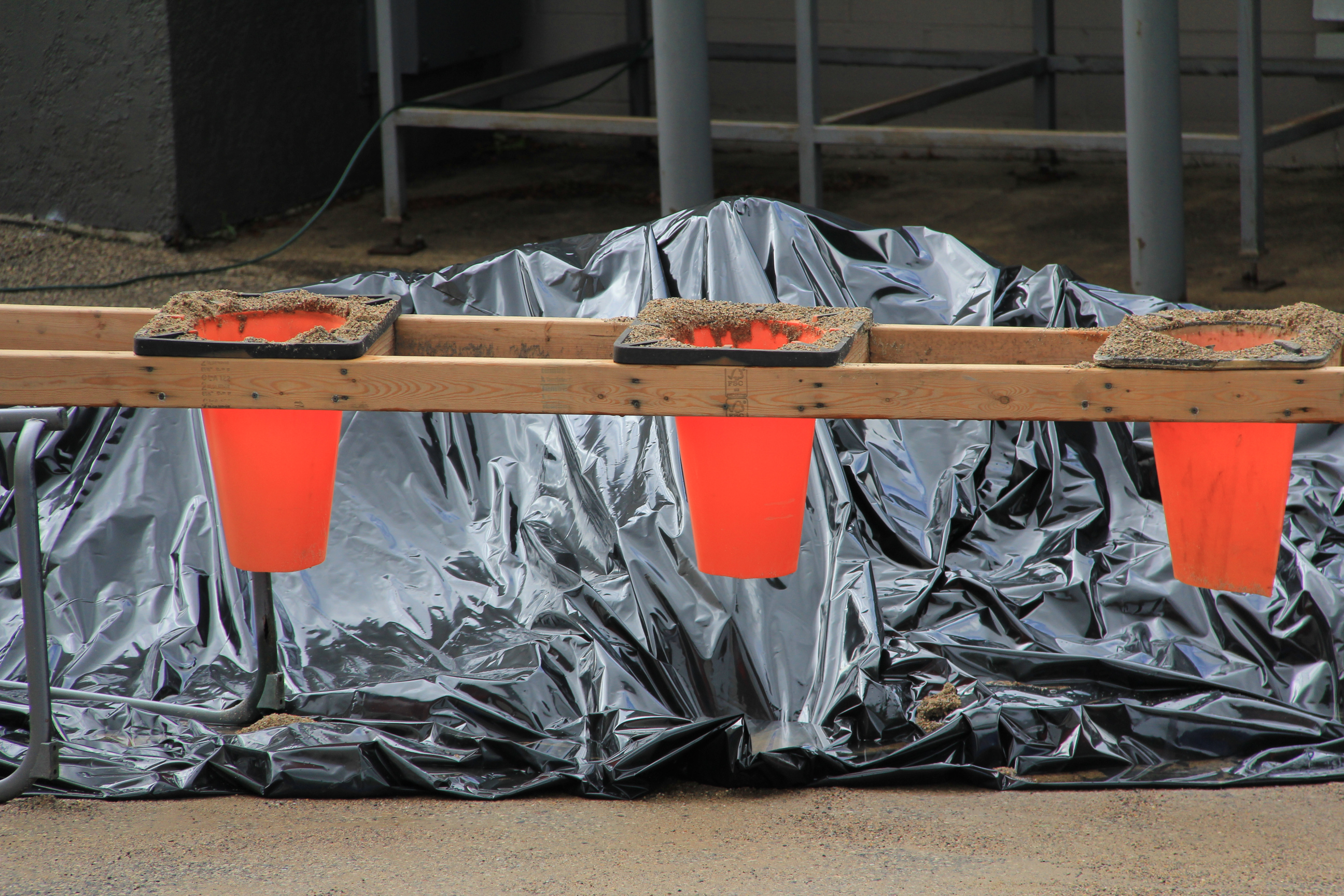
A sandbagging station. (Minnesota Prairie Roots copyrighted photo June 22, 2024)
A line of sandbags protects property on the west bank of the Cannon. (Minnesota Prairie Roots copyrighted photo June 22, 2024)
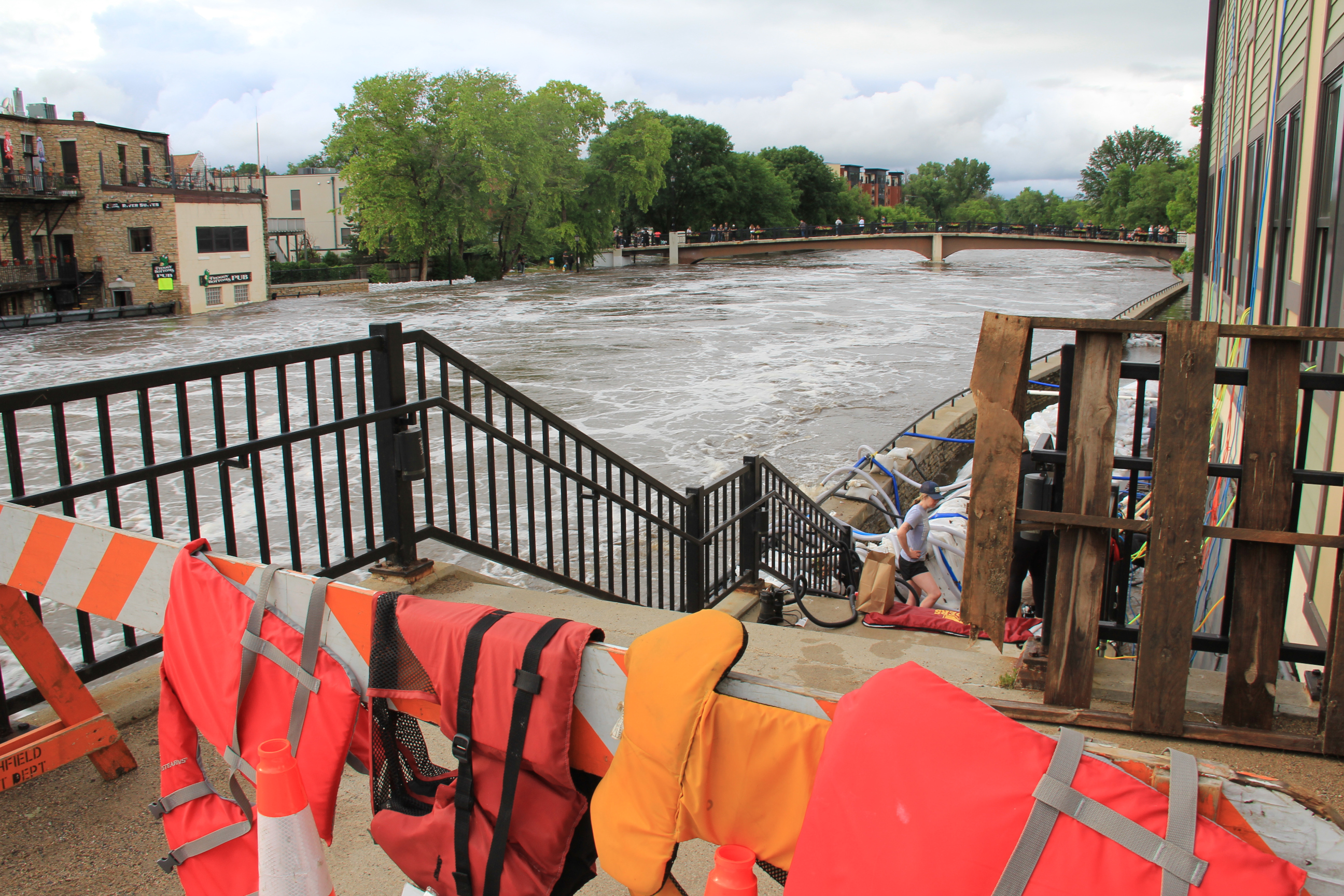
Life jackets drape a barricade blocking access to the flooded east side Riverwalk. Below, workers work to protect the Carlson building from the river. (Minnesota Prairie Roots copyrighted photo June 22, 2024)
NOTE: Check back tomorrow for flood photos from Faribault.
A vintage 1969 or 1970 Chevy pickup truck parked in a car port at Twin Lakes Auto Parts in Waterville.(Minnesota Prairie Roots copyrighted photo June 2024)
EVERY PLACE HAS CHARACTER, especially small towns. Or at least that’s how it seems to me, someone with an affinity for rural. I am not a big city girl, preferring quiet Main Streets to city traffic, low-slung buildings to soaring skyscrapers, small gatherings to crowds. I feel grounded, rooted, at home in rural locations.
One of Waterville’s most unusual homes, a small house sandwiched between businesses along Main Street. (Minnesota Prairie Roots copyrighted photo June 2024)
For me a day trip to explore small towns is as appealing as a day in the big city for someone who prefers cities. We are all different and that is a good thing.
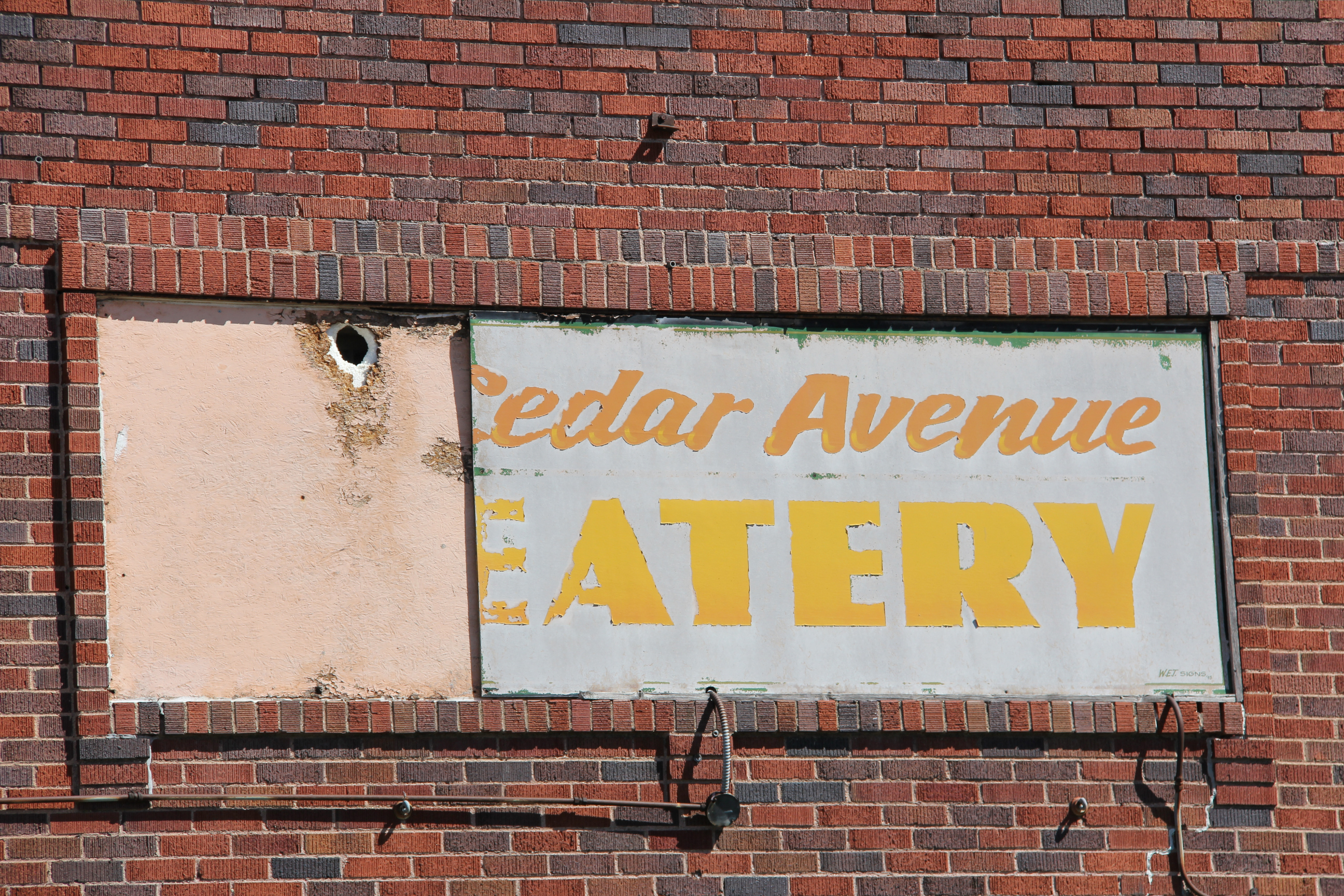
A ghost sign on a downtown building. (Minnesota Prairie Roots copyrighted photo June 2024)
Recently I toured seven area communities in a single day while working on a photo essay column for SouthernMinn Scene, a regional arts and entertainment magazine. I found myself photographing scenes well beyond the scope of my themed essay focusing on small town bar exteriors and signage. With camera in hand, I always scan for interesting photo ops.

Vintage bullhead art signage hangs on the Waterville Event Center. (Minnesota Prairie Roots copyrighted photo June 2024)
Among my stops was Waterville, in the southern Minnesota lakes region of Le Sueur County. Summertime residents and visitors plus bikers pedaling the Sakatah Singing Hill State Trail swell this town’s population well beyond 1,868. Waterville folks definitely recognize the value these people bring to the local economy, to the community.
Unexpected art on the side of the Corner Bar. (Minnesota Prairie Roots copyrighted photo June 2024)
I realize not everyone sees what I see upon walking through a small town business district like that in Waterville. I tend to notice details, oddities, the small things that make a place interesting. I’ve photographed the heart of Waterville several times, so this trip I mostly zeroed in on different details.
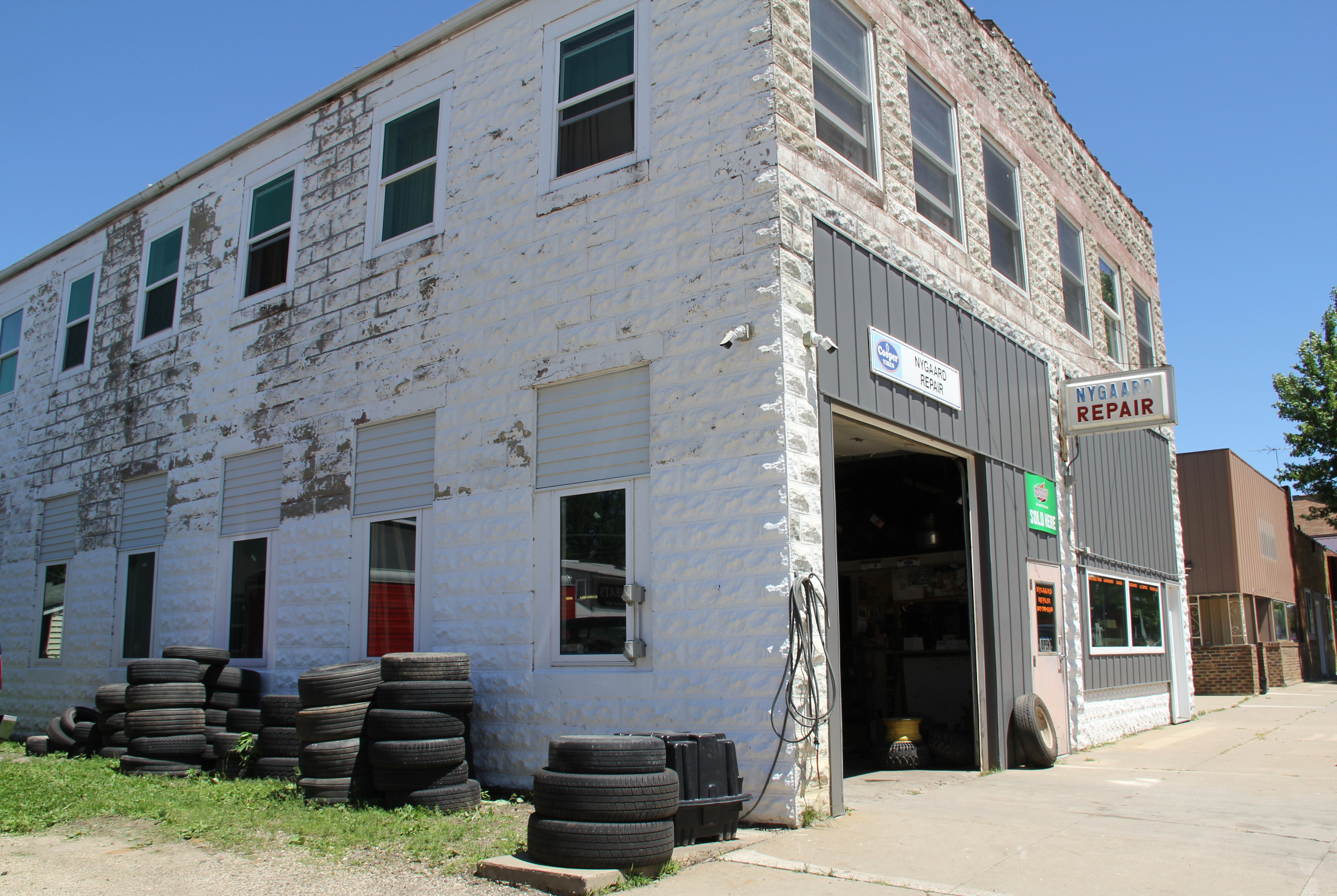
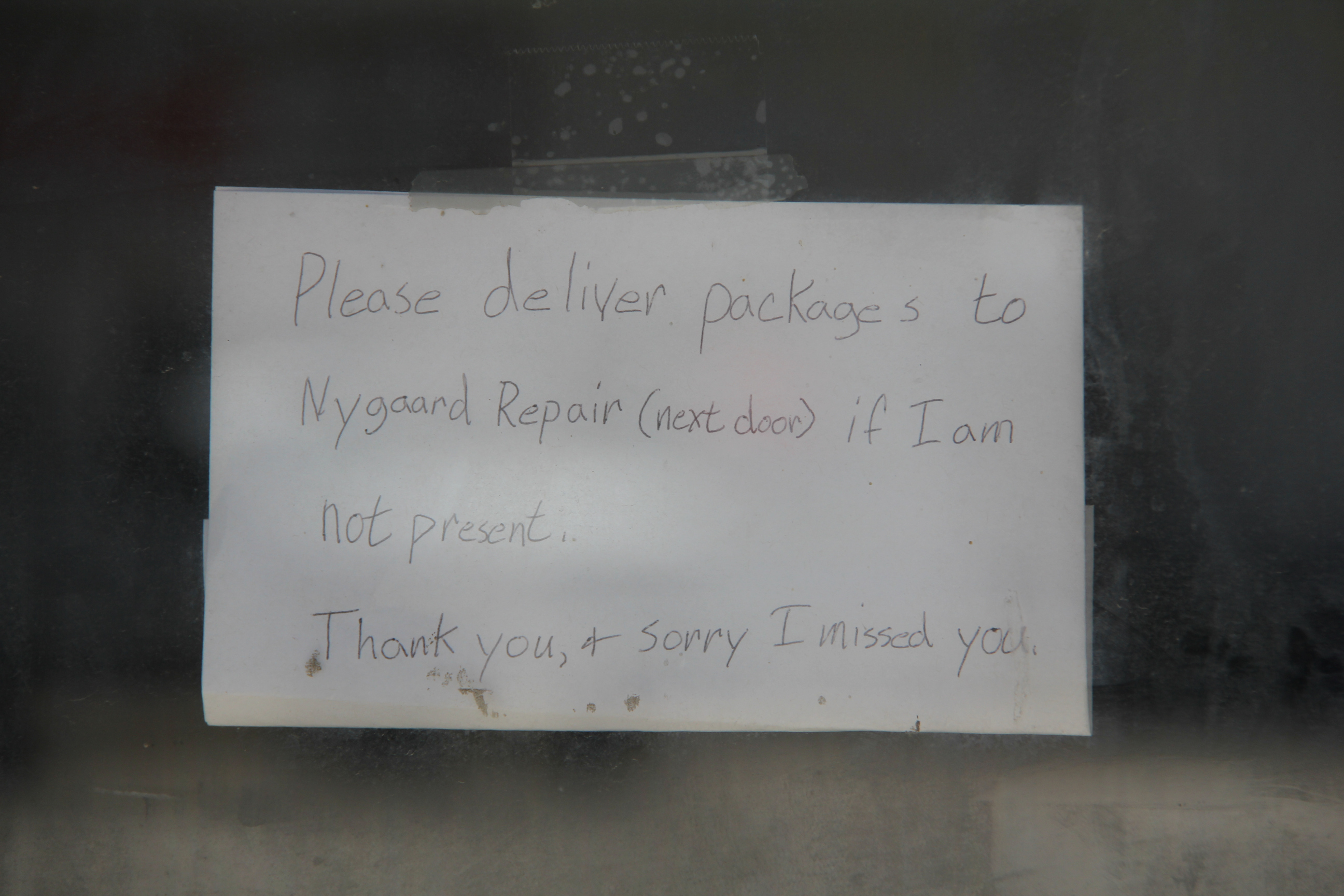
I see this often in small towns, specific notes left for delivery drivers. (Minnesota Prairie Roots copyrighted photo June 2024)
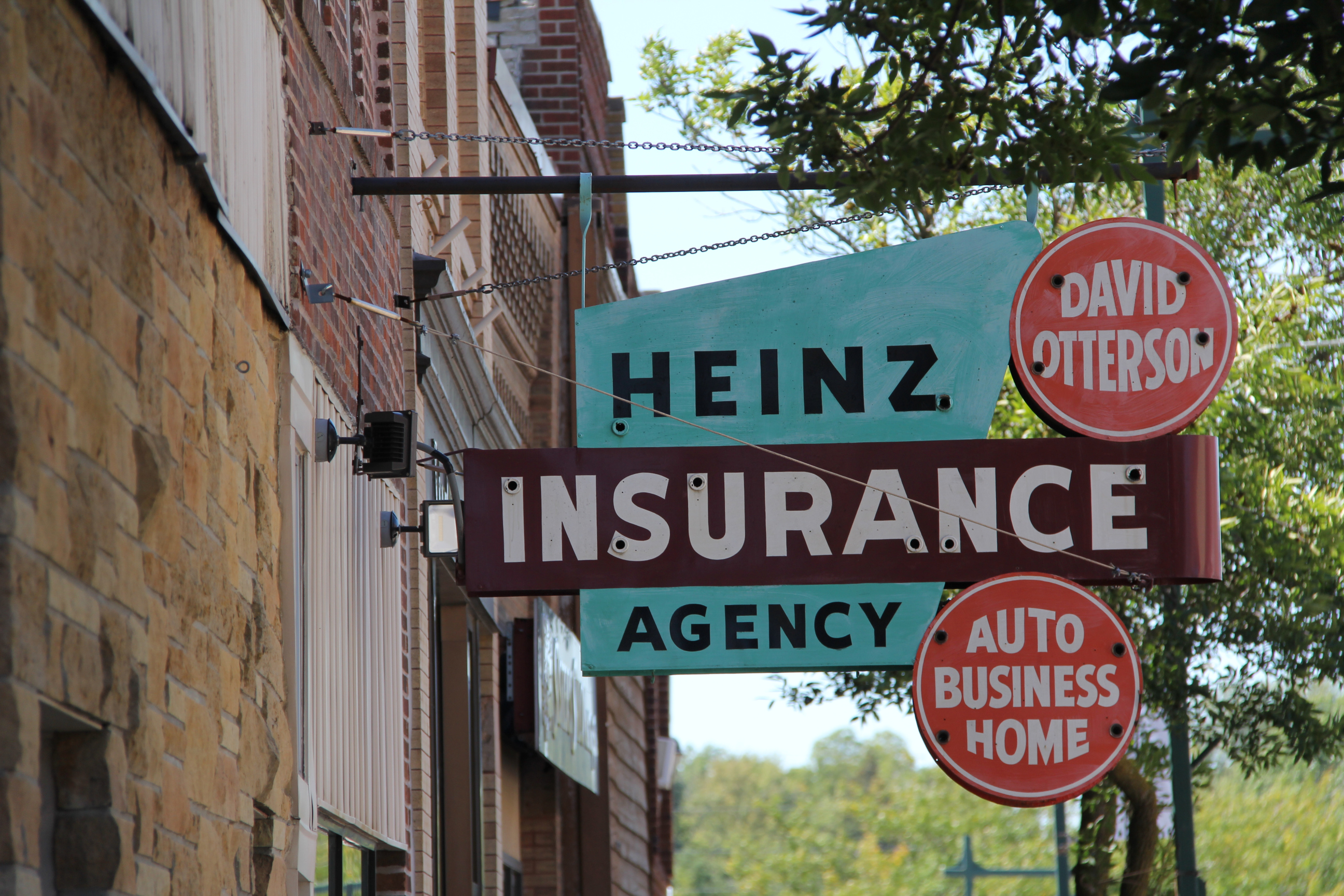
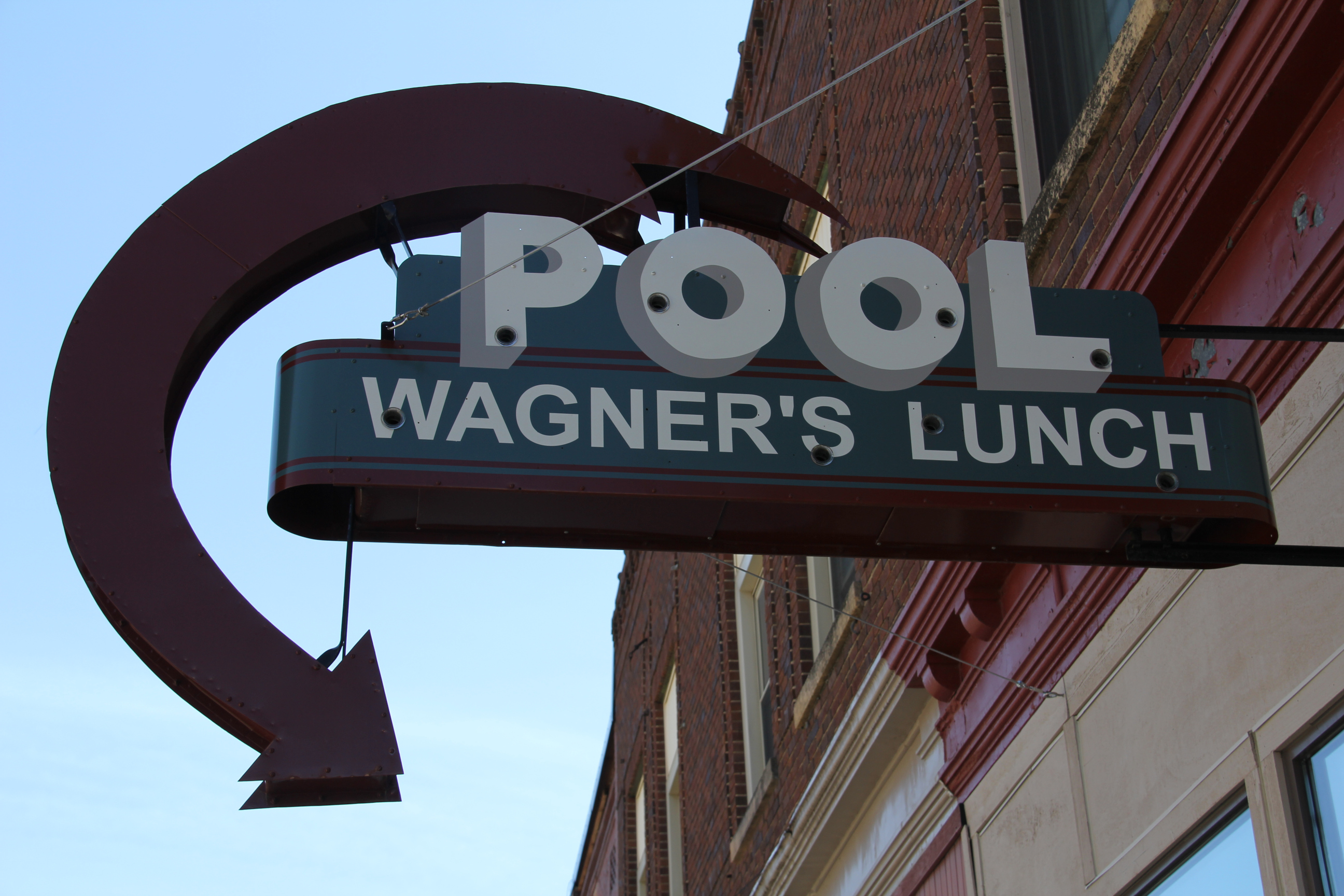
I should note that I’m particularly drawn to signage—handwritten to business signs.
Classic’s Pub opens soon in this massive building. (Minnesota Prairie Roots copyrighted photo June 2024)
Waterville will soon be home to two new businesses, as noted on signage. Classic’s Pub, a bar and event center featuring displays of vintage cars and motorcycles, is opening in a spacious corner building along South 3rd Street. Waterville has several other bars. But I’m excited about this one (not that I’ve been in the others) because of its vintage theme.
Another business opening soon in Waterville. (Minnesota Prairie Roots copyrighted photo June 2024)
And just across the street, a sign notes that The Cleaver & Corn is opening soon, serving sandwiches, gourmet specialty popcorn from the local The Snack Shack, sweets and more. That, too, sounds like a great addition to the community. And the business name…I find it particularly creative.
A customer pulled up to the hardware store on his riding lawnmower. (Minnesota Prairie Roots copyrighted photo June 2024)
As I walked about the downtown, I saw a whole lot of character. In buildings. In signage. In storefronts. Even in a John Deere riding lawnmower driven to and parked outside Harry’s True Value Hardware.
Waterville Hardware Hank, just across from True Value. (Minnesota Prairie Roots copyrighted photo June 2024)
Just across the street sits Waterville Hardware Hank, offering a second option to locals, cabin owners and campers. I’ve been inside this store with its narrow aisles and original wood floors. Not this trip, though.
Lots happening at the Corner Bar in June. (Minnesota Prairie Roots copyrighted photo June 2024)
Rather, I kept my feet on the sidewalk and pavement, opting to photograph downtown Waterville while outdoors only. That focused perspective revealed plenty of character that makes this small town unique, welcoming, a place I always enjoy visiting.
Photographed at the Rice County Master Gardeners garden in Faribault on one of my meandering walks. (Minnesota Prairie Roots copyrighted photo May 2024)
WHEN I GO FOR A WALK, I’m either walking to primarily exercise or to photograph. One involves fast-paced movement to increase my heart rate. The other entails a leisurely pace of observing the world around me.
There was a time when I always carried my camera. No more. I need to feel the freedom of just being, without thought of, oh, I need to photograph that. If I’m without my 35 mm digital camera and absolutely need to take a photo, I will use my smartphone.
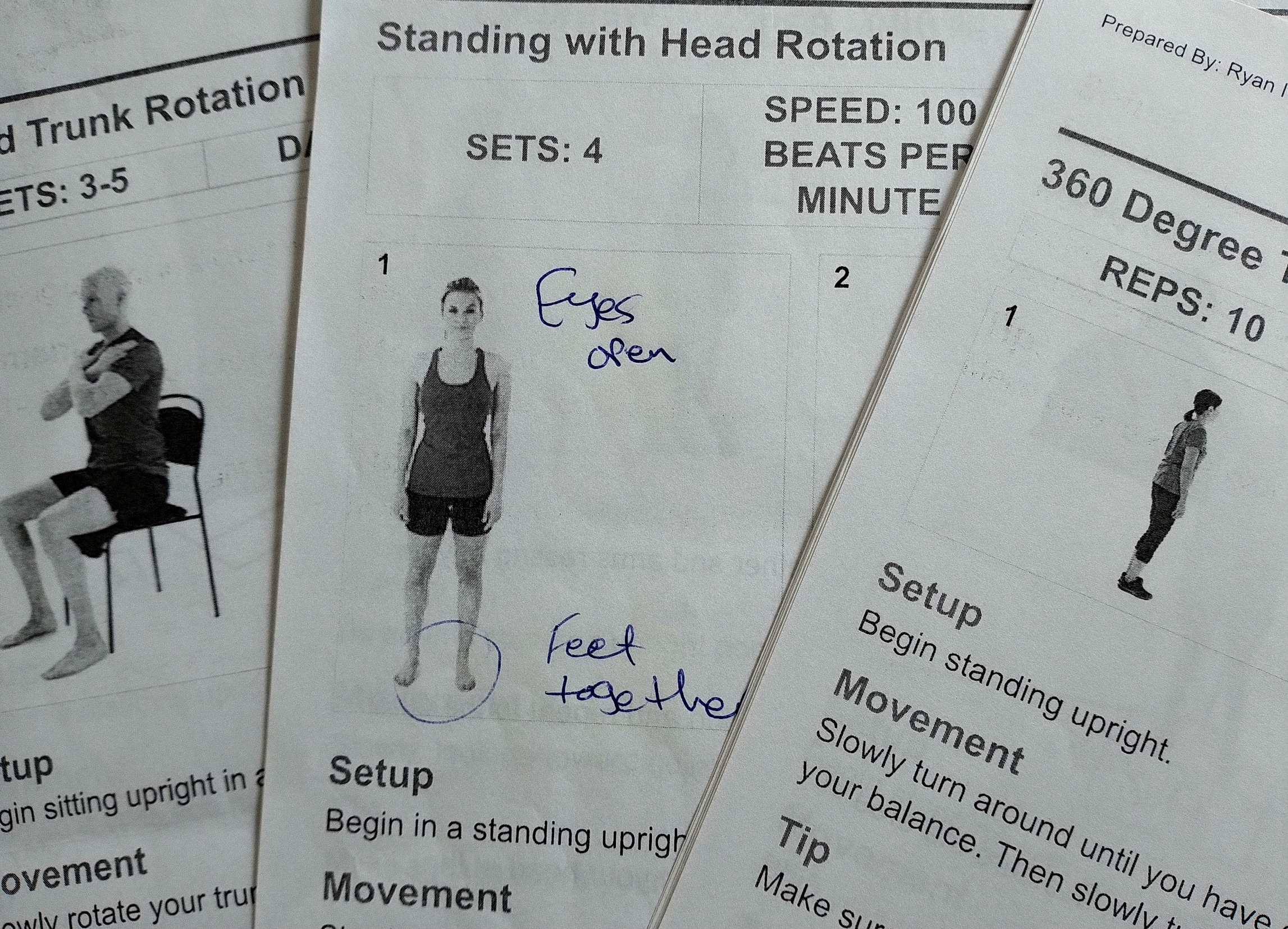
An example of exercises I did in vestibular rehab therapy. (Minnesota Prairie Roots copyrighted file photo 2023)
A NEW PERSPECTIVE
What prompted this change? My health. Last summer was, for me, the summer that wasn’t. I was primarily housebound from April through September due to long haul COVID. You’ve probably read my story, detailed here. I dealt with balance, sleep, sensory and other issues. All aspects of my life were affected. I left my house only for medical appointments because I couldn’t handle being out in the world of noise, light, sound, movement. I felt overwhelmed. I sat in my darkened living room, curtains drawn, lights low, no sound.
But here I am, a year later, with six months of vestibular rehab therapy behind me, and doing significantly better. Time and a lot of hard work on my part got me to this better place health-wise. I still deal with residual sensory issues. But mostly, I manage. And when I don’t, I temporarily sequester myself.
That I am back walking and photographing is, in many ways, remarkable. Last summer I couldn’t walk half a block due to imbalance. And I certainly couldn’t use my camera. I credit my physical therapist for patiently working with me, helping me regain my sense of balance and build my tolerance and ability to manage sensory overload. There is hope for anyone dealing with similar issues. But it can be a difficult road. There’s no denying how often I felt unheard, unsupported, without hope.
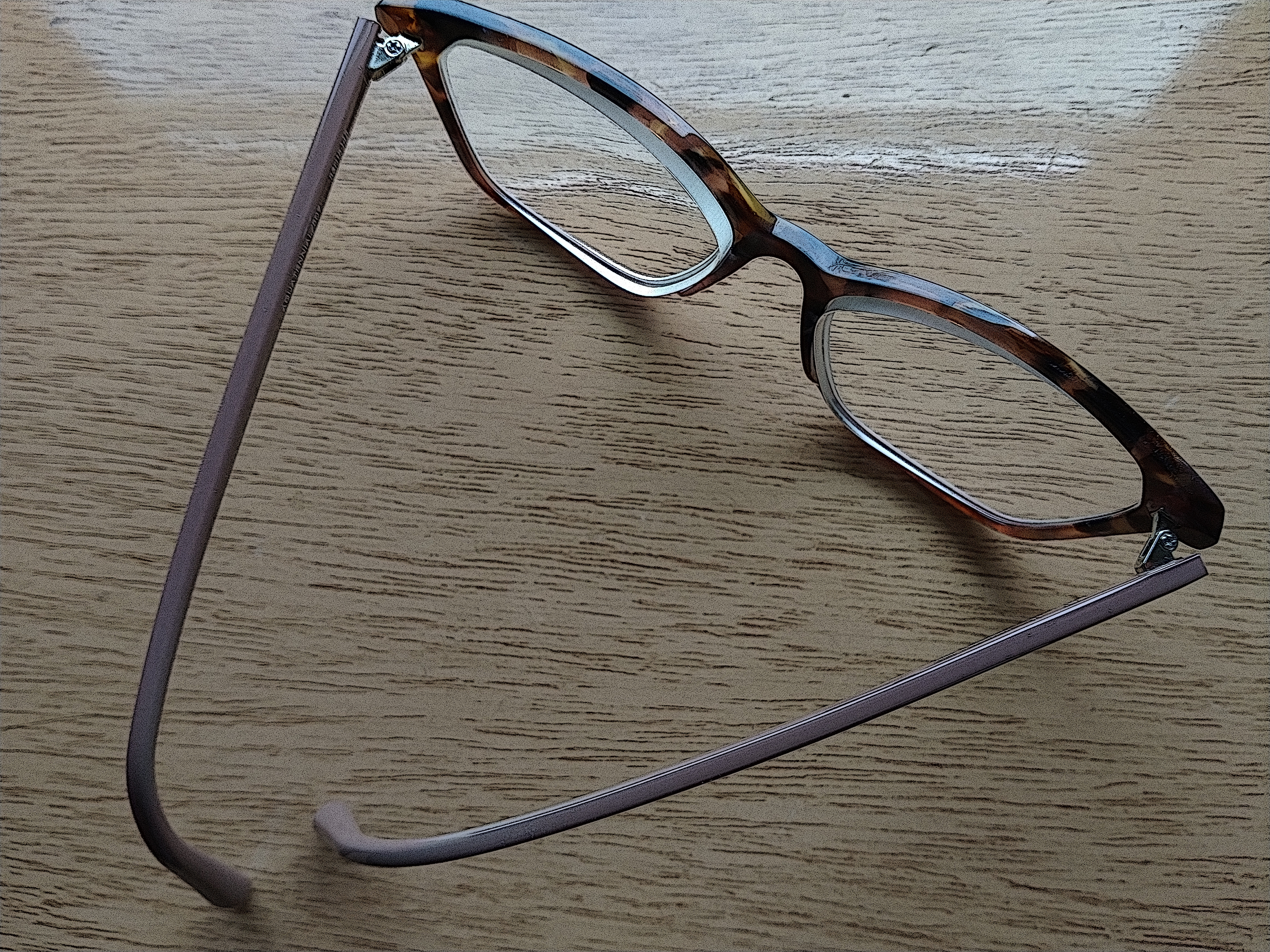
My new prism-heavy prescription eyeglasses. (Minnesota Prairie Roots copyrighted file photo May 2024)
DEALING WITH VISION ISSUES
At the same time all of this was happening, I was experiencing increasing double vision. In late January, I had bilateral strabismus eye surgery to realign my eyes. It was successful until it wasn’t. In 10-20 percent of cases, the eyes shift back to misalignment post-surgery. Mine did. I opted to try prism-heavy prescription lenses before considering a third surgery. I had my initial eye surgery at age four.
Four weeks out from getting my new prescription eyeglasses, my eyes and brain are still adjusting. The prisms have mostly corrected my double vision. But I’m struggling with distorted close-up vision, specifically slanting. I’m hoping, with time, that will vanish. I also can’t see things clearly on my computer screen, which is problematic when writing and when processing photos.
But onward I forge. Sometimes I push myself too much, taking too many photos, doing too many things. That results in strained, aching eyes and headaches. Often I feel just plain tired due to all the effort it takes to simply see. My brain and my eyes are working hard to focus my vision.
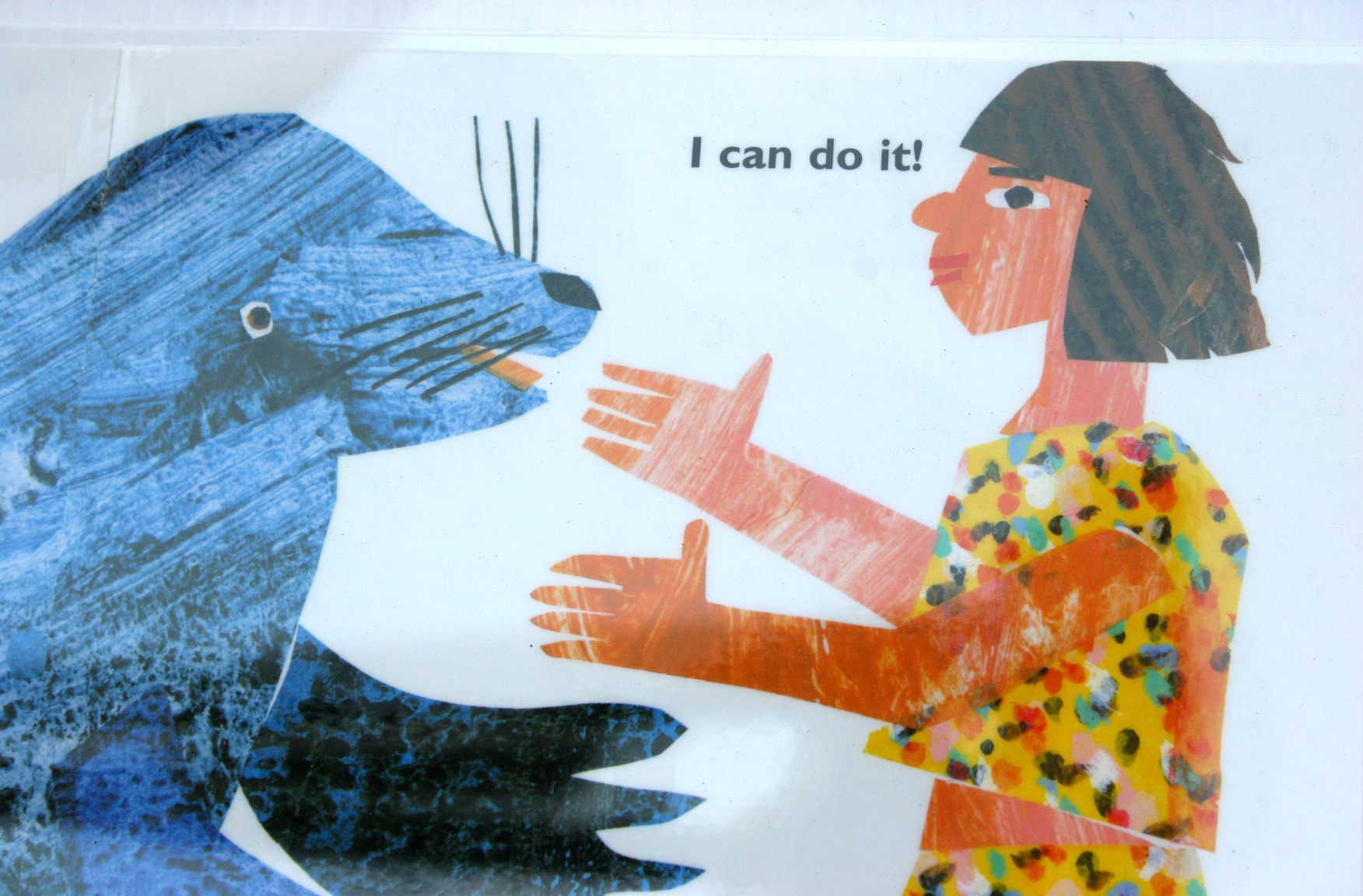
A page from Eric Carle’s book, From Head to Toe.
TAKE NOTHING FOR GRANTED
Too often in life, we take things for granted—the ability to walk, to hear, to see. And then something happens to us or someone we love and we realize that, hey, none of these are givens. I recognize that I have a responsibility to take care of myself in the best way I can. Sometimes that means walking to stay fit and sometimes that means walking to feed my creative spirit.
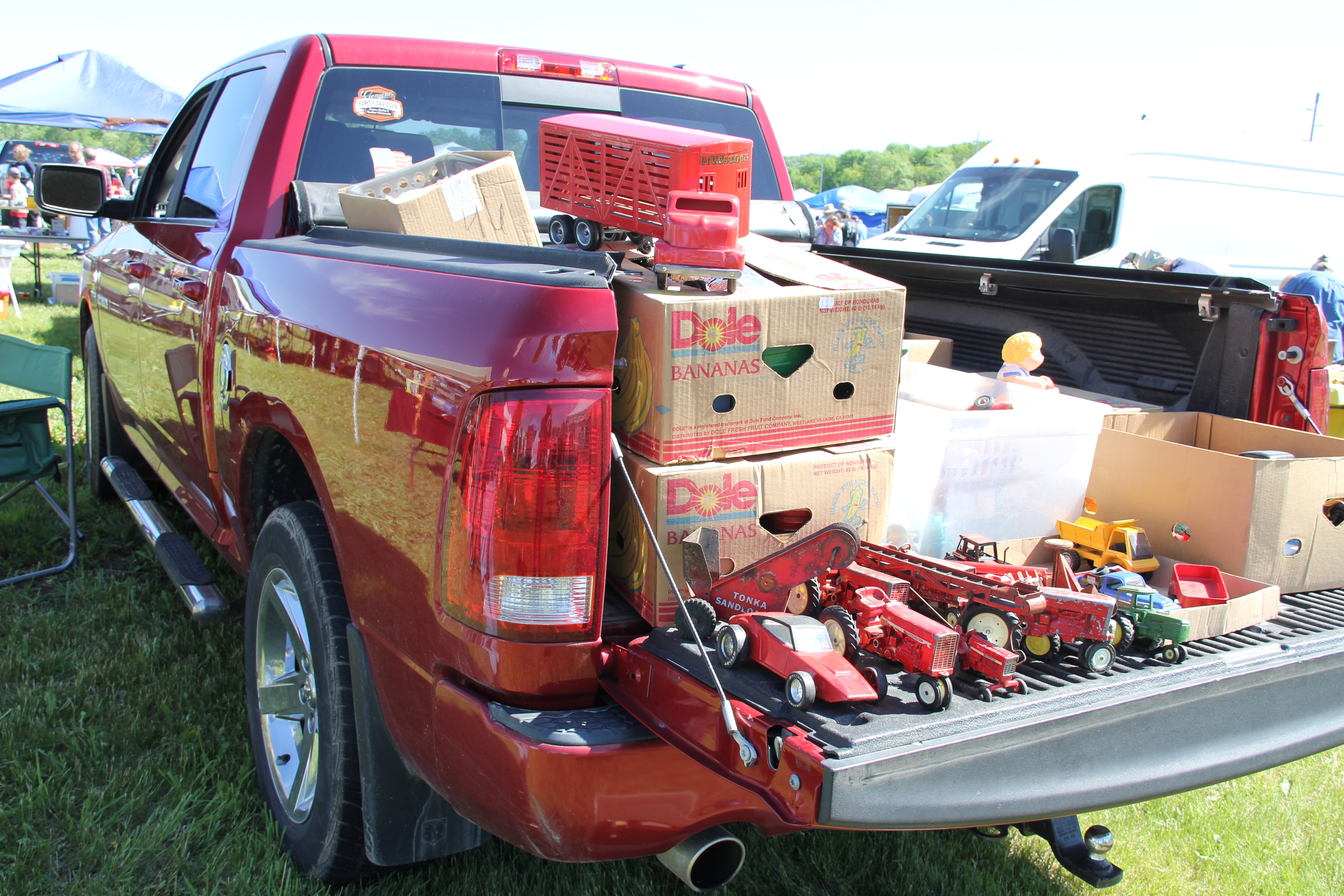
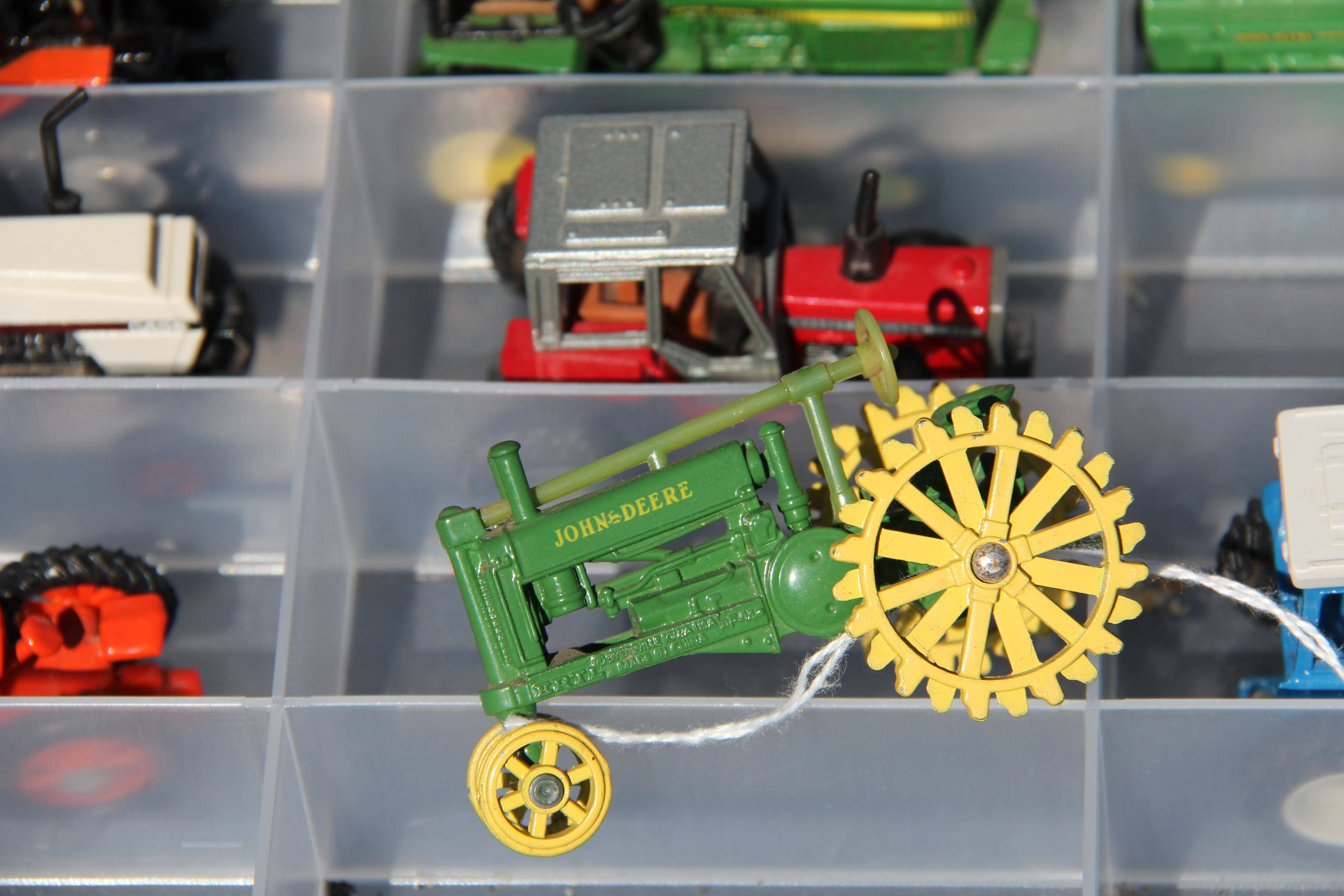
This particular vendor sold farm-themed toys. (Minnesota Prairie Roots copyrighted photo May 2024)
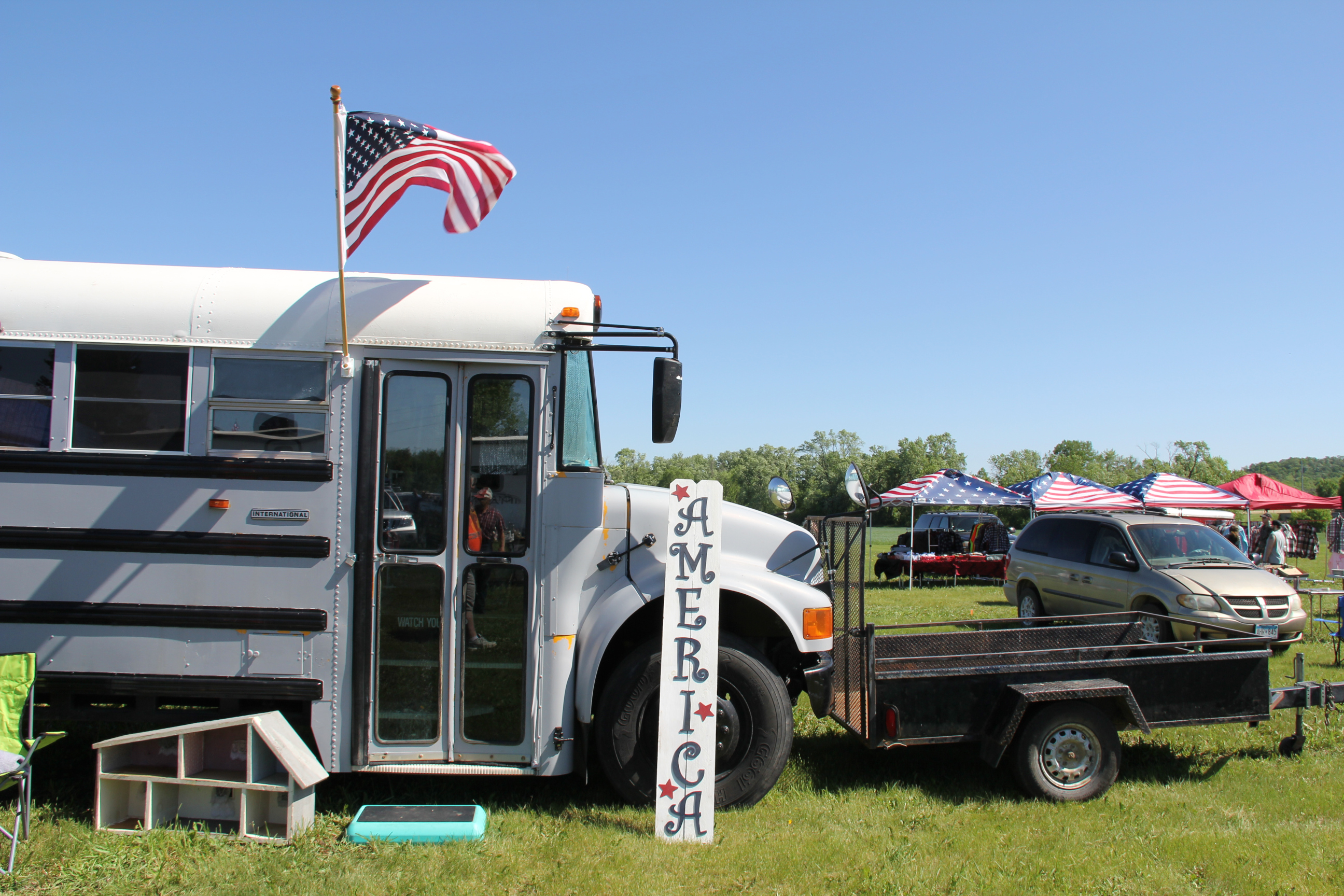
THEY PULL UP in their campers, pick-up trucks, converted buses and vans, often hauling trailers crammed with merchandise. They are traveling merchants, making the flea market circuit to pedal their goods.
A vendor with a patriotic flare. (Minnesota Prairie Roots copyrighted photo May 2024)
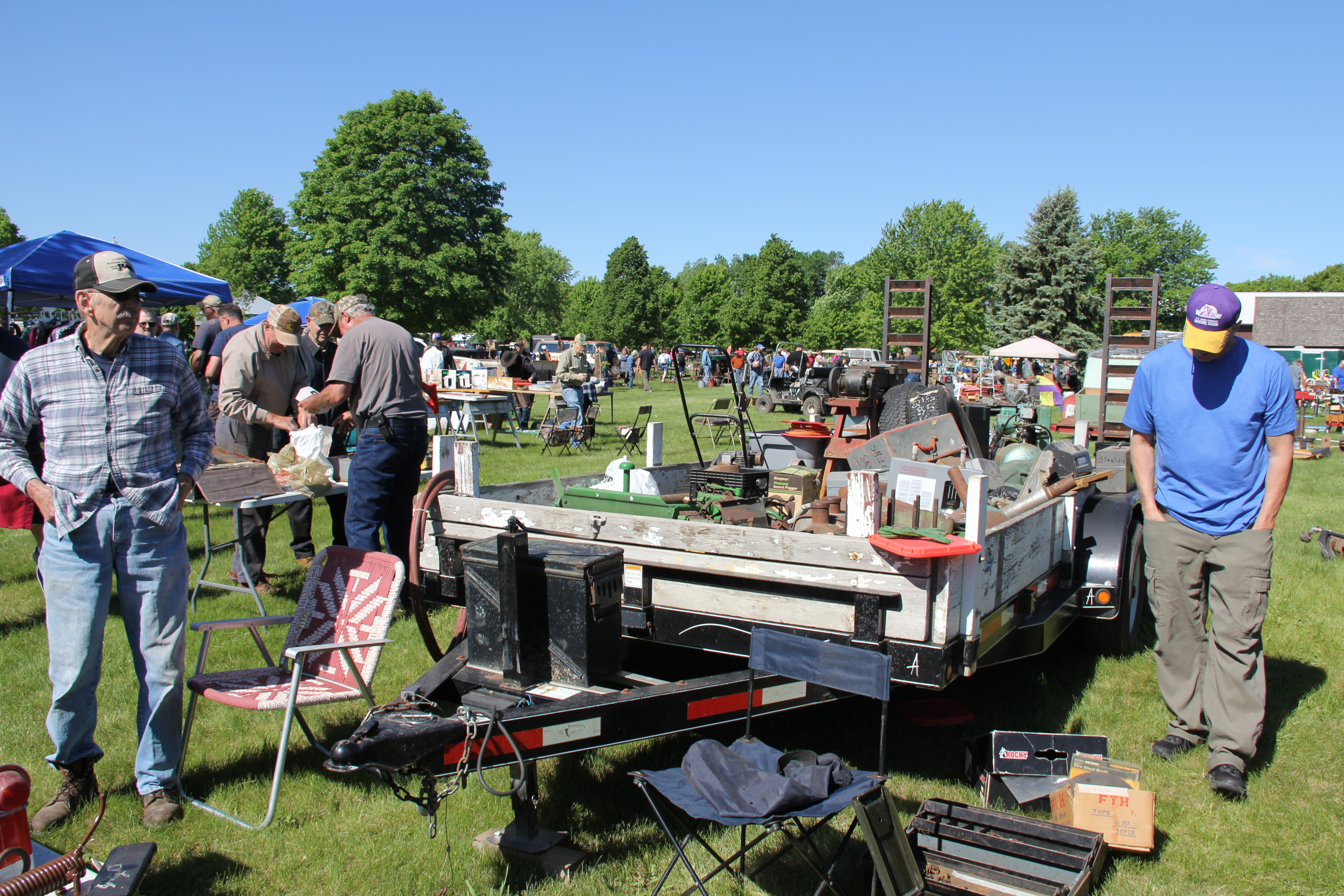
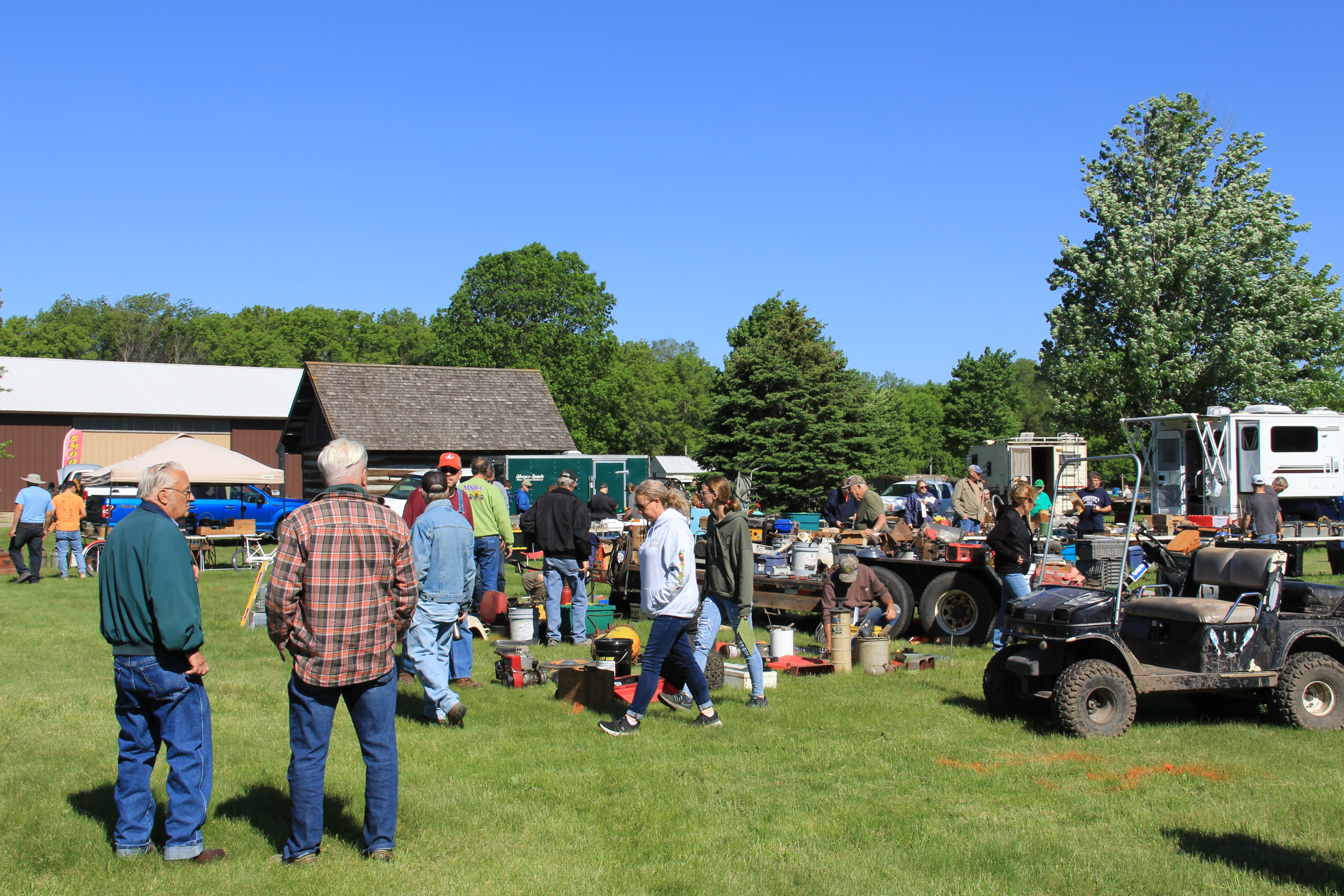
Recently I attended the Rice County Steam & Gas Engines Spring Flea Market at the club showgrounds south of Dundas. A second market, along with a tractor show, threshing demo and more, is held Labor Day weekend. Occasionally, I purchase something. But mostly, I look and photograph. There’s a lot to see.
Between the flea market and a consignment auction, there was lots to see and buy at the Rice County Steam & Gas Engines showgrounds. (Minnesota Prairie Roots copyrighted photo May 2024)
From people-watching to shopping to searching for unusual finds to photograph, I find myself drawn to this open air market of second-hand, handcrafted and new merchandise. There are characters and stuff you’ve never seen before and may or may not need, and a vibe that feels of yesteryear.
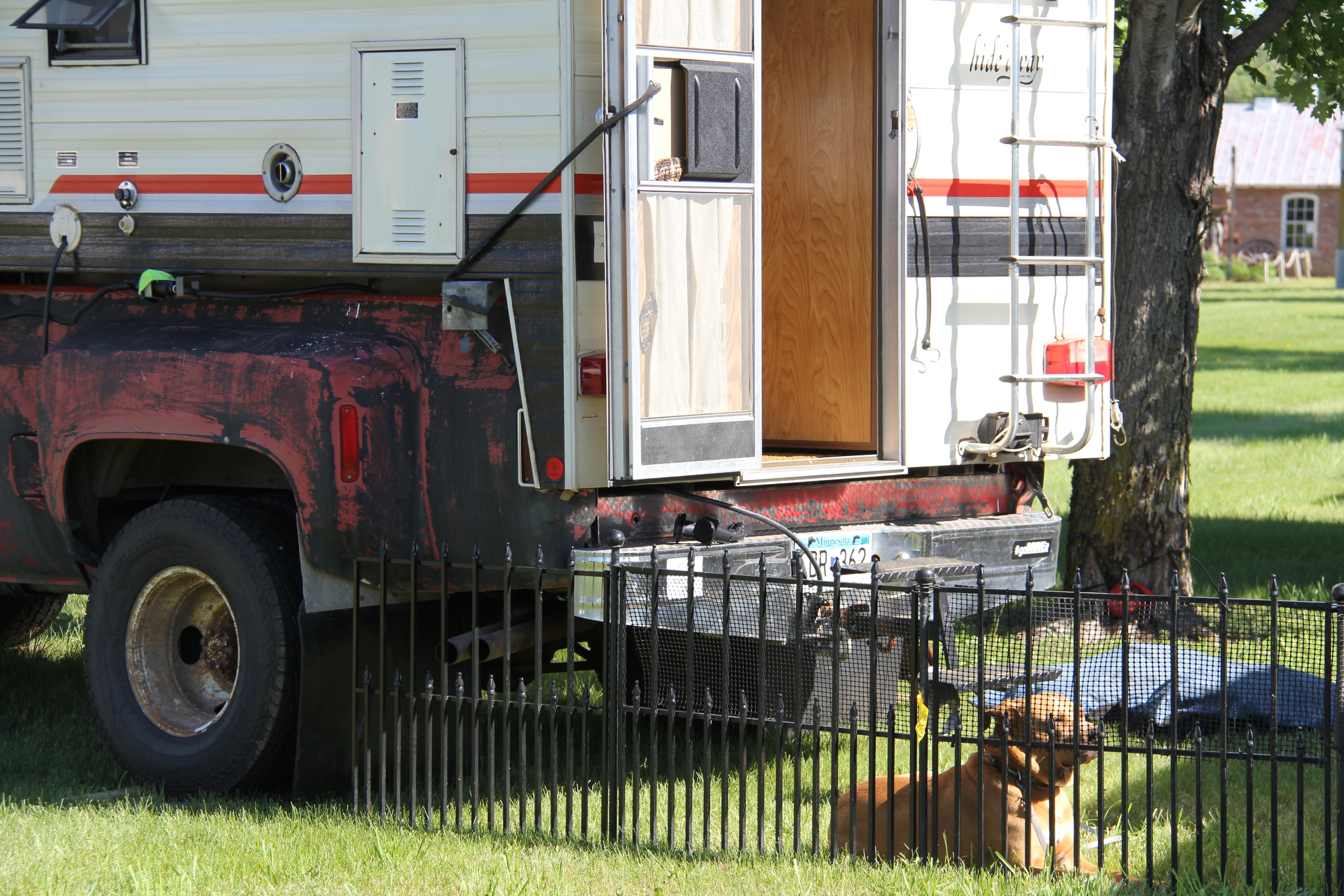
A vendor’s penned dog. (Minnesota Prairie Roots copyrighted photo May 2024)
Vendors bring their dogs, their finds and even bacon. As I wound among the booths, I smelled the scent of meat. A merchant stood next to his vintage camper frying bacon on a tabletop propane camper stove. I wanted to settle into his fold-up lawn chair and help myself to a slice or three, plus a cup of coffee and perhaps scrambled eggs. I settled instead for a bag of mini-donuts purchased from a food stand.
Mini tractors drew kids and collectors. (Minnesota Prairie Roots copyrighted photo May 2024)
I mostly meander. And watch. I saw a preschool boy beeline straight for a table of toy tractors. Grandma followed. Plenty of farm toys are available in sizes from matchbox to larger. A farm kid’s dream store, for sure.
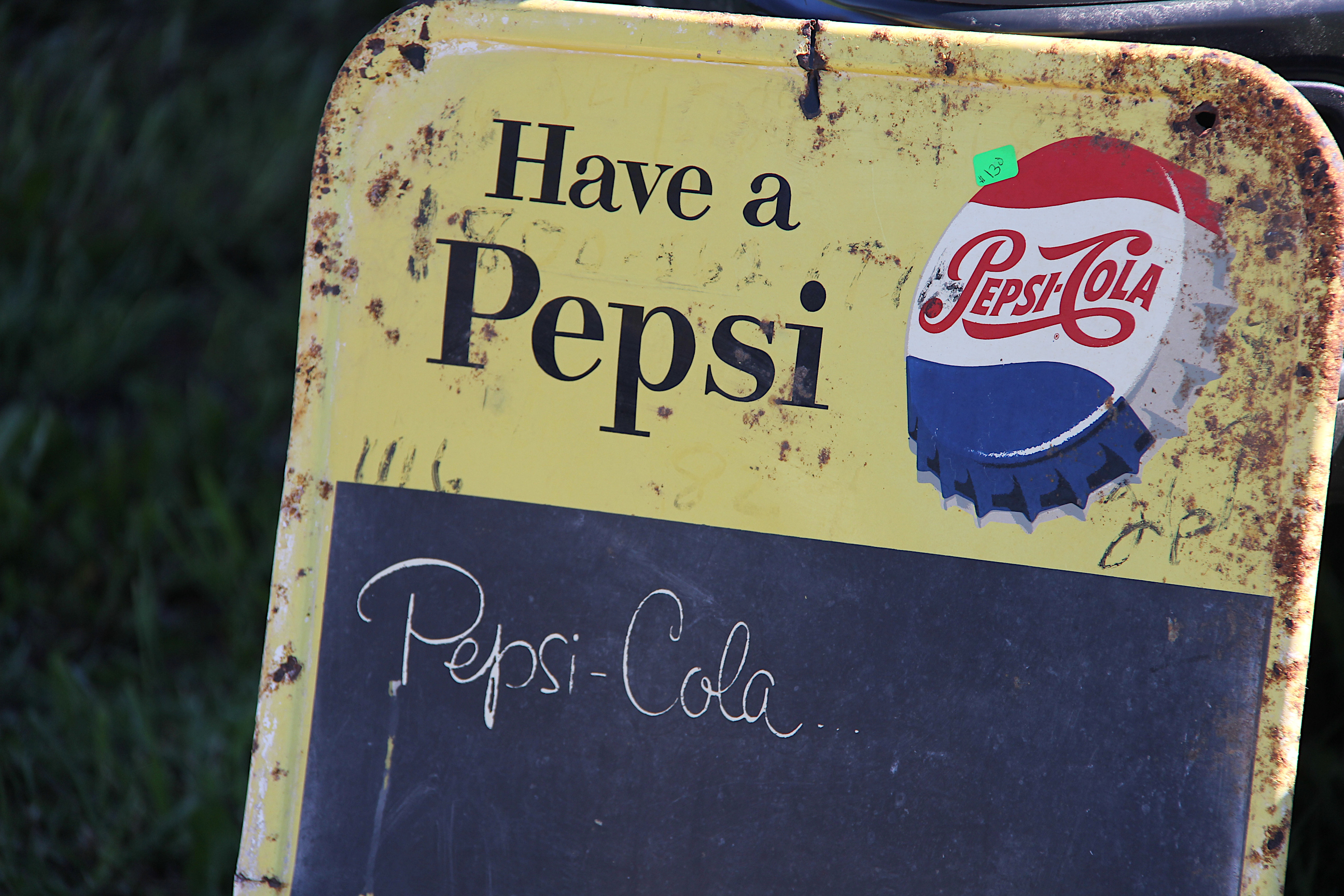
I seldom drink pop, but I do like this Pepsi sign. (Minnesota Prairie Roots copyrighted photo May 2024)
Me? I don’t shop for anything specific. But I’m drawn to old, not replica (of which there are plenty) signs. This time a vintage Pepsi sign caught my eye. For $130, and perhaps it’s worth that much, it wouldn’t be mine.
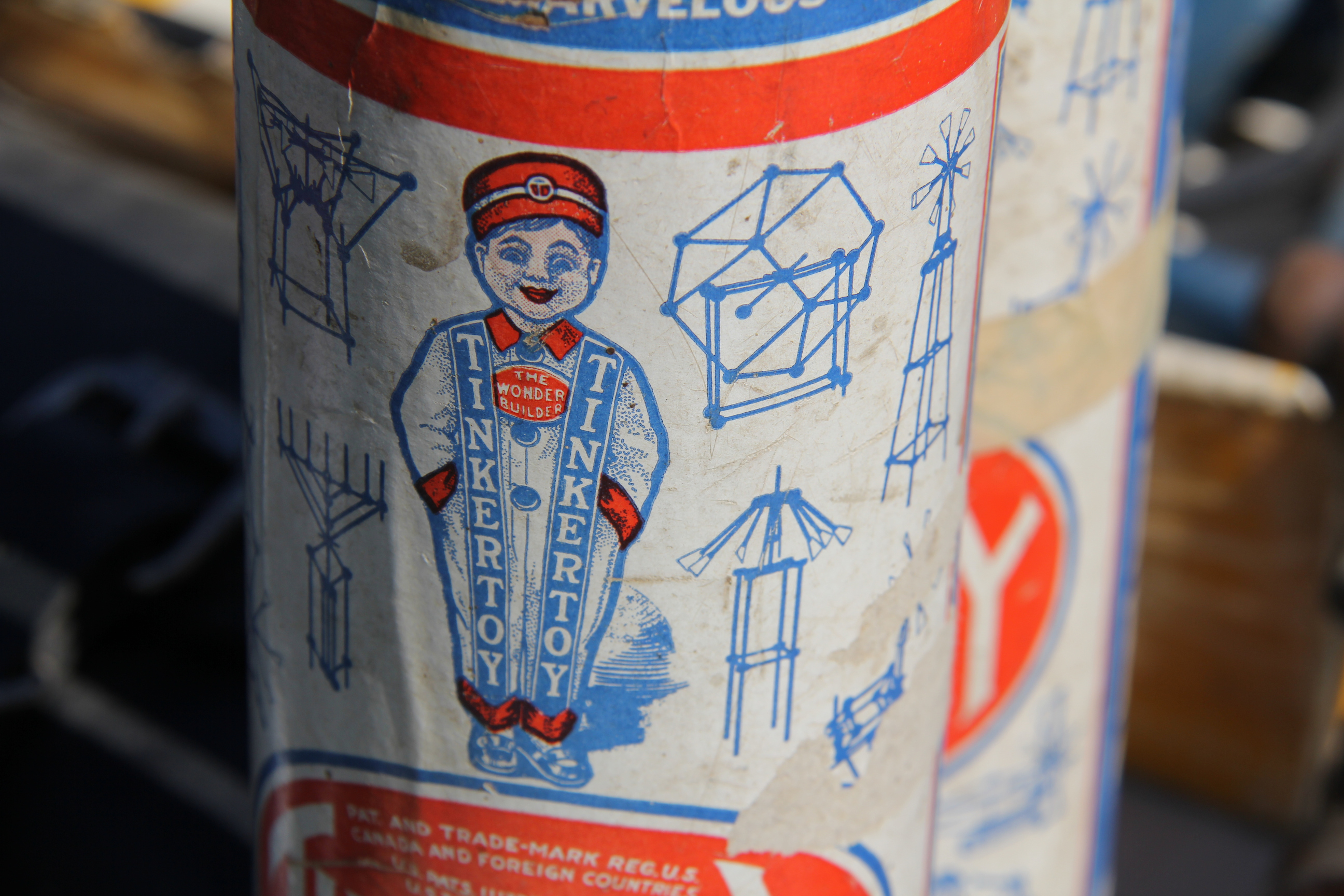
Not the safest toy, but one I loved as a child of the 1960s. (Minnesota Prairie Roots copyrighted photo May 2024)
Nor would the Tinkertoys…because I probably have a cylinder of those stashed under the attic eaves. I loved those “let’s see if you can poke your siblings’ eyes out” with the wooden sticks toy.
I appreciated the box cover art more than the ice skates. (Minnesota Prairie Roots copyrighted photo May 2024)
If I still skated, I could have purchased matching skates for myself and Randy. But, nope, not gonna risk falling at my age. I’ve already broken two bones while wearing flip flops and shoes.
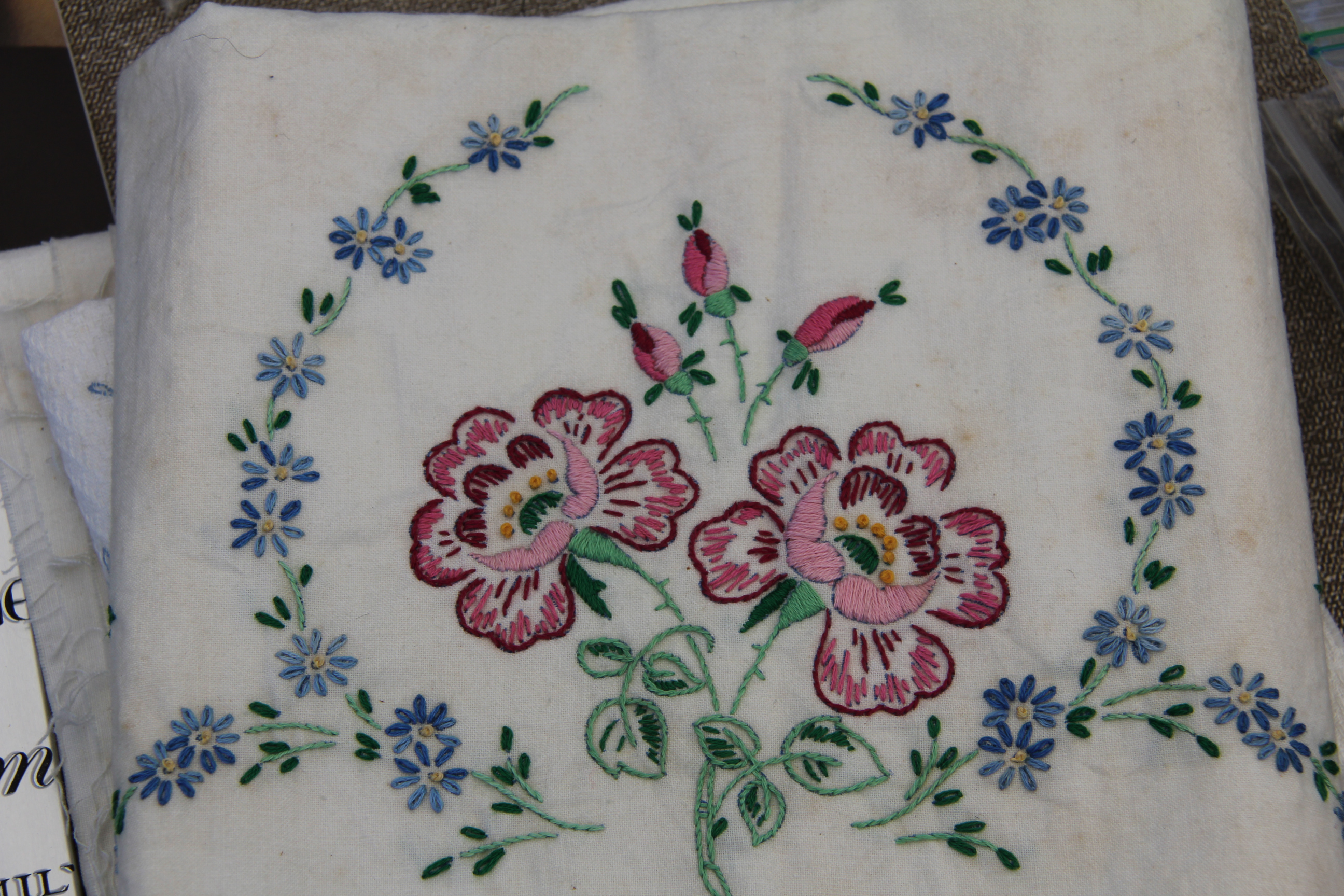
Beautiful hand embroidery. (Minnesota Prairie Roots copyrighted photo May 2024)
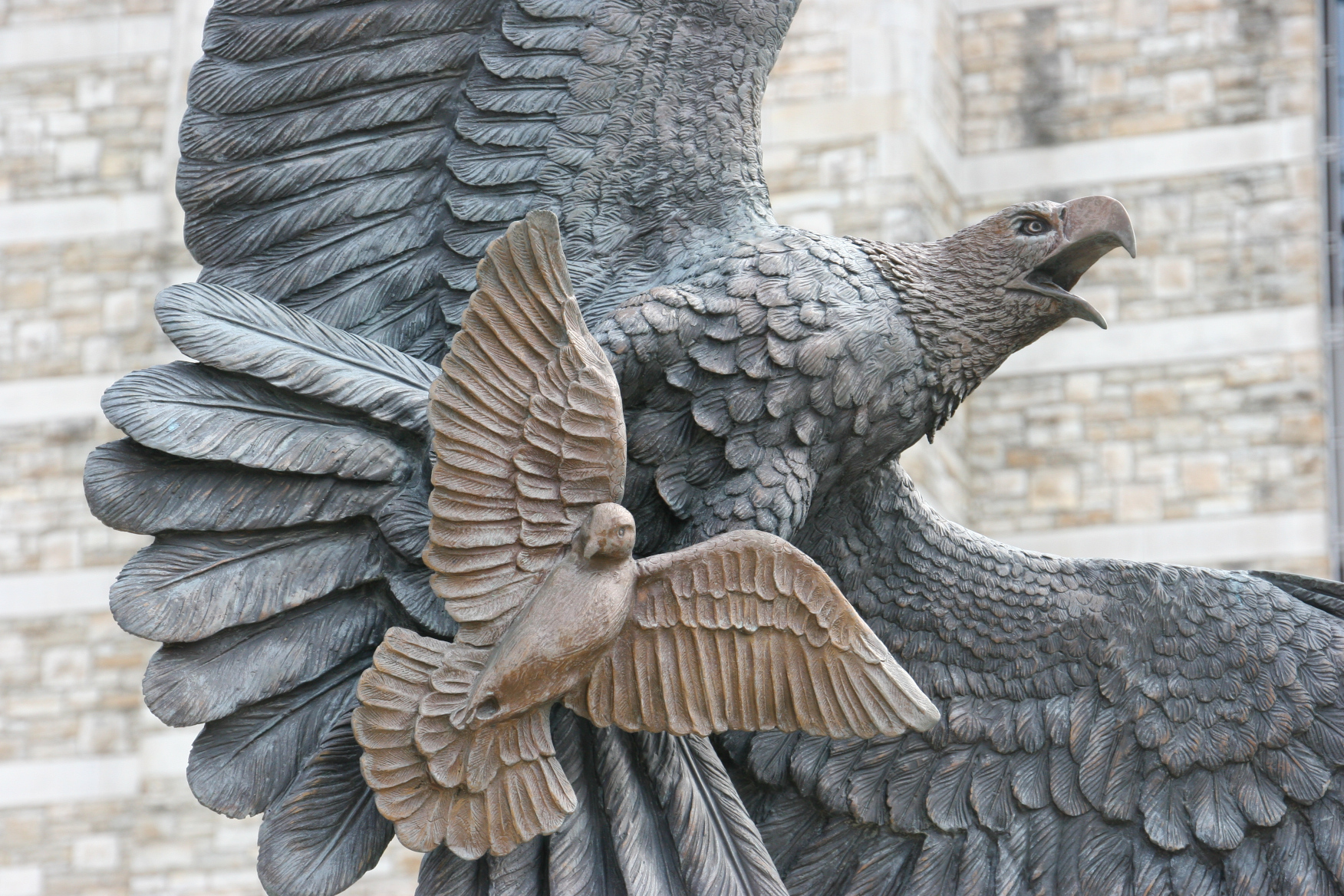
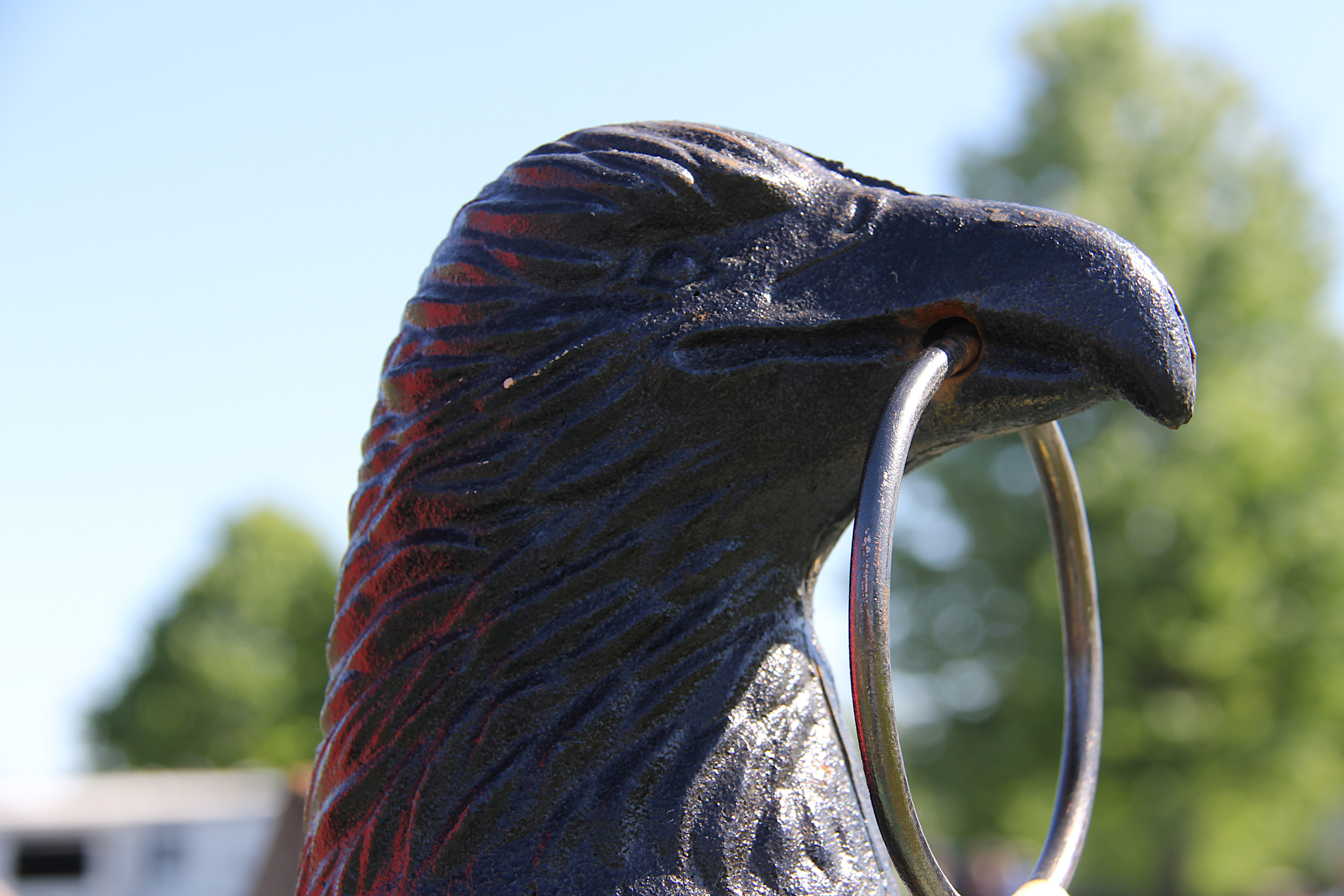
Eagle sculpture. (Minnesota Prairie Roots copyrighted photo May 2024)
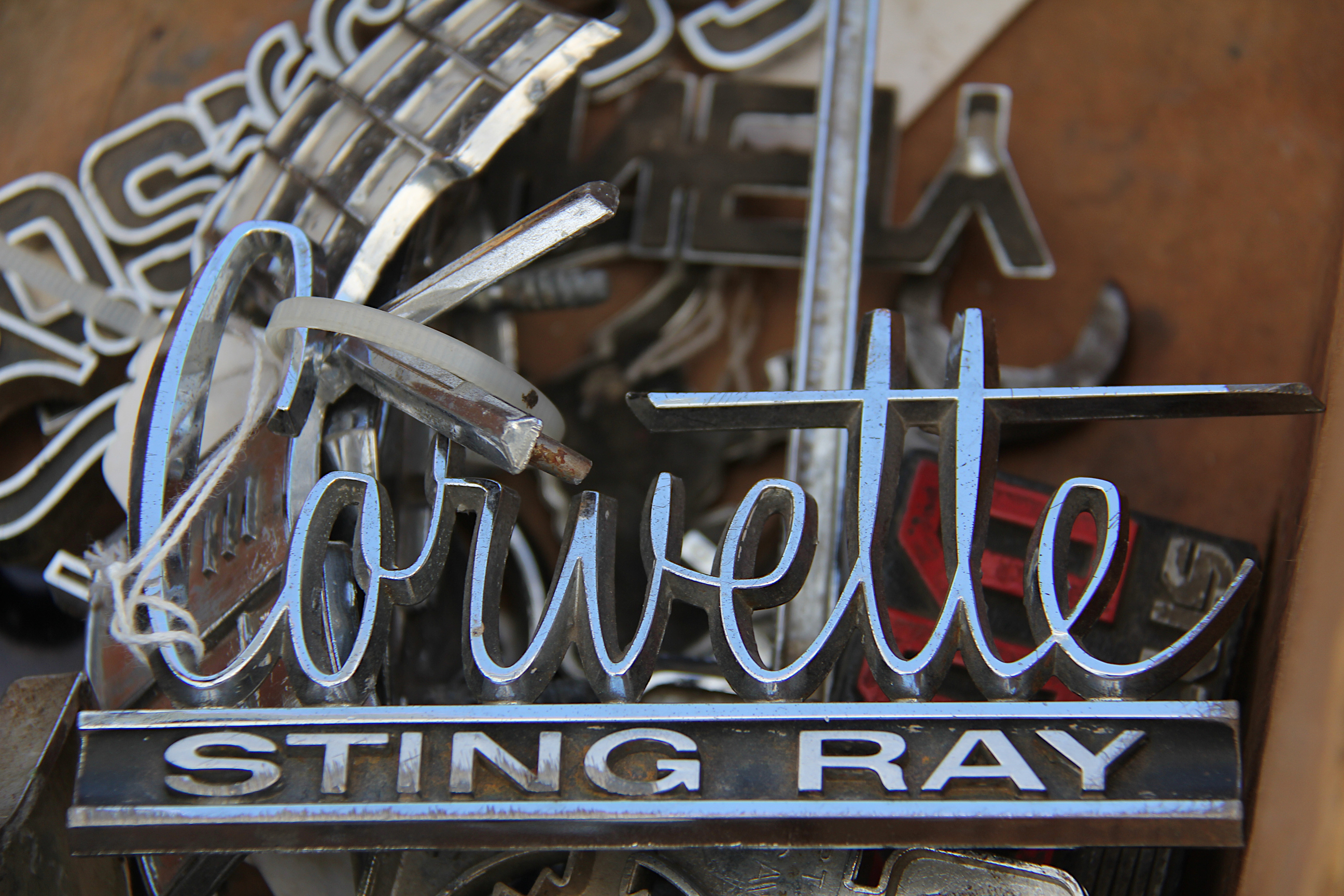
I see car emblems as art. (Minnesota Prairie Roots copyrighted photo May 2024)
I really liked the eagle sculpture and the car emblems and the embroidered dish towel. They’re art to me and I do love art.
Head inside the town hall for more treasures. (Minnesota Prairie Roots copyrighted photo May 2024)
The most interesting finds of the morning came at my last stop, where a handmade painted sign posted outside the old Northfield Township Hall promised ANTIQUES, TOOLS, TOYS INSIDE. There I met Gary Kowalski, labeled “PICKER” on his business card. He’s from Montgomery, lives in a former funeral home and picks for goods from Minnesota to Michigan to Texas and in between.
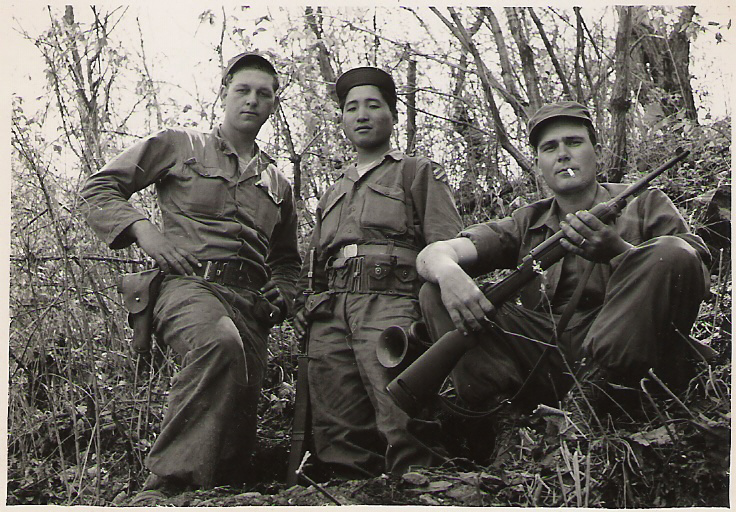
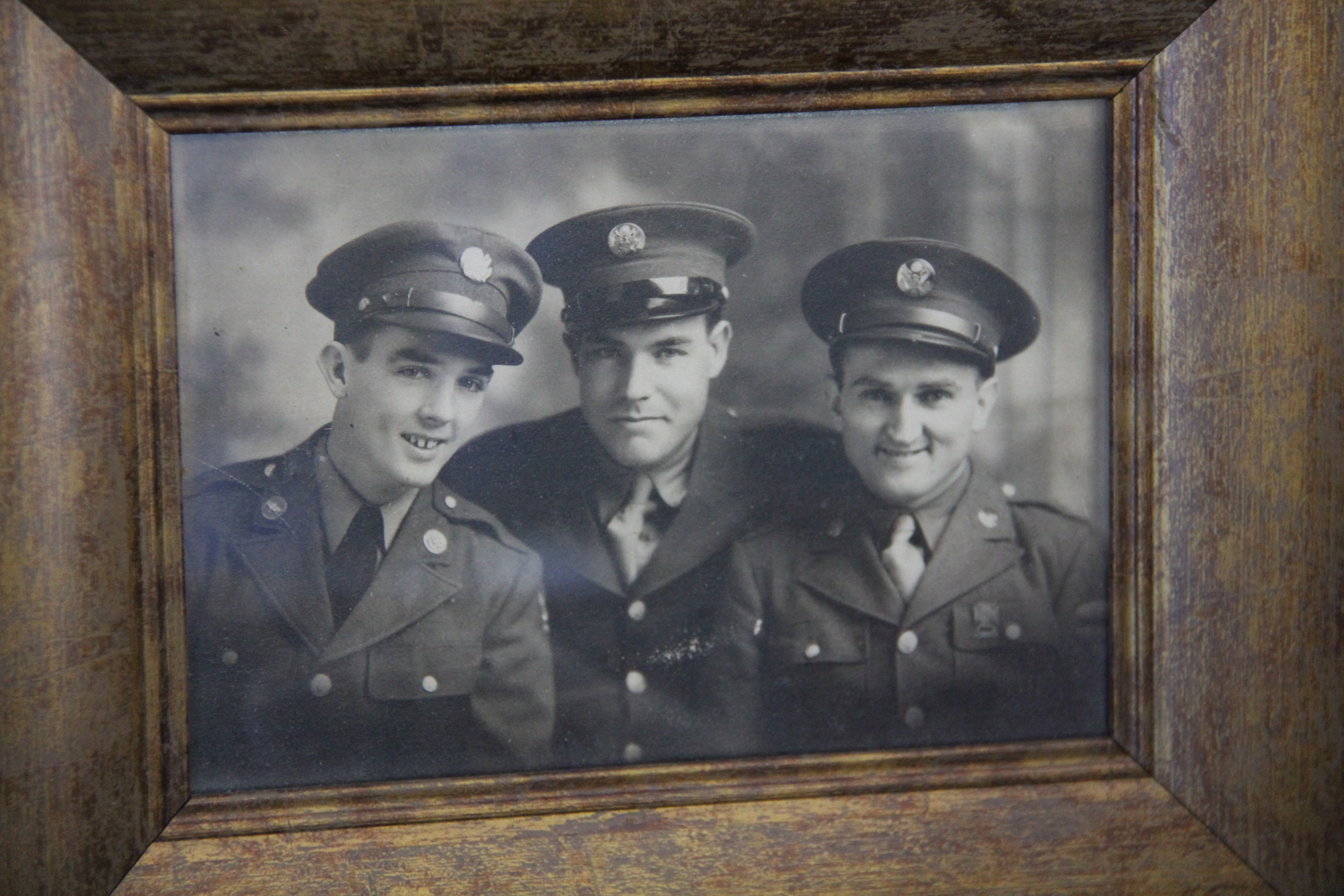
This photo of soldiers sparked a conversation between me and picker Gary Kowalski. (Minnesota Prairie Roots copyrighted photo May 2024)
A singular framed black-and-white photo of three soldiers in full formal military uniform grabbed my attention. Their smiles, the way they leaned into each other, told me they were not only in service together, but also friends. That’s when Gary stepped in to say he found the photo, along with other WW II items, in Texas. He’s a veteran himself and guesses the three were on leave for some rest and relaxation, thus the happy pose.
The Legion jacket that prompted a conversation about my home area. (Minnesota Prairie Roots copyrighted photo May 2024)
Gary had one more item that really made my day. An American Legion Post 38 jacket from Redwood Falls. It came from my home county. Yes, he’s been picking 20 miles to the east of my hometown. I’m always thrilled when someone, anyone, is familiar with a prairie place. Few people around this area hold any knowledge of communities in the southwestern corner of Minnesota. It’s a good place to pick, but others are better price-wise, Gary shared. He wasn’t sharing, though, specific picking sites. He doesn’t need the likes of me, who thinks picking would be a fun gig, competing for finds.
On a perfect spring morning, folks visit and shop at the flea market. (Minnesota Prairie Roots copyrighted photo May 2024)
He needn’t worry. I’ll stick to attending flea markets, where I’ll watch for characters, shop, and scout for oddities among all that merchandise pulled from campers, pick-up trucks, converted buses, vans and trailers.
LOONS, LEATHER, LITERARY ART…, oh, the work of creatives who set up shop Saturday at Faribault’s annual Straight River Art Festival. It’s an event that always impresses upon me the incredible talent of those who create with their minds, their hands, even their voices.
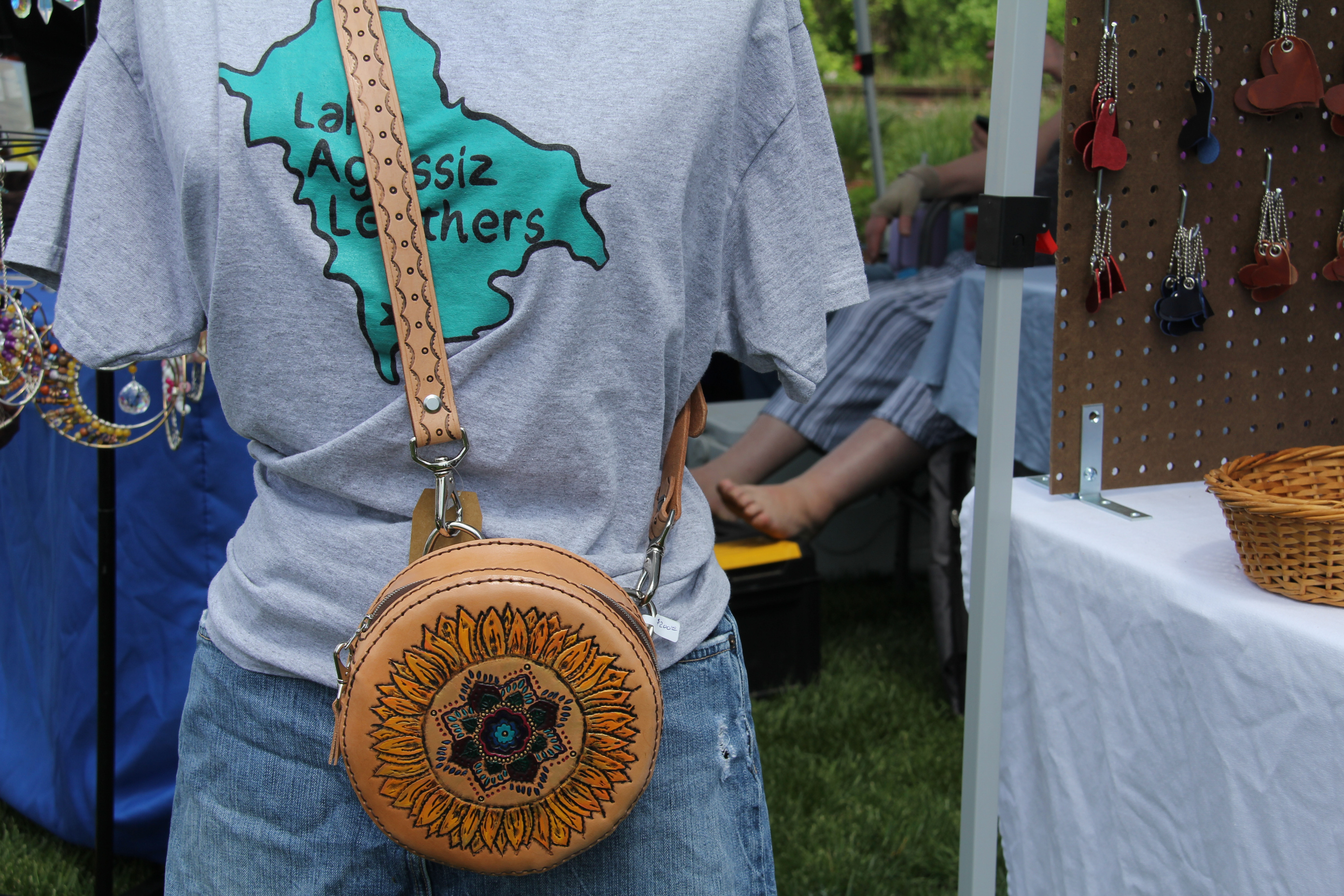
A hand-tooled sunflower mandala circle crossbody purse crafted by Susan McCabe of Lake Agassiz Leathers LLC. (Minnesota Prairie Roots copyrighted photo May 2024)
Mankato author Jason Lee Willis brought a selection of his Minnesota-themed historical fiction books. (Minnesota Prairie Roots copyrighted photo May 2024)
Los Tequileros played a mix of music during the art festival. (Minnesota Prairie Roots copyrighted photo May 2024)
One photographed loons. Another crafted goods from leather. And an author represented the literary arts in his books of historical fiction. Several bands played, bringing in the performing arts.
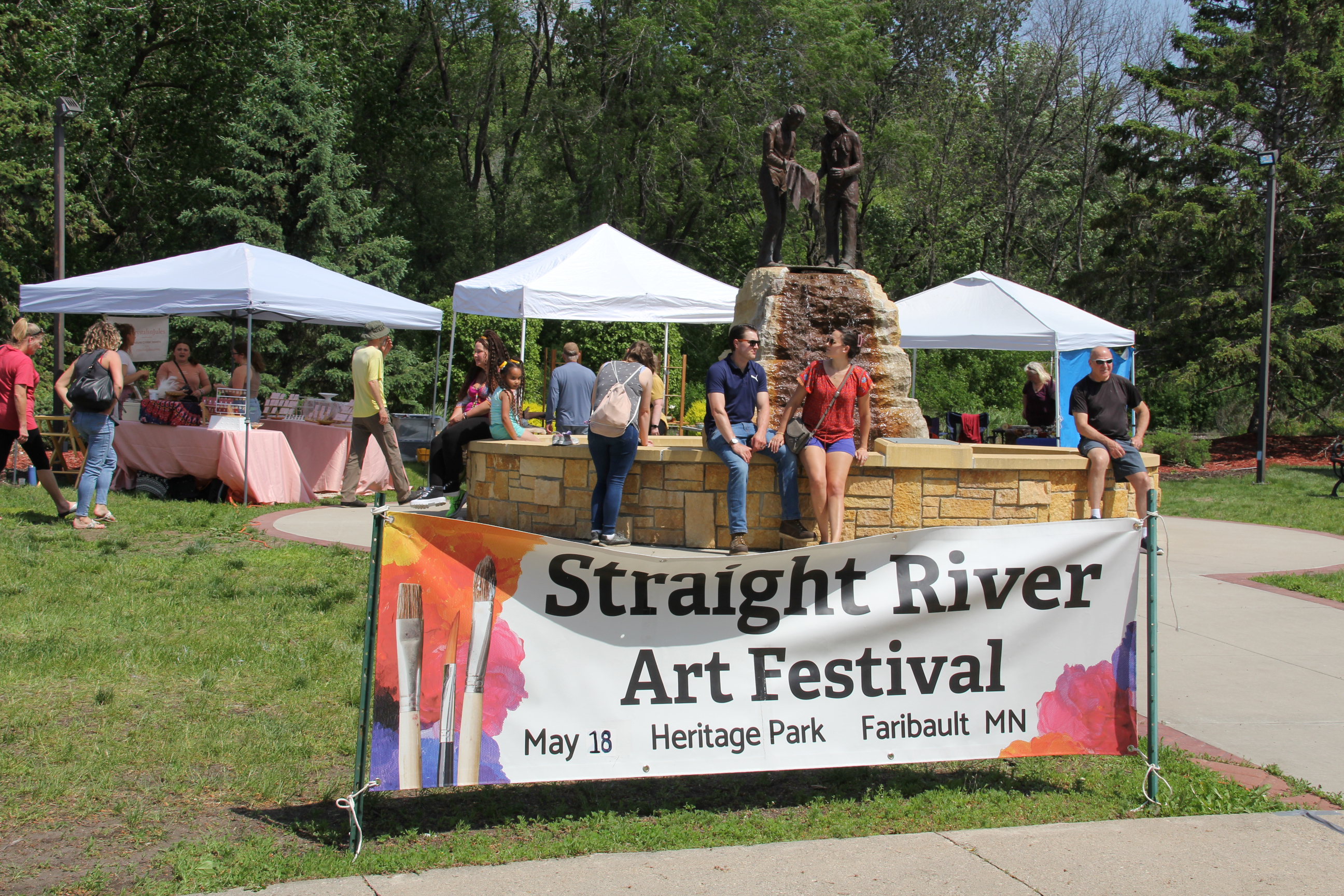
Vendor tents ringed and filled the park. (Minnesota Prairie Roots copyrighted photo May 2024)
This fest, held in Heritage Park against a scenic backdrop of trees and limestone bluffs aside the Straight River near downtown, is a lovely setting for meandering among vendor tents, viewing art, chatting with artists and enjoying the Minnesota outdoors.
Bea Duncan Memorial Fountain centers Heritage Park, site of the art festival. (Minnesota Prairie Roots copyrighted photo May 2024)
A fountain sculpture depicting town founder Alexander Faribault trading with a Dakota man centers the park, adding an historic, artsy element.
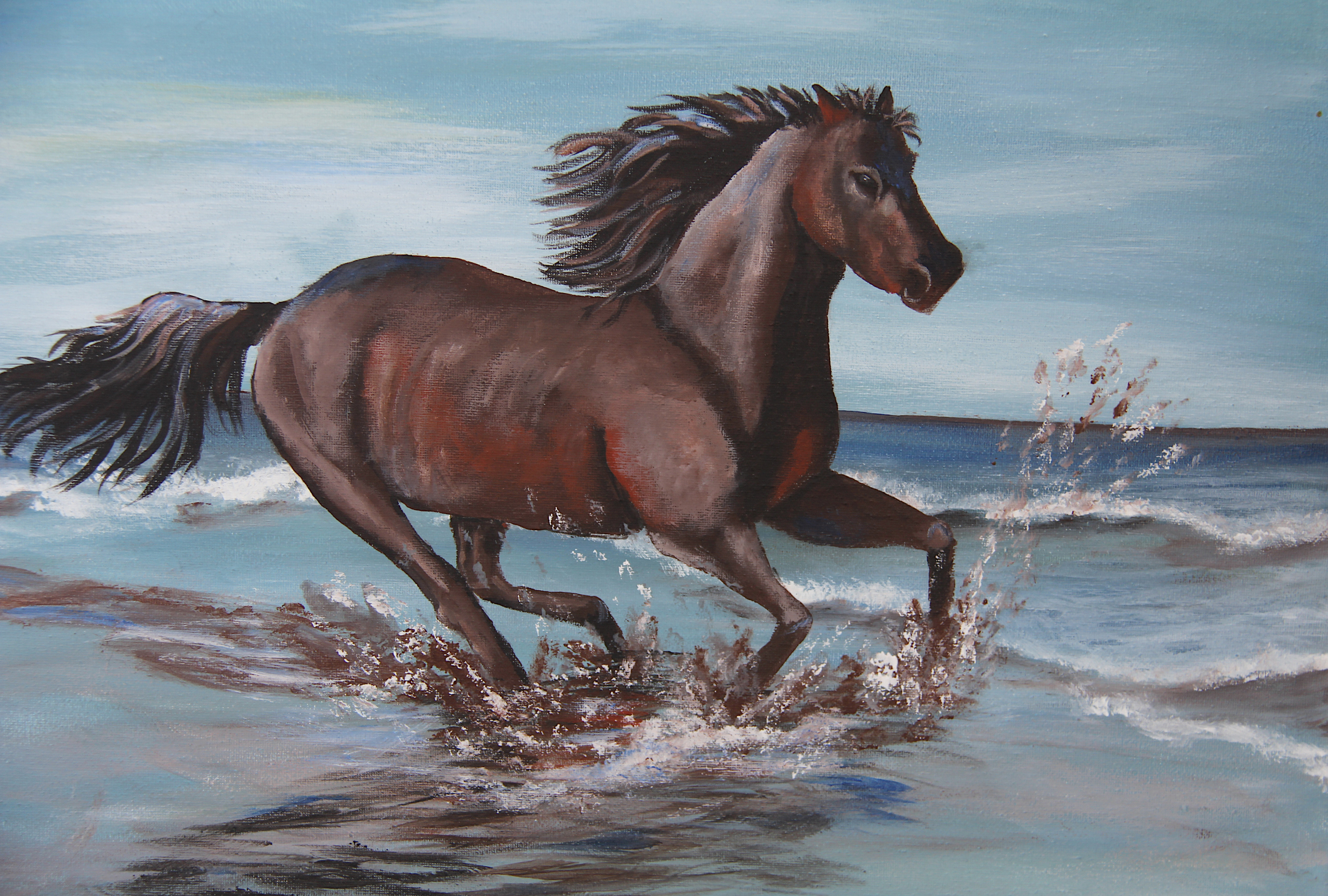
An acrylic painting by Peggy Paulson of Prairie Creek Art, Faribault. (Minnesota Prairie Roots copyrighted photo May 2024)
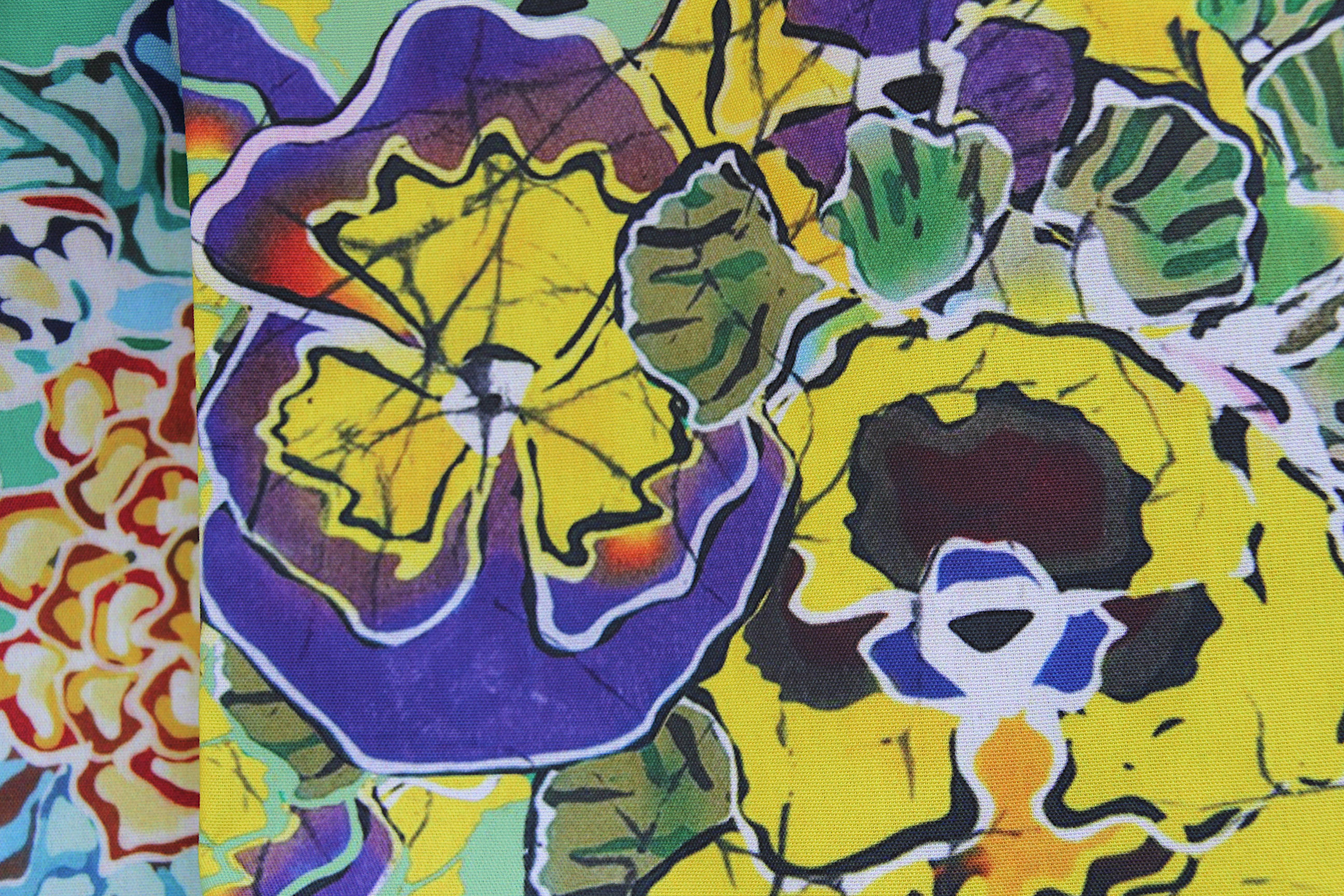
Original textile design art done with a serti-batiktechnique by Suz Klumb of Brigg Evans Design. (Minnesota Prairie Roots copyrighted photo May 2024)
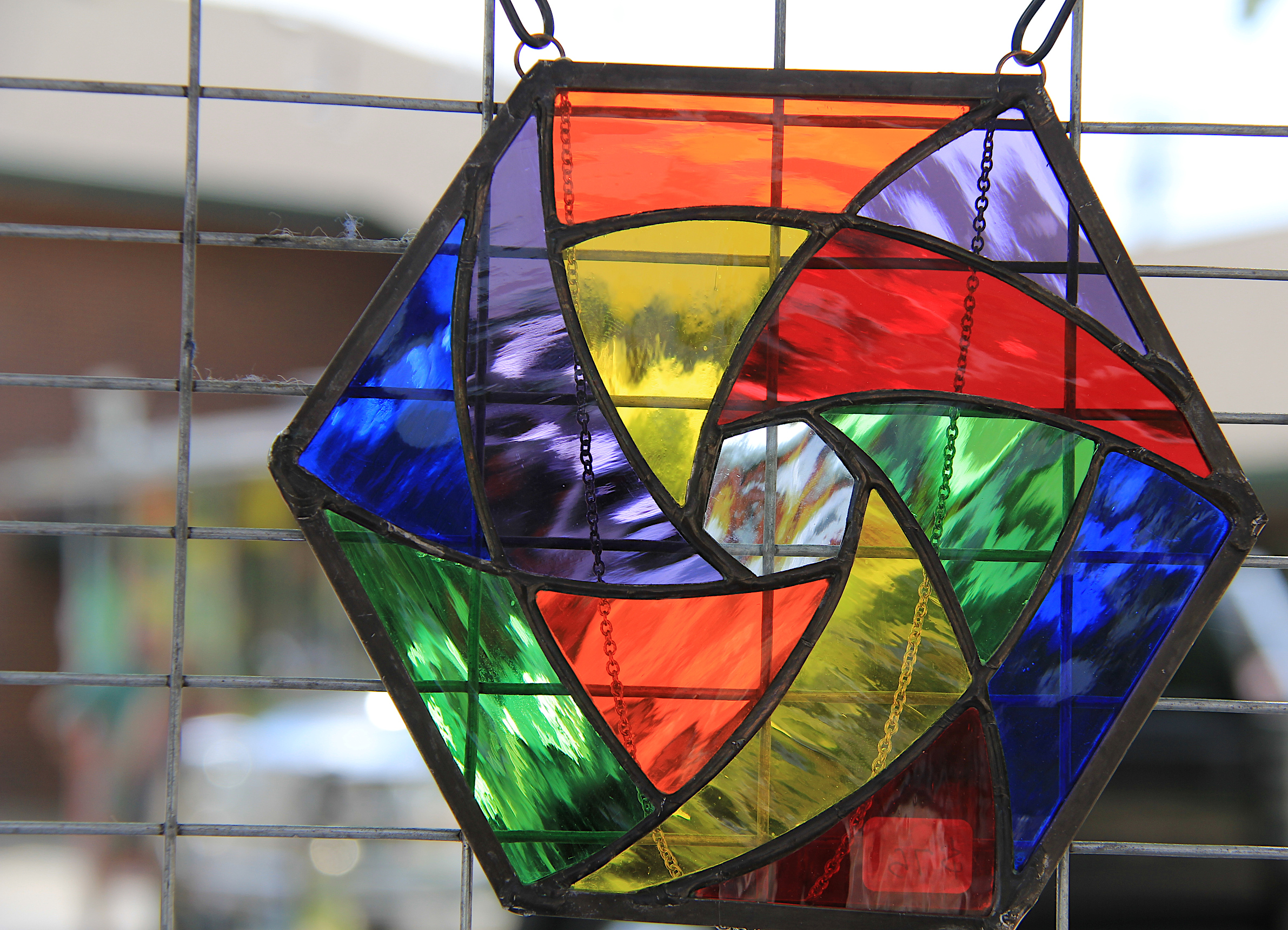
Like most arts festivals, this one featured a variety of art, this year from 30-plus creatives. I saw pottery, fabric and textile, batik, acrylic paintings, photography, stained glass, jewelry, fiber soft sculptures, handcrafted glass botanicals and more. Much more.
Vivid colors. Textures. Earthen hues. Stitching and sculpting. And shaping. An assortment of art appealing to assorted interests. It was all there.
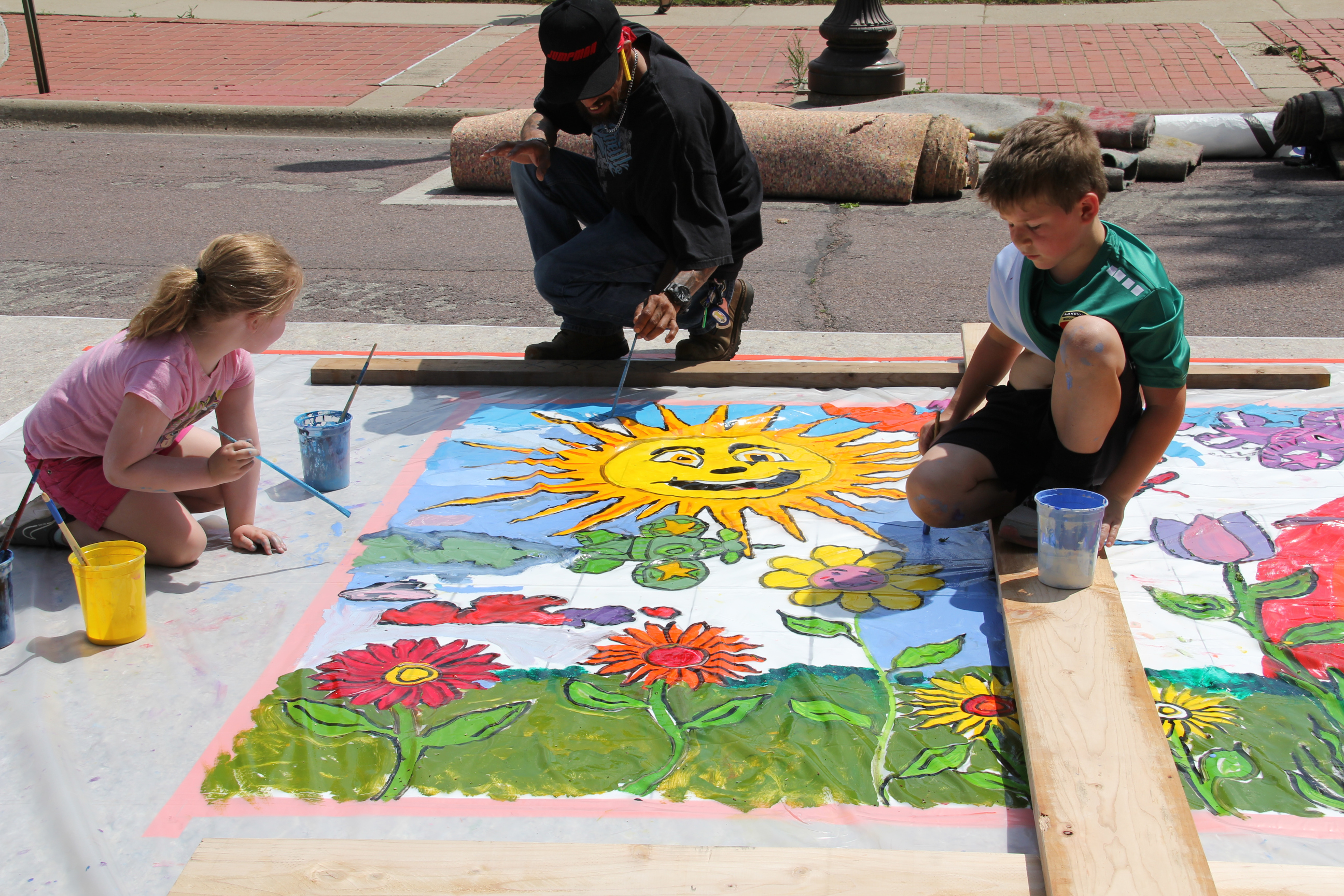
Mural painting at the Straight River Art Festival. (Minnesota Prairie Roots copyrighted photo May 2024)
There were activities for kids also, which I always appreciate since it’s important to engage families. The Paradise Center for the Arts offered hands-on art. Books on Central, a used bookshop in downtown Faribault run by Rice County Area United Way, handed out free picture books to little ones. And on a section of blocked off street, visual artist Stephen McKenzie laid out a mural for the community to paint. It’s on display now inside the Bachrach building along Central Avenue.
The center of the mural. (Minnesota Prairie Roots copyrighted photo May 2024)
The mural is bold and vibrant, engaging and beautiful, reflecting nature. It reflects, too, a sense of togetherness, that we are all one on this earth, under one sun, all colors of the rainbow, surrounded by beauty.
Kids and adults work side-by-side to paint the community mural. (Minnesota Prairie Roots copyrighted photo May 2024)
Watching adults and youth working side by side, painting bold hues onto the mural design, I felt joy. Individuals worked as a cohesive team to create art. There’s something to be said for that in this time of much divisiveness.
Paint inside a trailer used in painting the mural. (Minnesota Prairie Roots copyrighted photo May 2024)
Art brought folks together on Saturday to show and sell their art. But, more than that, the Straight River Art Festival builds community, energizes and connects creatives. There’s a certain vibe to an event like this that feels good, really good. But then again, I love art. And I deeply appreciate those who share it with us.
A display window at Keepers Antiques along Central Avenue in Faribault. (Minnesota Prairie Roots copyrighted photo February 2024)
PHOTOGRAPHING SCENES behind glass often proves challenging. First, you need to watch for your own reflection so as not to photograph yourself. And then there are all the other reflections playing upon the glass.
I faced those obstacles while photographing a valentine themed window display with my cellphone outside Keepers Antiques in historic downtown Faribault recently. I tried my best, waiting for vehicles to pass, angling myself out of the photo, working to frame the scene. Yet, even with all that finagling, the results were not outstanding. Or so I thought.
When I viewed the images on my computer, I was pleasantly surprised to notice unseen details in the overall window display image. That prompted thoughts of the popular “I Spy” photo-based picture books for kids. Readers need to find specific items in each photographed scene.
With historic buildings across the street reflecting in the antique shop window, it appears that two faces are peering from second floor windows on the far left and to the right. Love that ghostly visual. (Minnesota Prairie Roots copyrighted photo February 2024)
In the collage of antiques and collectibles Nona Boyes creatively placed in the window of her antique shop, I saw the makings of an “I Spy” book. (Study the first image in this post.) I spy a doll in a checked dress. I spy a red telephone. I spy a stop sign. I spy faces in windows. I spy a red ironing board. I spy a chandelier. I spy two candy boxes. I spy a valentine in a shoe. I spy a fleur de lis, the symbol of my community. What do you spy?
Shirley Temple dolls times three. (Minnesota Prairie Roots copyrighted photo February 2024)
What you won’t spy in the overview window display are three 1970s vintage Shirley Temple Ideal dolls. They were there, just not in the section I initially framed. I photographed them separately. In the doll portraits, I spy a red brooch. Do you? I spy, too, one white shoe with a red bow. I spy the word “beverages.”
Those I spy candy boxes. (Minnesota Prairie Roots copyrighted photo February 2024)
And I spy in the all of this an opportunity to turn a photo challenge into something interesting as only a photographer and writer can do. Through my creative lens, I saw pages in an “I Spy” book unfolding before me.
A bus follows a back country road near Morgan in southwestern Minnesota. (Minnesota Prairie Roots copyrighted file photo May 2018)
SHE WANTS TO SAVE the earth. It’s a lofty and noble goal for my granddaughter, who started second grade on Tuesday. Each year, on the first day of school, her mom documents basics about Isabelle on a small chalkboard. That includes a response to “What I want to be when I grow up.” This year Izzy aims to be an environmentalist. As a first grader, her professional goal was becoming a game designer. And on the first day of kindergarten, she wanted to own a toy store and also be a mom.
It’s interesting how Izzy’s interests evolve as she ages, as she grows her world and knowledge and connections with others. The possibilities are endless for her generation. I hold such hope in these young people, just beginning their formal educations.
And I hold hope, too, when I see a photo of Izzy and three neighborhood friends waiting at their urban bus stop. “Smart, Brave, Beautiful” banners Bethel’s tee. What a reaffirming message. For all of them. And how reaffirming that they are of differing ethnicity, their skin tones varied and, indeed, beautiful.
My elementary school, circa 1960s, located in Vesta in Redwood County. The school closed decades ago. (Photographer unknown; photo sourced from my personal photo album)
Sixty years have passed since I was a second grader in a small southwestern Minnesota elementary school, where my paternal grandfather served on the school board. My classmates and I were mostly farm kids, all white. We wrote in “Big Chief” lined tablets which today would not, should not, fly. Attitudes differed in the 1960s. Words like diversity, respect and environmentalist were not part of our everyday vocabulary.
A serene country scene just north of Lamberton in southern Redwood County.(Minnesota Prairie Roots copyrighted file photo September 2013)
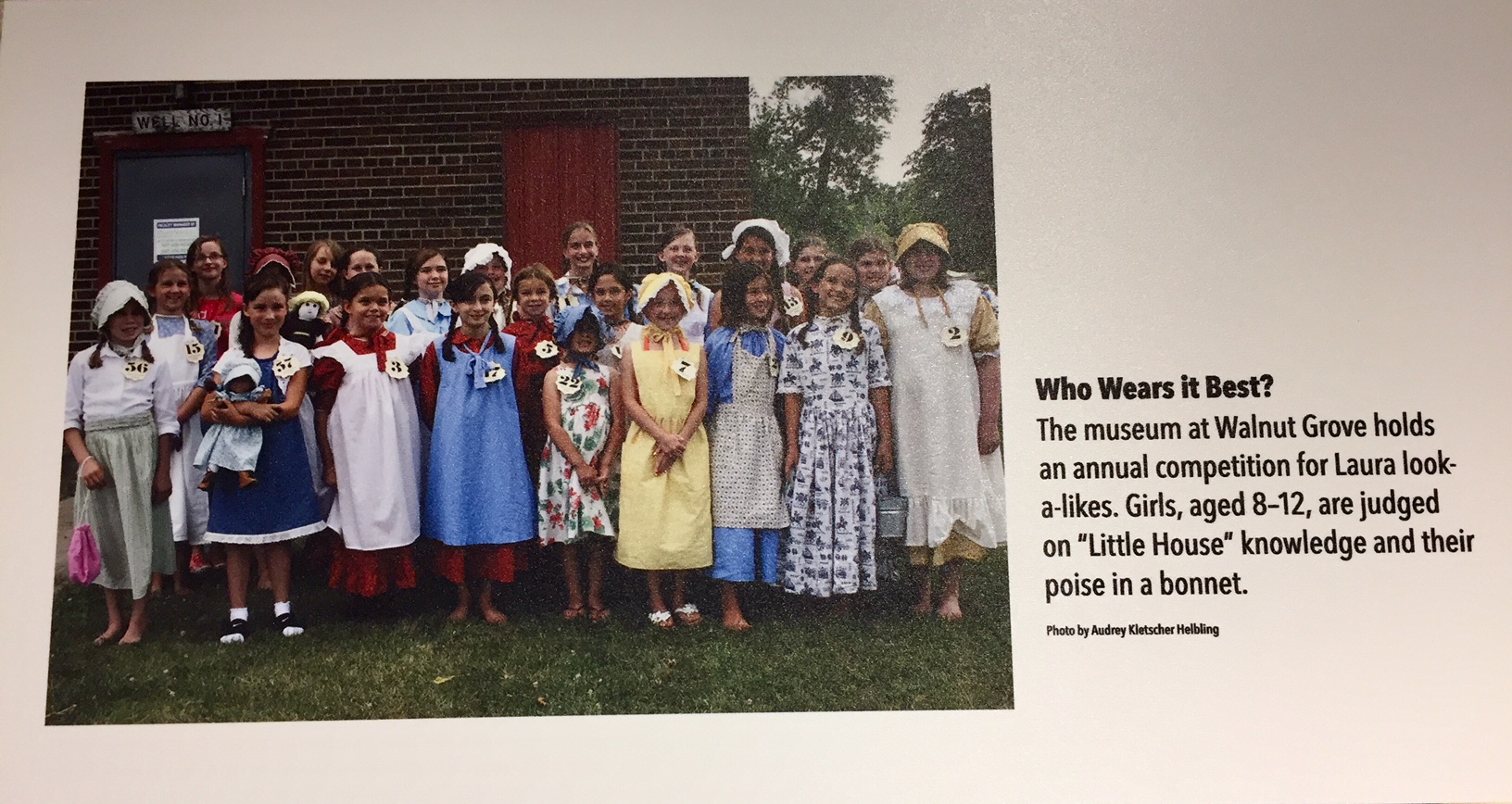
But words, overall, held my interest all those decades ago. I have Mrs. Kotval to thank for sparking my love of words, of reading, and eventually of writing. Each day after lunch, she read to her third and fourth graders from “The Little House” and other chapter books. Through the writing of Laura Ingalls Wilder, who lived many years earlier in nearby Walnut Grove, I began to appreciate the nuances of the prairie. And I learned the importance of descriptive, detailed writing. Wilder engaged all of her senses to describe the prairie and life thereon in her series of wildly popular books. With her love of the natural world, this writer unknowingly documented the environment for me, my children and for my second grade granddaughter, today an aspiring environmentalist.
Early on, I aspired to be an elementary school teacher. But that changed as I grew my world, my knowledge, my connections. Words focused my passion. Unlike most of my elementary school classmates, I loved penmanship—letters and words flowing in script across the pages of my penmanship book. I loved spelling. I loved reading, even in a school and town without a library and thus with limited access to books. And by high school, that love of words expanded to writing.
Fifth and sixth graders at Vesta Elementary School in the late 1960s. I’m in the back row, far right, next to the windows. (Photographer unknown; photo sourced from my personal photo album)
I want to pause here and stress the importance of passionate teachers in fostering students’ interests. From Mrs. Kotval reading to her students after lunch to junior high English teacher Mrs. Sales teaching me all the parts of grammar to high school teacher Mr. Skogen requiring students to keep journals, their influence on me and my eventual career was profound. I would go on to earn a college degree in mass communications, leading to a career as a journalist, writer, poet and photographer.
That brings me full circle back to Laura Ingalls Wilder, who early on influenced my detail-rich writing and photographic styles. In 2017, I became professionally connected to the author via “The World of Laura Ingalls Wilder—The Frontier Landscapes That Inspired The Little House Books.” Author Marta McDowell chose three of my photos (including one of prairie grasses at sunset) to illustrate her 396-page book documenting Wilder’s life and relationship to her environment. Perhaps some day my granddaughter will open the pages of McDowell’s book and find the photos taken by her grandmother. Whether Isabelle becomes an environmentalist or something vastly different, I expect she will always care about the earth and her role in saving it.
A family of Canada geese emerge from the grass growing along the Cannon River in Faribault. (Minnesota Prairie Roots copyrighted photo May 2023)
EACH SPRING I ANTICIPATE the appearance of newborn ducks and geese in the wild. There’s something about these waterfowl that appeals to me. Perhaps it’s the cuteness factor. Or maybe it’s the reassurance that, despite the ever-changing chaotic world, some things remain constant. Eggs hatch. Ducklings and goslings emerge. And the cycle of life continues.
I spotted adult mallard ducks, including these drakes and hen, but no ducklings. (Minnesota Prairie Roots copyrighted photo May 2023)
This year I was a bit late getting down to North Alexander Park in Faribault, a prime viewing spot along the Cannon River for an adaptation of Robert McCloskey’s children’s picture book, Make Way for Ducklings. The book won the Caldecott Medal in 1941 and is a beloved classic about a duck family in Boston.
Parent and baby gosling along the recreational trail in Faribault’s North Alexander Park. (Minnesota Prairie Roots copyrighted photo May 2023)
On the recent day I went duck and goose hunting with my camera here in Minnesota, far from Boston, I found only goslings. No ducklings. I approached with caution. I’ve learned from experience that Canada geese are aggressively protective of their young. I already hold childhood trauma from enduring vicious rooster attacks. I don’t need to add to that.
I kept my distance from the goose family, relying on my telephoto lens to take me closer. (Minnesota Prairie Roots copyrighted photo May 2023)
And so I watched and focused, thankful for my zoom lens which allowed getting close to the geese without getting close. The young ones appeared to be at teenage stage, rather than vulnerable baby stage. Thus my trust of even the youngest rated zero.
Determined goslings assert their independence. (Minnesota Prairie Roots copyrighted photo May 2023)
I was fully aware that the geese were aware of my presence. People occasionally toss bread to waterfowl here (something I wish they wouldn’t do), so they may have expected a hand-out. Not from me. I was simply there to observe and document while dodging excrement, one of the hazards of stepping into a Robert McCloskey scene.
Despite the caution, despite the need to watch my step, I will continue to delight in this annual rite of spring which draws me to the banks of the Cannon River in southern Minnesota. Far from Boston.
The gravel road past our friends’ Rice County farm. (Minnesota Prairie Roots copyrighted photo May 2023)
EVERYONE OUGHT TO OCCASIONALLY take a drive into the countryside along back county roads and gravel roads trailing dust. It’s good for the soul, spirit and mind to route into a quiet place defined by fields and farm sites. Away from town. Away from houses clumped together in blocks. Into a wide open place where land and sky meet and space seems infinite.
Randy and I found all of that recently as we drove east of Faribault, passing fields sprouting corn, farm sites nudging the highway. We aimed toward our friend Barb and Bob’s farm, invited there to harvest rhubarb. It’s an annual spring rite for us.
Bird folk art. (Minnesota Prairie Roots copyrighted photo May 2023)
But for me, this is about much more than gathering rhubarb. It’s about enveloping myself in the peacefulness of rural Minnesota. When only the trill of birds, the roar of a tractor and conversation with our friends break the silence, I feel utterly, contentedly at home. I feel grounded and rooted and connected and transported back to the farm of my youth, albeit 120 miles to the west.
Formerly a smokehouse, this is now used for storing gardening tools. The rhubarb patch flourishes alongside the aged building. (Minnesota Prairie Roots copyrighted photo May 2023)
I never pull a single stalk of rhubarb from the patch next to the aged clay block smokehouse. While Randy harvests, I roam. With my camera.
Beautiful rural Rice County, east of Faribault. (Minnesota Prairie Roots copyrighted photo May 2023)
First, I pause to take in the rural landscape—fields, trees, gravel road below a clear blue sky. Oh, place of my heart.
A familiar rural site, a silo. (Minnesota Prairie Roots copyrighted photo May 2023)
Then I head toward the silo towering over the farm site. Many times I climbed the ladder into the silo back on my childhood farm to fork silage and toss it down the chute to feed the cows. It was hard, smelly work. But when you worked on a dairy, livestock and crop farm 60-plus years ago, chores were labor intensive.
Barb’s “Star Shadow” barn quilt. (Minnesota Prairie Roots copyrighted photo May 2023)
From the silo, I turn my focus to the weathered plywood quilt block square displayed on the side of a tin-covered pole shed. The artwork, “Star Shadow,” honors Barb’s passion for quilting. It’s a nice addition to the building. I like barn quilt art, which surged in popularity perhaps a decade or more ago. There are places in Minnesota, like the Caledonia area in Houston County, where you can take a self-guided tour and view 59 barn quilts. For my generation, especially, quilts are part of our family history. Patchwork quilts layered beds, providing warmth on frigid Minnesota winter nights. I cherish remembrances of my paternal grandmother’s quilt tops, quilting frame and the quilts she gifted to me and all of her 40-plus grandchildren.
Apple blossoms. (Minnesota Prairie Roots copyrighted photo May 2023)
This visit to Barb and Bob’s farm brings back so many memories. I wander among the apple trees, most blossoms spent, and watch an elusive Monarch butterfly flit among the branches. I can almost taste the sweetness of apple jelly spooned onto buttered toast.
The growing pile of rhubarb. (Minnesota Prairie Roots copyrighted photo May 2023)
I check in with Randy, who hasn’t called me to help with the rhubarb harvest. He understands the pull I feel to photograph. Via photography, I notice details and that is such a gift. He’s gathered a growing stash of thick green stalks tipped in pink. Rhubarb seems such a humble fruit. Perfect for crisp, sauce or pie.
A tractor heads to a field with a roller to pack the soil. (Minnesota Prairie Roots copyrighted photo May 2023)
A tractor roars by then, dust rising around and behind as it pulls an unfamiliar farm implement down the gravel road. A roller, Randy notes later when we pass a packed farm field.
Randy carries discarded leaves away from the rhubarb patch. (Minnesota Prairie Roots copyrighted photo May 2023)
Then quiet settles again. Randy gathers the pile of rhubarb leaves, tidying the area around the old smokehouse.
We visited near the lilacs. (Minnesota Prairie Roots copyrighted photo May 2023)
We head back toward the farmhouse, this time rousing Barb and Bob, who earlier did not hear Randy’s knocks. We settle in for a chat which turns into a lengthy conversation in the shade of trees, near the lilac bush, in their front yard garden. Birds sing. Butterflies fly. Words rise. Cold, filtered well water poured from a fancy pitcher into thick, hefty glasses quenches thirst. The four of us simply enjoy each other’s company. No hurry. Nowhere to be.
Birdhouse on an outbuilding. (Minnesota Prairie Roots copyrighted photo May 2023)
I step away to photograph several of Barb’s many birdhouses.
The shy farm cat. (Minnesota Prairie Roots copyrighted photo May 2023)
And then the orange farm cat appears. I excuse myself again, to photograph Fred, who requires significant coaxing to come closer. But he is skittish. My camera lens, followed by the click of the shutter scares him away.
Bird bath art on the farm. (Minnesota Prairie Roots copyrighted photo May 2023)
I circle back to the conversation circle, passing a bird bath with a trio of ballet dancers centering that circle. They are graceful and beautiful and seemingly out of place in this rural setting. Yet, they are not. The countryside overflows with grace and beauty. The grace of silence and solitude. And the beauty of the natural world.
On this day, I need this. To be in the serenity of this quiet place. To take in the countryside. To see the sky, the trees, the land. To talk with Barb and Bob. And then to leave with a clutch of rhubarb and the promise of warm rhubarb crisp pulled from the oven.
A Brandenburg bison photo hangs to the left and the photographer talks about his work in a video, right, inside the Brandenburg Gallery.(Minnesota Prairie Roots copyrighted file photo 2013)
OF ALL THE PHOTOGRAPHY—from general to portrait to sports to nature and wildlife—it is wildlife photography that most impresses me as particularly challenging. And now one of the best wildlife and nature photographers in the world, who happens to be a native of my beloved southwestern Minnesota prairie, has received National Geographic’s Lifetime Achievement Award. Luverne-born and raised Jim Brandenburg, today based in Ely in northern Minnesota, won that top honor. He’s so deserving. His photos are beyond any star rating.
Brandenburg’s published books include “Brother Wolf–A Forgotten Promise.” He is known for his wolf photos, including these displayed in the Luverne gallery. (Minnesota Prairie Roots copyrighted file photo 2013)
Brandenburg joins only five other National Geographic photographers who’ve received this award. That he hails from the prairie, my homeland, makes me especially proud.
The entry to the gallery, located in the Rock County Courthouse square. (Minnesota Prairie Roots copyrighted file photo 2013)
Some of Brandenburg’s photo books displayed in the Luverne gallery. (Minnesota Prairie Roots copyrighted file photo 2013)
I have no ambition to pursue wildlife photography. I don’t have the interest, talent, knowledge of the natural world or patience required for the craft. But I appreciate those who excel in this specialized photography and I can learn from them. Brandenburg has been honing his craft for some 50 years with National Geographic. He’s won countless awards, produced many books filled with his images.
In all of this, this world travel, this move from southern to northern Minnesota, from prairie to northwoods, he’s remained rooted to his roots. He established the Luverne-based Brandenburg Prairie Foundation with a mission “to educate, preserve and expand native prairie in southwest Minnesota.” Brandenburg’s Foundation and the U.S. Fish and Wildlife Service bought 800 acres of untilled prairie in Rock County some eight miles northwest of Luverne, where visitors can immerse themselves in tallgrass prairie. I regret not walking the Touch the Sky Northern Tallgrass Prairie National Wildlife Refuge during my 2013 visit to this area. I need to return.
Hiking the path up and through the prairie grass at Blue Mounds State Park. (Minnesota Prairie Roots copyrighted file photo 2013)
I recognize that to many, this region of Minnesota seems desolate, lacking in beauty, just a place to get through when traveling. But for prairie natives like me, beauty is everywhere. In the wide sky. In sunsets so profoundly beautiful that they almost defy description. In farm sites set like islands among endless fields. In small towns and acres of corn. In prairie grasses swaying in the breeze. I can forever sing the praises of the prairie in refrains of howling wind and songbird and the silence of quiet.
An impressive quarry wall of Sioux quartzite.(Minnesota Prairie Roots copyrighted file photo 2013)
Brandenburg, I expect, experienced all of these, even if his native Rock County differs from my home county of Redwood a bit farther to the north and east. Even on the prairie, landscapes vary. Near Luverne, at Blue Mounds State Park, cliffs of Sioux quartzite rise 100 feet above the plains. It’s amazing, unexpected in this place where prickly pear cacti also grow, where bison graze, where wildflowers bloom.
A gravel road around the state park passes a sheep pasture and country church. (Minnesota Prairie Roots copyrighted file photo 2013)
I encourage you, if you’ve never spent time in southwestern Minnesota, to do so this spring or summer. View the landscape through an appreciative lens that takes in every nuance, every detail. Notice the light. Feel the wind. Hear the quiet. Settle into the simplicity of this place that renews the spirit, that a world-class photographer called home. That I, too, once called home.
Recent Comments