Minnesota Prairie Roots

Writing and photography by Audrey Kletscher Helbling

Celebrating the Fourth of July for 125 years in North Morristown July 2, 2017

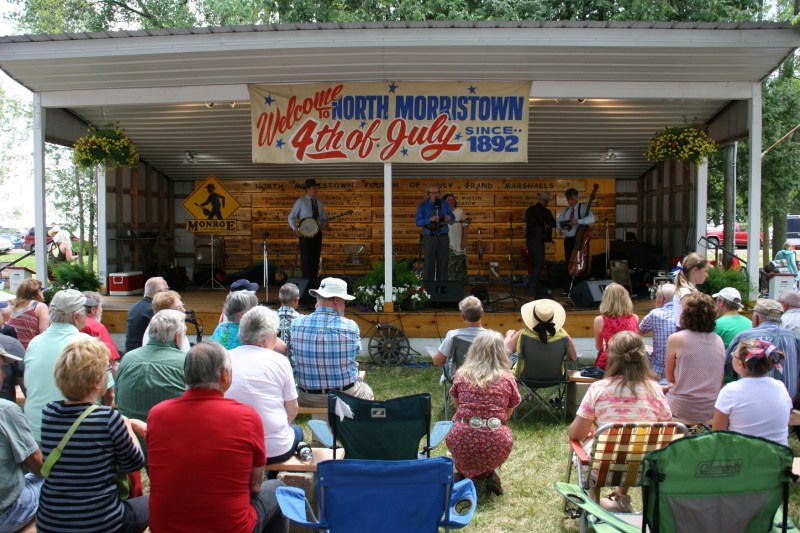
The popular bluegrass band, Monroe Crossing, performed twice at North Morristown in 2016. Minnesota Prairie Roots file photo 2016.


IN RICE COUNTY, the Fourth of July and North Morristown are synonymous. For in this rural spot of corn, soybean and alfalfa fields, farm sites, and a country church and school, folks gather every Independence Day to celebrate. This July Fourth marks 125 years of patriotic and family togetherness.


Vehicles line county roads leading to the festival grounds and also filled parking areas in this Minnesota Prairie Roots photo from July 4, 2016.


You won’t find North Morristown by looking for a water tower or anything that resembles a town. Rather, head northwest of Morristown to 10500 215th St. West and the festival grounds across the road from Trinity Lutheran Church and School, North Morristown.


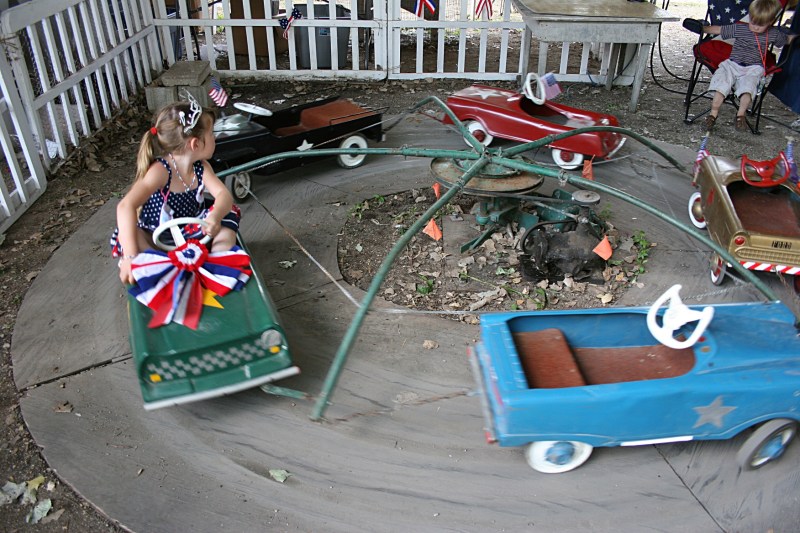
The vintage car ride for kids. Minnesota Prairie Roots file photo 2013.


Although I did not grow up in this part of Minnesota, I’ve lived here 35 years now and have celebrated many July Fourths at this rural location. I love the folksy simplicity of an event which began 125 years ago as a picnic. Today the celebration includes a 5K run/walk, parade, patriotic program, medallion hunt, silent auction, BINGO, musical performances (including the popular Twin Cities based Monroe Crossing), kids’ carnival style rides, fireworks shot over farm fields and more.


The homemade pies are a popular food choice. Buy your pie early for the best selection. Minnesota Prairie Roots file photo.


And then there are the food and beverages: homemade pies, fresh-squeezed lemonade, ice cream, pork sandwiches, burgers, beer and more. This food is basic country at its best, served by volunteers who work tirelessly to feed the masses.


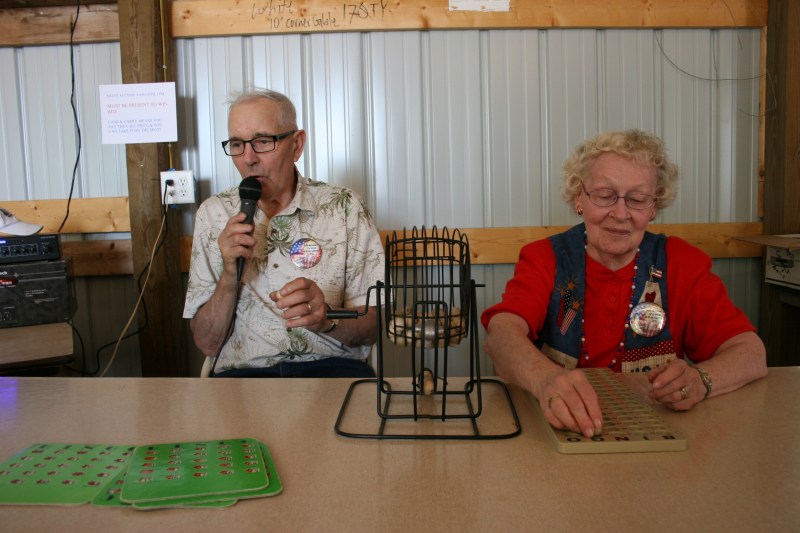
The bingo callers in 2013. I entered this image in a photo contest and won first place. Minnesota Prairie Roots file photo 2013.


Most who attend know each other. They either grew up here, married into a local family or have connections to the area. North Morristown on the Fourth of July is like a big family reunion. But even if you have zero connections to this place, you will feel comfortably welcome on the grassy, tree-filled festival grounds packed with friendly people.


By late afternoon last July 4, the crowd began thinning a bit. Festivities began at 9 a.m. Minnesota Prairie Roots file photo 2016.


As much as I’d like to attend, I may not this year due to the crowds and uneven walking surfaces. A friend, who is one of the grand marshals of this year’s 10 a.m. parade, expressed disappointment upon learning of my shoulder fracture. He was apparently counting on me to photograph the day’s events as I have many times in the past. Sorry, Al.


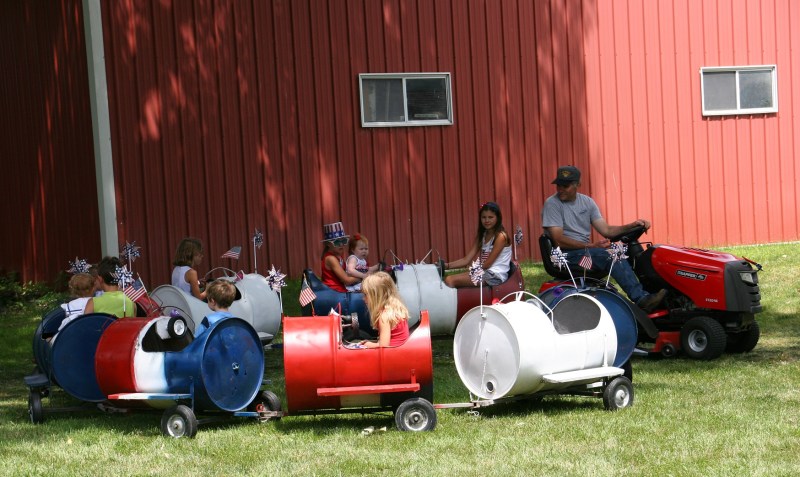
The old-fashioned barrel train draws lots of riders. Minnesota Prairie Roots file photo 2016.


Click here to view my previous coverage of North Morristown’s Fourth of July celebration. From my photographic perspective, you can see why this event has endured for 125 years. It doesn’t get much more grassroots basic Americana than North Morristown on the Fourth.

FYI: Click here to reach the North Morristown July Fourth Facebook page.

© Copyright 2017 Audrey Kletscher Helbling

NOTE: I am taking a break from further blogging this week. Please check back because I’ll be back.


Honoring the war dead in Cannon City May 30, 2017

Folks begin arriving for the 2 p.m. Memorial Day program at the Cannon City Cemetery. Minnesota Prairie Roots file photo.


VEHICLES LINED the narrow gravel driveway, angled into the grassy ditch on one side and edging the roadway on the other.

Randy pulled our lawn chairs from the van and I tucked a fleece throw under my left arm, umbrella in hand as we headed toward the crowd gathering at the Cannon City Cemetery gate. Clouds the color of bruises threatened rain on this 60-some-degree Memorial Day afternoon in rural southeastern Minnesota.


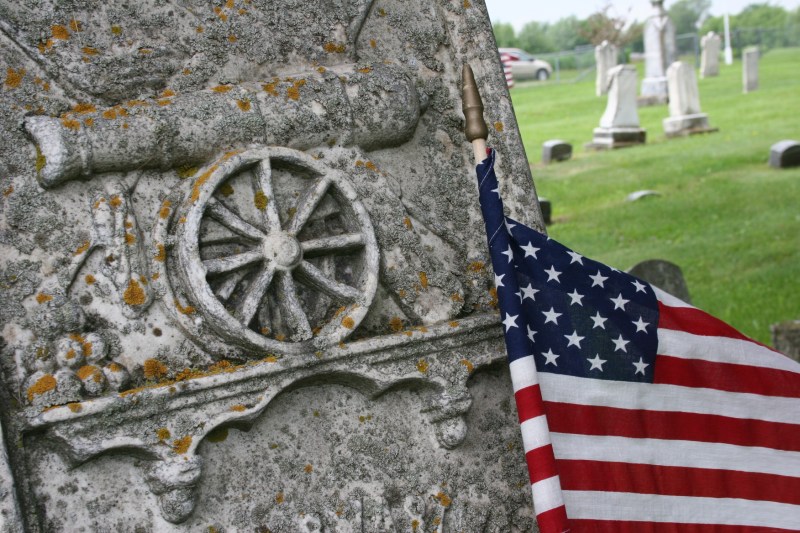
An art appropriate cannon marks a Civil War Veteran’s tombstone in the Cannon City Cemetery. Minnesota Prairie Roots file photo.


But weather would not keep us from this annual commemoration honoring the war dead—a tradition begun some 100 years prior in this wind-swept rural cemetery bordered by fields and pasture. On this Monday, those here would also mark the sesquicentennial of this burial place where a year ago cows moved to the fenceline to watch my friend Lois bury her husband next to his parents and grandparents.


The program opens with singing of “The Star Spangled Banner.” Steve Bonde is on the bugle. Minnesota Prairie Roots file photo.


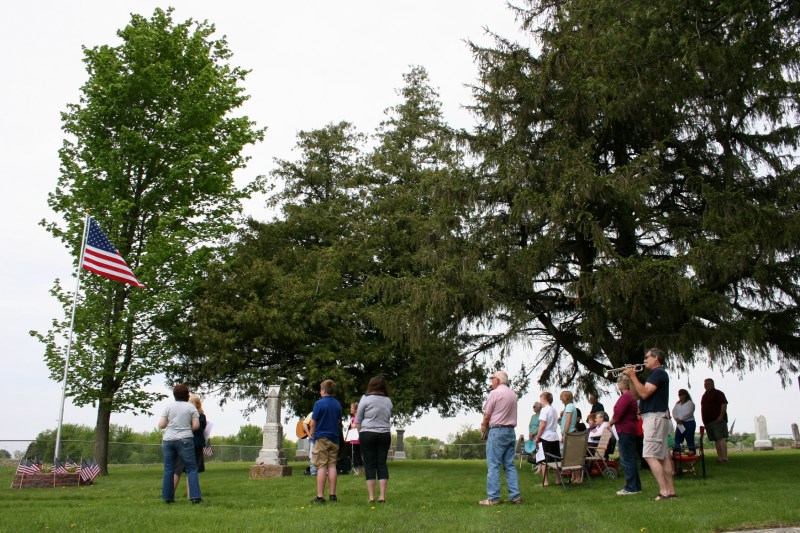
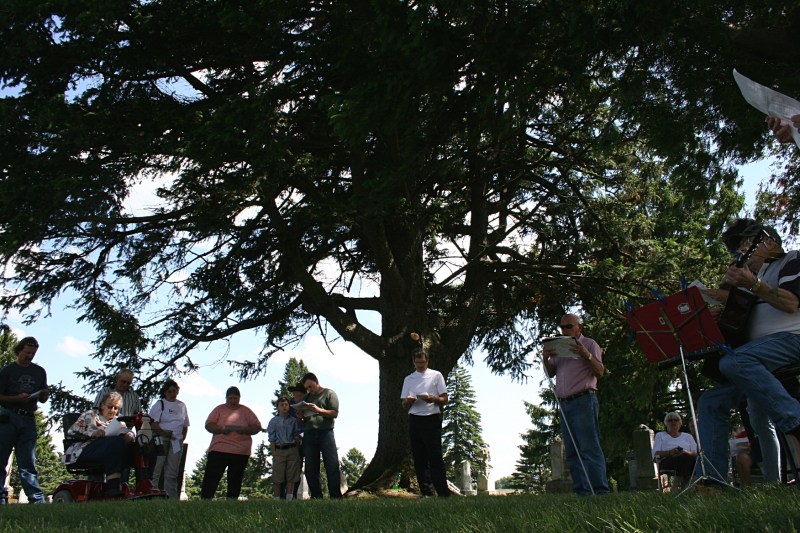
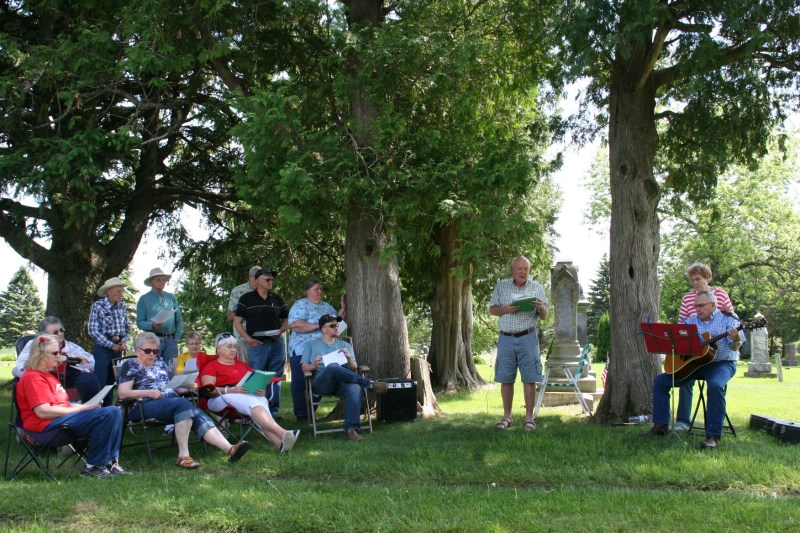
Randy and I have no family connection to this cemetery. But we have come here each Memorial Day for about the past five because we appreciate the grassroots simplicity of this event. Clustered under spruce and cedar among gravestones, attendees circle their lawn chairs to sing and to listen to patriotic and other readings and to the mournful playing of taps.


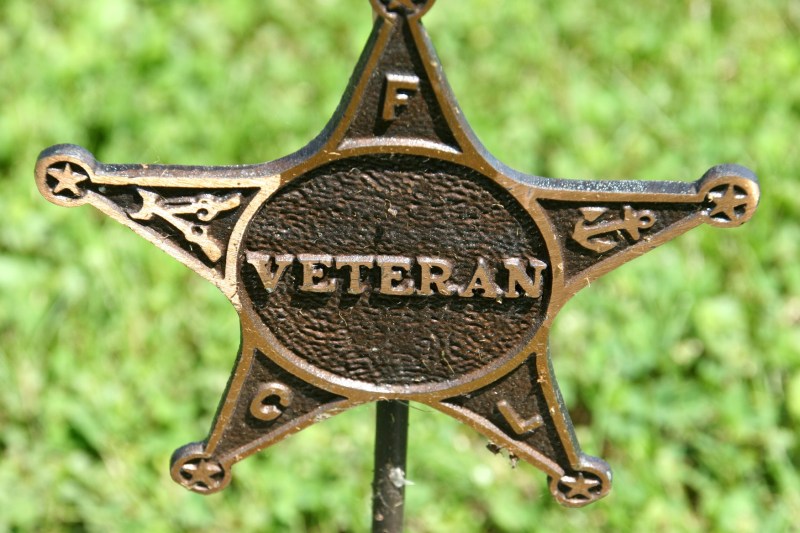
A bronze star marks a veteran’s grave. Minnesota Prairie Roots file photo.


As I sat there, snugged under fleece and wishing I’d worn a stocking cap, I considered that my temporary discomfort was nothing compared to war. I remembered the stories my Korean War veteran father, an infantryman on the frontlines, shared of bone-chilling cold. Yes, my ears hurt. But in a short time, I would be back inside my warm home.

I am an observer. To my right, I watched a teenage boy grip a military star, American flag and white carnation with his left hand, bugle in his other hand, as the fierce wind threatened to yank all three away. Earlier, some attendees distributed flowers, provided by the Cemetery Association, to soldiers’ graves. That flower-laying tradition began 100 years ago with students from the nearby Cannon City School marching with floral wreaths to the cemetery.


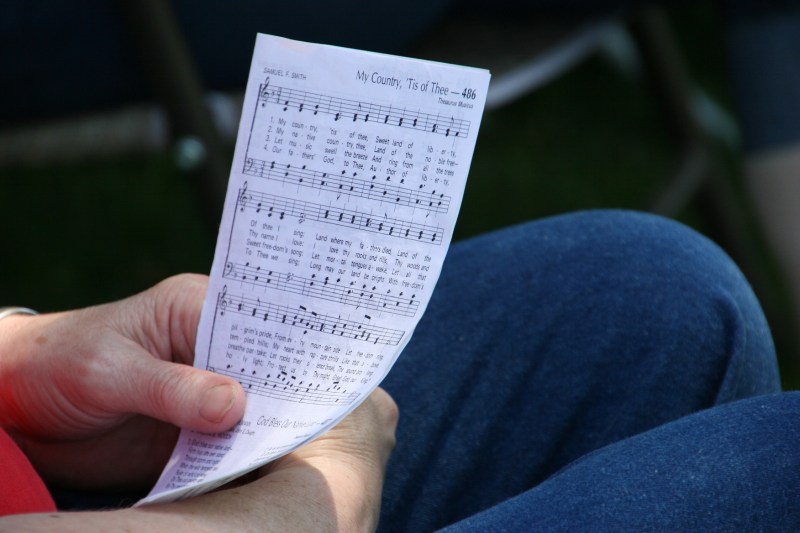
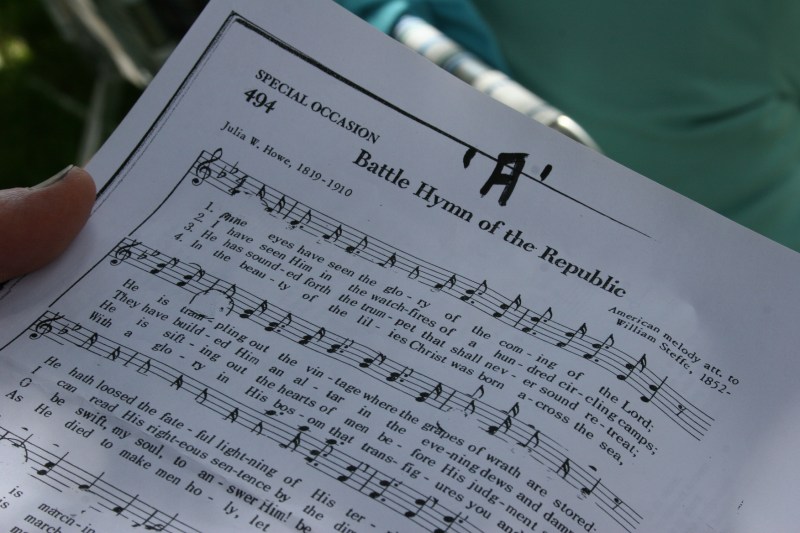
Song sheets are distributed to those in attendance. Minnesota Prairie Roots file photo.


This memorial service is so much about tradition—from recitation of The Pledge of Allegiance to singing of The Battle Hymn of the Republic to reading names of the 52 veterans buried here to recitation of In Flanders Fields.


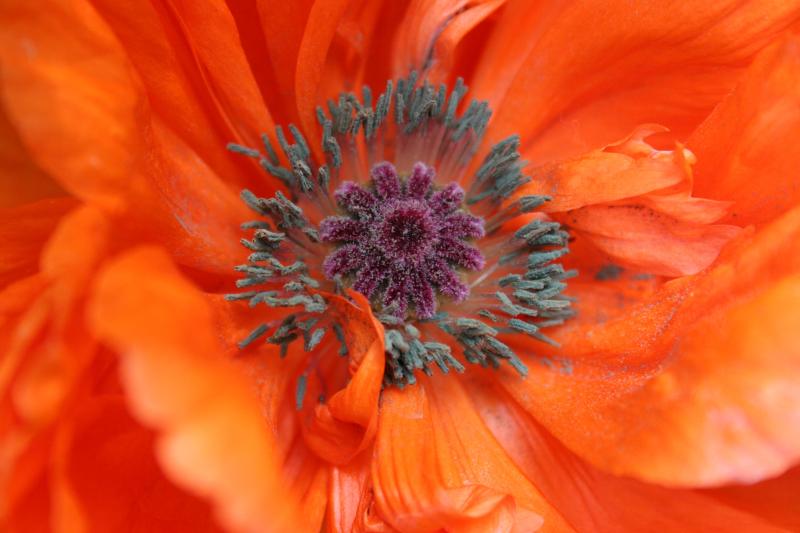
Poppies have long been associated with honoring and remembering veterans. Minnesota Prairie Roots file photo.


As Jean Pederson recited the haunting poem of poppies blowing between crosses in a field in Belgium, long-time Cannon City resident Bob Lewis slipped a pot of poppies onto the grass next to Jean’s motorized scooter. He’d dug them from a patch in his yard. That symbolic gesture by this veteran nearly moved me to tears as I watched 10 orange poppies wend in the wind to words of war.

Near Jean, I noticed the word LOVE sparkling along the pant leg of a teenage girl. Love and war. War and love. We love our freedom enough to fight for it.


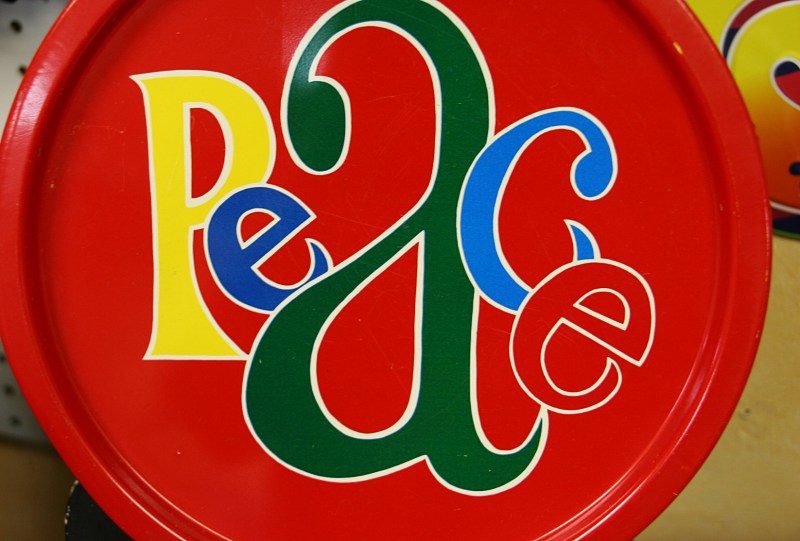
A message on a retro tray I own. Minnesota Prairie Roots file photo.


Yet, we always strive for peace, a message conveyed in a reading by two women: “Let there be peace on earth and let it begin with you.” Their words rose and fell with the wind, carried away—to the fields, the countryside, beyond, under a bruised sky.


© Copyright 2017 Audrey Kletscher Helbling
I apologize for the lack of current photos accompanying this story. I fell and broke my right shoulder recently so am unable to use my camera. I hope my words provide the visuals for you to see snippets of what I observed in Cannon City on Memorial Day.


A grassroots Memorial Day observance at a 150-year-old rural Minnesota cemetery May 25, 2017

The Cannon City Cemetery fence decorated for Memorial Day. Minnesota Prairie Roots file photo.


IN A RURAL CEMETERY in unincorporated Cannon City some five miles northeast of Faribault, a chain link fence separates gravestones from fields.


A snippet of those gathered for a past Memorial Day program, including Jean Pederson, left, who recited “In Flanders Fields,” and others who led the program. Minnesota Prairie Roots file photo.


Here the wind blows strong among spruce and cedar trees branching over gravestones. For a century and a half now, mourners have come to this place of solitude and grace to bury, grieve and remember loved ones. The cemetery was founded 150 years ago, an occasion which will be noted during the 2 p.m. Memorial Day program here on May 29.


Song sheets are distributed to those in attendance and then collected at the end of the program. Minnesota Prairie Roots file photo.


I first discovered this place and this annual May tribute, in 2011. Nearly every year since, I’ve returned to sing “The Star Spangled Banner,” “America, the Beautiful” and other patriotic songs; to listen to the reading of “In Flanders Fields,” “The Gettysburg Address” and more; to appreciate the mournful playing of taps; to gaze toward the flag whipping atop the flag pole; and to walk among tombstones.


This shows a portion of those gathered during a past Memorial Day program. Minnesota Prairie Roots file photo.


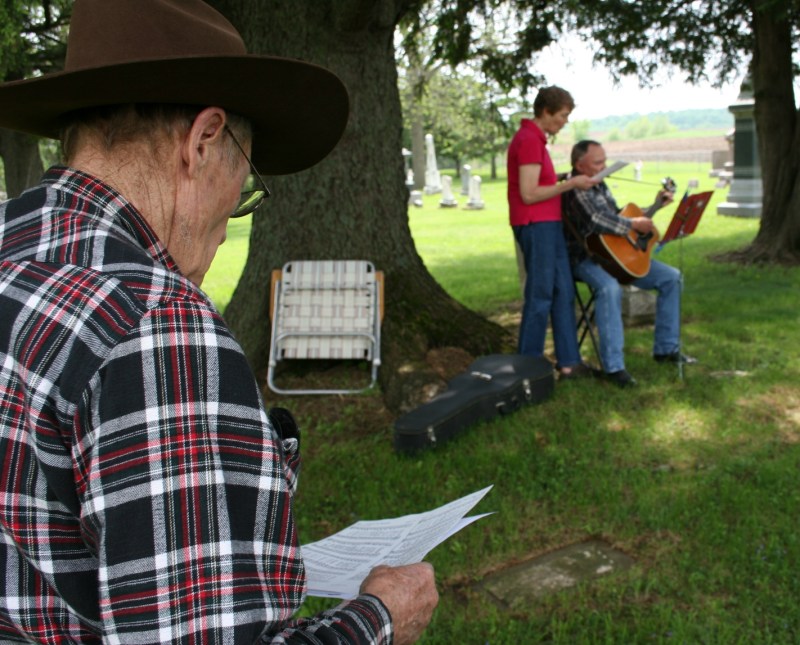
I have no personal connection to this cemetery. But I am drawn here by the rural-ness of this setting, by the simplicity of the ceremony, by a desire to honor the war dead at a truly grassroots Americana Memorial Day observance among people rooted deep into this land. It doesn’t get much more basic than this informal and unpretentious gathering in lawn chairs, song sheets passed around with Don Chester strumming a rhythm on his guitar.


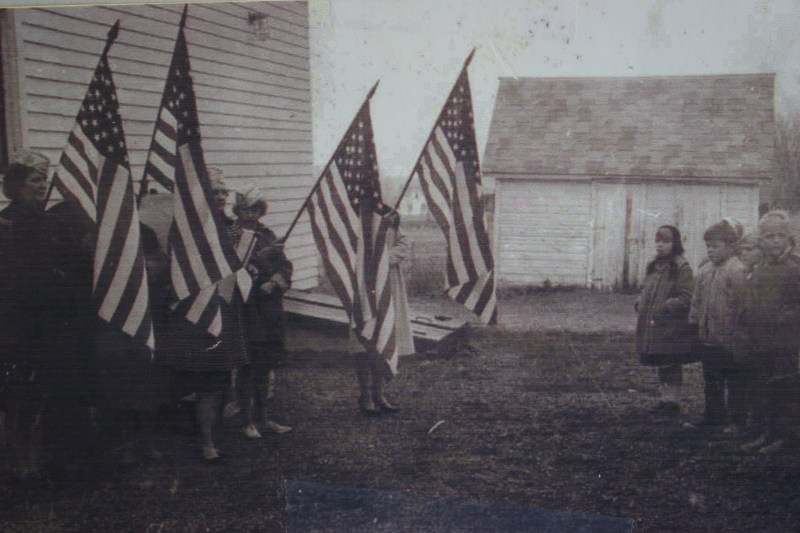
Memorial Day long ago in Cannon City.


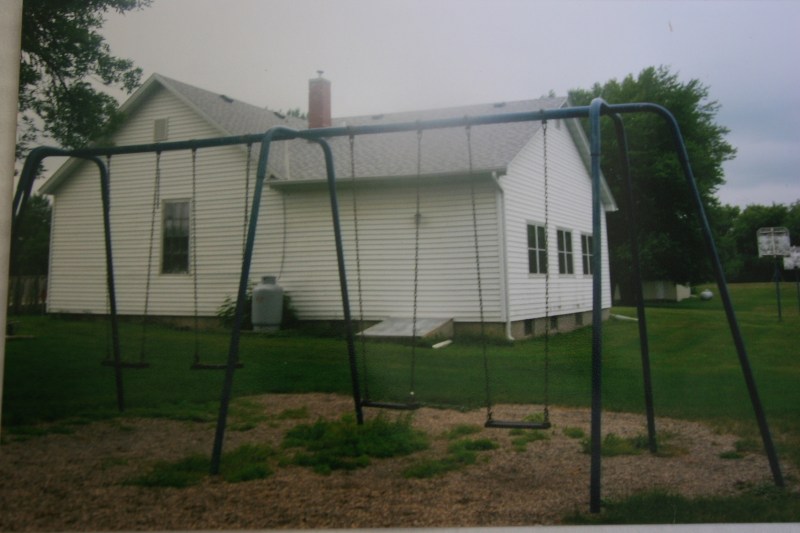
The former Cannon City School, now the town hall.


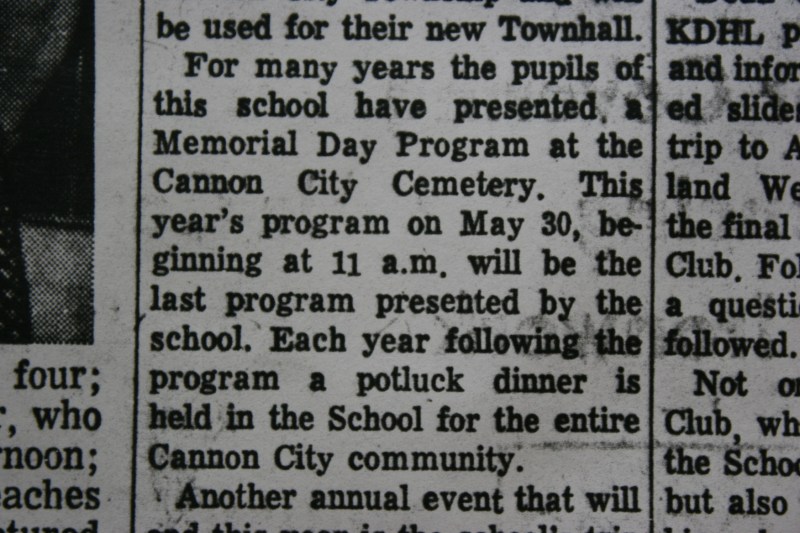
A vintage newspaper clipping about Memorial Day in Cannon City.


Fifty veterans—including one from the War of 1812 and 20 from the Civil War—are buried here. Their names are read each Memorial Day. It was Civil War veteran Elijah Walrod who first suggested a Decoration Day (now Memorial Day) program to Cannon City School teacher Chloe Gagstetter Polson. She honored his request some 100 years ago when school children marched with floral wreaths from the schoolhouse to the nearby cemetery. That tradition, which included a picnic following the ceremony, continued until the school closed in 1970 to become part of the Faribault School District. The Cannon City Cemetery Board carried on thereafter.


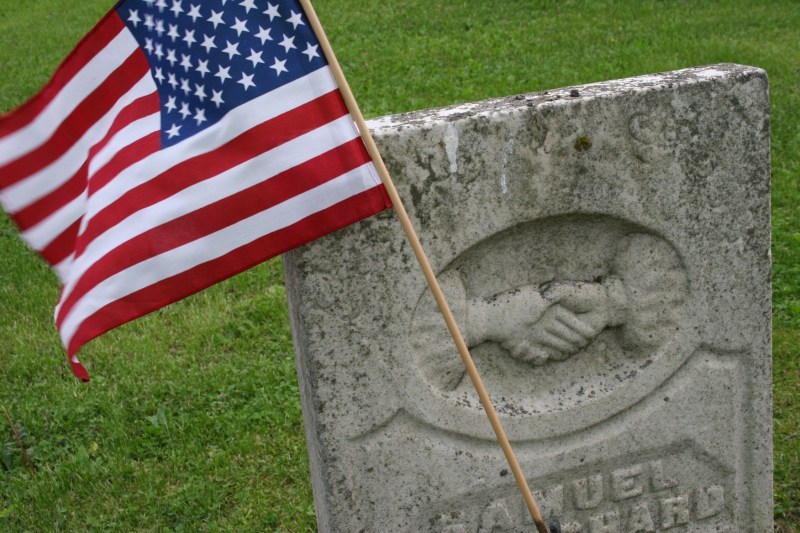
Veterans graves are marked with flags on a previous Memorial Day. Minnesota Prairie Roots file photo.


This year the Cannon City Cemetery Friends will note the cemetery’s 150th anniversary by distributing flowers and flags to attendees for placement on veterans’ graves.  Typically those American flags are placed in advance of the commemoration. There will be no “Death March” from the old schoolhouse, now the town hall, to the cemetery. Rather, everyone will meet at the cemetery gates. And after the program, organizers will serve ice cream cones.


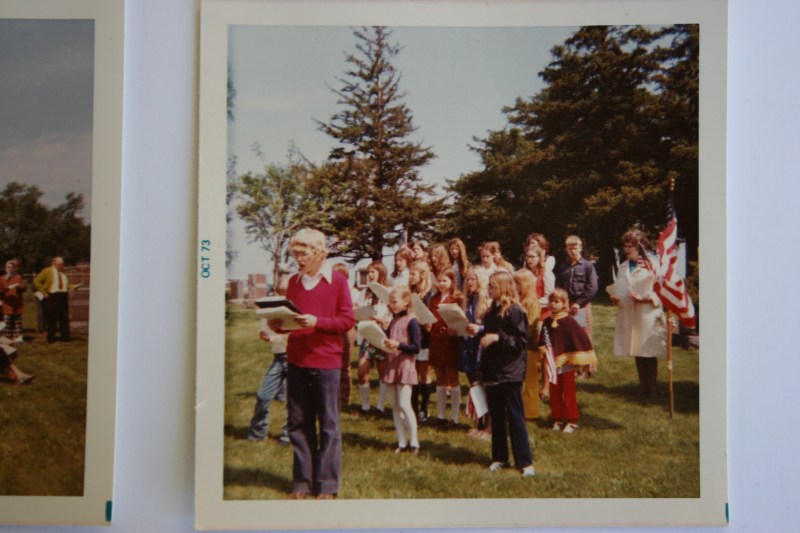
In 1973, the Cannon City Cardinals 4-H Club participated in the program.


The low-key anniversary observance seems fitting in a place where children dart among gravestones, birds trill and folks greet each other with the familiarity of growing up here. They know and value this place.


The program opens with singing of “The Star Spangled Banner.” Steve Bonde is on the bugle. Minnesota Prairie Roots file photo.


Tradition, says Cemetery Board Secretary Mel Sanborn, brings locals and natives back each Memorial Day “to honor veterans and loved ones buried here.” Sanborn has three aunts and uncles buried here and his own plot purchased already.


Bob sings as Don and Judy Chester lead the group in song. Bob attended Cannon City School and participated in Memorial Day programs here as a student. Minnesota Prairie Roots file photo.


Most who come here on Memorial Day share links of blood and/or roots. Not me. But I still feel at home here, comfortable in this rural cemetery where, on this day in late May, I am simply an American remembering those who died in service to our country.


FYI: The Cannon City Memorial Day program begins at 2 p.m. Bring your own lawn chair. The cemetery is located off Rice County Road 20. Look for the cemetery sign and follow the gravel road to the cemetery.

© Copyright 2017 Audrey Kletscher Helbling

Vintage photos are courtesy of Mel and Mary Sanborn.


Why I appreciate the arts in Minnesota May 11, 2017

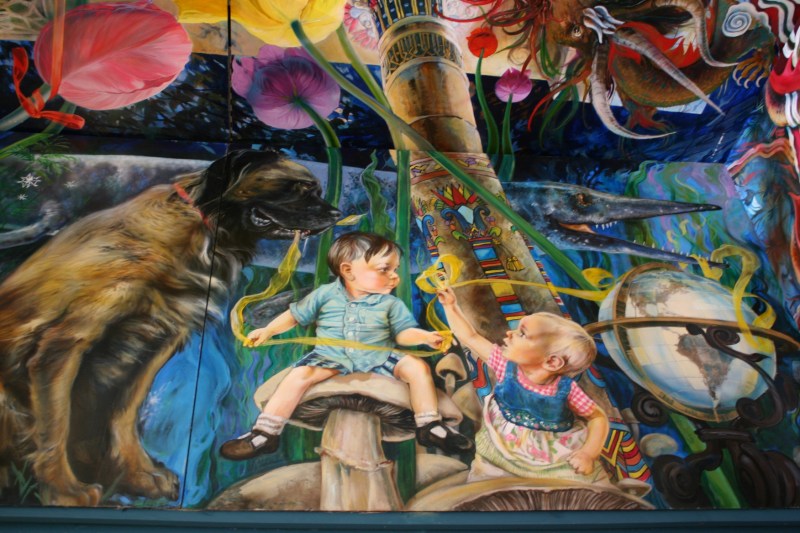
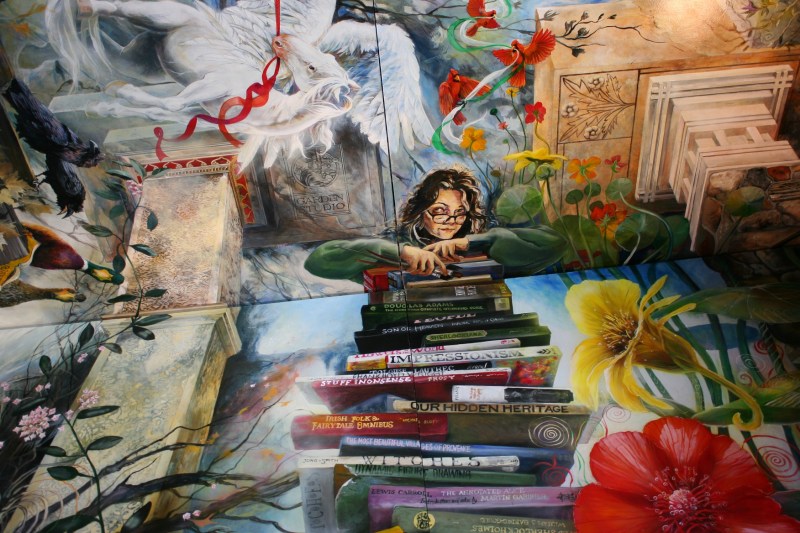
A snippet of the colorful and whimsical mural created by Lynette Schmidt Yencho for the Owatonna Arts Center library. Art surrounds these children.


GROWING UP IN RURAL southwestern Minnesota many decades ago, my exposure to the arts was minimal. I don’t recall attending a single art show, concert or theatre production outside of a public school. If such opportunities existed, I was either unaware of them or my parents had no money for such extras.


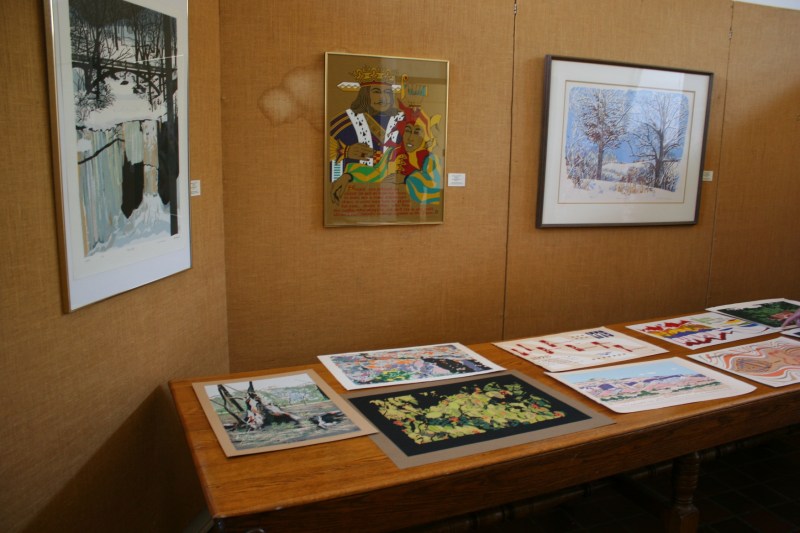
During a one-day fundraiser, the Owatonna Arts Center sold original serigraphs (silkscreen prints) produced by Alice Ottinger and Jean Zamboni of OZ Press in Owatonna. The press no longer operates. If you are interested in a print, contact the art center.


Opportunities to develop my creative interests did not extend much beyond English, music, art and home economics classes, except for the two weeks of shop class in which I crafted a linoleum block print. I always wished I could play piano or an instrument. But there was no time or money for either. I still cannot read a single note of music.


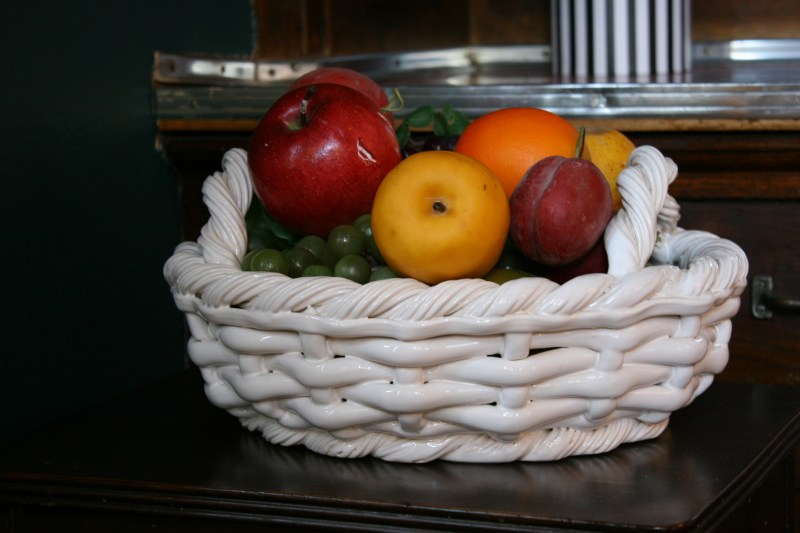
Fruit bowl art in the Owatonna Arts Center library.


I don’t begrudge my parents for not exposing me to the arts. They had to keep the dairy and crop farm running and a family of eight fed. Finances were tight.


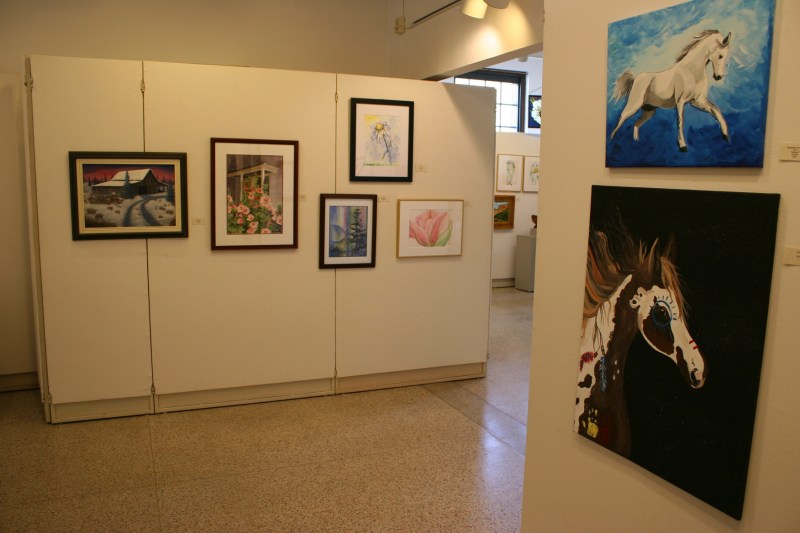
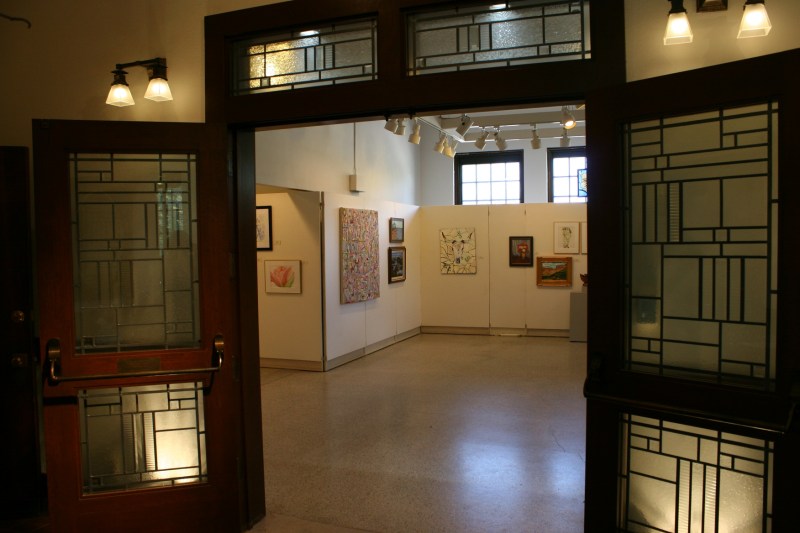
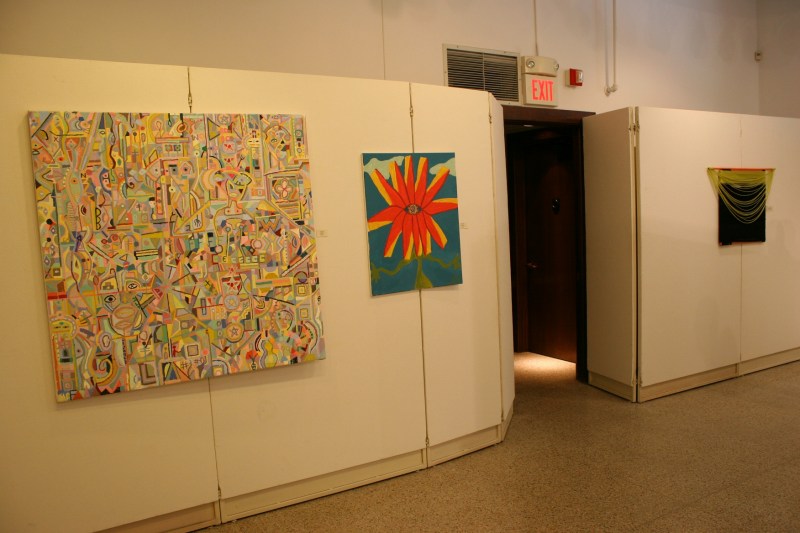
The 65th Annual Steele County Art Exhibition is currently showing at the Owatonna Arts Center. Here’s a sampling of art in that show.


Early on I learned that, if I wanted new clothes, I would have to sew them. This was back in the day when sewing clothing was far less expensive than buying ready-made. If I got store-bought clothes, they always came from the sales rack. I loved the sewing process—paging through thick volumes of Simplicity, Butterick and McCalls patterns; perusing bolts of fabric; and then cutting and sewing the fabric into wearable clothing.

In some small way, I created art. Not of my own design. But I could express myself through fabric selection and pattern choice.


Another section of the Owatonna Arts Center library mural by Lynette Schmidt Yencho. My love of reading as a child spurred my interest in writing.


I also created art in my writing. No teacher encouraged me, other than to praise my near-perfect penmanship, spelling and excellent English language usage skills. My writing was limited to class assignments and later writing for the high school newspaper, The Rabbit Tracks. I attended high school in Wabasso, which means “rabbit” in Ojibwe. Our mascot was a white rabbit.


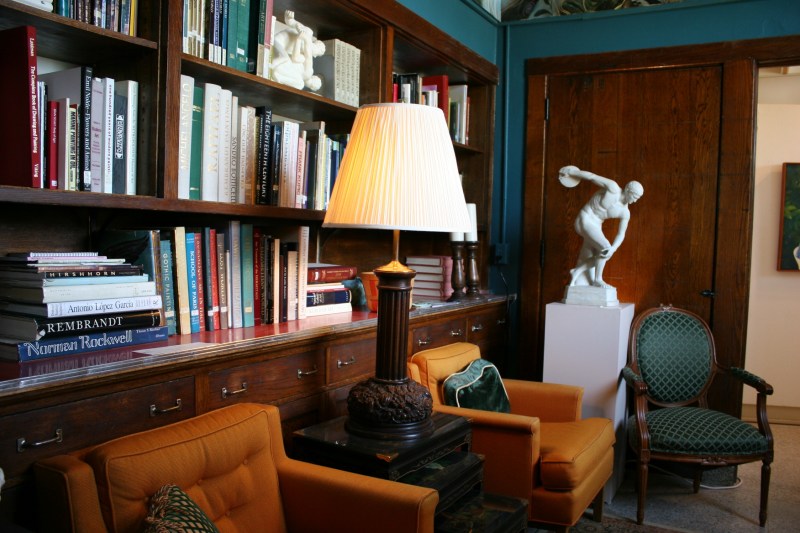
A room of books and art…in the Owatonna Arts Center library.


Why do I tell you all of this? I share this because my background explains why I have such a deep appreciation for the arts. That cliché of “absence makes the heart grow fonder” can be applied to the near absence of art in my life early on.


Doors open into the OAC gallery housed in an historic building.


Today, living 120 miles to the east of my hometown, I have many opportunities to enjoy the arts locally in Faribault and neighboring Owatonna and Northfield at arts centers, public schools, colleges and more. I am grateful that the visual, literary and performing arts hold such high value in Minnesota.


More art in the Steele County artists’ show.


Some would argue that the arts are not necessary. I contend that they are. We all have within us that innate need to connect with others. The arts offer that interconnection, that weaving together of creativity, of humanity, of a desire/need to express ourselves. I am grateful to be part of the community of artists through my writing of poetry, fiction, creative nonfiction and blog posts and through my photography. I am thankful, too, for the art opportunities available to me right here in my backyard and throughout Minnesota.


TELL ME: Do you embrace the arts either/and or by creating or enjoying them? Please share specifics.

© Copyright 2017 Audrey Kletscher Helbling

Artwork photographed with permission of the Owatonna Arts Center. Art is copyrighted by the artists and may not be copied and/or reproduced.


Spring in southeastern Minnesota May 10, 2017

Filed under: Uncategorized — Audrey Kletscher Helbling @ 5:00 AM
Tags: , , , , , , , ,


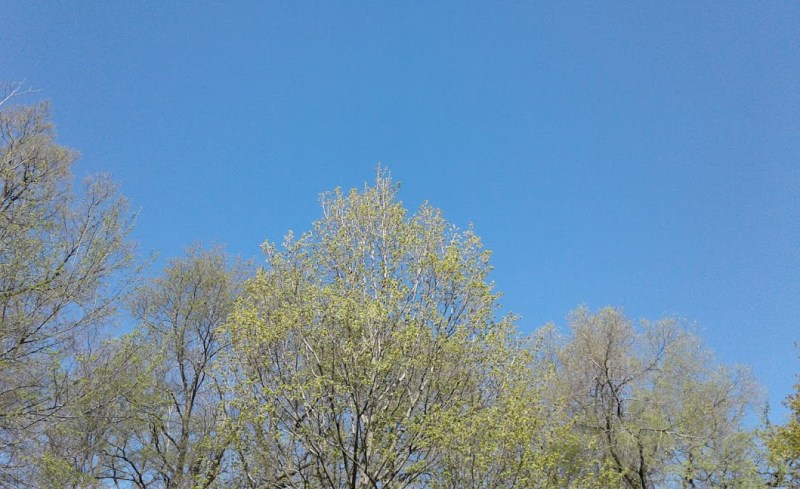
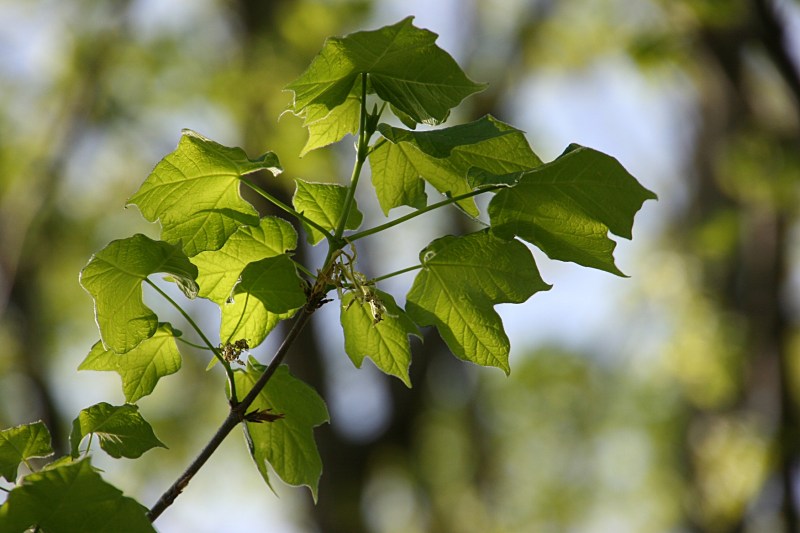
THESE ARE GLORIOUS DAYS in Minnesota. This May. This month when the landscape morphs from greys and browns into the vibrant greens of spring.


Leaves unfurl a canopy of green.


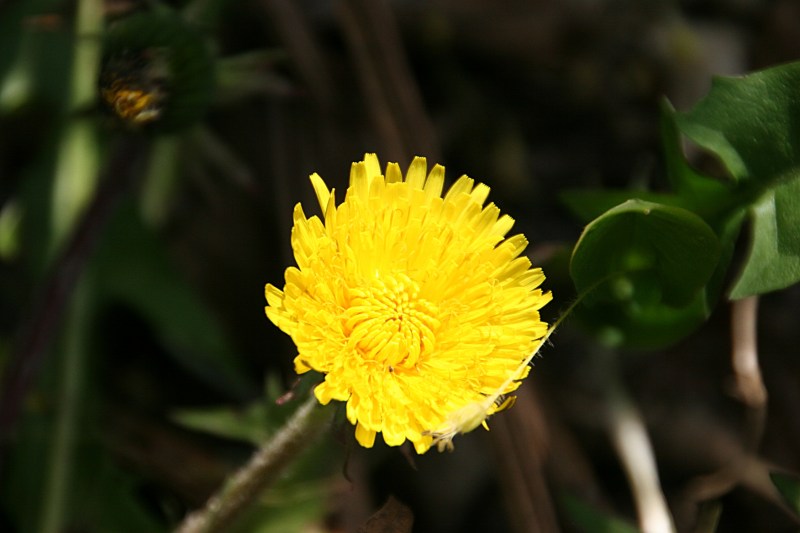
Lawns grow lush and sprout crops of dandelions.


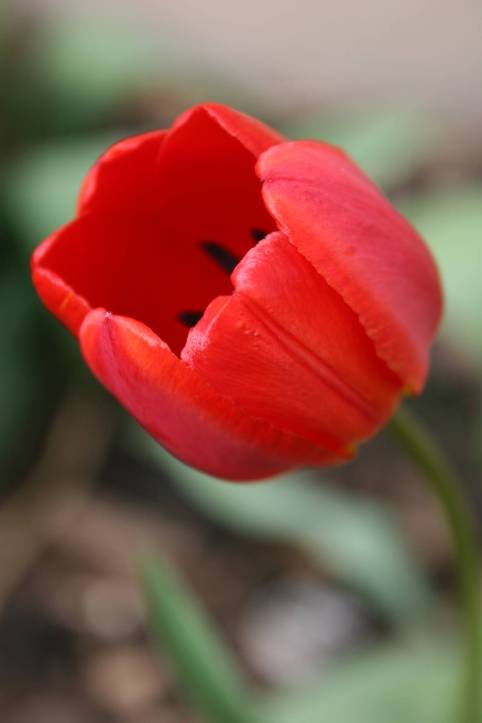
Tulips pop bold colors like exclamation marks in flowerbeds.


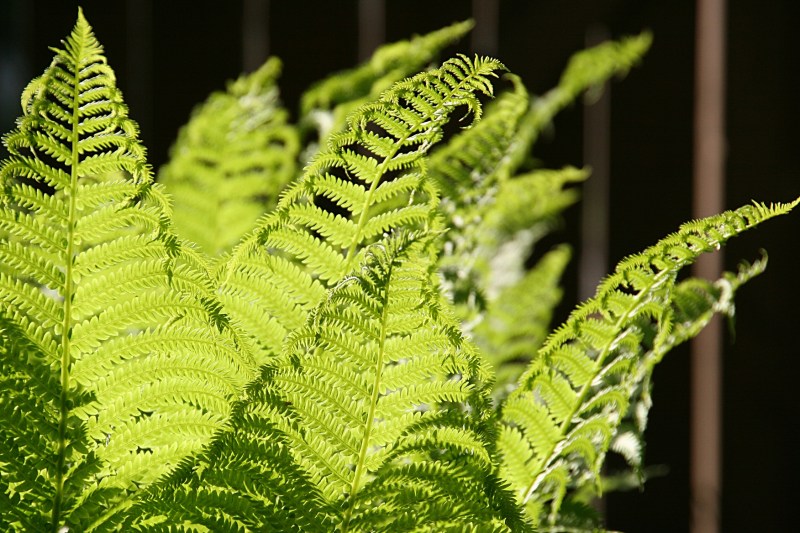
Coiled fiddleheads unwind into feathery ferns dancing in cool spring breezes.


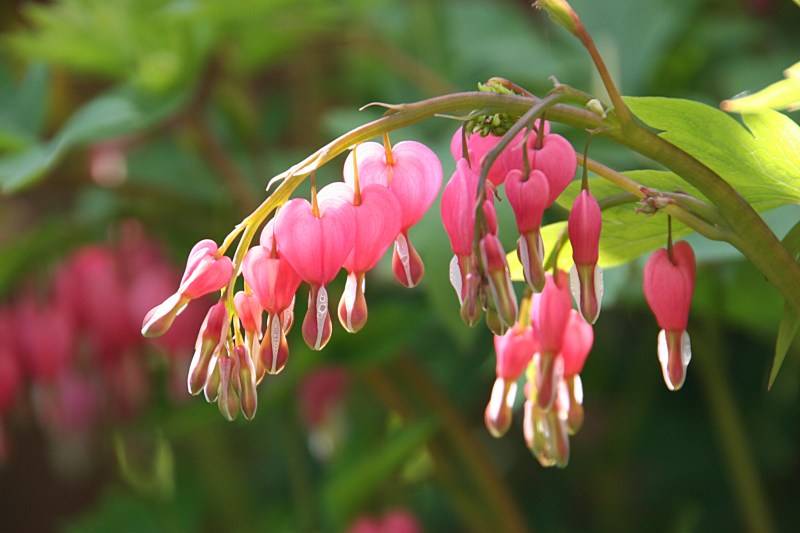
Bleeding hearts awaken, pushing new growth from stems dangling dozens of pink hearts. Hearts of love and hope and the beating of spring. All of this I see as if for the first time, although 60 springs have passed since I was born a Minnesotan.


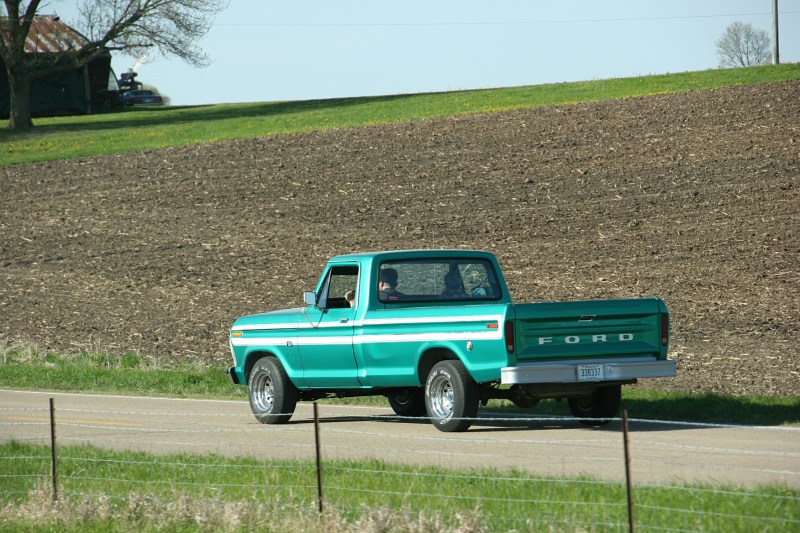
In the countryside, I watch a blue green Ford pick-up truck tool along an Interstate frontage road between strips of greening road ditches.


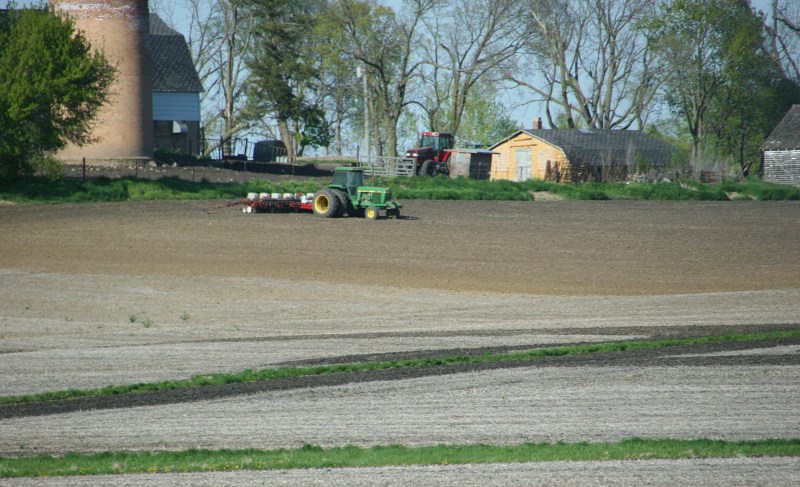
I observe, too, farmers working the land. Soon shoots of green will emerge from black soil as corn and soybean seeds erupt in new growth.

This is the season of newness in Minnesota, when anything seems possible. And perhaps it is.


TELL ME: How do you view and react to spring, wherever you may live?

© Copyright 2017 Audrey Kletscher Helbling


Published in Oakwood: My latest rural-rooted poem honors my farm wife mom April 28, 2017

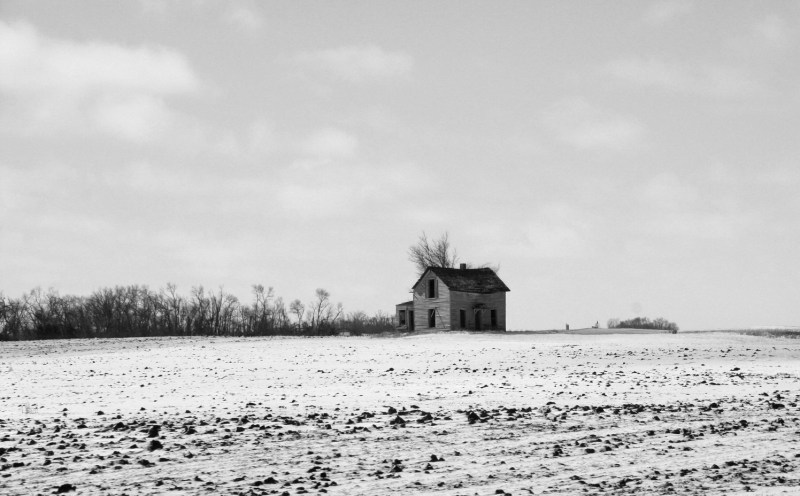
An abandoned farmhouse along Minnesota State Highway 19 east of Vesta, my hometown. The house is no longer standing. This image represents my rural heritage and looks similar to the house I called home for the first 11 years of my life. Minnesota Prairie Roots file photo.


MORE THAN 40 YEARS removed from the farm, my creative voice remains decidedly rural, especially in the poetry I write.

My latest published poem, “Ode to My Farm Wife Mother,” honors the woman who raised me, alongside my father, on a southwestern Minnesota dairy and crop farm. My parents were of good German stock, a hardworking couple who believed in God, in family and in the land. I carry that heritage with me, ever grateful for my rural upbringing.
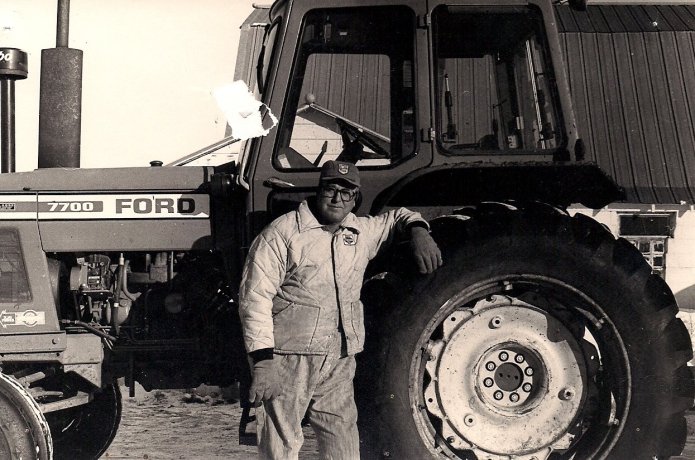
 

Dad farmed, in the early years with a John Deere and Farmall and IH tractors and later with a Ford. (Photo by Lanae Kletscher Feser)

A photo of my dad, Elvern, taken in 1980.


Life in rural Minnesota in the 1960s and 1970s was hard. I see that now from the perspective of an adult. My dad worked long hard hours in the barn milking cows and equally long hard hours in the fields. Farming was much more labor intensive then.
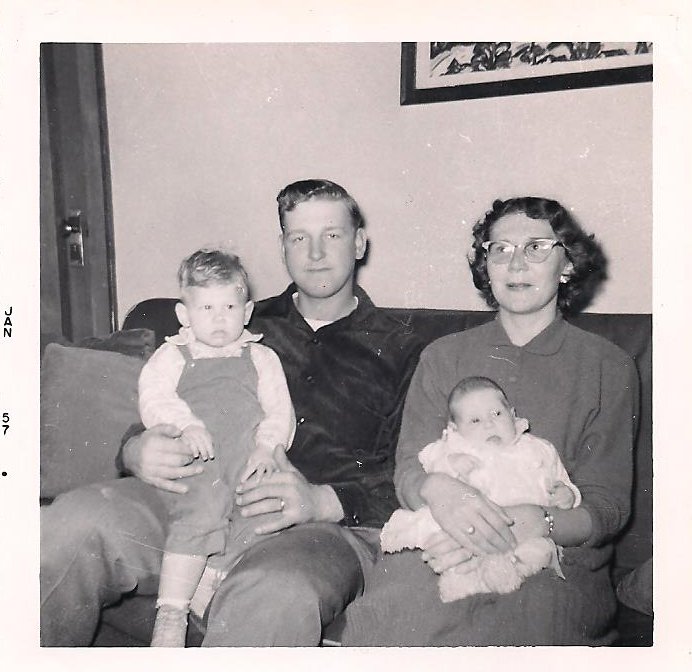
 

The only photo I have of my mom holding me. My dad is holding my brother, Doug.


Likewise, my mom’s job of caring for our family of eight required long hard hours of labor. She tended a large garden, preserved fruits and vegetables to stock the freezer and cellar shelves, baked bread from scratch, washed clothes with a wringer washer, did without a bathroom or telephone or television for many years, and much more.


My parents, Vern and Arlene, on their September 25, 1954, wedding day.


Sometimes I think how much easier my mother’s life would have been had she not married my dad and stayed at her town job in Marshall.
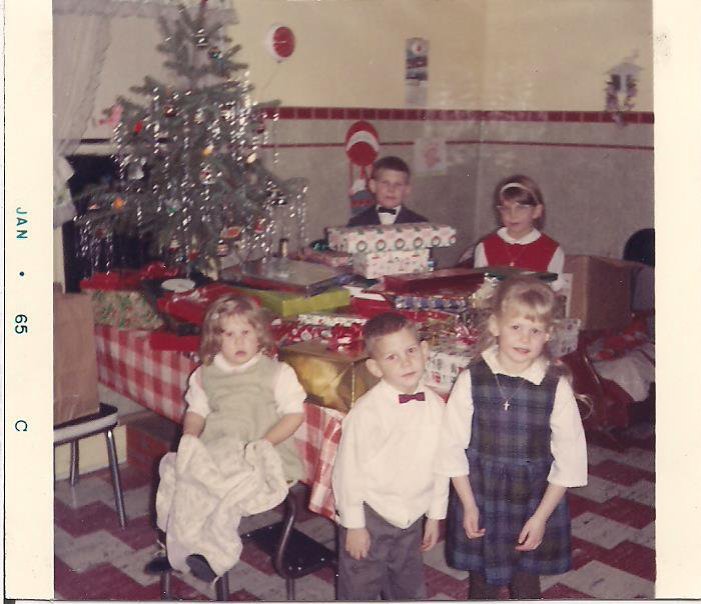
 

Our family Christmas tree always sat on the end of the kitchen table, as shown in this Christmas 1964 photo. That’s me in the red jumper with four of my five siblings. I write about this red-and-white checked floor in my poem.


But then I remind myself of how much family means to my mom and I could not imagine her life without any of her six children. She centered us, grounded us, taught us kindness and gratitude, instilled in us a loving and compassionate spirit.
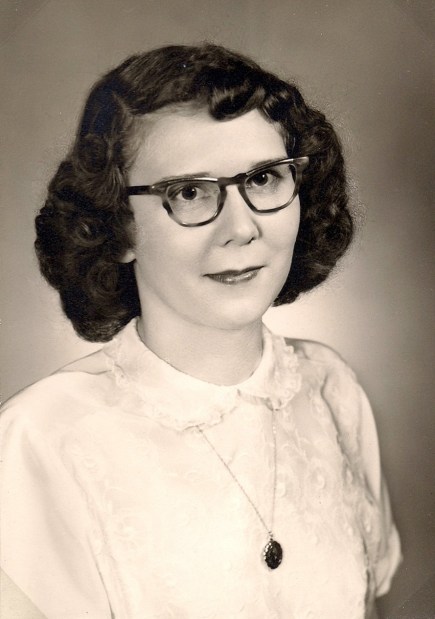
 

Arlene’s 1951 graduation portrait.


She has always been mom to me, a mother now nearing age 85. But there was a time when she was Arlene, not somebody’s wife, somebody’s mother. There was a time when she and my dad danced away a Saturday night in a southwestern Minnesota dance hall. They met at a dance.
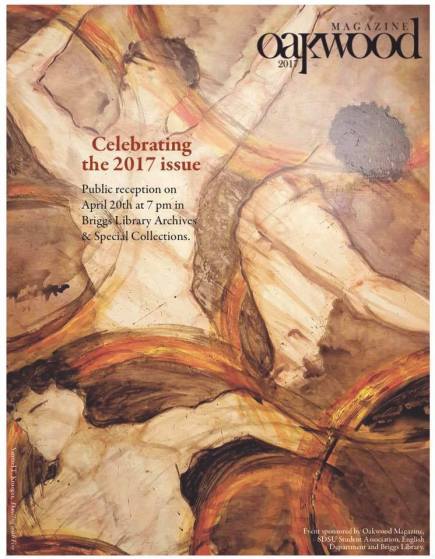
 

The promo for Oakwood 2017 features “Dancing with Fire,” the art of Samuel T. Krueger. Promo image courtesy of Oakwood.


Those thoughts inspired me to write “Ode to My Farm Wife Mother,” published last week in South Dakota State University’s literary journal, Oakwood. I am honored to have my poem selected for inclusion with the work of other writers and artists from the Northern Great Plains. It’s a quality publication that represents well those of us who call this middle-of-the country, often overlooked place, home.


Ode to My Farm Wife Mother

Before my brother,
you were Saturday nights at the Blue Moon Ballroom—
a bottle of Jim Beam whiskey in a brown paper bag,
Old Spice scenting your dampened curls,
Perry Como crooning love in your ear.

Then motherhood quelled your dancing duet.
Interludes passed between births
until the sixth, and final, baby slipped into your world
in 1967. Thirteen years after you married.
Not at all unlucky.

Life shifted to the thrum of the Maytag,
sing-song nursery rhymes,
sway of Naugahyde rocker on red-and-white checked linoleum.
Your skin smelled of baby and yeasty homemade bread
and your kisses tasted of sweet apple jelly.

In the rhythm of your days, you still danced,
but to the beat of farm life—
laundry tangled on the clothesline,
charred burgers jazzed with ketch-up,
finances rocked by falling corn and soybean prices.

Yet, you showed gratitude in bowed head,
hard work in a sun-baked garden,
sweetness in peanut butter oatmeal bars,
endurance in endless summer days of canning,
goodness in the kindness of silence.

All of this I remember now
as you shove your walker down the halls of Parkview.
in the final set of your life, in a place far removed
from Blue Moon Ballroom memories
and the young woman you once were.

                                         #
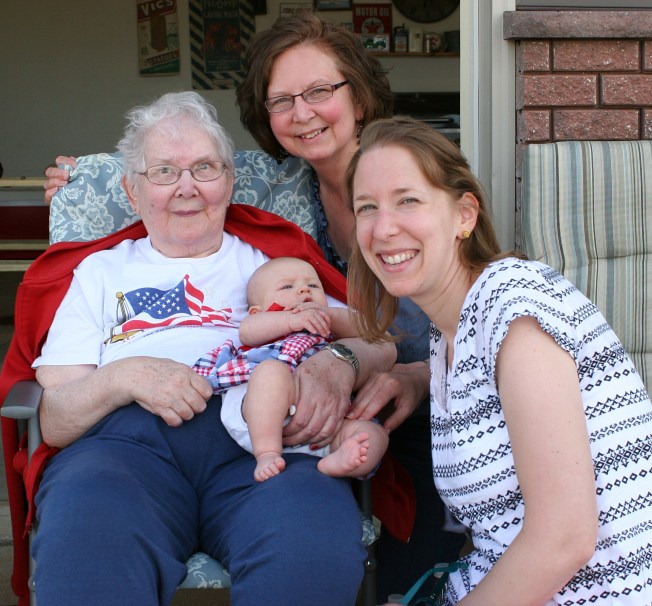
Four generations: Great Grandma Arlene, Grandma Audrey, mother Amber and baby Isabelle, all together for the first time in July 2016 in rural southwestern Minnesota. Minnesota Prairie Roots file photo 2016.


I took some liberties with my poem. I doubt my mom ever drank whiskey. But back in the day, folks brought booze bottles in brown paper bags to dances for set-ups. She didn’t dance in the Blue Moon Ballroom, although one once stood in Marshall. Arlene went to dances in Ghent, in a dance hall whose name eludes me. Blue Moon sounds more poetic. But the rest of the poem is factual right down to the Naugahyde rocker and my mom shoving her walker down the hallways of Parkview.

FYI: You can view my poem on page 78 of Oakwood, found online by clicking here. My bio is published on page 89, listed among the other 40 contributors’ bios. I am grateful to SDSU in Brookings for the opportunity to be part of this magazine which showcases the creative voices of Plains writers and artists. I shall always feel proud of my rural upbringing, the single greatest influence on me as a poet, a writer, a photographer.

Copyright 2017 Audrey Kletscher Helbling


Art of the crucifixion April 14, 2017


ART MOVES IN A WAY sometimes that words cannot.


St. Mary’s Catholic Church sits atop a hill in New Trier, a small town north of Cannon Falls.


Today I present to you selected art that depicts the crucifixion of Christ. I discovered this collection inside St. Mary’s Catholic Church, New Trier, Minnesota.


Centering the ornate altar is this depiction of Jesus’ crucifixion.


The art ranges from simple to elaborate. I know nothing of the artists. But in viewing each of their works, I experience a wide range of emotions. And with that comes a deep sense of gratitude for those who share their faith through art.


In the face of Mary, I see profound grief in losing her son.


Hands convey so much love; here Mary holds Jesus’ hand.


The detail in this work of art presents the visual depth of Christ’s suffering.


This simple crucifix is set against the window backdrop of St. Mary’s Cemetery.


When I toured St. Mary’s recently, I was overwhelmed by the beauty of this place, just as today I am overwhelmed by gratitude to Christ.

FYI: Please check back for future posts of my visit to St. Mary’s.

© Copyright 2017 Audrey Kletscher Helbling
 

My award-winning water story publishes April 8, 2017


“Water Stories from a Minnesota Prairie Perspective” has published in southern Minnesota based River Valley Woman’s April issue. My story won the nonfiction category in the “We Are Water” writing contest sponsored by Plum Creek Initiative with the support of The League of Women Voters and River Valley Woman. That honor includes a $250 prize.

I don’t have a hard copy yet, but I viewed the story online. And so can you by clicking here and advancing to page 50 of the April issue. The piece is lengthy per submission guidelines requiring 5 – 12 pages of copy.

No matter how many times I’ve been published, I still thrill in seeing my words out there for others to read and perhaps appreciate. You can find print copies of the magazine in many locations like Mankato, St. Peter, New Ulm, Redwood Falls and surrounding smaller communities. Click here for a complete list.

In reading my story, you will learn of my growing up years on a southwestern Minnesota dairy and crop farm, the place that shaped me into the person, writer and photographer I’ve become. Farm life as I remember it from the 1960s – 1970s no longer exists. So this story, while written for a competition, was also written for me and my family. There’s an importance in reclaiming memories through written words, in telling the stories that define a place, in sharing my roots with you, my readers.

FYI: Click here to read my first blog post about winning this writing competition.

© Copyright 2017 Audrey Kletscher Helbling
 

Barn memories February 28, 2017

Filed under: Uncategorized — Audrey Kletscher Helbling @ 5:00 AM
Tags: , , , , , , , , , ,

barn-85-barn-fence


MY APPRECIATION FOR and fascination with aged barns remains strong, steadfast, unwavering. That interest springs from childhood years of laboring in a southwestern Minnesota dairy barn.


barn-15-barn-2-silos


As the second oldest in a family of six children, I was tasked early on with doing chores alongside my eldest brother. Dad needed the help and I never resented it. I only resented that my brother would steal the silage I’d tossed down from the silo. I suppose I can’t blame him. He had to carry silage across two gutters and a barn aisle to feed cows on the east side of the barn. I had only to step outside the silage room door to distribute chopped and fermented corn on the west side. But still.


barn-84-farmhouse


Often I told my dad I wanted to be a farmer when I grew up. He never encouraged it. But I loved working in the barn—maybe not the scraping manure part so much. Yet I always preferred farm work to anything Mom wanted me to do in the house.


barn-80-barn-silo


So I pushed a wheelbarrow down the barn aisle, then scooped shovels full of ground feed before stanchions. I hoisted myself into the haymow to throw down bales of hay and straw. I shook apart straw with a pitchfork, separated alfalfa with gloved hands. I carried pails of milk, washed buckets, mixed milk replacer, fed milk and pellets to hungry calves…

I hold memories of Point of Law booming from WCCO, of hot urine splashing from a cow’s behind, of frothy milk poured into the bulk tank, of a yellow jackknife stuffed inside my pants pocket, of cats clustering around a battered hub cap brimming with still warm milk.


barn-81-barn-w-green-patched-roof


My dad was right. I never became a farmer, pursuing journalism instead. Only one brother farmed for awhile. He’s still in an ag-related industry as is my oldest brother. The rest of us, well, we left the farm. But I like to think that we’ve truly never left in the sense of a deep-rooted attachment to the place that shaped each of us. I write and photograph from a rural perspective. Another sister works as a floral designer. My youngest brother is an attorney in the Twin Cities metro, but maintains his connection to southwestern Minnesota through deer and pheasant hunting.

We were raised as the sons and daughters of a farmer. That remains, as part of our past and as part of who we became.

TELL ME: Did your childhood influence your direction in life, including career choices, where you lived/live, etc.?

FYI: These photos were taken in rural Rice County and in the Jordan/Prior Lake areas, not in my native southwestern Minnesota. This post honors my farmer father, Elvern Kletscher, who would have celebrated his birthday this week. He died 14 years ago in early April 2003.

© Copyright 2017 Audrey Kletscher Helbling
 

Art shed February 10, 2017

Filed under: Uncategorized — Audrey Kletscher Helbling @ 5:00 AM
Tags: , , , ,

art-shed-in-olmsted-county-mn-117-overview


THE AGED SHED STANDS as a canvas along Olmsted County Road 1 for artwork that reminds me of the 1960s.


art-shed-in-olmsted-county-mn-122-close-up


Peace signs and LOVE. Stand by me. The sun will come out.

If I knew the story behind the art, the words, the artists, I’d tell you. But I don’t.

This shed is situated on private property between Pleasant Grove and Simpson, south of Rochester, near Root River County Park. Driving northbound, you’d miss it hidden by trees. Southbound I just barely caught the flash of color through nature’s cover.
 

art-shed-in-olmsted-county-mn-121-close-up


Whatever the story, I am intrigued. I don’t consider this graffiti. It’s art and poetry, emotions expressed. All those hearts and peace symbols point to soulful individuals who care deeply, live joyfully and love life.

Thoughts?

If you know the story about this art, I’d love to hear from you.

Note: These photos were taken in October, long before winter’s arrival in Minnesota.
© Copyright 2016 Audrey Kletscher Helbling