Minnesota Prairie Roots

Writing and photography by Audrey Kletscher Helbling

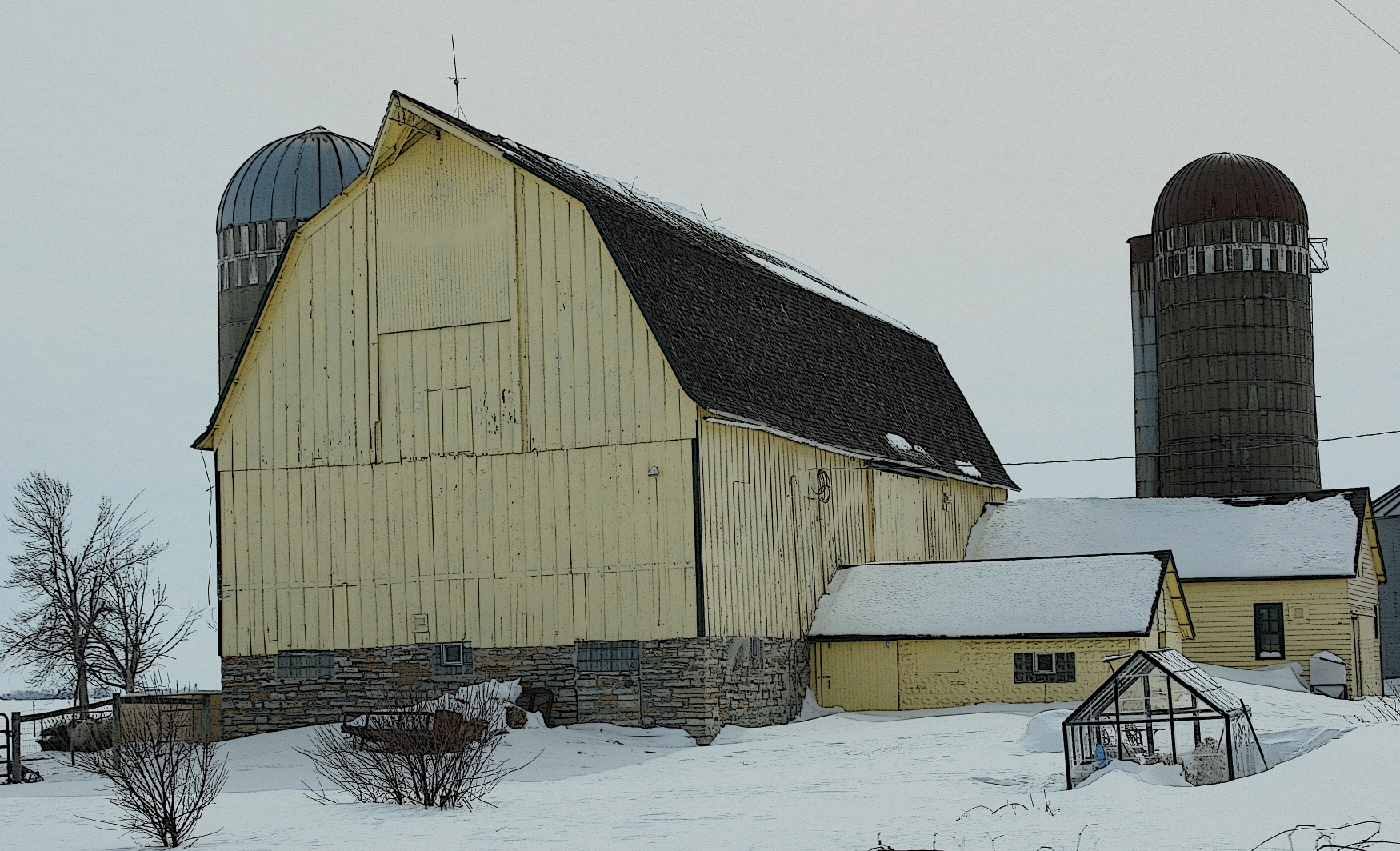
The yellow barn January 7, 2015

Filed under: Uncategorized — Audrey Kletscher Helbling @ 5:00 AM
Tags: , , , , ,

INITIALLY, THE HUE caused me consternation. Who paints a barn yellow? Red, or perhaps grey or white, should define agrarian buildings.

Near Nerstrand, Minnesota.

Near Nerstrand, Minnesota. Minnesota Prairie Roots file photo.

But the more I study this photo, the more the color appeals to me. Creamy pale yellow, the shade of butter, seems fitting for a building which sheltered, maybe still does, cows and perhaps a myriad of other farm animals.

The hue, too, accents the foundation of locally-quarried limestone. There’s something about a stone barn foundation that portrays strength and history and hard work. Just imagine the time and effort invested and muscles used.

Duo silos flank the barn like soldiers in steely grey uniforms, always at the ready.

This scene pleases me. Every barn, no matter its color, deserves to stand, guarded against the assaults of time and weather and so-called progress.

Of that I am certain.

© Copyright 2014 Audrey Kletscher Helbling


Calling all lutefisk lovers to Vang Lutheran Church October 6, 2014

Vang Lutheran is set among the farm fields of Goodhue County. The name "Vang" means field. Vang is a region of Norway from which the areas first settlers arrived.

Vang Lutheran is set among the farm fields of Goodhue County. The name “Vang” means field. Vang is a region of Norway from which the area’s first settlers arrived.

JUST DAYS BEFORE THE 34th annual Lutefisk and Norwegian Meatball Supper at Vang Lutheran Church, rural Dennison, the ladies were busy prepping Saturday morning.

A sign inside Vang Lutheran Church advertised its annual Lutefisk & Meatball Supper.

A sign inside Vang Lutheran Church advertises its annual Lutefisk & Meatball Supper.

Plates are stacked on the kitchen counter.

Plates are stacked on the kitchen counter awaiting diners.

Lists have been made with assigned jobs.

Lists have been made with assigned jobs.

Church ladies bring bowls from home.

Church ladies bring bowls from home.

Dishes and bowls stacked. Counters covered in plastic. Floors scrubbed. Lists in place. Folding chairs ready to unfold. Beet preserves and pickles already in the country store, made with produce from the Vang-Dennison Lutheran Church parishes’ Growing Connections Garden. Vinegar stashed in the fridge for coleslaw.

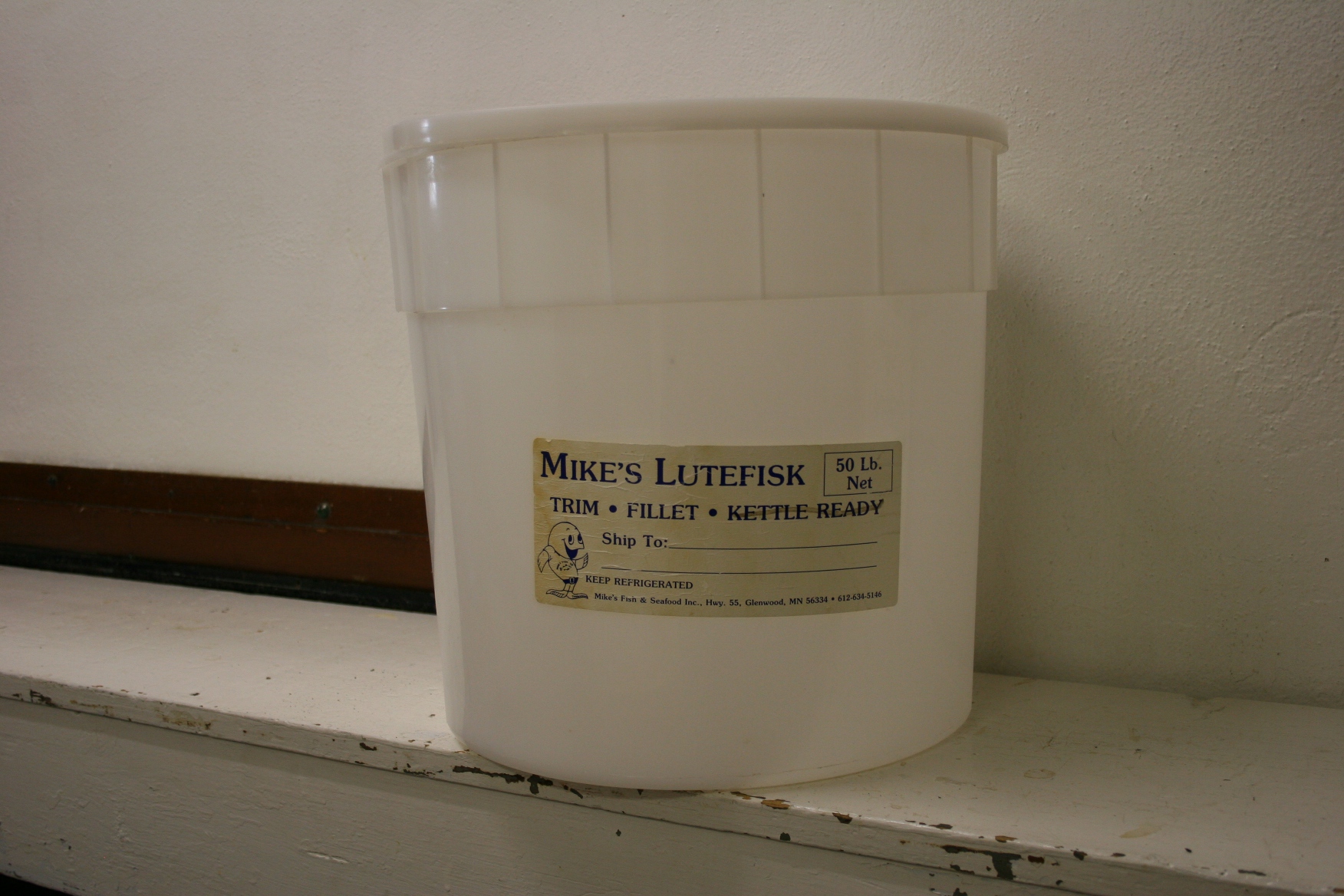
An empty lutefisk bucket from a previous supper.

An empty lutefisk bucket from a previous supper.

The lutefisk hadn’t arrived yet from Mike’s Lutefisk in Glenwood, Minnesota. But this Norwegian Lutheran church is ready for the 1,150 pounds that will feed 1,200 diners on Wednesday, October 8.

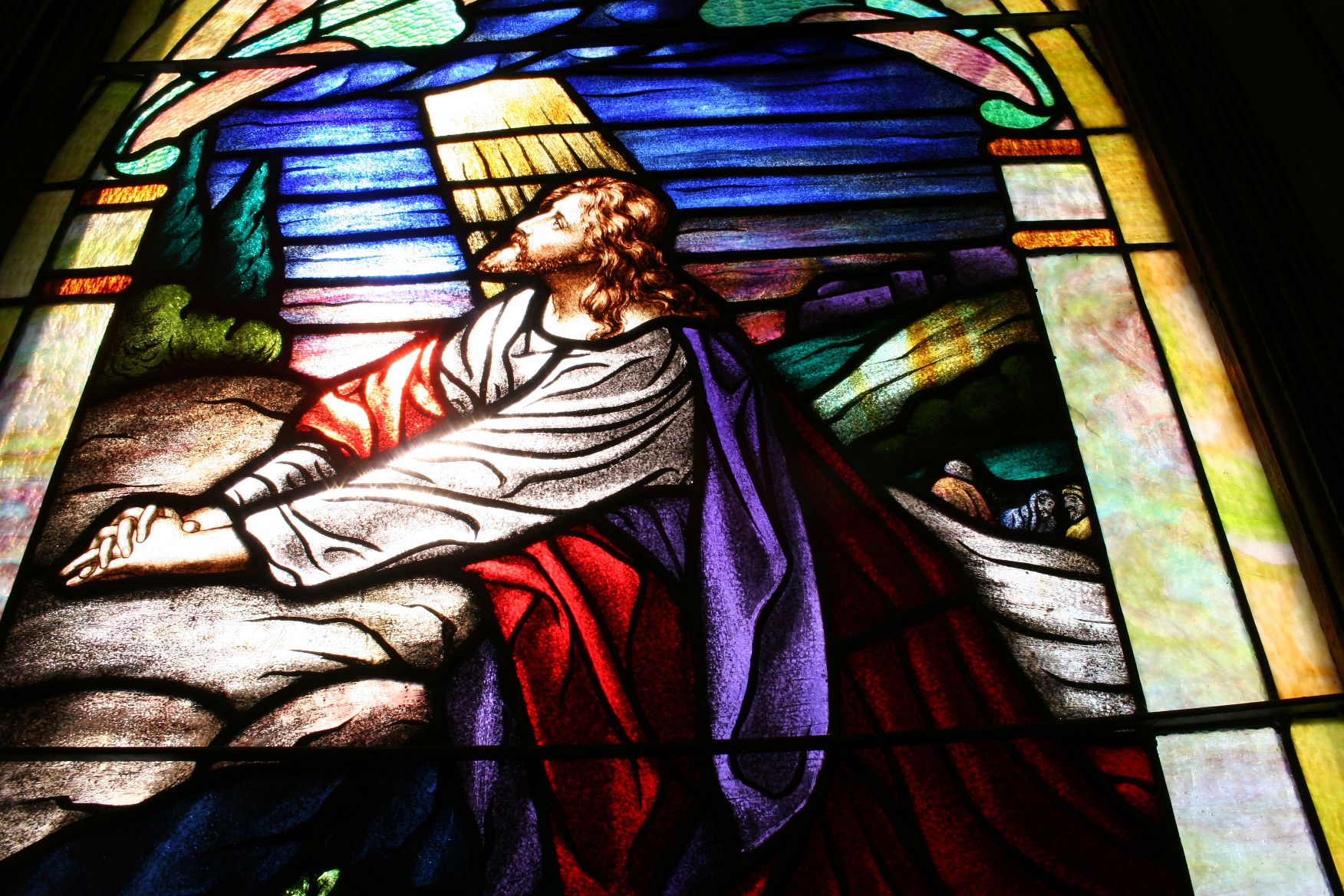
Beautiful stained glass windows grace the sanctuary.

Beautiful stained glass windows grace the sanctuary.

Not quite the 5,000 Jesus fed, but a seeming miracle for this congregation of 300 members—with a weekly attendance of 70 – 90—to prepare and serve this ethnic feast.

A view of the sanctuary from the balcony.

A view of the sanctuary from the balcony.

On the menu are lutefisk, Norwegian meatballs and gravy, mashed potatoes, corn, cranberries, coleslaw, rolls, fruit soup, lefse, Norwegian bakings and beverages.

To feed that many requires 1,150 pounds of lutefisk, 550 pounds of meatballs, 200 pounds of butter (presumably for all that lutefisk), 600 pounds of potatoes, 36 gallons of corn, 110 pounds of coleslaw, 20 gallons of cranberry sauce, 20 gallons of fruit soup, 4,500 cups of coffee (Norwegians must drink a lot of coffee), 600 half-pints of milk, 2,600 pieces of lefse, 90 dozen buns and 2,600 Norwegian bakings.

Uffda.

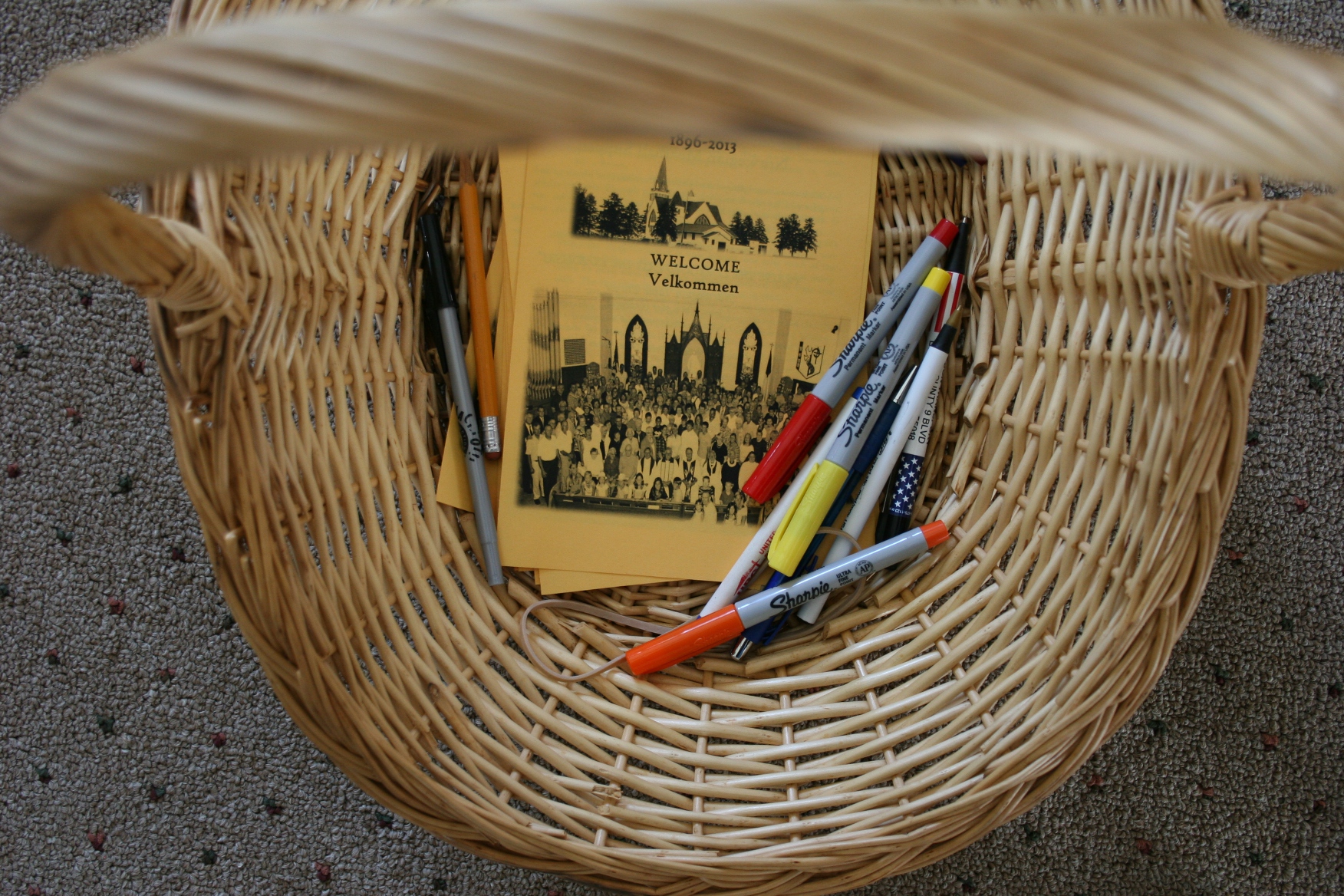
Diners will receive info about Vang and its annual supper.

Diners will receive info about Vang and its annual supper like these informational sheets photographed in a basket.

Mid-day servings are at 11 a.m., noon and 1 p.m. by reservation only. Call the church office at 507-645-6042.

Continuous evening serving runs from 4 – 7:30 p.m.

Cost is $16 for adults; $6 for 10 and under; and free for preschoolers.

The picturesque Vang Lutheran Church was built in 1896.

The picturesque Vang Lutheran Church was built in 1896.

Vang Lutheran Church, 2060 County Road 49, is located at  the corner of Goodhue County Road 49 and 20th Avenue, which is southeast of Dennison or seven miles northwest of Kenyon.

I won’t be there. I don’t like lutefisk. But apparently plenty of people do.

© Copyright 2014 Audrey Kletscher Helbling


An afternoon at the Sogn Valley Craft Fair October 4, 2014

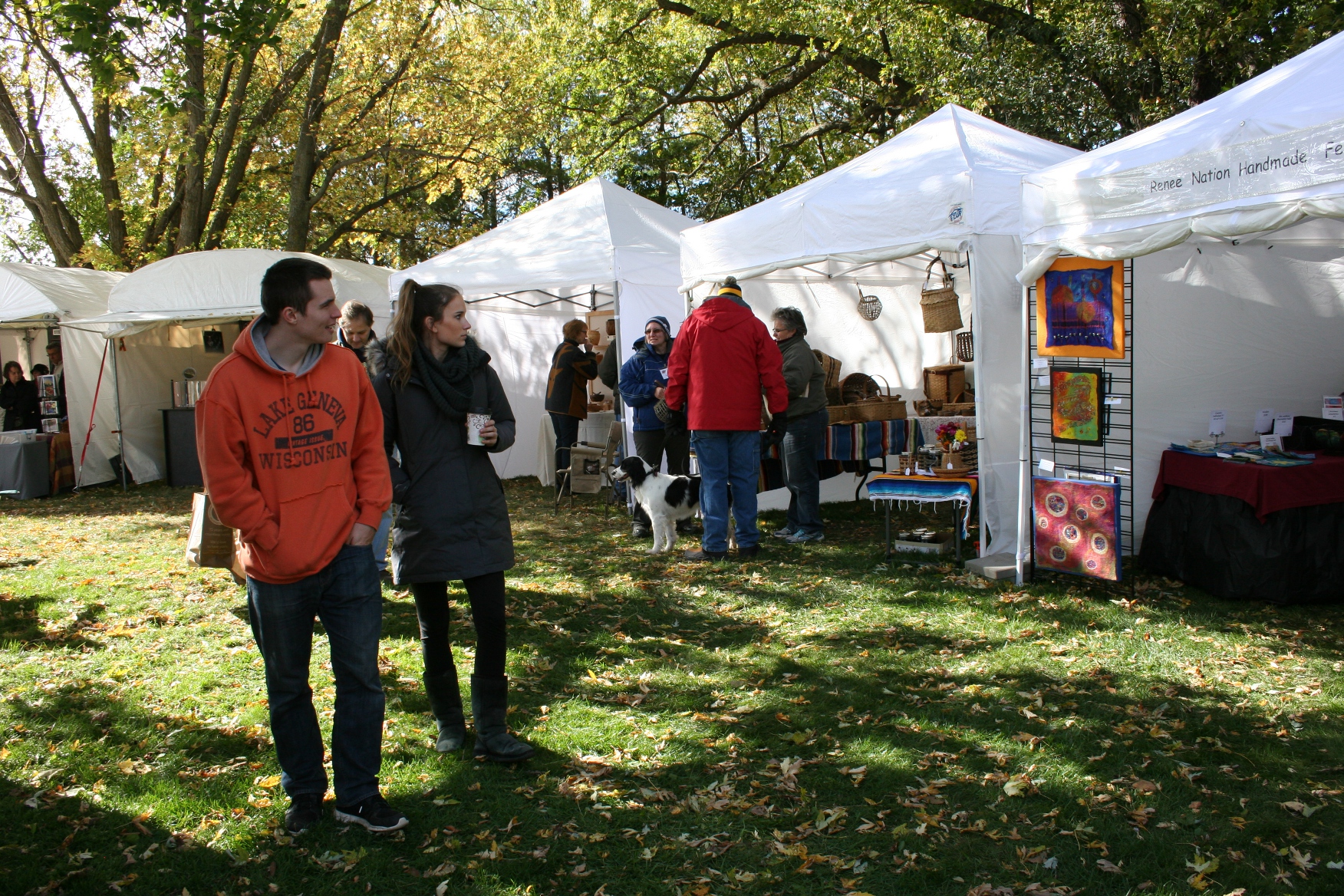
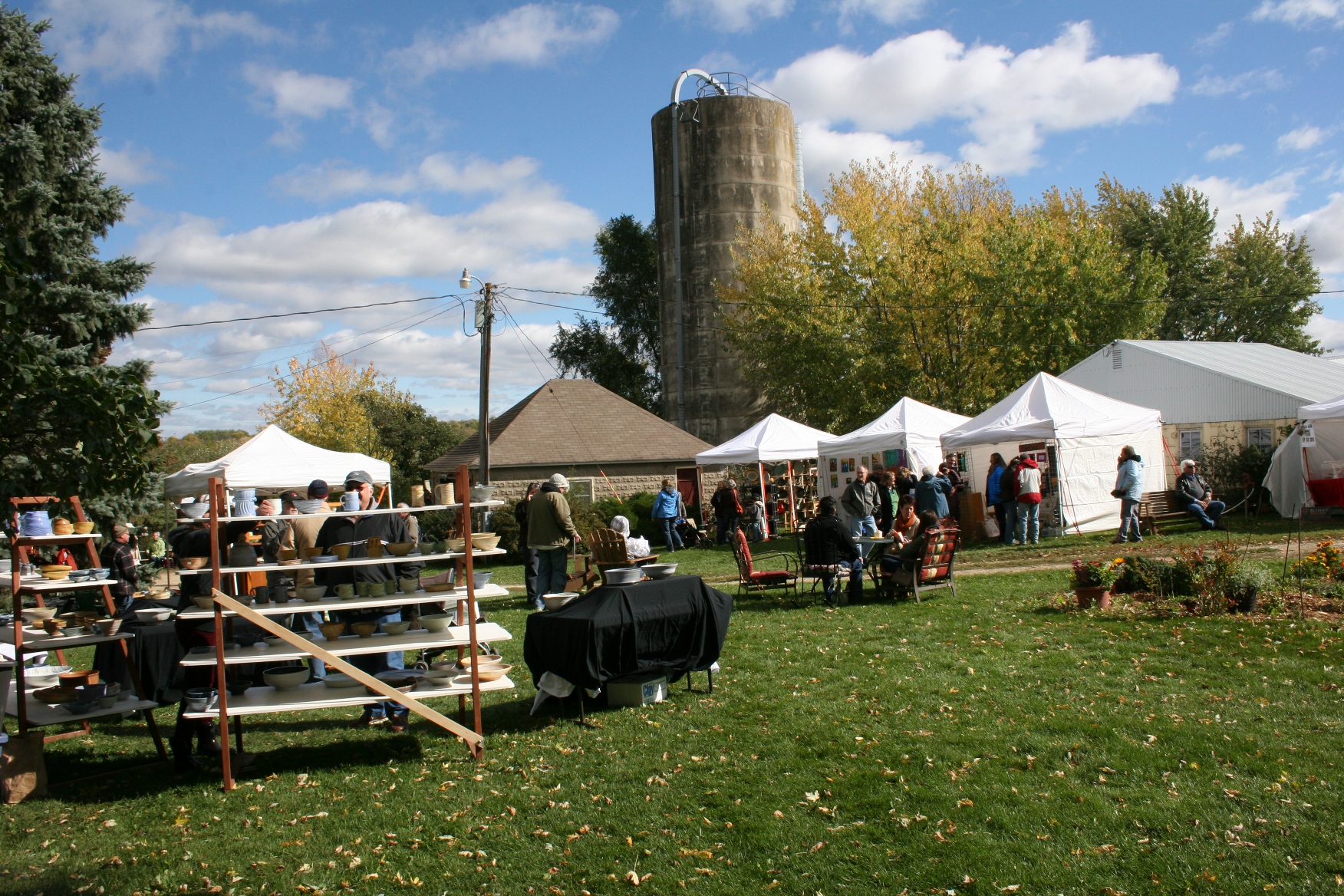
NEARLY THREE DOZEN ARTISTS ring the farmyard, a grove of trees sheltering their tents on an autumn day that bites with a brisk wind.

Artists shelter in tents.

Artists shelter in tents.

Leaves litter the grass. Clouds break away into sunshine. Caps clamp heads. Hands shove deep into warm pockets.

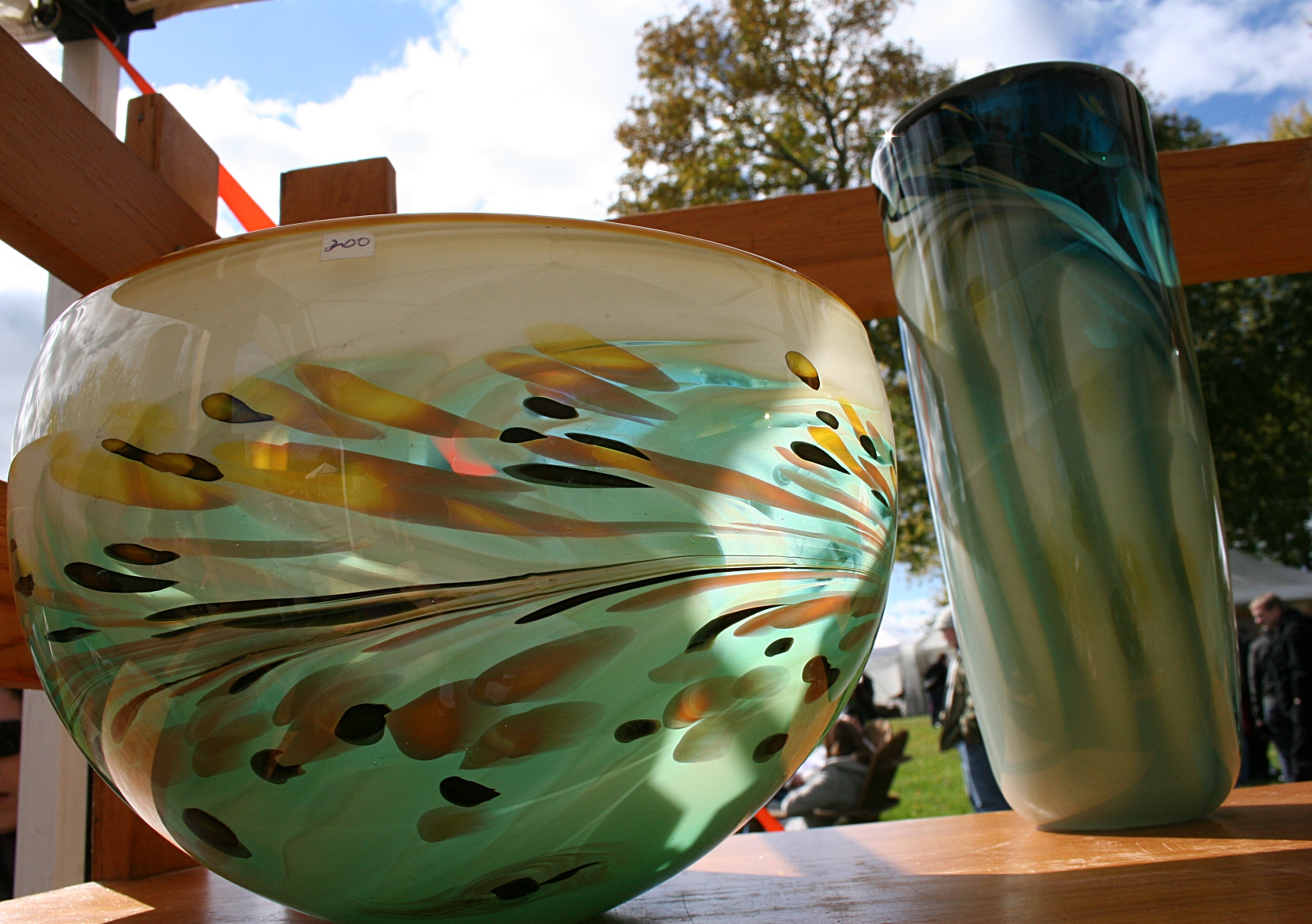
Hand blown glass by Steve Claypatch of Ascension Art, Minneapolis.

Hand blown glass by Steve Claypatch of Ascension Art, Minneapolis.

And folks meander, pausing to admire the art that has drawn a crowd into the Sogn Valley southwest of Cannon Falls for the annual Sogn Valley Craft Fair.

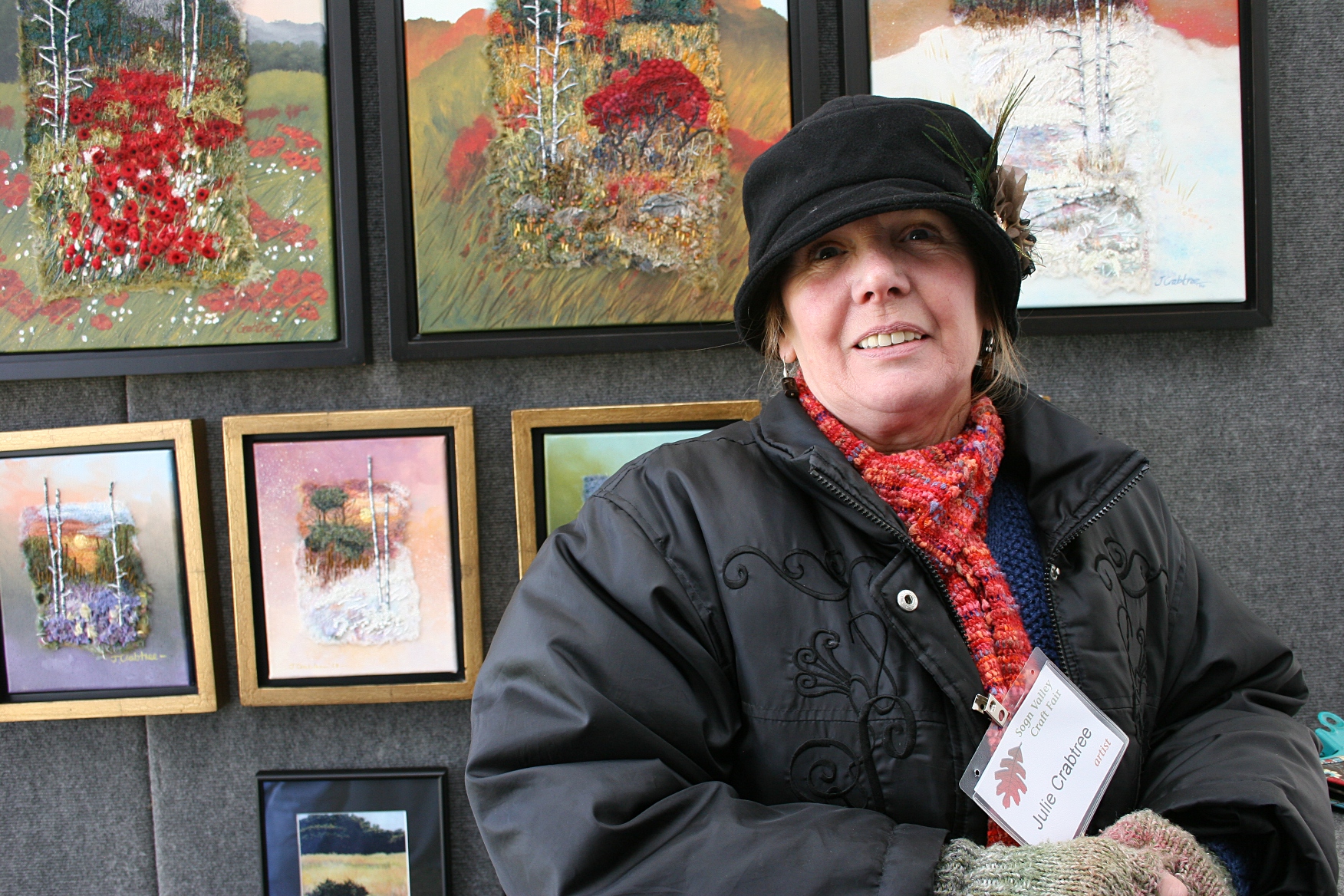
Julie Crabtree creates fabulous mixed media modern embroidery fiber art.

Julie Crabtree creates fabulous mixed media modern embroidery fiber art.

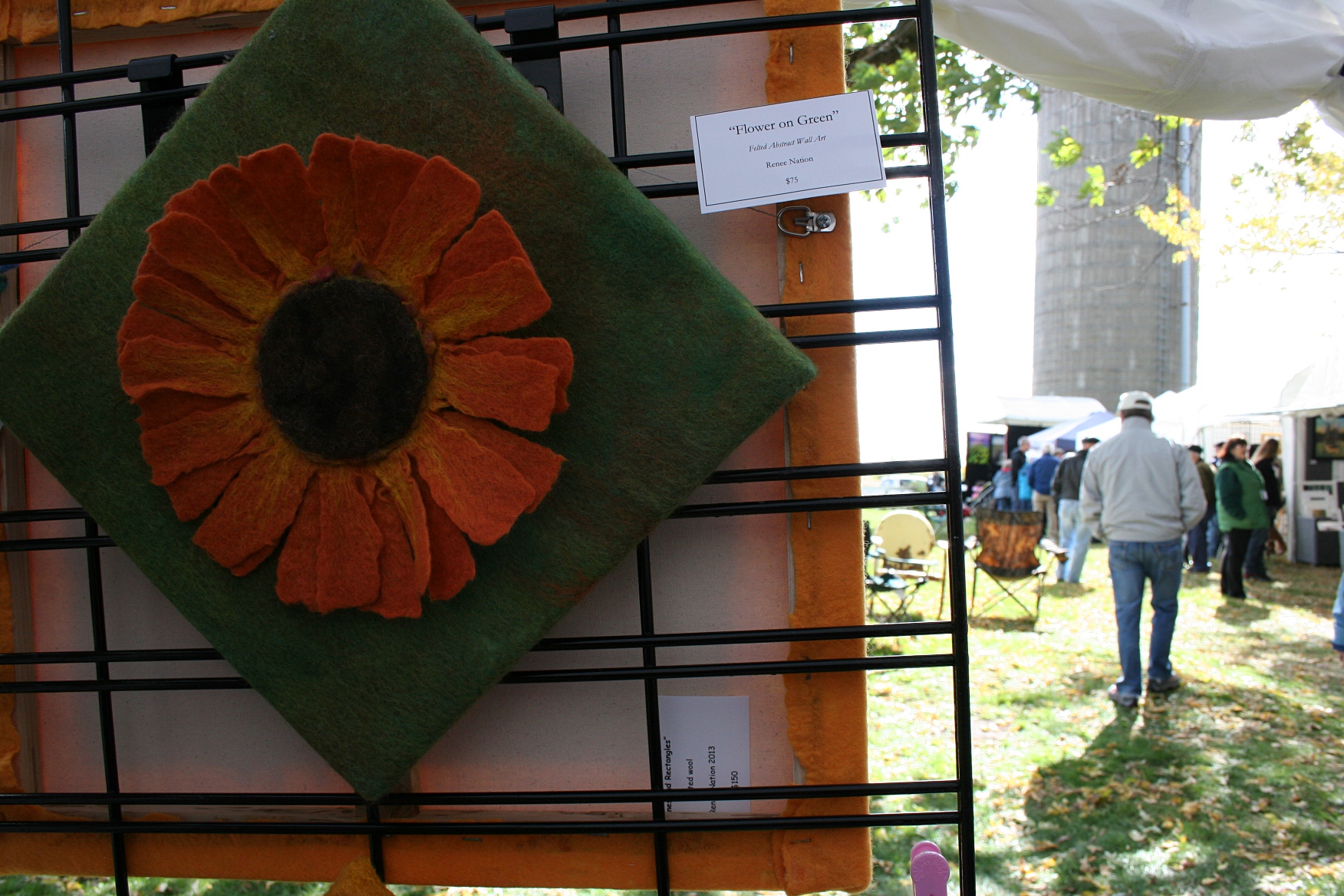
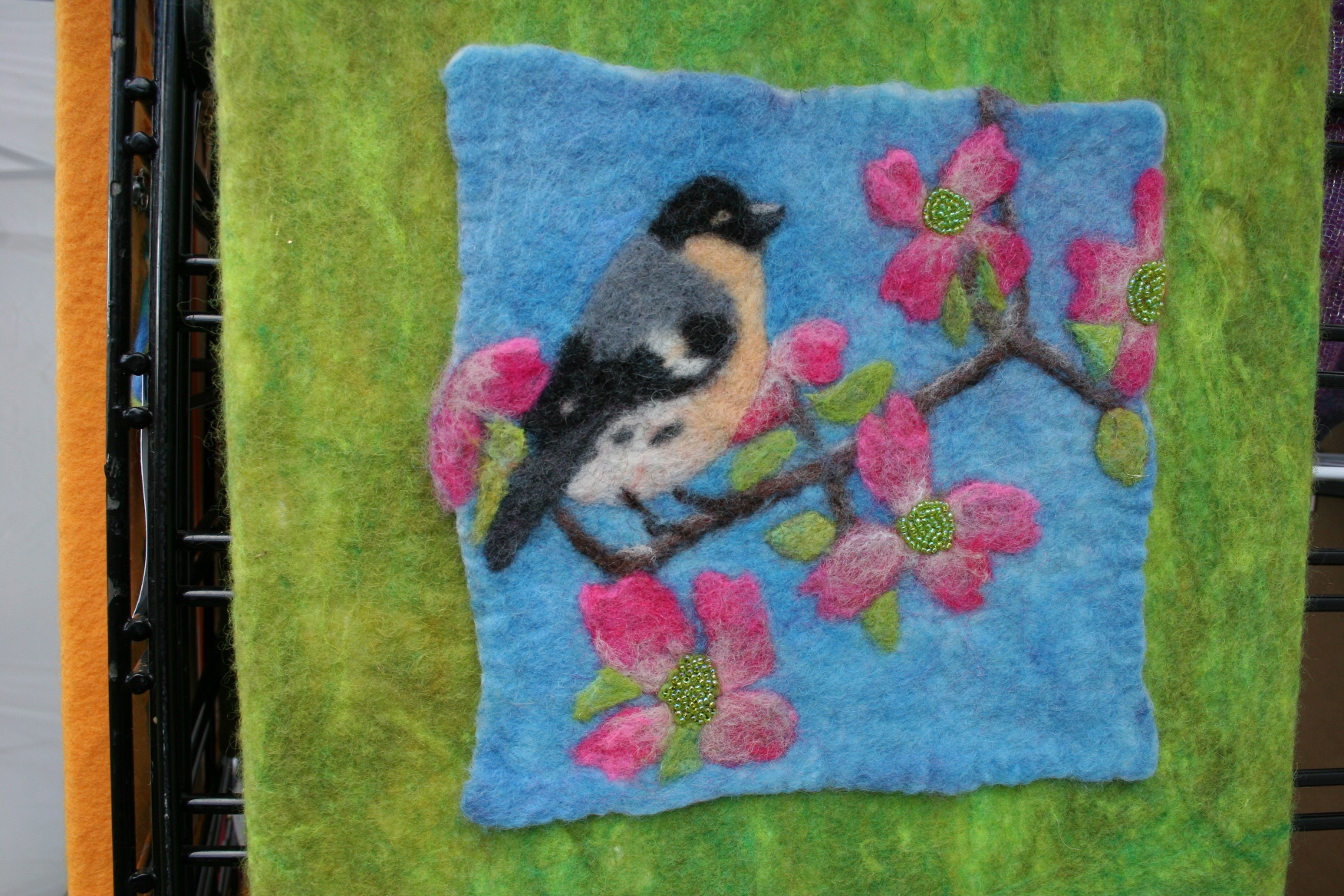
The work of Renee Nation, fiber artist and felt maker.

The work of Renee Nation, fiber artist and felt maker.

Colleen Riley of Eureka Pots was selling this garden art among other soda fired ceramics.

Colleen Riley of Eureka Pots sells this garden art among other soda fired ceramics.

Here jurored artists vend their creations—photos, pottery, fiber art, jewelry, woodcarvings, prints and much more.

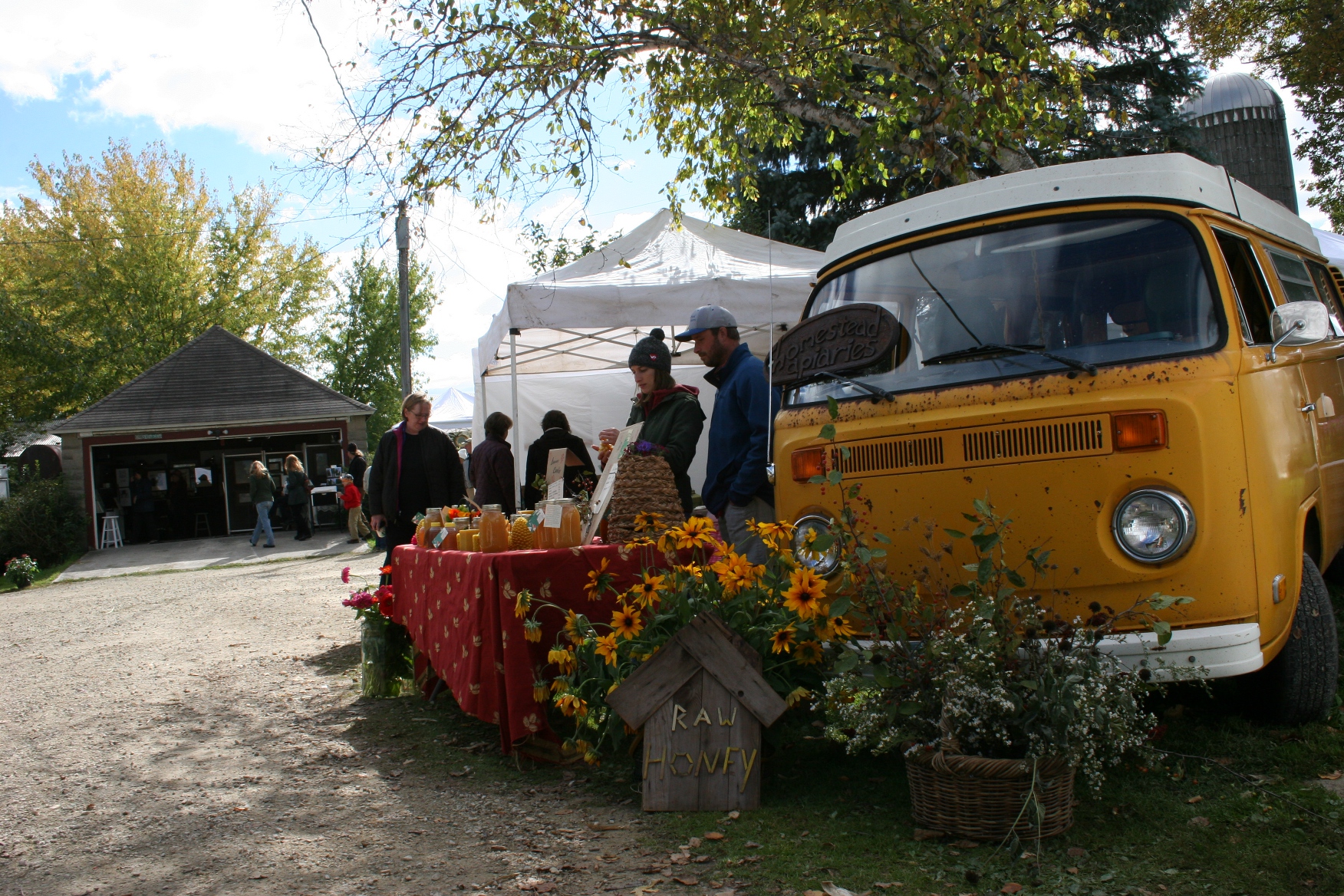
Homestead apiaries sells honey, beeswax candles and more.

Homestead apiaries vends honey, beeswax candles and more.

Here beekeepers sell honey and beeswax candles.

A welcoming vendor sold baked goods, preserves and more at Ruthie's Kitchen while the baker returned home, just down the road, to bake buns for Sunday's fair.

A welcoming vendor sold baked goods, preserves and more at Ruthie’s Kitchen while the baker returned home, just down the road, to bake buns for Sunday’s fair.

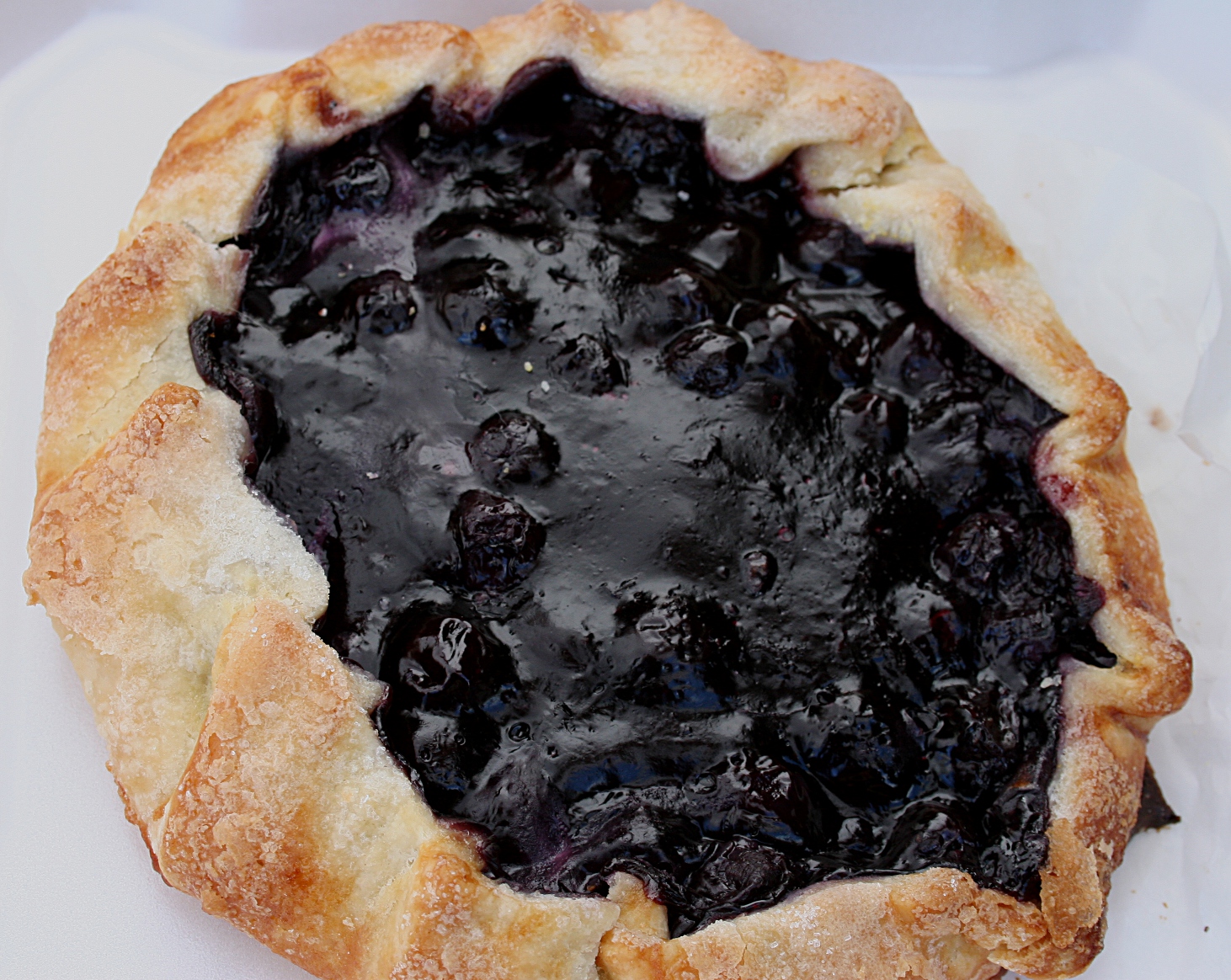
A blueberry tart from Ruthie's Kitchen.

A blueberry tart from Ruthie’s Kitchen.

Tenders of the earth peddle pumpkins and apples. Baked and preserved goods draw those hungry for a taste of Grandma’s kitchen.

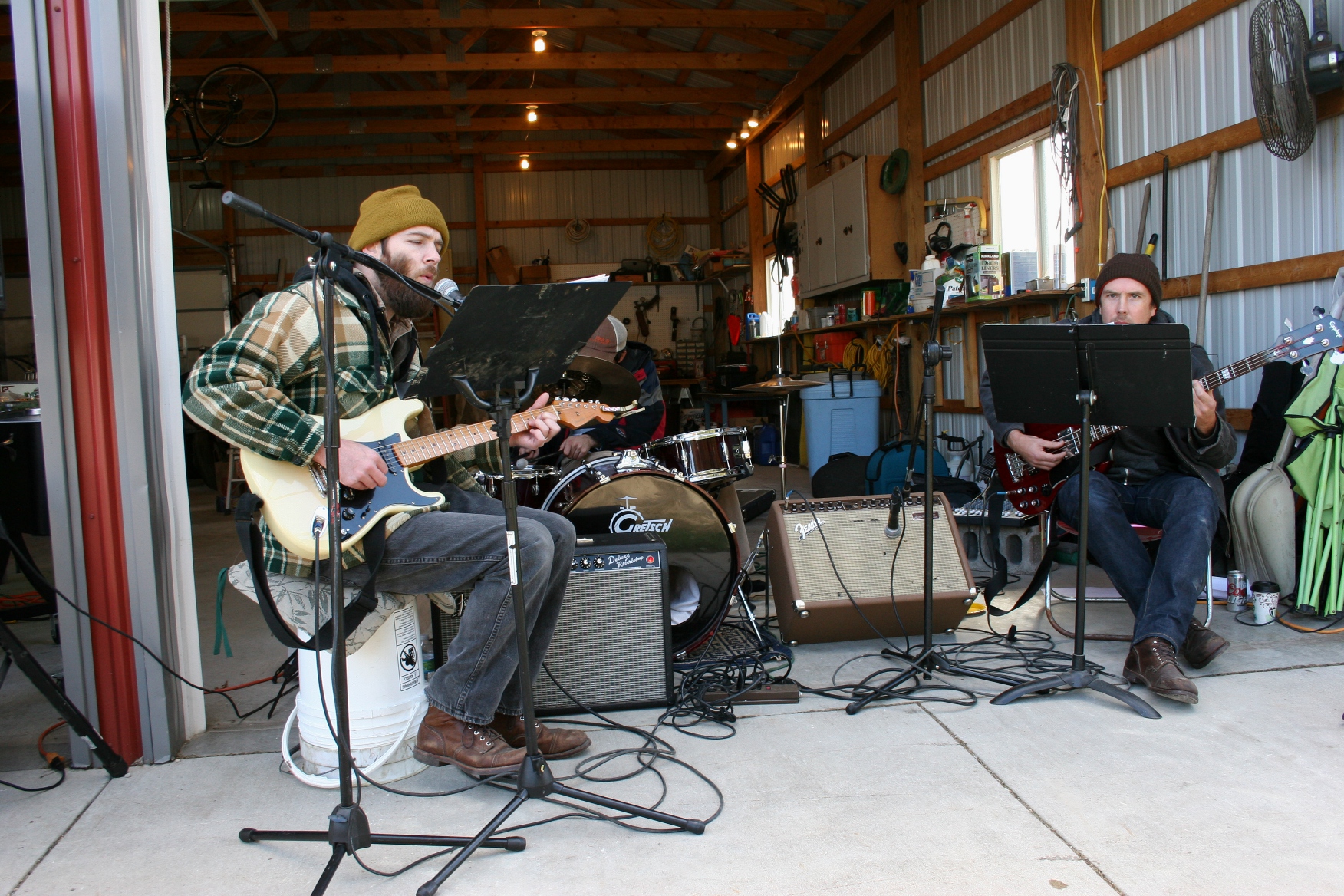
Local band, Muchos Machos, entertains.

Local band, Muchos Machos, entertains.

Musicians strum and croon.

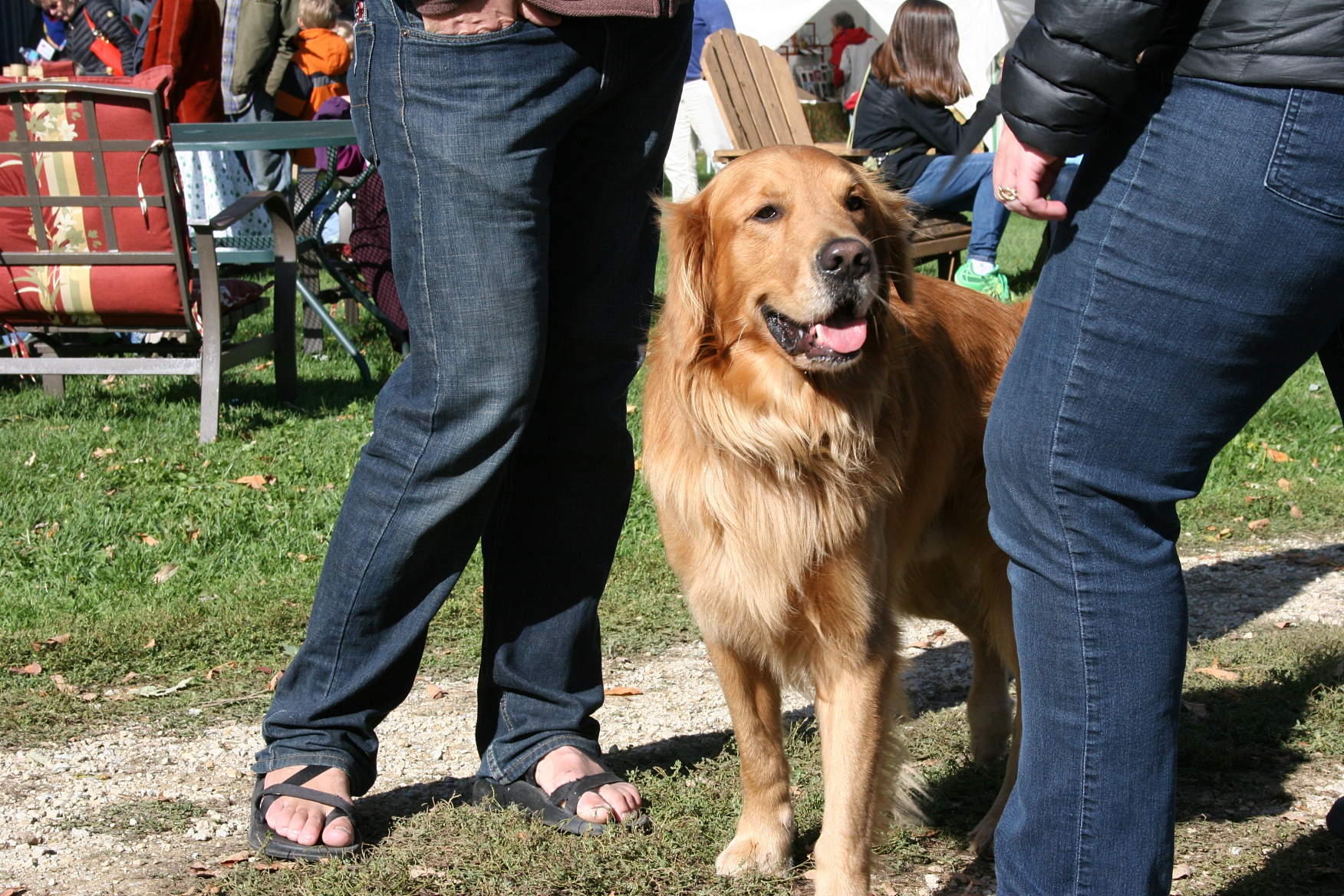
Dogs are welcome.

Dogs are welcome.

Dogs, accompanying their owners, are a reminder of farm dogs that once roamed this rural place in the shadows of looming silos.

An overview of the craft fair.

An overview of the craft fair.

There is something comforting and peaceful about being here among artists in a land where hardworking Norwegian immigrants once settled. In this place, this Sogn Valley.

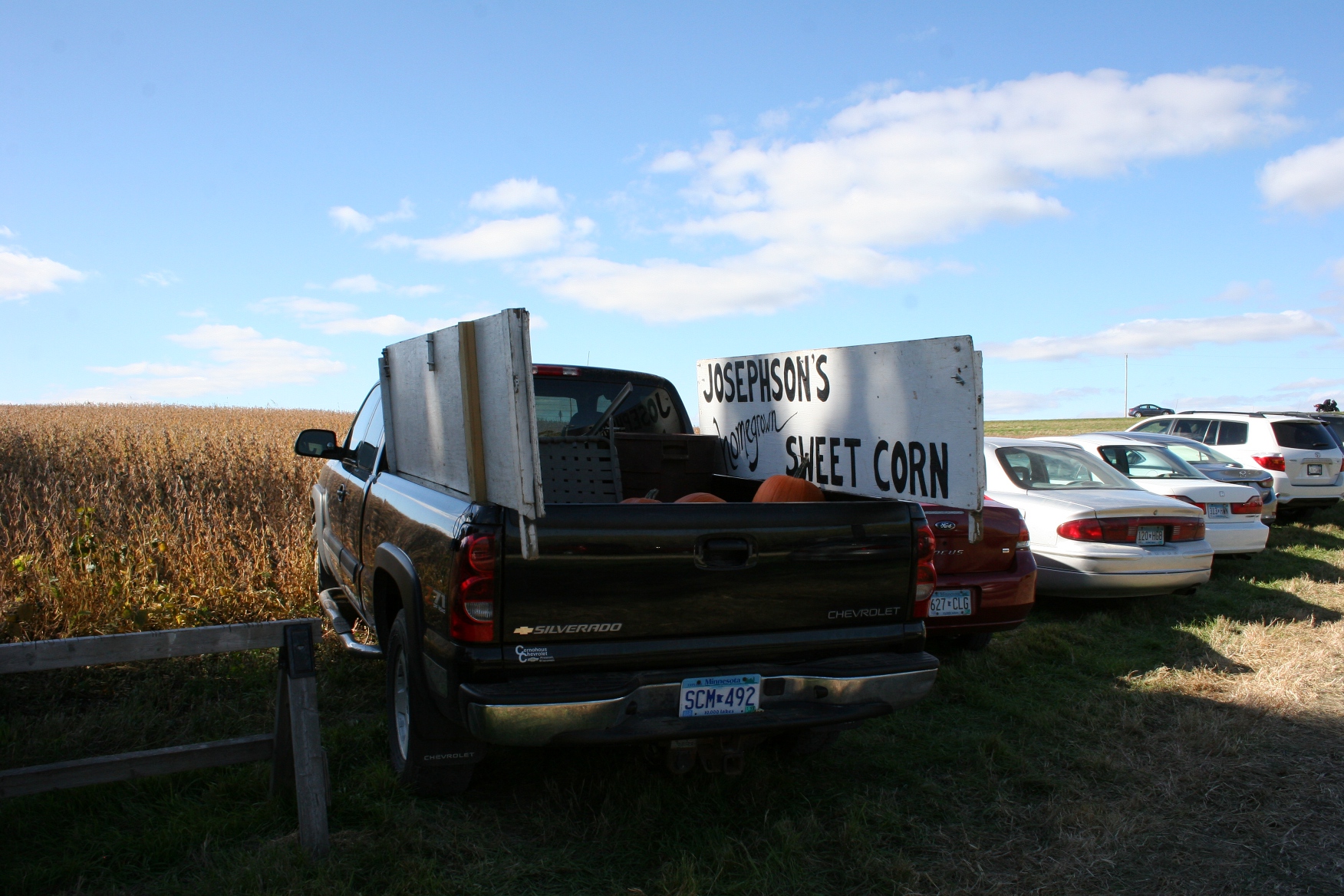
Parked in the parking area along the farm drive.

Parked along the farm drive.

FYI: The Sogn Valley Craft Fair continues from 10 a.m. – 4 p.m. Sunday, October 5. Parking and admission are free. Click here for more information.

BONUS PHOTOS:

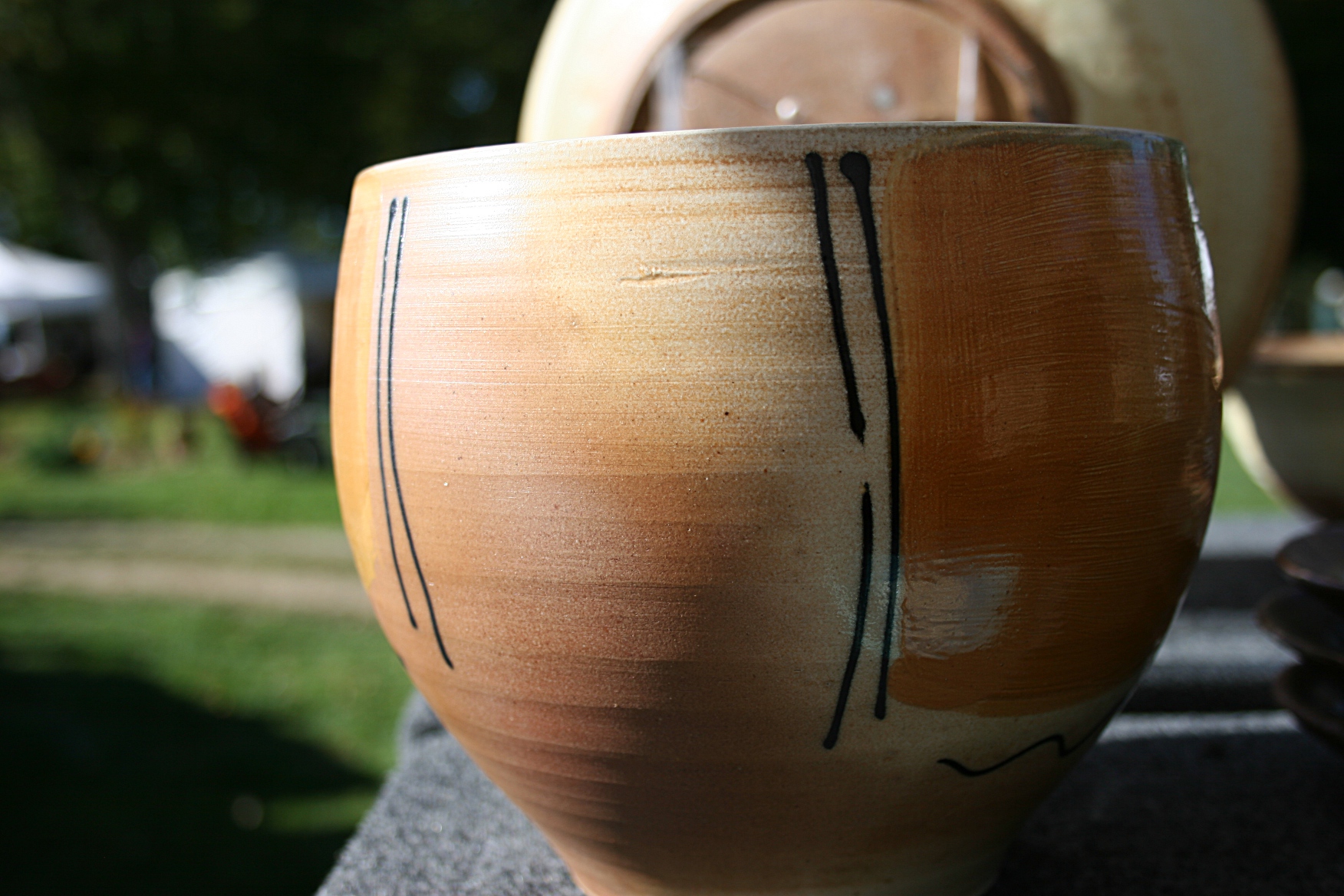
Kerry Brooks Pottery from Dock 6 Pottery, Minneapolis.

Kerry Brooks Pottery from Dock 6 Pottery, Minneapolis.

The art of Renee Nation, fiber artist/felt maker.

The art of Renee Nation, fiber artist/felt maker.

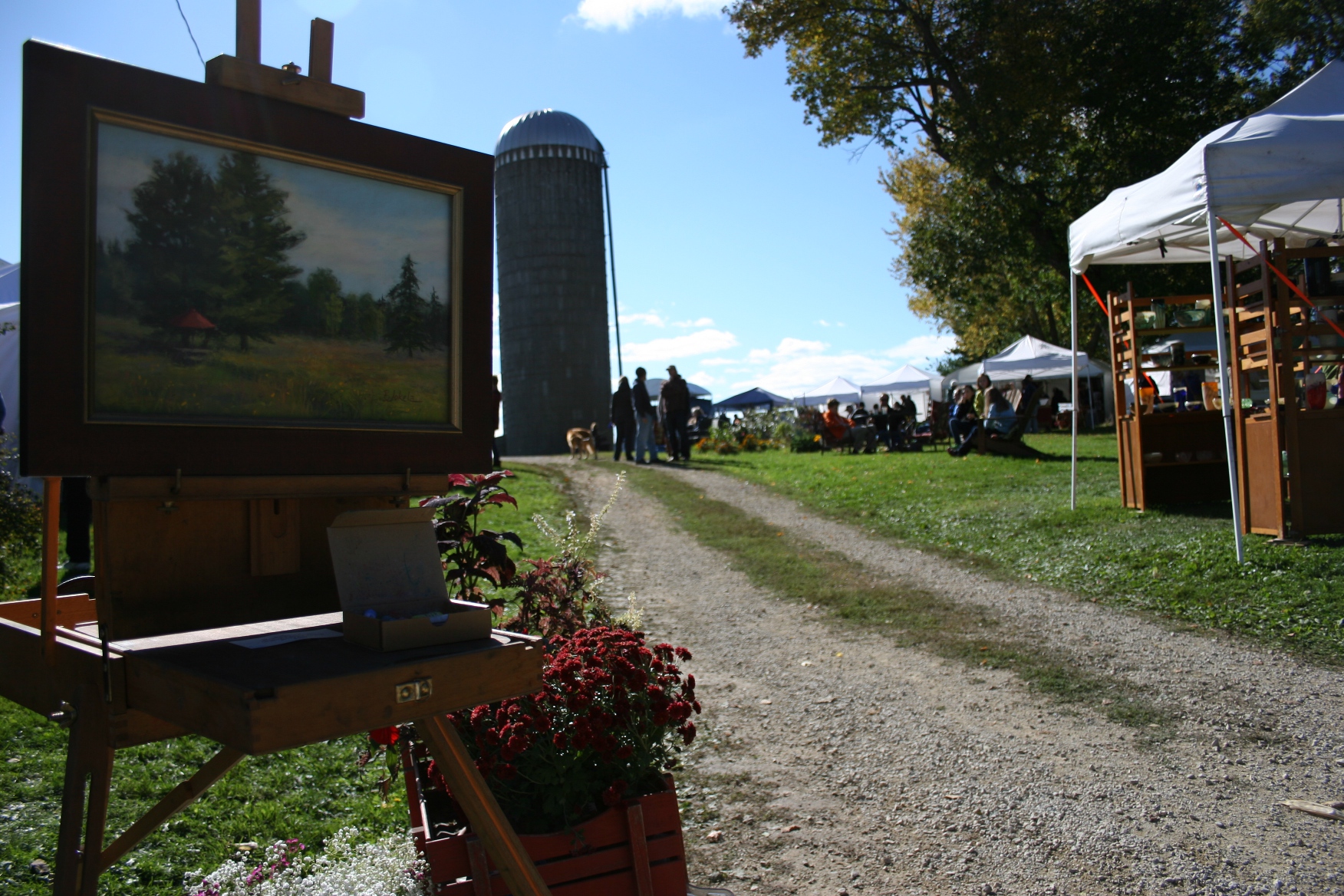
This Sogn Valley farm site presents a beautiful rural setting for the craft fair.

This Sogn Valley farm site presents a beautiful rural setting for the craft fair.

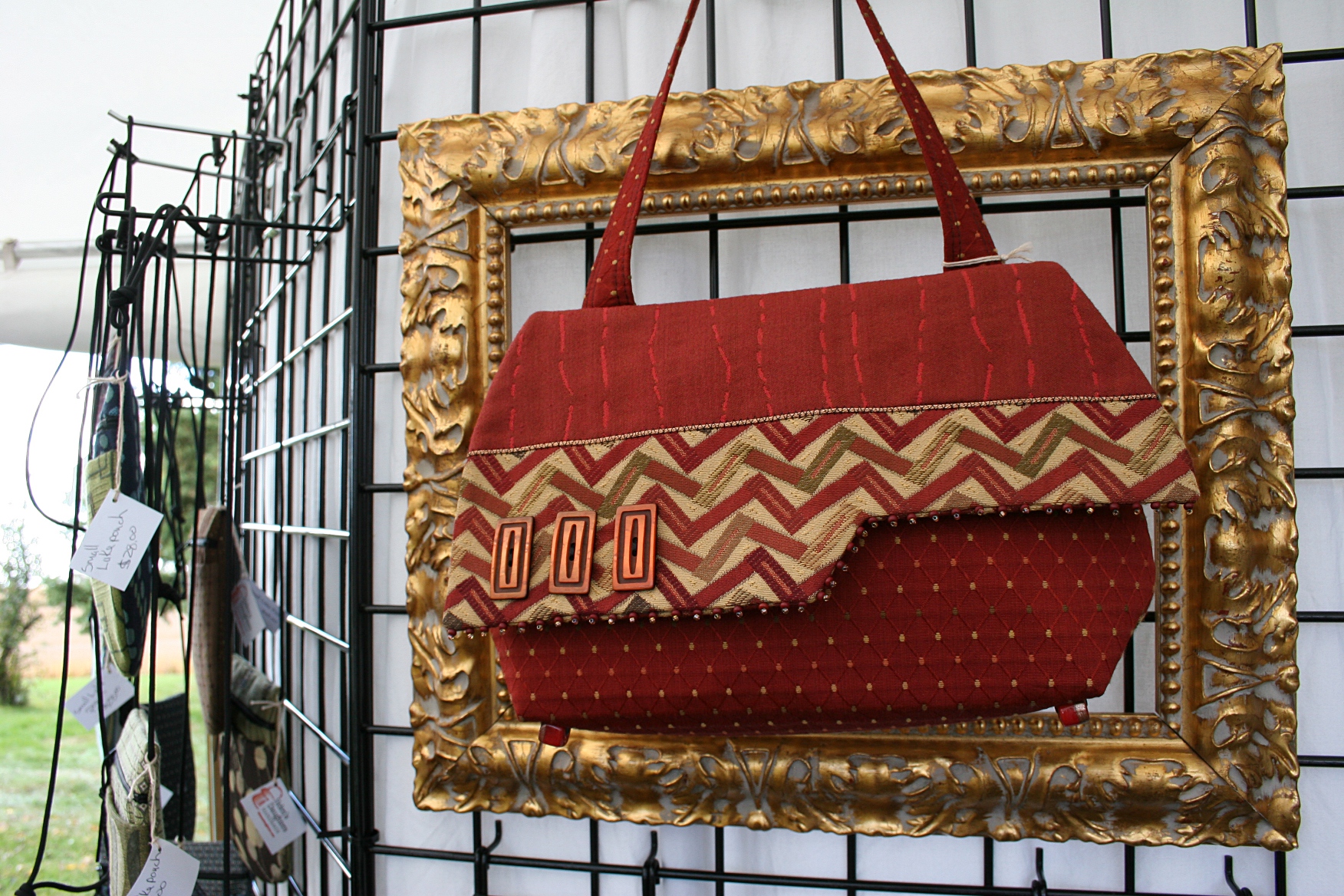
Mariella TerBeest-Schladweiler of Preston has been crafting handbags at Helen's Daughters Handbags since 1989.

Mariella TerBeest-Schladweiler of Preston has been crafting handbags at Helen’s Daughters Handbags since 1989.

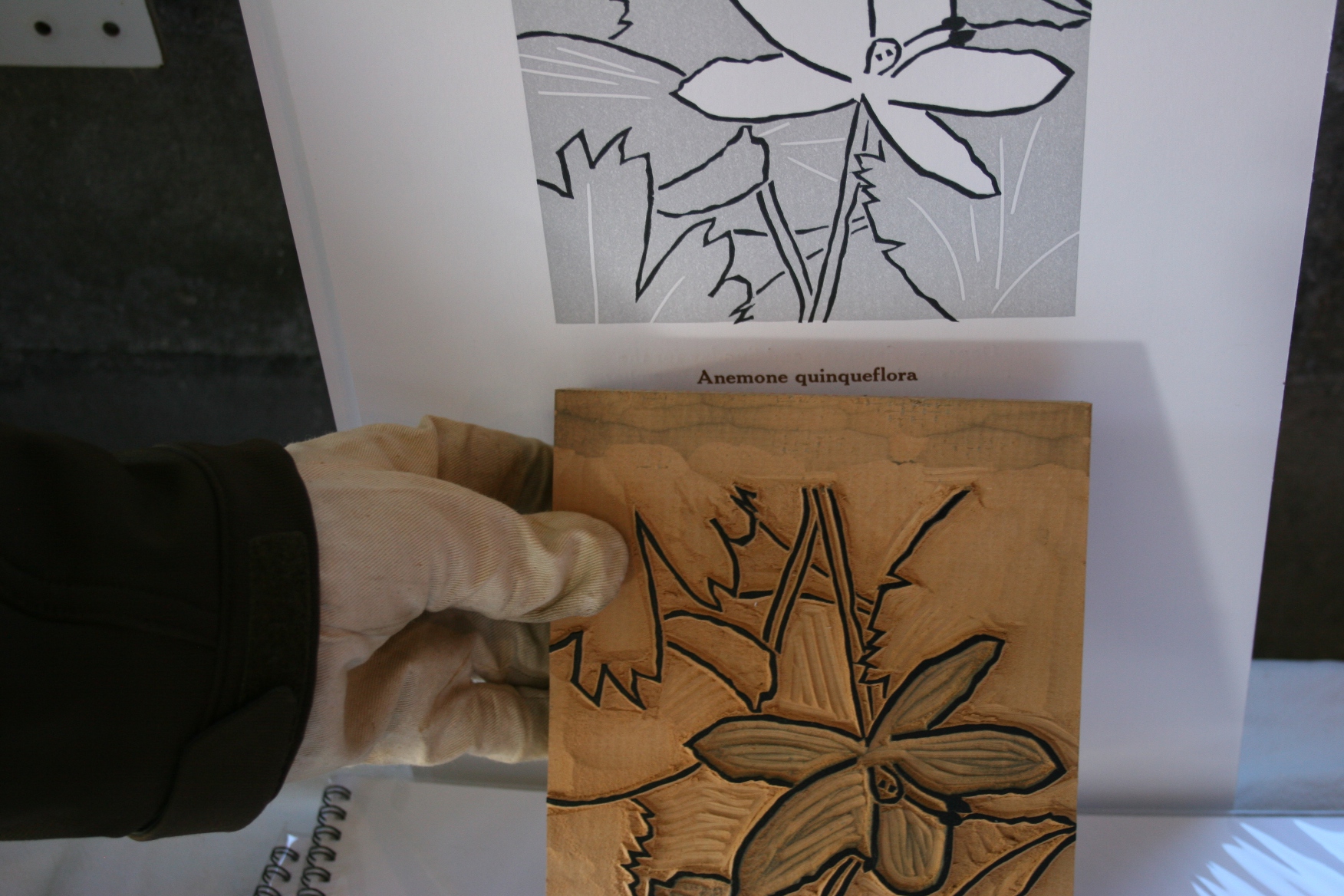
Richard Stephens of Super Session Press shows a block and print he crated.

Richard Stephens of Super Session Press shows a block and print he crated.

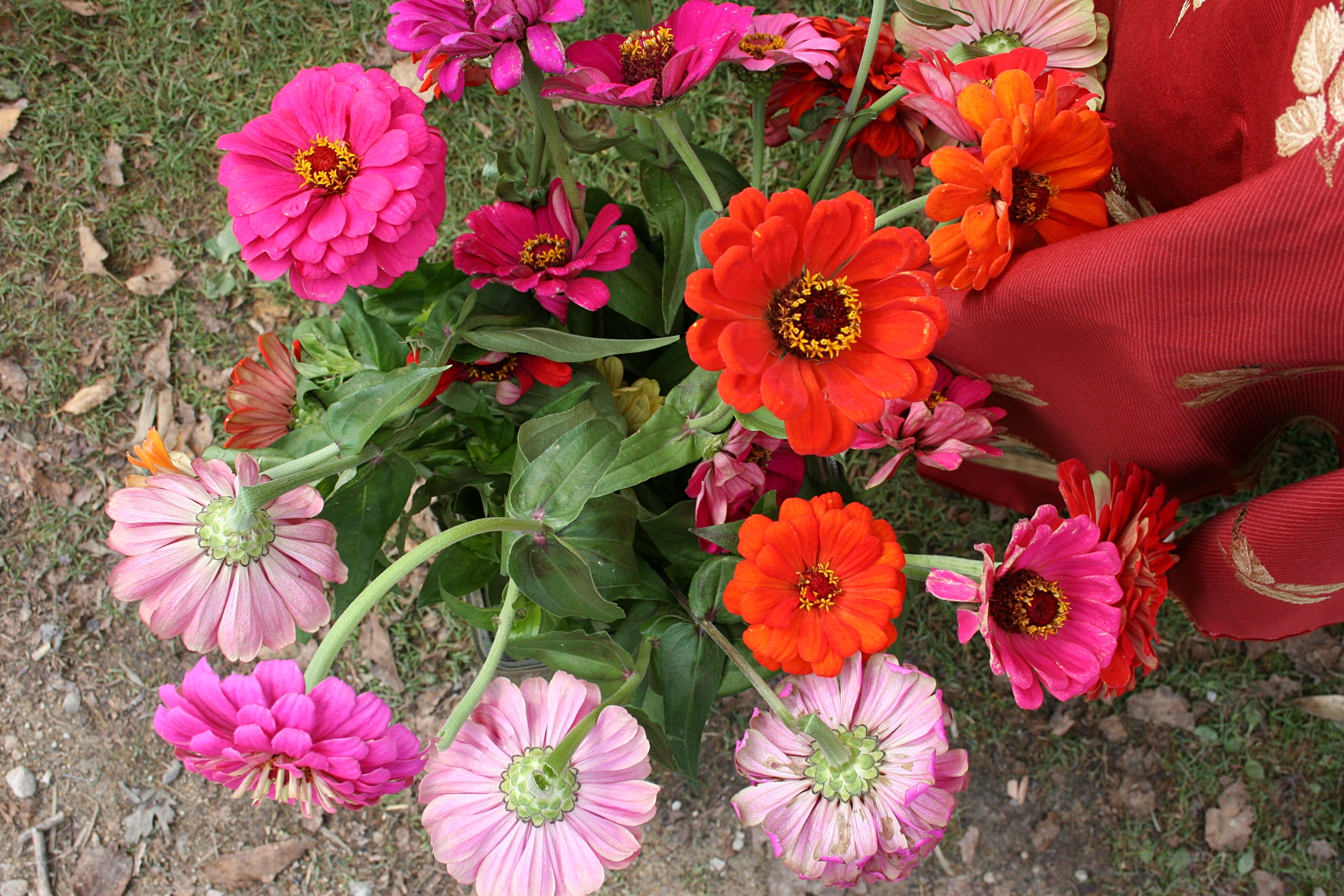
Vibrant zinnias at the Homestead apiaries stand.

Vibrant zinnias at the Homestead apiaries stand.

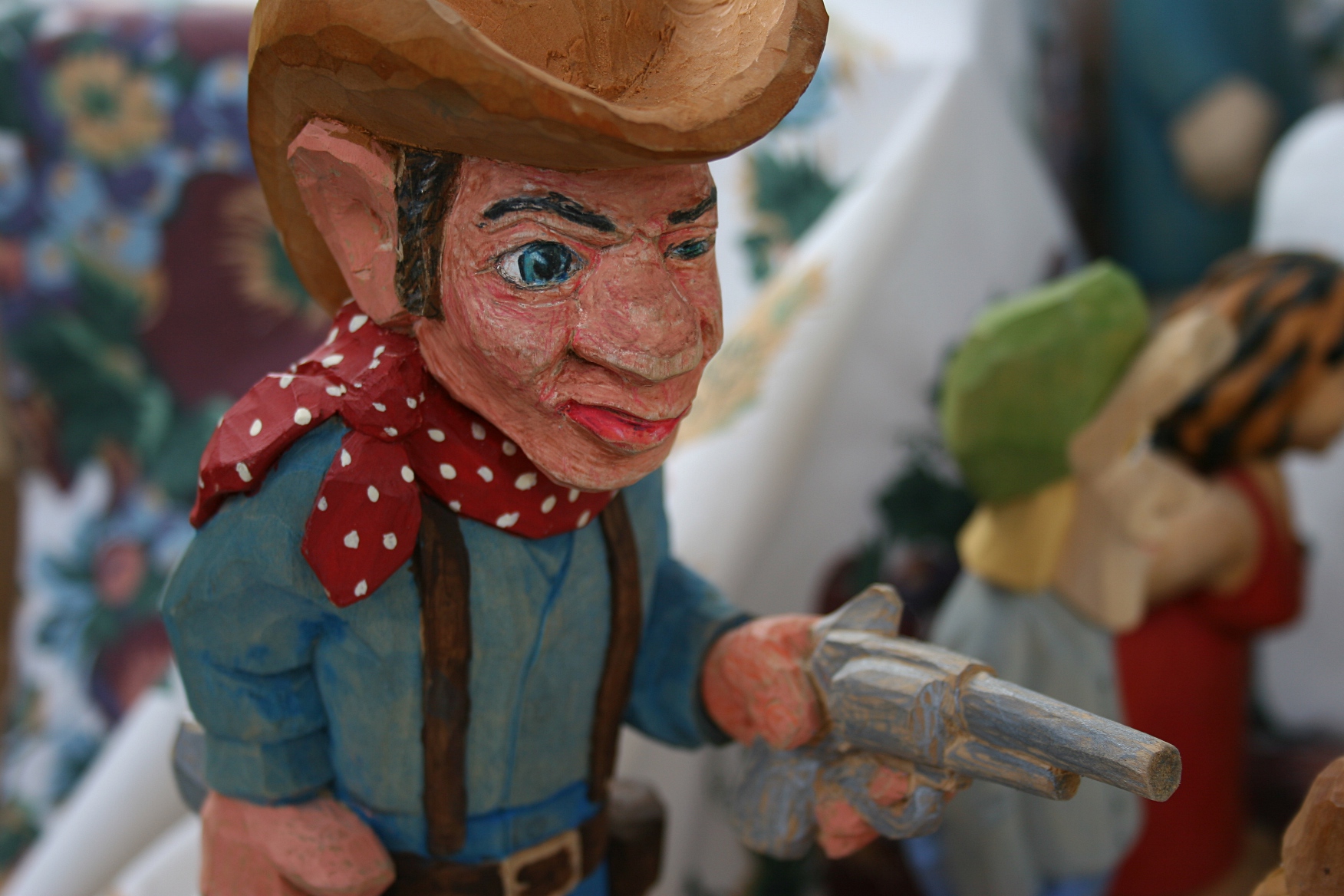
A carving by Bob Oates of Sogn Valley Woodcarving.

A carving by Bob Oates of Sogn Valley Woodcarving.

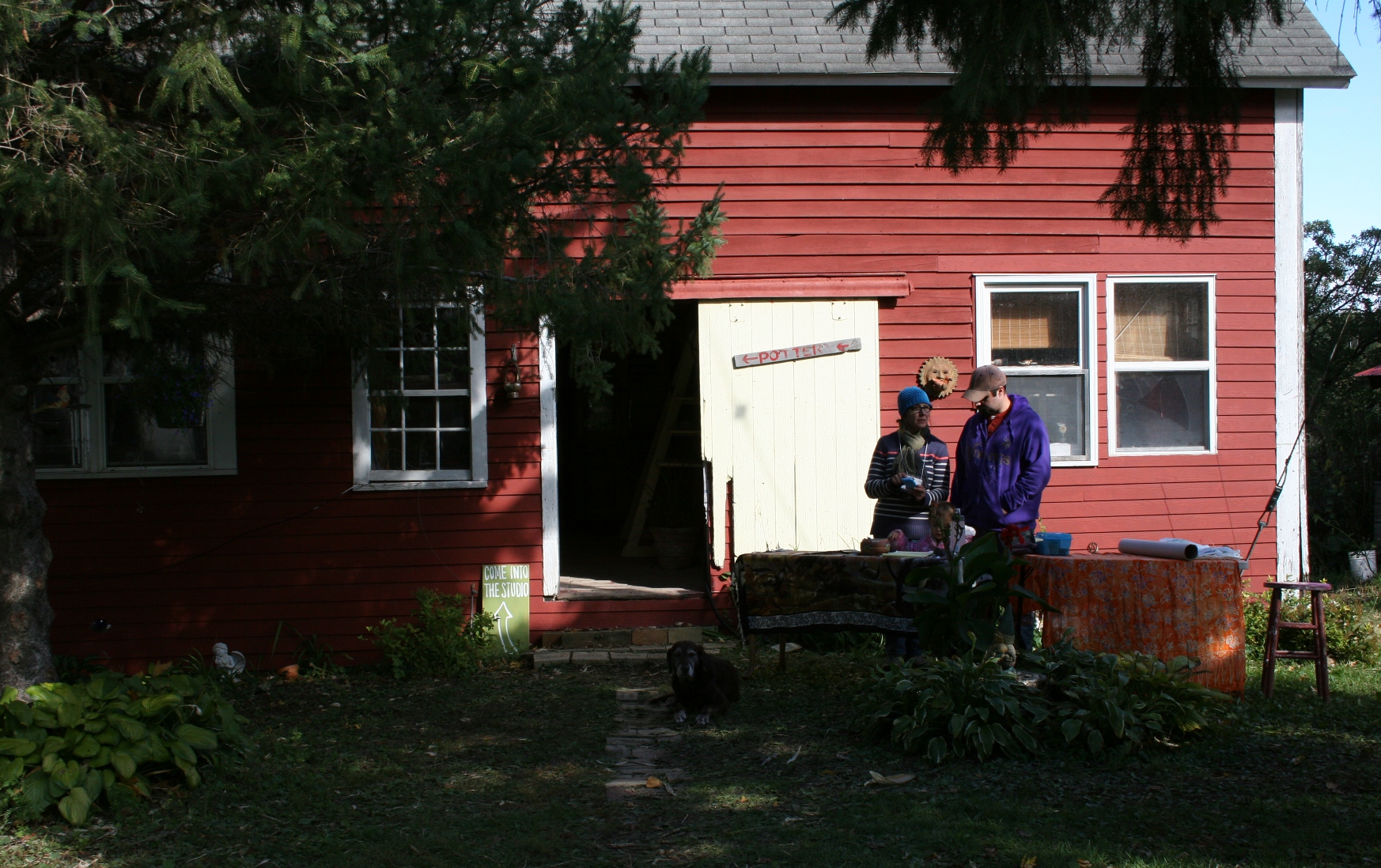
The pottery shed of Dawn Makarios who hosts the Sogn Valley Craft Fair.

The pottery shed of Dawn Makarios (left) who hosts the Sogn Valley Craft Fair.

A door inside the pottery shed.

A door inside the pottery shed.

An example of the pottery Dawn Makarios creates.

An example of the pottery Dawn Makarios creates.

Bring your appetite. There are food vendors on-site.

Bring your appetite. There are food vendors on-site.

© Copyright 2014 Audrey Kletscher Helbling


Reflections on Autumn’s arrival in Minnesota October 1, 2014

Filed under: Uncategorized — Audrey Kletscher Helbling @ 6:00 AM
Tags: , , , , , , , ,
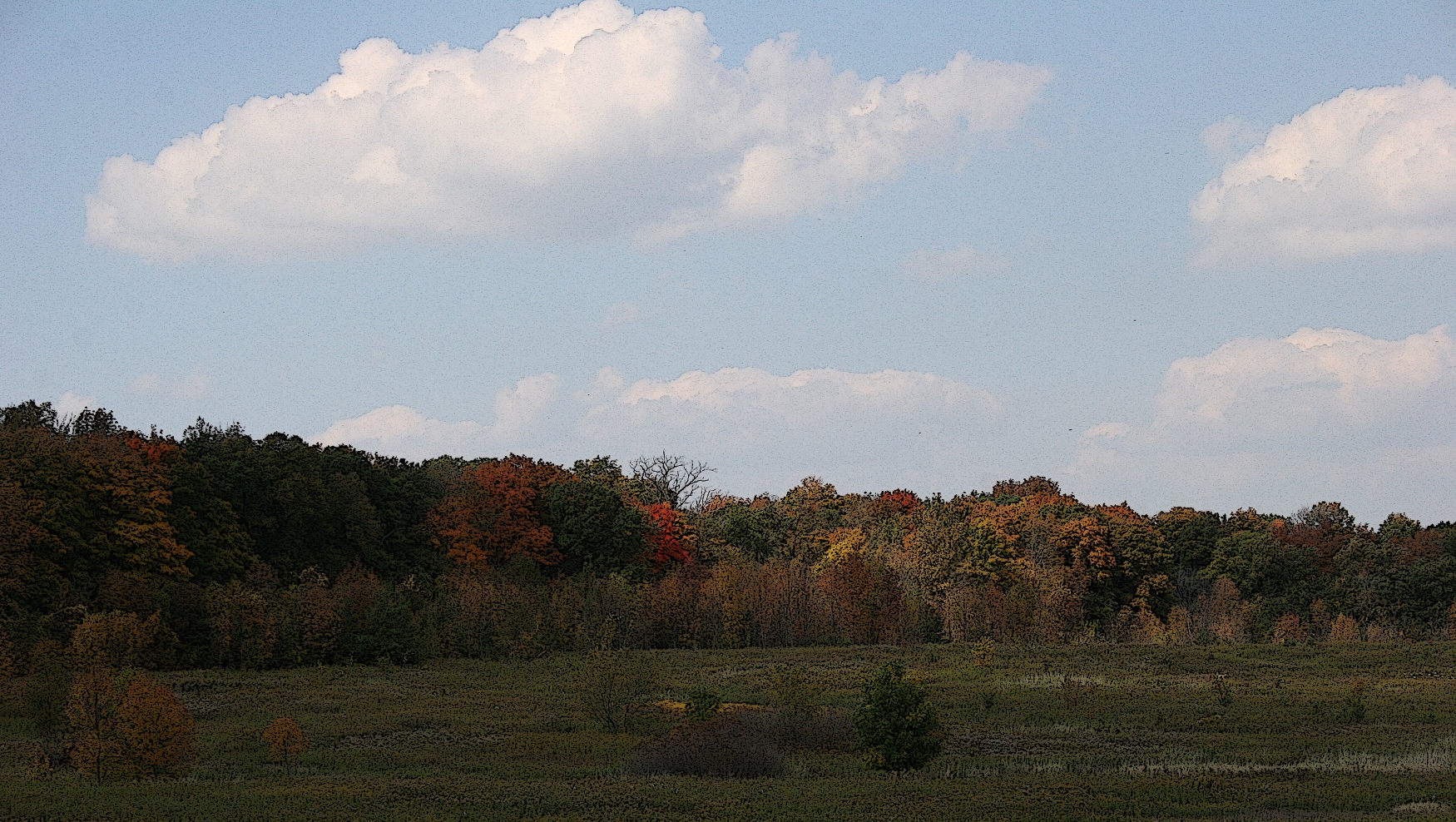
A tree line tinged in color at Nerstrand Big Woods State Park in southeastern Minnesota.

A tree line tinged in color at Nerstrand Big Woods State Park in southeastern Minnesota.

AUTUMN GRIPS ME like no other season.

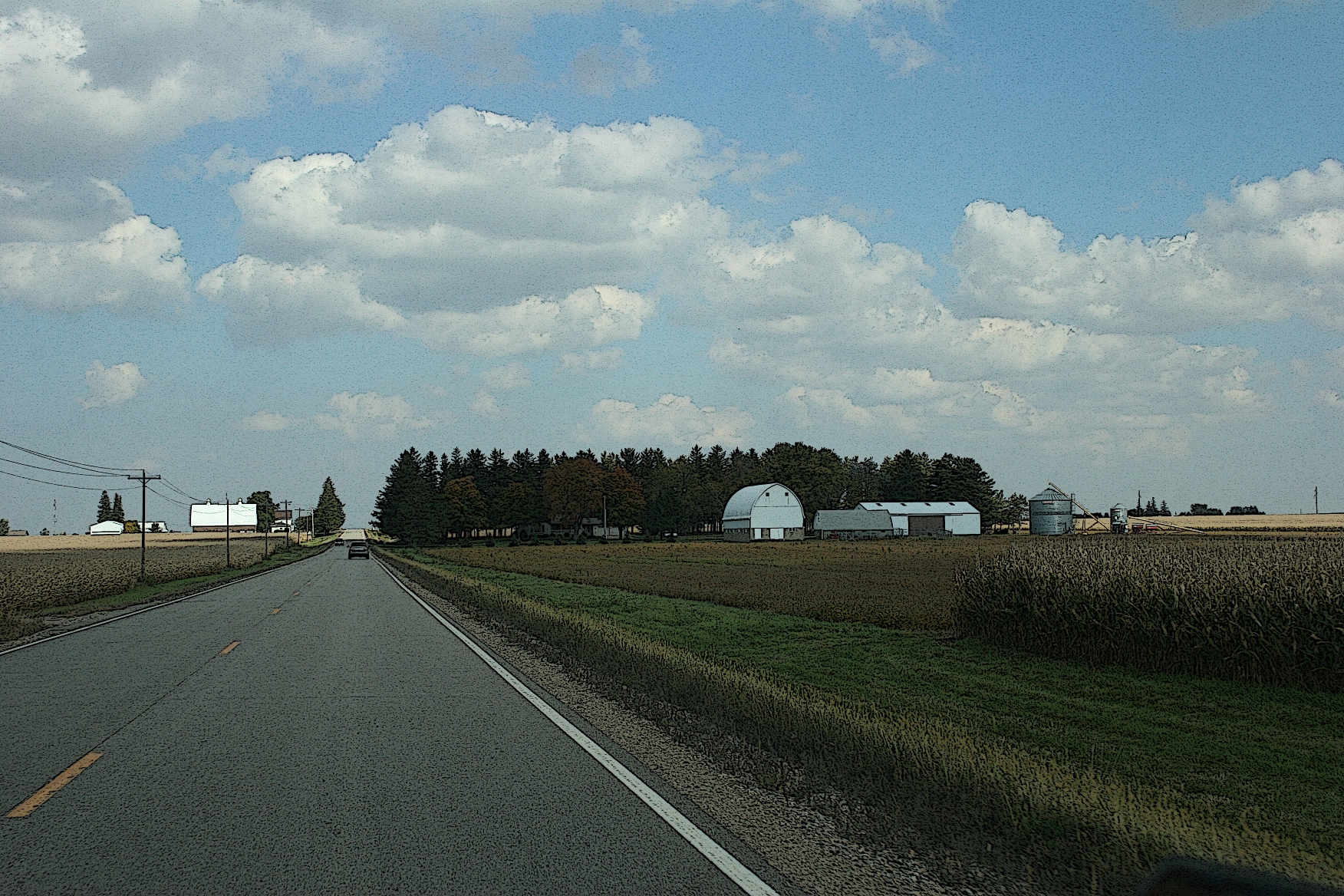
Autumn reveals herself in fields ripening along Rice County Road 24 between Faribault and Kenyon, Minnesota.

Autumn reveals herself in fields ripening along Rice County Road 24 between Faribault and Kenyon, Minnesota.

She draws me into fields drying in russet shades,

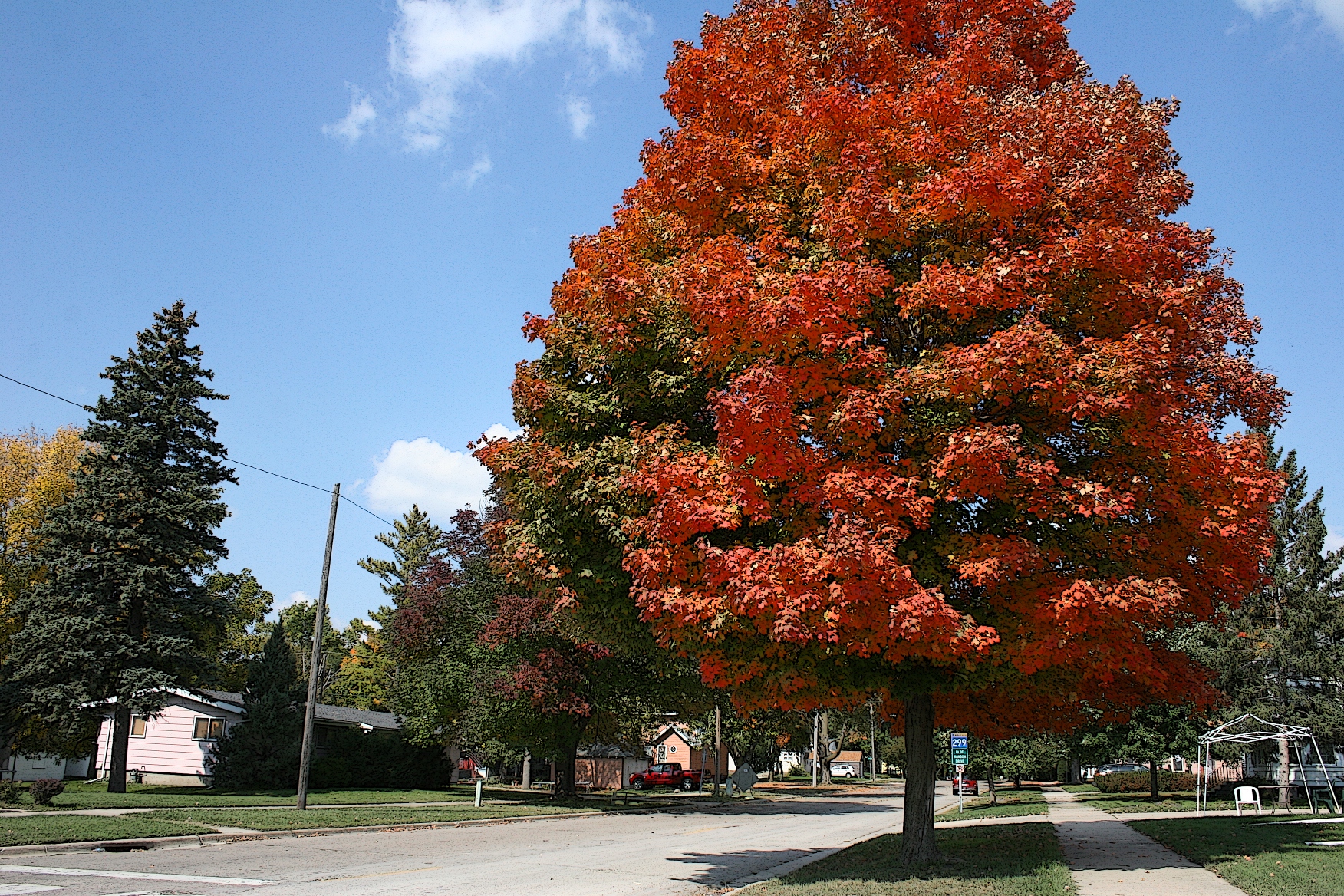
Maples are flaming, like this one alongside Minnesota State Highway 60 on the east side of Faribault.

Maples are flaming, like this one alongside Minnesota State Highway 60 on the east side of Faribault.

to maples flaming red,

An idyllic rural scene of drying soybeans and gravel road just off Rice County Road 24.

An idyllic rural scene of drying soybeans and gravel road just off Rice County Road 24.

to the aged scent of earth and fire,

Bins await the new crop.

Bins await the new crop.

to the hope of a farmer

Soybeans await harvest.

Soybeans ripe for harvest in Rice County.

and the end of the growing season.

Days of cobalt blue skies or pressing grey give way to evenings that welcome the flicker of candles, apple crisp warm from the oven, sweaters pulled on.

Drying cornfields herald the arrival of Autumn.

Drying cornfields herald the arrival of Autumn in southeastern Minnesota.

These days, as my flip flops crunch upon fallen leaves, I long to hold on to Autumn, to yank her away from Winter’s pull.

© Copyright 2014 Audrey Kletscher Helbling


My prize winning poetry: rooted in rural Minnesota September 19, 2014

LAST SATURDAY I SHOULD HAVE BEEN in northern Minnesota reading my poem, “Sunday Afternoon at the Auction Barn,” at a book release party.

Should have been mingling with other writers at Blueberry Pines, between Park Rapids and Menahga, at lunch, during a writer’s workshop and during readings from The Talking Stick Volume 23, Symmetry.

But, instead, I was cleaning my mom’s house in preparation for putting it on the market. It’s a matter of priorities and setting aside one’s own desires to do what must be done.

While others were enjoying the fellowship of many fine Minnesota writers, I was scrubbing walls and woodwork and floors and holding back tears.
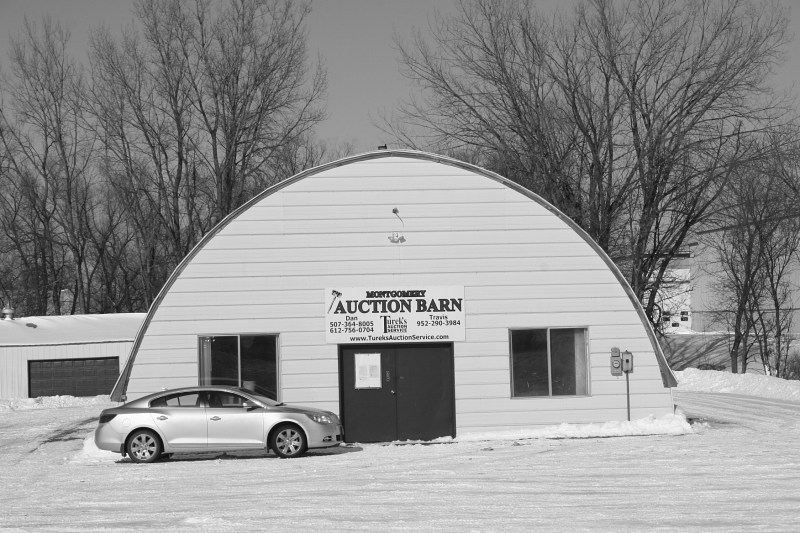
Turek's Auction Service, 303 Montgomery Ave. S.E. (Highway 21), Montgomery, has been "serving Minnesota since 1958." Daniel Turek, Sr., started the third-generation family business now operated by Dan, Jr. and Travis Turek. They sell everything from antique vases to real estate.

Turek’s Auction Service, 303 Montgomery Ave. S.E. (Highway 21), Montgomery, has been “serving Minnesota since 1958.” Daniel Turek, Sr., started the third-generation family business now operated by Dan, Jr. and Travis Turek. They sell everything from antique vases to real estate. Photographing this auction barn last winter inspired my poem.

Oh, yes, I would much rather have been in the Minnesota northwoods reading my prize winning poem. Margaret Hasse, who’s published four collections of poetry, awarded “Sunday Afternoon at the Auction Barn” second place, selected above 89 other poems for that honor.

She wrote:

“I loved how you turned a humdrum occasion of bidding on antiques in an old barn into a closely observed and luminous occasion. The writer John Ciiardi once wrote that close and careful observation can “leak a ghost.” The surprise of your poem was the elevation of a commercial or material enterprise into a spiritual gathering—with a fellowship, liturgy, reverent respect, and people who commune. The ending—visual and concrete—was just right. The poet Franklin Brainerd wrote a poem something to the effect, “in a world of crystal goblets, I come with my paper cup.” There’s something both unpretentious and appealing about “sipping steaming black coffee from Styrofoam cups.”

TS 23


I can’t publish the actual poem here. To read it, you’ll need to order a copy of The Talking Stick 23, Symmetry. I’d highly recommend doing so. This anthology features 91 poems, 23 pieces of creative nonfiction and 15 works of fiction from some outstanding Minnesota writers or writers with a strong connection to our state.

The Talking Stick, published annually by the Jackpine Writers’ Bloc, holds a strong reputation, evidenced by the more than 300 submissions from 159 writers. Another one of my poems, “The Promised Land,” and a short story, “Eggs and Bread,” also published in this volume.

Last year I earned honorable mention for my short story, “The Final Chapter.” And before that, my poem, “Hit-and-Run,” also garnered honorable mention.

Such awards reaffirm one’s skills as a writer.
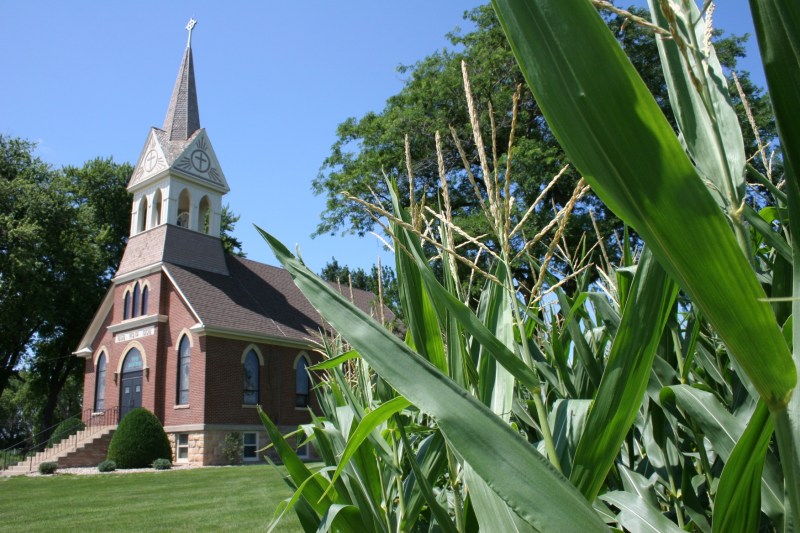
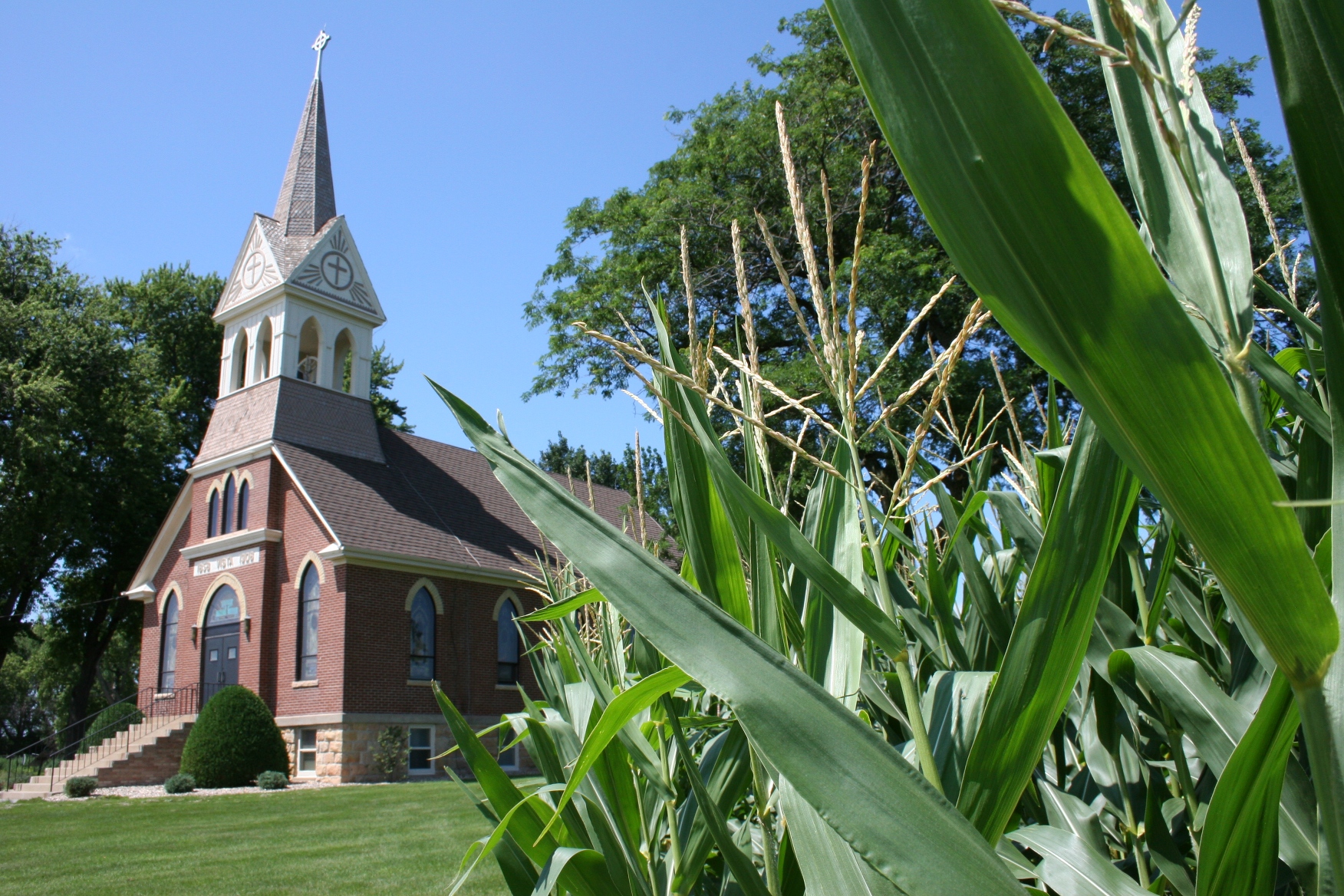
Cornfields snuggle up to one side of Vista's church yard. It's the most beautiful of settings.

Cornfields snuggle up to Vista Evangelical Lutheran Church in southern Minnesota. Minnesota Prairie Roots file photo.

And recently, also in northern Minnesota, my poem, “Hope of a Farmer,” was selected as a Work of Merit by judges at the Northwoods Art and Book Festival in Hackensack. That poem I can publish here. Like nearly every poem I pen, this poem is rooted in rural Minnesota.

Hope of a Farmer

In the slight breeze of a July afternoon,
when ninety degrees and humidity press upon me
at the edge of a corn field stretching into forever,
memories rise and shimmer like heat waves.

I see my father’s work laid out before him—
first, seeds dropped into rich black soil,
next, corn rows carefully cultivated,
then fervent prayers for timely rain.

And I remember how he hung onto harvest hope,
to the promise of golden kernels
brimming grain wagons that swayed
and rumbled to the Farmer’s Co-op Elevator.

This the wind-blown corn leaves whisper
while stalks rise toward the prairie sky,
reaching, reaching, reaching
toward the heavens like the faith of a farmer.

Copyright 2014 Audrey Kletscher Helbling


Artwerk, Steve style September 11, 2014

Filed under: Uncategorized — Audrey Kletscher Helbling @ 6:00 AM
Tags: , , , , , ,

MY FRIEND STEVE, married to my friend Jackie, is an artist. Oh, he may not term himself as such and he prefers you call his creations artwerk rather than artwork. Seems more masculine, this bulk of a guy claims.

Conduit and pipes transformed into art for placement on Steve's wooded acreage.

Conduit, pipes and metal transformed into art for placement on Steve’s wooded acreage.

But I am 100 percent certain that the art Steve crafts from what many would term junk qualifies him as a bonafide artist. He’s even dumpster dived for art materials and salvaged items from scrap piles.

Circles and spirals appear often in Steve's art.

Circles and spirals appear often in Steve’s art.

For now this one-time welder pursues his art passion as a hobby. I’m convinced he could sell his pieces or create works on commission and have suggested such to him. He’s already selected a business name—Big “N” Ugly’s Iron Werks. Catchy. But Steve is certainly not ugly. If I remember correctly, the name relates to some crazy story from his past.

Discarded plumbing provides materials for art in a flower garden.

Discarded plumbing provides materials for art in a flower garden.

Jackie wishes this flowerbed faucet was functional.

Jackie wishes this flowerbed faucet art was functional.

Oversized chimes crafted from discarded clothing racks (etc.) and strung high in a tree.

Oversized chimes crafted from discarded clothing racks (etc.) and strung high in a tree.

He’s transformed clothing racks, tape measures, a springform pan, old faucets, a grater, conduit and more into visual, and sometimes functional, art. The pieces are strategically placed on the couple’s wooded creekside property just off a quiet county road northeast of Medford. I love their land and many times have wished aloud that I desire to retreat here until all stress has exited my life.

Conduit turned art.

Conduit turned art.

A portable outdoor functioning sink created with old faucets, springform pan, plastic pipes and more.

A portable outdoor functioning sink created with old faucets, springform pan, plastic pipes and more.

Fence art.

Fence art.

On a recent steamy summer Sunday afternoon, Steve and Jackie invited my husband and me to tour their outdoor sculpture garden featuring Steve’s vast collection of original art.

The close-up spirals on one of Steve's pieces.

The close-up spirals on one of Steve’s pieces.

A full view of the same piece above and one of the bridges Steve built.

A full view of the same piece above and one of the bridges Steve built.

Even old tape measures are worked into his art.

Even old tape measures are worked into his art.

To view his pieces is to wonder how he can possibly come up with ideas to twist and shape and bend and sculpt cast-offs into abstract art that grabs your attention for its uniqueness, cleverness and artsy appeal.

A practical use for an otherwise useless washer agitator, repurposed as a beverage holder.

A practical use for an otherwise useless washer agitator, repurposed as a beverage holder.

Boat seats repurposed as a seating area on a retaining wall.

Boat seats repurposed as a seating area on a retaining wall.

Who thinks of using a vintage meat grinder for art, then suspending it in a tree? Steve.

Who thinks of using a vintage grinder for art, then suspending it in a tree? Steve.

Talk to Steve about his artwerk and you hear his unbridled enthusiasm. This is what he’s meant to do. To create. Artwerk.

Steve has built several of these sheds, this one graced with some of the art he's crafted.

Steve has built several of these sheds, this one graced with some of the art he’s crafted.

Seriously, how does one shape barbed wire into a ball?

Seriously, how does one shape barbed wire into a ball?

A snippet of an art piece dangling high in the trees.

A snippet of an art piece dangling high in the trees.

FYI: If you are interested in purchasing Steve’s art or having him create a piece on commission, let me know via a comment here or in an email (see my “about” page). I’m tapping Steve’s creative brain about a metal headboard from my childhood. Believe me, he can turn anything into art. Anything.

Steve did not want a photo of himself published, which is why you’re not seeing one here. I have one, but…I will honor his request.

© Copyright 2014 Audrey Kletscher Helbling
 

And there was light & clouds & beauty everywhere in rural Minnesota August 4, 2014

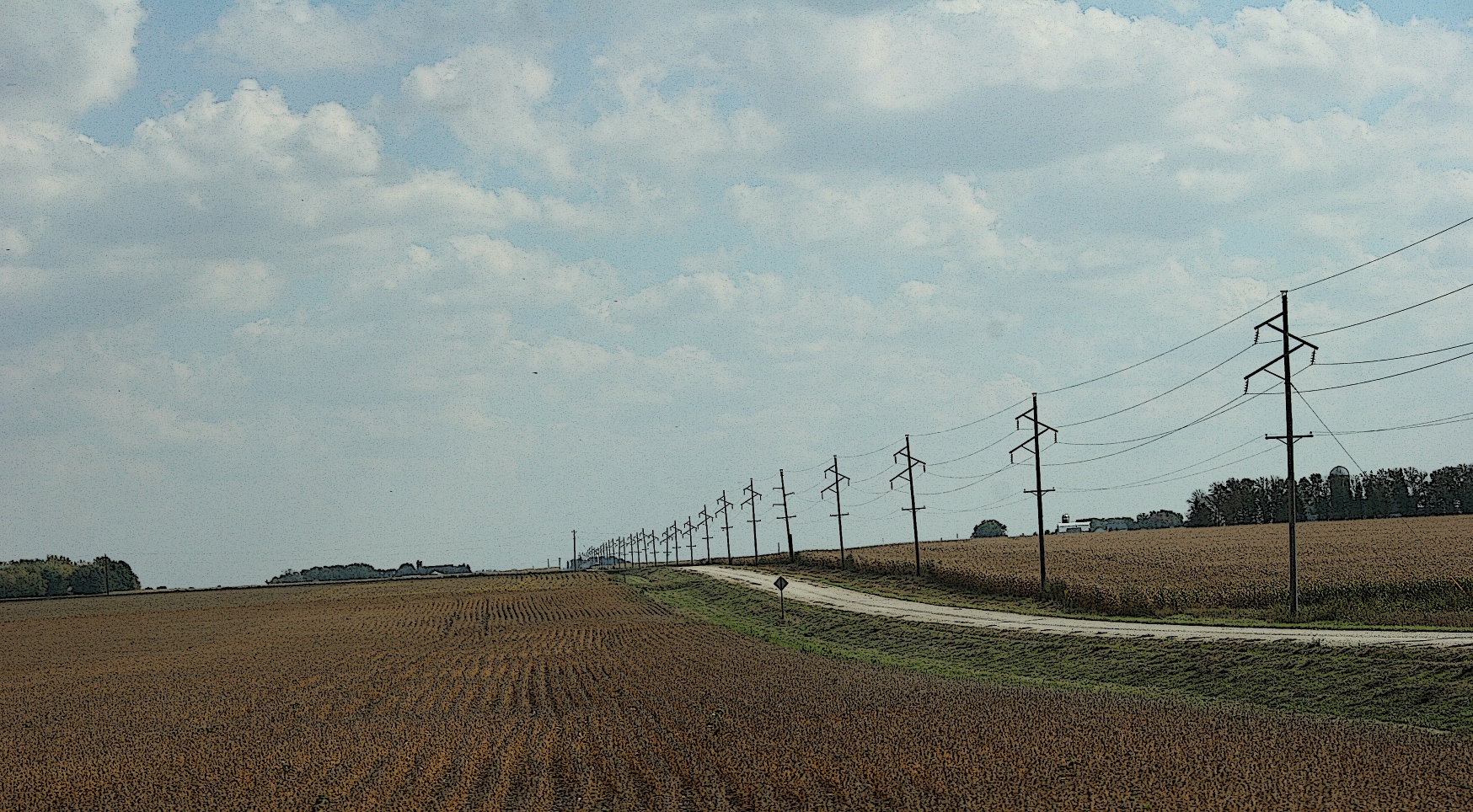
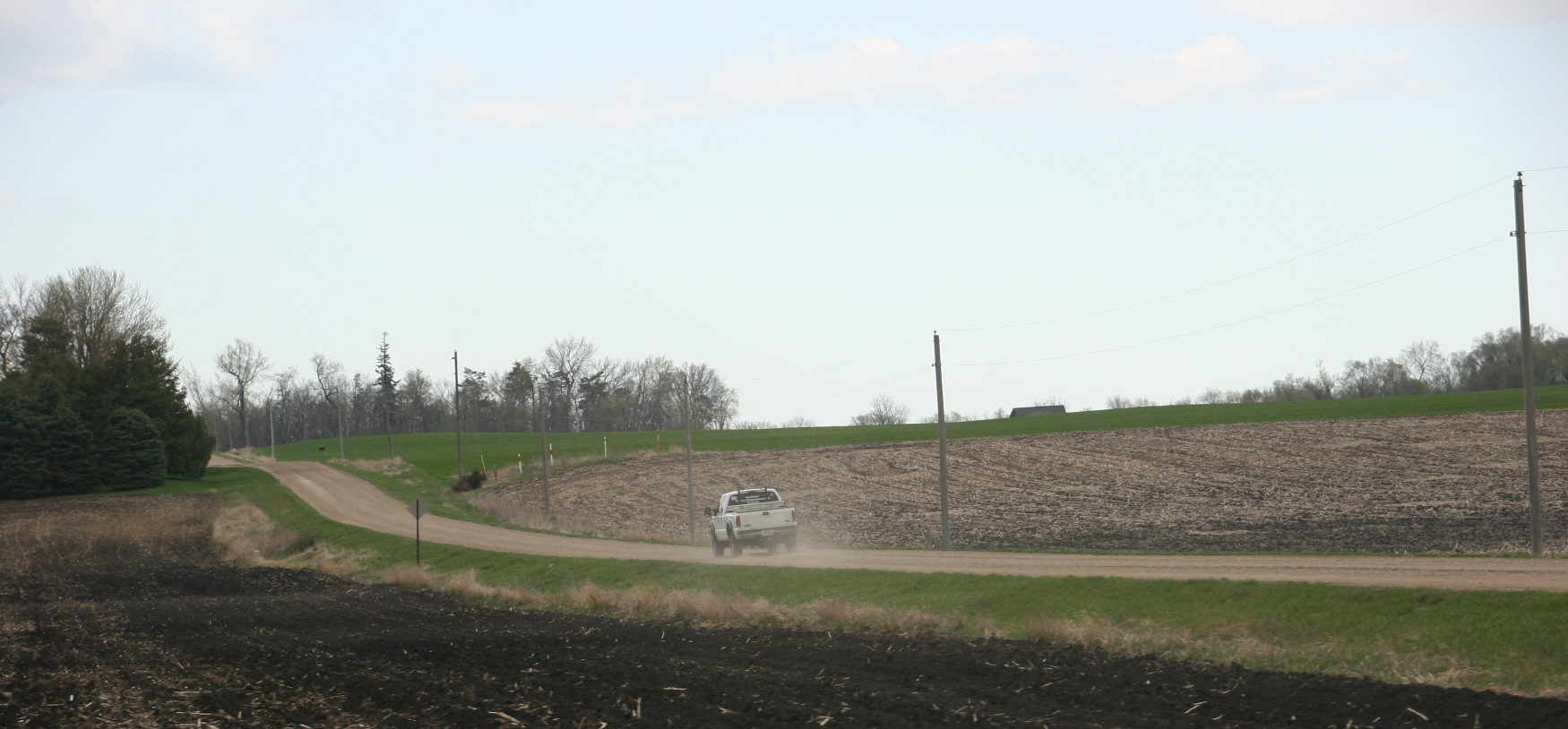
Power lines between Redwood Falls and Morgan.

Power lines tower over a cornfield between Redwood Falls and Morgan.

ALL THE WAY HOME, from southwestern Minnesota to southeastern, I watched the sky and the light and the crops as daylight edged ever nearer night.

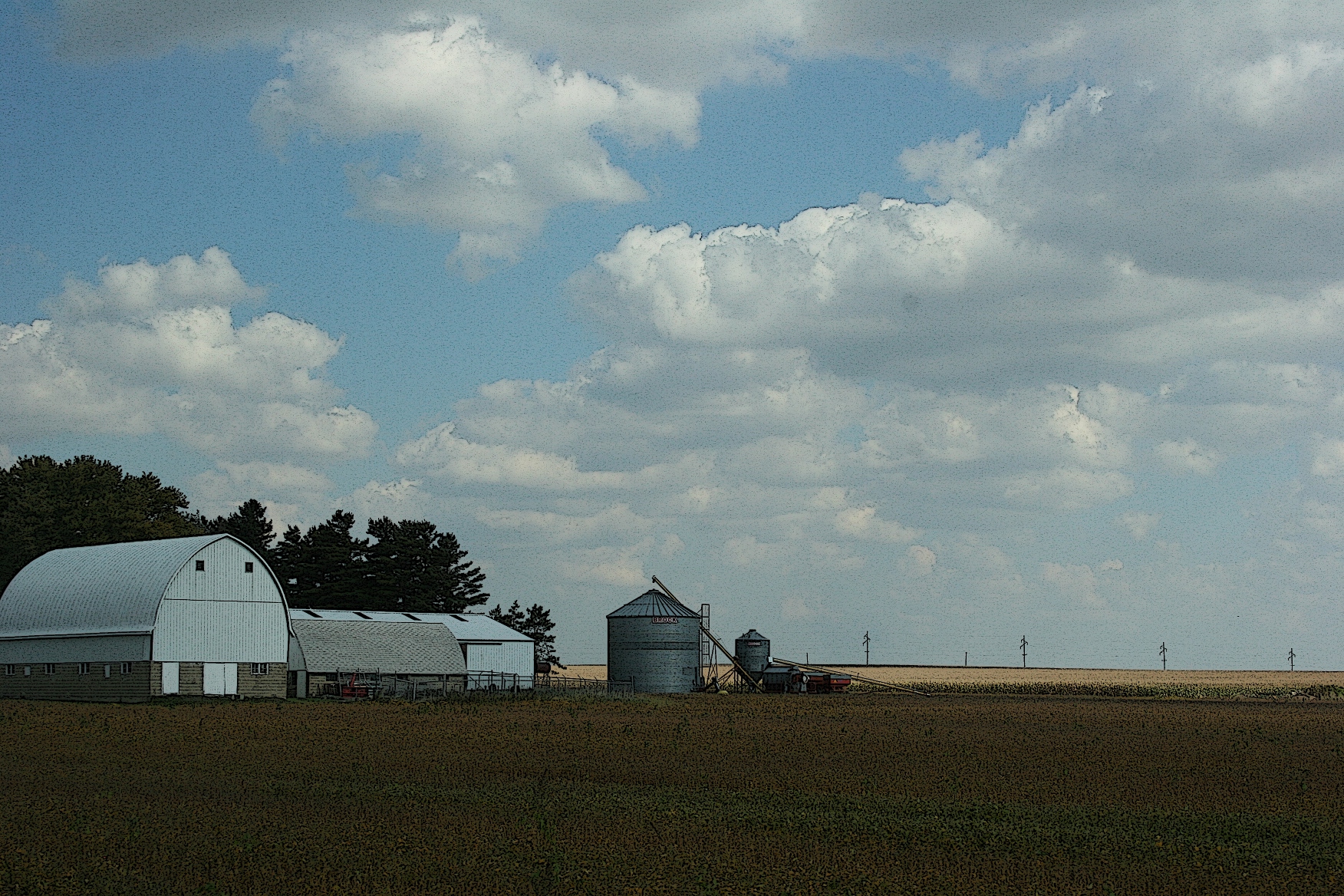
A farm site between Morgan and New Ulm.

A farm site sits next to a corn field between Morgan and New Ulm.

There’s something magical about this time when light angles sharp shadows and a certain glow prevails.

Along U.S. Highway 14 between New Ulm and Courtland.

Along U.S. Highway 14 between New Ulm and Courtland.

On this particular evening, grey mingled with white and blue, clouds stretching and towering and sometimes nearly imprinting upon the earth.

I waited for the rain. Then, just east of Courtland along U.S. Highway 14, one of Minnesota’s most dangerous rural highways, the sky opened. For a short period, rain rushed across the windshield, washing away residue of bugs and bird poop with each swipe of the wipers.

Traveling U.S. Highway 14 near Eagle Lake.

Traveling U.S. Highway 14 near Eagle Lake.

Soon enough, the rain stopped and dry pavement rolled beneath the van tires.

Grain bins along Minnesota State Highway 60 just off U.S. Highway 14.

Grain bins along Minnesota State Highway 60 just off U.S. Highway 14.

I focused once again on the light—the contrast of fading sunlight against battle grey sky,

Light ripples across a hillside of corn between Waterville and Faribault along Minnesota State Highway 60.

Light ripples across a hillside of corn between Waterville and Faribault along Minnesota State Highway 60.

light spotlighting a hillside of tasseling corn,

Just east of Waterville along Minnesota State Highway 60.

Just east of Waterville along Minnesota State Highway 60.

vibrant yellow traffic signs popping alongside the road.

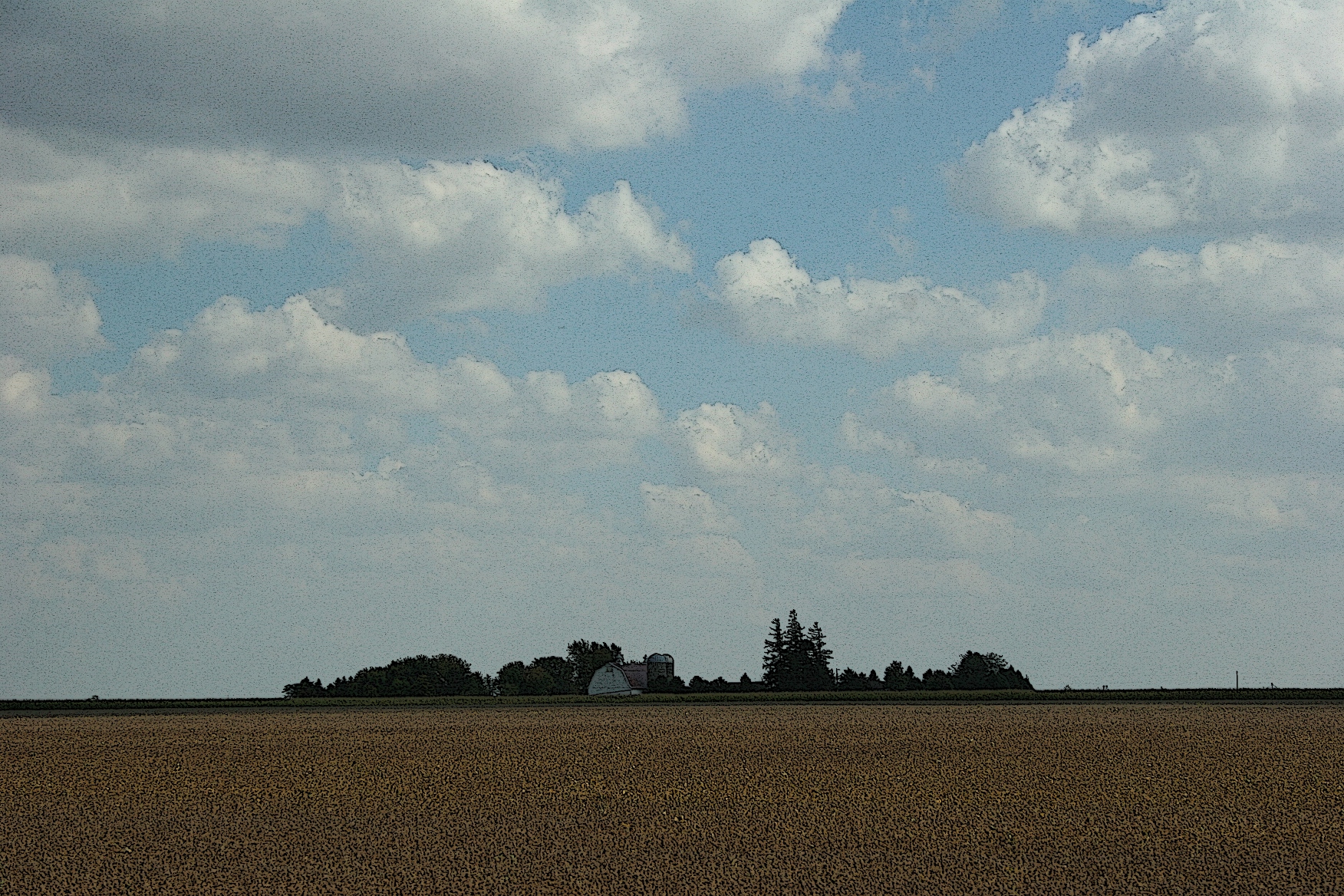
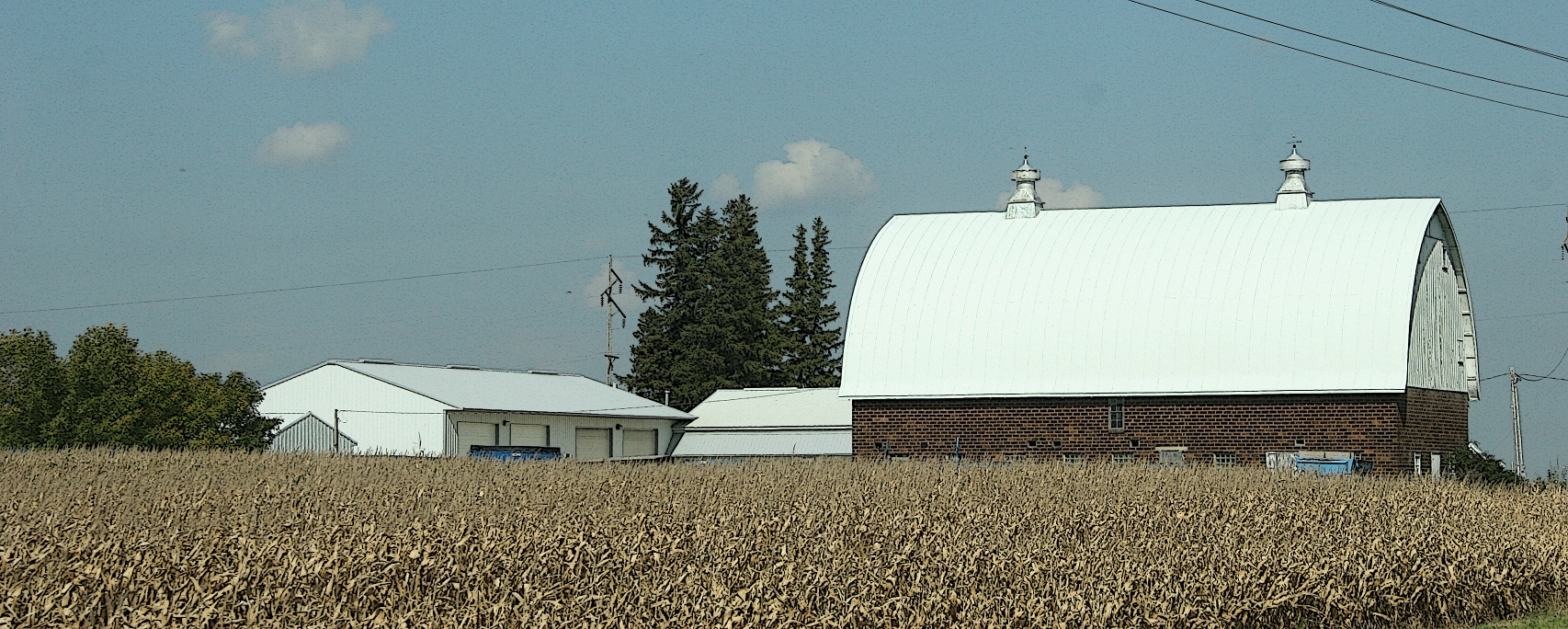
Barn and bins behind a corn field near Waterville.

Barn and bins behind a corn field near Waterville.

The landscape appeared more focused, like a bold-lined picture colored with pointy new crayons. Sharp. New. Unrounded.

© Copyright 2014 Audrey Kletscher Helbling
 

Baseball memories from rural Minnesota July 14, 2014

FOR BABY BOOMERS like myself, summertime memories of life in rural Minnesota are as much about consuming pitchers of sugary Kool-Aid, picking rocks and walking beans as about baseball.

Memorial Park Baseball Field, home to the Dundas Dukes.

Memorial Park Baseball Field, home to the Dundas Dukes., an amateur baseball team.

When I think back to the 1960s, I hear the static buzz of my older brother’s transistor radio as he dials in ‘CCO. Play-by-play with Halsey Hall, Herb Carneal and Ray Scott. Names familiar to my generation as the voices of the Minnesota Twins.

A carving of a Dundas Dukes baseball player stands just outisde the baseball field in Dundas.

A carving of a Dundas Dukes baseball player stands just outside the baseball field in Dundas.

And then the players themselves—greats like homerun slugger Harmon Killebrew and Tony Oliva and Rod Carew.

My brother, when we played pick-up games of softball after the evening chores, role-played Killebrew. There was no arguing the choice among us siblings. He was always Killebrew as we pulled on our worn gloves or thwacked the grimy softball with a wooden bat or sped across loose gravel, rounding the discarded disc plates that served as bases.

This plaque, by a baseball player sculpture at Memorial Park in Dundas,

This plaque, by the baseball player sculpture at Memorial Park in Dundas, summarizes well thoughts on baseball.

Such are my memories, along with remembering the stacks of baseball cards my brothers collected. They chewed a lot of bubblegum.

My interest in baseball, like the demise of the transistor radio, has faded through the decades. I don’t watch the game and occasionally catch only wisps of a radio broadcast.

Looking through the fence toward the Dundas Dukes' dug-out.

Looking through the fence at Memorial Park Baseball Field in Dundas.

But this week, when all eyes focus on major league baseball’s All-Star game at Target field in Minneapolis, the memories rush back.

I hear the static. The cry: “Batter up!” I see ball connecting with bat, my older brother slamming a homerun over the milkhouse. I race toward the bouncing ball, feet pounding across gravel. I scoop up the ball. And, as always, I fail to throw with any force, landing the ball far short of upheld glove. And my brother sails across home plate, arms flying. It’s another homerun for Harmon.

© Copyright 2014 Audrey Kletscher Helbling
 

Feeling unsettled in a rural Minnesota cemetery June 12, 2014

A TIME EXISTED when I avoided cemeteries. I was young then, unappreciative of their value from an artistic, historical and personal perspectives. And, if I’m honest, I’ll admit that I felt a bit afraid walking atop graves.

My thoughts have changed. Whenever my husband and I happen across a rural cemetery, we’ll often stop and wander.

The aged Eklund Cemetery sits among farm fields in Walcott Township.

The aged Eklund Cemetery sits among farm fields in Walcott Township.

We did just that recently while in section 25 of Walcott Township in southeastern Rice County. This Minnesota township was named in honor of Samuel Walcott, an early, enthusiastic settler from Massachusetts. He returned to the East “after…his mind became distraught and he found an abiding place in an insane retreat in his native State.”

Randy, whose vision far surpasses mine, spotted the small final resting place along County Road 90, headed toward it and pulled into a field drive as no other parking exists.

The unassuming entry to the Eklund Cemetery.

The entry to the Eklund Cemetery, which sits almost on top of the road.

Now I’ve explored many a country cemetery. But I’ve never had to step over a double stretch of chains to enter. That should have been my first clue that the Eklund Cemetery would trouble me.

The old dates impressed me.

The old dates impressed me.

I felt almost instantly uncomfortable here as I meandered among aged tombstones marking the graves of early settlers like Hans Flom, born in 1826. There are 143 people buried at Eklund, including five with the Eklund surname.

The first burial here, of one-month-old Annie B.O. Sam, occurred after her February 28, 1884, death, according to the Dalby Database (a remarkable online collection of cemetery and other historical info compiled by Faribault residents John and Jan Dalby). A few months later, the 17-month-old daughter (listed only as “baby”) of Christ and Julie Davidson was buried here.

Such long ago dates impress me.

Weeds flourish among the weathered tombstones.

Weeds flourish among the weathered tombstones.

But I was unimpressed by the condition of the cemetery where dandelions and creeping Charlie and other weeds flourish in the too tall grass. Perhaps frequent rains have kept the caretaker away.

A fence separates graveyard from fields.

A fence separates graveyard from fields.

No matter, it was not the unkempt lawn that bothered me as much as the sunken graves, the marked depressions in the earth that show the precise spots of burials. When my husband remarked that vaults were not used back in the day, my concern increased. As foolish as it seems, I worried about suddenly sinking into a grave. And I’ve seldom felt that way before in a cemetery.

Eklund Cemetery, Ingeborg's gravestone

Eklund Cemetery, Nels Nelson gravestone

Eklund Cemetery, Palrud gravestone

I hurried my tour, distracting myself by noticing the abundance of Norwegians names like Hans, Ingeborge, Nels and Erik, middle name Ole.

The most unusual name I noticed.

The most unusual name I noticed.

This cemetery once served Eklund (or Egelund) Evangelical Norwegian Lutheran Church, disbanded in 1957. That steepleless church building now sits off Minnesota State Highway 60 on Faribault’s east side, according to information written by Helga Sam Thompson. Its current use is that of a chiropractic office.

A close-up of a time-worn, weathered tombstone.

A close-up of a time-worn, weathered tombstone.

In one particular spot in the cemetery, I noticed a patch of black earth the size of a grave. Just dirt, unheaped, no grass, with weeds beginning to edge into the soil. No marker marked the spot. Again, that uncomfortable feeling settled upon me. The last burial here, of Bernard C. Sam, happened in 2011. Prior to that, the most recent burial, of 22-year-old Matthew David Caron, occurred in 1997.

Someone still cares about a loved one buried here.

Someone still cares about a loved one buried here.

Shortly thereafter, Randy plucked an errant plastic flower petal from the ground, fallen from a gravestone cross. I advised him to leave the orchid colored bloom there. He did.

Nature leaves her signature on an in-ground grave marker.

Nature leaves her signature on an in-ground grave marker.

I wanted nothing from this cemetery. Nothing.

FYI: If you are into genealogy and/or history, visit the Dalby Database which includes a remarkable collection of 2.5 million records and increasing daily. Click here to read a summary of what you can find on this website. And then click here to reach the Dalby Database. John and Jan Dalby of Faribault were given the Minnesota Genealogical Society’s Pioneer Explorer Award in 2010.

Special thanks to John Dalby for providing me with links to information about Eklund Cemetery and church and Walcott Township histories.

© Copyright 2014 Audrey Kletscher Helbling


Sweet vintage signage in Sleepy Eye & a theatre in need of rescue June 9, 2014

Classic vintage signage on the King Koin Launderette.
Classic vintage signage on the King Koin Launderette in Sleepy Eye.
EVERY TIME I PASS through Sleepy Eye along U.S. Highway 14 in southwestern Minnesota, I admire the same business signage, especially on the King Koin Launderette downtown.
With no time ever to stop for a proper photo shoot, I settle for a drive-by shot.

That laundromat sign is just so classic. You gotta love it.

Another eye-catching sign on the west side of Sleepy Eye.

Another eye-catching sign on the west side of Sleepy Eye.

Ditto for the simple geometric sign that’s likely marked Mathiowetz Body Shop for years. The garage style building and clutter of vehicles tell me this is a body shop, even if I miss the sign.

Can the PIX Theatre be reclaimed?

Can the PIX Theatre be reclaimed?

And, finally, there’s the PIX Theatre. Each time I observe the clearly abandoned building with those three aging letters and the hole in the marquee, I want to scream, “Please, somebody, anybody, buy this place and restore it.”

© Copyright 2014 Audrey Kletscher Helbling