Minnesota Prairie Roots

Writing and photography by Audrey Kletscher Helbling

An almost-summer evening on the farm June 1, 2011

Filed under: Uncategorized — Audrey Kletscher Helbling @ 6:47 AM
Tags: , , , , , , , , , , ,

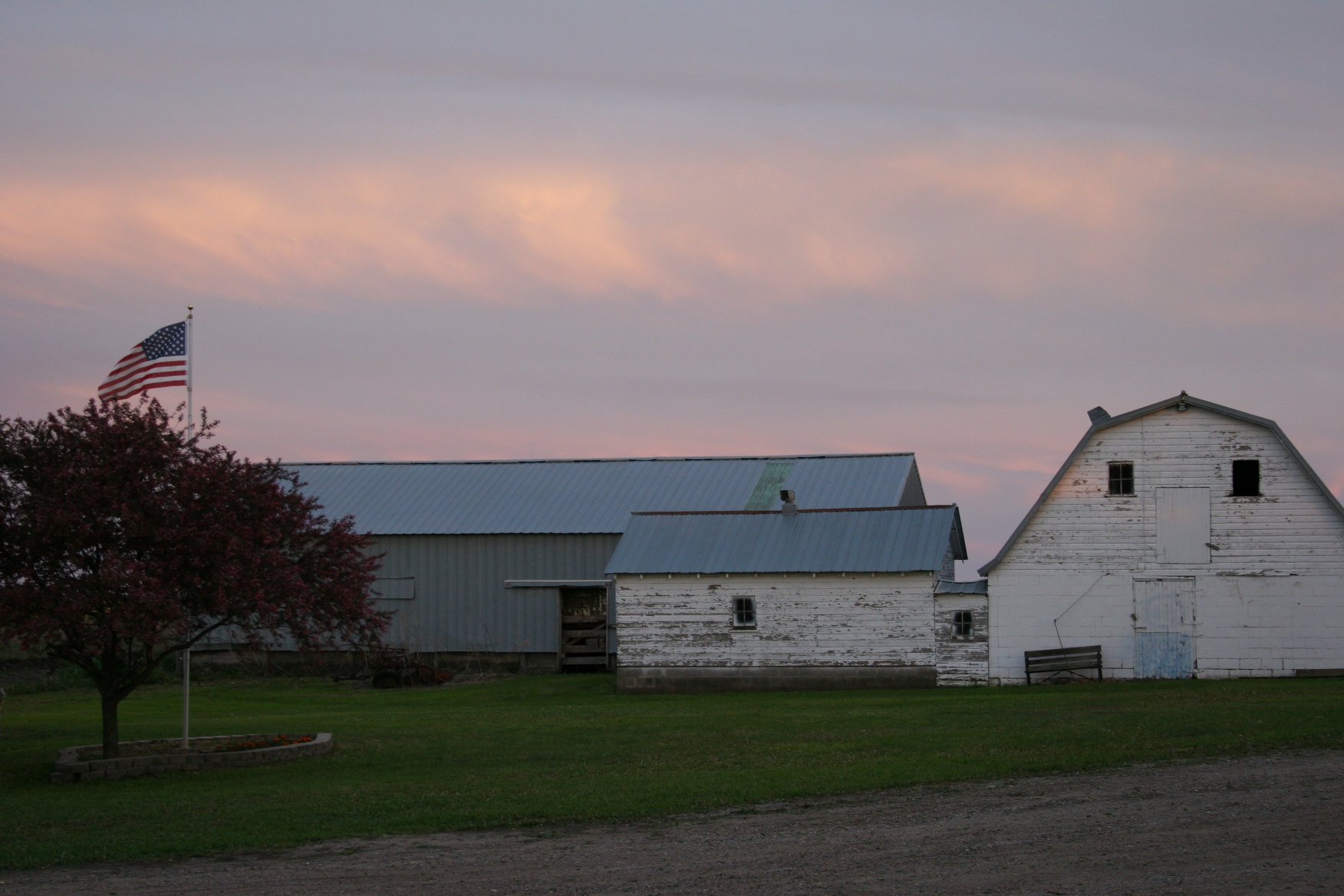
The sun sets on the farm site where I grew up in southwestern Minnesota.

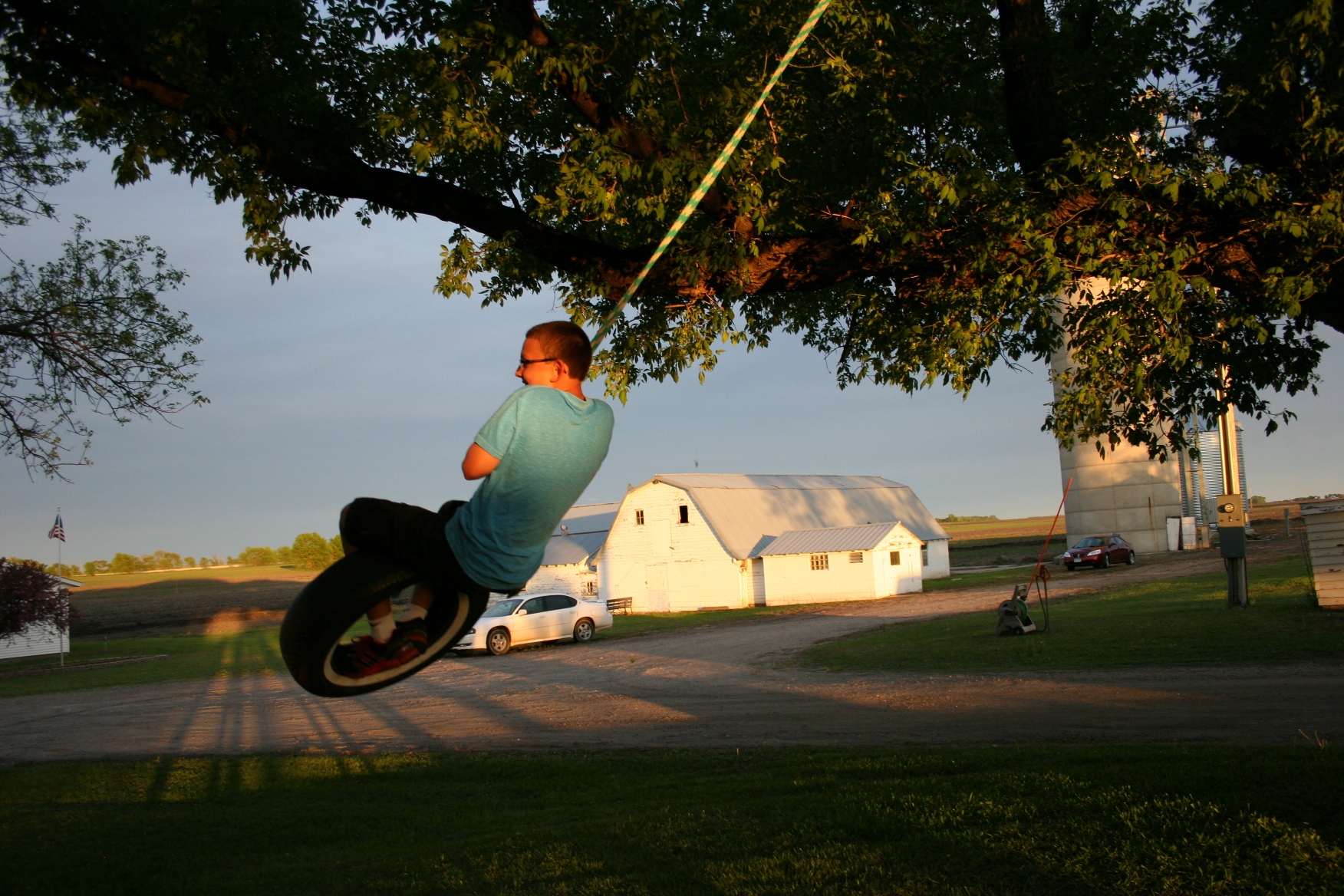
OH, SWEET EVENING of almost-summer on my childhood farm. Daylight fades, washing the sky in the palest of prairie rose pink. Shadows sharpen before the last lingering rays of sunlight retire for the night.

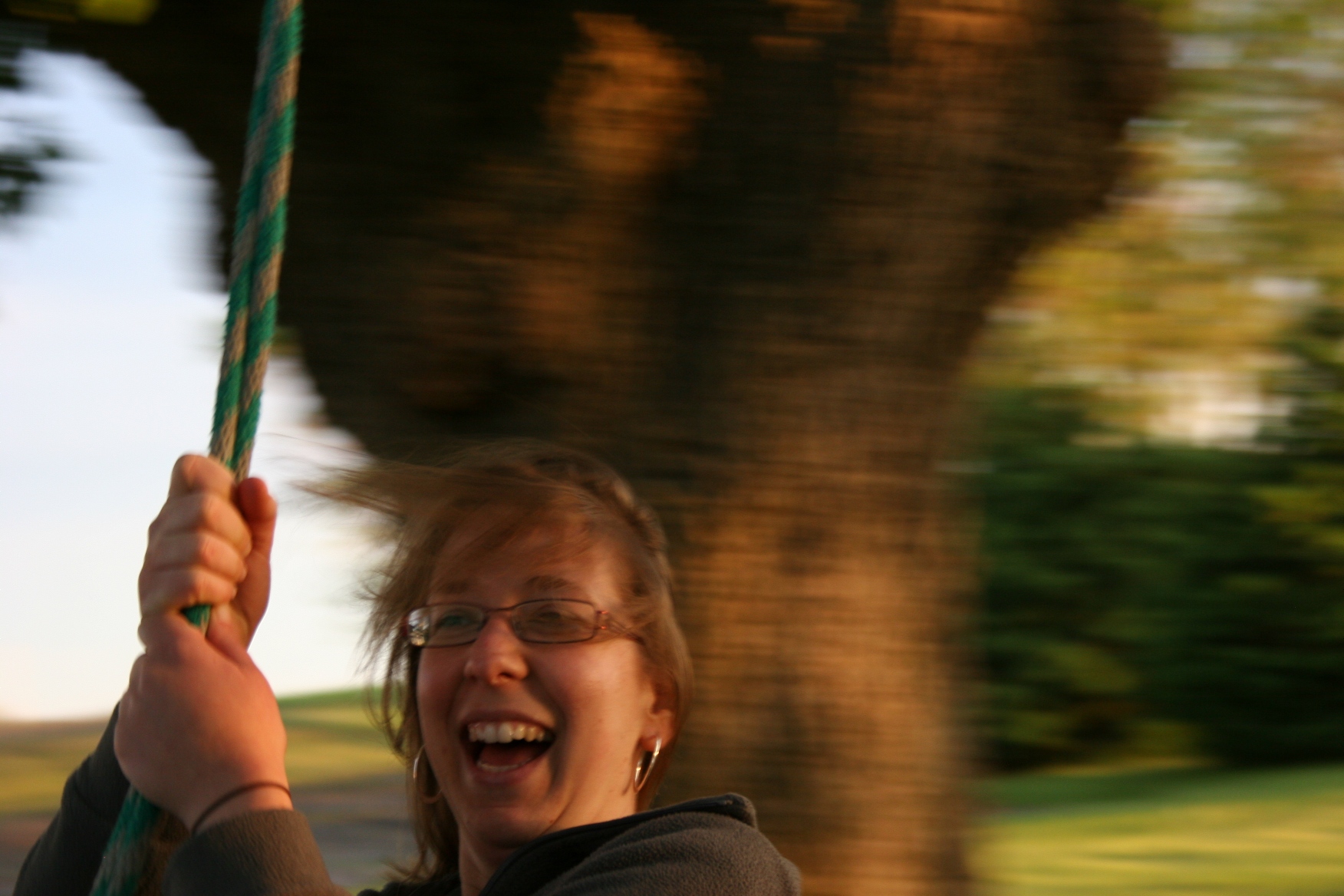
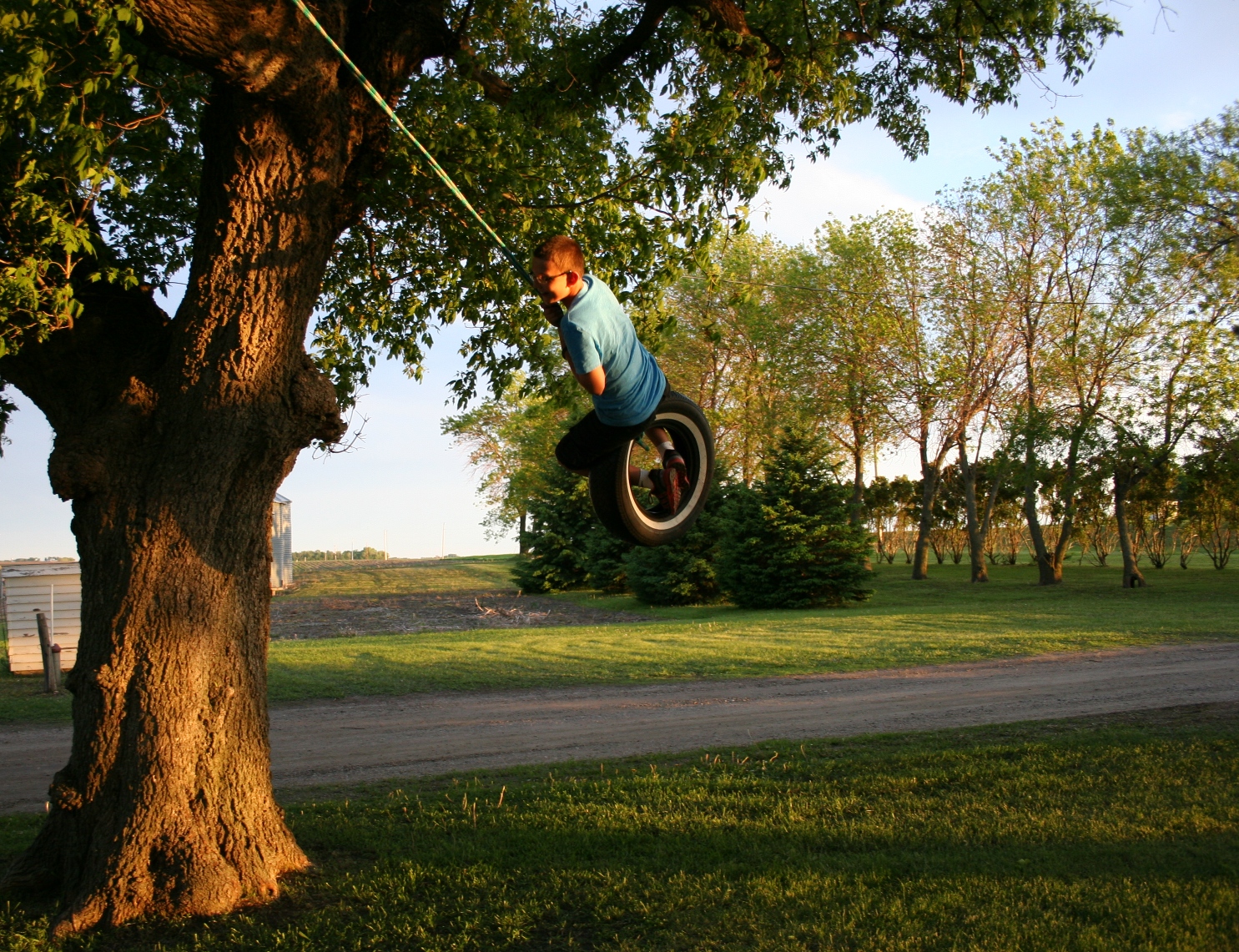
Underneath the branches of the sturdy old tree, which once sheltered a long-gone farmhouse and a tractor-tire sandbox, the cousins and siblings, ranging in age from 11 to 25, one-by-one grab double ropes, straddle a car tire and ask for a push.

My 11-year-old nephew and a tire swing...

And then they are swinging through the air, spinning nearly out of control, dodging danger in a tree trunk, wisps of hair flying, smiles as wide as the prairie sky, until, finally, they plead for someone, anyone, to stop the dizzy-inducing carnival ride.

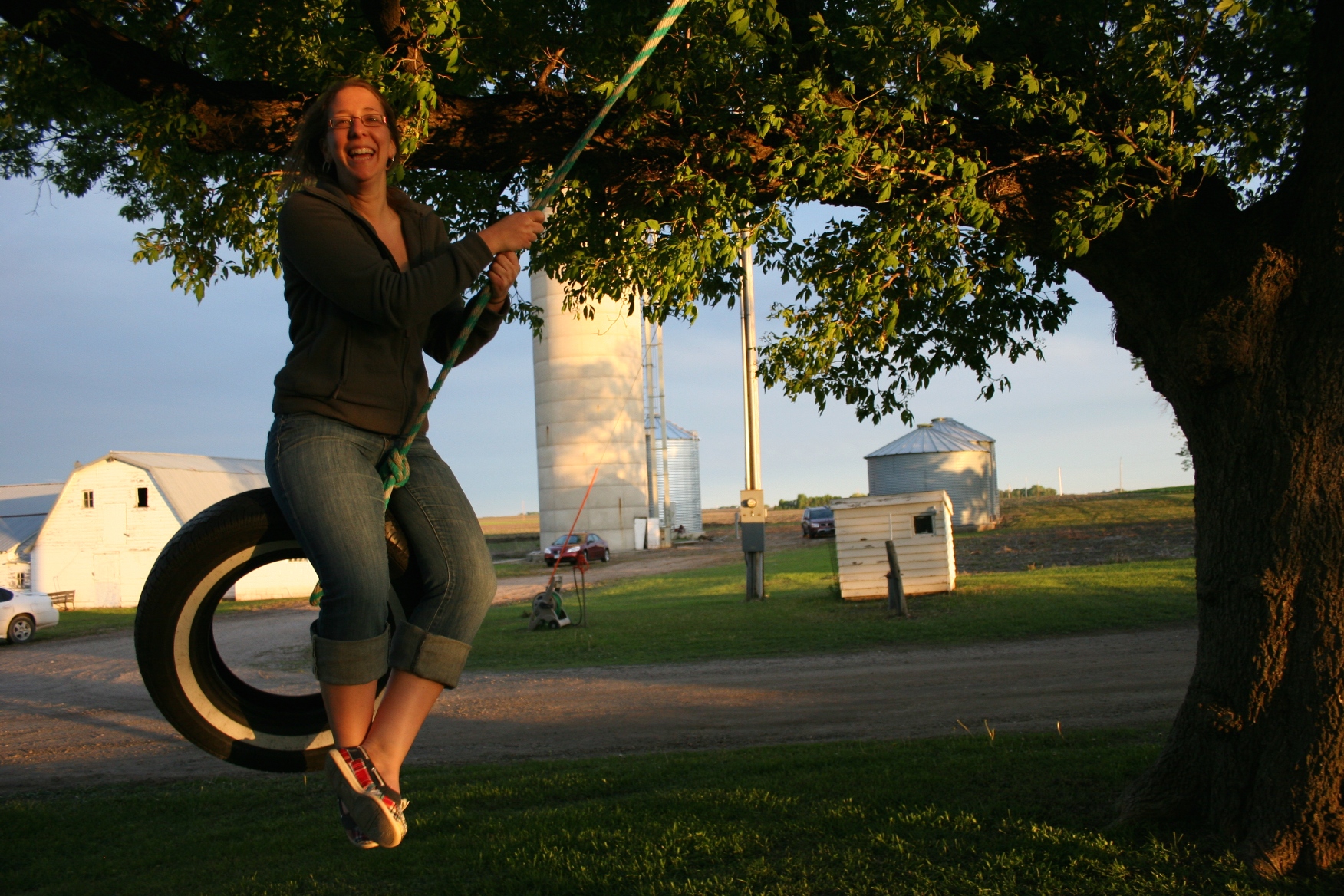
My oldest daughter...

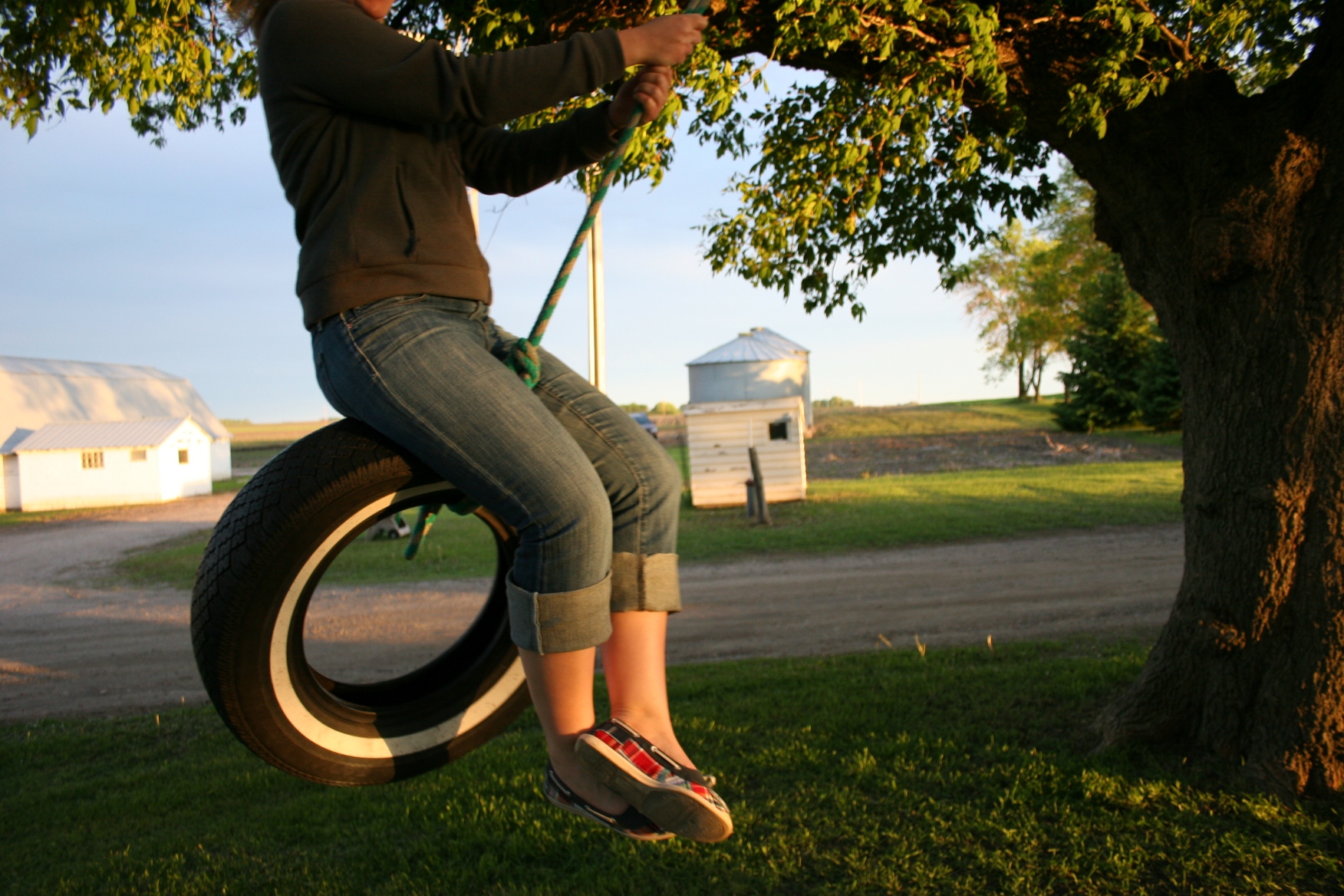
...discovers joy on a tire swing...

...far from her big city home, in the place she calls "the middle of nowhere..."

...and sometimes "nowhere" can be as much fun as Minneapolis on an almost-summer evening.

Oh, sweet evening of almost-summer on the farm, when I grip my camera, dodge the swaying tire to capture the moments, to vicariously relive the exuberance of tipping my head back, catching the wind as I ride the tire swing. I feel the twirling, dizzy oblivion through the lens of my camera, wishing I could grasp the ropes, straddle the tire, stretch my toes heavenward and tickle the belly of the sky.

© Copyright 2011 Audrey Kletscher Helbling


The veterans of Vesta May 30, 2011

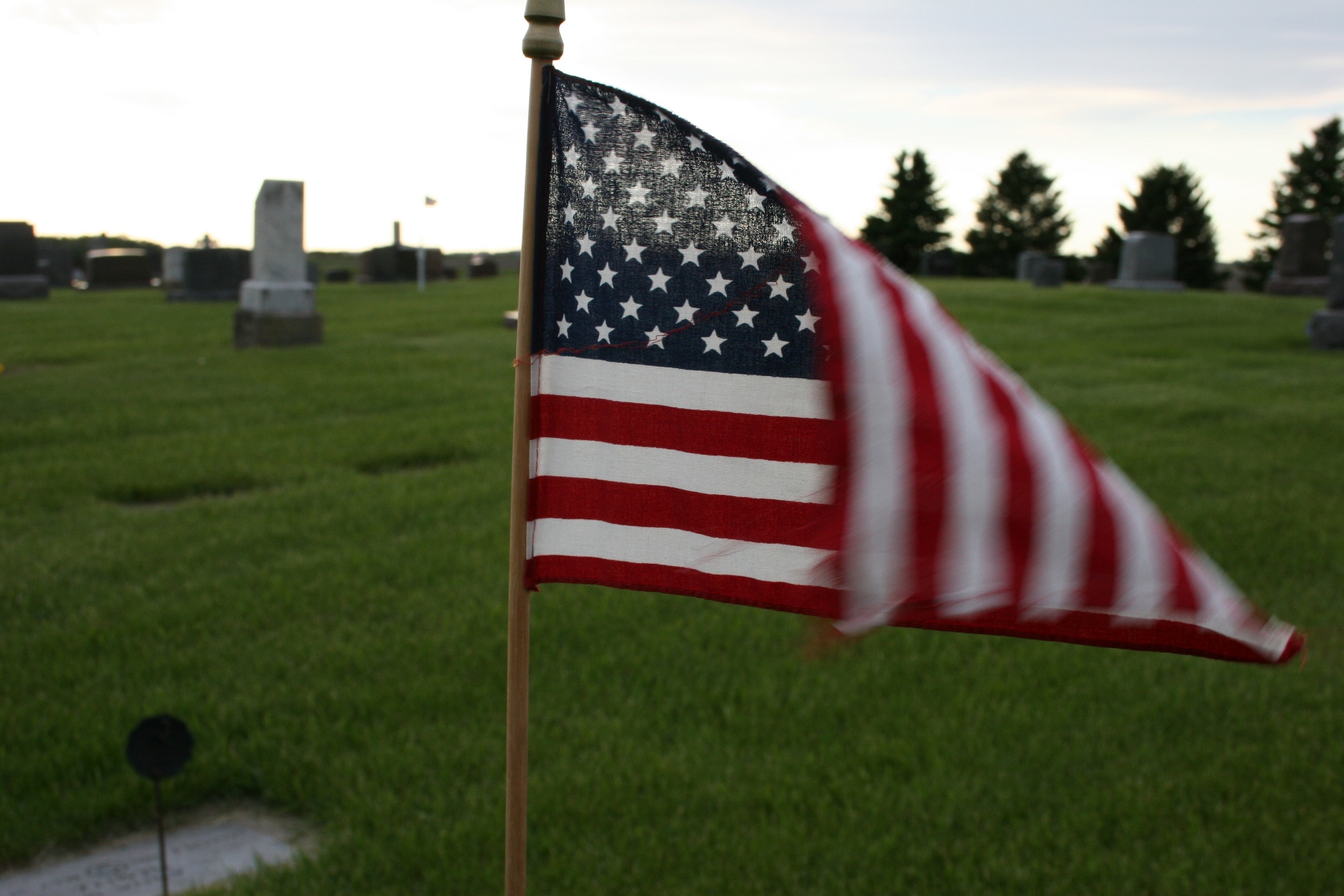
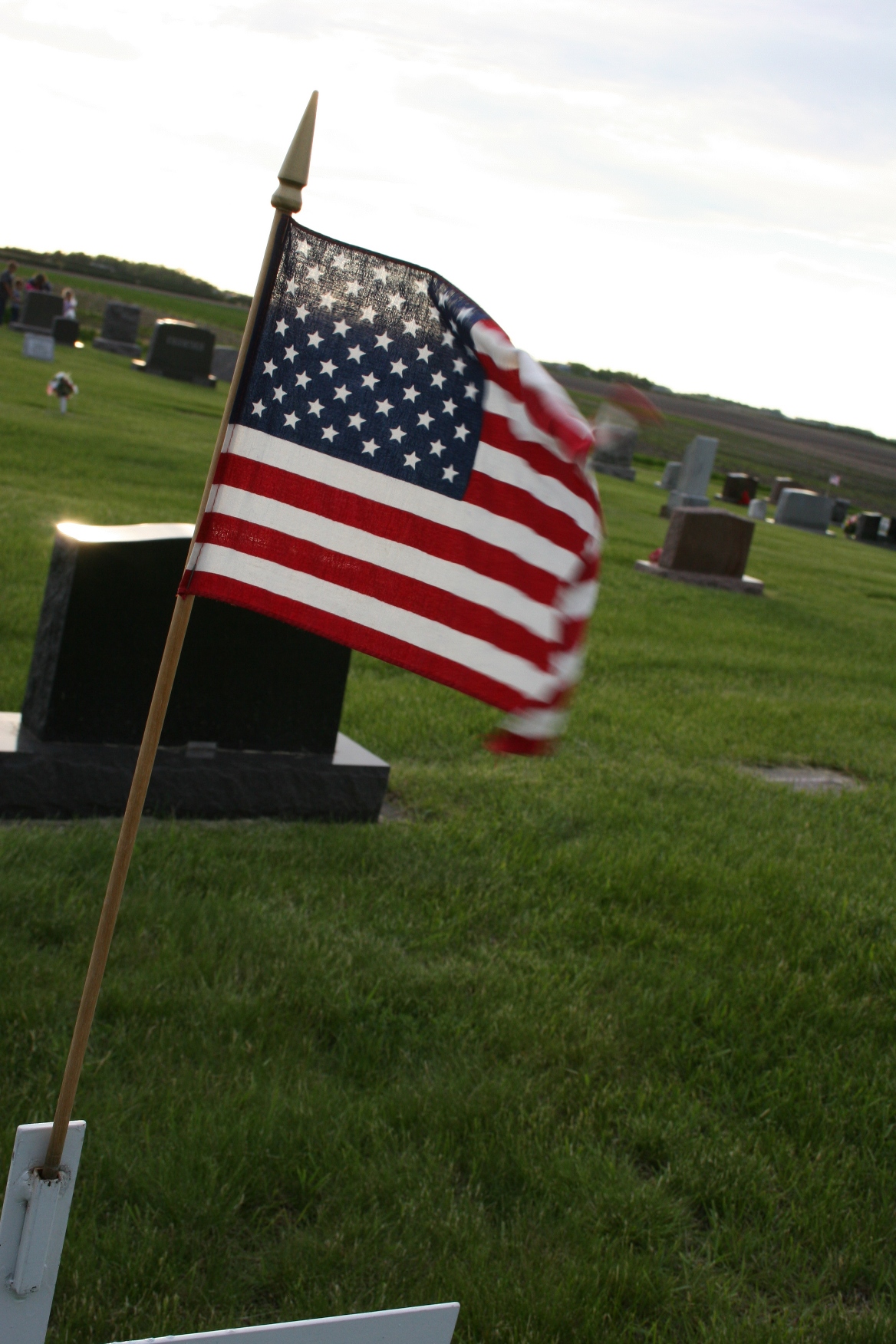
A flag placed on a veteran's grave at the Vesta Cemetery in southwestern Minnesota.

EARTH MEETS SKY HERE.

On this Memorial Day weekend, I have come to this hilltop cemetery outside of my hometown of Vesta in southwestern Minnesota to remember.

I walk the rows, between the tombstones, lean in close, read the names, memories only a thought away.

My focus is on my father and the other veterans buried here whose names I know, whose stories of war I will never fully know.

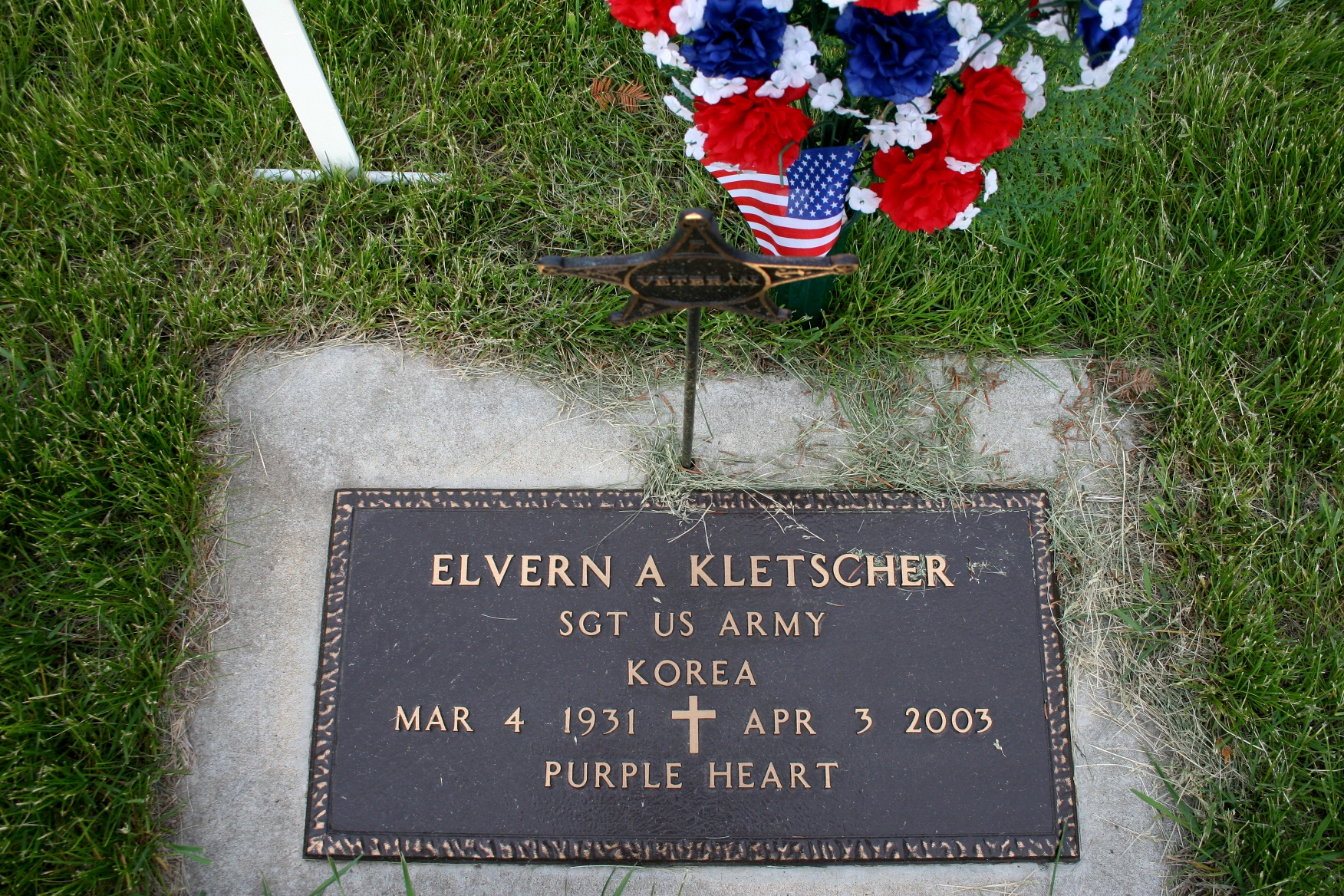
An in-ground marker honors my father, Elvern Kletscher, a Korean War veteran and recipient of the Purple Heart for wounds he suffered at Heartbreak Ridge in Korea.

How did they feel leaving family and farm? Were they scared? Were they honored to serve their country? Did they yearn for home as they shouldered their weapons? Did they leave as boys, come home as men? Were they scarred by war, forever changed?

I wondered as strong prairie winds whipped flags attached to white wooden crosses. So many flags. So many graves of men who’ve served.

If only I’d asked them to tell me their stories, these men whom I’d never thought of as soldiers, until I saw their graves marked by crosses and stars and American flags.

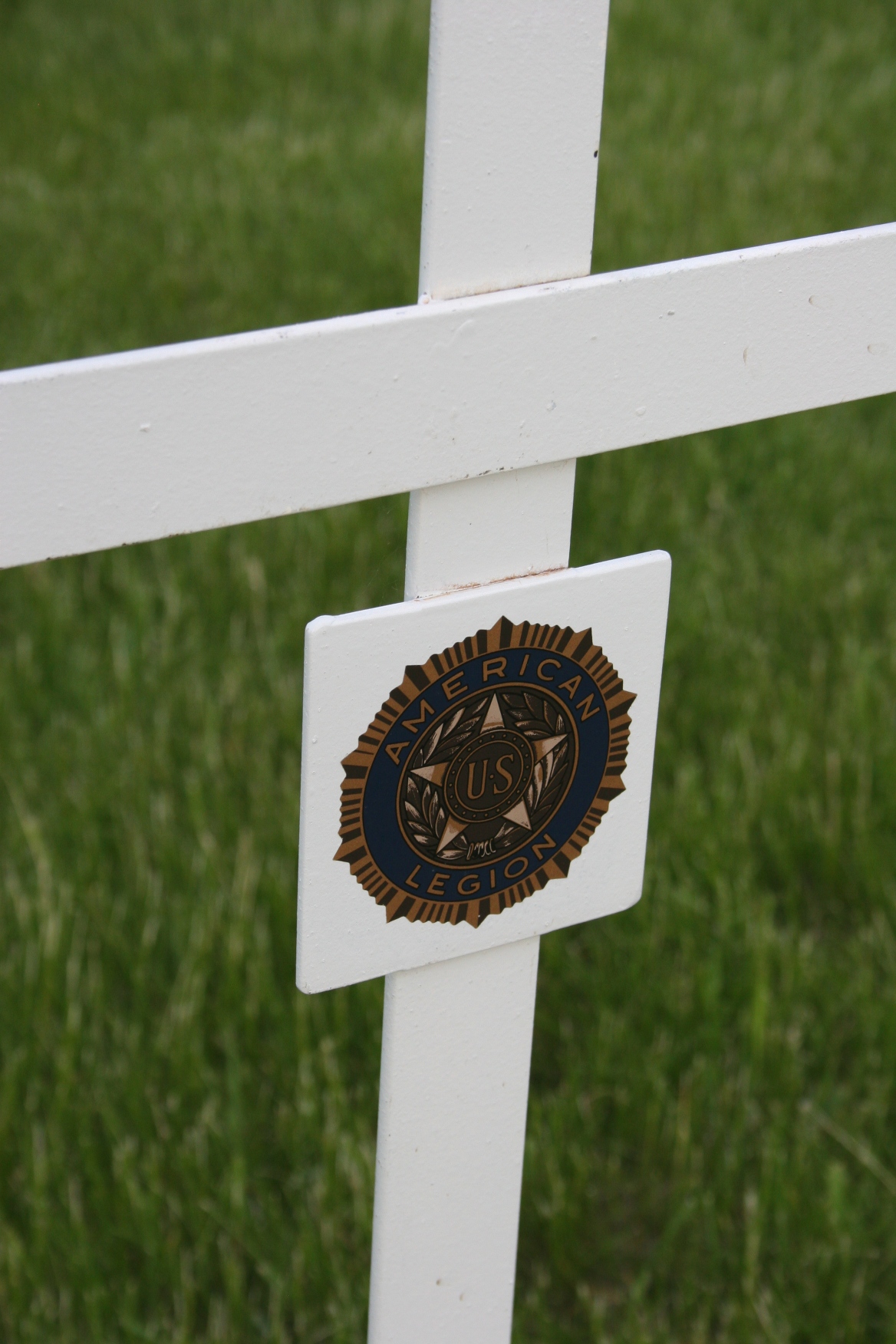
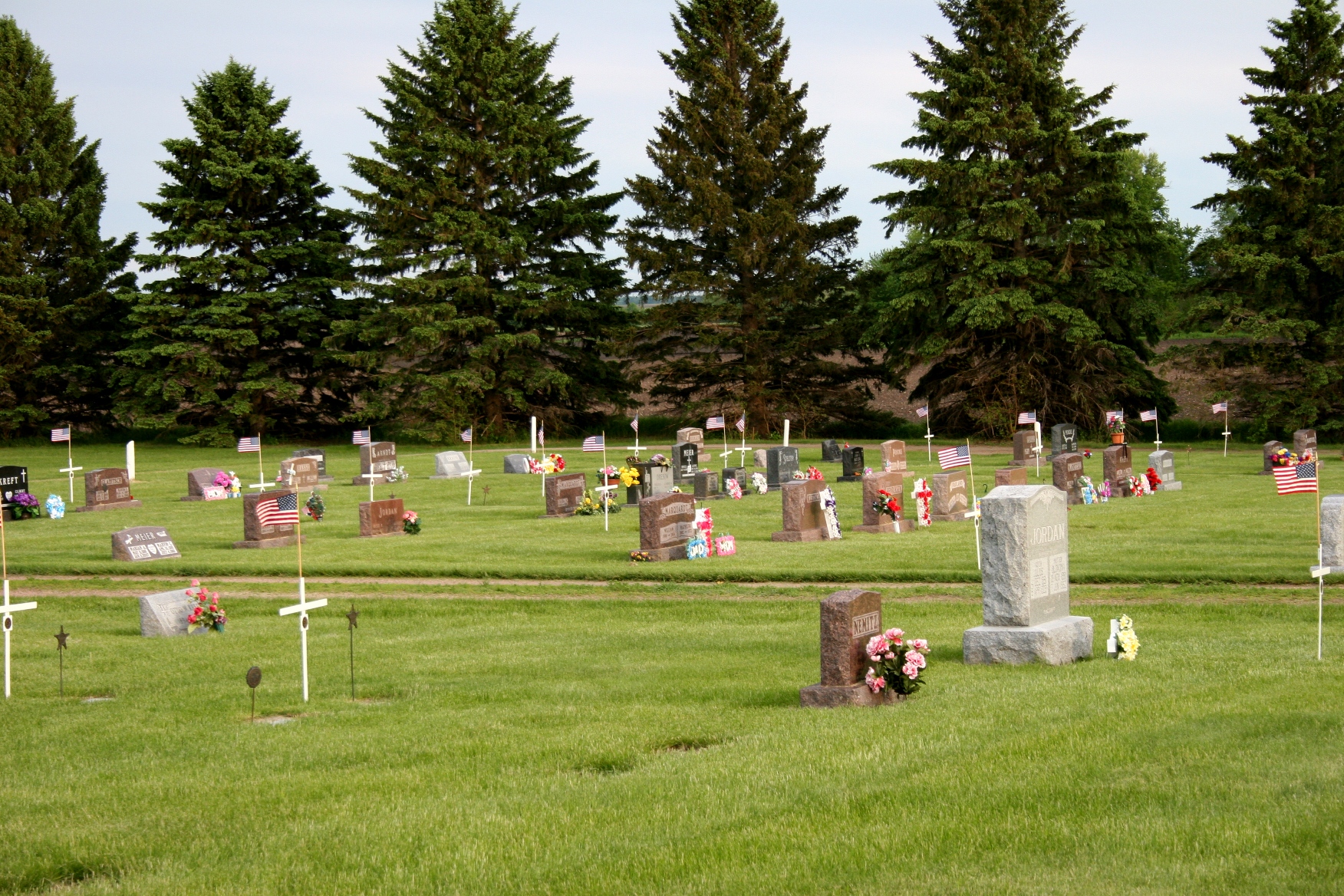
The local American Legion marks veterans' graves with white crosses.

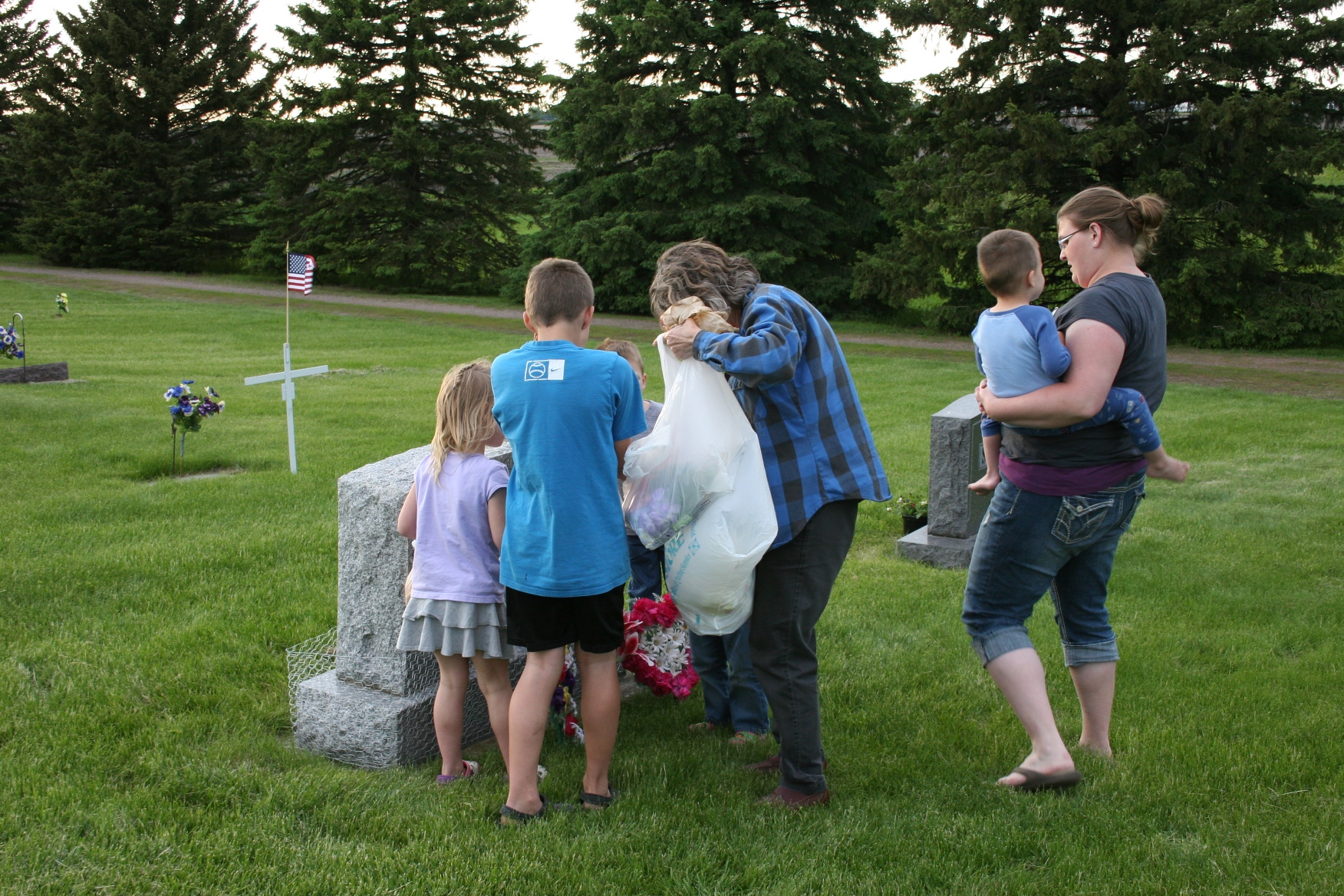
Barb Schmidt teaches her grandchildren about their ancestors as they place flowers on the graves of loved ones Saturday evening at the Vesta Cemetery.

Set atop a hill, the wind catches the flags marking vets' graves.

I was surprised by the number of veterans buried in the Vesta Cemetery, their graves marked by small flags attached to white crosses. This photo shows only one small portion of the graveyard.

© Copyright 2011 Audrey Kletscher Helbling


Reflecting on graduation speeches by three generations of Minnesota women May 27, 2011

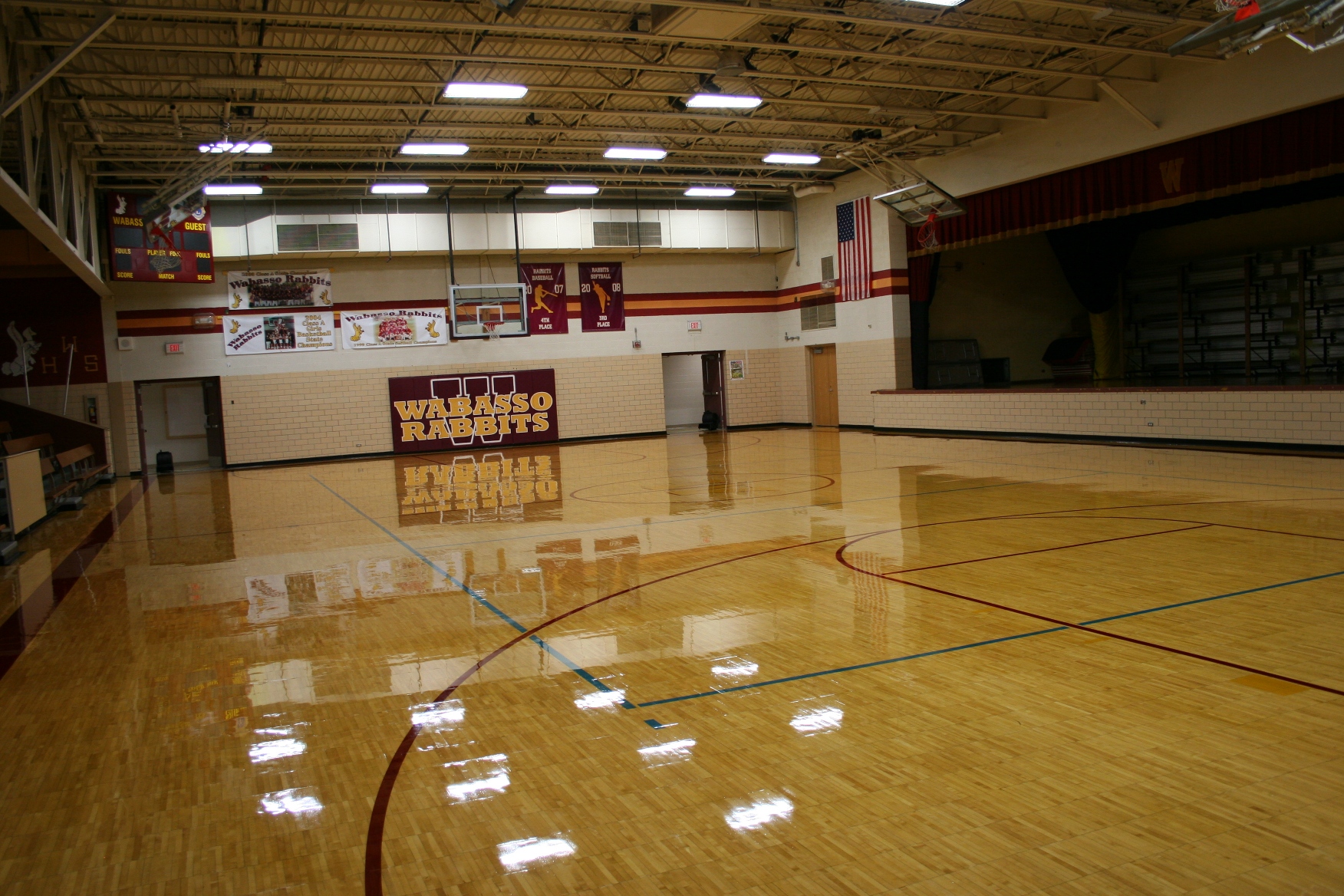
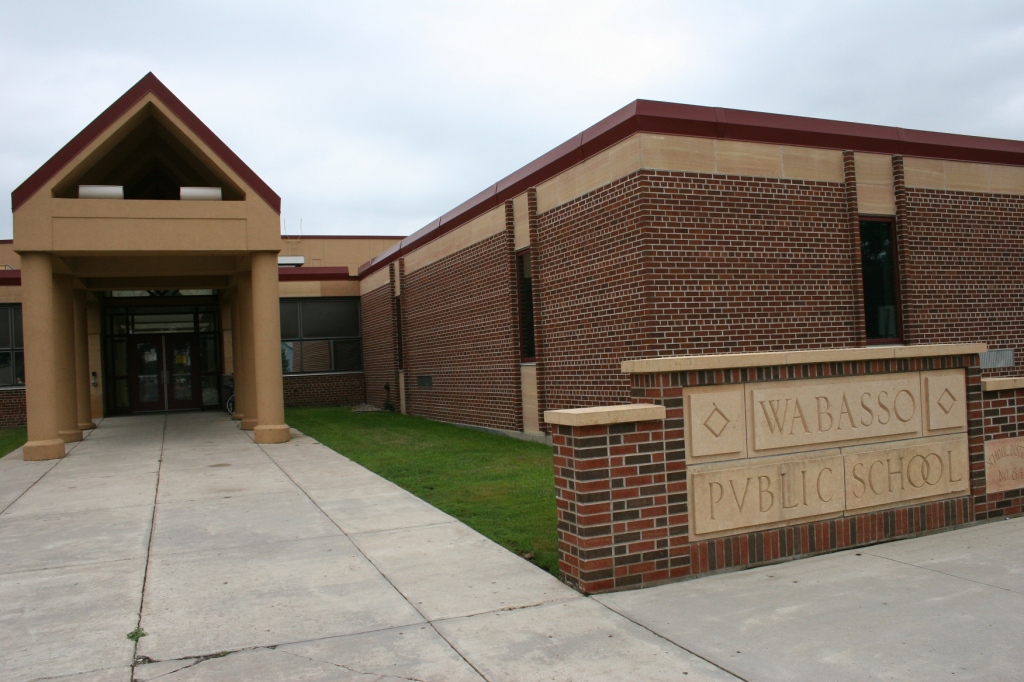
Wabasso High School, where my niece will give a speech tonight as class valedictorian. My mom and I also graduated from WHS, although the building looks much different than when we graduated in 1951 and 1974.
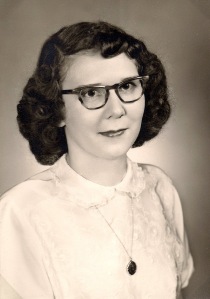
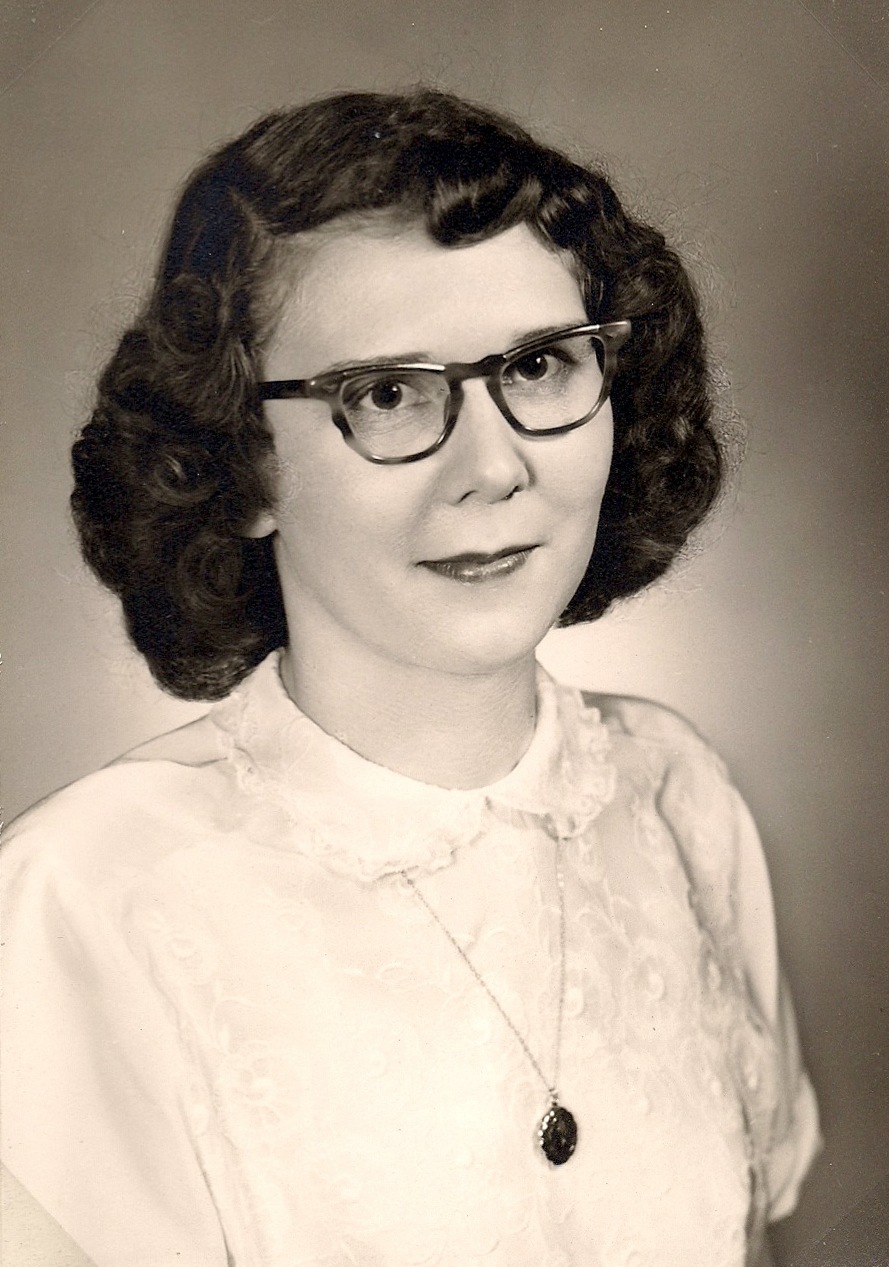
Arlene Bode Kletscher's 1951 graduation portrait.

SIXTY YEARS AGO 18-year-old Arlene Bode stepped onto the stage at Wabasso High School and gave a commencement speech, “Our Part in the Fight Against Communism.”

While that seems an unlikely, unsuitable, topic for an address by the class valedictorian, my mom says you need to remember the time period in which she wrote and gave that speech.

This was 1951, at the height of the Cold War, the era of bomb shelters and fear of the Soviet Union.

My mom espoused patriotism, encouraging her southwestern Minnesota classmates “to be patriotic and vote…so we can keep our freedom,” she recalls. She has a copy of that speech tucked inside her WHS diploma.

She found the speech recently when pulling out her diploma to show her granddaughter, Hillary Kletscher, who graduates tonight, also from Wabasso High.

Hillary, like her 79-year-old grandmother, is the class valedictorian and will speak at commencement. When I texted Hillary early Thursday afternoon, she hadn’t yet titled her speech. But, she said, the “main subject is change and how it’s good but we have to hold onto what we learn from the past.”

I won’t be there to hear my niece’s address. But I intend to ask her for a copy, just like I plan to get a copy of my mom’s speech, which I’ve never seen. These are parts of our family history, words reflecting the time periods in which they were written, words of hope and wisdom and patriotism (at least in my mom’s case).

Hillary will step onto the WHS stage tonight and speak on change, yet remembering the past.
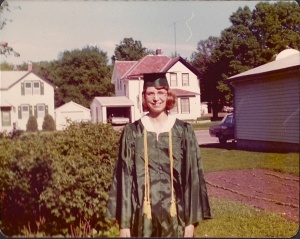
Audrey Kletscher Helbling, 1974 WHS graduate.

That my mom kept her speech through six decades impresses me. I say that specifically because I have no idea where to find the speech I gave at my graduation from Wabasso High School in 1974. It’s packed in a box somewhere in a closet in my home, but I possess neither the time nor energy to dig it out.

I remember only that, as class salutatorian, my farewell address included a poem. What poem and by whom, I do not recall.

In 2006, my daughter Miranda graduated as valedictorian of Faribault High School and gave a commencement speech. Given that occurred only five years ago, I should remember the content. I don’t. I recall only that she held up a test tube to make a point.

I am also making a point here. Thankfully much has changed in the 60 years since my mom spoke on “Our Part in the Fight Against Communism.” While the world today remains in turmoil, at least the intense fear, felt by the Class of 1951 during the Cold War, no longer exists.

We have also moved beyond the turbulent 60s and 70s, a time of rebellion, anti-establishment, and anti-war sentiments and discontent over the Vietnam War experienced by my class, the Class of 1974.

By 2006, when my second daughter graduated, we as a nation were beginning to recover from 9/11, yet we lived in an increasingly security-focused society.

Today my niece graduates in a day of continuing economic uncertainty, when young people are struggling to find jobs and when Baby Boomers like myself worry about our jobs and retirement.

Yet, through it all—the Cold War, Vietnam, September 11 and a challenging economy—we remain four strong women living in a free country where we, individually, spoke freely, representing the classes of 1951, 1974, 2006 and 2011.

© Copyright 2011 Audrey Kletscher Helbling


Horse/Pferd crazy in Minnesota und Deutschland April 7, 2011

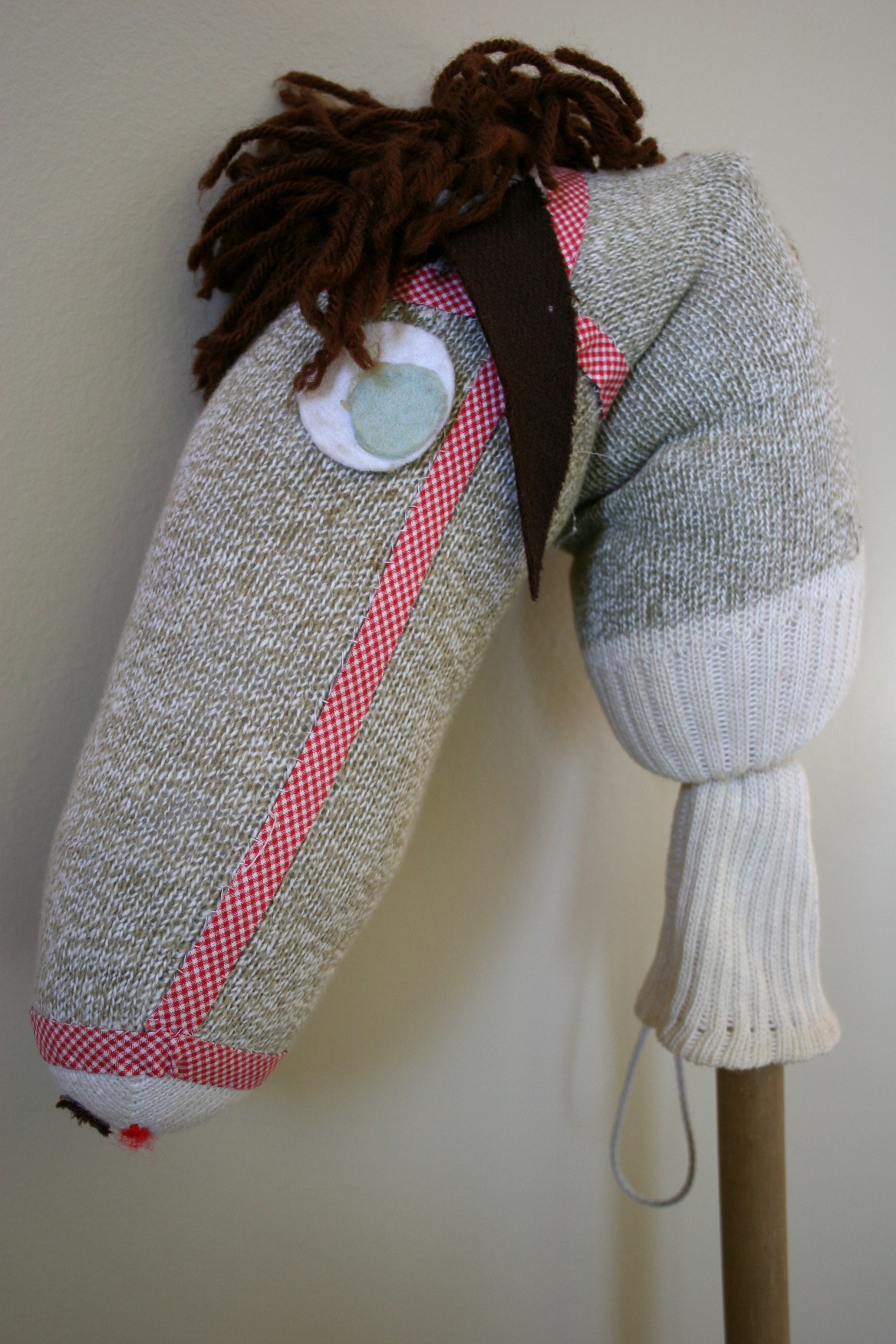
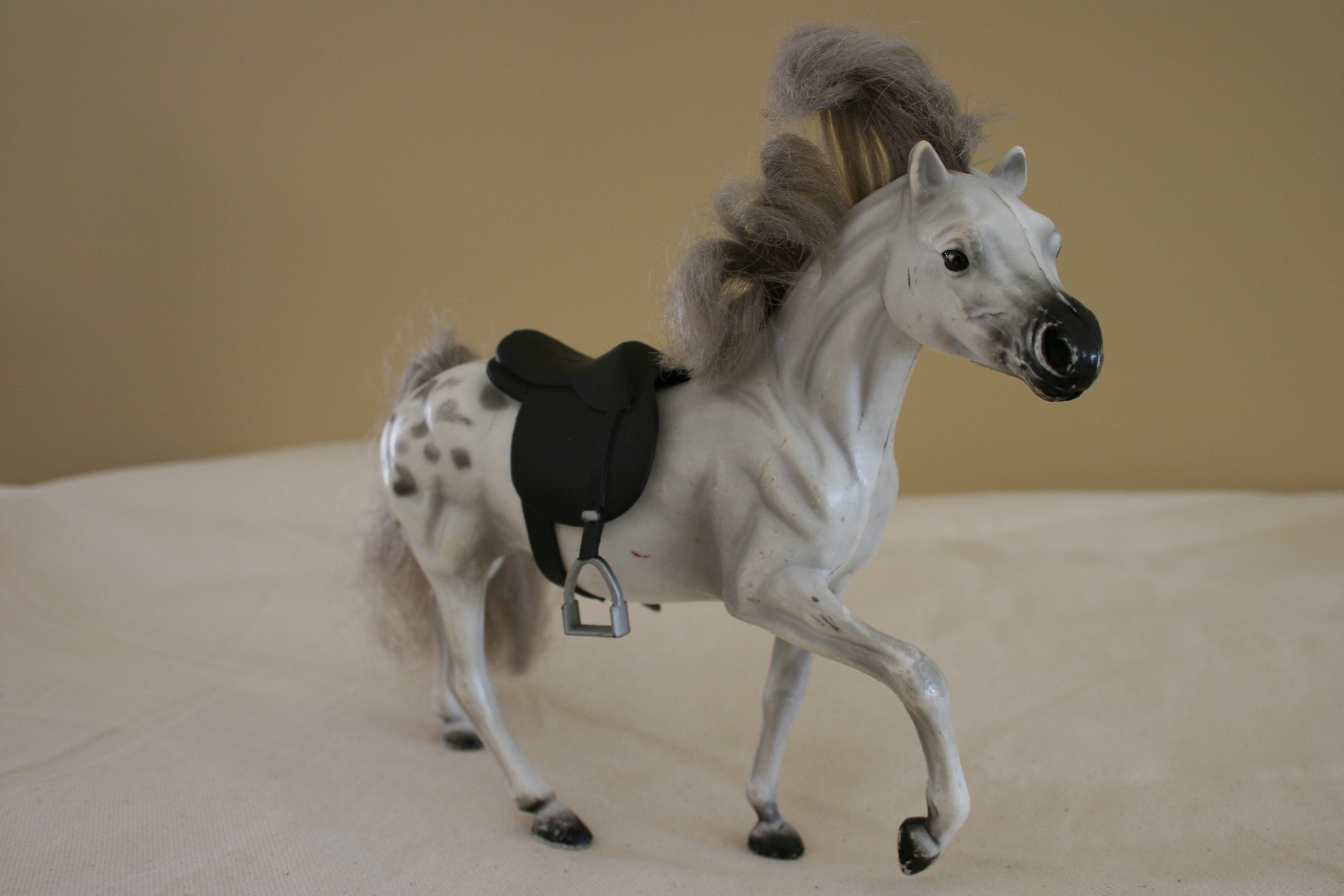
This isn't my stick horse; mine is long gone. But my parents made stick horses for my two daughters 20-plus years ago. This horse belongs to one of them.

GROWING UP ON A SOUTHWESTERN Minnesota farm, I wanted a horse. Bad. Really, really bad.

But Dad wasn’t buying my and my siblings’ pleas to “Please, please, pretty please, Dad, can we get a horse?”

He stood firm in his belief that horses were dangerous. And then he would give us the facts to back up his fear. Dad would regale us over and over again with the tale of the boy he’d seen lying in the Redwood Falls Hospital with a hoof print embedded in his forehead. Whether that story was entirely true or a bit of exaggeration, I’ll never know. I only knew, unequivocally, that Dad didn’t want any of his six kids kicked in the head by a horse.

I think he also had concerns about keeping an animal that wasn’t earning its keep on our dairy and crop farm. With tractors, he didn’t need horses that, in his opinion, would do nothing except consume corn and hay that he needed for the cattle.

And so my siblings and I improvised. Socks with eyes, mouths and ears and with yarn manes sewn on and then jammed onto sticks became our horses. Stick horses. I rode mine around the farmyard so much that I easily could have ridden to Montana and back.

These were the days, too, of television westerns like Gunsmoke, Bonanza, Rawhide. These were the days of shooting cap guns and, even though this is certainly not politically-correct today, of playing “cowboys and Indians.”

When my siblings and I weren’t riding our stick horses with guns blazing, we were riding our bicycles. Up and down the driveway. On the rock-hard dirt paths we’d carved through the grove. We pedaled furiously, escaping robbers and savages on our bikes turned horses.

On occasion, we also straddled empty barrels, slipping our feet into stirrups we’d fashioned from baler twine. We were, if anything, innovative, resourceful and imaginative.

Dad wasn’t giving us our horse, so we made do.

For my oldest brother, making do also meant attempting to ride a steer. I don’t recall that he was ever bucked off. But I also don’t remember that he succeeded in his mission.


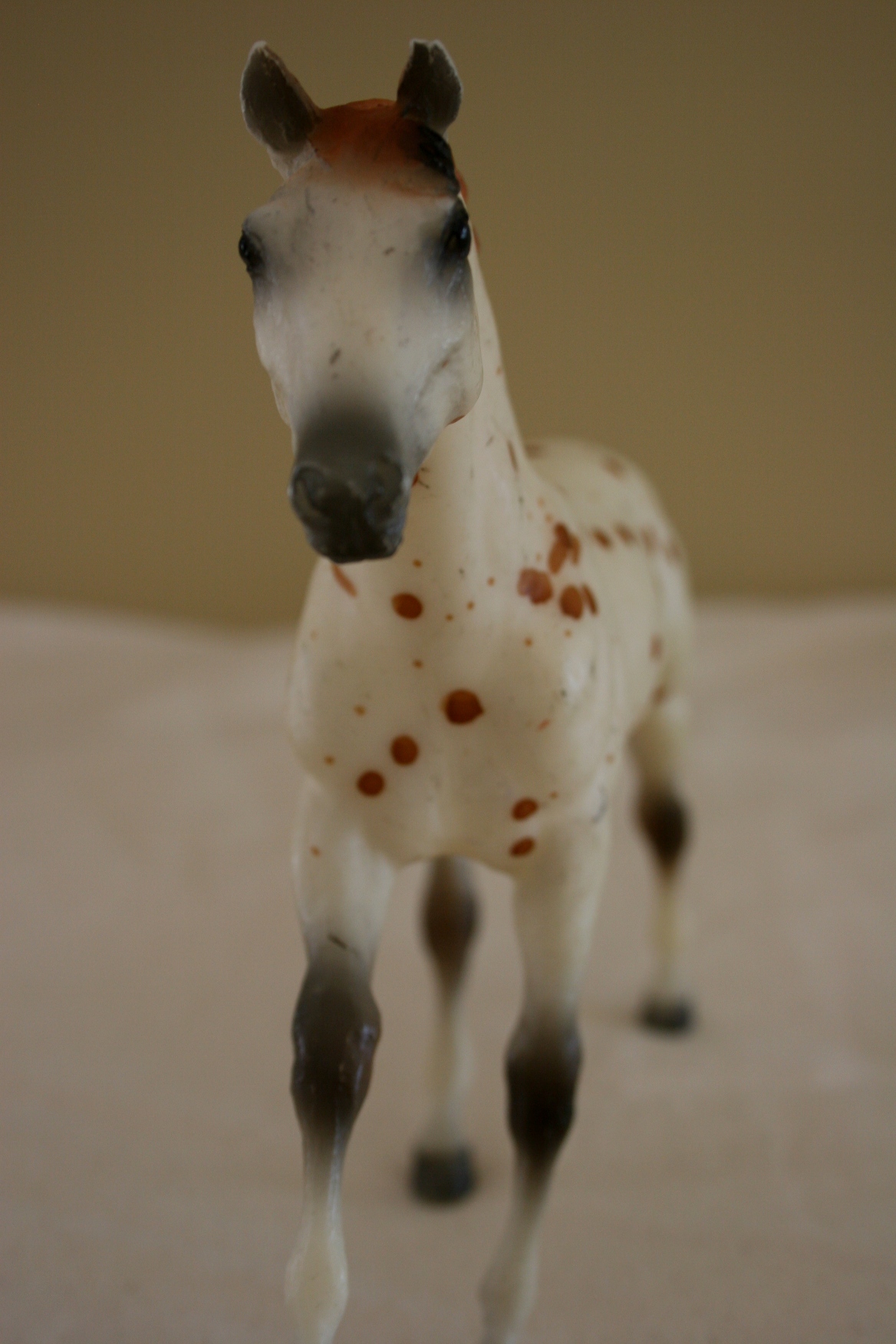
My second daughter went through a phase, when she was about four years old, of being obsessed with horses. She drew horse pictures non-stop. I read every horse book to her available through the southeastern Minnesota library system. And I bought her toy horses, all of which are still in a plastic tote for her to someday claim.

All of which brings me to this story. Have you heard about the 15-year-old German girl who trained a cow that she can ride like a horse? Her parents, like my dad, told her she couldn’t have a horse. So she improvised.

Shortly after Luna was born on the family’s farm two years ago, Regina Mayer started working with the animal. Her persistence paid off as she can now saddle up and ride the cow like a horse. Luna even is trained to jump over hurdles.

I like the spunk of this teen. Knowing what I know about cattle, I realize just how determined Regina had to be to get her “horse.”

Apparently my brothers, sisters and I weren’t determined enough. So, instead, we settled for sticks, bikes and barrels. And, on occasion, we cajoled a relative into riding her horse from several miles away to our farm. She would allow us to climb into the saddle for a walk around the farmyard. It was then that I discovered I really didn’t feel all that comfortable riding a horse. But I never told my dad. Not once.


One of the many horses in my second daughter's collection.

© Copyright 2011 Audrey Kletscher Helbling
 

A glimpse of winter on the Minnesota prairie March 8, 2011


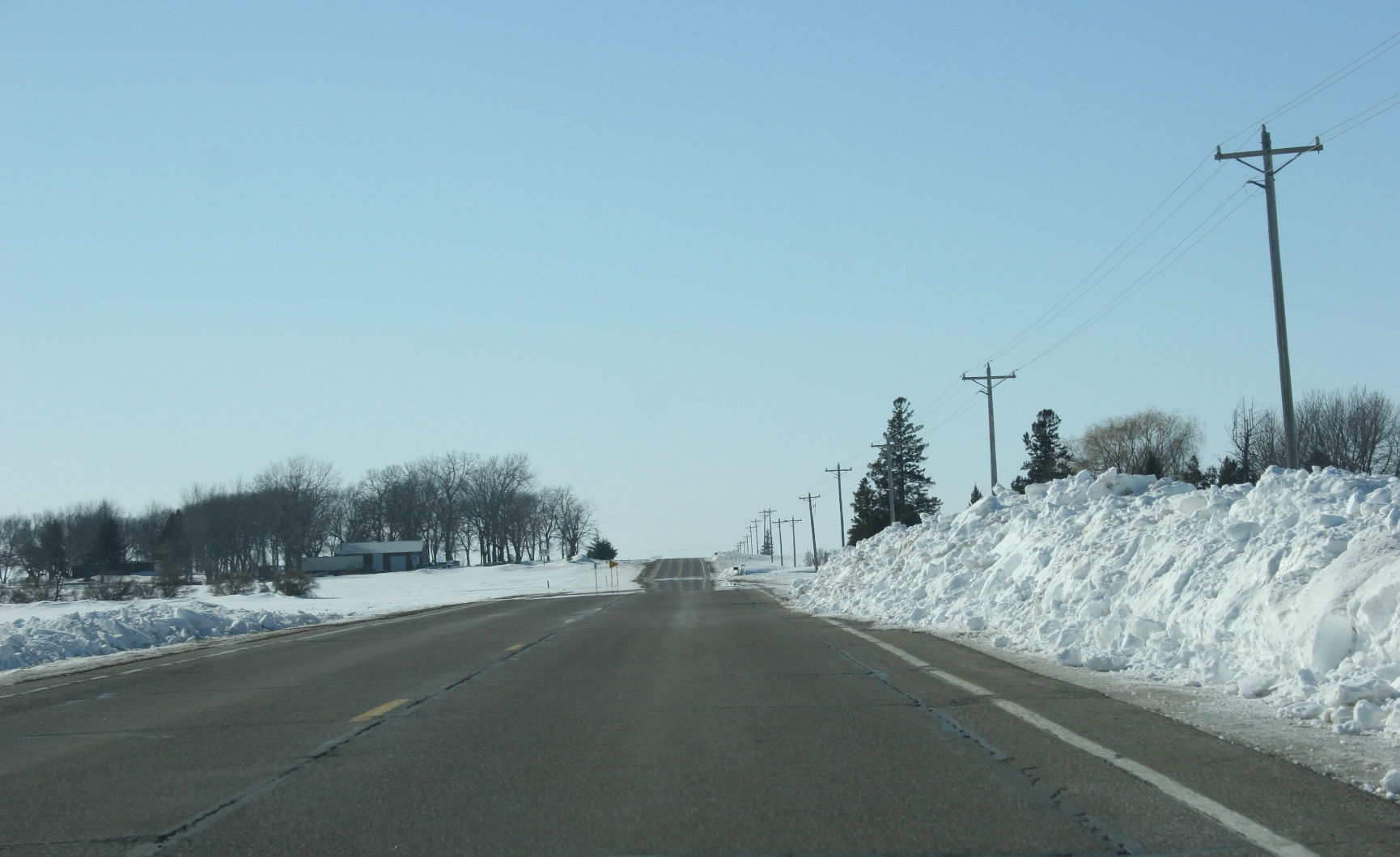
Traveling U.S. Highway 14 west of New Ulm to southwestern Minnesota.

I NEEDED A TRIP to southwestern Minnesota this past weekend, as much to be with extended family as to reconnect with the land where I grew up. I was not disappointed, on both counts.

I embraced the family I love as we talked and laughed and talked and laughed some more while celebrating my middle brother’s 50th birthday until just past midnight on Saturday.

Sometime in between, we joked about the possibility of being snowed in on his Redwood County acreage. Snow was in the forecast and we all know that snow on the prairie, combined with wind, could strand us.

By the time we finished breakfast mid-morning on Sunday, the flakes were flying and U.S. Highway 14 was dusted with snow, enough to cause cautionary travel as my husband, son and I headed east back to our Faribault home.

Fortunately, we drove out of the snow even before reaching New Ulm.

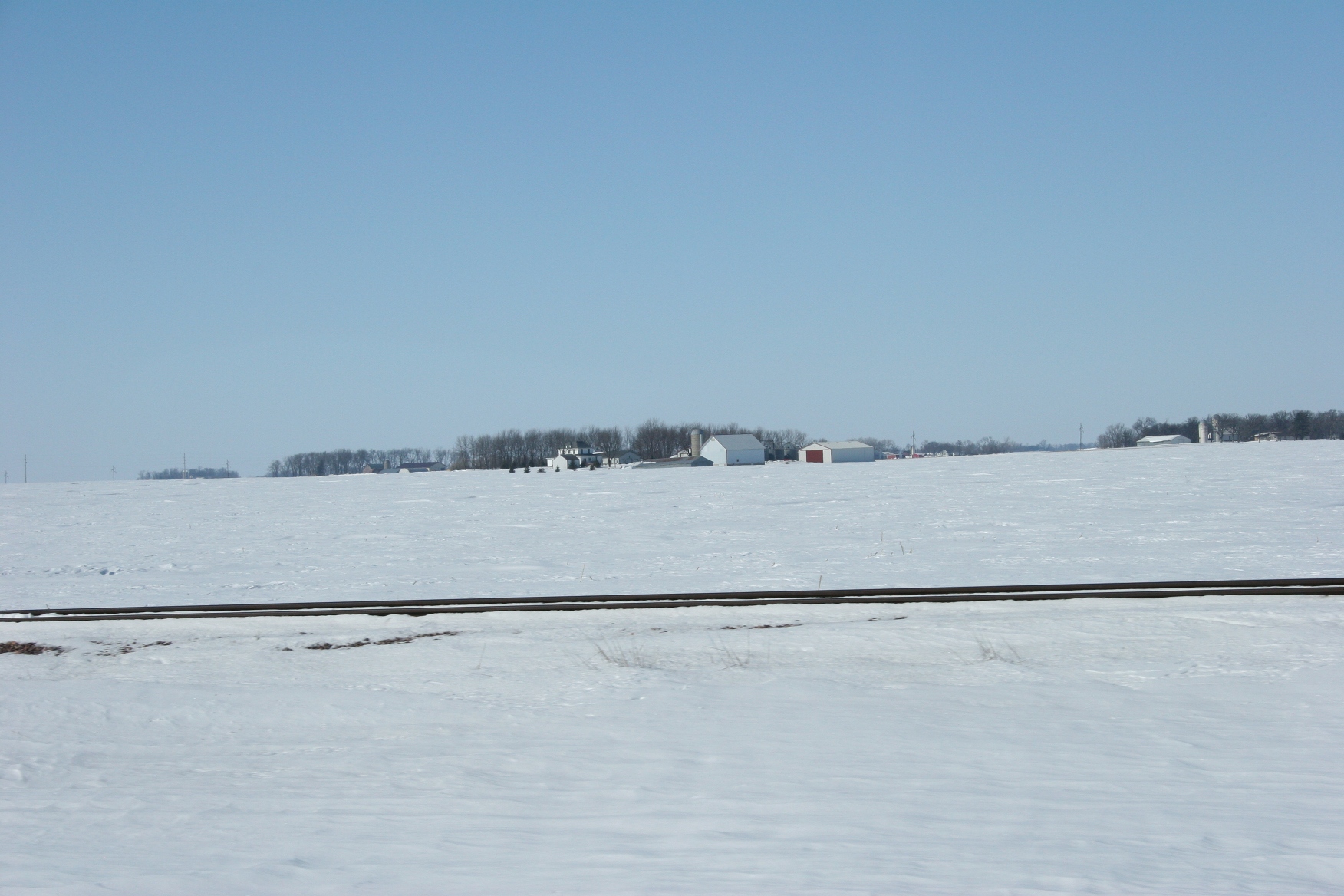
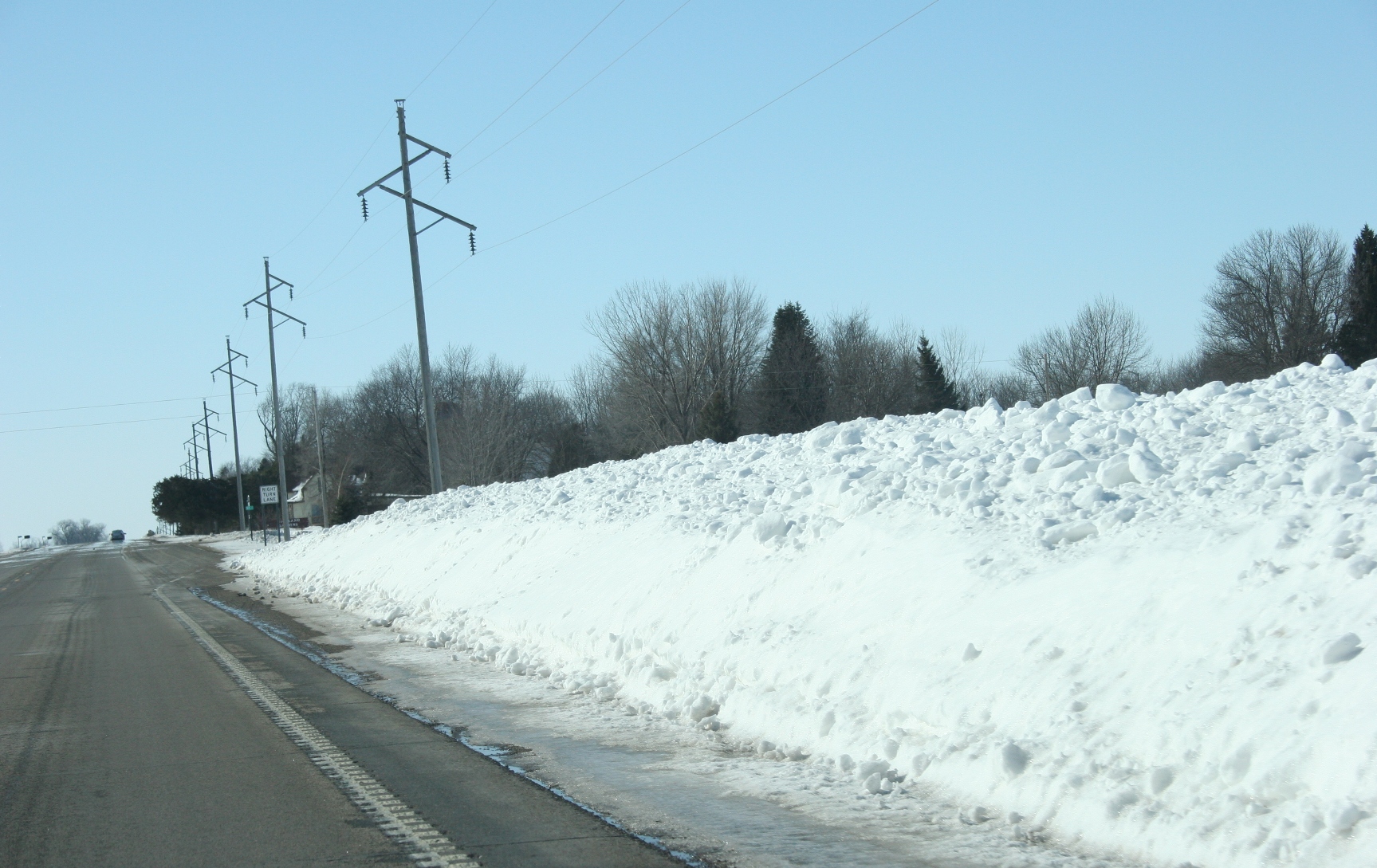
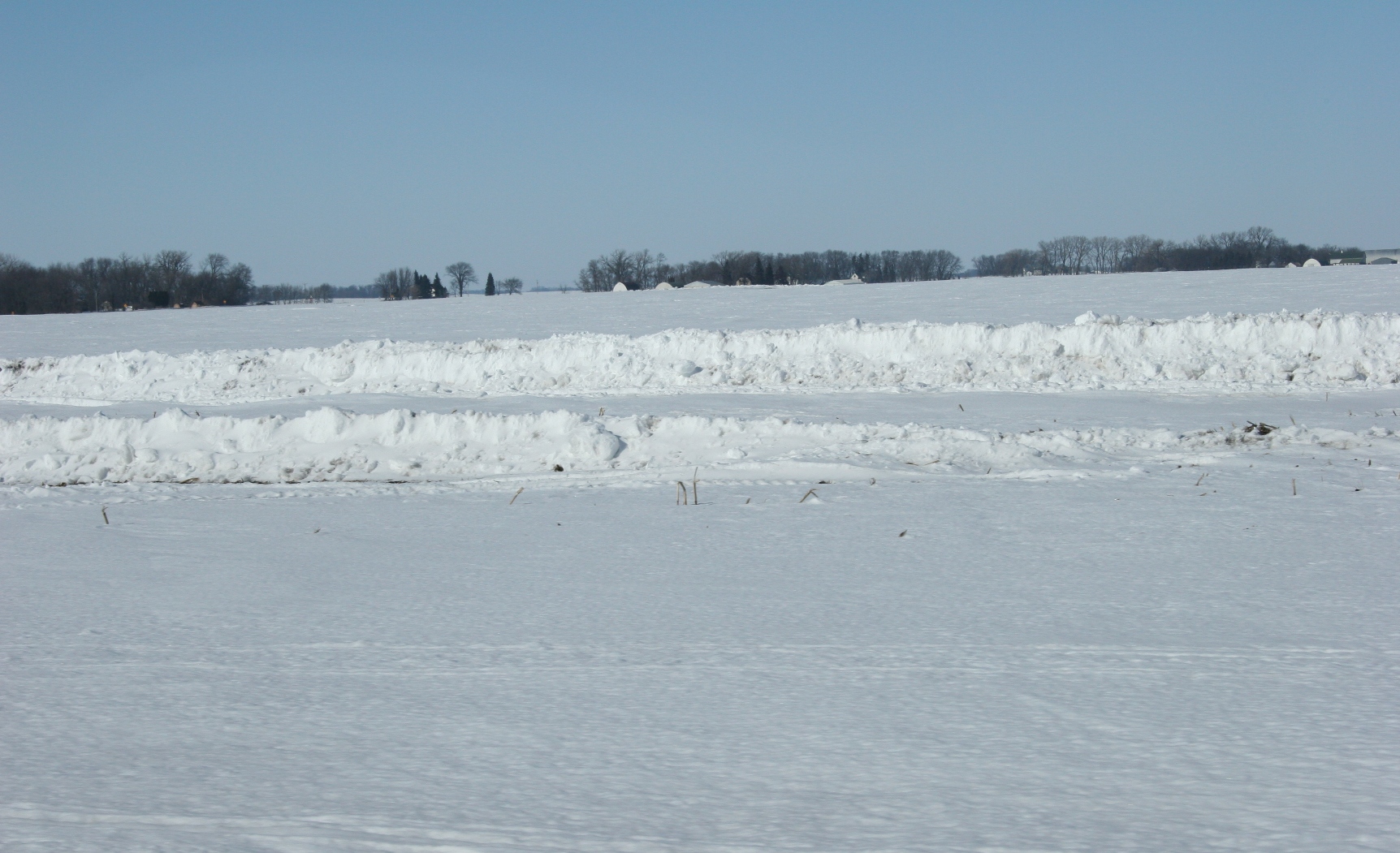
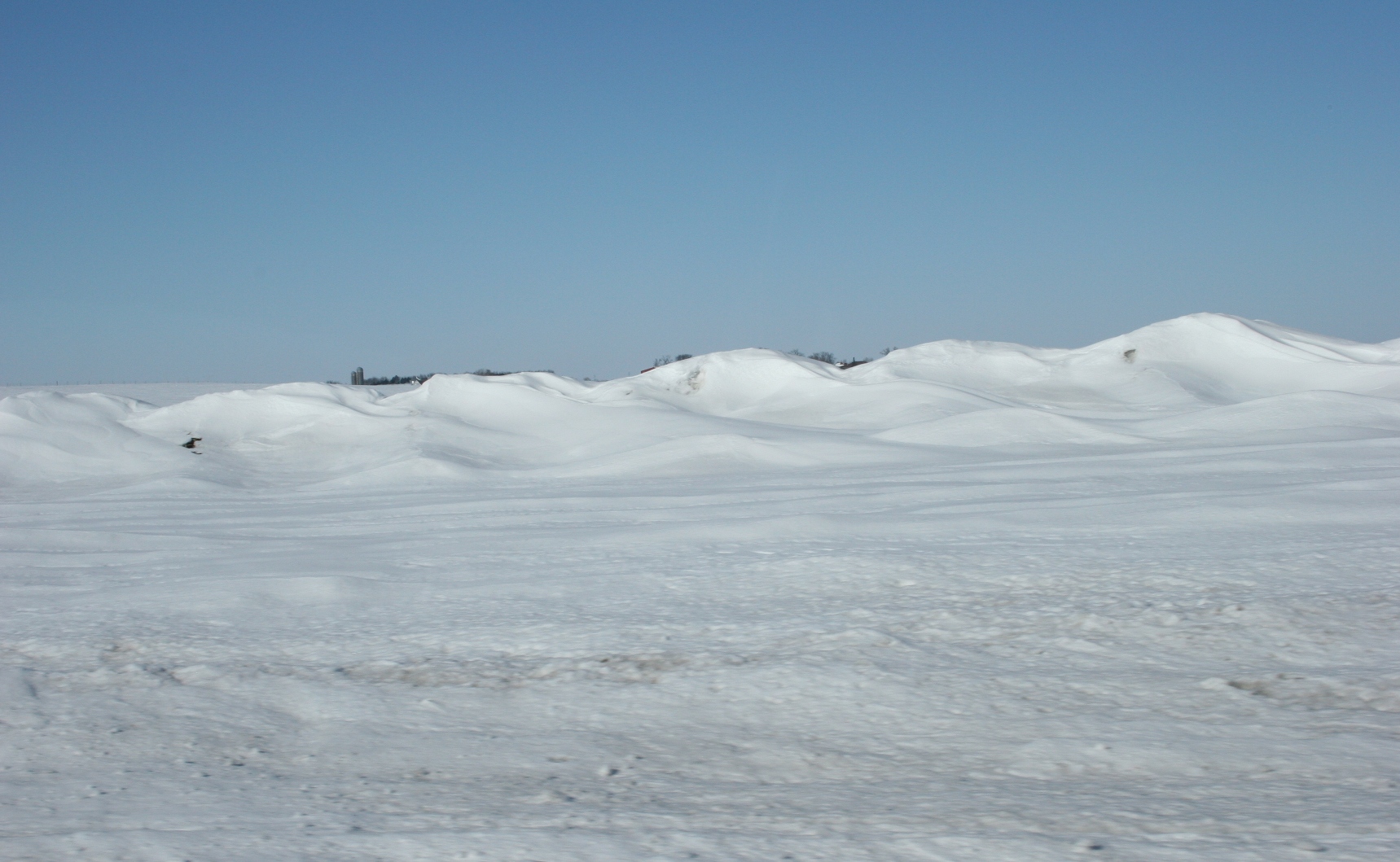
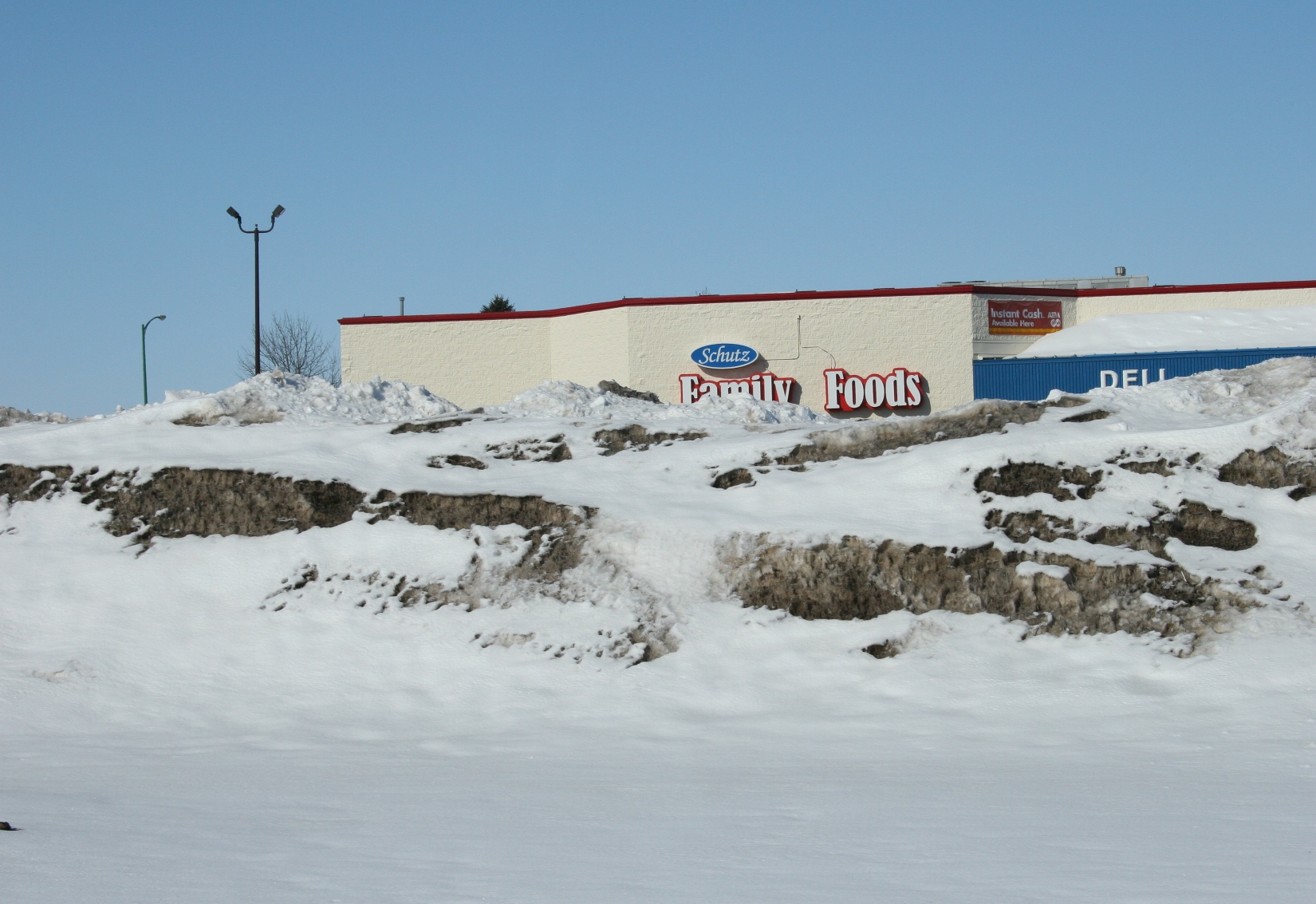
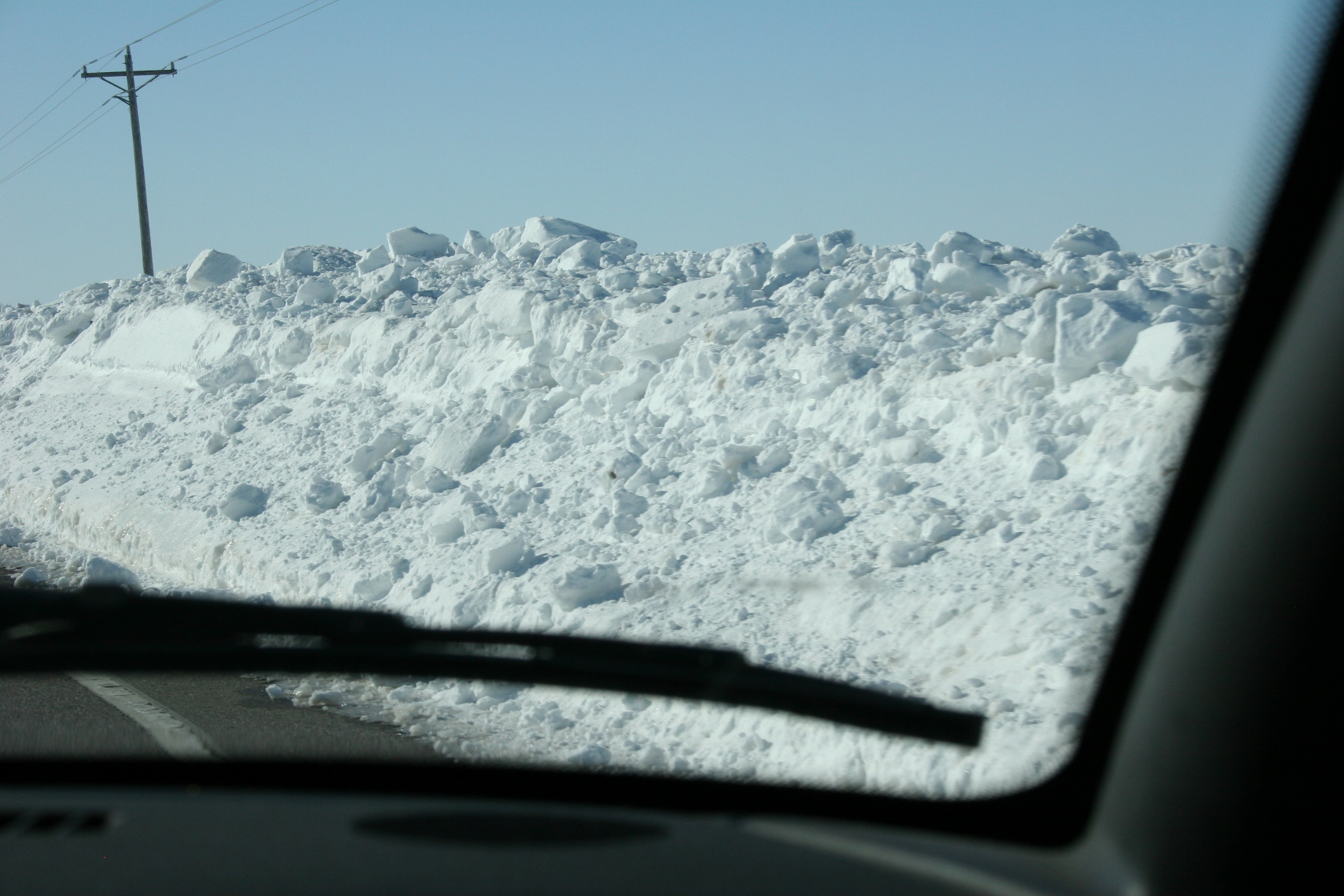
Every time I visit the prairie, I realize all over again how harsh winters are out there and how very different they are from the winters I experience in southeastern Minnesota. Honestly, if you saw the drifts and plowed ridges of snow along Highway 14 and the endless vista of wide open spaces that stretch like a sea of white, you would understand.

Join me on this visual journey along a section of the Laura Ingalls Wilder Historic Highway between New Ulm and Lamberton. These photos don’t even do justice to winters on the prairie because we weren’t traveling in a prairie blizzard. But, in these images, you can envision the possibilities…


Railroad tracks run parallel to Highway 14 as the land stretches under spacious skies.

In some spots along U.S. Highway 14, the snow is piled higher than vehicles.

Snow had been pushed into rows in fields along Highway 14, acting as natural snow fences.

The wind sculpted drifts along the snow fences.

The snow had been pushed into mountains so high that only the top portion of Family Foods was visible from Highway 14 on the eastern side of Sleepy Eye.

Snow pushed off Highway 14, as seen through the windshield of our car.

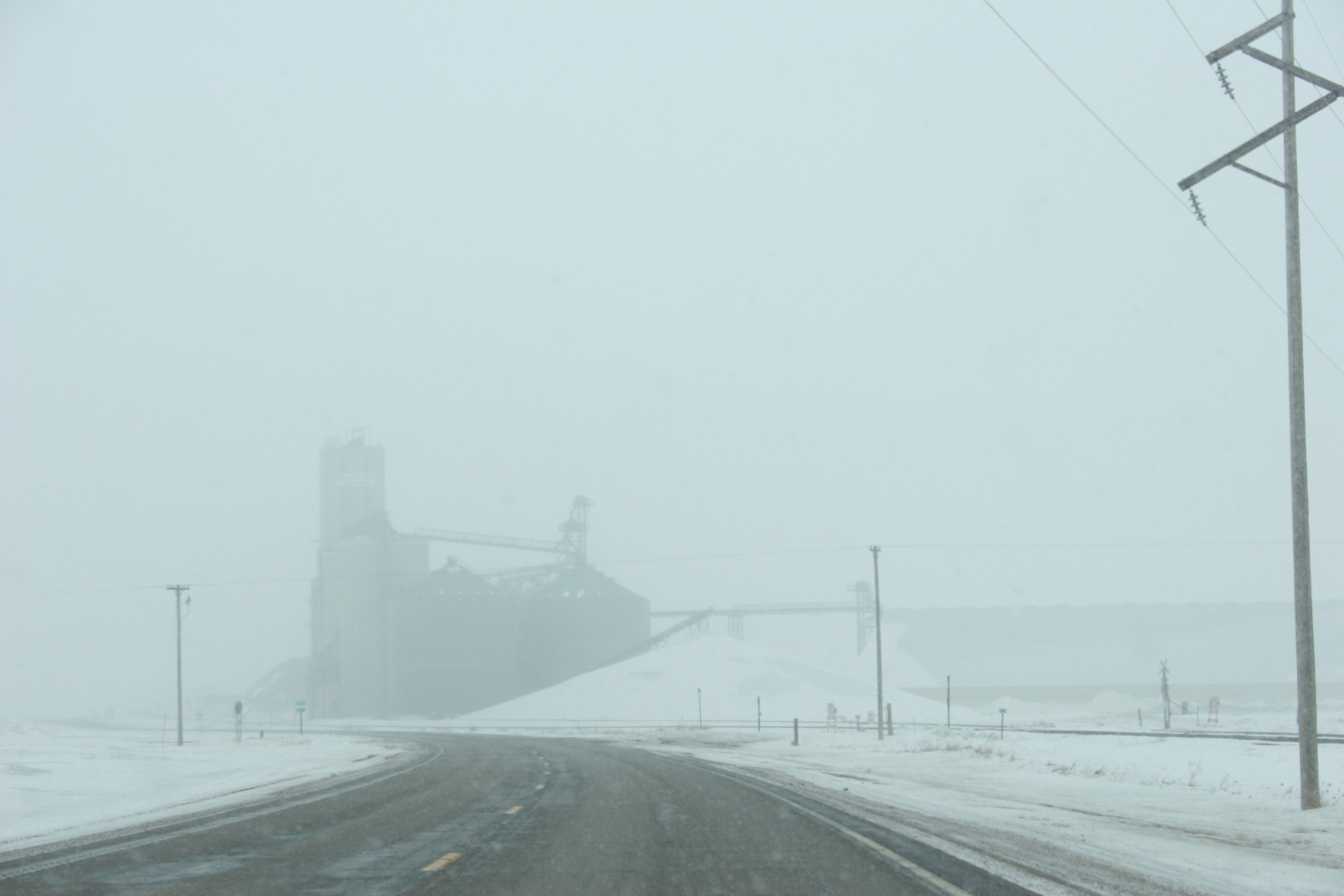
Visibility was reduced as we traveled along U.S. Highway 14 Sunday morning near Lamberton, creating this surreal image of the local grain elevators. The top seven images were taken on Saturday.

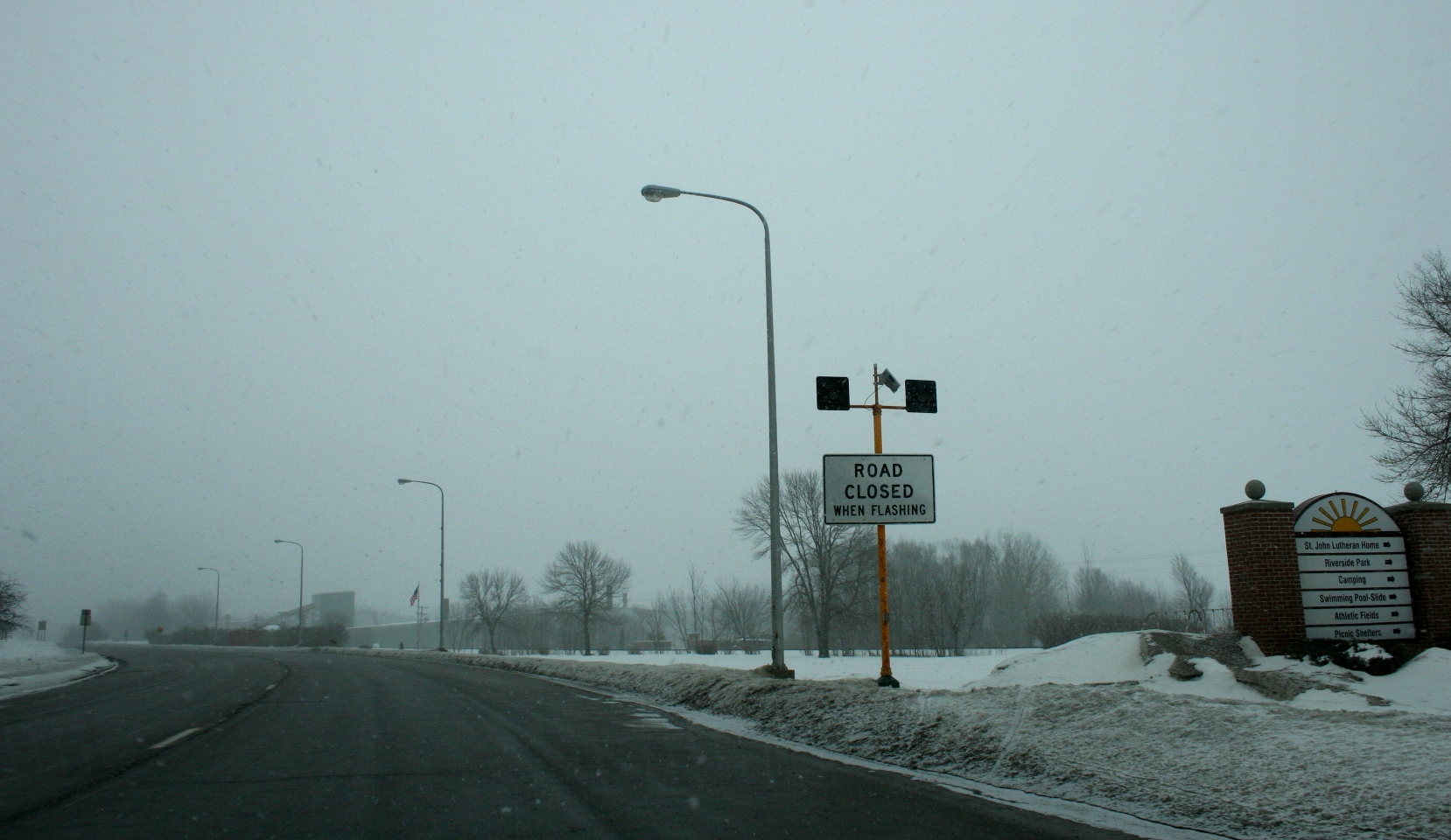
We were thankful the lights on this sign, on the east side of Springfield, were not flashing Sunday morning. During severe winter weather these lights are activated and roads are closed to keep motorists safe.

© Copyright 2011 Audrey Kletscher Helbling
 

Reflections on the 2008 Cottonwood bus crash February 21, 2011

Filed under: Uncategorized — Audrey Kletscher Helbling @ 10:41 AM
Tags: , , , , , ,

THREE YEARS AGO Saturday, the small southwestern Minnesota community of Cottonwood suffered an unbelievable tragedy. They lost four of their children when a van ran a stop sign and slammed into a school bus, killing Jesse, Hunter, Reed and Emilee.

I intended to mark that February 19 anniversary date with a blog post. But I forgot. I am not proud of myself. How could I forget to honor these young lives, to remember a prairie town that mourned so deeply, to tell the families that I have not forgotten them or this horrible day?

The event touched me personally as my cousin Joyce’s grandson, 8-year-old Bryce, was riding in the front seat of that bus. He was OK, suffering only several small abrasions.

I’ve kept the emails Joyce and I exchanged after that February 19, 2008, tragedy because I never wanted to forget. And now I’ve gone and done just that.

So today, several days late, I want to remind all of you to hold your children close, to tell them how very much you love them. Treasure them. Every day.

My cousin told me back then, three years ago, about the terror she felt after learning of the crash and not knowing if her grandson was OK. Later, she would thank God for watching over Bryce as she prayed for the recovery of the injured, the families who lost their children and the community of Cottonwood.

I purchased a teddy bear, a bag of M & Ms and a book for Bryce, a voracious reader, and mailed the items to him along with a letter just days after the crash. I figured he could use a teddy bear to hug and words of encouragement.

I wrote, in part, “I hear that you were very brave, which is a tough thing to be when something so scary happens.”

I encouraged him to talk to God, his family or anyone else “when you feel scared and sad.”

Then I ended my letter: “Lots of people love you.”

Today as I reflect on the four children who died that Tuesday afternoon in February 2008 on the cold, wind-swept prairie in a tragedy that should never have happened, my heart aches for their families.

But I hope that through the grief and the pain and the healing they can hold onto the love, the love that will always be there, and the memories, the sweet, sweet memories of their precious children.

CLICK HERE TO READ a blog post I wrote on February 19, 2009, marking the one-year anniversary of the Cottonwood bus crash.

© Copyright 2011 Audrey Kletscher Helbling


Snow in Minnesota, again February 20, 2011

UP UNTIL ABOUT 45 minutes ago, snow was falling fast and furious here in Faribault, at a rate of an inch an hour.

Visibility had dwindled to a block in town. As for the country, I wouldn’t even want to guess.

But now, shortly after noon, the snow flakes aren’t as thick or as heavy and conditions have improved. Perhaps this is simply a lull in a storm predicted to drop up to 15 inches of snow here in southeastern Minnesota, more in southwestern Minnesota, “more” being 20 inches.

My area of Minnesota is currently under a winter storm warning until noon Monday.

In southwestern Minnesota, where my mom and other family members live, a blizzard warning has been issued. Snow and winds have created difficult driving conditions and low visibility on the prairie, according to information I just read on the Minnesota Department of Transportation website. I expect that snow gates, if they have not already been lowered across roads like Minnesota State Highway 19, will soon be put in place. That means you do not travel those roadways without the risk of a hefty fine. Prairie people, for the most part, understand the dangers of traveling in a blizzard and stay put.

I expect to spend my day holed up at home, wrapping up writing projects for Minnesota Moments’ spring issue. It’s a good day to do that and a good way to avoid working on income tax. I detest rounding up tax information and, this year, have put off the awful numbers task longer than normal.

On the way home from church, my husband and I stopped at the grocery store, a busy place at 10 a.m. As we entered the store, we were greeted by a shopper who just smiled and said, “Here we go again.” He was, of course, referring to the snow.

Then, a half hour later as we exited the store with our bread and other food packed into three bags, a cart-pusher, who was struggling to gather grocery carts in the snowy parking lot, declared, “Winter all over again.”

See the common word in their statements? That would be “again.”

Yup, here we go again.

I WOULD LOVE TO HEAR reports about weather conditions in your area. So submit a comment.


I APOLOGIZE for the lack of current photos, but I am without my Canon for a week while it is being cleaned.

© Copyright 2011 Audrey Kletscher Helbling
 

The winters of my childhood January 20, 2011

Filed under: Uncategorized — Audrey Kletscher Helbling @ 8:56 AM
Tags: , , , , , , , , ,

REMEMBER THE WINTERS of fun?

You could hardly wait to rush out the door and slog through freshly-fallen snow, plowing furrows for a game of fox-and-goose.

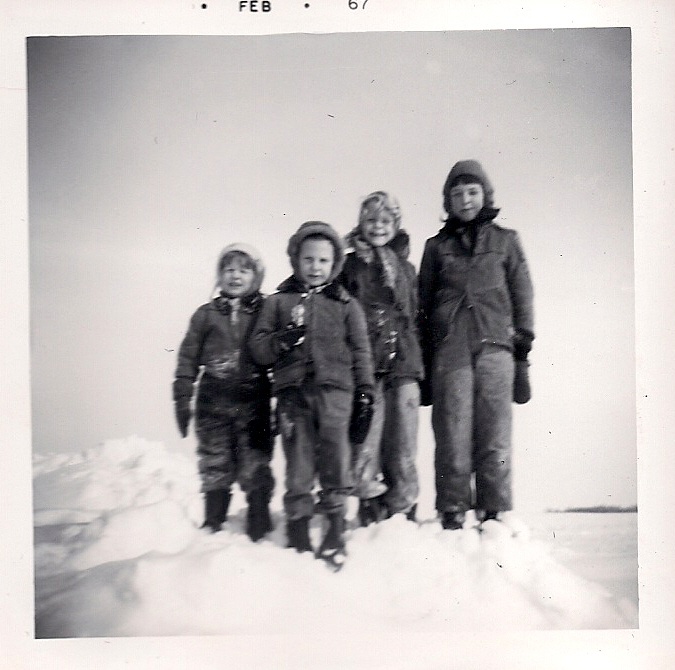
You could barely wait for Dad to push bucketsful of snow from the farmyard with his tractor and loader into mountains suitable for scaling.


Three of my younger siblings and I pose atop a snow mountain our dad created in our southwestern Minnesota farmyard in this photo dated February 1967.

You excitedly dug into the sides of snowdrifts, hard as bedrock, to carve out snow caves.

You raced across the tops of those snowdrifts, up and down and all around the world of white.


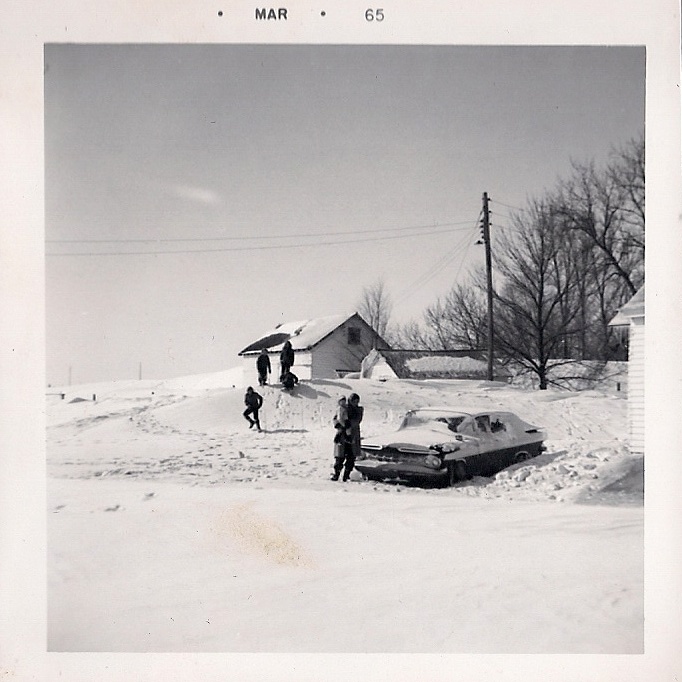
Our southwestern Minnesota farmyard is buried in snowdrifts in this March 1965 image. My mom is holding my youngest sister as she stands by the car parked next to the house. My other sister and two brothers and I race down the snowdrifts.

You packed snow into hard balls, aiming for siblings, wiggling and screaming at the brother who grabbed your collar and stuffed ice-cold snow down the back of your neck.

And when the snow was the perfect consistency, you rolled and packed it into big balls, shoving and grunting and straining, working together with classmates or siblings to build a snowman or a snow fort.

Such were the winters of my childhood on a southwestern Minnesota farm. Fierce. Brutal. But, mostly, fun.

Today, living through one of our snowiest winters in forever, I am reminded of those childhood winters. I would be wise to remember the fun I once experienced on the cold, snowy, wind-swept Minnesota prairie.


This huge, hard-as-rock snowdrift blocked our farm driveway in this March 1965 photo. My uncle drove over from his nearby farm to help open the drive so the milk truck could reach the milkhouse. That's my mom and five of us kids atop the drift.

WHAT ARE YOUR MEMORIES of childhood winters?

© Copyright 2011 Audrey Kletscher Helbling
 

Heading back home to the southwestern Minnesota prairie for Christmas December 26, 2010

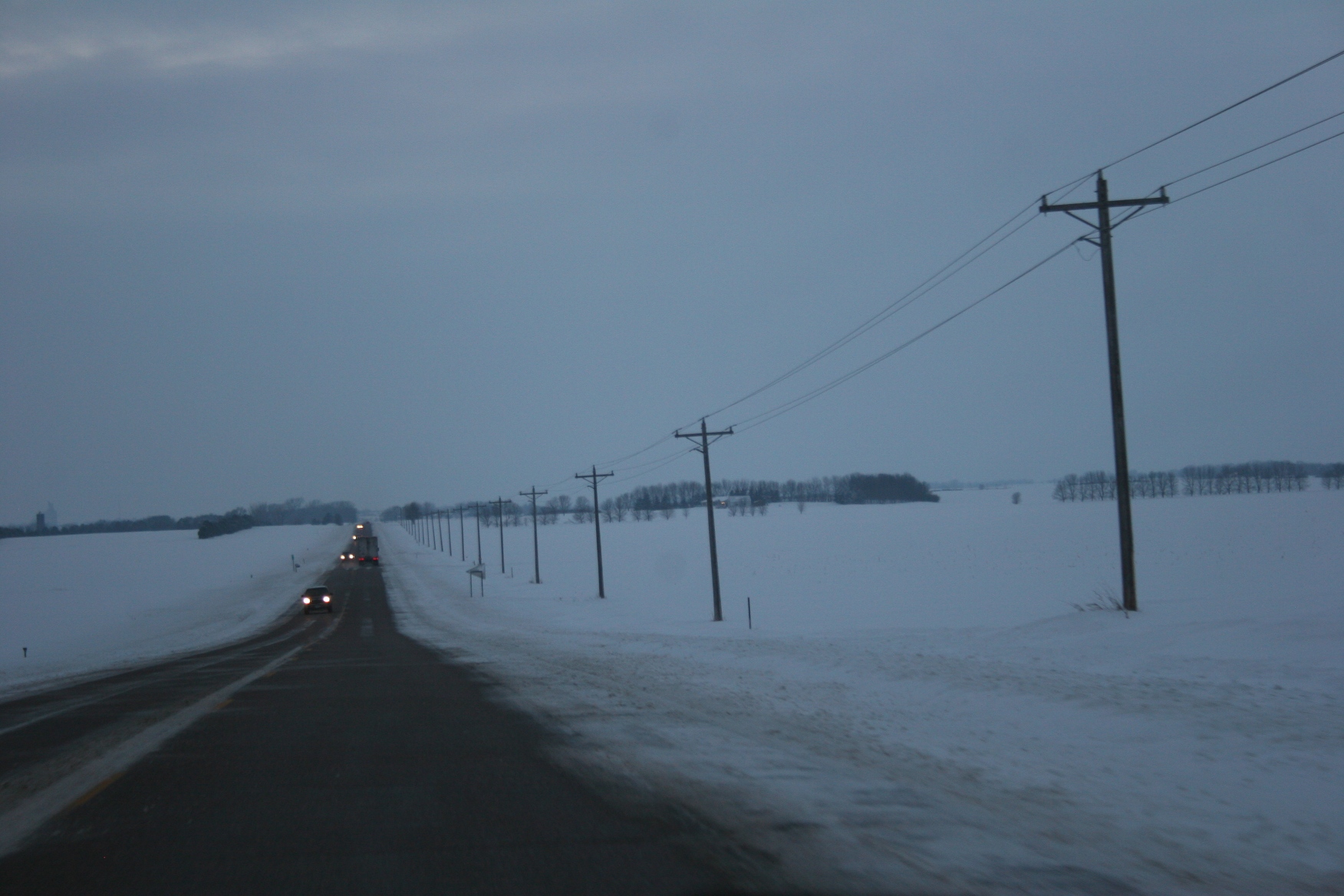
We drove along U.S. Highway 14 as we traveled to southwestern Minnesota for Christmas. This stretch is between the Sanborn corners and Lamberton.

FOR THE FIRST TIME in decades, my family and I celebrated Christmas Eve with my mom and four of my five siblings, and their families, “back home” on the southwestern Minnesota prairie.

It was my mom’s wish that all of us be there, attending Christmas Eve church services with her at our home church, St. John’s Lutheran in Vesta.

Our Christmas together was as wonderful and memorable and as full of laughter and love as I expected it would be.

Initially, I doubted that we would make the 2 ½-hour trip west given the steady snow that began falling early Christmas Eve, slicking the highways and creating difficult driving conditions. But by the time we left Faribault around 2:30 p.m. Friday, the snow had stopped and major highways were clear.
So, with the trunk packed full of luggage, air mattresses and sleeping bags, presents and coolers, the five of us crammed ourselves into the car (along with pillows and board games on our laps) for the journey to Redwood County. We were headed first to my brother’s house just north of Lamberton.

When we got to New Ulm, nearly 1 ½ hours into the trip, I dug my camera out of the camera bag wedged near my feet and snapped occasional photos of the prairie. It is the land I most love—the place my kids call “the middle of nowhere.”

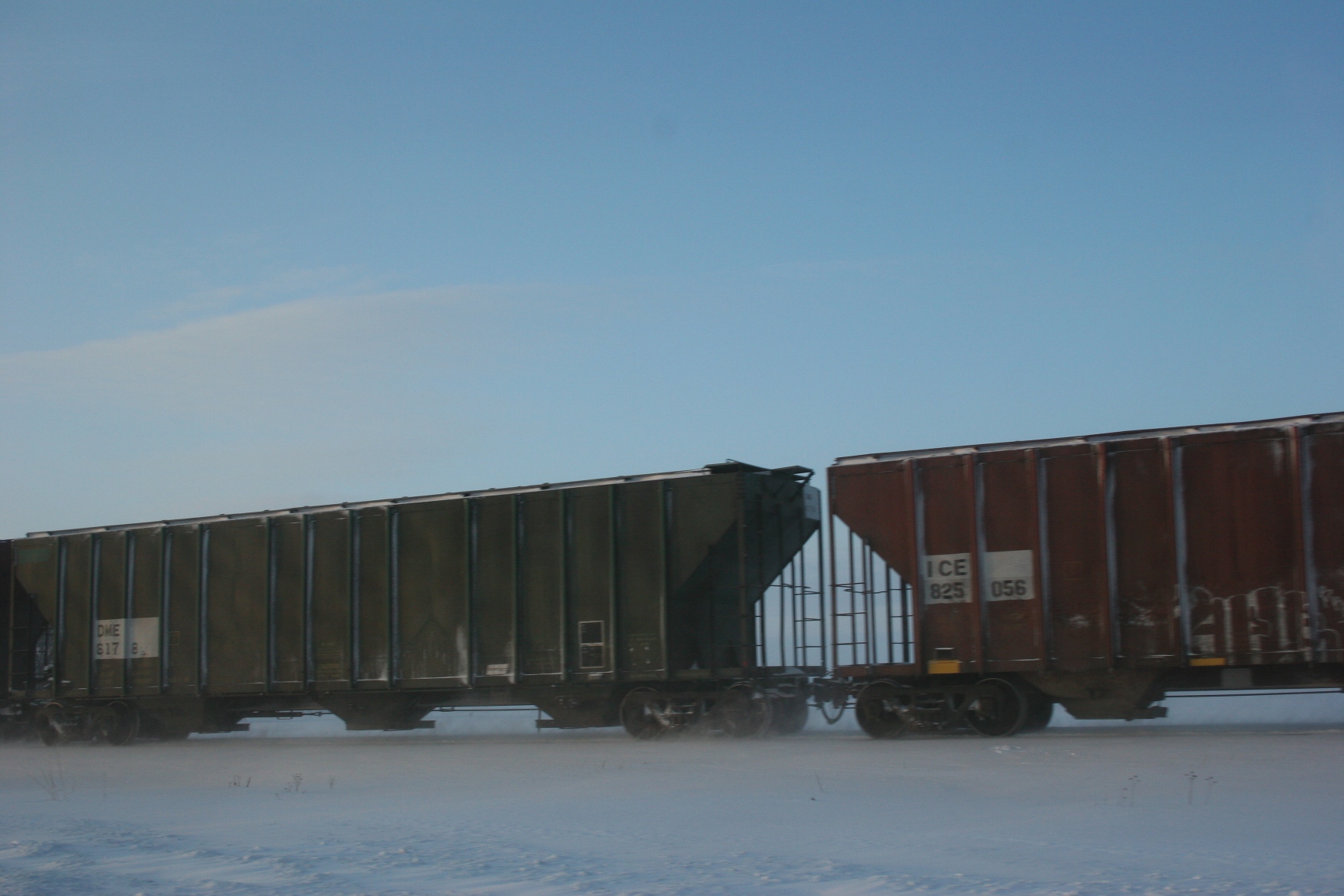
A train travels east along U.S. Highway 14 between Essig and Sleepy Eye while we travel west.

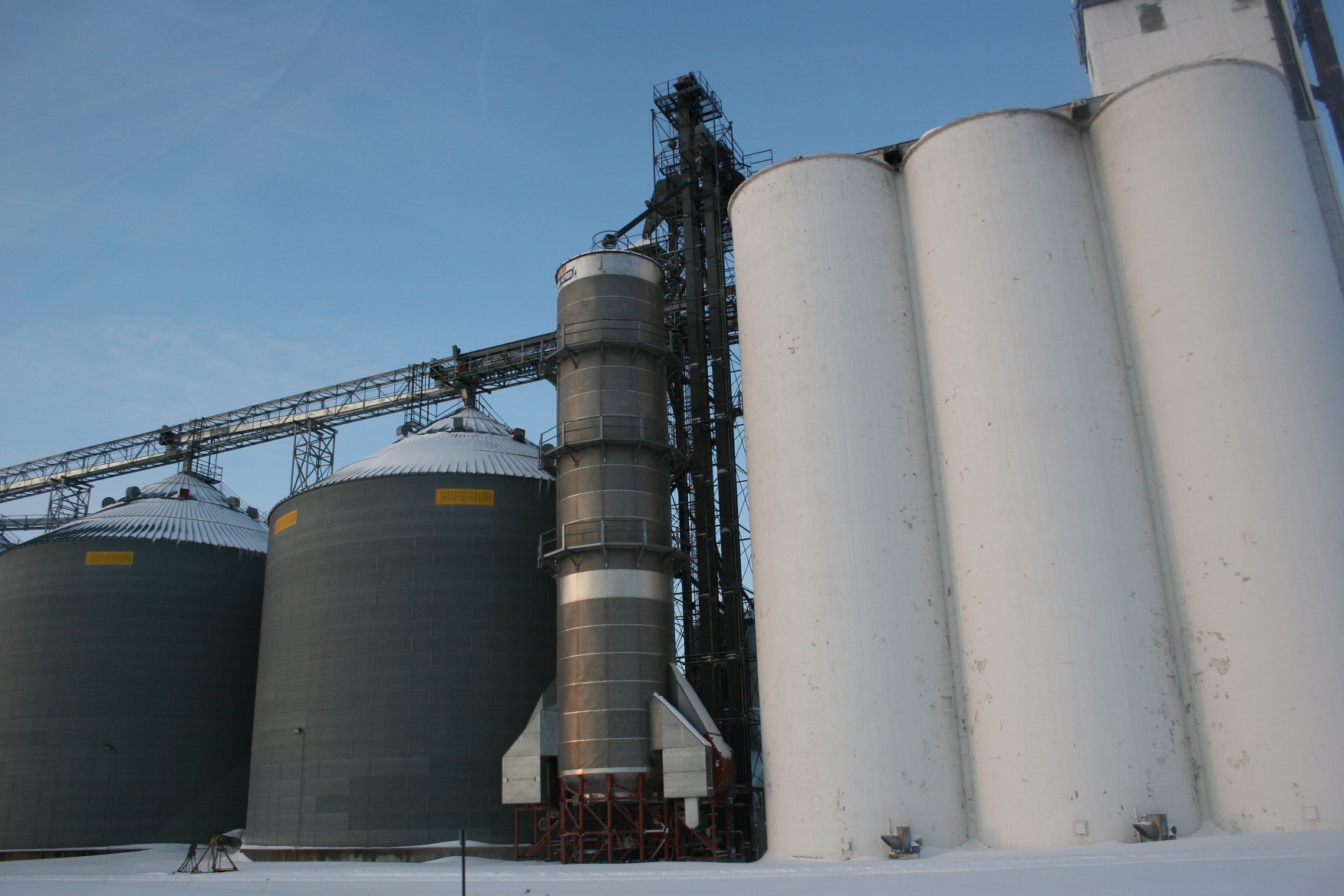
I love this land of plowed fields and wide open spaces, of small-town grain elevators occasionally punctuating the vast skies, of cozy farm sites sheltered by barren trees.

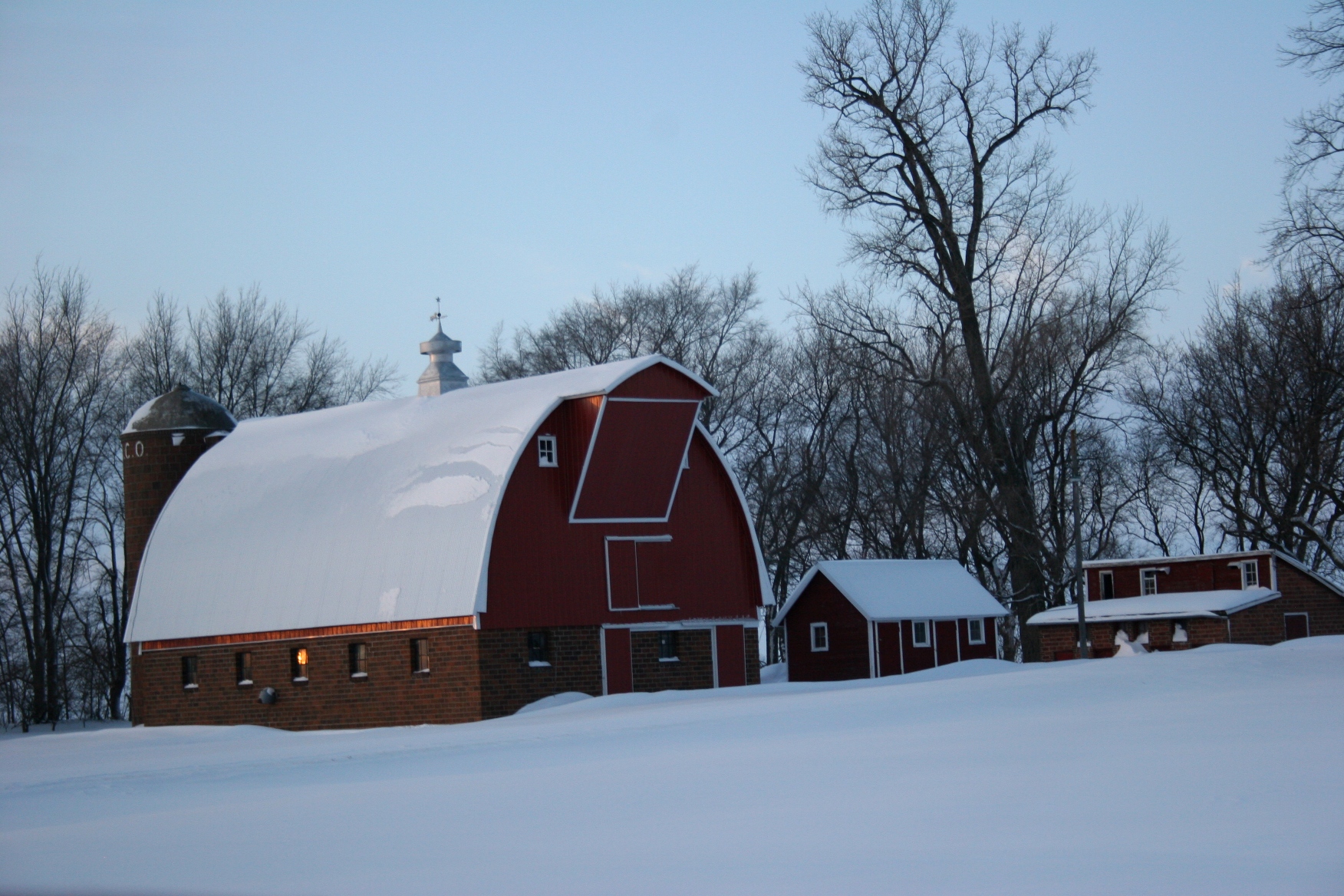
I love, especially, the red barns accented by the fresh-fallen snow, portraying an agrarian beauty that perhaps only someone who grew up on a farm can appreciate.

As much as I have disliked all of the snow we’ve had this winter, I saw only a beautiful winter wonderland when I was back home for Christmas on the prairie.

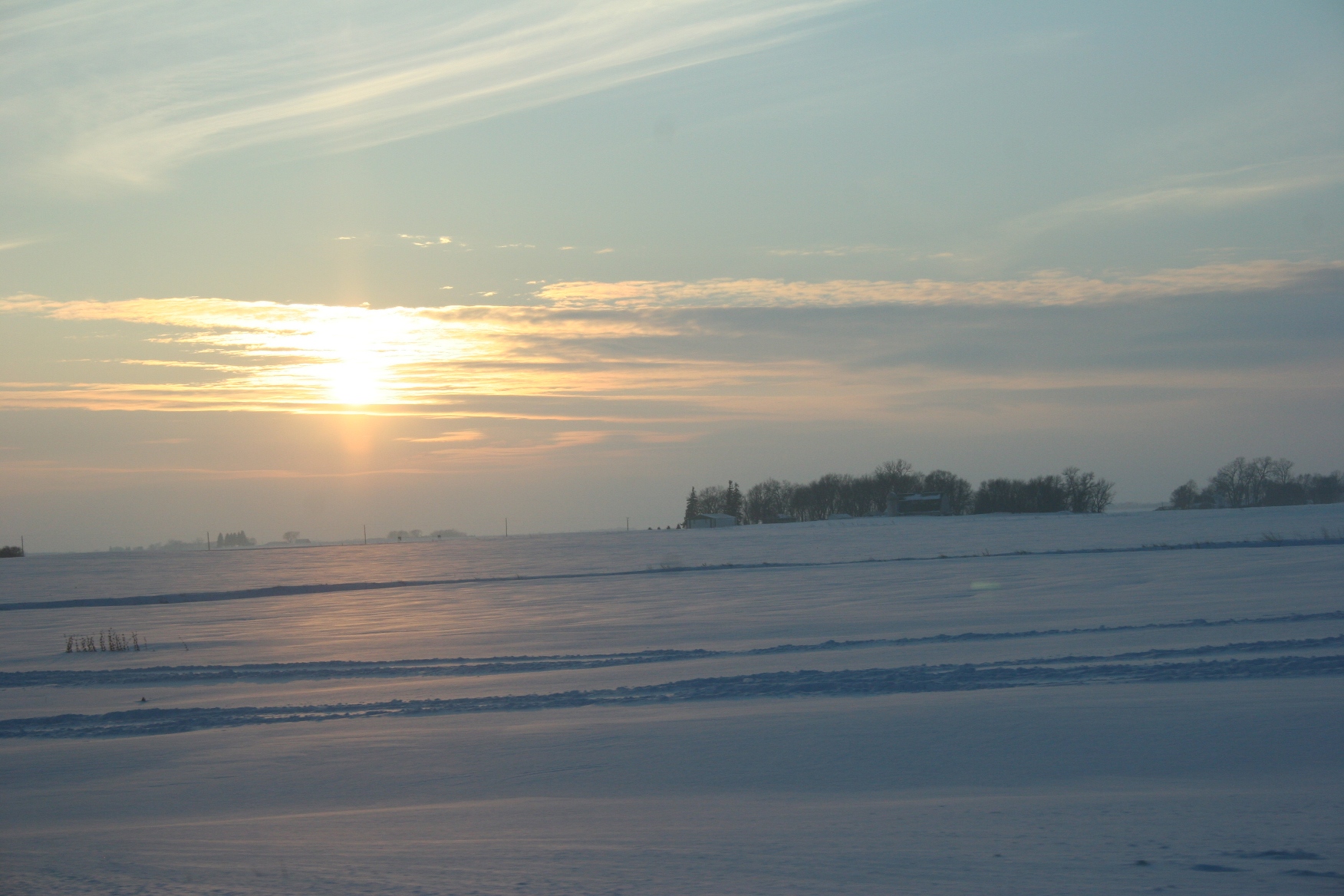
The sun begins setting over the prairie as we head west, passing through Sleepy Eye and Springfield before reaching Lamberton. We saw only occasional glimpses of sun on a mostly gray day.

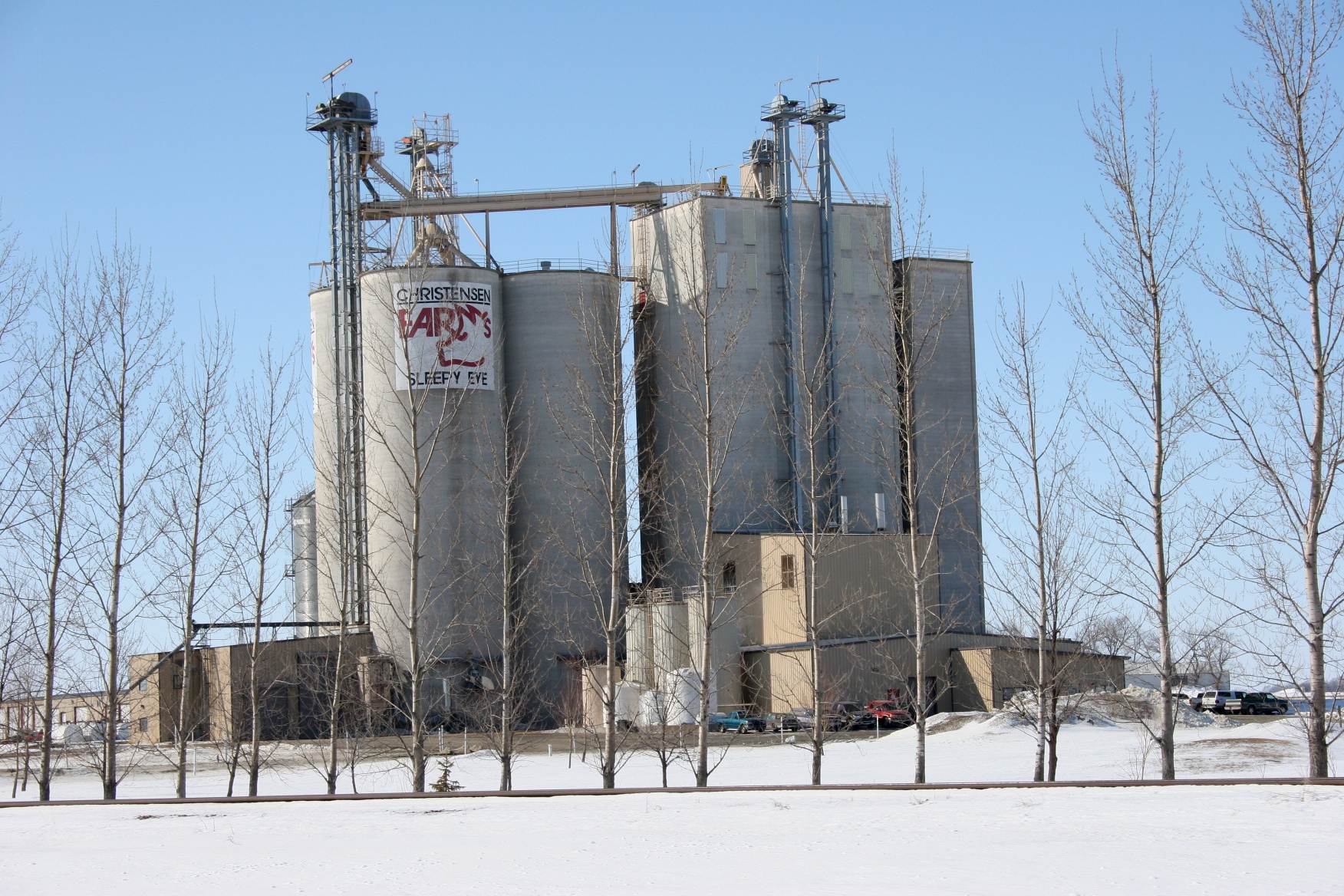
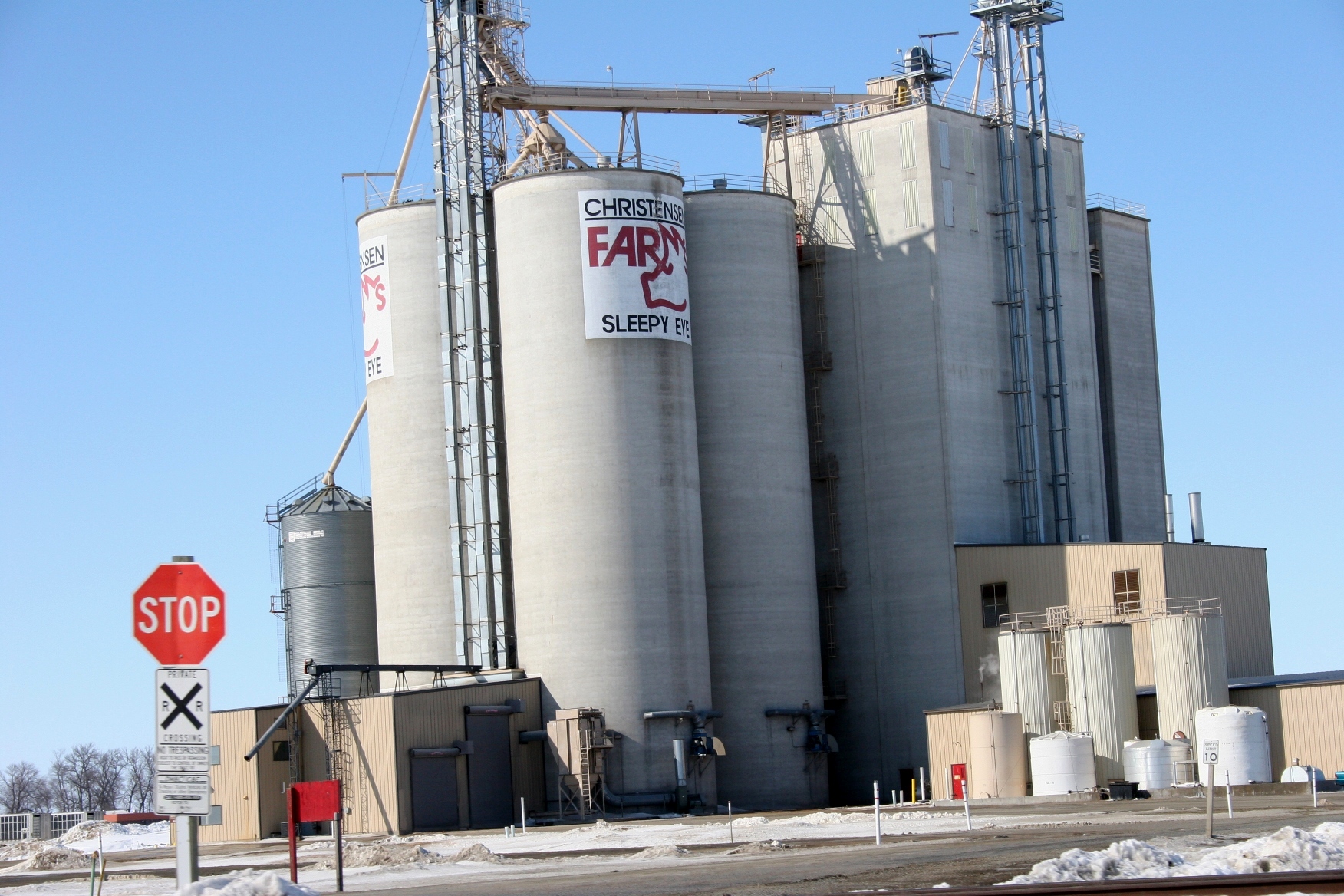
The elevators in Sleepy Eye. Small-town prairie elevators like this can be seen for miles away.

One of many picturesque barns along U.S. Highway 14.

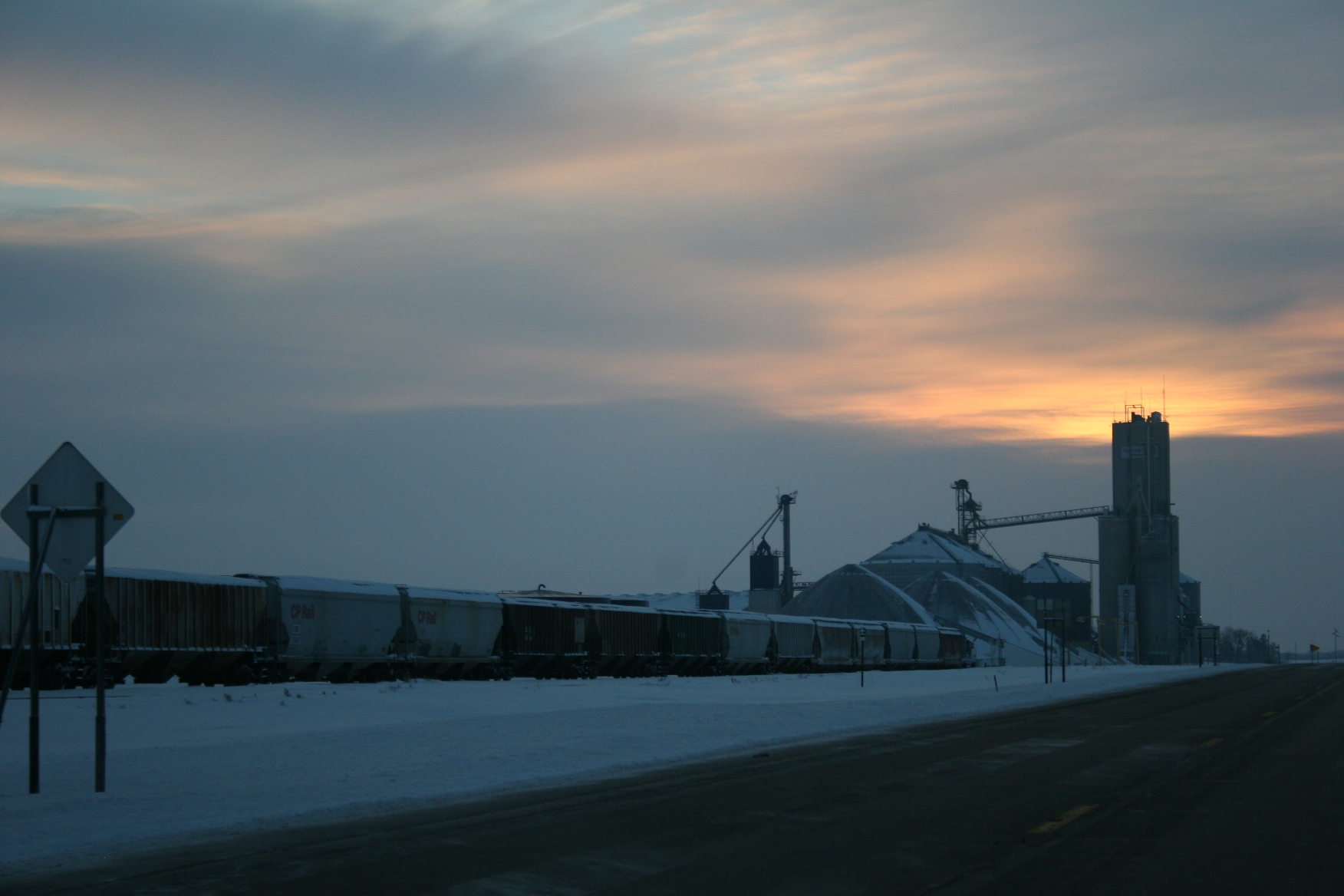
Elevators and trains are a common site along U.S. Highway 14 in the rich farmland of southwestern Minnesota. We've nearly reached our destination when I photograph this elevator complex near sunset.

© Copyright 2010 Audrey Kletscher Helbling