Minnesota Prairie Roots

Writing and photography by Audrey Kletscher Helbling

North Morristown on the Fourth, the place to be in southern Minnesota July 2, 2019

Filed under: Uncategorized — Audrey Kletscher Helbling @ 5:00 AM
Tags: , , , , , , ,

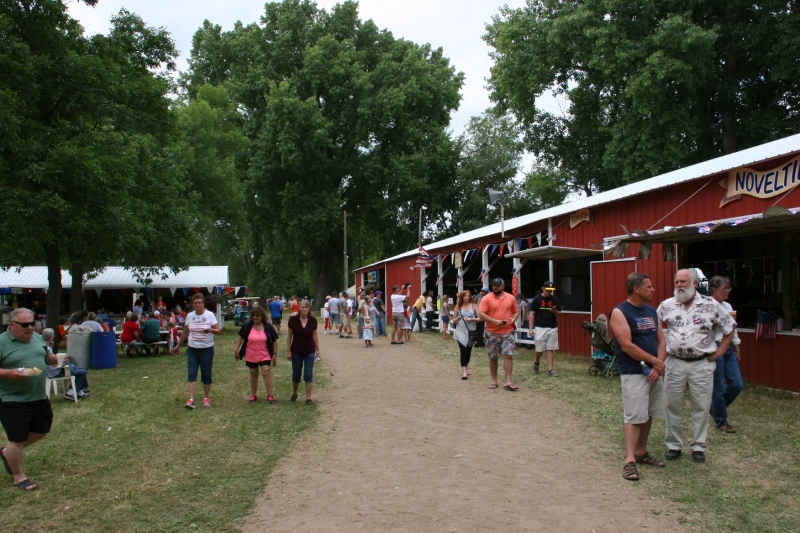
A glimpse of the North Morristown celebration grounds. Minnesota Prairie Roots file photo 2016.


NORTH MORRISTOWN, MINNESOTA, on the Fourth of July is grassroots Americana.


Buy your pie early for the best selection. Minnesota Prairie Roots file photo.


From the country setting to the popular parade featuring the Candy House to a medallion hunt and flag-raising ceremony and concerts and offerings of homemade pies and much more, this celebration reflects rural America at its best.


If you haven’t experienced July 4 at North Morristown, I suggest you travel to this southern Minnesota holiday destination this week.


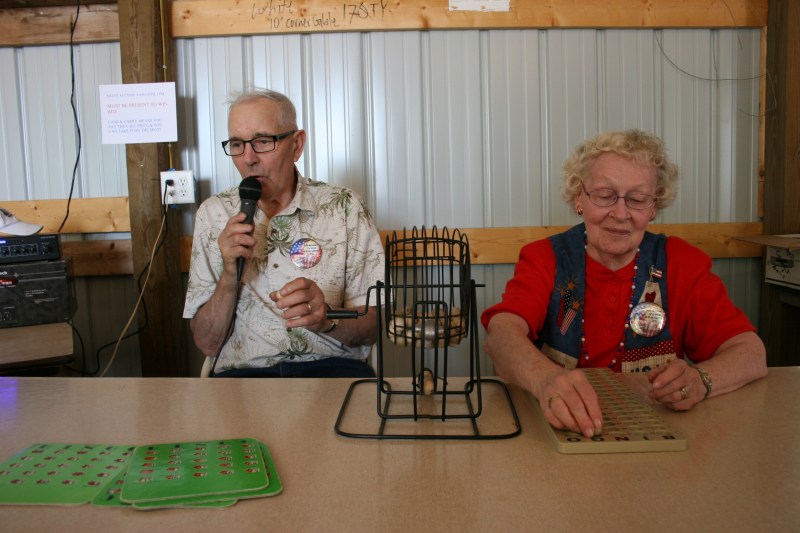
The BINGO callers of North Morristown. I won first place for this photo in a contest sponsored by National Mutual Benefit. Minnesota Prairie Roots file photo 2013.


My husband enjoys his cheeseburger at the North Morristown Fourth of July celebration in 2016. This is one of my favorite close-up images and among those published in Fleur-de-lis. Minnesota Prairie Roots file photo 2016.


Craig and Kathy enjoying the Fourth at North Morristown. Minnesota Prairie Roots file photo.


Here you’ll find BINGO and bands, burgers and beer, and, at day’s end, fireworks bursting over farm fields.


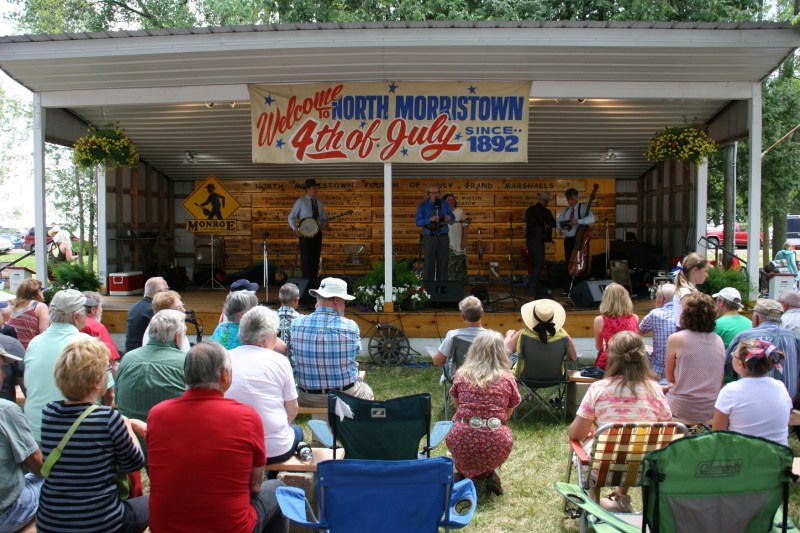
The popular bluegrass band, Monroe Crossing, performs twice at North Morristown, at 1:30 and 4 p.m. Minnesota Prairie Roots file photo 2016.

For many, this event represents an annual reunion with family and friends. Even with no roots to this place, I embrace this celebration, delighting in some really good food, visiting with friendly people and enjoying the music of crowd favorite Monroe Crossings, which returns year after year to perform at North Morristown on the Fourth.


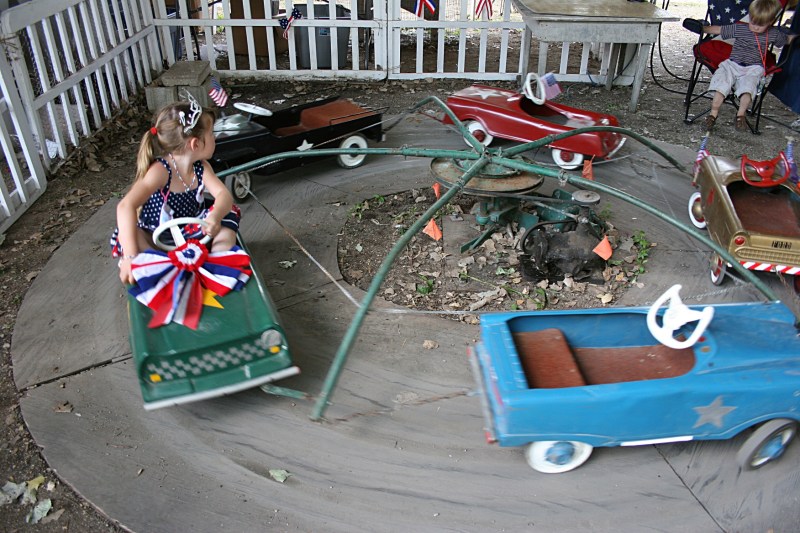
One of several vintage kiddie carnival rides at North Morristown. Minnesota Prairie Roots file photo 2013.


If you appreciate the company of good folks who value country, community, family and hard work, then North Morristown will appeal to you. Bring your lawn chair. Bring your appetite. Bring your kids and/or grandkids. And be sure to express your gratitude to the volunteers who make this event happen. Thank them. And buy a $2 celebration button to show your financial support.


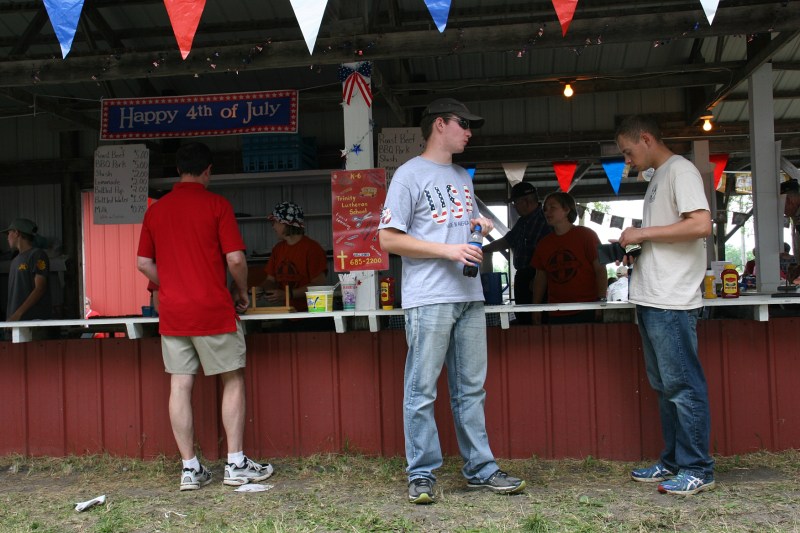
This food stand served tasty BBQ pork and beef sandwiches and other food during a past celebration.  Minnesota Prairie Roots file photo 2016.


Billed as the longest-running Fourth of July celebration in Minnesota at 127 years, this is a must-attend for anyone interested in an authentic, down-to-earth way to commemorate our nation’s birthday.

© Copyright 2019 Audrey Kletscher Helbling


In rural southern Minnesota: Peonies & wine June 19, 2019


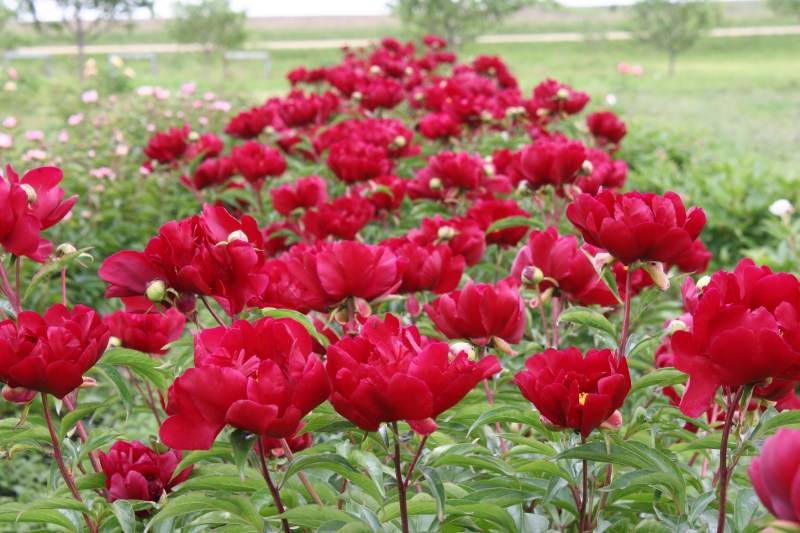
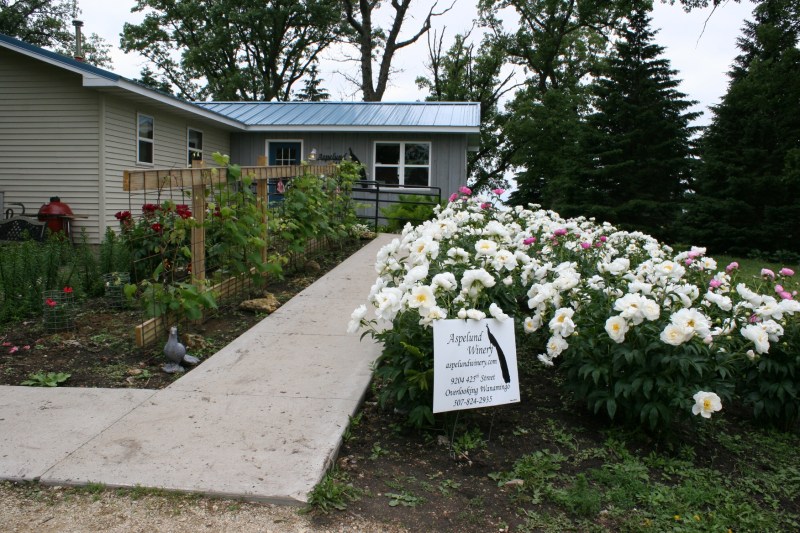
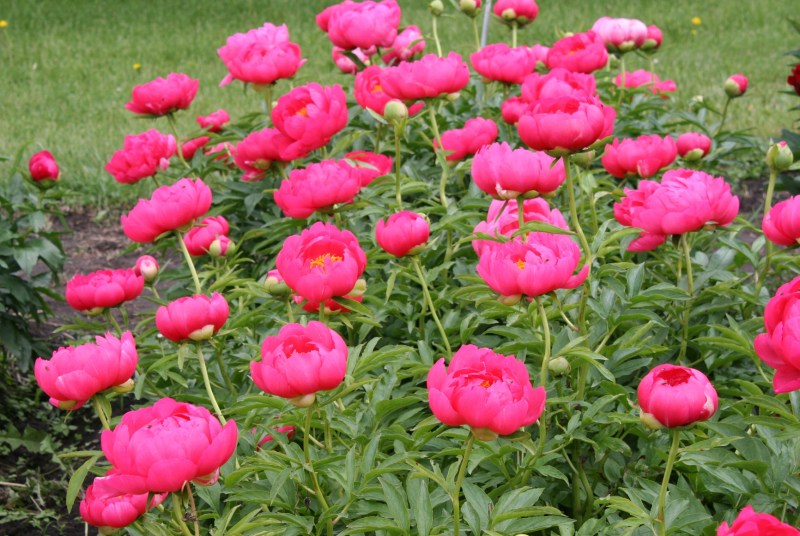
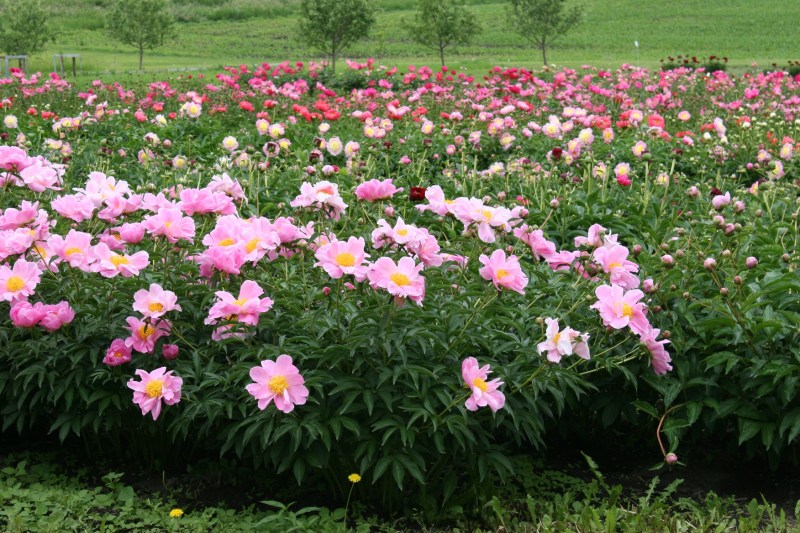
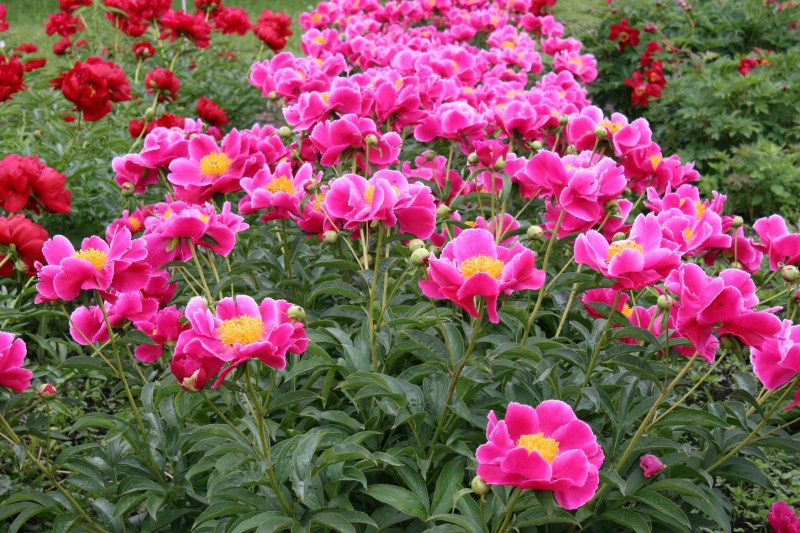
UNDER INTERMITTENT GREY SKIES, fragrant blossoms of pink, burgundy, coral, rose and more popped brilliant color into the landscape at a rural Minnesota winery which doubles as a peony business.


On the deck at Aspelund Winery. Minnesota Prairie Roots file photo 2018.


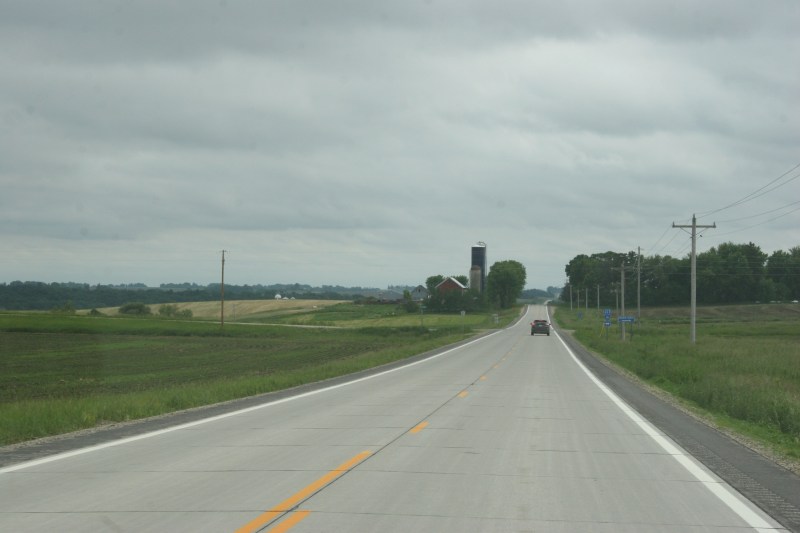
Within miles of the winery, the beautiful landscape of southern Minnesota.


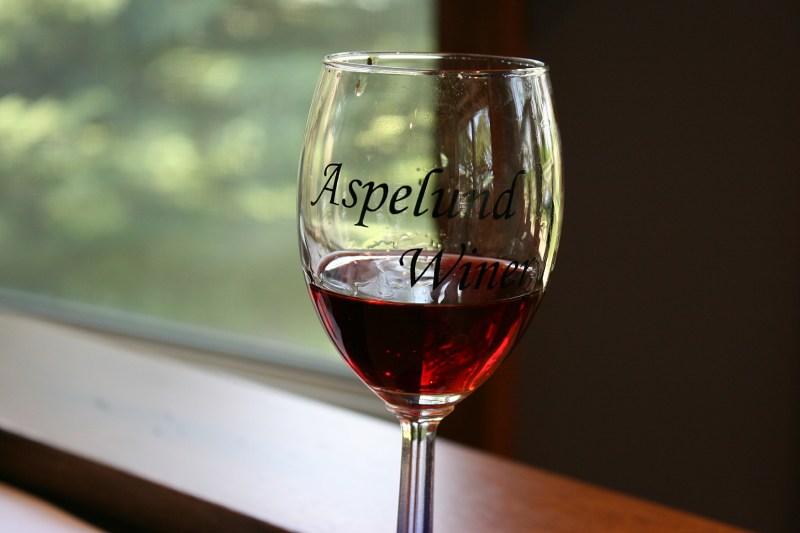
If you love the showy and elegant peony, appreciate good wine and delight in the quiet of a countryside location, Aspelund Winery and Peony Gardens (outside Aspelund and to the northwest of Wanamingo) is a must-visit. Randy and I met friends there Sunday afternoon to view the peony fields and to sip raspberry and apple wines.


It was exactly what I needed—to relax in a beautiful natural setting accented by peonies. There’s still time to tour the farm between noon and 5 p.m. on Saturday or Sunday to see the peonies before their brief blooming season ends. (Check Facebook for updates.)


Co-owner Dawn Rohl wears a peacock pin on her denim jacket. The peacock is the winery symbol/mascot.


Minnesota Prairie Roots file photo.


Co-owners Bruce and Dawn Rohl greet visitors to their hilltop location with the welcoming warmth of long-time friends. They are a salt-of-the-earth and knowledgeable couple who work hard to grow magnificent peonies and craft tasty wine. I recommend Rascal Red, a raspberry wine. Below the tasting room, the Rohls develop their wines, the newest an in-progress asparagus wine made from asparagus grown near the vineyard.


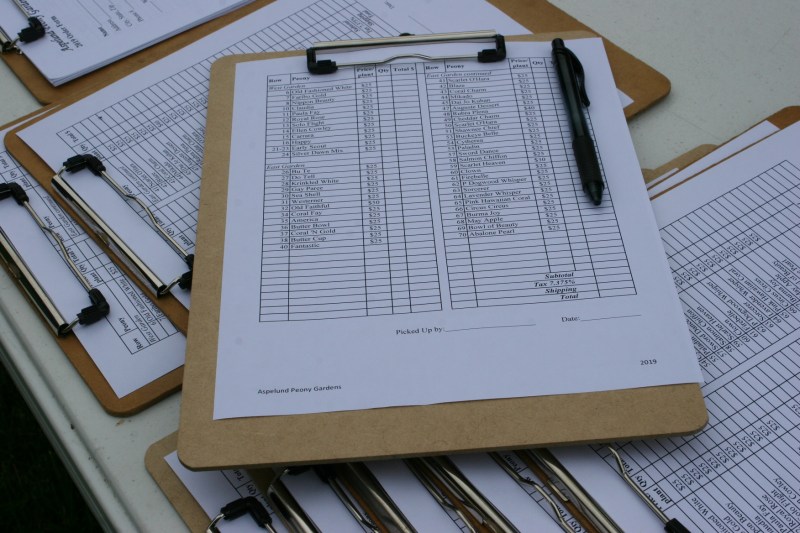
The list of peonies available for purchase.


During our visit, flower lovers meandered among the peonies, some selecting bushes to buy and pick up to plant in the fall. Soon Bruce will sell his hybridized peonies lining the entry to the tasting room.


Whether you’re serious about peonies or wine, or simply appreciate both, this rural Goodhue County winery and peony gardens rate as a unique, enjoyable and ideal way to spend an afternoon in a stunning rural setting among friends. Be sure to pet Rascal, the family dog who can open the door to the tasting room.

FYI: The winery is located at 9204 425th Street, rural Wanamingo (just outside Aspelund). If you take Minnesota State Highway 60 between Kenyon and Wanamingo, you will see a sign directing you to Aspelund, which is basically a church, a town hall and a farm site. Click here to read previous posts I’ve written on the winery and gardens.

© Copyright 2019 Audrey Kletscher Helbling
 

A Holy Week tradition at a rural Minnesota church April 12, 2019

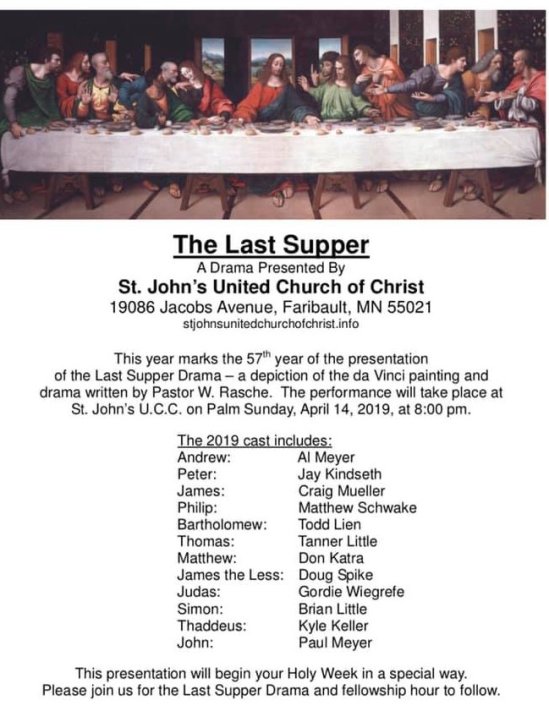
St. John’s members portray the disciples in this undated vintage photo, the first record of a photograph from The Last Supper Drama. Actors, from left to right, are Luverne Hafemeyere, Earl Meese, Vicgtor Luedke, Howard Meese, Virgil Bosshart, Arnold Keller, P.L. Golden, Alvin bosshart, Paul Bauer, Elmer Covert Sr. and Arnold Bauer. Photo courtesy of St. John’s.


FOR NEARLY 60 YEARS NOW, a small country church in southern Minnesota has started Holy Week with a drama centered on Jesus’ disciples and their relationship with him. It is a powerful presentation that never fails to move me, although I’ve seen The Last Supper Drama multiple times.


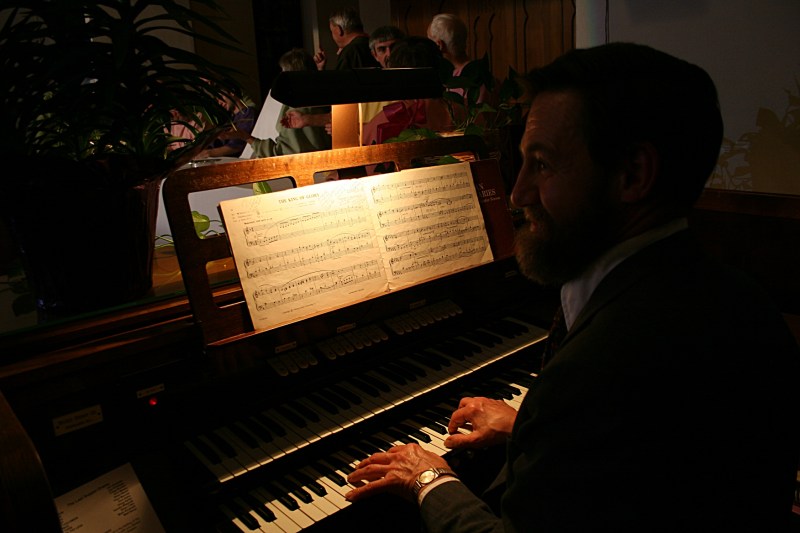
Craig Keller has been the long-time drama organist, playing the same music every year. The script and music remain unchanged in nearly 60 years. Minnesota Prairie Roots file photo.


The original script and music remain unchanged through the decades. Only the actors change, often alternating performance years.


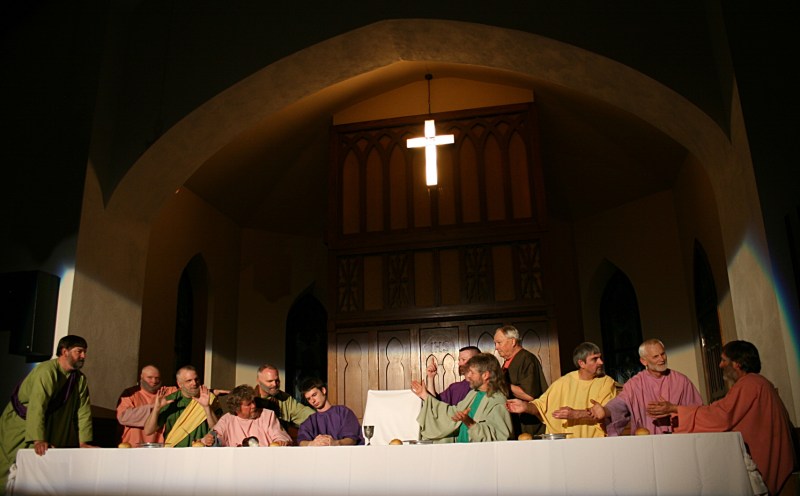
St. John’s 50th presentation of The Last Supper Drama in the sanctuary. Minnesota Prairie Roots file photo.


In the darkness of St. John’s United Church of Christ, Wheeling Township, rural Faribault, the 12 disciples seat themselves at a long table fronting the altar. The scene replicates Leonardo da Vinci’s The Last Supper painting, minus Jesus. An empty chair draped in white cloth represents Jesus in the St. John’s version.


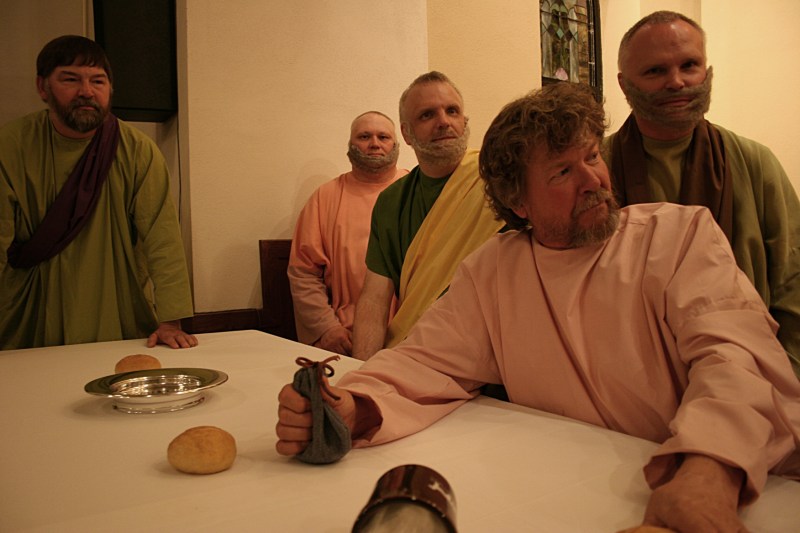
Judas grips the bag of silver, his reward for betraying Christ. Minnesota Prairie Roots file photo.


The annual Palm Sunday evening event begins Holy Week in a reverent, reflective and worshipful way.


I am grateful to this rural congregation for this faith gift. This drama focuses my thoughts on Christ as I remember his betrayal, suffering, death, burial and resurrection. Through the voices of those role-playing disciples, I connect on a personal level to these followers of Christ. That makes this drama especially powerful and effective.

© Copyright 2019 Audrey Kletscher Helbling
Promo from St. John’s Facebook page


On the road: A look at Redwood County flooding & snow pack March 24, 2019

Westbound just outside of Redwood Falls along Minnesota State Highway 19 late Saturday morning.


SNOW LAYERS farm fields.


Along Minnesota State Highway 19 between Redwood Falls and the Belview corner.


Massive snow piles still mark farm sites, this one along Minnesota State Highway 19 near the Belview corner.


A scene along Minnesota State Highway 19 near the Belview corner appears more winter-like than spring.


In the shade of yards and groves and northern hillsides, snow banks remain, reminders of a long Minnesota winter not yet over.


In many spots along Minnesota State Highway 19 between Redwood Falls and the Belview corner, snow pushed off the highway (some up to 100 feet from the roadway) remains.


Snow shoved from a once-drifted Minnesota State Highway 19 appears like wind-sculpted waves frozen in place just west of Redwood Falls.


A sign on the west edge of Redwood Falls along Minnesota State Highway 19 advises motorists to check the Minnesota Department of Transportation website for road closures.


In Redwood, the Redwood River appears mostly iced-over.


Flooding along Minnesota State Highway 19 between Redwood Falls and the Delhi corner.


But outside of town, snow melt floods fields, settles in low-lying areas. Frozen tile and frozen ground allow no outlet for all that water. Farm sites seem temporary lakeside properties.


A drainage ditch near the intersection of Brown County Road 29 and Minnesota State Highway 67 southeast of Morgan.


Ditches brim with water.


East of Courtland along U.S. Highway 14, fields are mostly bare of snow.


Between Morgan and Gilfillan, snow cover and flooding increase.


Southeast of Redwood Falls.


A survey of the countryside while driving from Faribault to Belview and back Saturday presents a perspective on the flooding and potential flooding in southern Minnesota. Not until Randy and I drove northwest out of Morgan did we begin to really notice the difference. Our observations of significant remaining snow pack and already ponding water visually confirms the reason for a flood warning in my native Redwood County.


Flooded farm field near Delhi.


Just east of Belview.


East of Delhi, a closure on the Scenic Byway road.


There’s a lot of snow yet to melt, especially west of Redwood Falls. That water must go somewhere since it can’t soak into the frozen soil. And that somewhere is likely into the Redwood River, which feeds into the Minnesota River, which feeds into the Mississippi River. What happens in rural southwestern Minnesota will eventually affect the Twin Cities metro.


Near Delhi.


Temps and precipitation will factor into the flooding equation, too, as winter transitions into spring. I will tell you that Redwood County, on Saturday, seemed still stuck in the final days of winter.

© Copyright 2019 Audrey Kletscher Helbling
 

Prairie-rooted farm film, Farmer of the Year, comes to Faribault March 18, 2019

Minnesota Prairie Roots file photo.


HER BACKGROUND MIMICS MINE. Grew up doing chores on a southwestern Minnesota dairy farm in a community where everyone knows everyone. Surrounded by a large, extended family. Danced at the American Legion Hall, ate beef commercials and called the noon meal dinner, the evening meal supper.


Filmmakers Kathy Swanson and Vince O’Connell.


Although I’ve never met Kathy Swanson, I feel a sisterhood with her. We are both creatives, decidedly connected to the Minnesota prairie of our roots. The place that shaped us, that remains a part of our identities and our creative work.


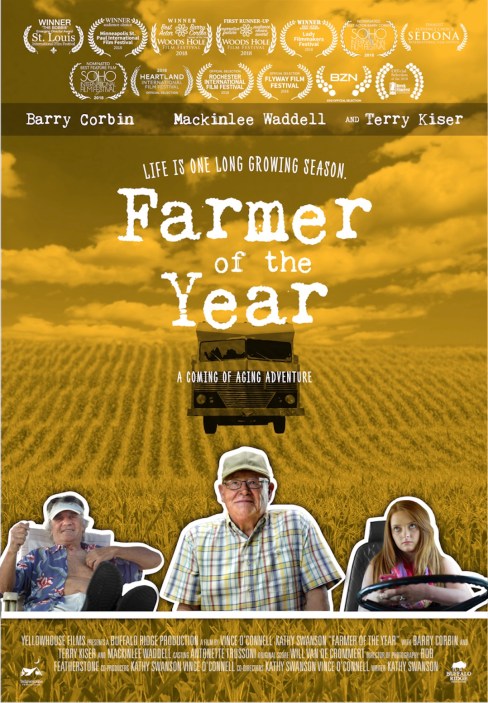
Poster promo photo courtesy of YellowHouse Films.


That mutual rural background is the reason I’m so excited about Kathy’s award-winning independent feature film, Farmer of the Year, produced and directed with her life partner, Vince O’Connell. That film by YellowHouse Films (named after the yellow house in Vermont where the couple lives) shows at 7 p.m. Saturday, March 23, and at 2 p.m. Sunday, March 24, at the Paradise Center for the Arts in historic downtown Faribault. Ticket cost is $10. When Kathy reached out to me asking for help in bringing the film to Faribault, I didn’t hesitate. I’m always happy to assist another creative and especially someone from my home region. My native county of Redwood is a bit farther to the north and east of hers.


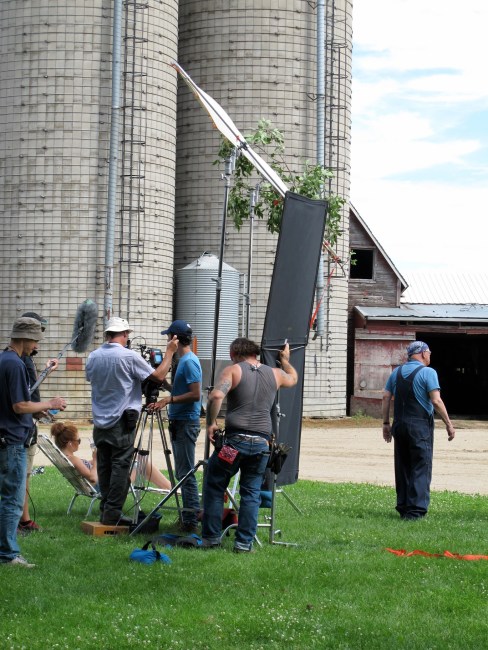
Filming in southwestern Minnesota. Photo courtesy of YellowHouse Films.


Kathy, a former Lincoln County Dairy Princess, grew up near Tyler, a farming community of some 1,100 within a half hour drive of the South Dakota border. The Vermont filmmakers took their cast and crew to southwestern Minnesota, shooting scenes on Kathy’s home farm (now owned by her brother and his wife), inside her octogenarian father’s house, at the local Citizens State Bank, on area roads and more. The crew also filmed in places like The Lunch Box Cafe and Hole in the Mountain Park in Lake Benton and in downtown Marshall. The film takes viewers along Interstate 90 in Minnesota and into South Dakota, right up to the famous Corn Palace in Mitchell, S.D. Other shots are of Mesa, Arizona. And, most unique, 1950s farming footage from Kathy’s dad’s 8mm film incorporated into Farmer of the Year. Such documentation can only add to the authenticity of the film.

The mail carrier in the film is the real Tyler mailman. The guy mowing the cemetery is the guy who mows the cemetery. This is real rural life, a life Kathy understands well and tapped into when writing the script.


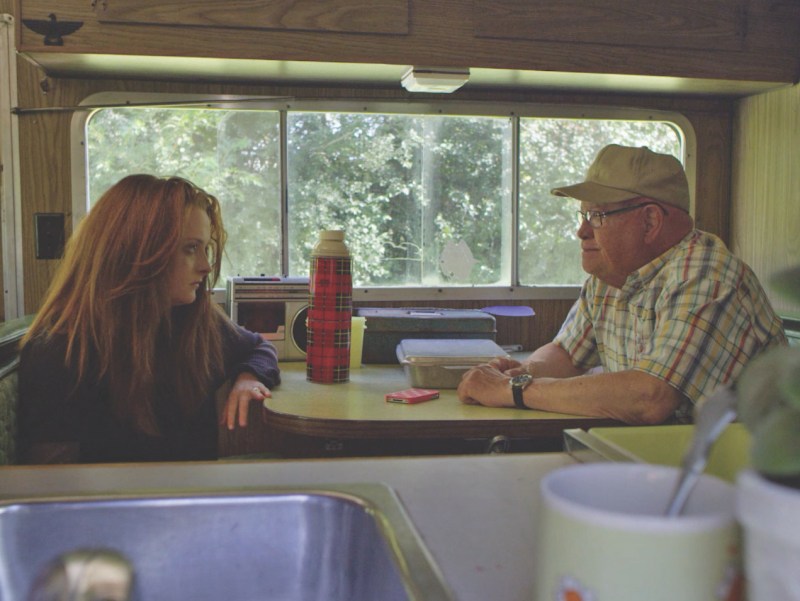
A scene from the film with main characters Hap and Ashley. Photo courtesy of YellowHouse Films.


The character-driven film tells the story of an 83-year-old widower farmer who has just sold his farm, then gets an invitation to his World War II Army reunion in California. Hap Anderson and his granddaughter take off in a 1973 Winnebago with plans to stop in Nebraska so Hap can reconnect with an old flame.

So much of the promo material about Farmer of the Year resonates with me:

The film aspires to have a sense of real life within the rural Midwest vernacular.

Farmer of the Year blends the comedy and drama of life into a deceptively simple story of aging, transition and resilience.

Life is one long growing season.

Rated between a PG and a PG13 film, Farmer of the Year has already been widely-shown and praised in Minnesota. It stars noted performers like Barry Corbin of Northern Exposure fame, Mackinlee Waddell of Good Christian Belles, Terry Kiser of Weekend at Bernie’s and others with impressive credentials. YellowHouse Films has 20 short films to its production credit.


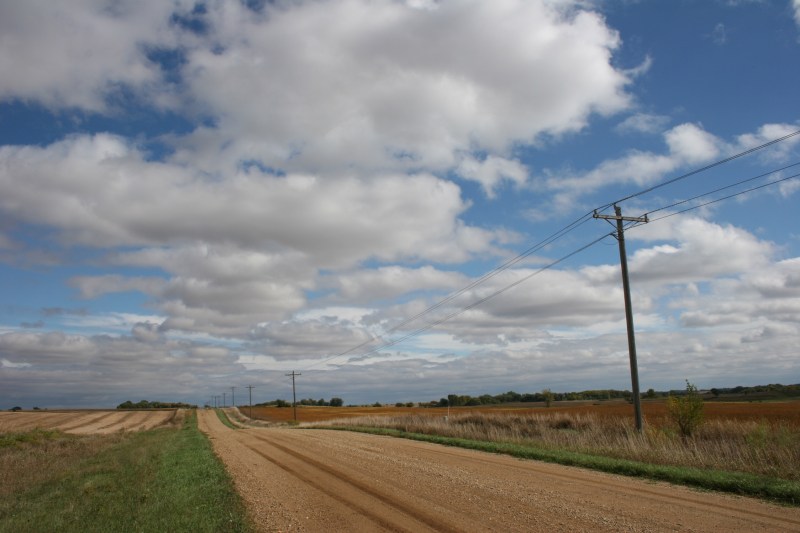
Just north of Lamberton in southern Redwood County, my home county. Minnesota Prairie Roots file photo.


I look forward to watching this 1-hour, 43-minute film in my community of Faribault, a 2 ½-hour drive from my hometown of Vesta. I value the exposure southwestern Minnesota gets in Farmer of the Year. This rural region seems too often underappreciated, too often considered the middle-of-nowhere. But it’s some place. It’s the place that shaped creatives like Kathy and me. It’s a place we once called home among people we loved in a land we loved. Still love.


© Copyright 2019 Audrey Kletscher Helbling
Photos (unless otherwise noted) courtesy and copyright of YellowHouse Films


How a winter drive refocuses thoughts & inspires creativity March 7, 2019

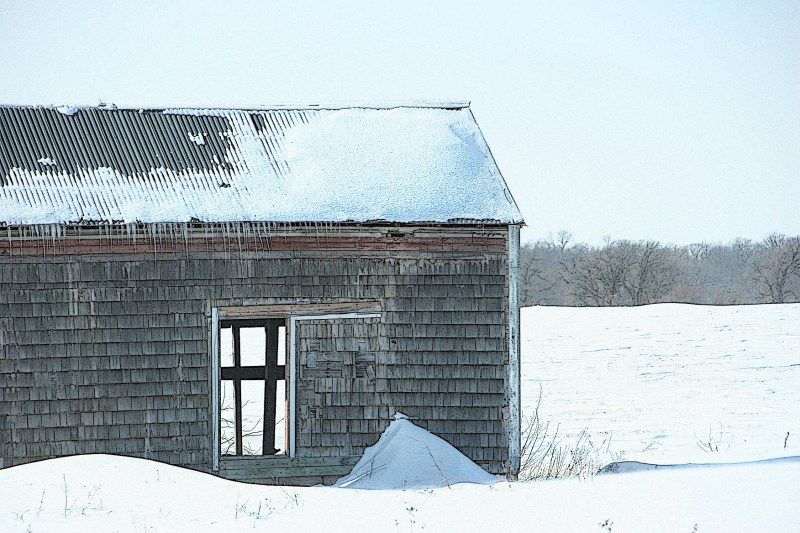
An abandoned building near Nerstrand, Minnesota.


IT IS THE ABSENCE of color. White. Pervasive now in the Minnesota landscape, as one would expect in March.

The whiteness of the southern Minnesota countryside overwhelms vision. Snow layers the land, rooftops, roadways, seemingly every surface. It takes effort to focus on something, anything, beyond the white.


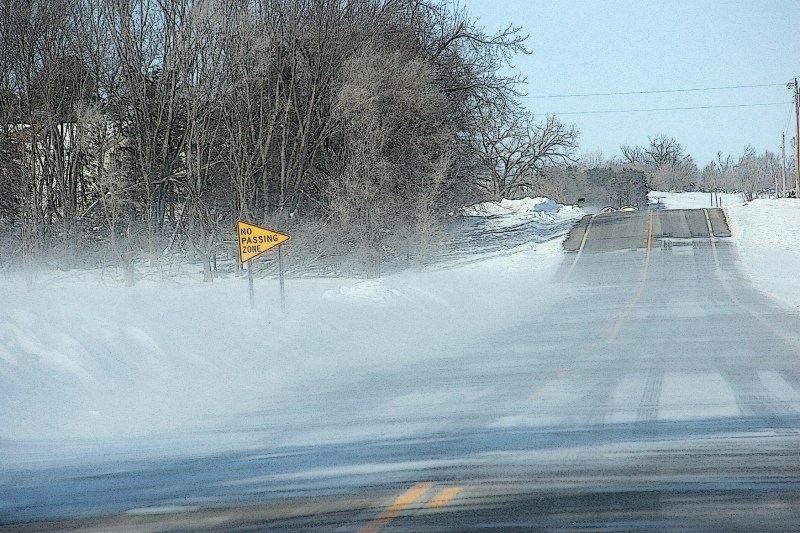
A much-needed Sunday afternoon drive through rural Rice County provided an opportunity to shift my thinking away from this interminable winter of too much brutal cold and too much snow. Yet, my thoughts never really drifted away from winter. How could they when wind swept snow across the roadway, sometimes finger-drifting drifts?

How could my thoughts wander to spring when everywhere I saw winter?

How could I escape winter when I observed ditches filled with snow to road level?

This drive wasn’t accomplishing what I’d hoped—a temporary alleviation of cabin fever. Who was I fooling? Only a vacation to a warmer climate or a weekend get-away to a hotel could deliver that. Neither will happen.


East of Northfield, Minnesota.


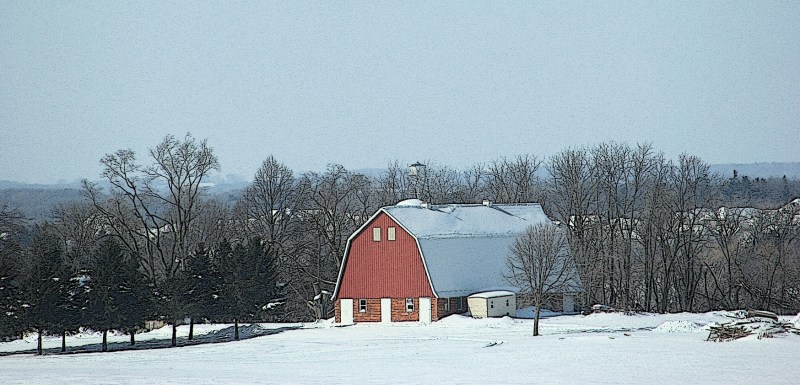
Realizing that, I tried harder to embrace the winter scenery. My camera allows me to reshape my thinking, to view the world through a different lens. To see beyond the colorless to the color. A red barn.


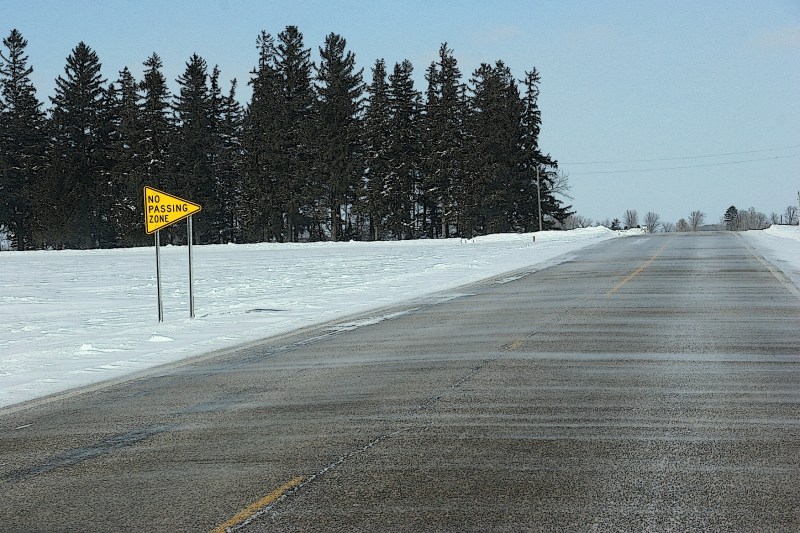
A flash of yellow in a road sign.


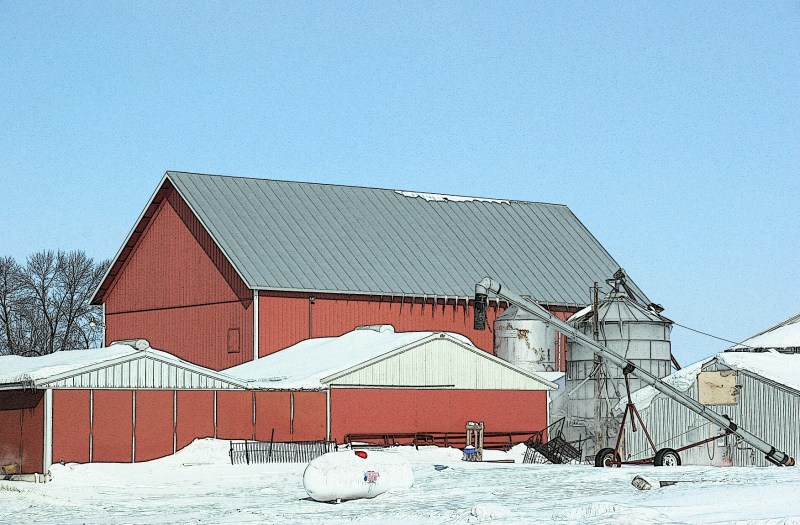
Blue sky backdrops a farm site near Nerstrand, Minnesota.


A blue sky.


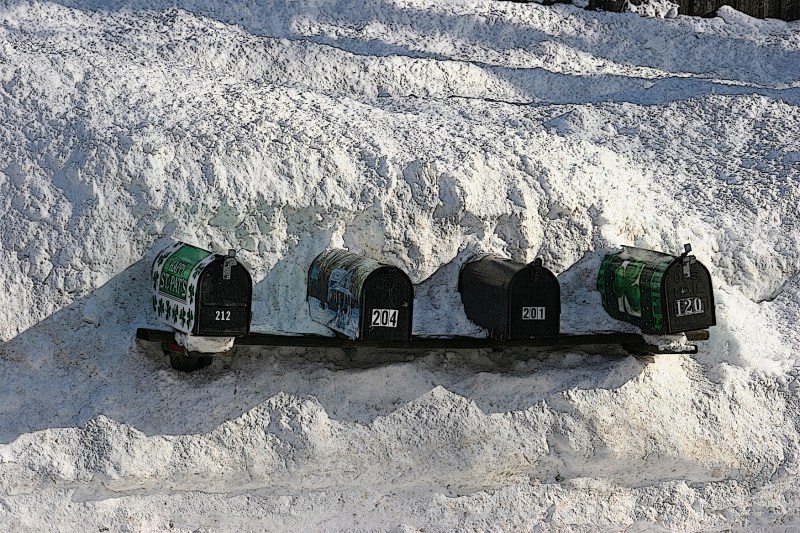
Mailboxes protrude from banked snow in Dundas, Minnesota.


With camera in hand, I began to notice the details—to see art-wrapped mailboxes embedded in a snow bank,


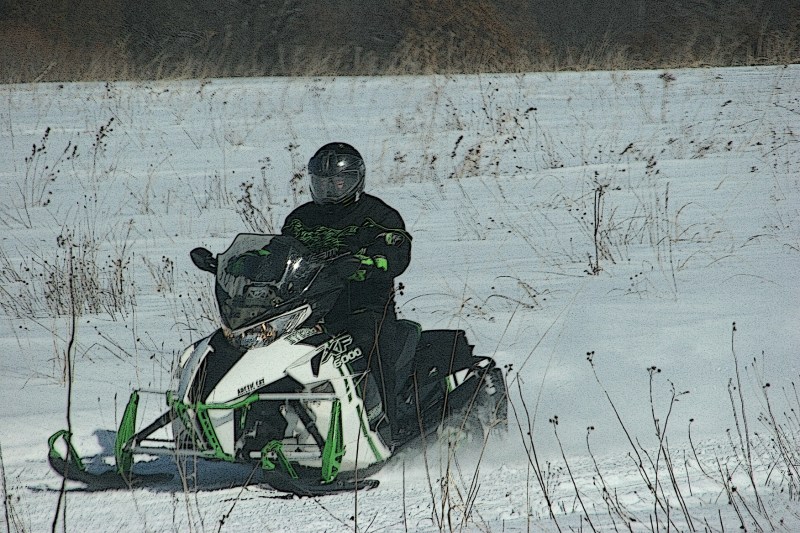
Snowmobiling near Nerstrand.


a snowmobiler powering through winter,


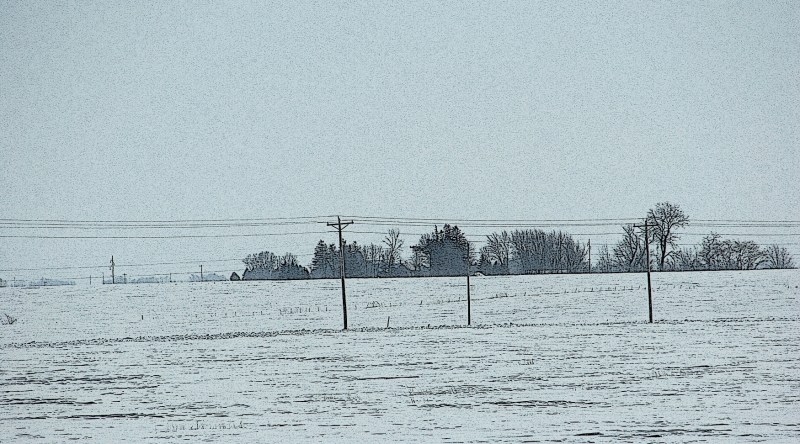
power poles penciling horizontal lines over blank fields.

And when I saw all of that, the poetry of winter overwrote the absence of light, of all that white.


Note: All images have been edited with an artsy editing tool.

© Copyright 2019 Audrey Kletscher Helbling
 

Winter photo poetry February 18, 2019

Filed under: Uncategorized — Audrey Kletscher Helbling @ 5:00 AM
Tags: , , , , , , , , ,


A WINTER LANDSCAPE IN RURAL Minnesota can, at first glance, seem visually unappealing. White upon white upon white.

But then a moment happens. A curtain opens in the mind to reveal a scene that holds spectacular beauty.

Stubble pokes through snowy fields. A farm site stands isolated, yet strong, in all that winter vastness. And then, a layer of golden light slips between land and clouds.

The light. The textures. The immensity of the scene. All collide before my eyes, to create a winter photo poem. Beautiful in its complexity. Beautiful in its simplicity. Winter.


I photographed this scene along Interstate 35 somewhere north of Faribault around sunset Saturday.

© Copyright 2019 Audrey Kletscher Helbling
 

Even in rural Minnesota, ag knowledge sometimes lacking October 25, 2018

Filed under: Uncategorized — Audrey Kletscher Helbling @ 5:00 AM
Tags: , , , , , ,

Shepherd’s Way Farms, rural Nerstrand. Minnesota Prairie Roots file photo. Shown here for illustration only.


ARE WE A GENERATION away from losing the farm? Not in the literal sense. But in the sense of understanding agriculture.

Do you know, do your children know, do your grandchildren know the sources of ingredients in food and other products?

A recent test shows me that, even here in rural Minnesota some 50 miles south of Minneapolis, people are not particularly knowledgeable. Granted, this was no scientific study. And it was limited in scope. But results were enough to make me realize that we could do a better job of educating our young people about agriculture. Even those who live in a city like Faribault surrounded by corn and soybean fields.


A fest-goer attempts to match animals and plants to products I set out.


How did I reach this conclusion? Well, I pulled together several farm-themed matching and other games for a recent kids’ fall fest at my church. One of those required players to match farm animals and plants to five products. Only one boy successfully completed the task as did some, but not all, adults.


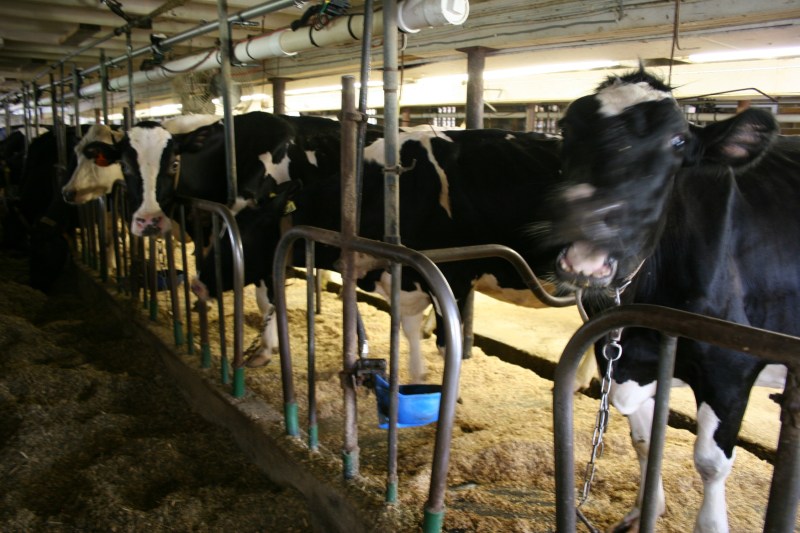
Registered Holsteins photographed at a Faribault area farm. Minnesota Prairie Roots file photo.


I laid pictures of the following on a table: cows, sheep, pigs, corn and soybeans.

Then I set out a can of cranberry sauce, a box of Velveeta cheese, a brush, a bottle of Thousand Island salad dressing and a wool blanket.

The goal was to match the image and product.


Minnesota Prairie Roots file photo from Shepherd’s Way Farms.


As you might guess, the sheep and blanket, cows and cheese proved easy matches.


Minnesota Prairie Roots file photo of a cornfield.


But not the other three. Can you figure it out? I’ll help. The first ingredient on the dressing label is soybean oil. The second ingredient on the cranberry label is high fructose corn syrup. That leaves the brush. Some brush bristles are made from pig hair.

I expected the game might challenge little kids too young to understand what comes from where or what ingredients are in our food. But I was surprised by mid to upper elementary kids and adults who got the matches wrong.

Does it matter? I believe so. Our kids and grandkids, even us adults, need to be knowledgeable about food and product sources. We need to understand that our food and more doesn’t just come from the store or some online source. It comes from the land, directly or indirectly, grown or raised by farmers. When we realize that, we begin to value and appreciate rather than simply consume.


In the window of Ruf Acres Market in historic downtown Faribault, egg cartons promoting eggs from Graise Farm. The eggs are sold at this market and elsewhere in the area. Minnesota Prairie Roots file photo.


ASIDE FROM THIS EXPERIENCE, I’ve seen strong efforts locally to educate consumers about agriculture. Leading the way in my community is Tiffany Tripp of Graise Farm. She and her husband raise grass-fed animals in a sustainable environment, according to their farm website. I’ve seen Tiffany out and about selling and promoting locally-grown/raised. She is currently co-coordinating efforts to market locally-grown/raised/sourced products under a Cannon Valley Grown label. What a great idea. I love her enthusiasm and that of others who recognize the value of what is grown and raised right here in southeastern Minnesota.

THOUGHTS?

© Copyright 2018 Audrey Kletscher Helbling
 

An October drive in the Minnesota countryside October 16, 2018

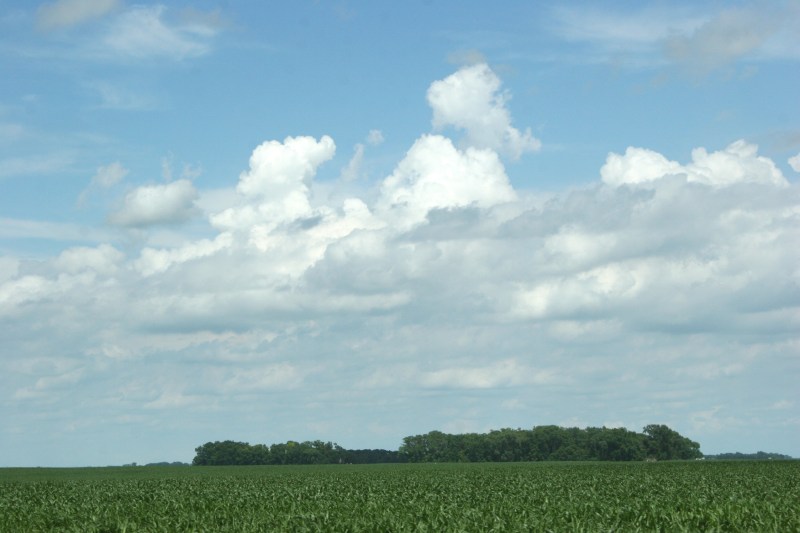
In search of fall colors in rural southern Minnesota.


SATURDAY WAS THE DAY, we decided. The day to meander and view fall colors in the Rice County area following a week of nothing but grey skies. Weather forecasters promised half a day of sunshine before clouds moved in again. Yard work could wait. Randy and I needed to enjoy autumn.


Colorful Seventh Street in Faribault nearing the intersection of Second Avenue.


So, with optimism, we headed out of Faribault along Seventh Street, a roadway bordered by beautiful fall foliage. The sun shone bright during our late morning exit. I was excited, remembering the beauty of last fall, especially around area lakes.


This treeline along Kelly Lake showed us some fall color.


But as we drove, we soon realized that our expectations did not match reality. The leaves are not nearly as colorful as last season. At least not on this day. I could choose to be disappointed—and I was for quite awhile—or I could choose to look for beauty beyond splashes of fall colors.


Place me on a gravel road and I will find something that appeals to me whether a farm site, a field, a cluster of cattle. Just being in the country brings me joy. And peace.


I know some would find this time just driving through the rural landscape to be a waste of hours. But not me. There is a need deep inside me to occasionally reconnect with the land, to simply escape the closeness of gridded city streets. I need to follow gravels roads. I need to see tractors and barns, even artsy rural mailboxes. It’s difficult to explain to someone without rural roots.


But for me, the land comforts. It rises up like a poem, wrapping my soul in words and images that have shaped—are still shaping—me.

© Copyright 2018 Audrey Kletscher Helbling
 

Autumn on a rural Minnesota acreage, a photo essay October 4, 2018

A restored windmill towers above a refurbished mini barn (soon to be art studio) on my brother and sister-in-law’s rural Redwood County acreage.


OF SIX FARM-RAISED SIBLINGS, only two live in the country. Neither farmers. But two work in the ag industry, one as the CEO of an ethanol company, the other as part owner in an implement dealership.


My middle brother remains in our home county of Redwood and welcomes us back for extended family gatherings, most recently our annual autumn tradition of making horseradish—157 jars this year. The tradition honors our deceased farmer father. He dug and processed horseradish roots for many years. Now we do the same but with easier methods than using an old meat grinder powered by a drill. Like Dad, we give away the condiment.
 

Sunflowers ripen and dry under the prairie sky.


Our annual gathering in rural Lamberton isn’t about the horseradish as much as it is about family.

 

I’ve always delighted in milkweed pods bursting with seeds.


While I enjoy our time together, I usually slip away to meander, to take in the rural setting, to photograph. I need that peacefulness amid all the chattering and joking and loudness of a group with some strong personalities.


How lovely the broom corn rising and swaying in the prairie wind.


My artsy sister-in-law creates vignettes like this that change with the seasons.


A sunflower, heavy with seed, bows to the earth.


I need quiet. And I need to take in the shifting of the seasons, the artful autumn displays, the aged buildings, all the visual reminders of a rural life I still miss decades removed from the country.


A gazing ball in a flower garden reflects sky, land and dried black-eyed susan seed heads.


I am grateful for the opportunity to escape to this acreage, to reclaim the serenity of rural Minnesota.


An old shed recently moved onto the acreage, to be rebuilt or salvaged for the wood.


I realize nostalgia tinges my view of country life. Much has changed since I left the farm nearly 45 years ago. But not the love I hold for the land, for the quiet and grace and muted tones of harvest time.


© Copyright 2018 Audrey Kletscher Helbling