Minnesota Prairie Roots

Writing and photography by Audrey Kletscher Helbling

Belview pulls together after destructive storm July 6, 2011

THREE MONTHS AGO Merlin and Iylene Kletscher closed on the purchase of a foreclosed house along Main Street in Belview. They plan to sell their lake home near New London and move back to Iylene’s hometown, also within 10 miles of Merlin’s hometown of Vesta.

My aunt and uncle want to be closer to family and friends and back in a small town like Belview with a population of 375.

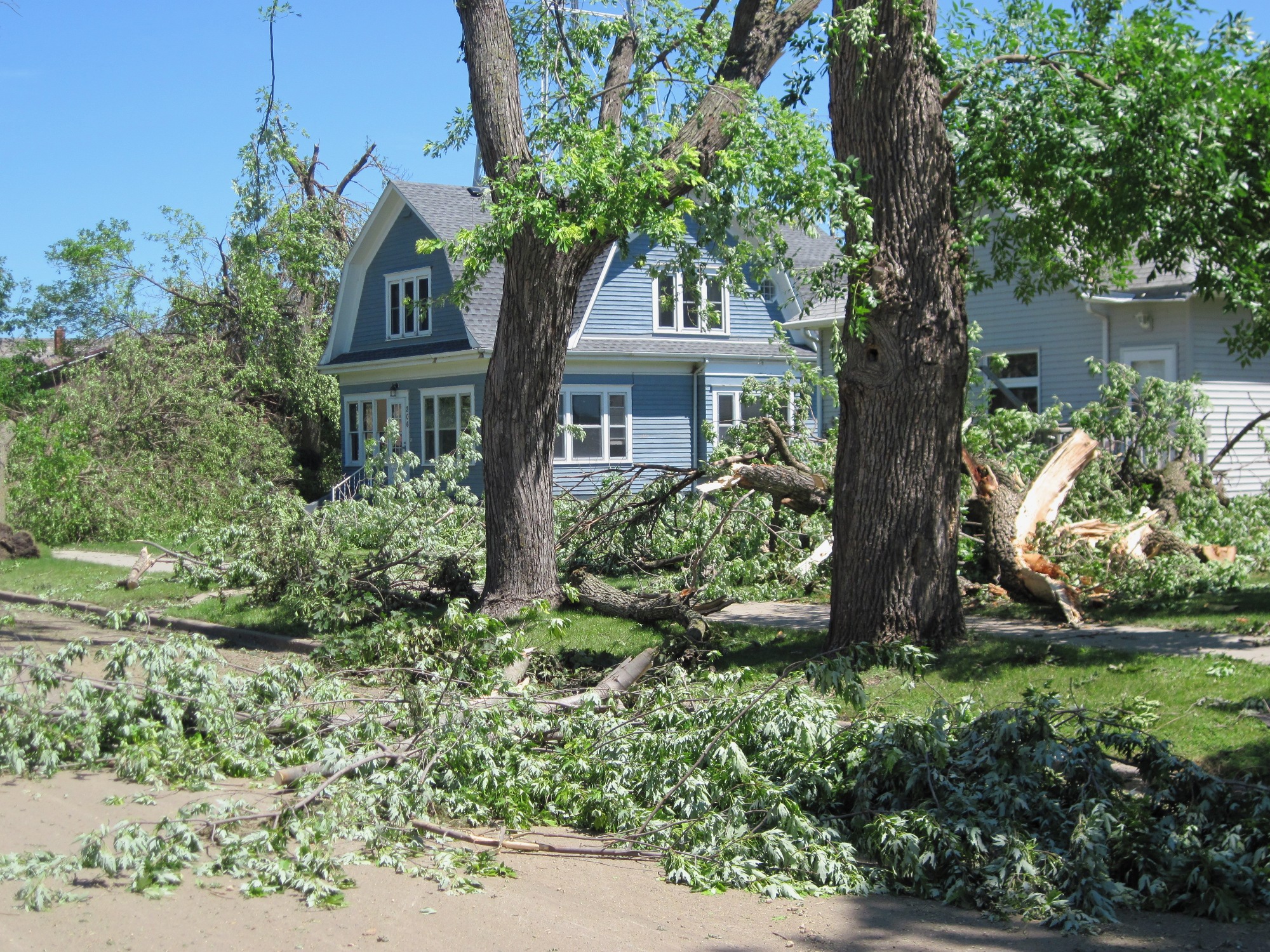
They chose the Main Street fixer-upper, among other reasons, for all the beautiful trees on the property.

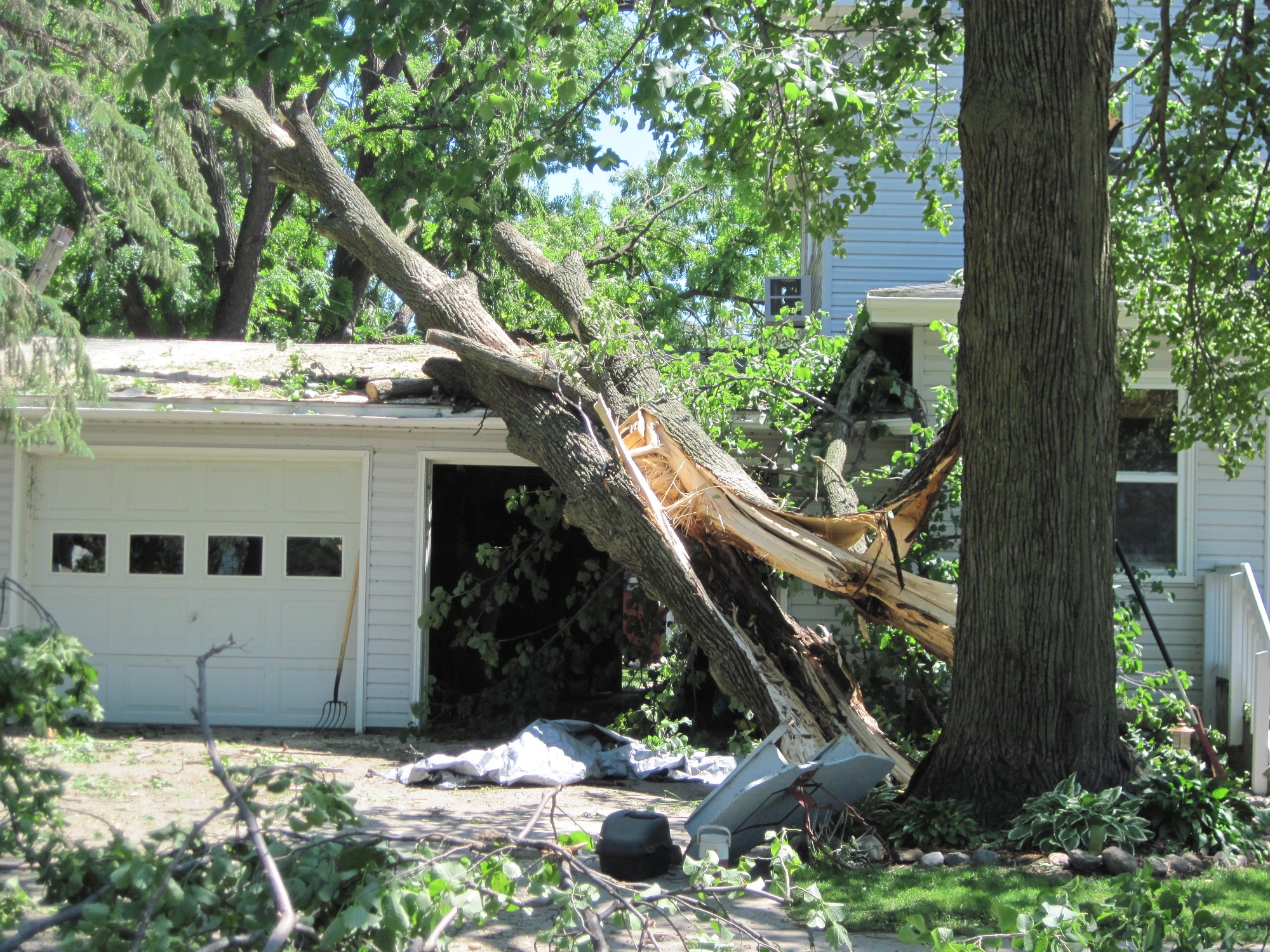
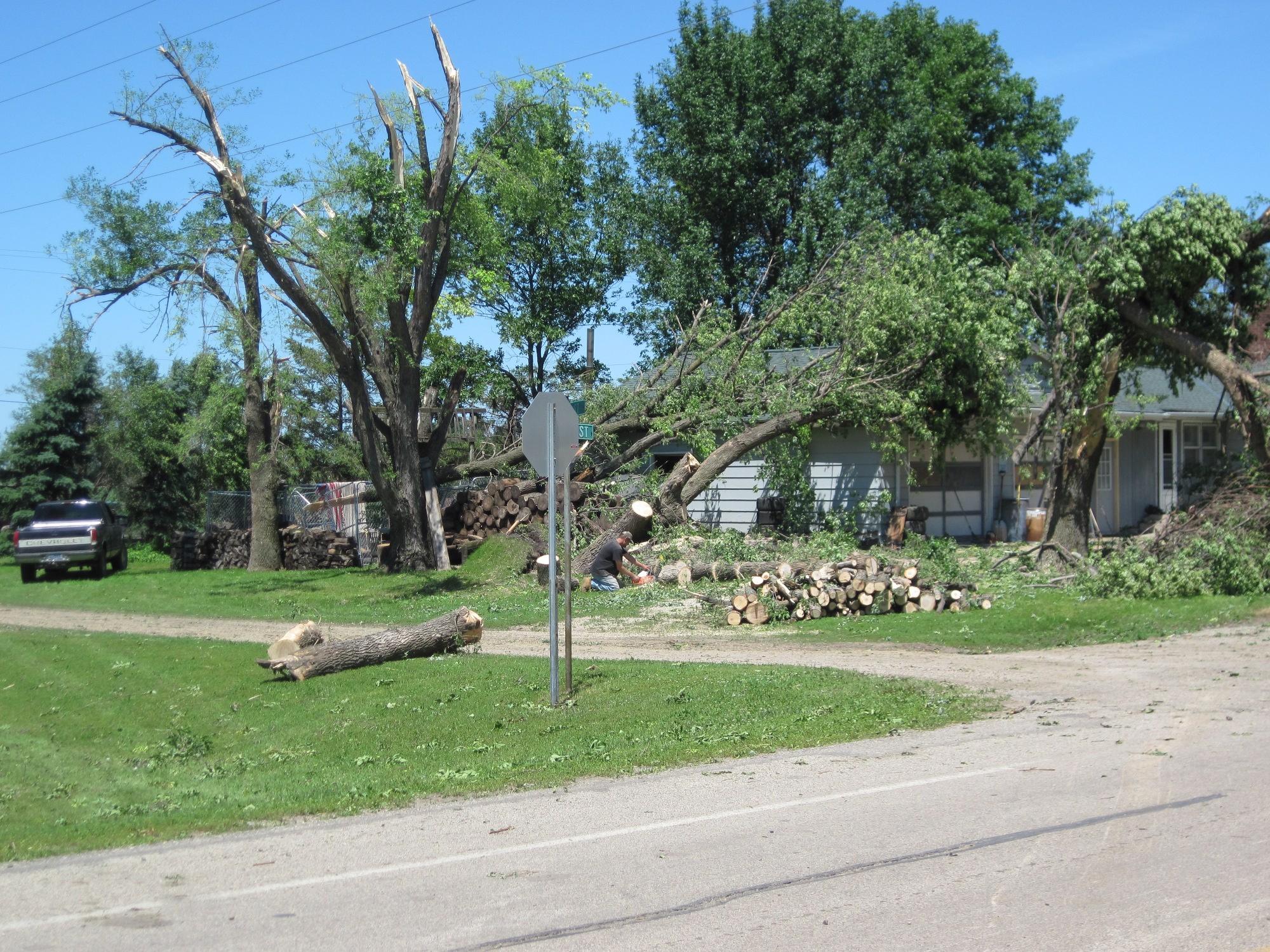
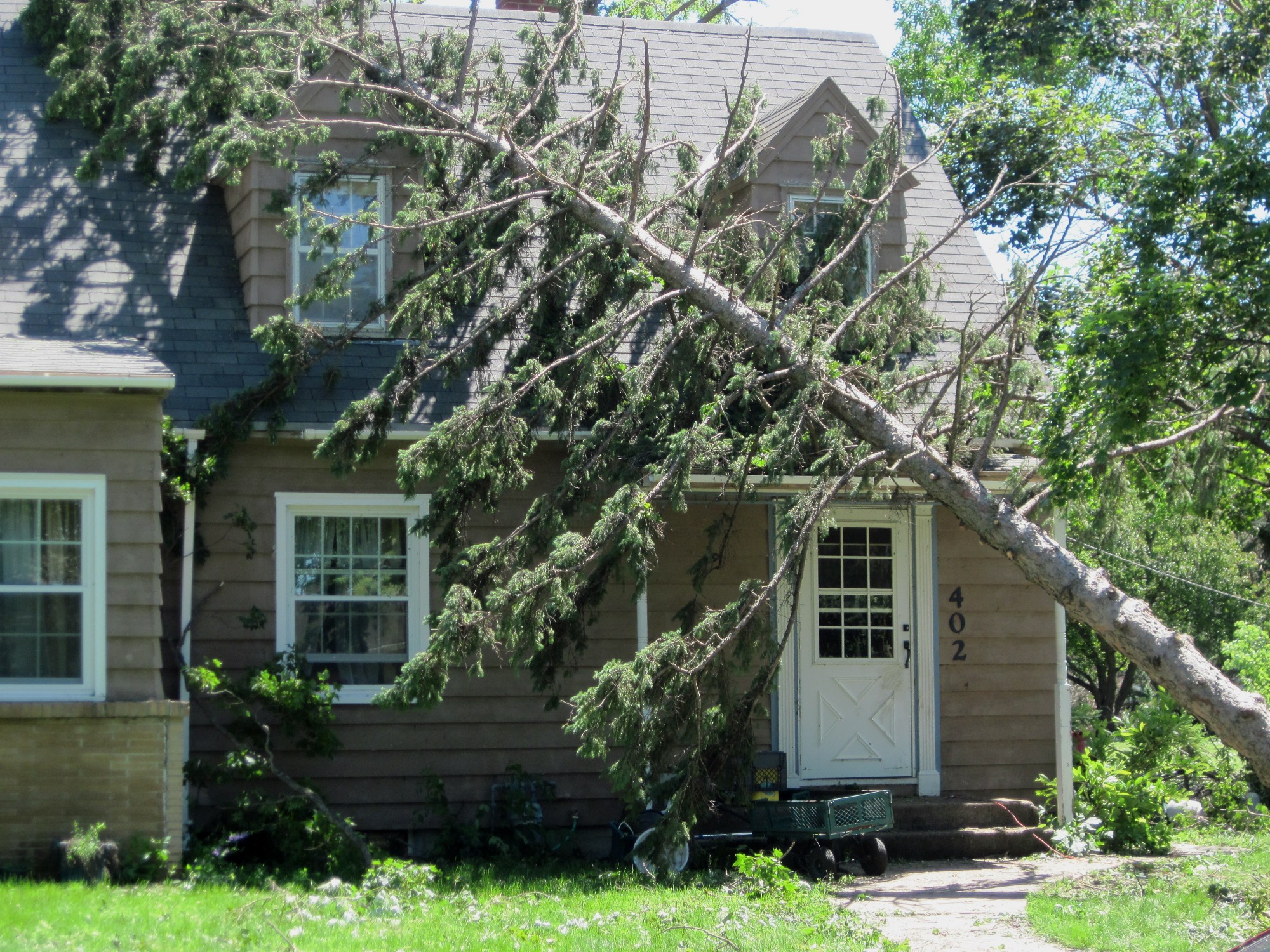
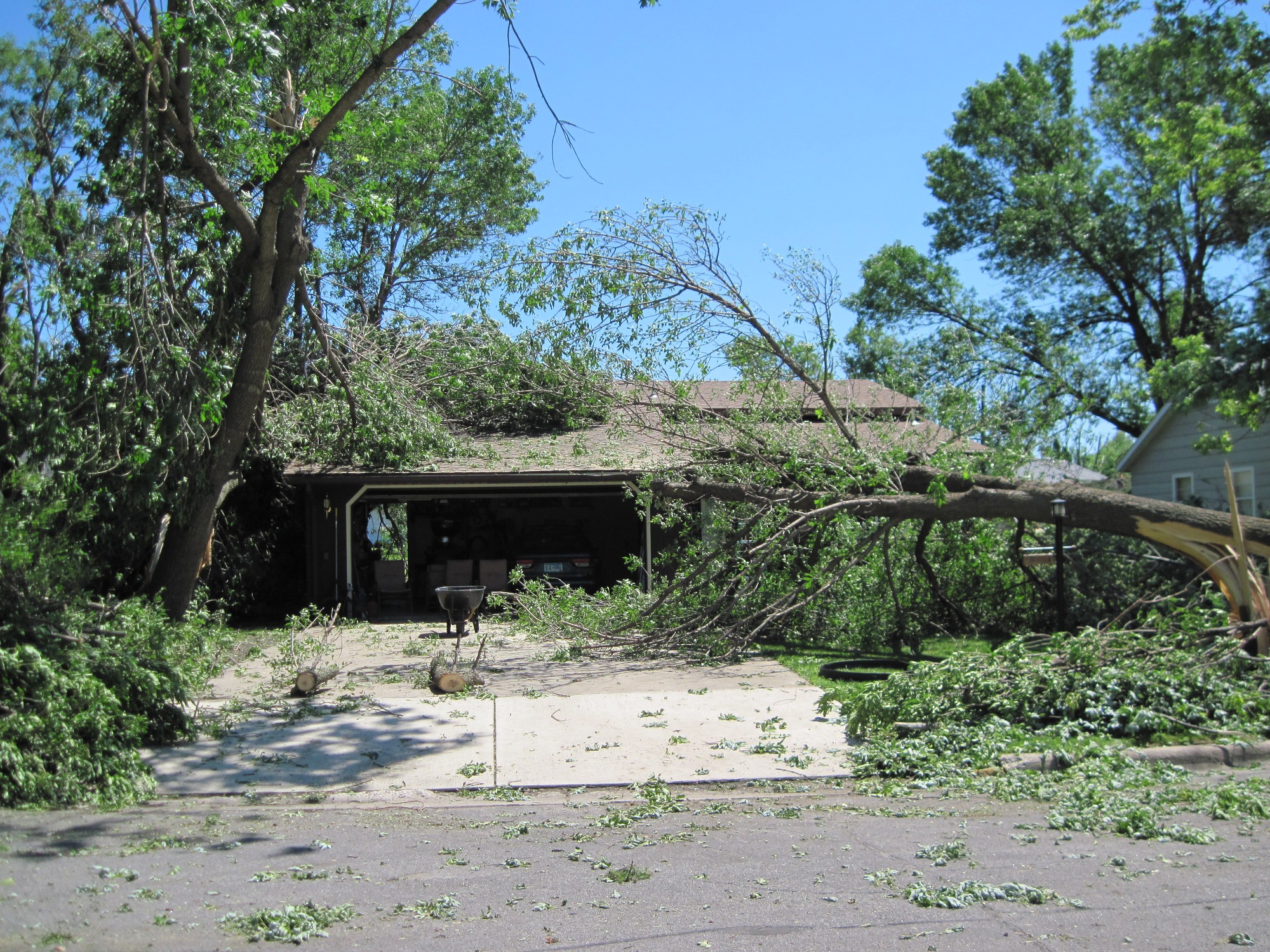
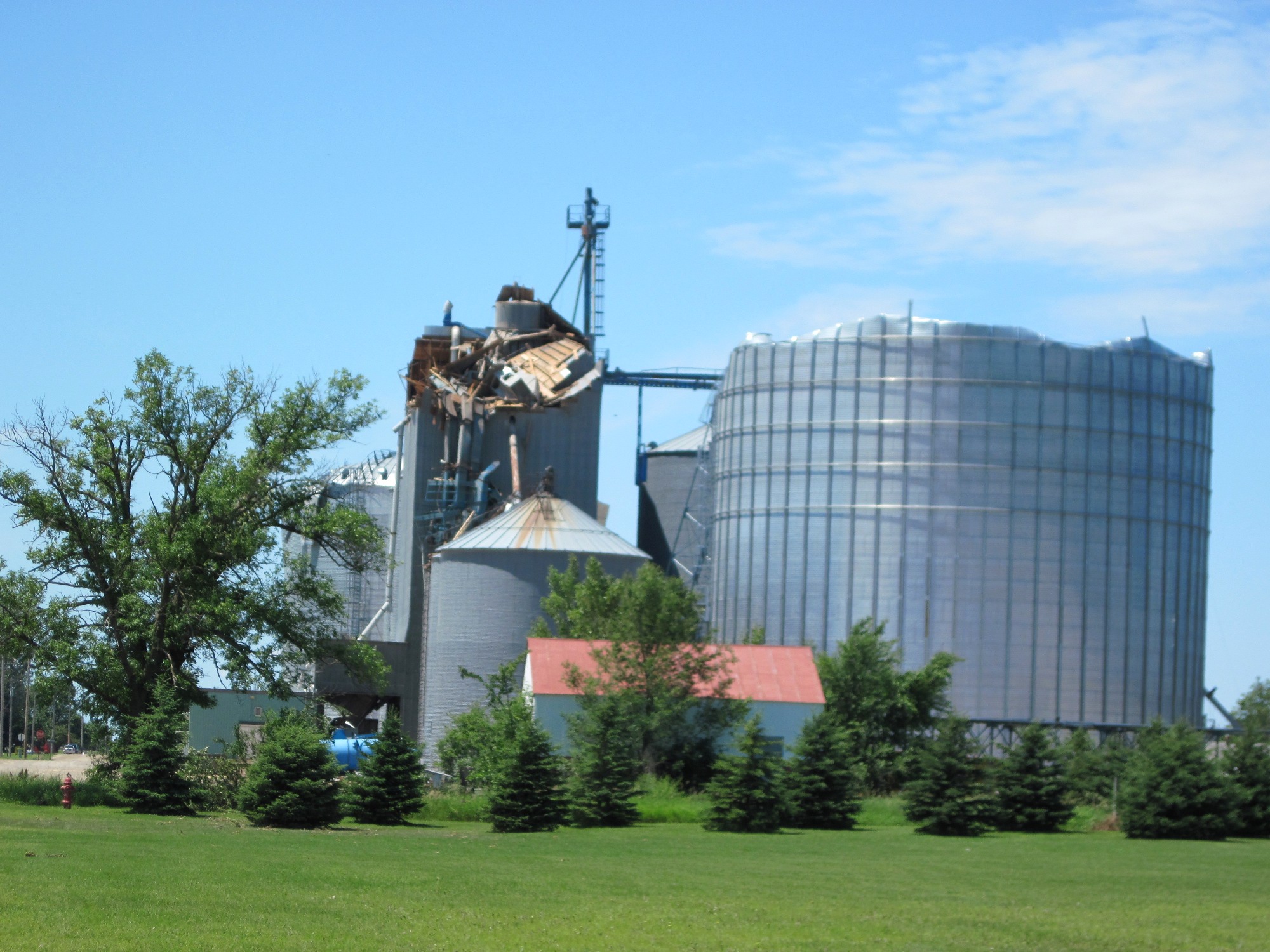
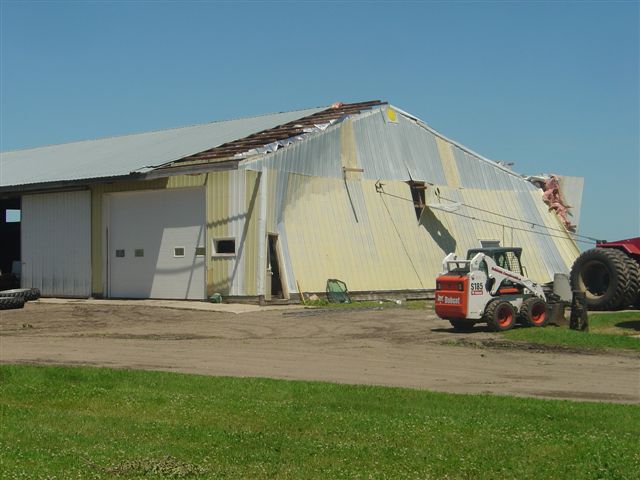
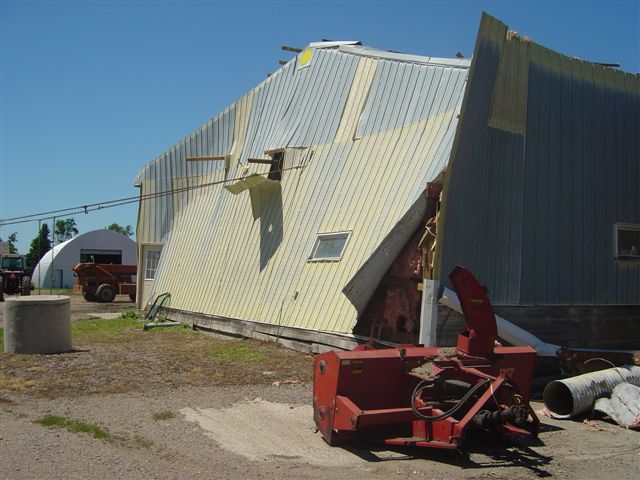
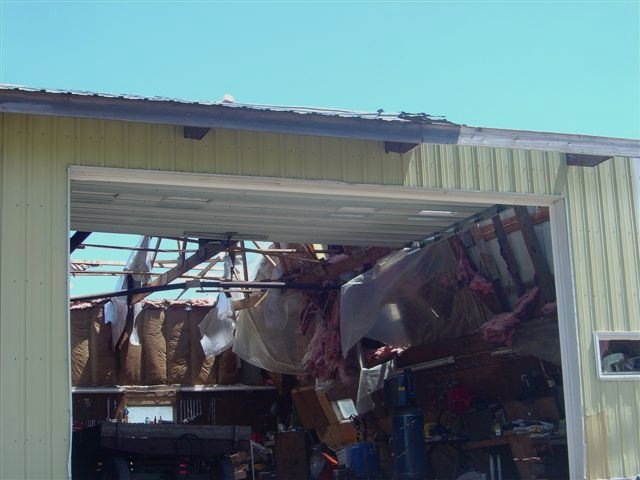
Today most of those trees are gone, toppled in a storm that swept through Belview and a wide-spread area of southwestern Minnesota late Friday afternoon. The storm ripped off roofs, took down power lines and trees, smashed grain bins and elevators and more as fierce winds roared across the flat prairie.

Merlin and Iylene Kletscher's home on the left, surrounded by downed trees.

Now Merlin and Iylene, like so many others in this area of Minnesota, are dealing with insurance companies and contractors as they clean up and repair their homes and businesses.

“The new chimney we had installed is leaning,” my uncle says. “The new shingles are missing ridge caps. We have broken windows and torn screens, etc.” The couple had just installed new windows in their home and made other major improvements.

Despite all of that damage to a house he and Iylene have worked so hard to restore, my uncle doesn’t seem at all discouraged. Rather, he praises Belview’s reaction to the storm: “Belview is amazing in that the people just pull together…I can’t say enough good things about the fire department and city employees and council. While we were there, trucks, tractors, 4-wheelers, payloaders, backhoes and pickups went by our house about one every 30 seconds pulling trees, debris or branches to the MPCA-approved burn site on the northeast edge of town.”

It seems the city was prepared for a natural disaster such as Friday’s storm. Log onto the city website and you’ll find a “CONSUMER ALERT: SUMMER STORM SEASON” posted by City Clerk Lori Ryer on May 24 encouraging residents to prepare for summer storms.

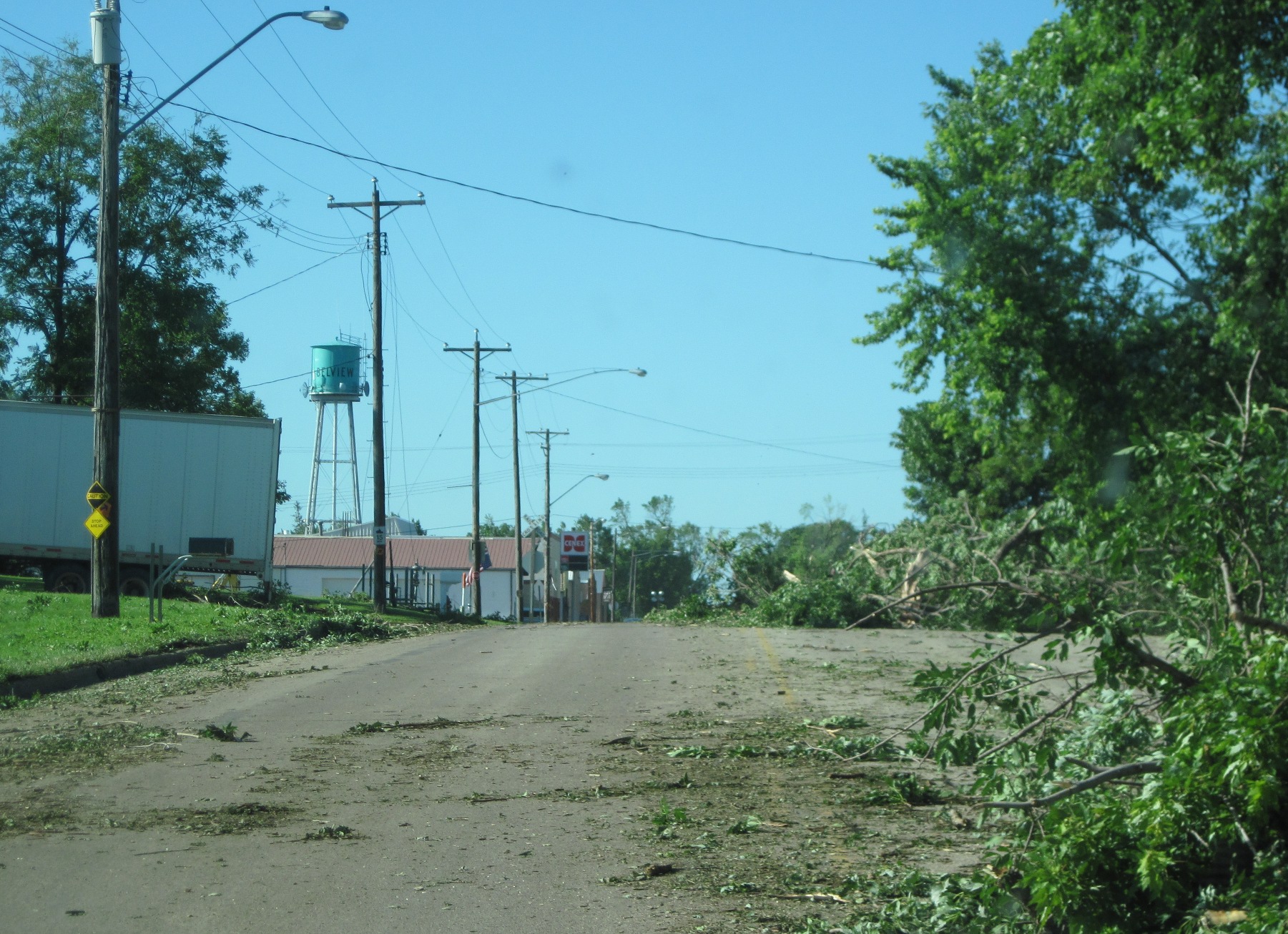
Entering Belview from Sacred Heart at 9 a.m. on July 2.

The city of Belview's water department building.

The ferocity of Friday’s storm is impressive. “Our neighbor across the street in Belview said that during the height of the storm, he couldn’t see his mother’s house right next door!” Merlin shares. “Chad Krinke (next door neighbor and relative) said two inches of rain fell in 20 minutes—he called us about a half hour after it hit, giving a report on our house damage. The city was blocked off, so no one could get in unless they had specific ties to someone in the city.”

Trees blocked the street north of the Belview City Park.

Jerry Hagen's house, across the street from Merlin and Iylene's home in a July 2 photo.

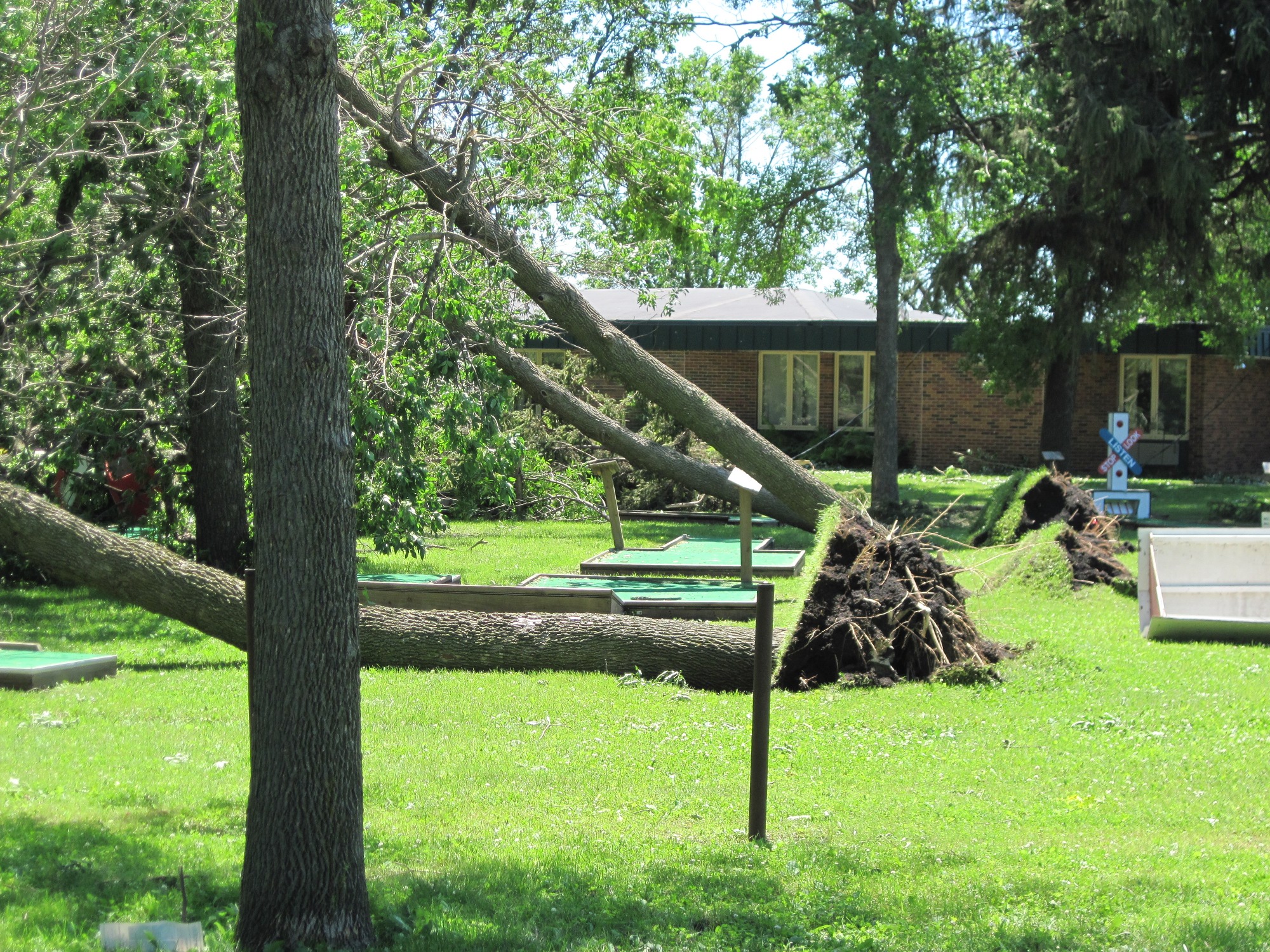
Residents of Parkview Home, next to the city park, were evacuated Friday night. This photo shows the nursing home and mini golf in the park. The rubber roof of the nursing home was peeled off during the storm.

Storm damage at the home of the Rev. Daniel Faugstad family.

Damage along South Main Street.

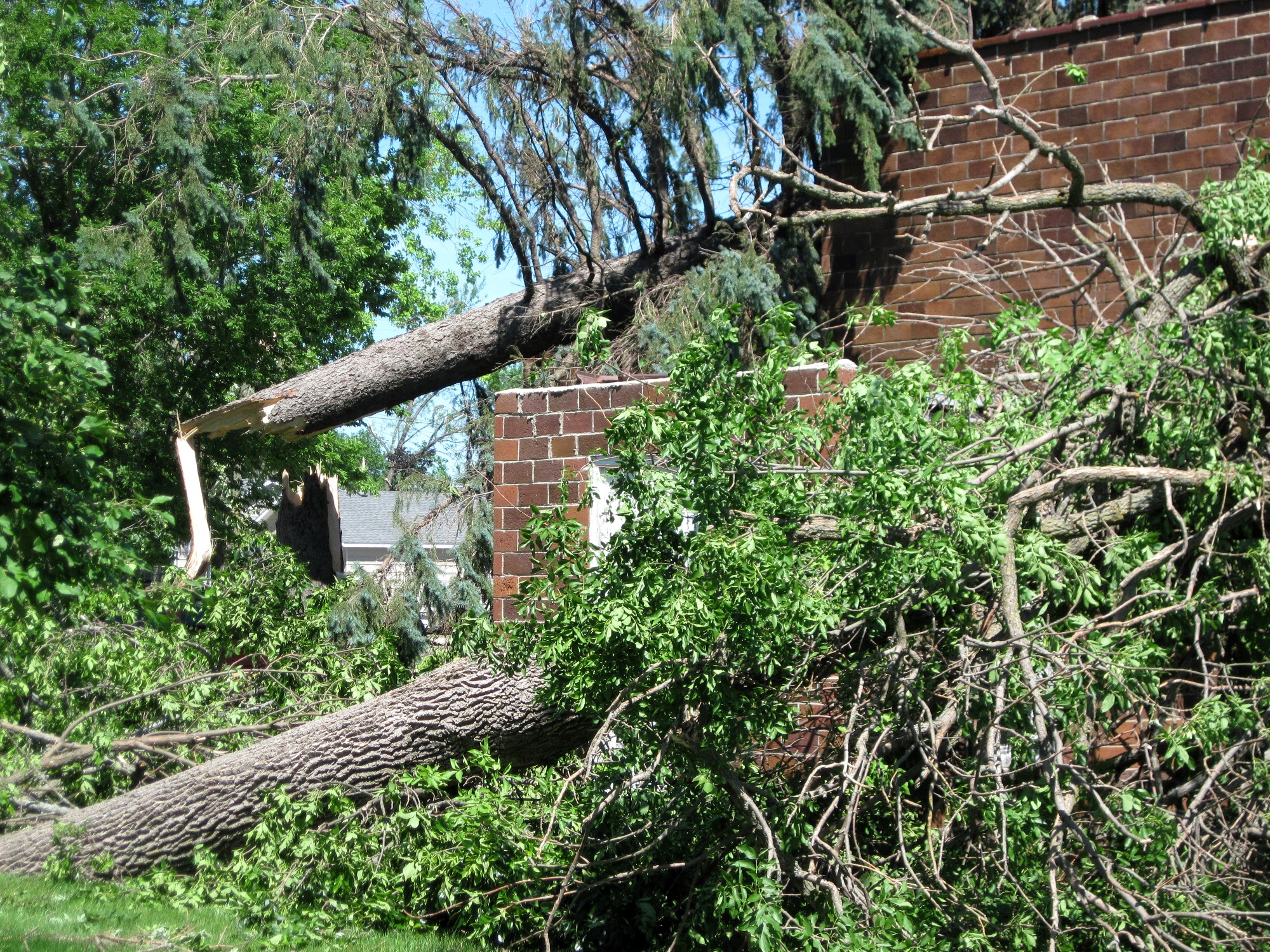
Another tree toppled onto a house.

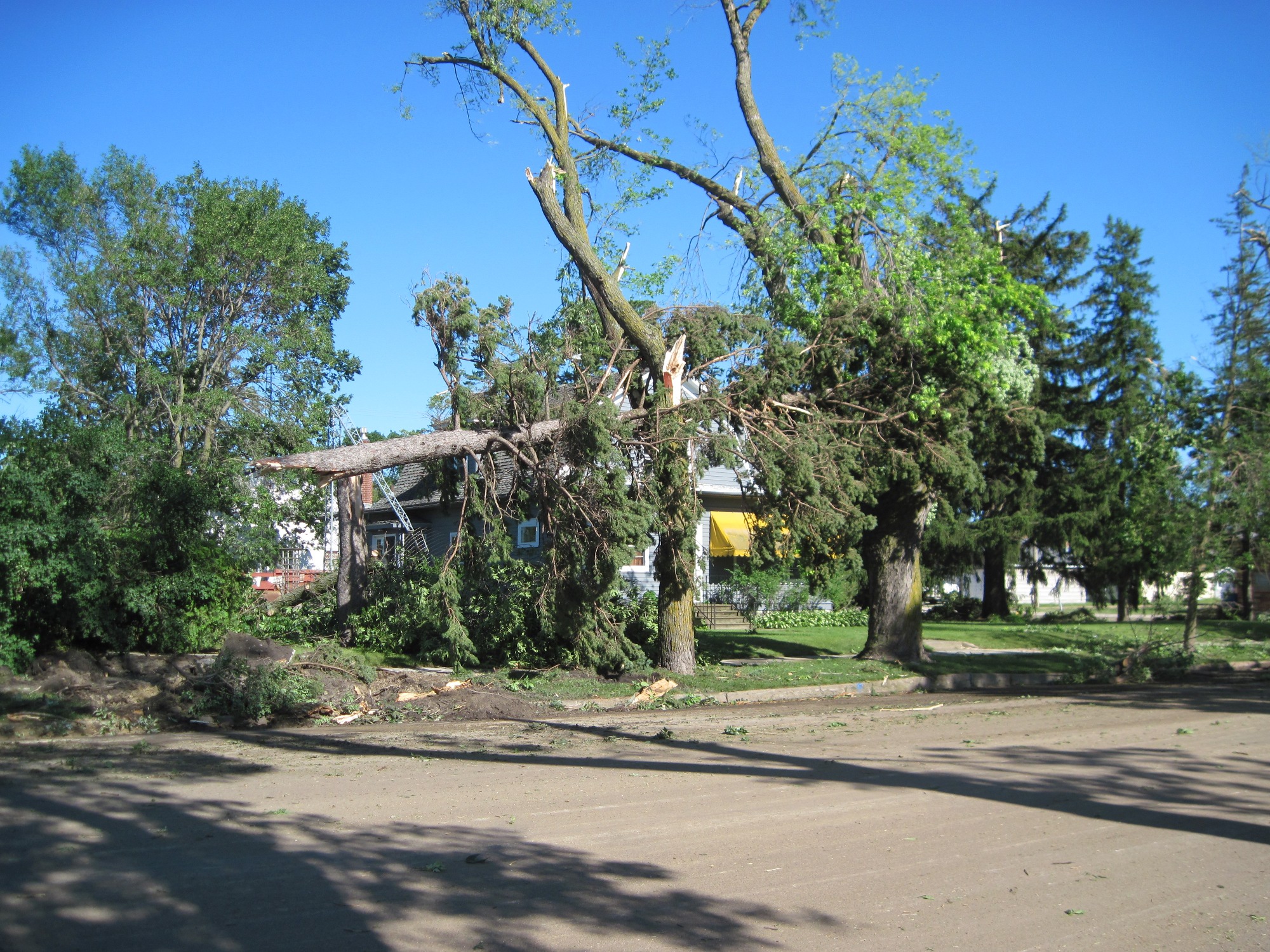
More residential storm damage in Belview.

Merlin also reports that a farmer just west of nearby Vesta (my hometown) recorded a high wind speed of 110 mph on his wind velocity meter during the storm. I have not yet confirmed that information. Vesta was also hard hit by the storm. Click here to read that story and view photos of the damage.

The damaged bins and elevator at Meadowland Farmers Elevator in Vesta.

Neighboring Belview and Vesta are only two of the many, many small towns in southwestern Minnesota hit by Friday’s storms. I expect that hundreds of farm places were also ravaged. For the most part, the disaster has not been covered by metro media and that bothers me—a lot.

IF YOU LIVE in southwestern Minnesota and were impacted by the storm, please submit a comment telling me about your personal experiences (where were you/did you seek shelter/what was the storm like, etc.), damage to your property or town, and recovery progress. I am also looking for photos to publish, so contact me via a comment and I will follow-up by emailing you.

PHOTOS COURTESY of Merlin and Iylene Kletscher

© Copyright 2011 Audrey Kletscher Helbling


MPR debuts Minnesota architecture series with my submission July 1, 2011

LAST WEEK MINNESOTA Public Radio’s “State of the Arts” blogger Marianne Combs put out a call for photos and stories celebrating the great architecture of Minnesota.

I figured given how much I appreciate old buildings—and that would be considerably—I could submit an entry. But what building would I choose?

I started going through my photo folders in search of an image I considered most worthy of submission. FYI, I even have a folder labeled “architecture.”

Faribault topped my choices since this southeastern Minnesota community, my home since 1982, has many, many buildings on the National Register of Historic Places. And, yes, architecturally, these structures are jewels.

Then I considered images from Lucan, Morgan, Hanley Falls, Wood Lake, West Concord, Mantorville, Alexandria, Northfield and a few other towns I can’t immediately recall. Yes, the list was long.

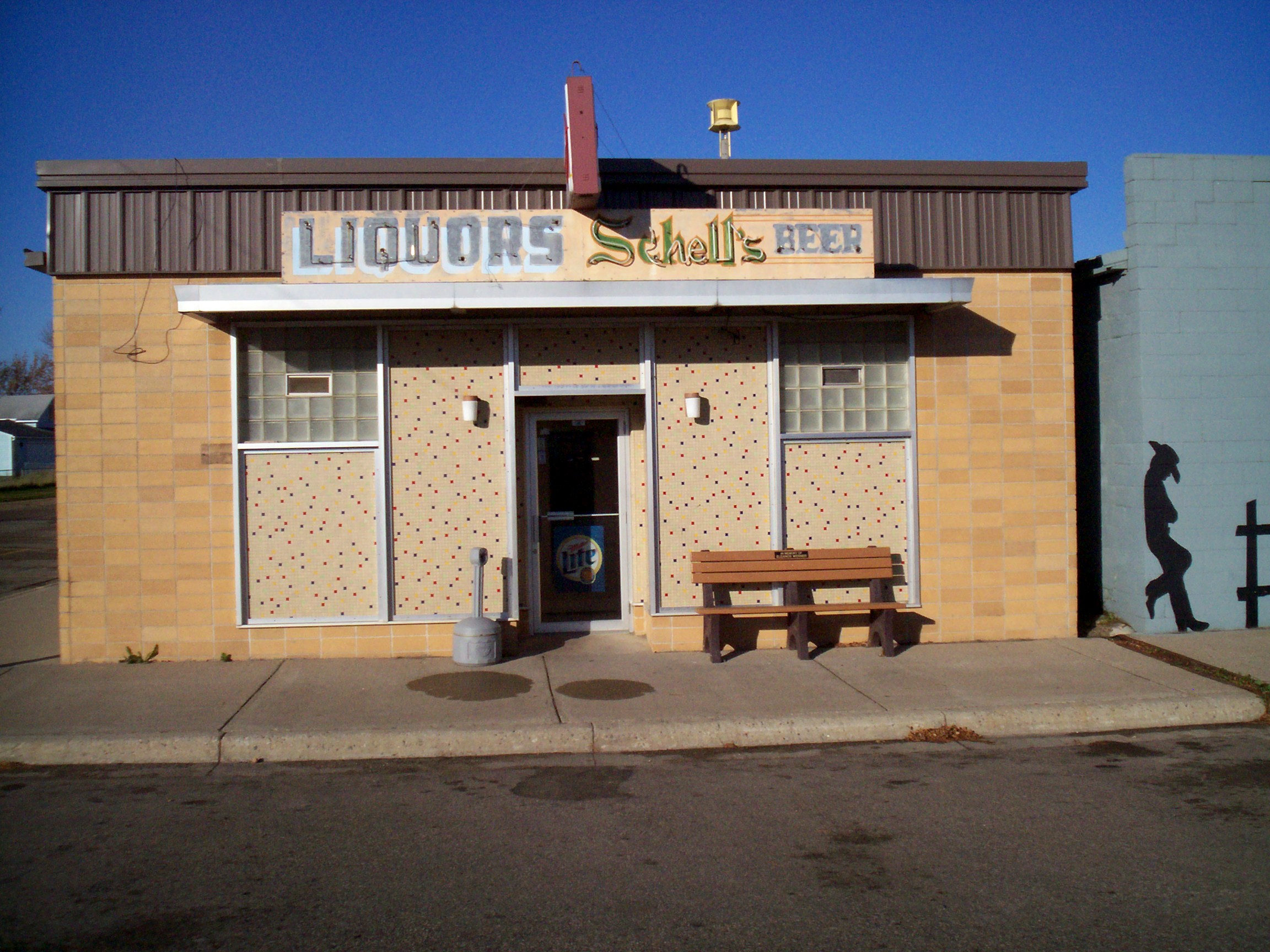
But something kept tugging at me—my loyalty to my hometown of Vesta. Now those of you familiar with Vesta, population around 350 and with a block-long main street, are likely wondering what on earth I found in this southwestern Minnesota prairie town of architectural worth.

Here is the building I chose and which debuted Marianne Combs’ Minnesota architecture series this afternoon. You can click here to read why I chose the Vesta Municipal Liquor Store.


© Copyright 2011 Audrey Kletscher Helbling


Appreciating mom-and-pop businesses like Mutch Hardware June 27, 2011

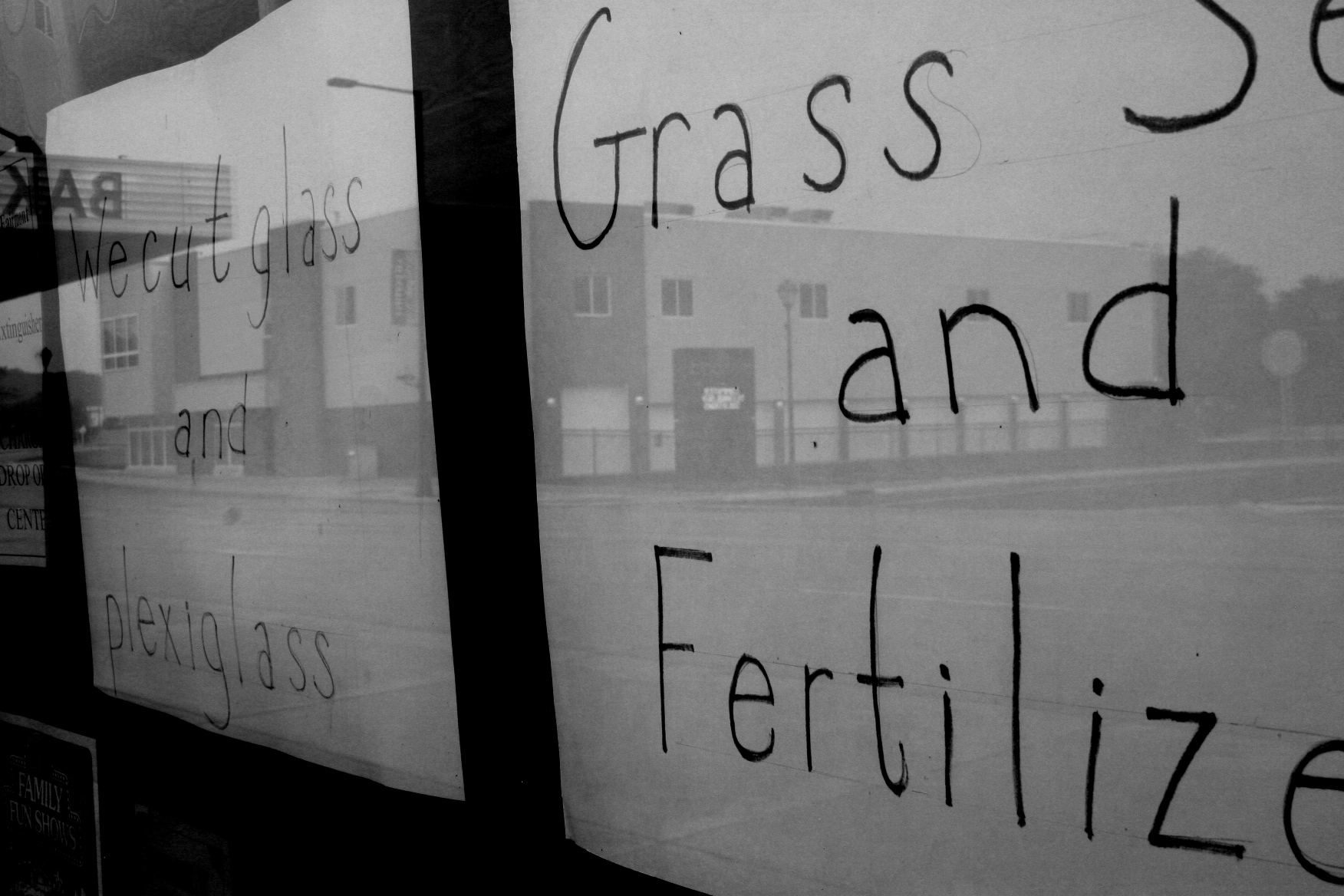
Buildings across the street reflect in the windows of Mutch Northside Hardware in North Mankato where these signs hang on a front plate-glass window.

“Grass Seed and Fertilizer.”

“We cut glass and plexiglass.”

I didn’t need grass seed or fertilizer or any glass cut. Yet, the signage drew me to the storefront plate-glass window of the hardware store along Belgrade Avenue in North Mankato. How often do you see business signs like this with letters printed in near-perfect penmanship between two penciled ruler lines on white tagboard?

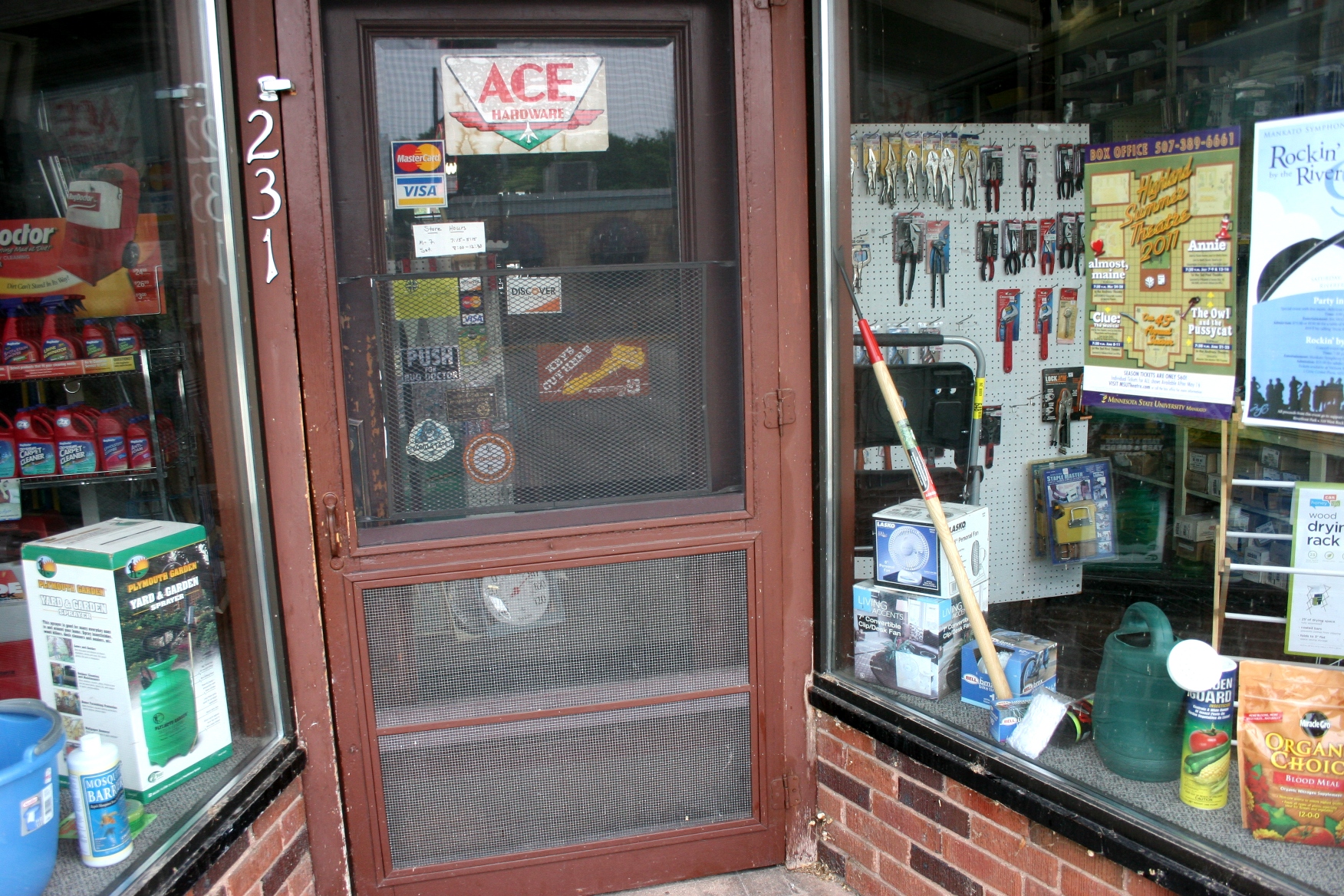
After I admired the simplicity of this advertising in a world of mass-produced, flashy, signage, I noticed the old screen door. That did it. I was smitten with this place, this Mutch Northside Hardware that, from the exterior, reminded me of the small town hardware stores of my youth.

You know, the kind of store where you can buy everything and anything. The place packed with merchandise from floor to ceiling, aisles narrow as a sidewalk crack. Nails and bolts jumbled in scarred cubbies. Belts dangling from hooks on pegboard. Wooden floors that creak.

Mutch Hardware is crammed with merchandise, some of it displayed in the window fronts.

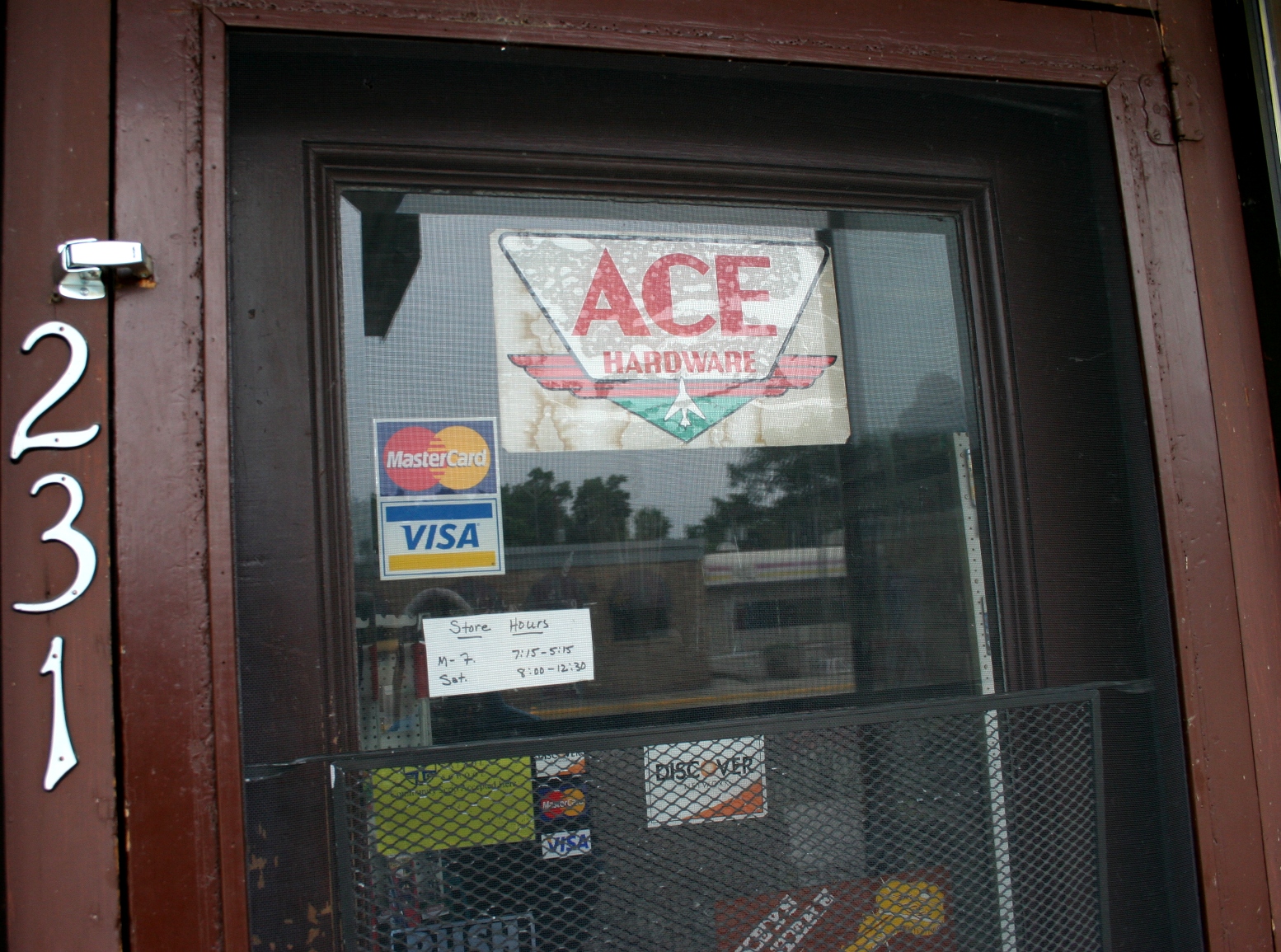
An old ACE Hardware sign decorates the front door where a handwritten sign is posted listing store hours.

I could almost hear the vintage screen door slam shut behind me as I stood outside the closed hardware store, hands cupped around my eyes, peering inside. It was late Saturday afternoon and I was hours too late to step inside Mutch Hardware, much to my disappointment.

But that didn’t stop a flood of memories from washing over me. Memories of going to town with my dad, stopping at Joe Engel’s Hardware store on Vesta’s main street to pick up a few bolts or maybe a belt or something else for the farm.

My siblings and I had another reason for hitching a ride to the southwestern Minnesota hardware store with our dad. Joe Engel’s supplied our ammo—coiled rolls of red-perforated paper pocked with gun powder for our toy cap guns. This was the 1960s, and even though not politically-correct today, an era of playing “Cowboys and Indians.” I remember those days with a depth of fondness that I doubt today’s tech-oriented kids will ever experience.

I would like to take each of them inside a business like Mutch Hardware, where I expect helpful, personal service, care and friendliness accompany each purchase. Places like this seem rare in our fast-paced world of big box stores run by corporations in far away cities. Few mom-and-pop stores can survive in today’s economy. That is reality.

I’m not a prima donna; I shop chain stores as much as anyone. Yet when I see a business such as Mutch Northside Hardware in North Mankato, I take notice. I appreciate the hardworking men and women who, as independent business owners, still offer us a shopping option.

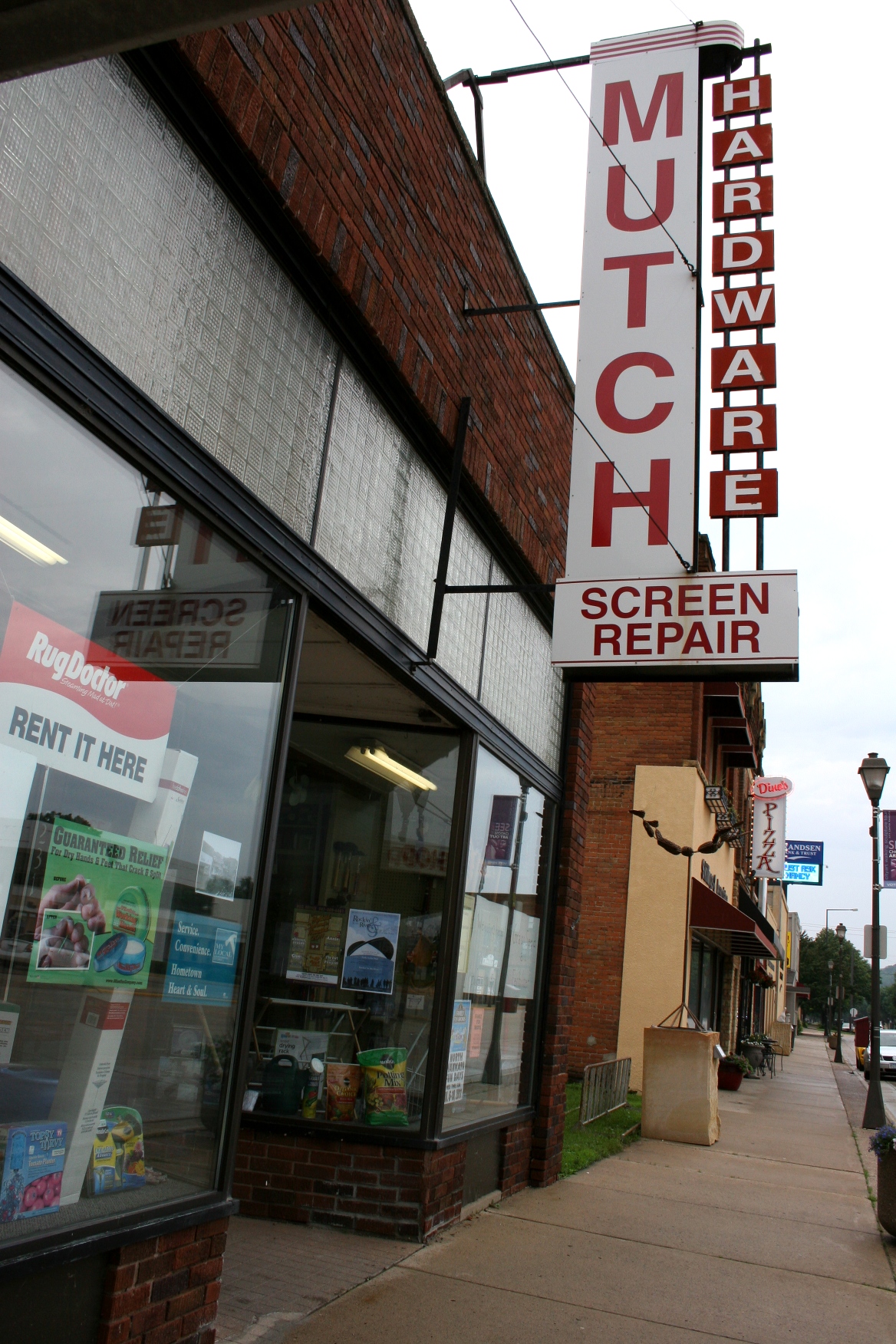
Outside Mutch Northside Hardware, a place reminiscent of bygone days.

DOES AN OLD-FASHIONED mom-and-pop type business like Mutch Northside Hardware exist in your community, or do you know of one somewhere? I’d like to hear. Tell me about it by submitting a comment.

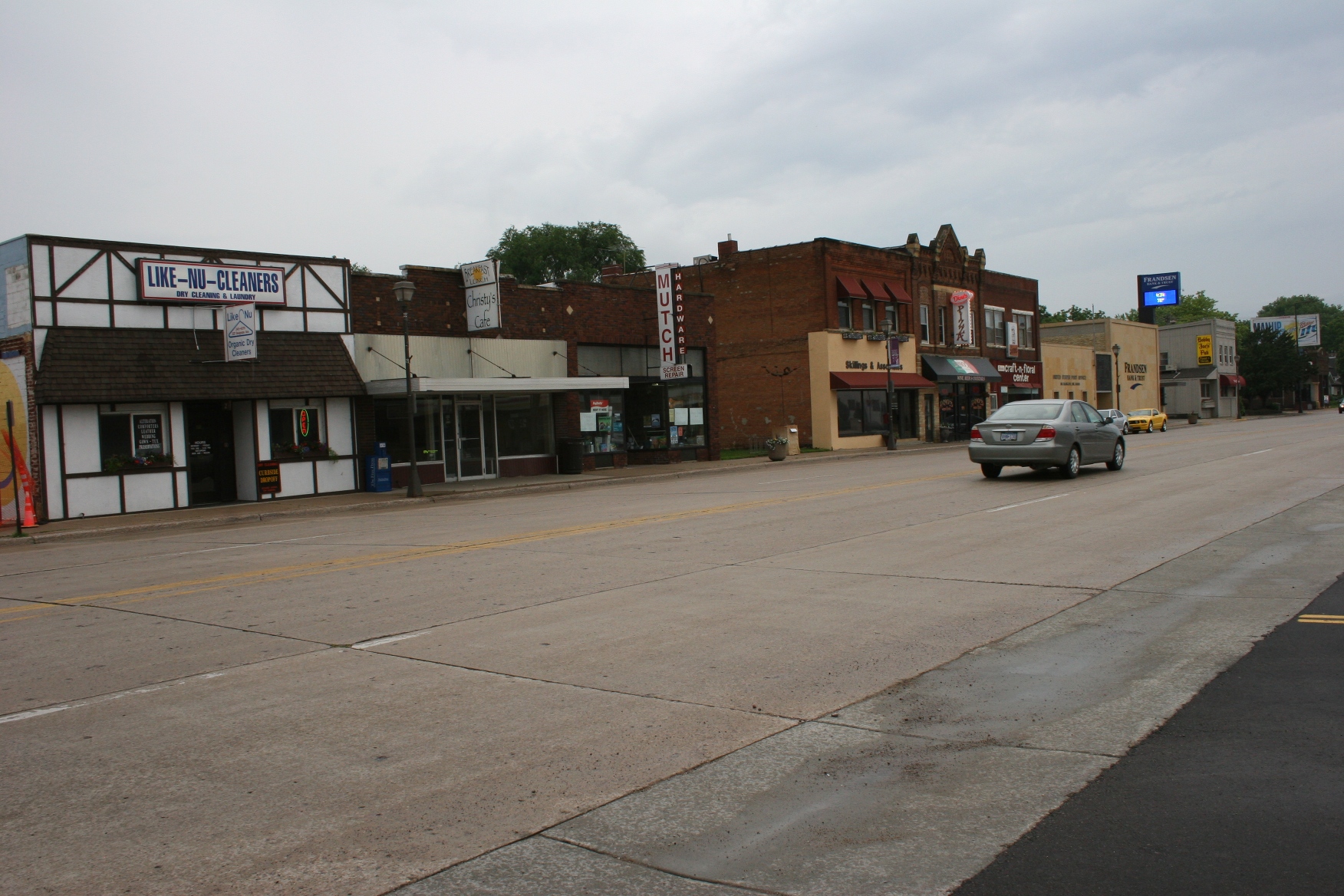
This image of a section of Belgrade Avenue in North Mankato shows the following businesses, from left: Like-Nu-Cleaners, Christy's Cafe, Mutch Northside Hardware, Skillings & Associates, Dino's Gourmet Pizzeria, Craft-n-Floral Center, the U.S. Post Office, Frandsen Bank & Trust and Bobby Joe's Pub.

© Copyright 2011 Audrey Kletscher Helbling


You could be a model, James June 13, 2011

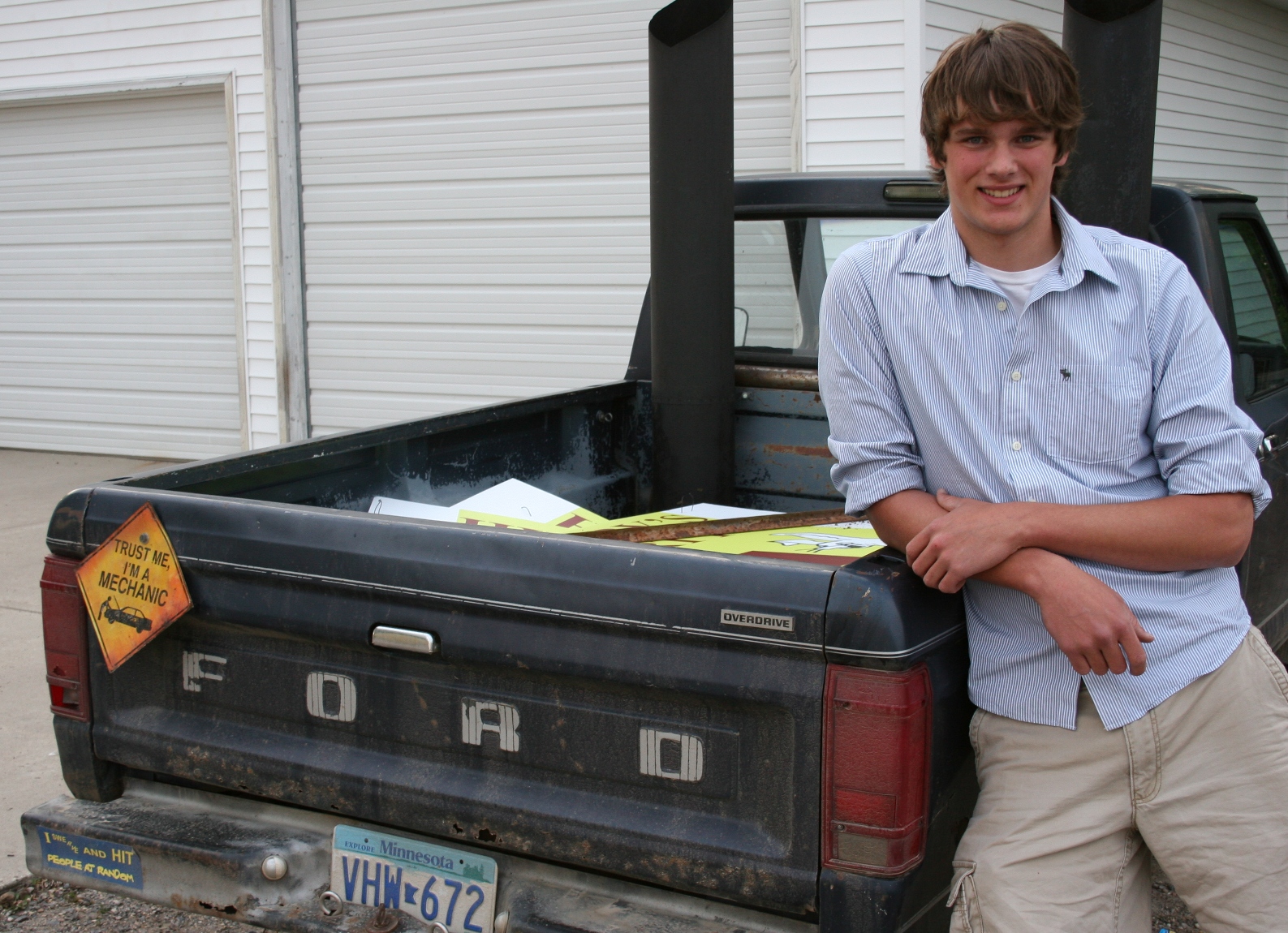
James and his Ford Ranger pick-up truck.

“JAMES, HAS ANYONE ever told you that you could be a model?” I asked as he leaned against the bed of his Ford Ranger pick-up truck for a quick photo shoot by me.

He didn’t really answer, which I’m to take as a “yes.”

With his all-American boy good looks, this fresh-faced Minnesota farm kid (adult, actually) could easily grace the pages of a fashion magazine, a print ad or even a television commercial.

His personality matches his boy-next-door appearance. James, not Jim or Jimmy, is down-to-earth, quiet, maybe even shy, with a playful smile and spirit.

Not that I know James all that well. He’s my niece Hillary’s boyfriend. But since my niece lives 2 ½ hours away, I haven’t spent much time with her significant other.

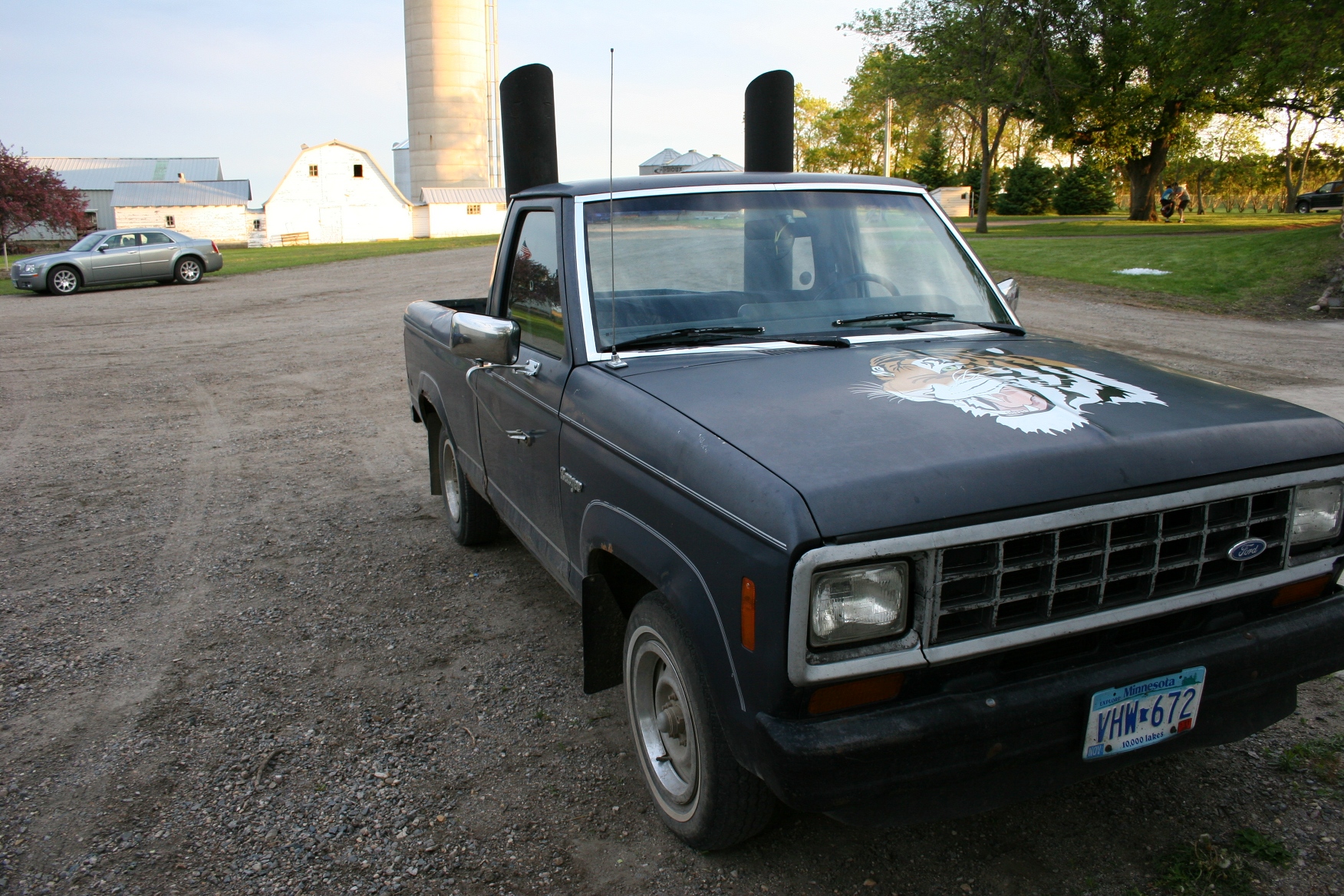
It was James’ Ford Ranger that caught my eye as he came barreling onto the home place (aka the farm where I grew up) during Hillary’s recent high school graduation reception. You can’t miss his truck with the stove-pipe-size exhaust pipes jutting out of the pick-up bed.

Impressed with the duo stacks, I moved in closer to check out James’ wheels. And then I discovered the redneck streak in this seemingly demure South Dakota State University agricultural engineering student.

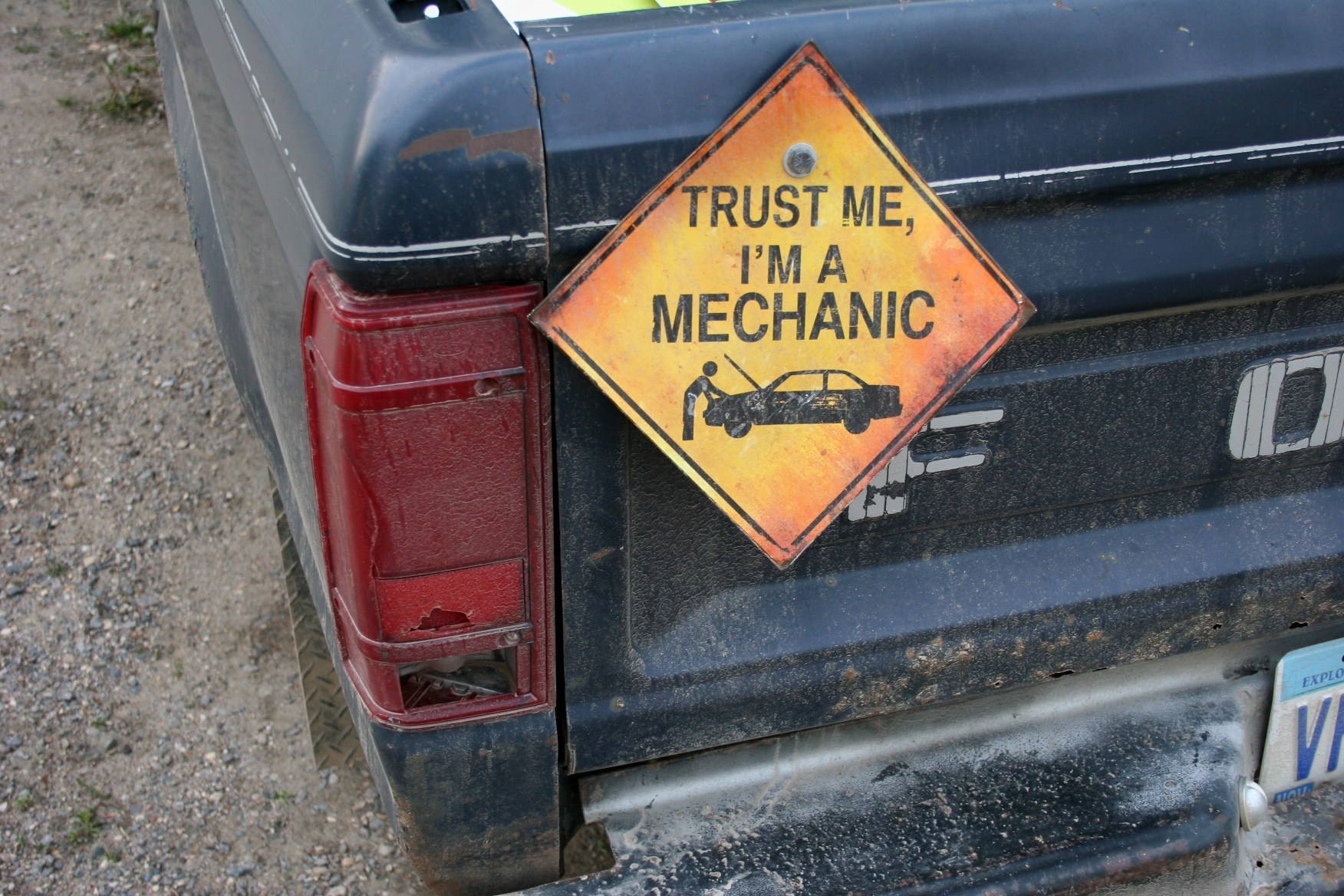
Check out these bumper stickers:

As good an explanation as any for a dirty vehicle.

This bumper sticker doesn't reflect on James' driving skills, only his sense of humor. Don't take the message seriously, please.

Farm youth like James are typically quite adept at all things mechanical.

What do these tell you about James? Obviously he possesses a sense of humor. He’s also capable of keeping a vehicle running and confident enough to tell you.

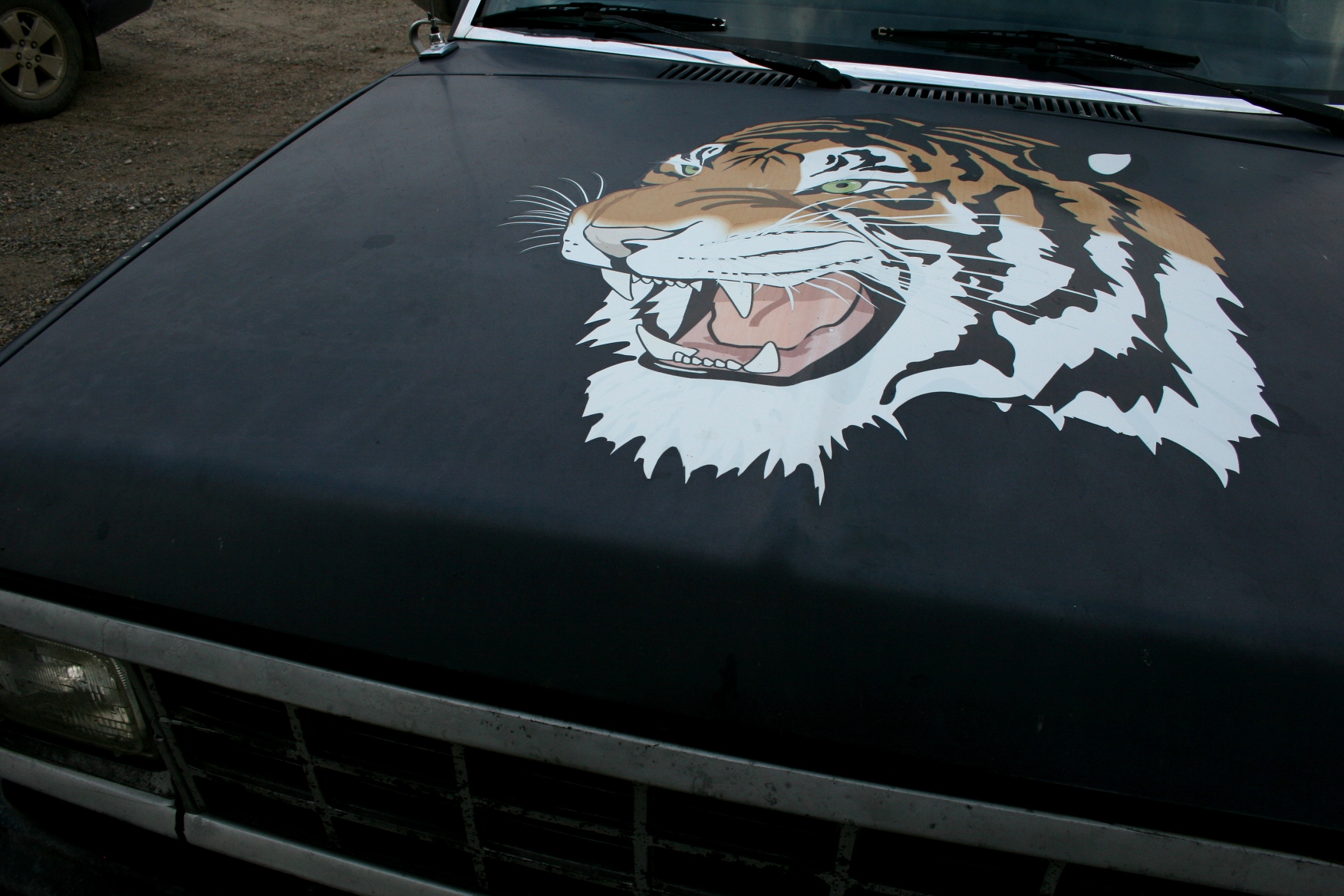
But, wait, there’s more. His pick-up hood sports a tiger head, as in the mascot of Marshall High School, James’ alma mater. James also owns school spirit.

The tiger, Marshall High's mascot, defines the pick-up hood.

I really don’t have anything more to say about this southwestern Minnesota farm boy or his wheels, except to re-emphasize that I think James could be a model, maybe for Ford or John Deere. I wouldn’t want him to get into anything too Californian or New Yorkish so as to change his appealing rural charm.

What’s your opinion? Could/should James give modeling a shot to fund his college education? This idea is mine, not his, just to be clear.

One last shot of James' Ford Ranger pick-up truck, parked on the farm where I grew up just outside of Vesta in southwestern Minnesota.

© Copyright 2011 Audrey Kletscher Helbling


I’ve never met Garrison Keillor, but… June 8, 2011

SO, HOW WOULD YOU feel if a photo you took was incorporated into a video/slide show narrated by Garrison Keillor?

Would you slip on your red shoes, lace up the laces and dance a polka?

Since I don’t own red shoes like Keillor and I don’t polka, I enthused to my husband repeatedly about my stroke of luck. I haven’t really boasted to anyone else. We don’t do that sort of thing here in Minnesota. But, I thought maybe I could tell a few of you. A photo I shot of winter on the Minnesota prairie is part of a video/slideshow narrated by our state’s most famous storyteller.

Now, how does this happen to a blogger like me who happily blogs along each day with words and photos from Minnesota, without a thought, not a single thought, that Keillor may someday come into my life. Well, I didn’t exactly meet him and I haven’t exactly spoken to him, but…

A MONTH AGO, Chris Jones, director of the Center for Educational Technologies at Gordon College in Wenham, Massachusetts, commented on my January 7, 2010, blog post, “Wind and snow equal brutal conditions on the Minnesota prairie.” He was inquiring about using my photo of winter on the prairie in a video/slideshow for retiring President R. Judson Carlberg and his wife, Jan.

Typically I do not personally respond to comments via email. I am cautious that way, protective of my email address and of anybody out there who may not have my best interests in mind. So I didn’t, just like that, snap your fingers, fire off a response to Jones. First I sleuthed. Honestly, I had never heard of Gordon College and I sure can’t spell Massachusetts.

Here’s what I learned from the college’s website: “Gordon College in Wenham, Massachusetts, is among the top Christian colleges in the nation and the only nondenominational Christian college in New England. Gordon is committed to excellence in liberal arts education, spiritual development and academic freedom informed by a framework of faith.”

I am Lutheran and that all sounded conservative enough for me.

So I emailed Jones, with several questions. You really didn’t expect me to not have questions, did you? I asked Mr. Gordon College guy: “Could you explain to me the nature of this video, which photo you are interested in using and where this video will be shown?”

That’s when he dropped Garrison Keillor’s name as the video/slideshow narrator. Sure. Yeah. Use my photo. Wherever. Whenever. Fine with me. Credit me and Minnesota Prairie Roots, send me a link to the completed video and allow me to blog about this and we’ve got a deal.

And so we did. Have a deal. After I promised not to publicly share the video with you. Sorry, I wish I could because it’s an entertaining media presentation, but I gave my word.

I also gave my word that I would make it clear to you, dear readers, that Garrison Keillor doesn’t just go around every day narrating surprise media presentations for college presidents’ retirement parties.

He met Jud and Jan Carlberg on a cruise. They struck up a friendship and, later, when the college was planning the video/slideshow, a Gordon writer “thought boldly, imagining this as a wonderful surprise for the Carlbergs, and started making inquiries,” Paul Rogati, Gordon’s CET multimedia designer, shared in a follow-up email. “When Mr. Keillor agreed to record the narration, the script was written for his style of monologue, with a reference to the winters on the prairies of Minnesota. Your image was a perfect match.”
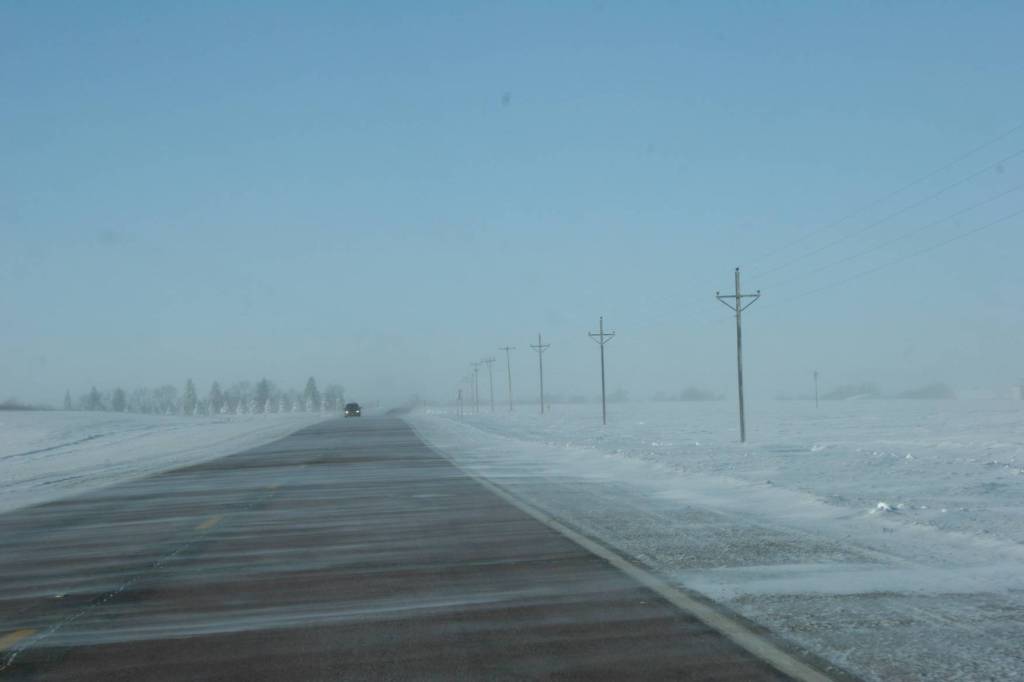
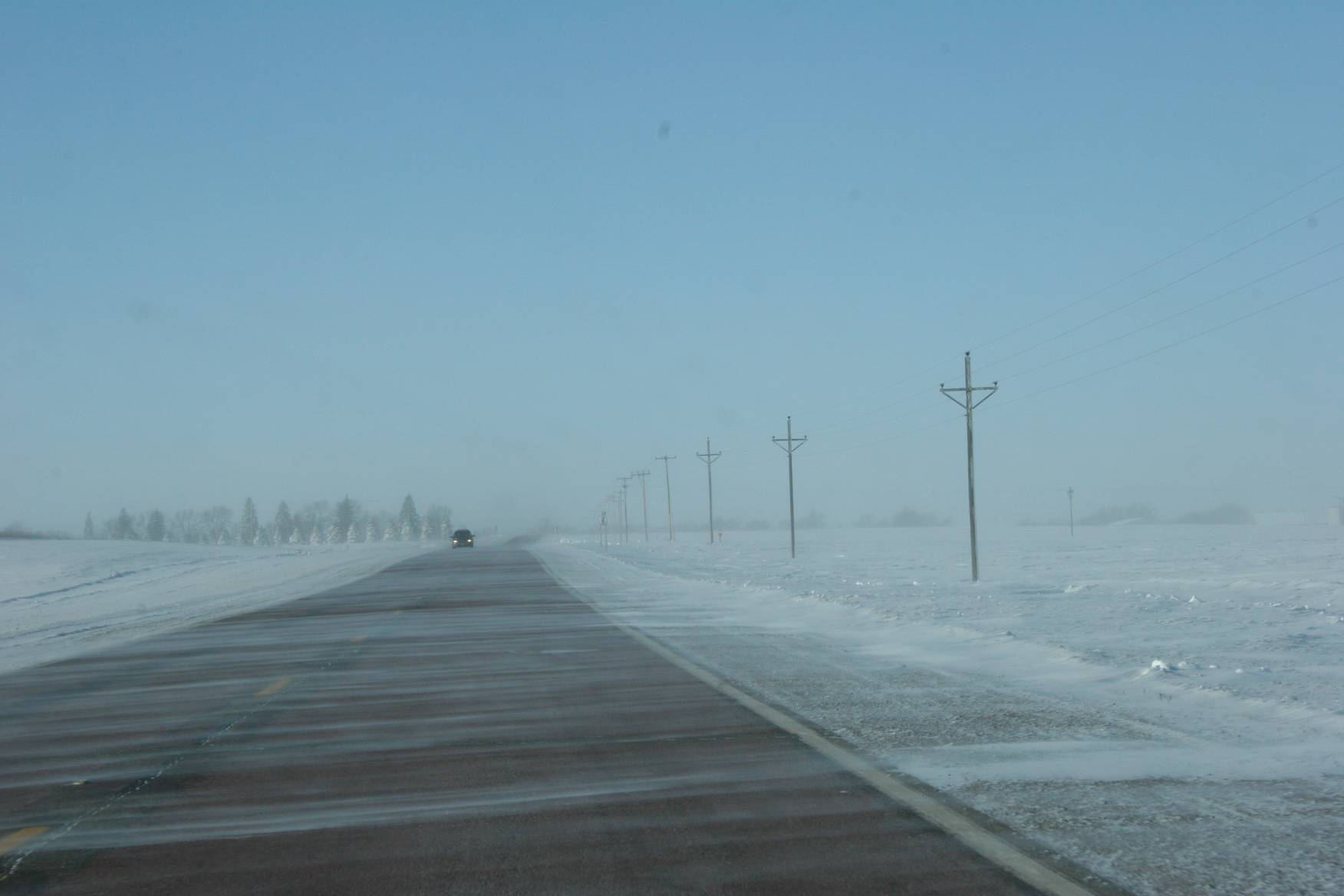
"The photograph," taken along Minnesota Highway 30 in southwestern Minnesota.

And that is how my photo taken in January 2010 along Minnesota Highway 30 in southwestern Minnesota became connected to Garrison Keillor.

My prairie picture is one of many, many, many images incorporated into this retirement tribute to a “tall Scandinavian scholar from Fall River, Massachusetts” who was inaugurated as Gordon’s seventh president “in a swirling March blizzard” in 1993.

Yes, the whole piece is pure “A Prairie Home Companion” style and it’s a pleasure listening to Keillor’s silken voice glide across the words penned by authors Jo Kadlecek and Martha Stout.

The monologue opens like Keillor’s radio show, but “on Coy Pond on the campus of Gordon College.” It is a pond which “sometimes freezes up solid enough to go ice fishing on,” Keillor professes. And “there are rumors of an ice fishing shack being built” by the retired president with more time on his hands.

Several other references are made to Minnesota in a presentation that mixes humor with factual information about the Carlbergs’ 35-year tenure at Gordon, a “college which includes Lutherans” and which offers students off-campus experiences in places like the Minnesota prairie.

Then, finally, at the end of the video, the Carlbergs are invited to “sometime come up to the prairies of Minnesota to see what winter is all about.” A snippet of my photo appears on the screen, slowly panning out to show the full winter prairie landscape frame.

I’m not sure which the Carlbergs will do first in their retirement—sneak past Gordon College security and park an ice fishing shack on Coy Pond or visit southwestern Minnesota in winter, where, no doubt, “all the women are strong, all the men are good looking and all the children are above average.”

#

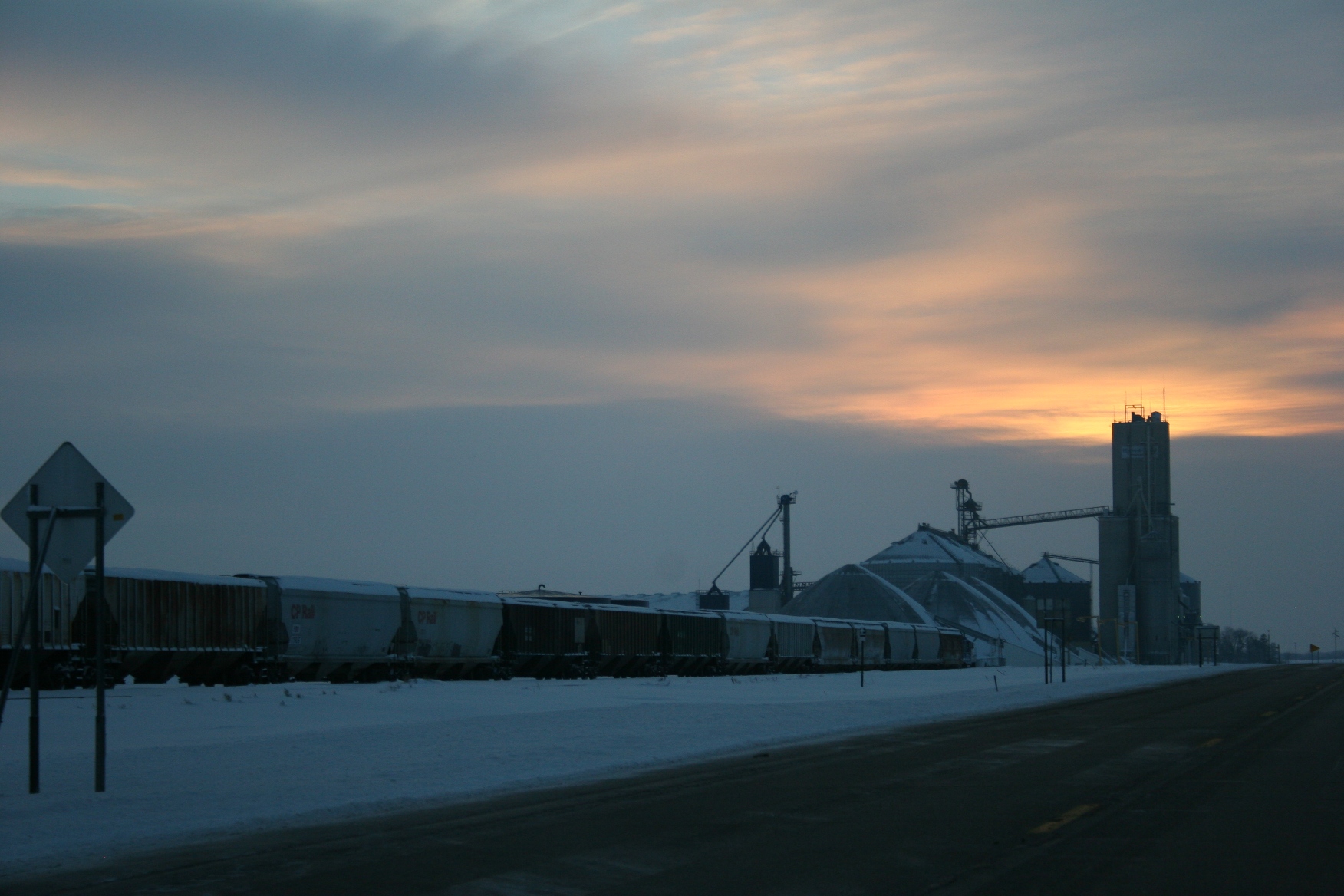
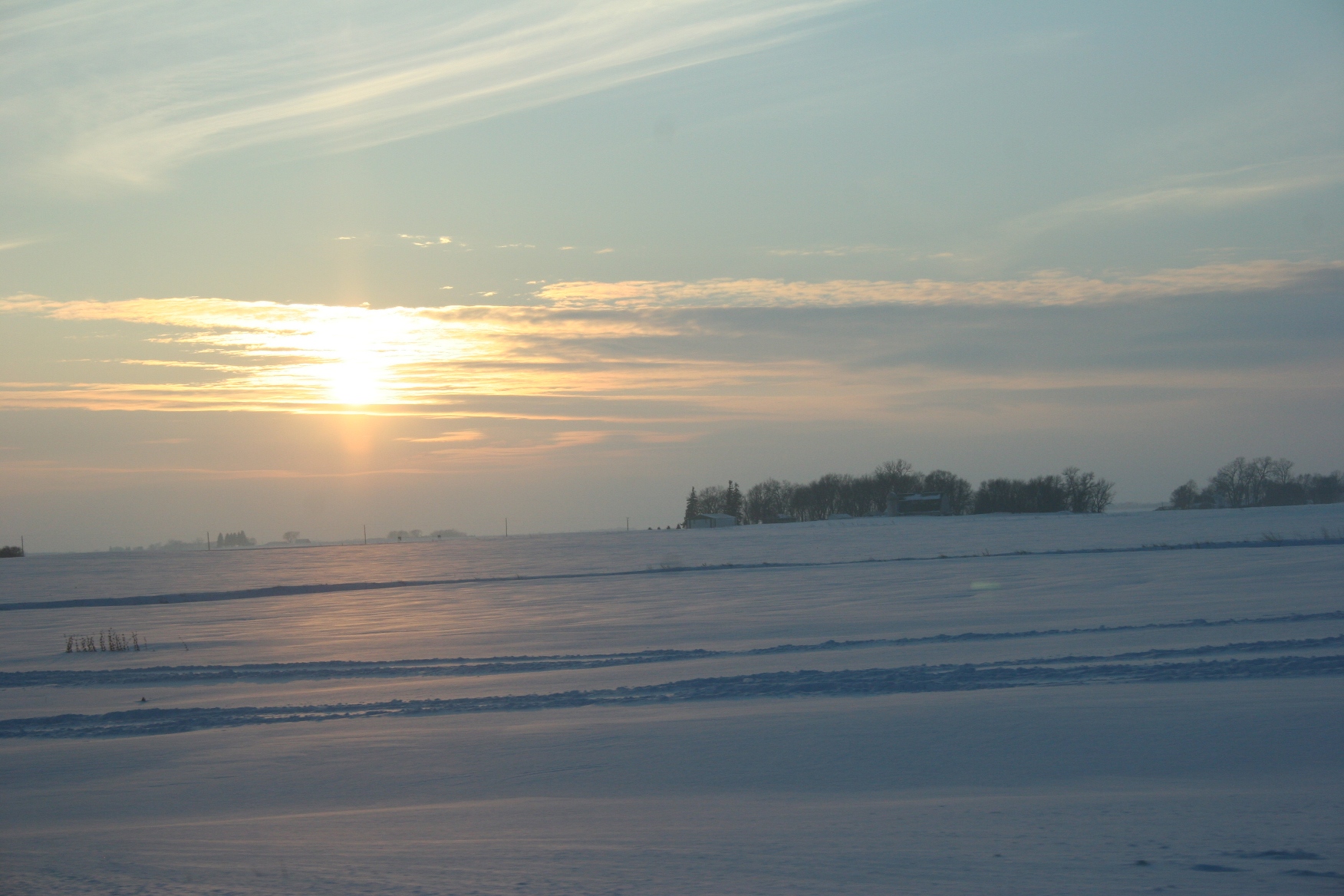
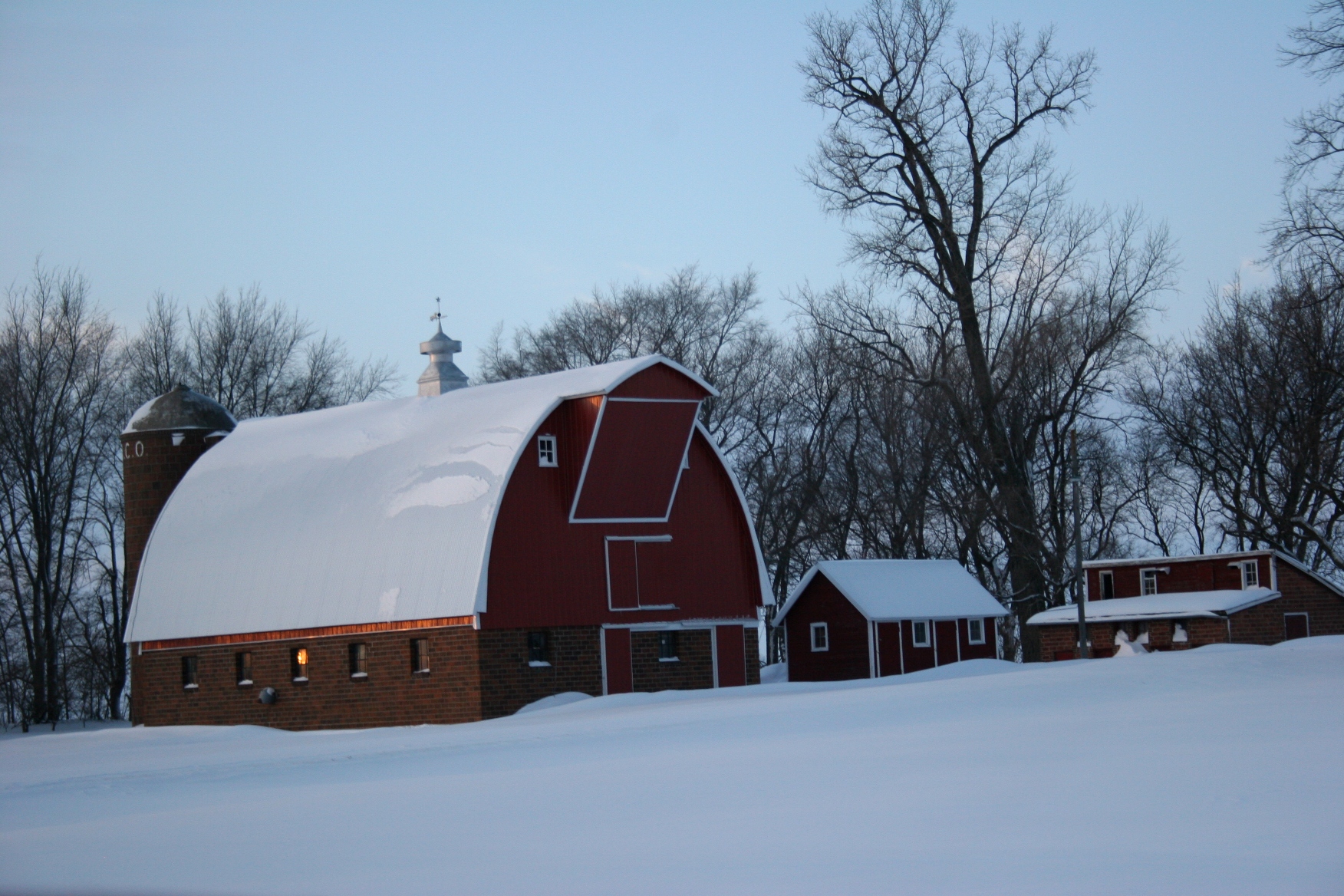
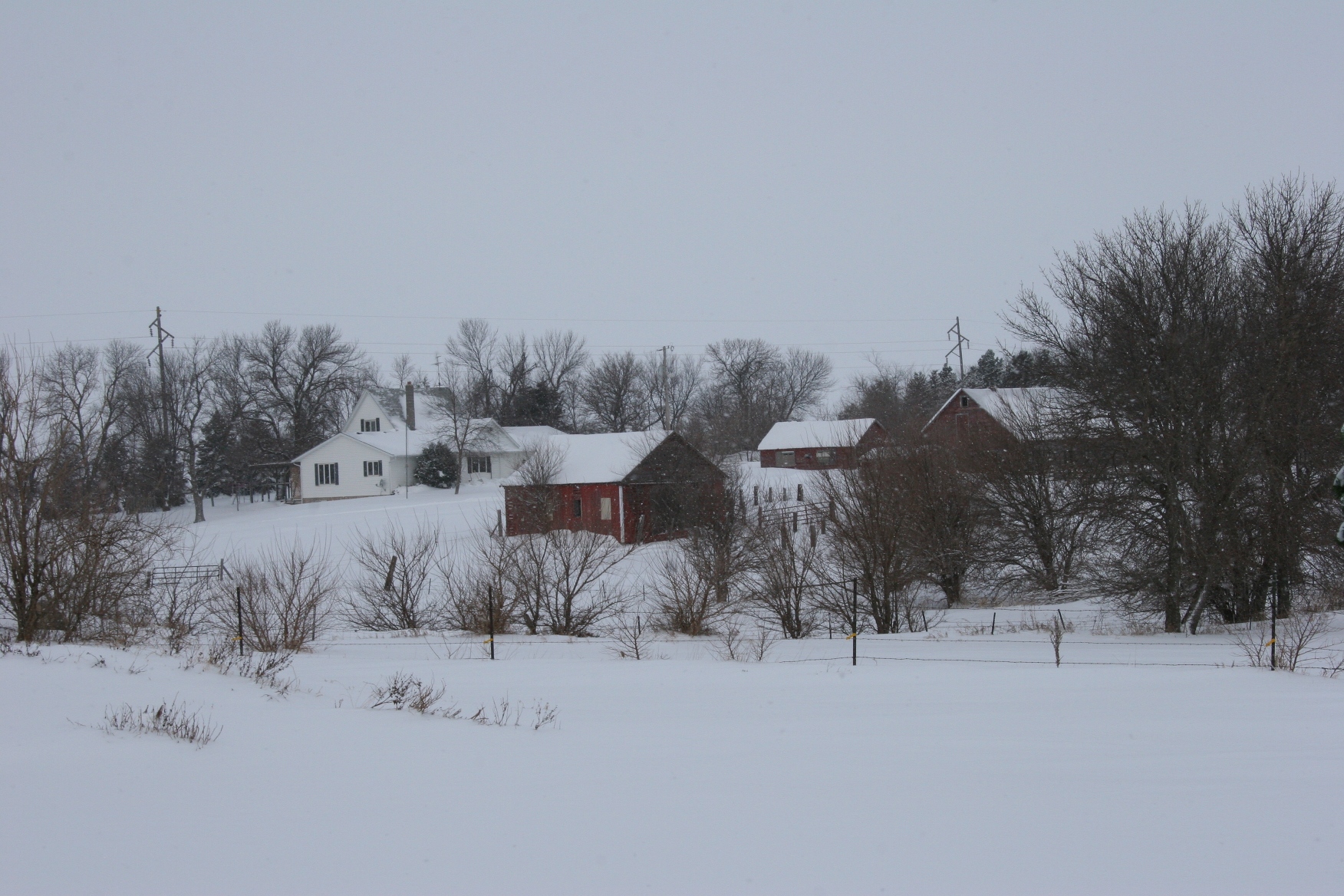
WHEN (not if) the Carlbergs travel to Minnesota in the winter, they will also see scenes like this on the southwestern Minnesota prairie:
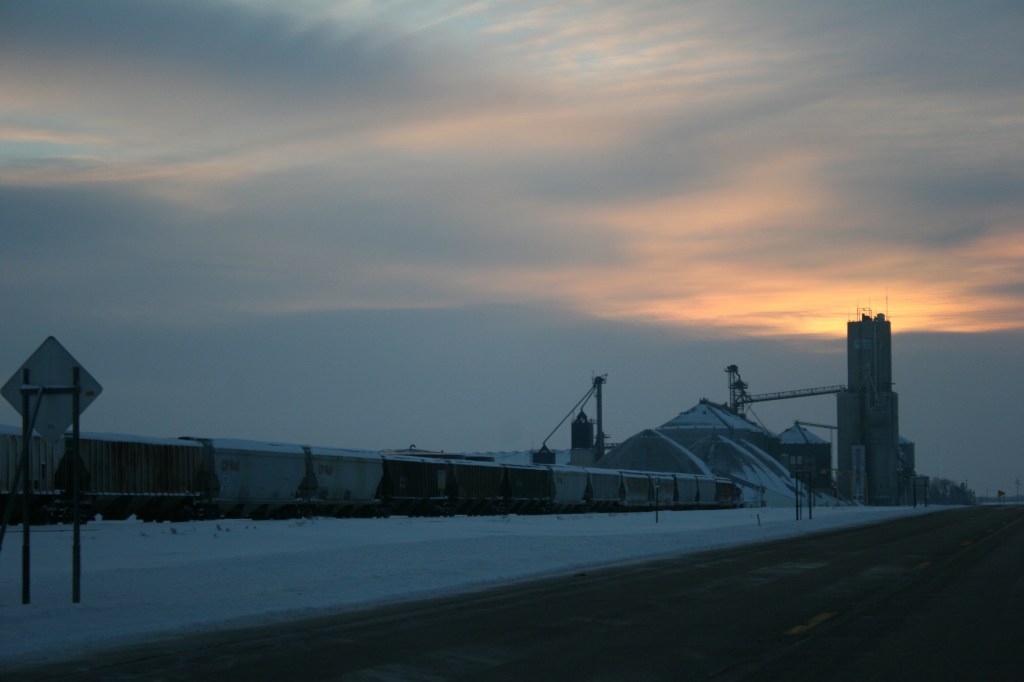
An elevator along U.S. Highway 14 in southwestern Minnesota.
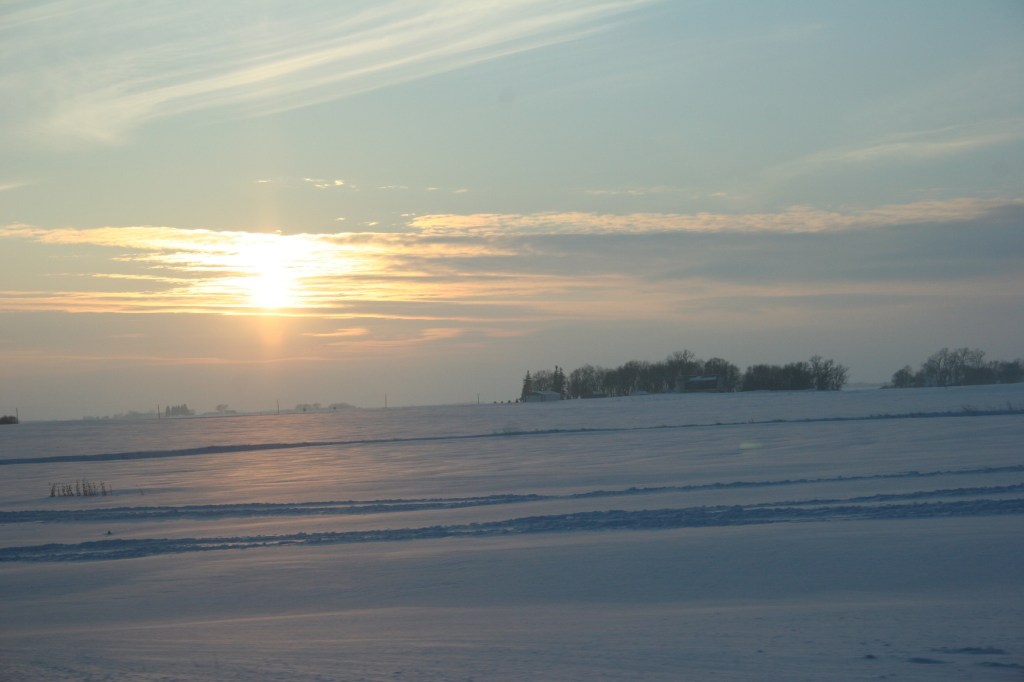
The sun begins to set on the Minnesota prairie.

Barns abound in the agricultural region of southwestern Minnesota, this one along U.S. Highway 14.

A picturesque farm site just north of Lamberton in Redwood County, Minnesota.

© Copyright 2011 Audrey Kletscher Helbling


An almost-summer evening on the farm June 1, 2011

Filed under: Uncategorized — Audrey Kletscher Helbling @ 6:47 AM
Tags: , , , , , , , , , , ,

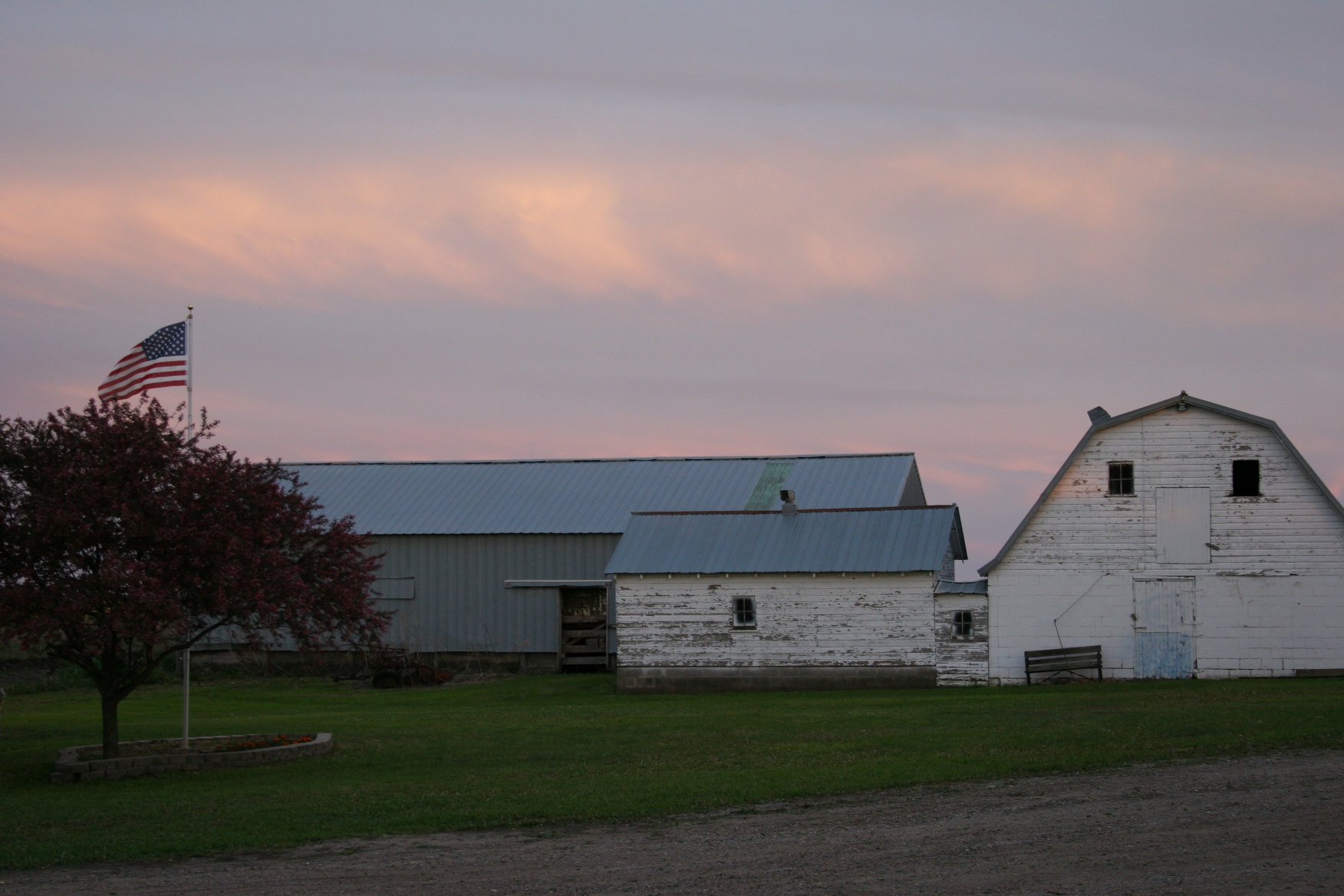
The sun sets on the farm site where I grew up in southwestern Minnesota.

OH, SWEET EVENING of almost-summer on my childhood farm. Daylight fades, washing the sky in the palest of prairie rose pink. Shadows sharpen before the last lingering rays of sunlight retire for the night.

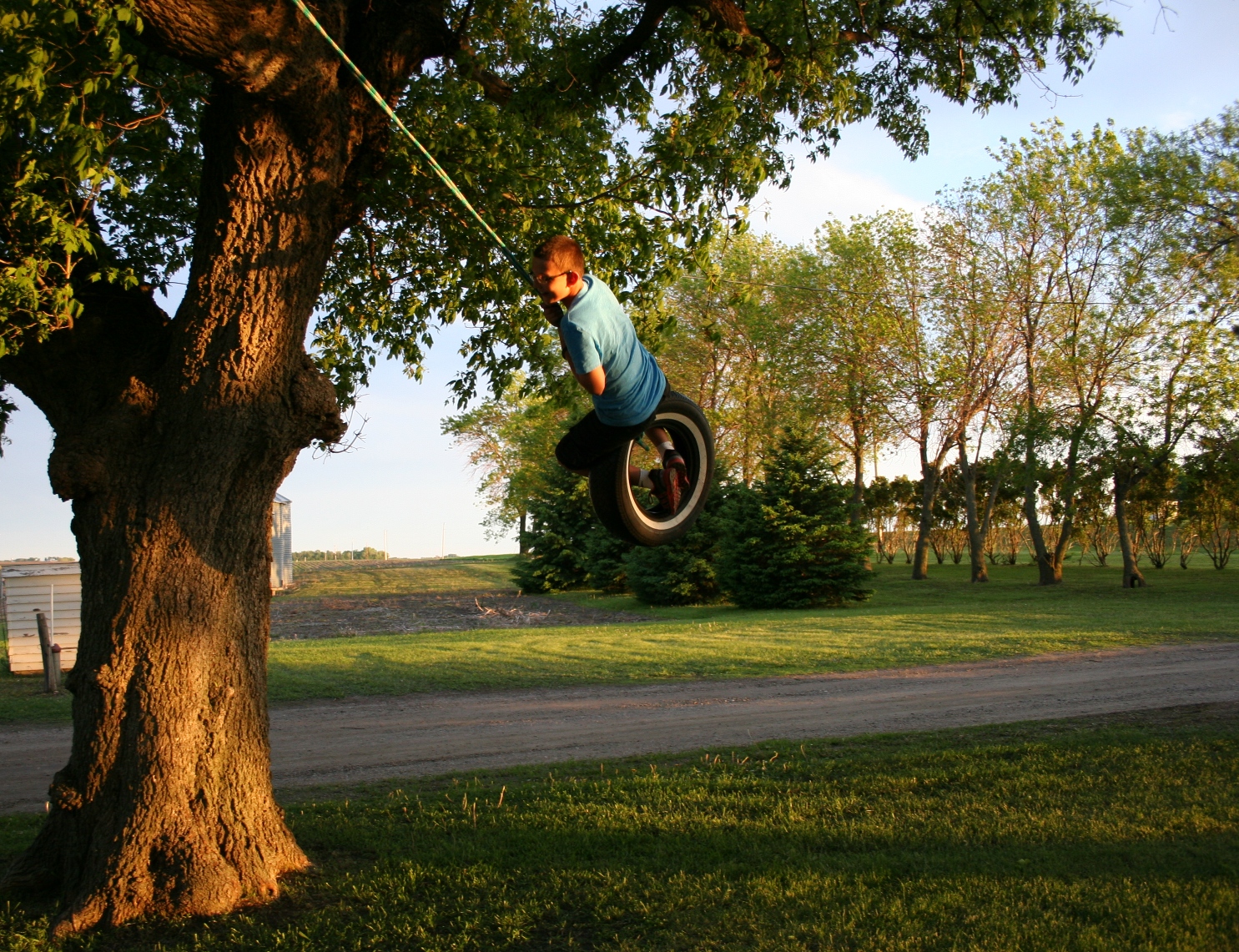
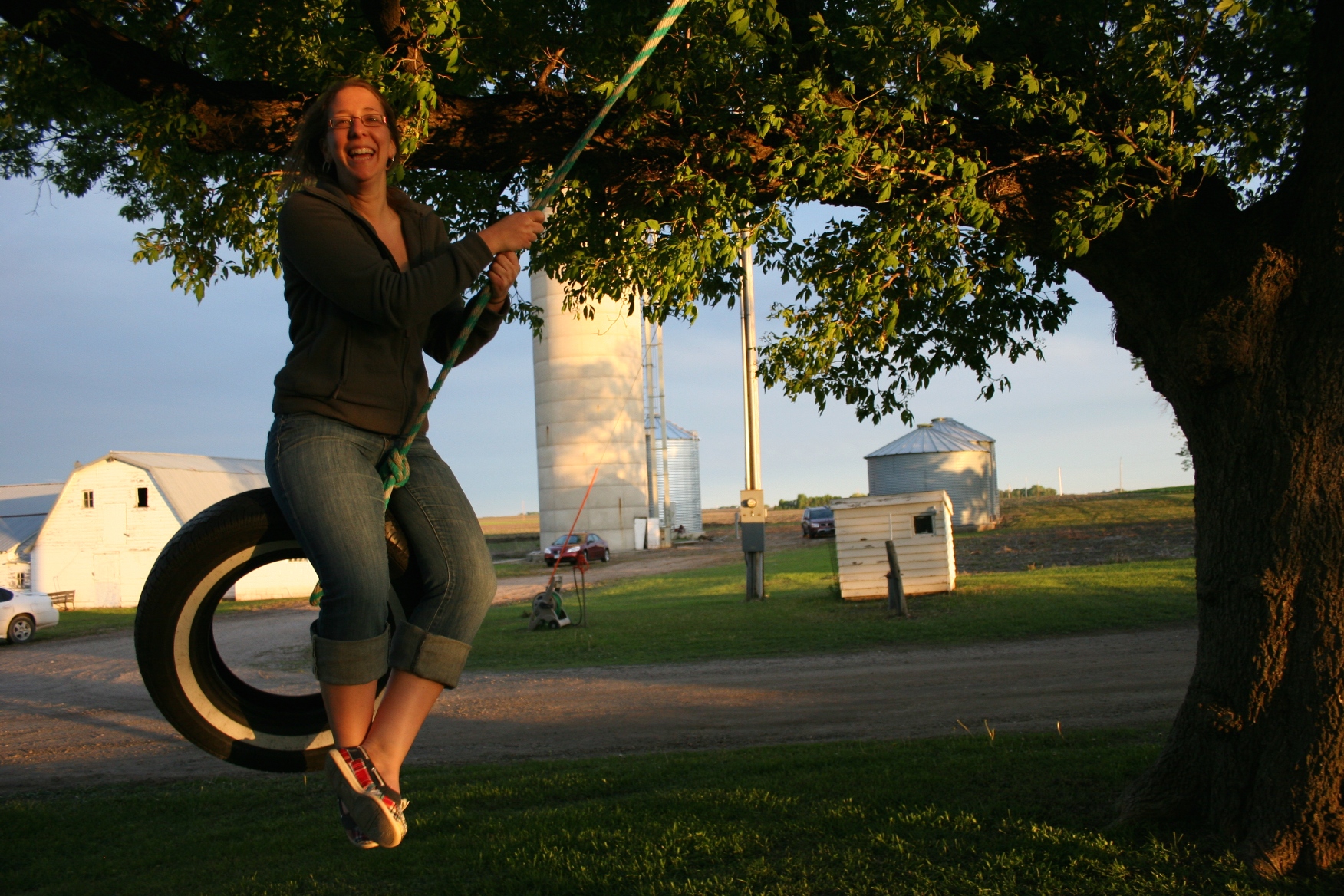
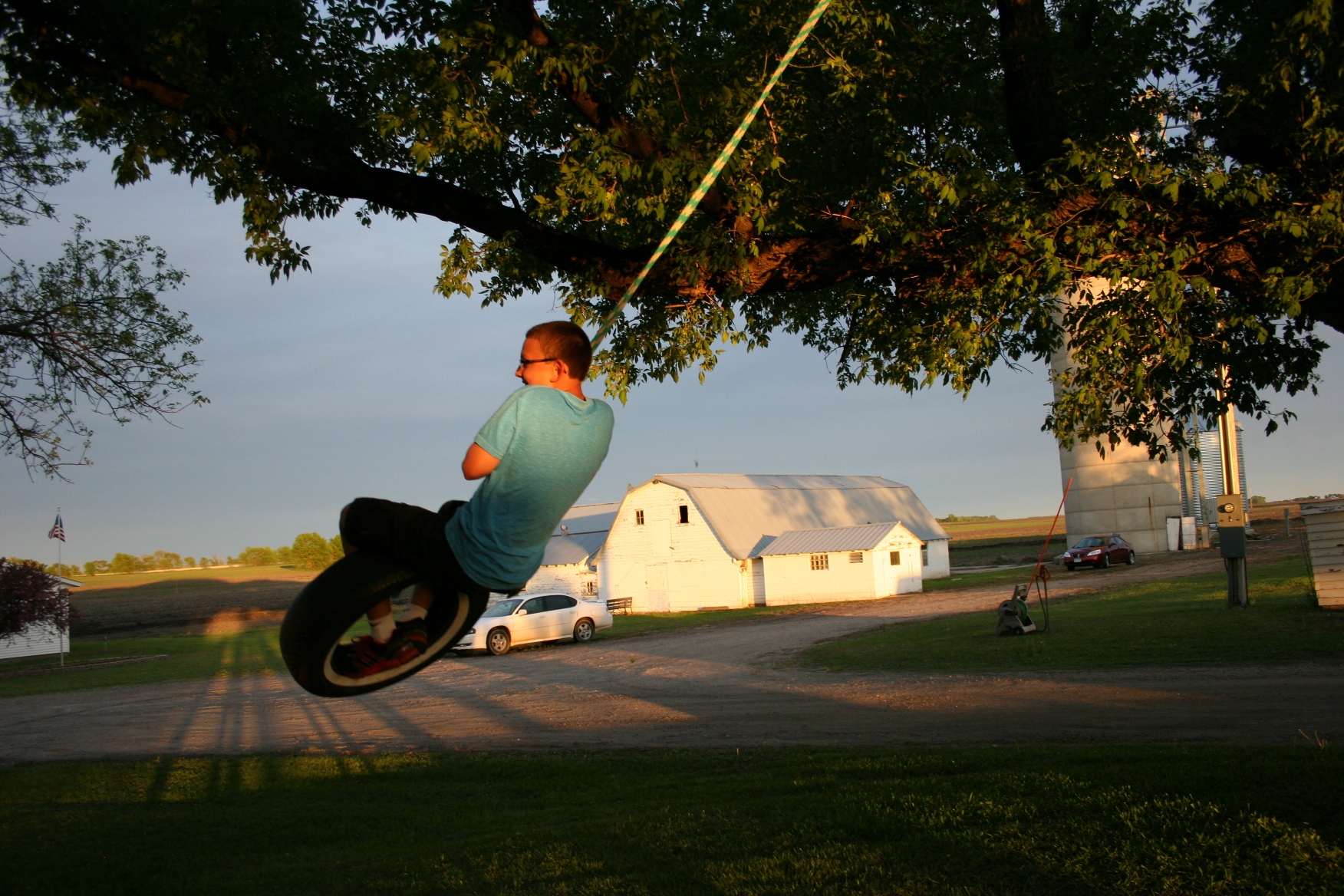
Underneath the branches of the sturdy old tree, which once sheltered a long-gone farmhouse and a tractor-tire sandbox, the cousins and siblings, ranging in age from 11 to 25, one-by-one grab double ropes, straddle a car tire and ask for a push.

My 11-year-old nephew and a tire swing...

And then they are swinging through the air, spinning nearly out of control, dodging danger in a tree trunk, wisps of hair flying, smiles as wide as the prairie sky, until, finally, they plead for someone, anyone, to stop the dizzy-inducing carnival ride.

My oldest daughter...

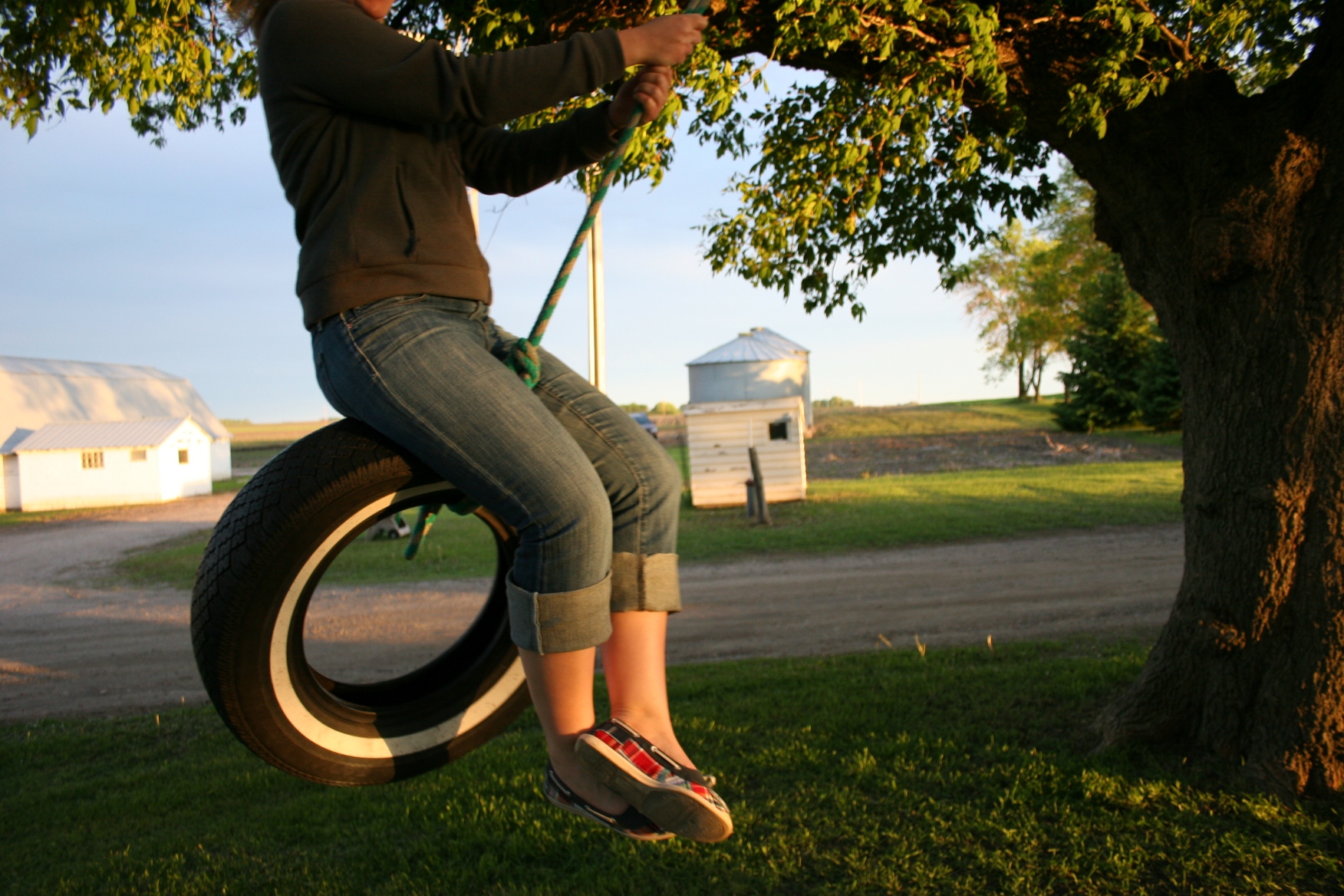
...discovers joy on a tire swing...

...far from her big city home, in the place she calls "the middle of nowhere..."

...and sometimes "nowhere" can be as much fun as Minneapolis on an almost-summer evening.

Oh, sweet evening of almost-summer on the farm, when I grip my camera, dodge the swaying tire to capture the moments, to vicariously relive the exuberance of tipping my head back, catching the wind as I ride the tire swing. I feel the twirling, dizzy oblivion through the lens of my camera, wishing I could grasp the ropes, straddle the tire, stretch my toes heavenward and tickle the belly of the sky.

© Copyright 2011 Audrey Kletscher Helbling
 

The veterans of Vesta May 30, 2011

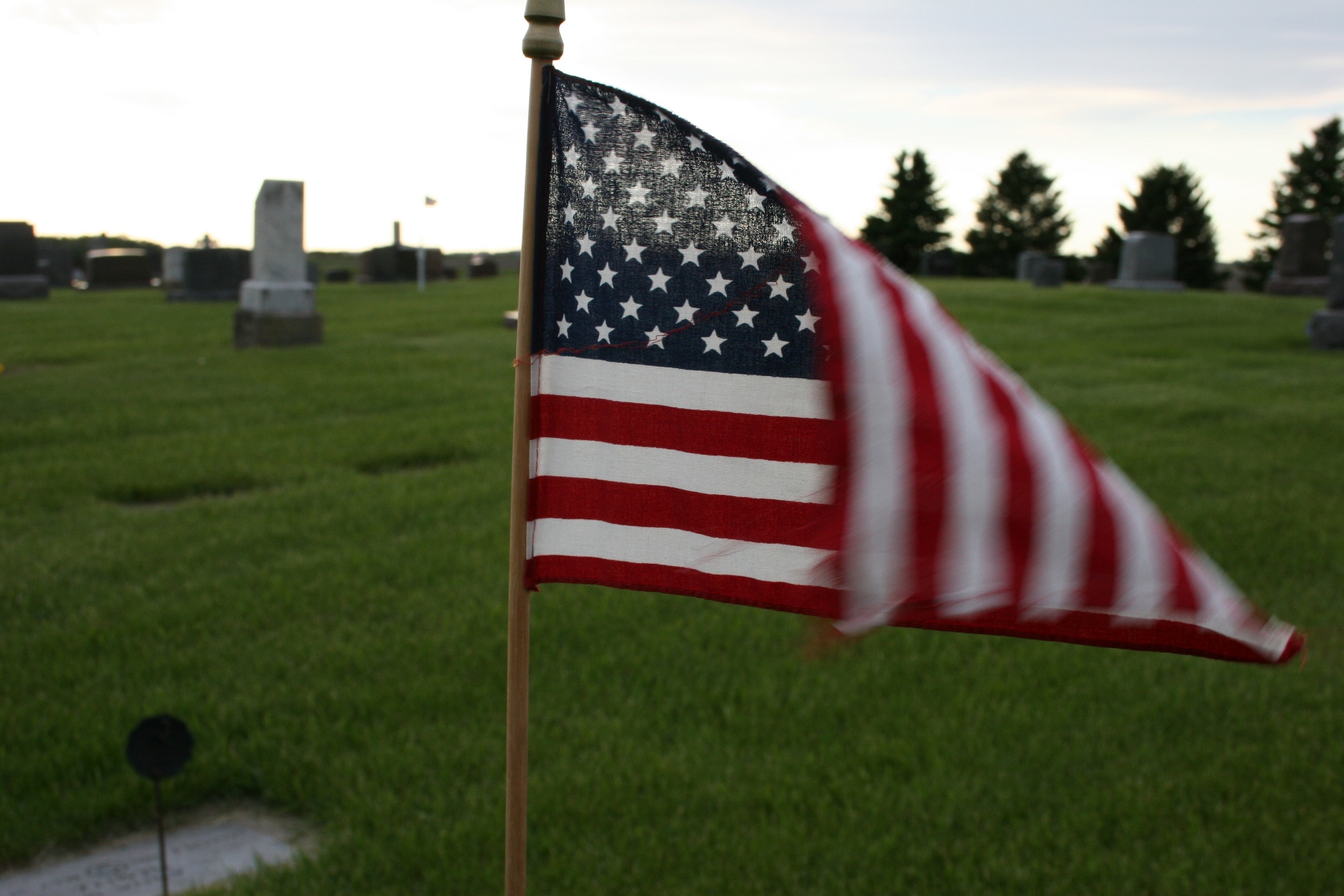
A flag placed on a veteran's grave at the Vesta Cemetery in southwestern Minnesota.

EARTH MEETS SKY HERE.

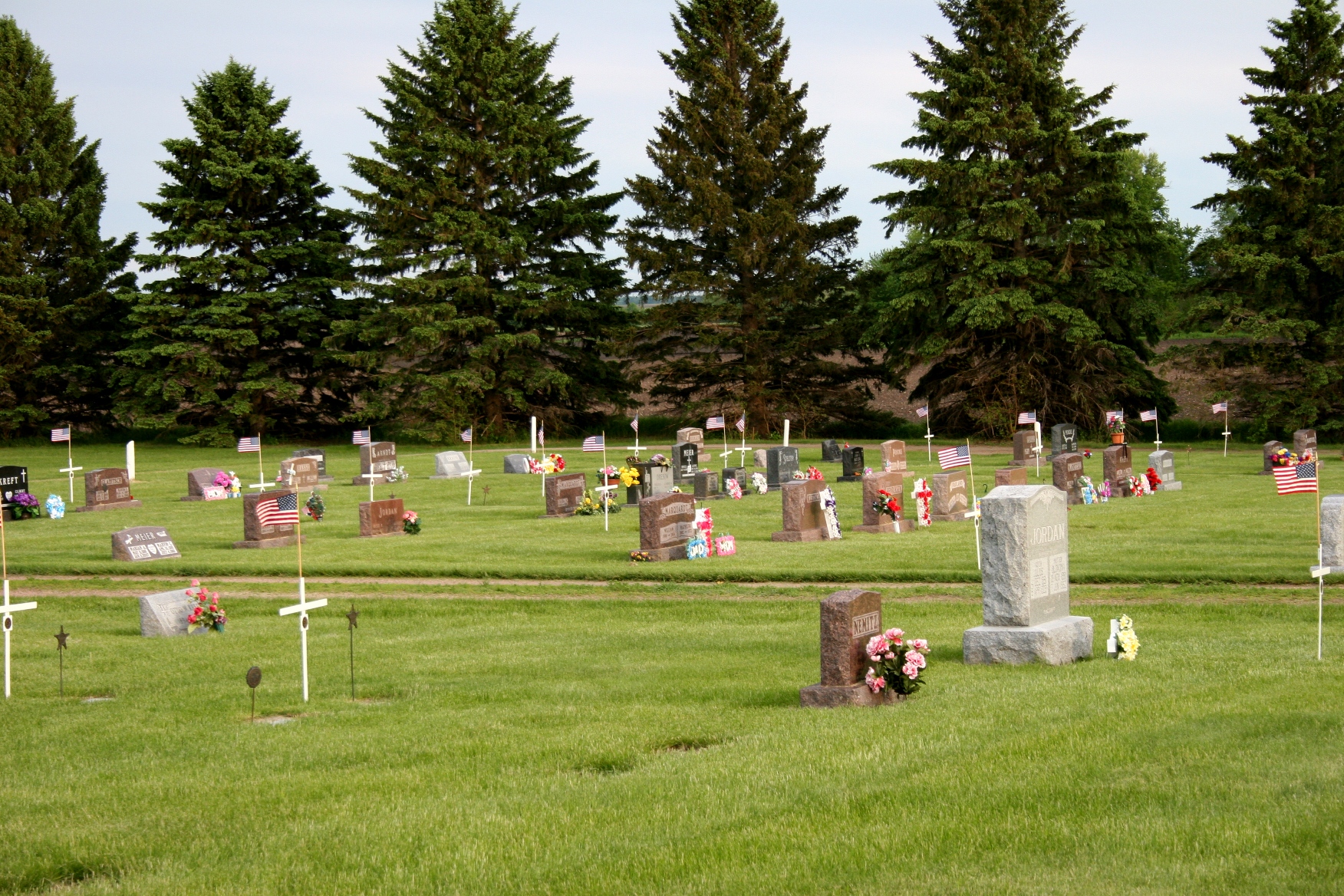
On this Memorial Day weekend, I have come to this hilltop cemetery outside of my hometown of Vesta in southwestern Minnesota to remember.

I walk the rows, between the tombstones, lean in close, read the names, memories only a thought away.

My focus is on my father and the other veterans buried here whose names I know, whose stories of war I will never fully know.

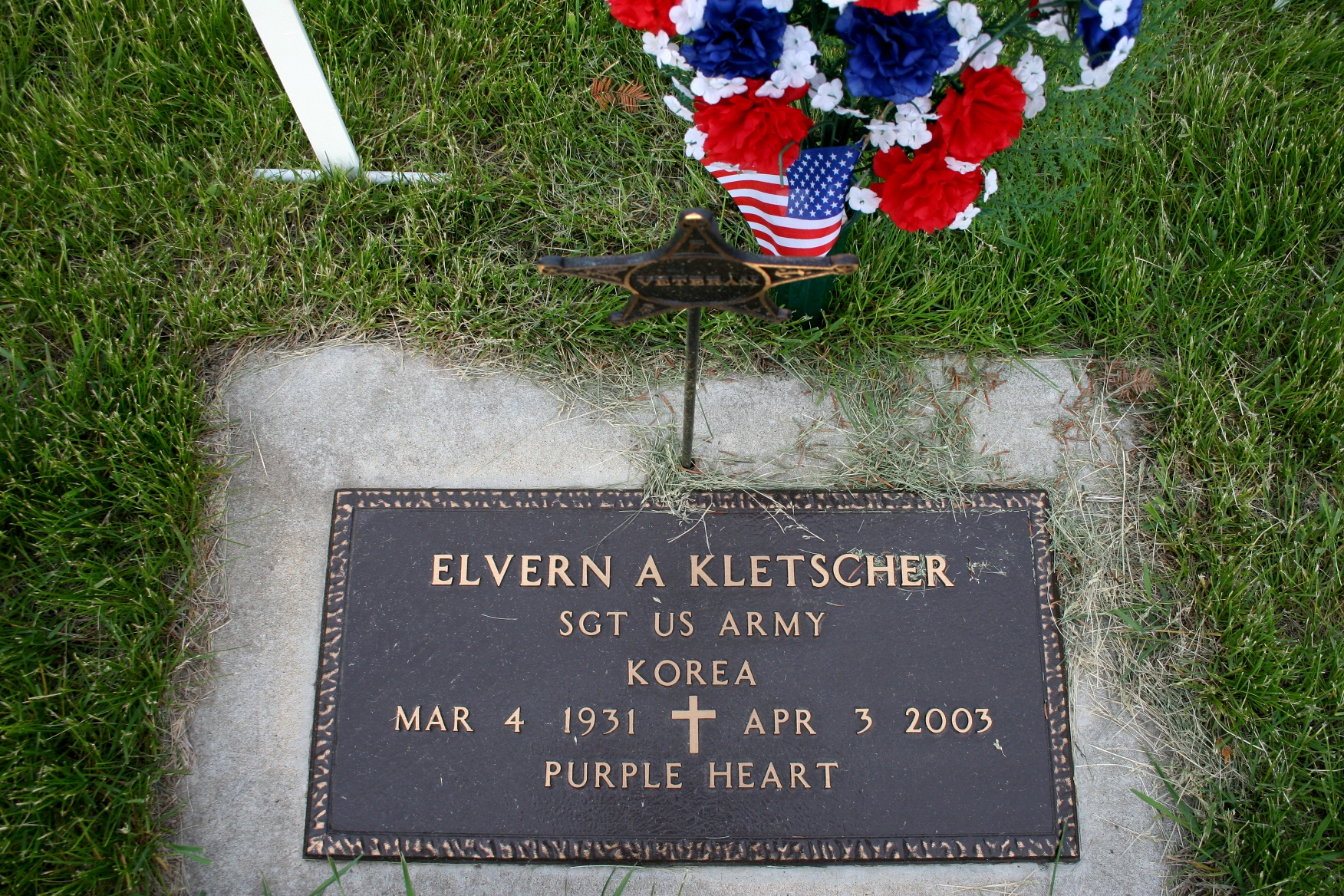
An in-ground marker honors my father, Elvern Kletscher, a Korean War veteran and recipient of the Purple Heart for wounds he suffered at Heartbreak Ridge in Korea.

How did they feel leaving family and farm? Were they scared? Were they honored to serve their country? Did they yearn for home as they shouldered their weapons? Did they leave as boys, come home as men? Were they scarred by war, forever changed?

I wondered as strong prairie winds whipped flags attached to white wooden crosses. So many flags. So many graves of men who’ve served.

If only I’d asked them to tell me their stories, these men whom I’d never thought of as soldiers, until I saw their graves marked by crosses and stars and American flags.

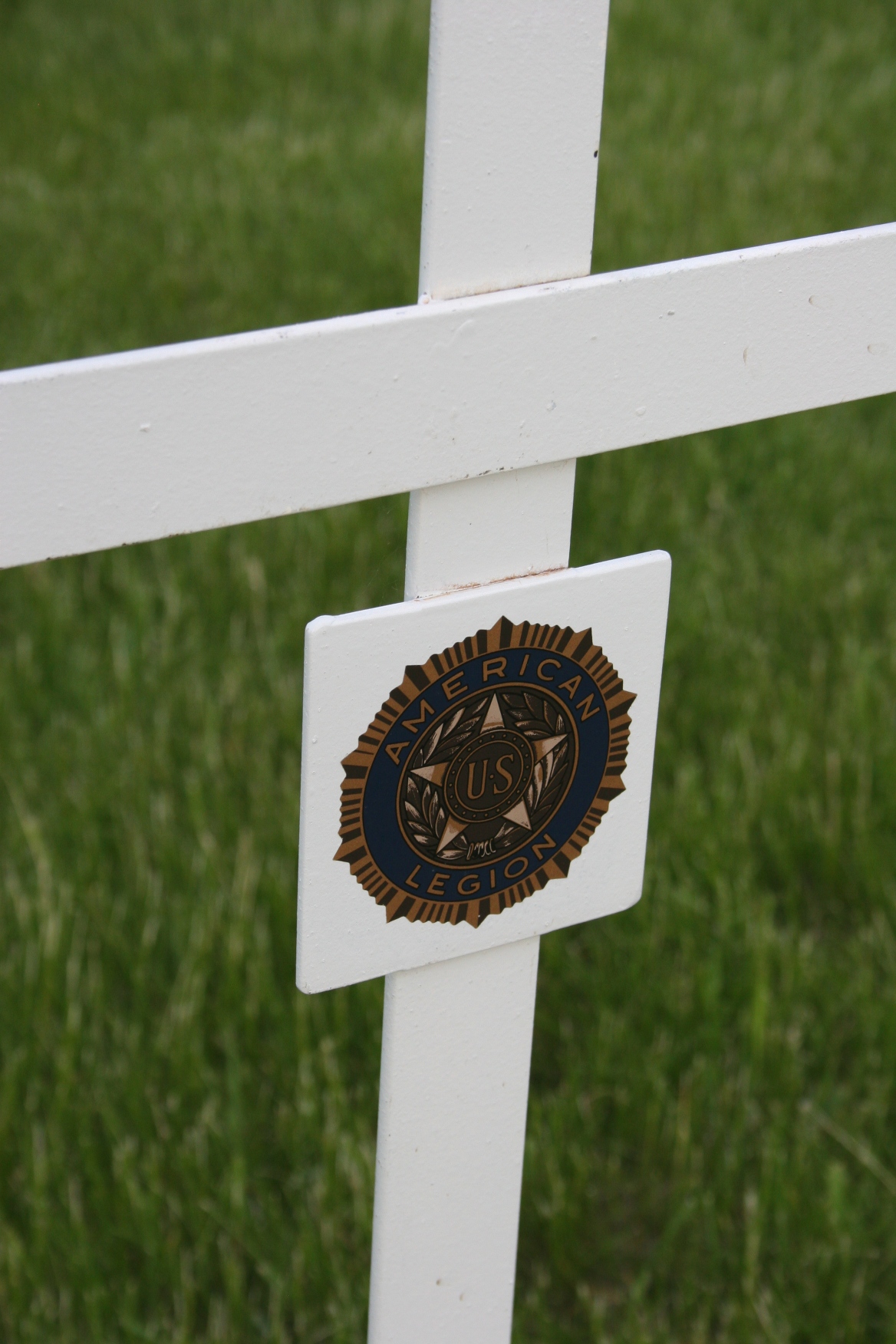
The local American Legion marks veterans' graves with white crosses.

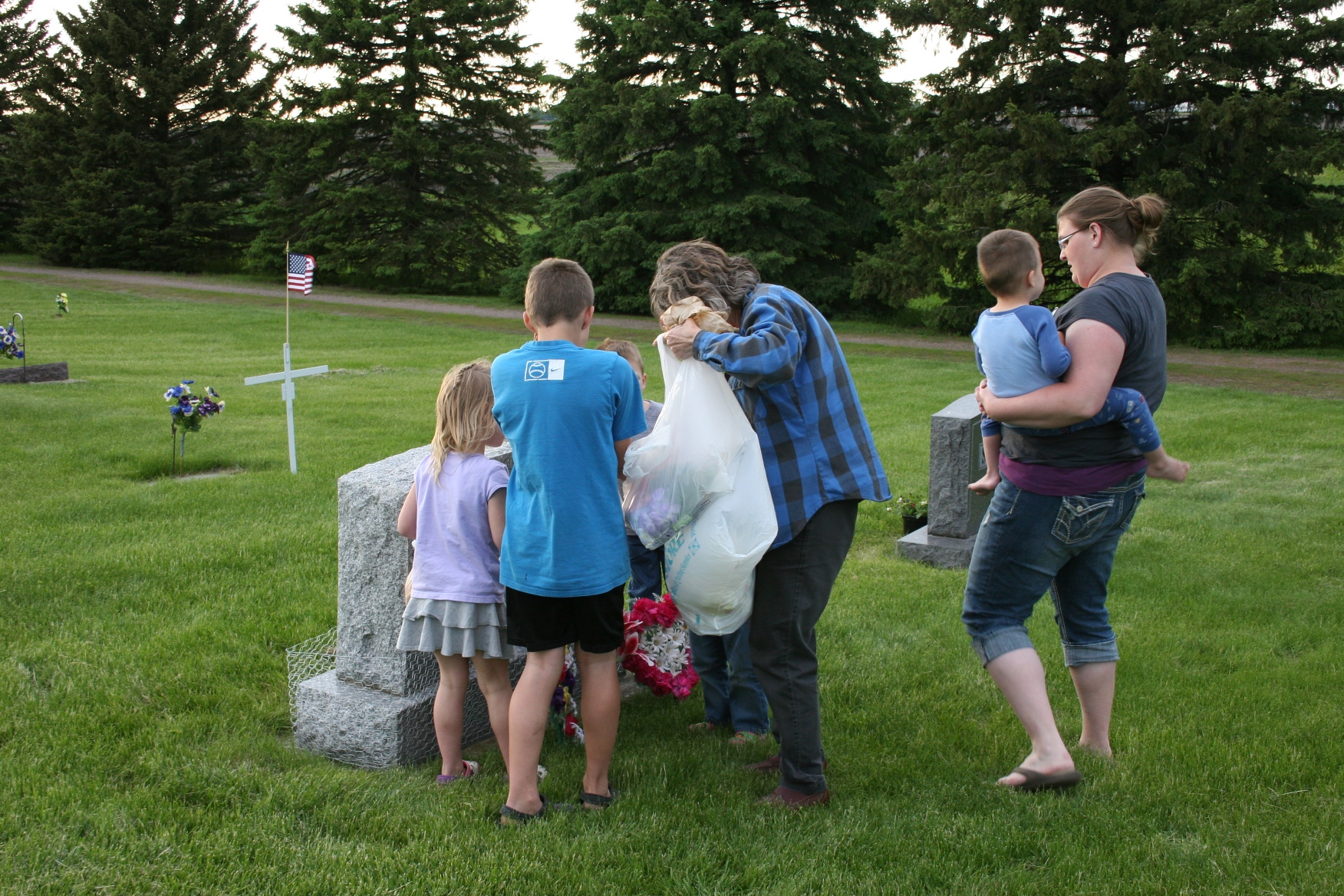
Barb Schmidt teaches her grandchildren about their ancestors as they place flowers on the graves of loved ones Saturday evening at the Vesta Cemetery.

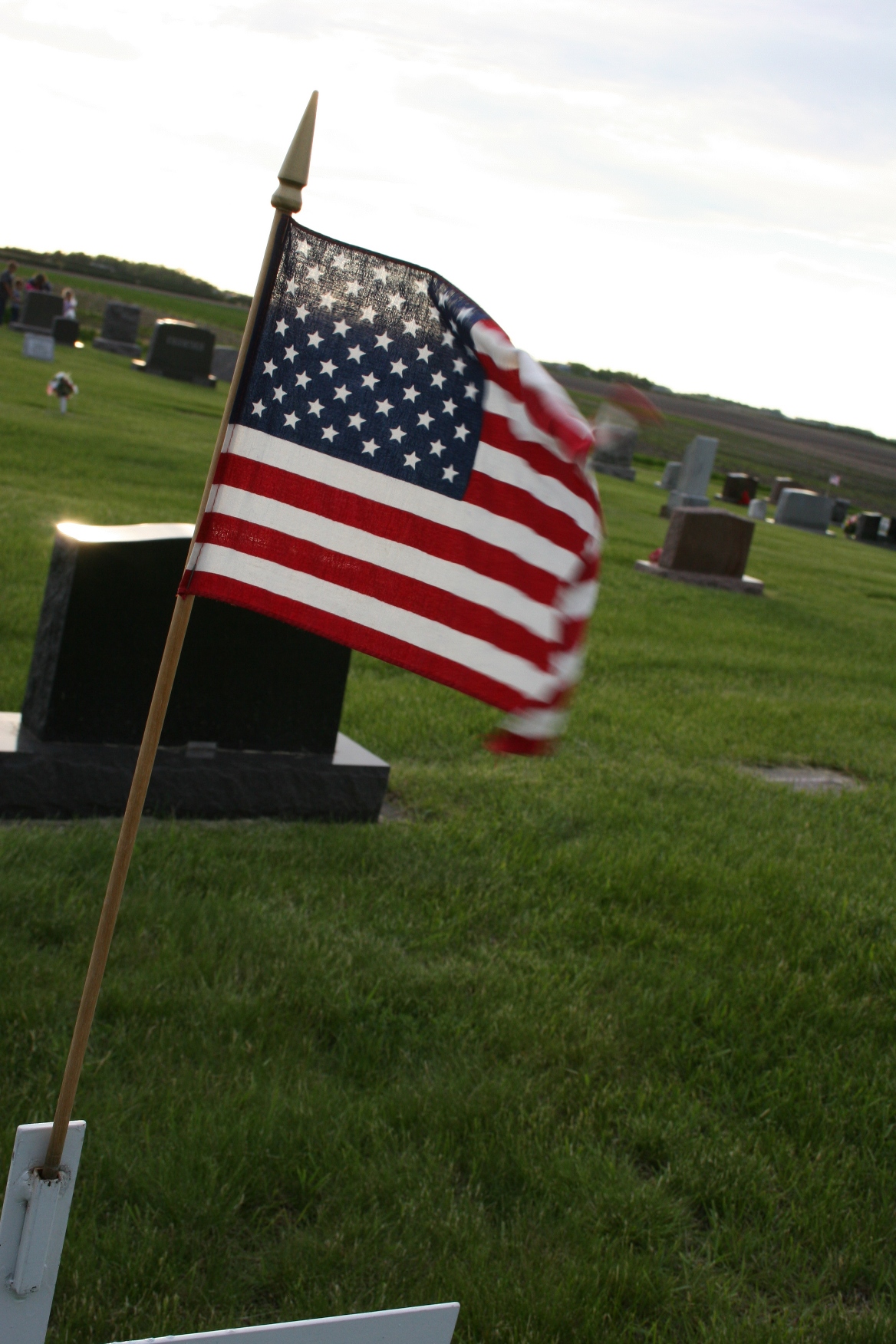
Set atop a hill, the wind catches the flags marking vets' graves.

I was surprised by the number of veterans buried in the Vesta Cemetery, their graves marked by small flags attached to white crosses. This photo shows only one small portion of the graveyard.

© Copyright 2011 Audrey Kletscher Helbling
 

Reflecting on graduation speeches by three generations of Minnesota women May 27, 2011

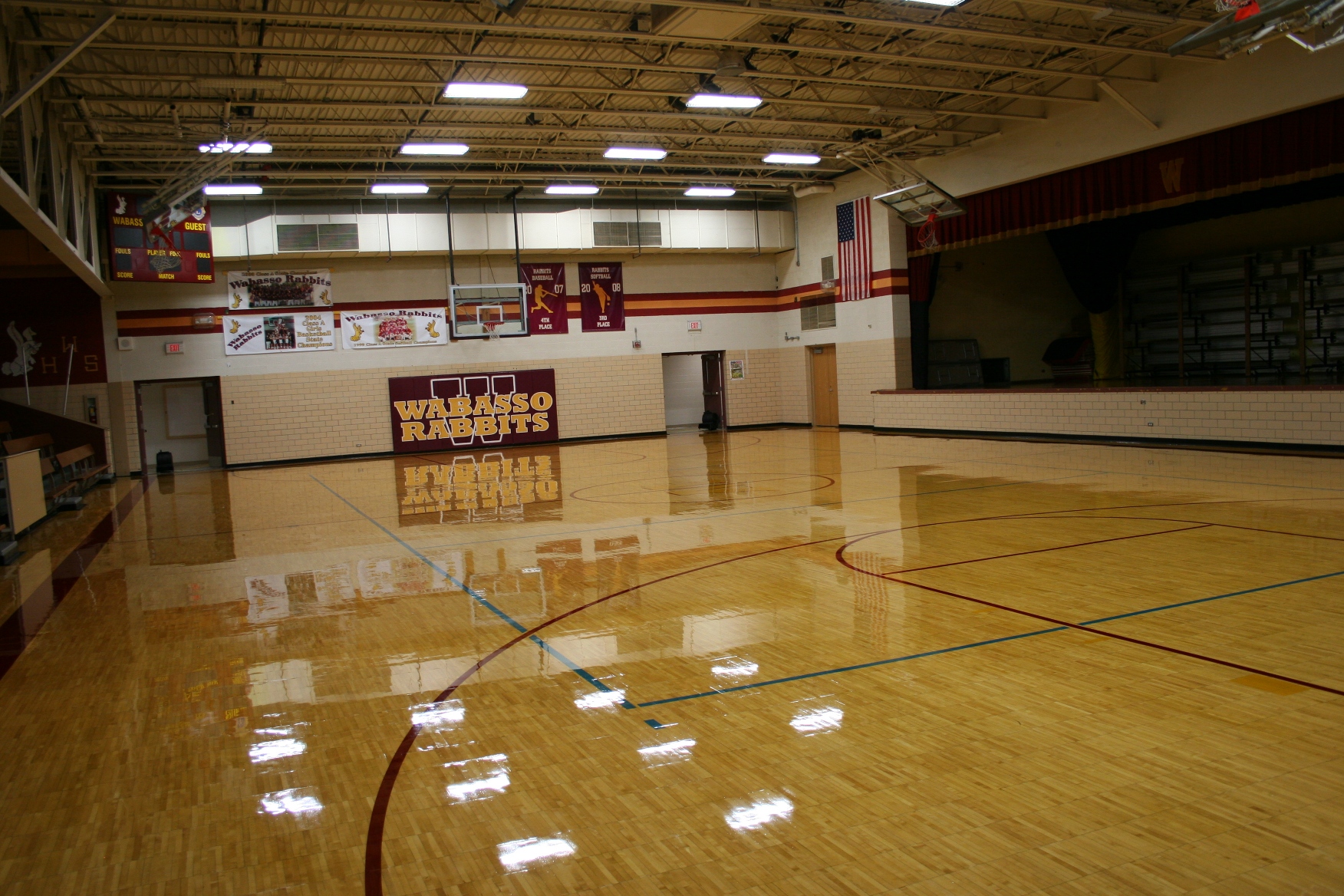
Wabasso High School, where my niece will give a speech tonight as class valedictorian. My mom and I also graduated from WHS, although the building looks much different than when we graduated in 1951 and 1974.

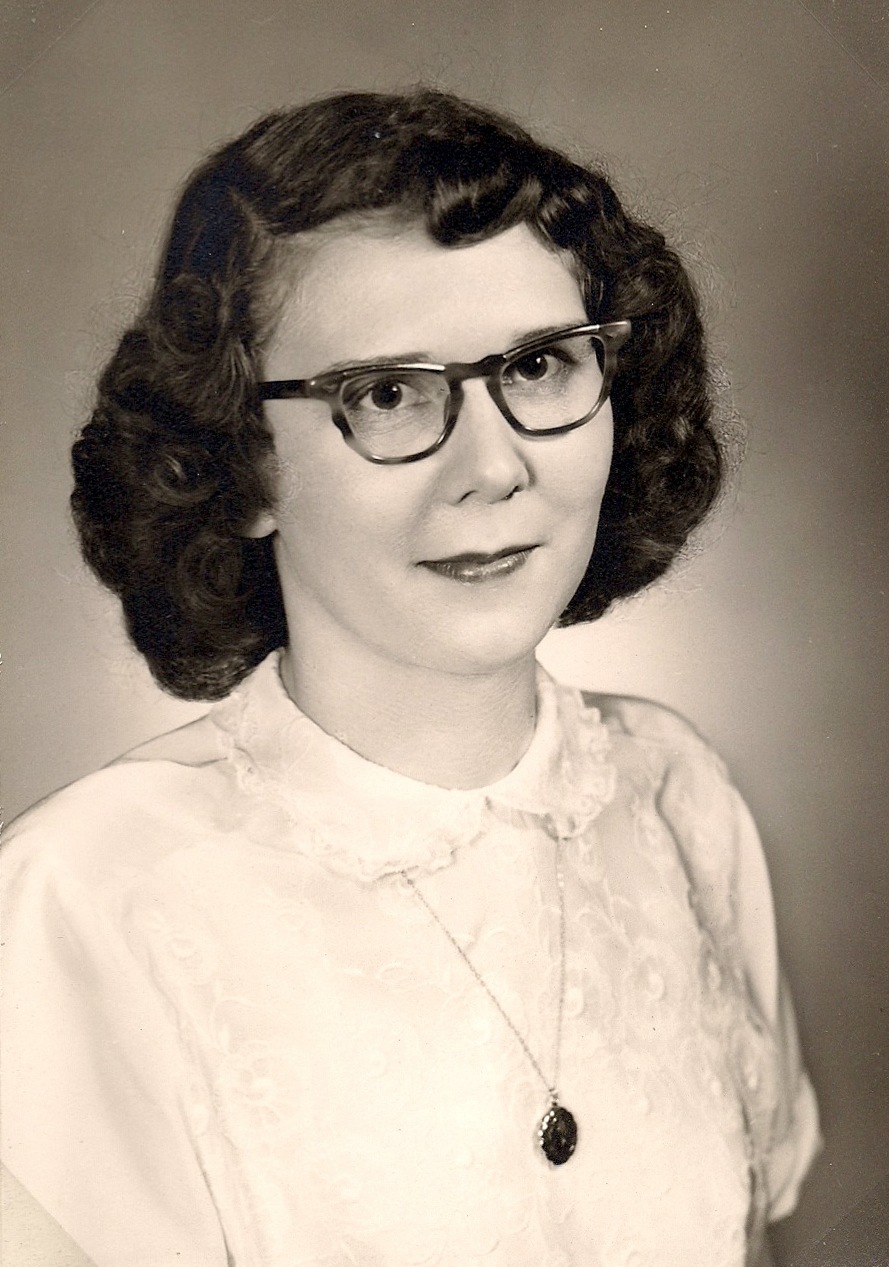
Arlene Bode Kletscher's 1951 graduation portrait.

SIXTY YEARS AGO 18-year-old Arlene Bode stepped onto the stage at Wabasso High School and gave a commencement speech, “Our Part in the Fight Against Communism.”

While that seems an unlikely, unsuitable, topic for an address by the class valedictorian, my mom says you need to remember the time period in which she wrote and gave that speech.

This was 1951, at the height of the Cold War, the era of bomb shelters and fear of the Soviet Union.

My mom espoused patriotism, encouraging her southwestern Minnesota classmates “to be patriotic and vote…so we can keep our freedom,” she recalls. She has a copy of that speech tucked inside her WHS diploma.

She found the speech recently when pulling out her diploma to show her granddaughter, Hillary Kletscher, who graduates tonight, also from Wabasso High.

Hillary, like her 79-year-old grandmother, is the class valedictorian and will speak at commencement. When I texted Hillary early Thursday afternoon, she hadn’t yet titled her speech. But, she said, the “main subject is change and how it’s good but we have to hold onto what we learn from the past.”

I won’t be there to hear my niece’s address. But I intend to ask her for a copy, just like I plan to get a copy of my mom’s speech, which I’ve never seen. These are parts of our family history, words reflecting the time periods in which they were written, words of hope and wisdom and patriotism (at least in my mom’s case).

Hillary will step onto the WHS stage tonight and speak on change, yet remembering the past.

Audrey Kletscher Helbling, 1974 WHS graduate.

That my mom kept her speech through six decades impresses me. I say that specifically because I have no idea where to find the speech I gave at my graduation from Wabasso High School in 1974. It’s packed in a box somewhere in a closet in my home, but I possess neither the time nor energy to dig it out.

I remember only that, as class salutatorian, my farewell address included a poem. What poem and by whom, I do not recall.

In 2006, my daughter Miranda graduated as valedictorian of Faribault High School and gave a commencement speech. Given that occurred only five years ago, I should remember the content. I don’t. I recall only that she held up a test tube to make a point.

I am also making a point here. Thankfully much has changed in the 60 years since my mom spoke on “Our Part in the Fight Against Communism.” While the world today remains in turmoil, at least the intense fear, felt by the Class of 1951 during the Cold War, no longer exists.

We have also moved beyond the turbulent 60s and 70s, a time of rebellion, anti-establishment, and anti-war sentiments and discontent over the Vietnam War experienced by my class, the Class of 1974.

By 2006, when my second daughter graduated, we as a nation were beginning to recover from 9/11, yet we lived in an increasingly security-focused society.

Today my niece graduates in a day of continuing economic uncertainty, when young people are struggling to find jobs and when Baby Boomers like myself worry about our jobs and retirement.

Yet, through it all—the Cold War, Vietnam, September 11 and a challenging economy—we remain four strong women living in a free country where we, individually, spoke freely, representing the classes of 1951, 1974, 2006 and 2011.

© Copyright 2011 Audrey Kletscher Helbling
 

Horse/Pferd crazy in Minnesota und Deutschland April 7, 2011

This isn't my stick horse; mine is long gone. But my parents made stick horses for my two daughters 20-plus years ago. This horse belongs to one of them.

GROWING UP ON A SOUTHWESTERN Minnesota farm, I wanted a horse. Bad. Really, really bad.

But Dad wasn’t buying my and my siblings’ pleas to “Please, please, pretty please, Dad, can we get a horse?”
He stood firm in his belief that horses were dangerous. And then he would give us the facts to back up his fear. Dad would regale us over and over again with the tale of the boy he’d seen lying in the Redwood Falls Hospital with a hoof print embedded in his forehead. Whether that story was entirely true or a bit of exaggeration, I’ll never know. I only knew, unequivocally, that Dad didn’t want any of his six kids kicked in the head by a horse.
I think he also had concerns about keeping an animal that wasn’t earning its keep on our dairy and crop farm. With tractors, he didn’t need horses that, in his opinion, would do nothing except consume corn and hay that he needed for the cattle.
And so my siblings and I improvised. Socks with eyes, mouths and ears and with yarn manes sewn on and then jammed onto sticks became our horses. Stick horses. I rode mine around the farmyard so much that I easily could have ridden to Montana and back.

These were the days, too, of television westerns like Gunsmoke, Bonanza, Rawhide. These were the days of shooting cap guns and, even though this is certainly not politically-correct today, of playing “cowboys and Indians.”

When my siblings and I weren’t riding our stick horses with guns blazing, we were riding our bicycles. Up and down the driveway. On the rock-hard dirt paths we’d carved through the grove. We pedaled furiously, escaping robbers and savages on our bikes turned horses.

On occasion, we also straddled empty barrels, slipping our feet into stirrups we’d fashioned from baler twine. We were, if anything, innovative, resourceful and imaginative.

Dad wasn’t giving us our horse, so we made do.

For my oldest brother, making do also meant attempting to ride a steer. I don’t recall that he was ever bucked off. But I also don’t remember that he succeeded in his mission.


My second daughter went through a phase, when she was about four years old, of being obsessed with horses. She drew horse pictures non-stop. I read every horse book to her available through the southeastern Minnesota library system. And I bought her toy horses, all of which are still in a plastic tote for her to someday claim.

All of which brings me to this story. Have you heard about the 15-year-old German girl who trained a cow that she can ride like a horse? Her parents, like my dad, told her she couldn’t have a horse. So she improvised.

Shortly after Luna was born on the family’s farm two years ago, Regina Mayer started working with the animal. Her persistence paid off as she can now saddle up and ride the cow like a horse. Luna even is trained to jump over hurdles.

I like the spunk of this teen. Knowing what I know about cattle, I realize just how determined Regina had to be to get her “horse.”

Apparently my brothers, sisters and I weren’t determined enough. So, instead, we settled for sticks, bikes and barrels. And, on occasion, we cajoled a relative into riding her horse from several miles away to our farm. She would allow us to climb into the saddle for a walk around the farmyard. It was then that I discovered I really didn’t feel all that comfortable riding a horse. But I never told my dad. Not once.


One of the many horses in my second daughter's collection.

© Copyright 2011 Audrey Kletscher Helbling