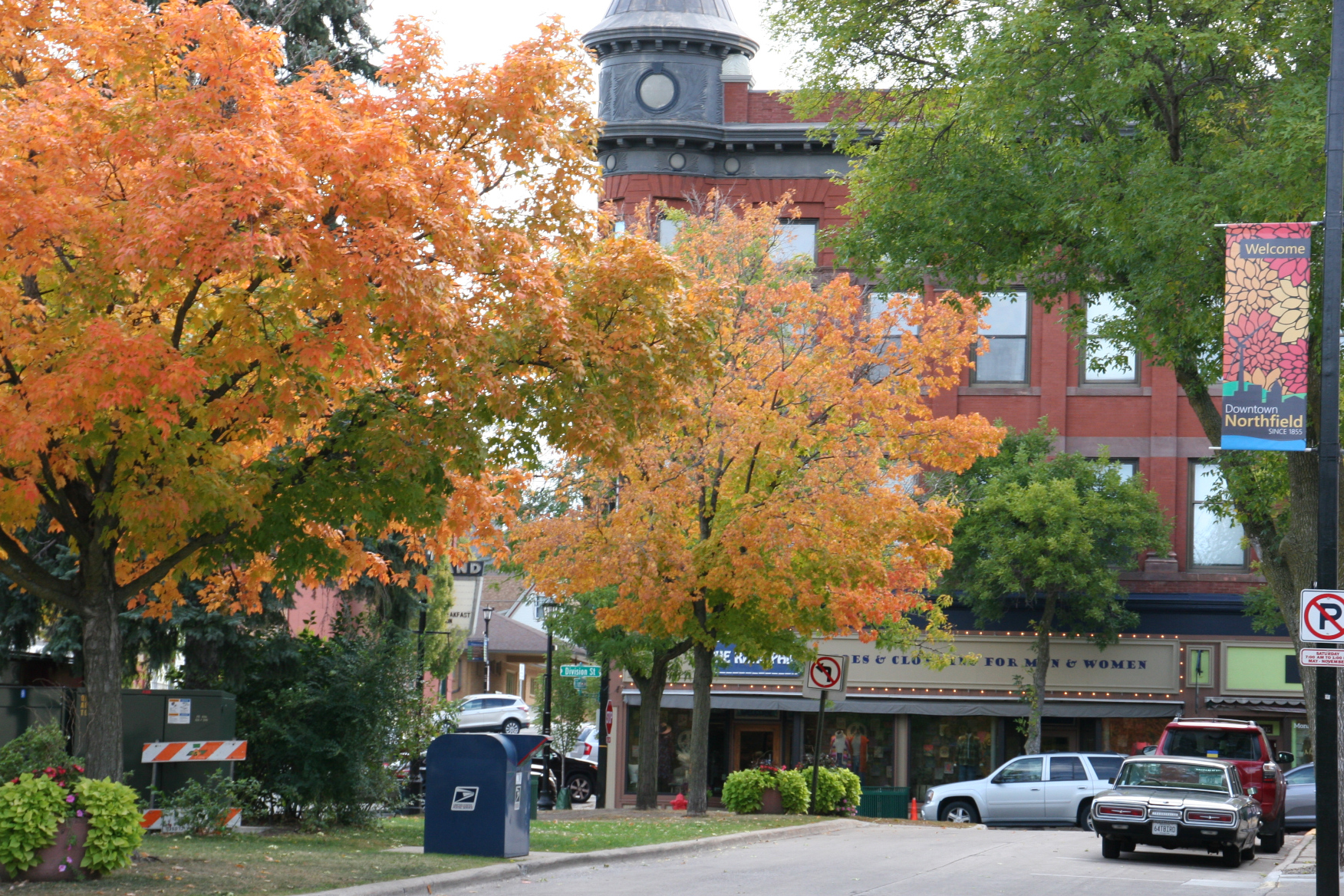
Trees were ablaze at the end of September in Northfield’s Bridge Square. (Minnesota Prairie Roots copyrighted photo September 2022)
FRIDAY MORNING BROUGHT the first snow flurries of the season to southern Minnesota. Not enough snow to stick to the ground here in Faribault, but in other parts of the state flakes accumulated.
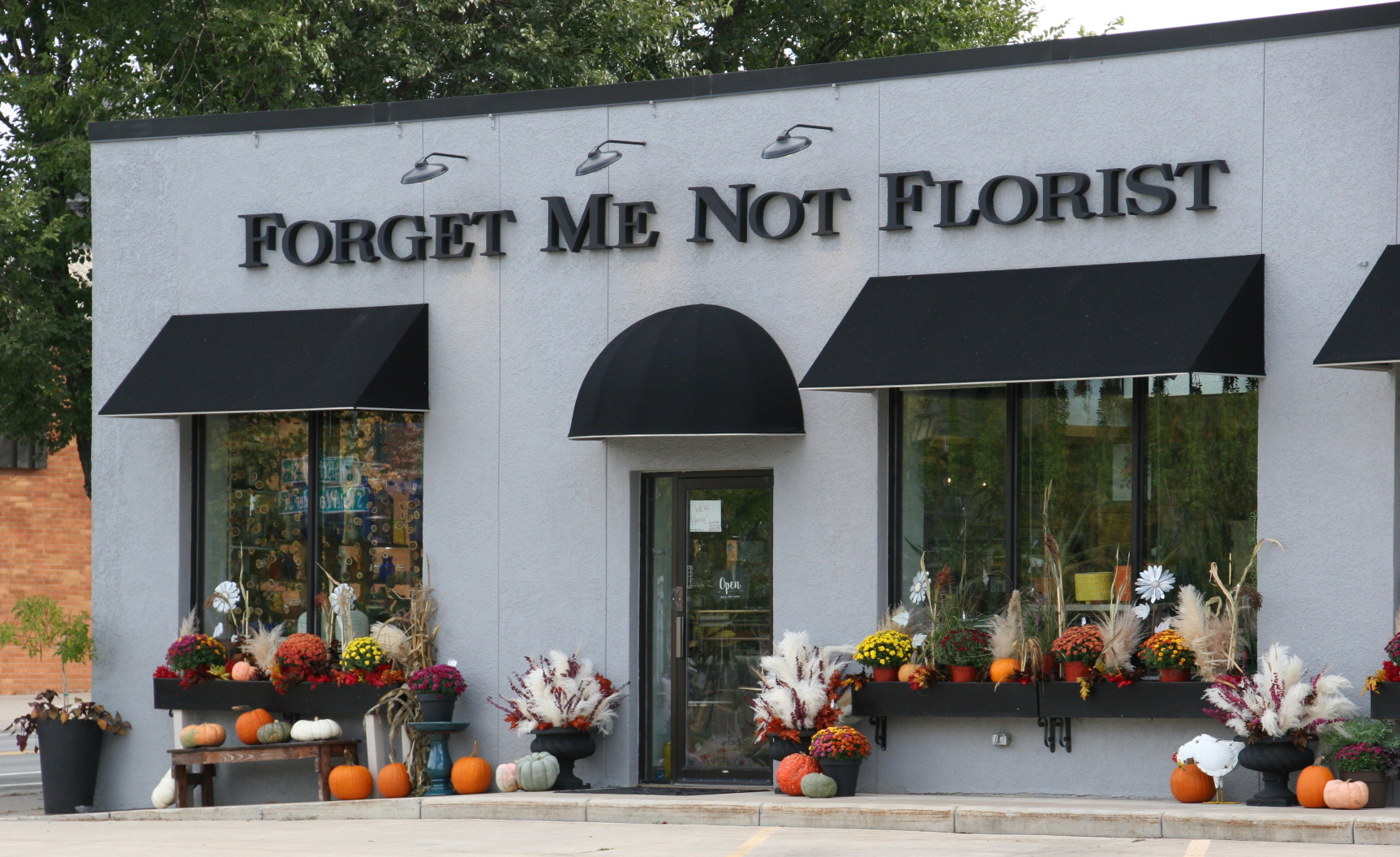
Seasonal displays drew my eye to this floral shop on a corner in downtown Northfield. (Minnesota Prairie Roots copyrighted photo September 2022)
We are in the time of transition, shifting from autumn toward winter. One day the sun shines bright on trees still ablaze in color and temps feel comfortable. Other days, grey clouds blanket the sky, blocking the sun, with winter attire needed outdoors.
Inside Used-A-Bit Shoppe, glassware in a seasonal hue. (Minnesota Prairie Roots copyrighted photo September 2022)
In these waning days of autumn, I am reminded of how much I love this season—for the colors, the mostly moderate temps, the scent, the feel, the gathering in. It’s as if we Minnesotans recognize that every single gloriously sunny day needs to be celebrated, to be photographed in our memories, to be pulled out when winter days draw us in.
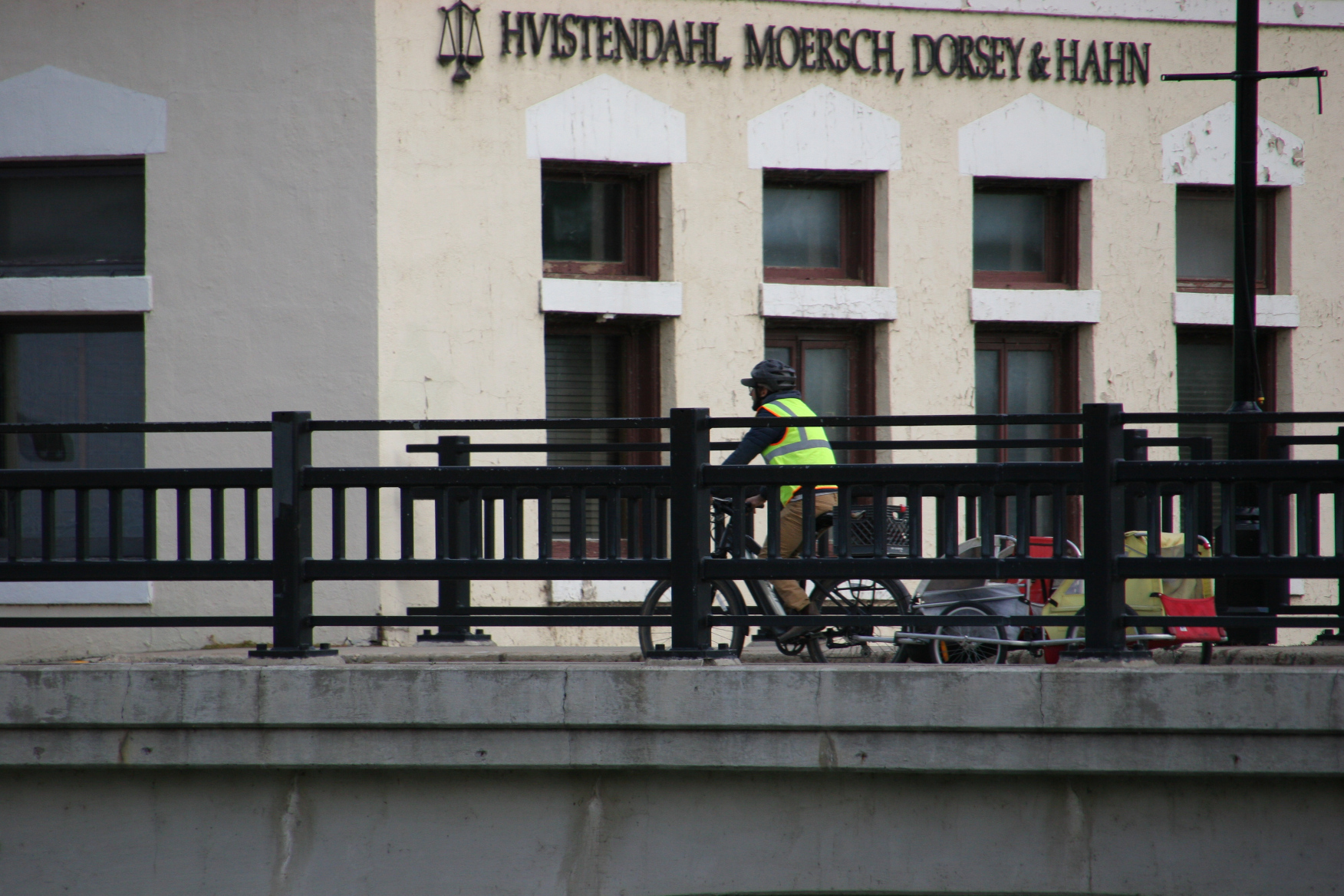
Biking across a bridge over the Cannon by Bridge Square. (Minnesota Prairie Roots copyrighted photo September 2022)
A few weeks ago I was in neighboring Northfield, about a 20-minute drive away. This art-strong historic college town along the Cannon River presented scenes that hold the essence of the season. From colorful trees to blooming flowers to seasonal displays, the visuals of autumn unfolded before me.
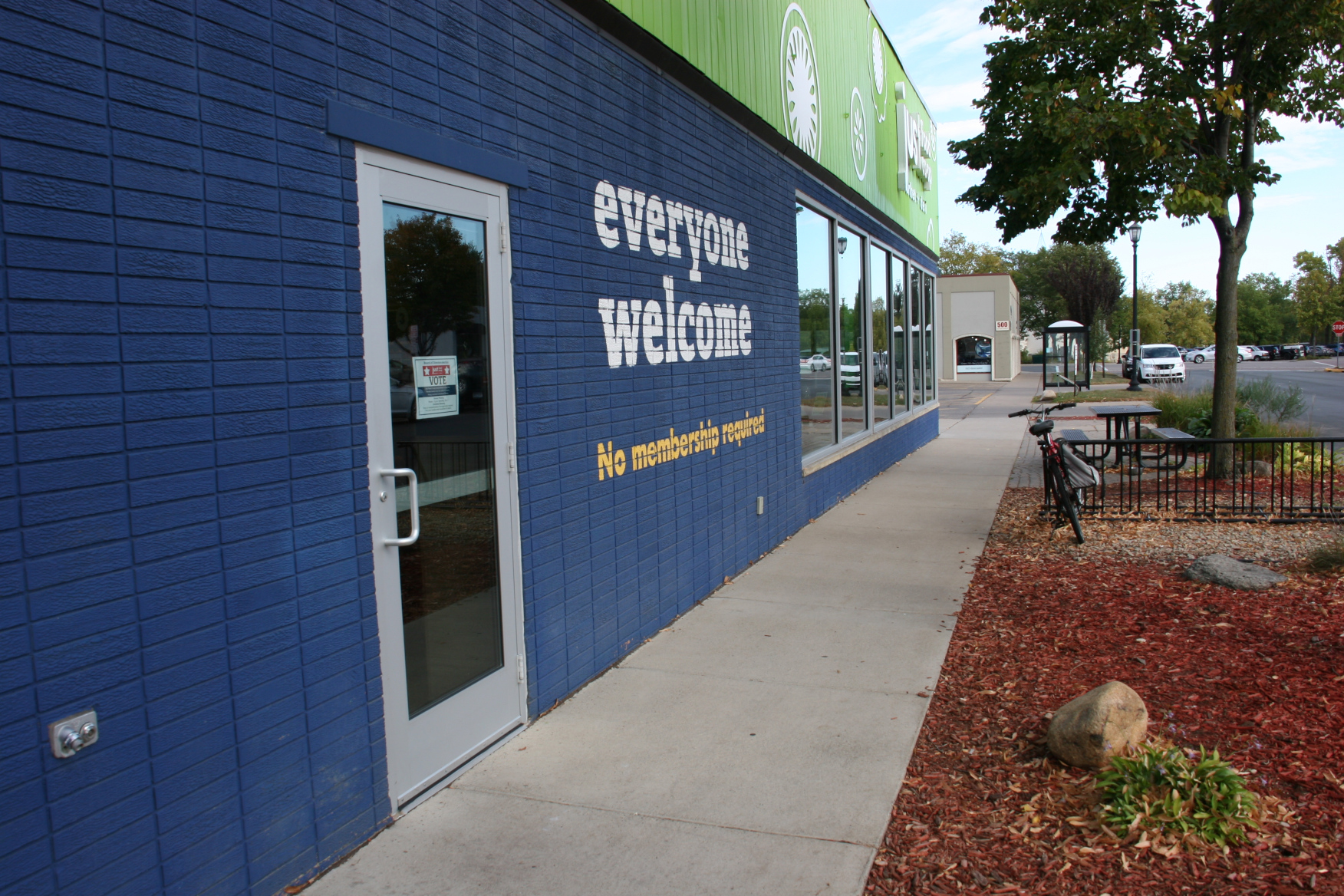
Outside Just Food Co-op. (Minnesota Prairie Roots copyrighted photo September 2022)
People were out and about. Dipping into Just Food Co-op. Shopping at the thrift store. Sitting on a park bench waiting to share a faith message. Walking a dog. Biking across a bridge spanning the river.
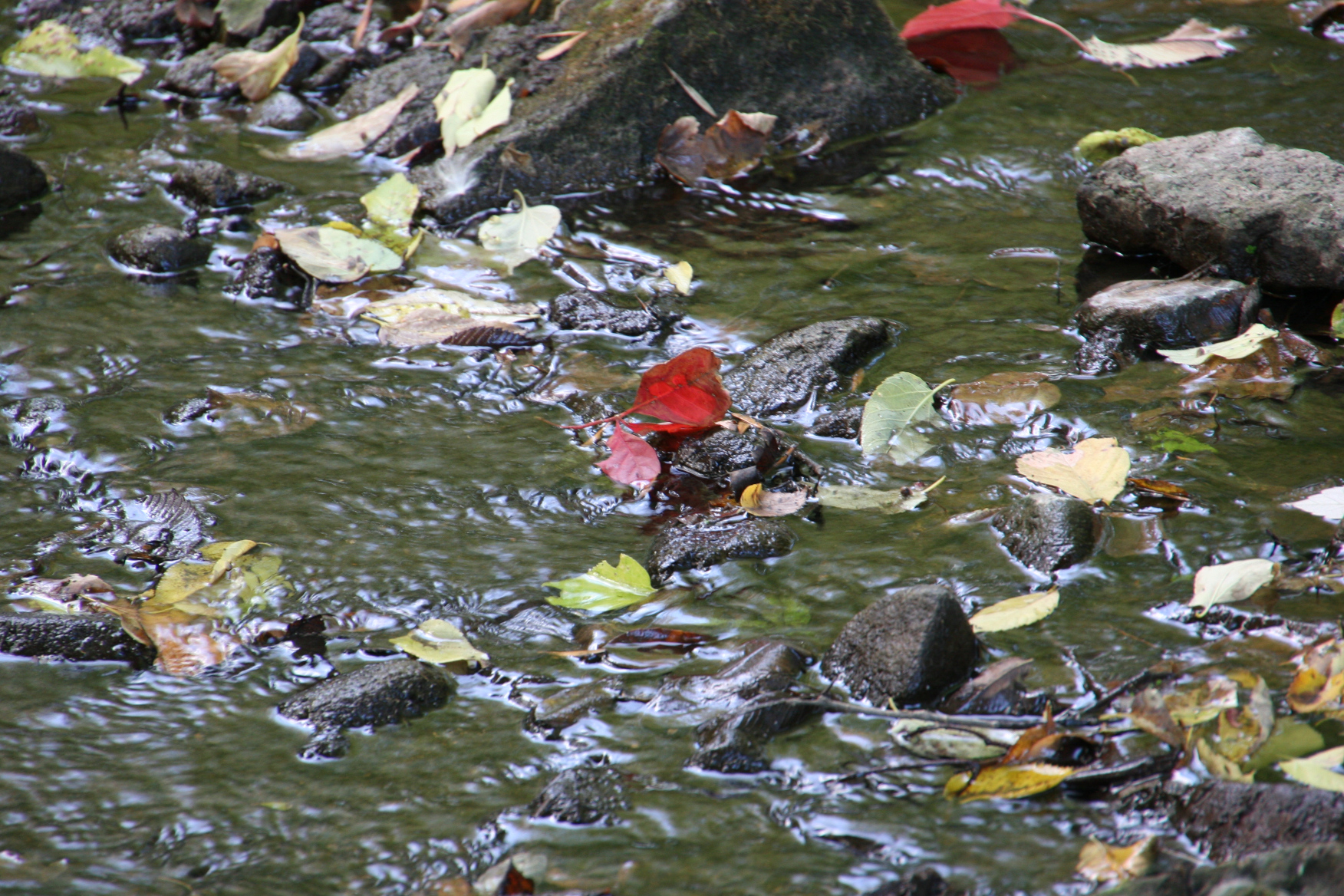
Fallen leaves add interest to the Arb creek. (Minnesota Prairie Roots copyrighted photo September 2022)
I felt no hurry, only an appreciation for the day, time to meander while waiting for Randy to complete an appointment. Afterwards we headed to Cowling Arboretum for a short walk and an engaging conversation with another hiker. It was one of those chance encounters that left me feeling uplifted, encouraged, blessed.
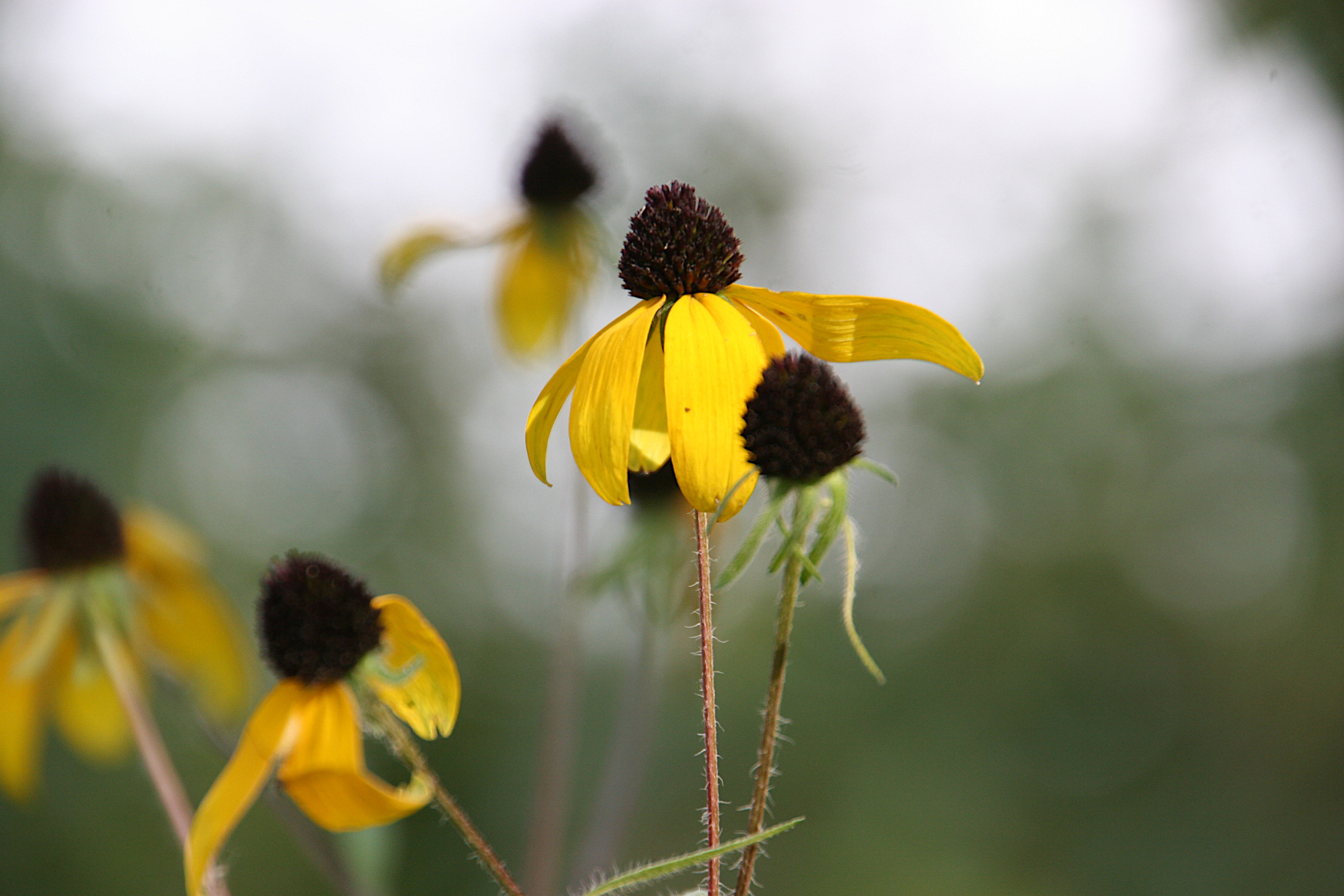
Coneflowers flourish at Cowling Arboretum. (Minnesota Prairie Roots copyrighted photo September 2022)
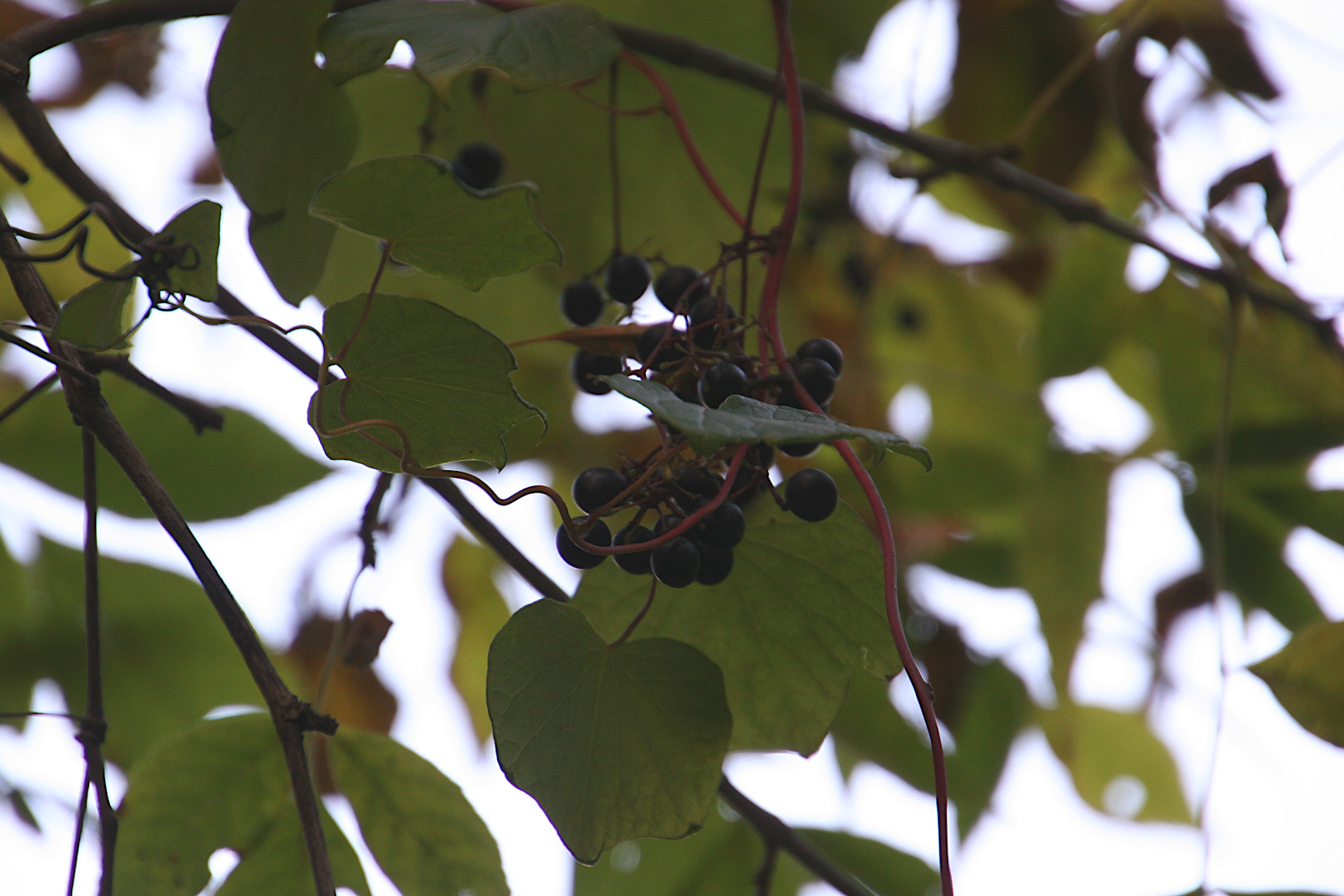
Wild grapes. (Minnesota Prairie Roots copyrighted photo September 2022)
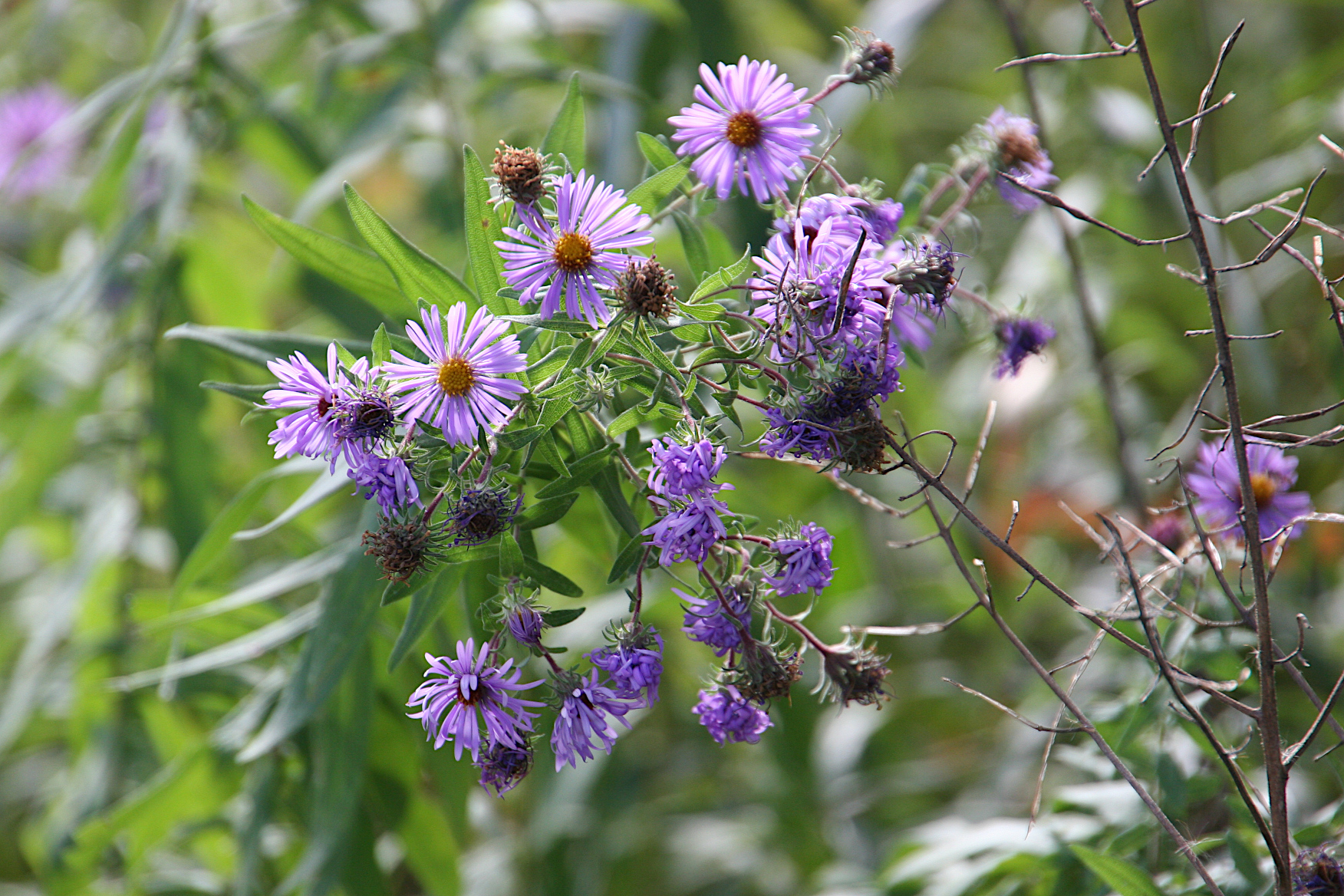
Wildflowers thrive in the sunshine along the Cannon River at Cowling Arboretum. (Minnesota Prairie Roots copyrighted photo September 2022)
As I immersed myself in nature on that final day of September, I noticed wildflowers in bloom, leaves floating in the creek, the curve of grapevines, the hint of color in a few trees. If I was to revisit the Arb today, I would surely view a different scene. Each day moves us nearer, oh, so much closer, to winter.
Perkins in Monticello advertised free pie. (Minnesota Prairie Roots copyrighted photo August 2022)
PIE. Who loves a good pie? I do.
A few months back while passing through Monticello on the way to a family reunion, I noticed an eye-catching FREE PIE MONDAY sign and cherry pie graphic on the window of Perkins® Restaurant & Bakery. It was enough to make me wish the day was Monday rather than Saturday.
I can’t tell you the last time I dined at Perkins, but it’s probably been decades. I prefer home-grown to chain restaurants.
Yet, the offer of free pie…
As far as I can tell, the 11 am – 9 pm free pie on Monday comes with the purchase of an entree. Reviews of Perkins’ pie point to good pie. I’d need to sample it to offer my opinion. Make that blueberry, please, or French Silk.
Now it’s your turn. If you’ve indulged in Perkins’ pie, how is it? Or where have you found really good pie? What’s your favorite type? This is, after all, pie season.
The Straight River roils by at the dam in Owatonna. I see struggles. I see strength. (Minnesota Prairie Roots copyrighted file photo)
WHAT’S YOUR DEFINITION of strength? Whom do you consider strong? Have you faced a challenge, or multiple challenges, in life that required strength? While our answers vary, especially on the third question, I expect threads of commonality in responses.
Strength, from my perspective, is about fortitude and endurance. It’s about somehow finding the ability to face a challenge, to persevere, to come out on the other side with a renewed sense of personal power. Not power in the sense of control, but power that reaffirms one’s ability to deal with whatever life throws at us.
We all have something, right? Financial hardships. Health issues. Loss. Pain. Family members who are struggling. But, admittedly, when we are in the middle of a lot, it can sometimes feel like we are alone, that others live perfect lives unencumbered by issues that drain, stress and, yes, sometimes overwhelm. Nothing could be further from the truth. I repeat: We all have something, whether individually or within our families. We are not alone.
(Cover image from Goodreads)
The novel, Three Sisters by Heather Morris, prompted me to write on the topic of strength. Although fictional, the book is based on a true story about three sisters held in a concentration camp. This is a story of indescribable atrocities witnessed and experienced. This is also a story of irrepressible strength and hope. I encourage you to read this novel and also watch Ken Burns’ newest documentary, “The U.S. and the Holocaust,” which happened to air at the same time I was reading the book. Together, the two were almost too much for me to emotionally take in. It’s a lot to comprehend the inhumanity and cruelty of mankind. Those sent to concentration camps certainly exhibited strength, whether they survived or not.
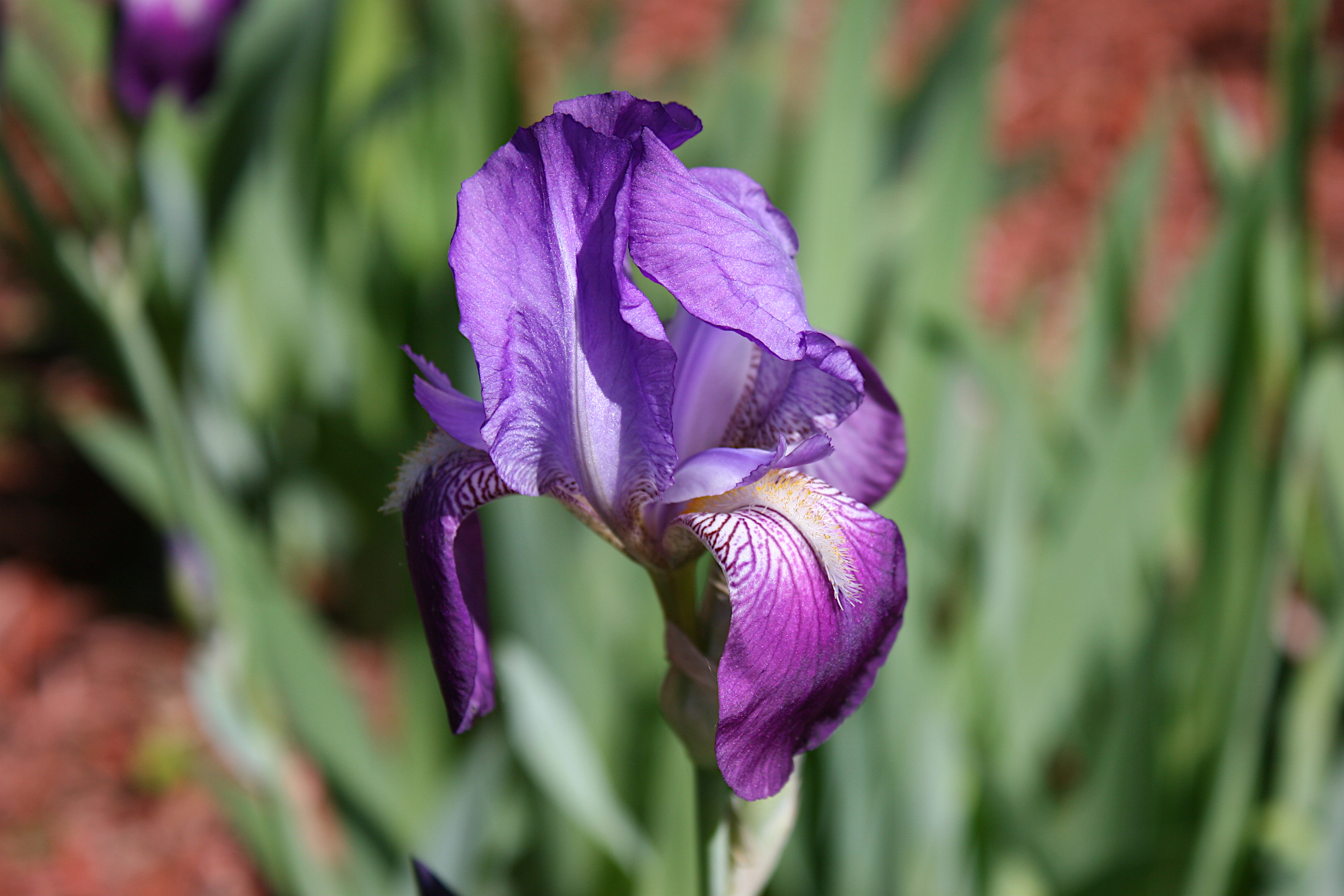
In reading Three Sisters, I learned that gladiolus (the flower) signify strength. And the iris, which is part of the glad family, denotes hope. The iris was my mom’s favorite flower. “Hope” is a word I’ve held, and continue to hold, close. “Hope” is not simply a wish. By my definition, it is an active verb that focuses on light shining through darkness. It is a word, too, that envelopes gratitude and believing that things will get better.
I keep this stone on my office desk. (Minnesota Prairie Roots copyrighted file photo)
My name, Audrey, means noble and strong. I wish I’d asked my mom why she chose that name for me, her first-born daughter. I never did, and now she’s gone, but the name fits. I’ve had to be strong many times throughout my life. We all have something, right? Challenges can make us better, more empathetic and compassionate people. That is the good that arises from struggles.
This message refers to struggles with mental illness. (Minnesota Prairie Roots copyrighted file photo)
This week, especially, with World Mental Health Day on October 10, I consider mental health. From anxiety to depression to brain disorders like bi-polar and schizophrenia, these are undeniably hard diagnoses which require incredible strength to face. Simply getting up in the morning, functioning, can prove difficult. There are no cures. No quick fixes. Medication can manage, therapy can help. And even though we are getting better at recognizing and understanding, stigma remains. We can do better at supporting, encouraging, helping. We need more mental health professionals to meet the growing demand for mental health care.
Strength. Hope. Those two words inspire and uplift. Gladiolus and iris. Those two flowers represent the same. From the pages of a novel about three Holocaust survivors to my name to life experiences, I understand what it means to be strong, to feel hope.
TELL ME: I’d like to hear your thoughts on strength and hope.
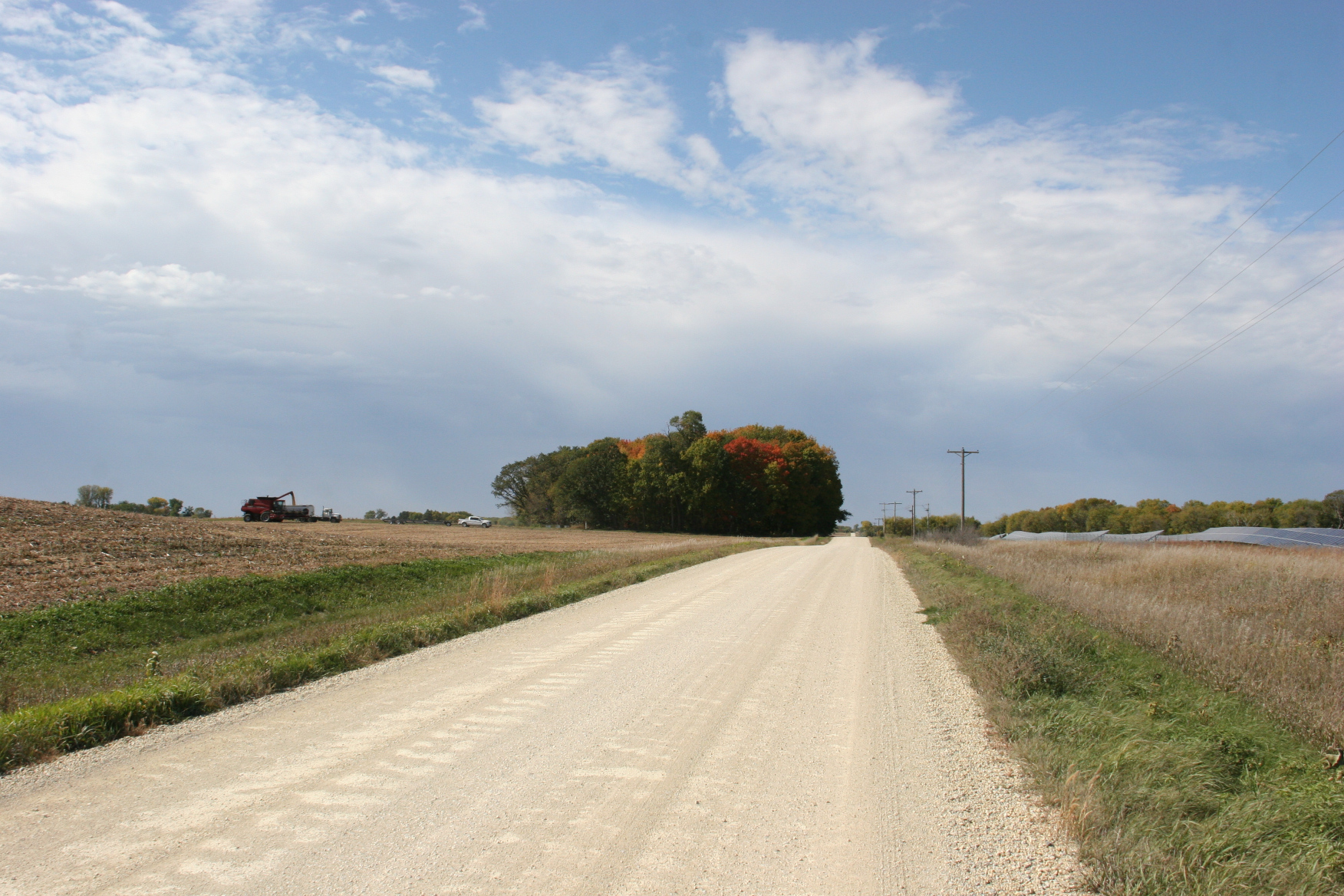
Harvesting, left, in a field along a gravel road near Dundas. (Minnesota Prairie Roots copyrighted photo October 2022)
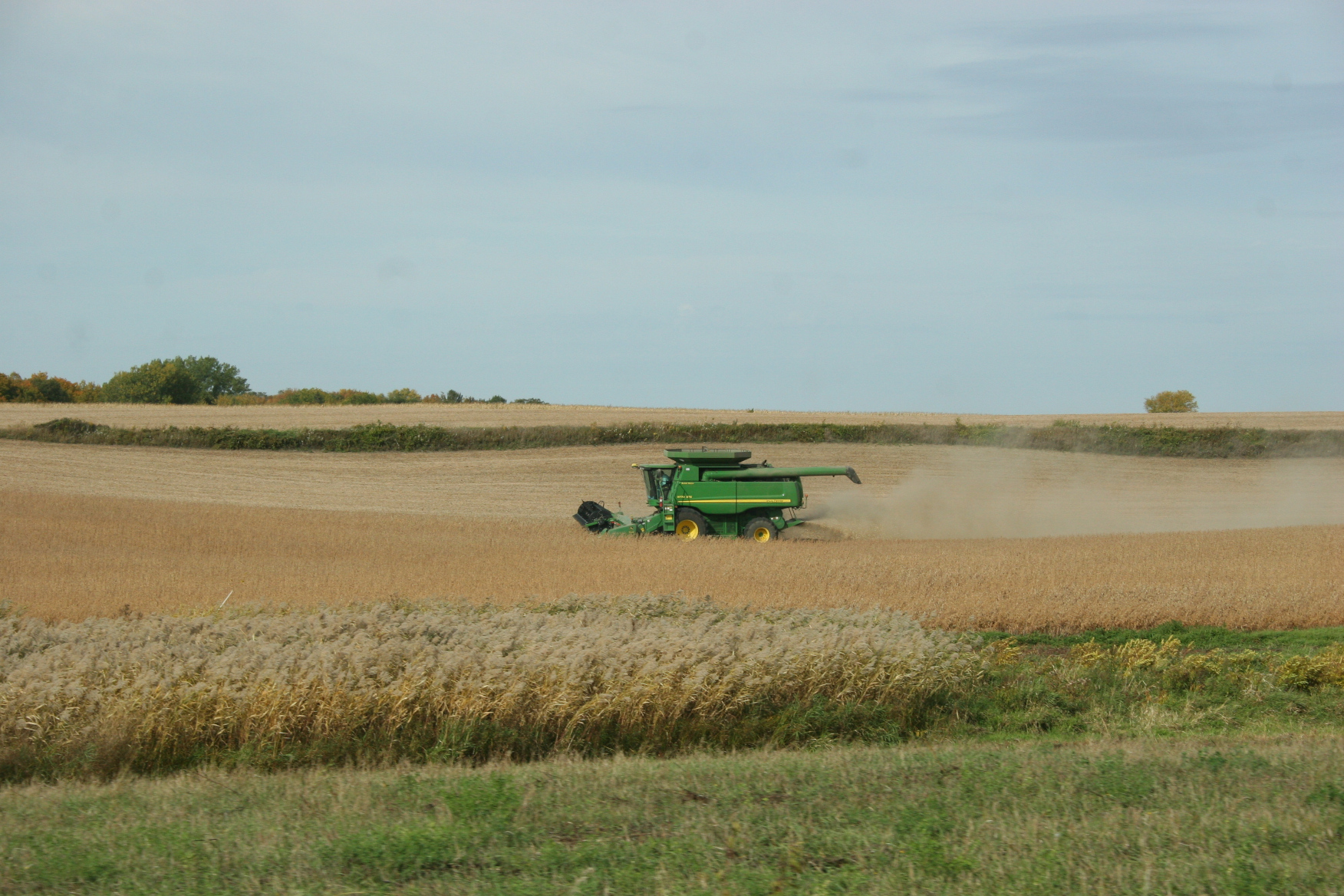
DUST HANGS OVER THE LANDSCAPE like smoke. Hazy. The air dirty with debris kicked up by combines sweeping across corn and soybean fields in southern Minnesota. Harvest is well underway here as farmers bring in the season’s crops.
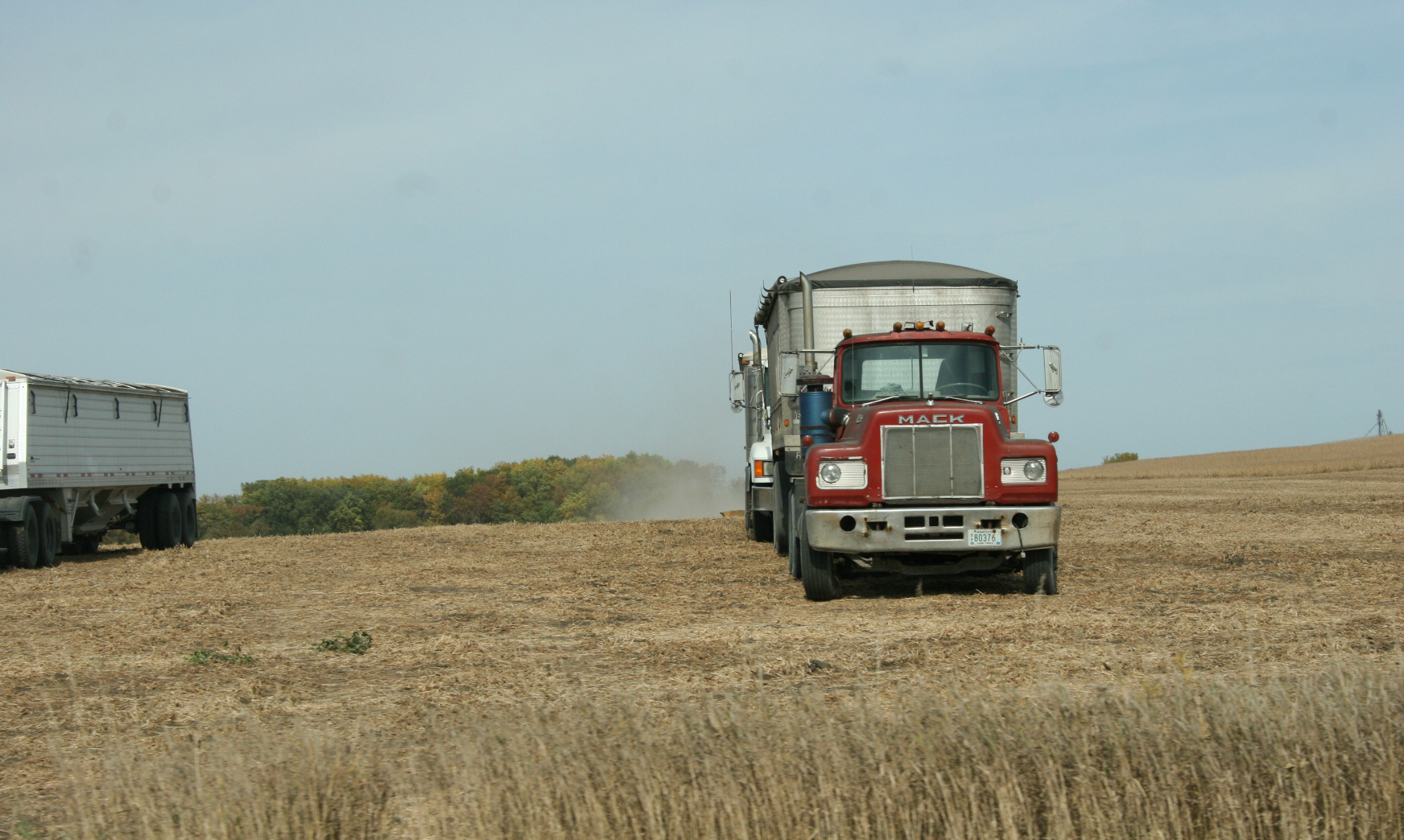
Trucks haul harvested crops from fields to bins and/or grain elevators. (Minnesota Prairie Roots copyrighted photo October 2022)
From back country gravel roads to the interstate, I’ve witnessed this scene unfolding before me in recent weeks. Combines chomping. Harvested corn and beans spilling into grain trucks.
Harvesting beans. (Minnesota Prairie Roots copyrighted file photo October 2022)
Farmers work all hours of the day and night in the rush to finish gathering crops before winter arrives. In the dark of night, bright headlights spotlight fields. In daylight, sunlight filters through clouds of dust.
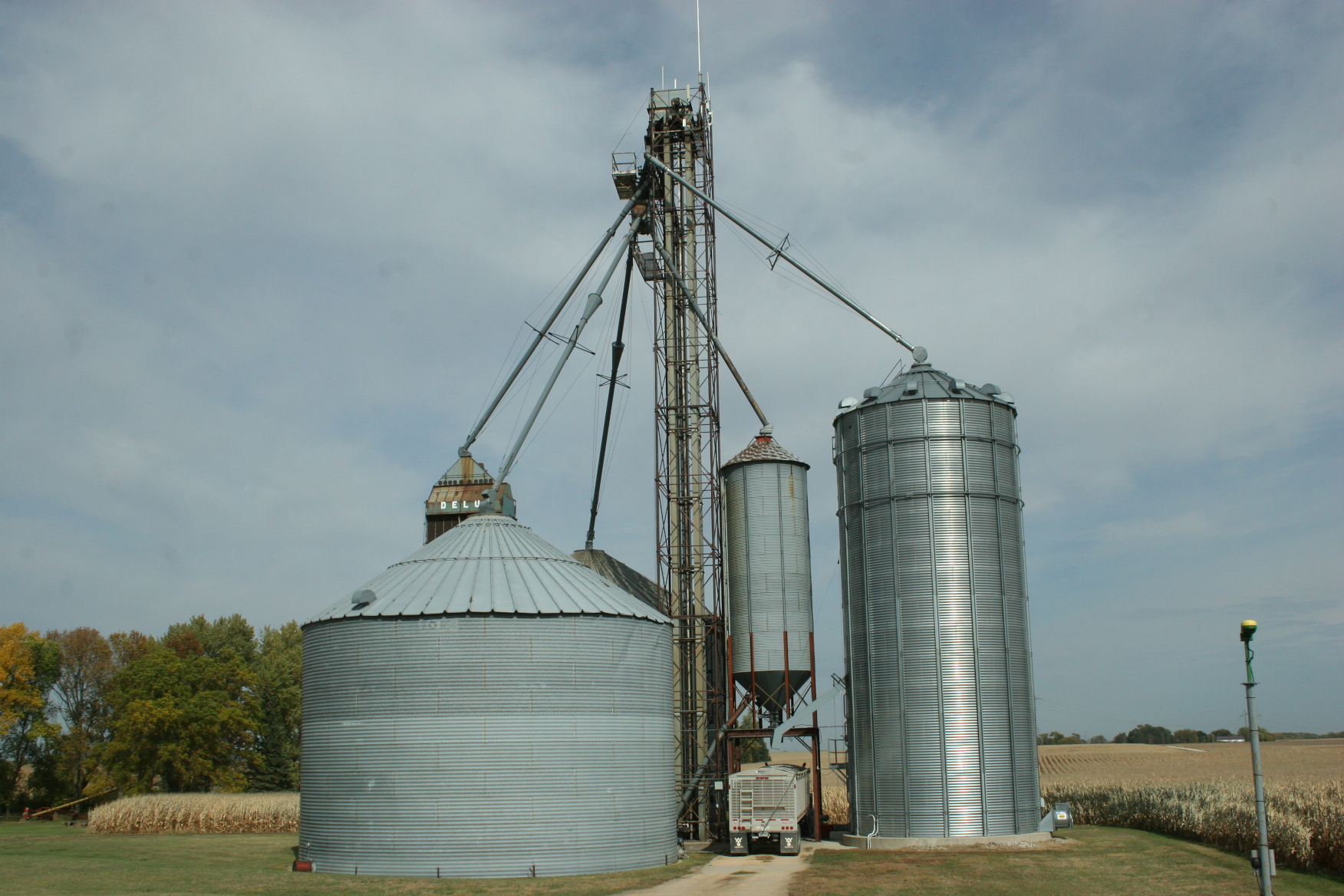
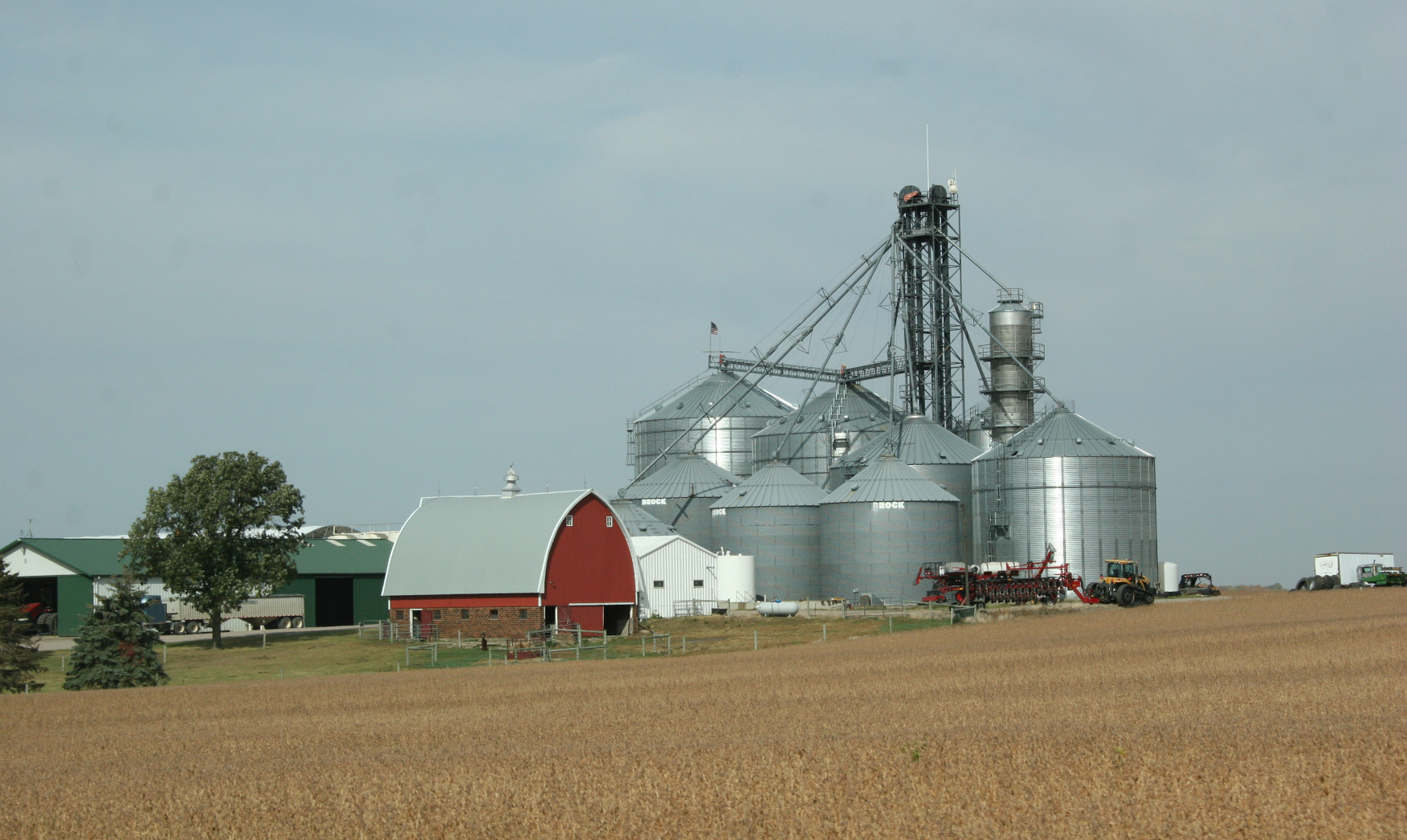
A grain truck pulls into a farmer’s grain drying and storage complex. (Minnesota Prairie Roots copyrighted photo October 2022)
Harvest is part of my DNA by having been raised on a southwestern Minnesota crop and dairy farm. Decades removed from the land, I still take notice of the harvest. The smell. The hues. The hurry. I understand this season in rural Minnesota.
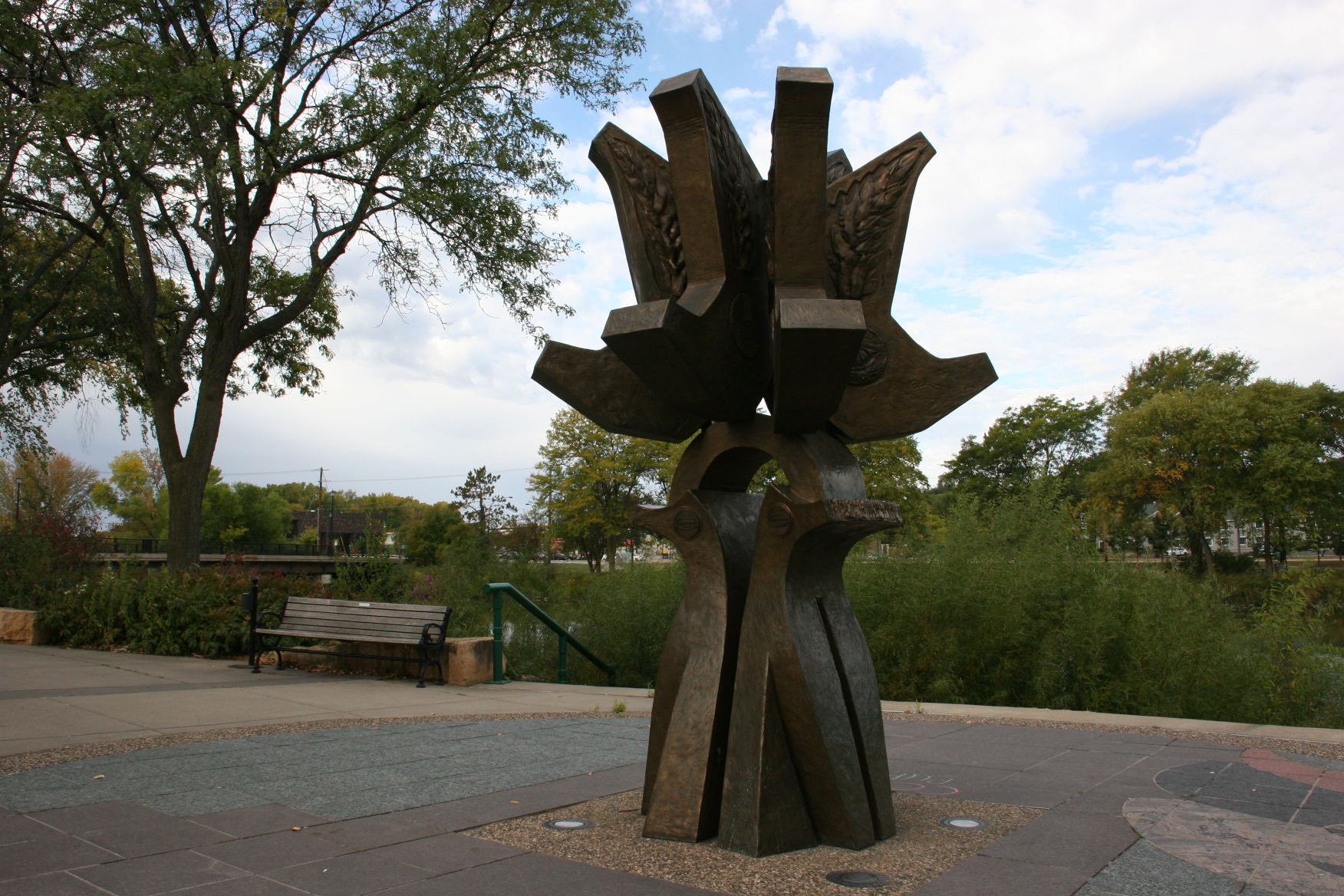
“Harvest” by Raymond Jacobson. (Minnesota Prairie Roots copyrighted photo October 2022)
In nearby Northfield, I recently happened upon a bronze sculpture, “Harvest,” which had gone unnoticed by me. It’s been there since 2008 at Sesquicentennial Legacy Plaza along the Cannon River, near the post office, near Bridge Square. In all my visits to Northfield, to the Riverwalk area, I missed this public art created by Raymond Jacobson.
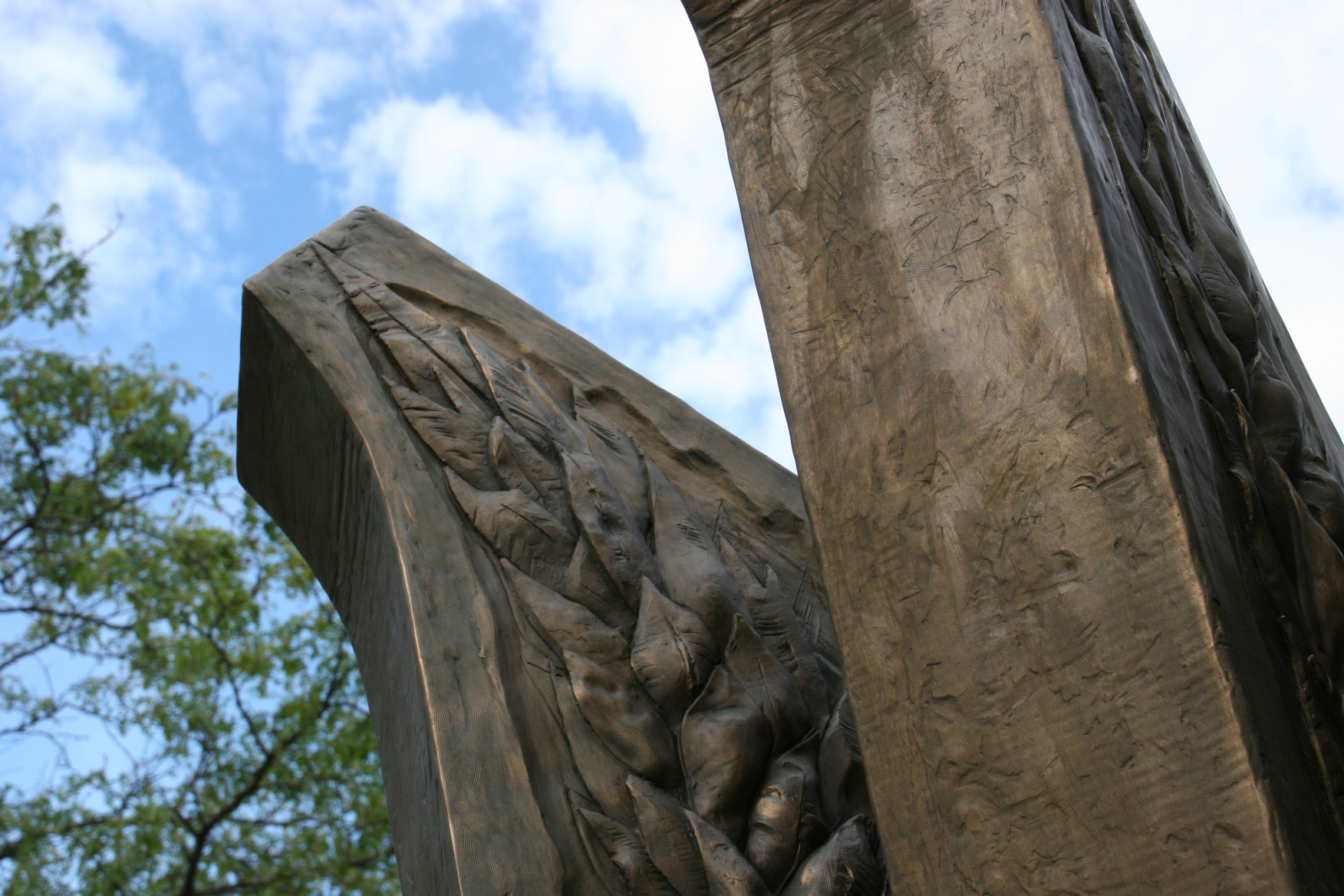
Close-up details of the wheat incorporated into “Harvest.” (Minnesota Prairie Roots copyrighted photo October 2022)
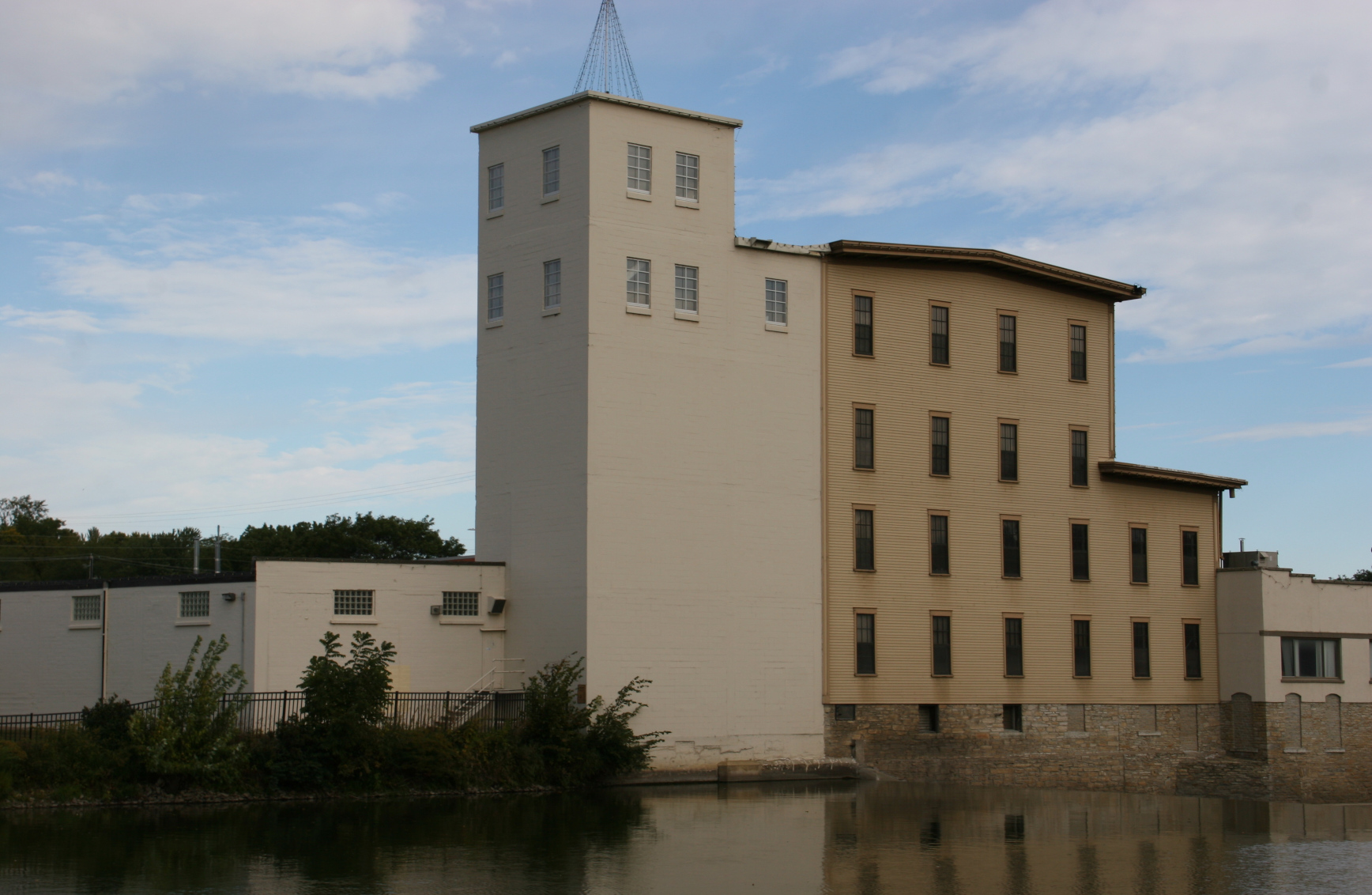
The historic Ames Mill along the Cannon River. (Minnesota Prairie Roots copyrighted photo October 2022)
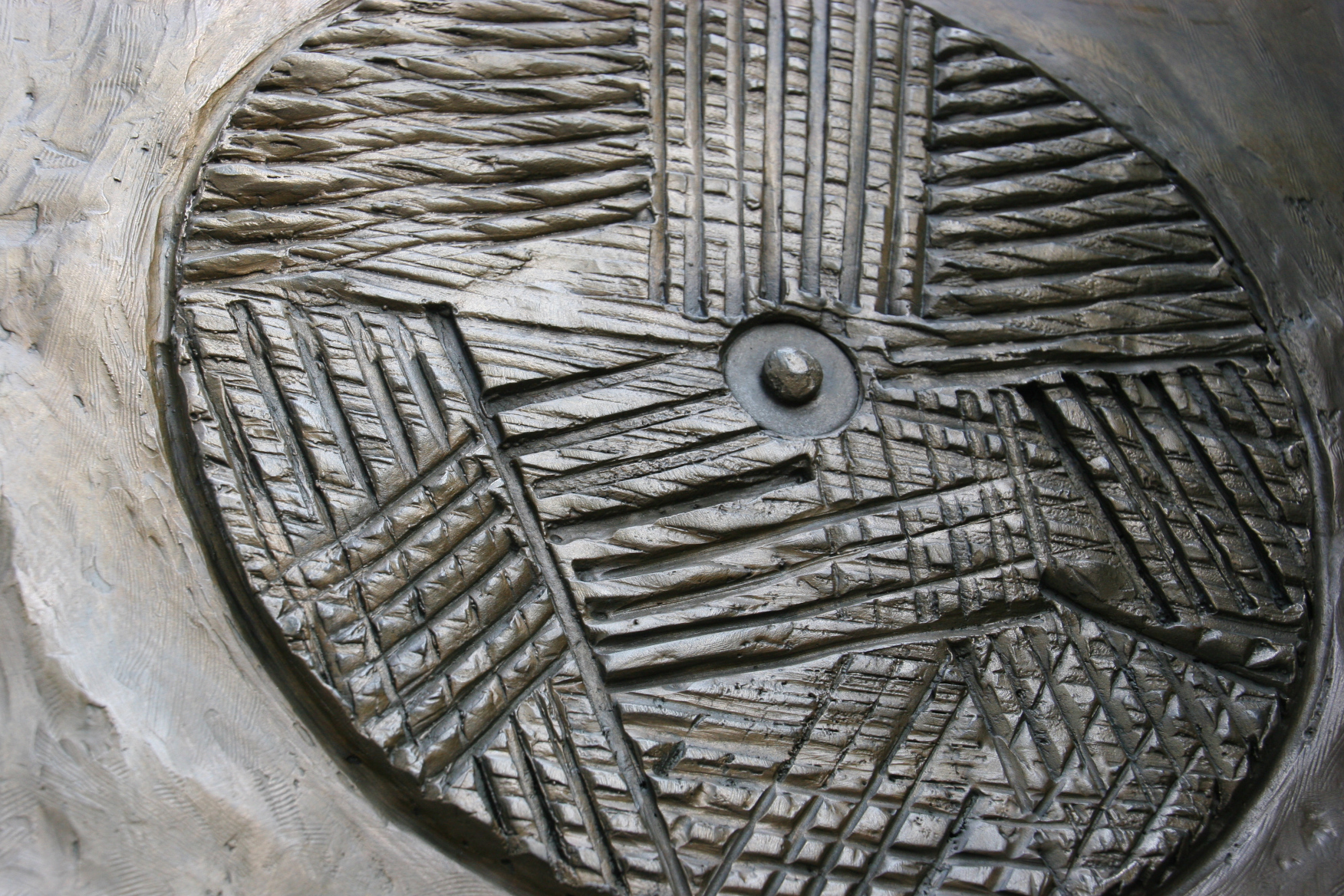
An interpretation of a stone grist mill for grinding wheat into flour is included in the sculpture.(Minnesota Prairie Roots copyrighted photo October 2022)
It’s beautiful, fitting for a community rooted in agriculture. The 3,000-pound sculpture symbolizes Northfield’s heritage of wheat farming and milling. Just across the river sits the Ames Mill, where the gristmill in the late 1860s produced 150 barrels of wheat daily.
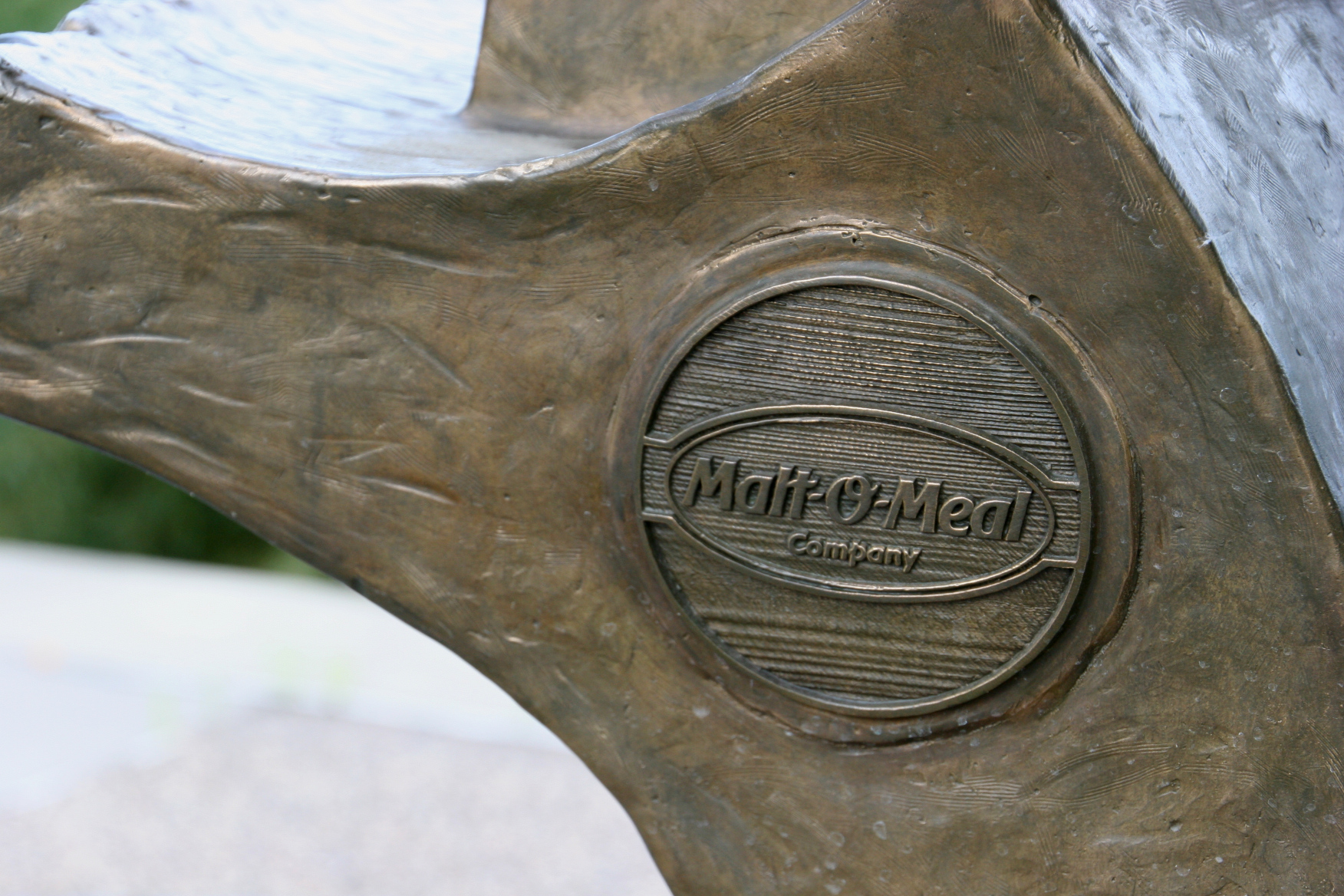
Malt-O-Meal was a major funder for the sculpture. (Minnesota Prairie Roots copyrighted photo October 2022)
In 1927, John Campbell of the Campbell Cereal Company took over the mill and began producing Malt-O-Meal hot cereal. Today Post Consumer Brands owns the mill and still makes that hot cereal. Dry cereal is manufactured at a nearby production facility. Many days the scent of cereal wafts over Northfield.
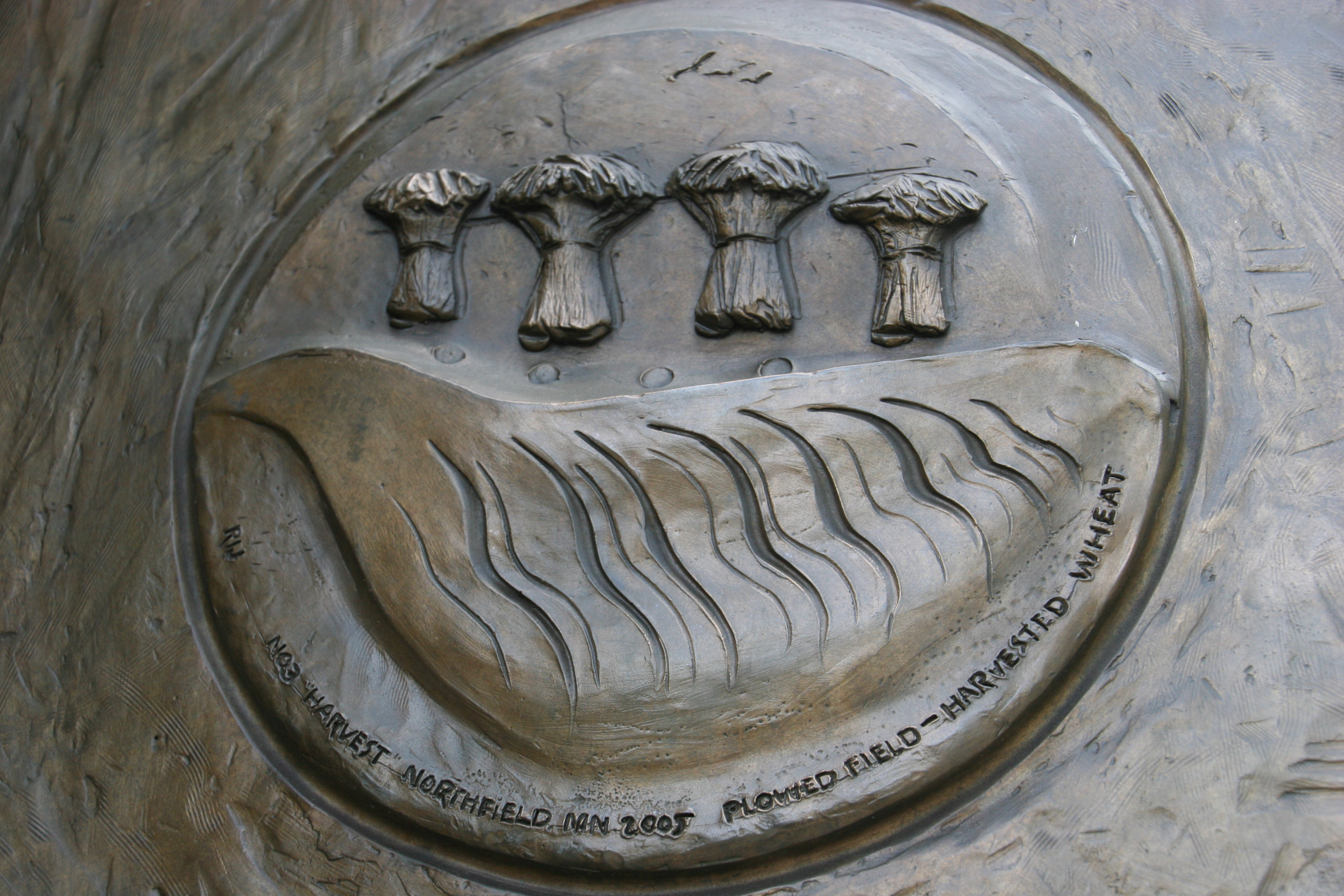
Harvested wheat and a plowed field cast into bronze. (Minnesota Prairie Roots copyrighted photo October 2022)
All of this—the smell of cereal, the “Harvest” sculpture, the historic Ames Mill—reminds me of the importance of agriculture in our region. It reminds me, too, of my rural roots. I am grateful for my farm upbringing. I am grateful, too, for those who today plant, tend and harvest crops. They are essential to our economy, feeding the world, providing raw product.
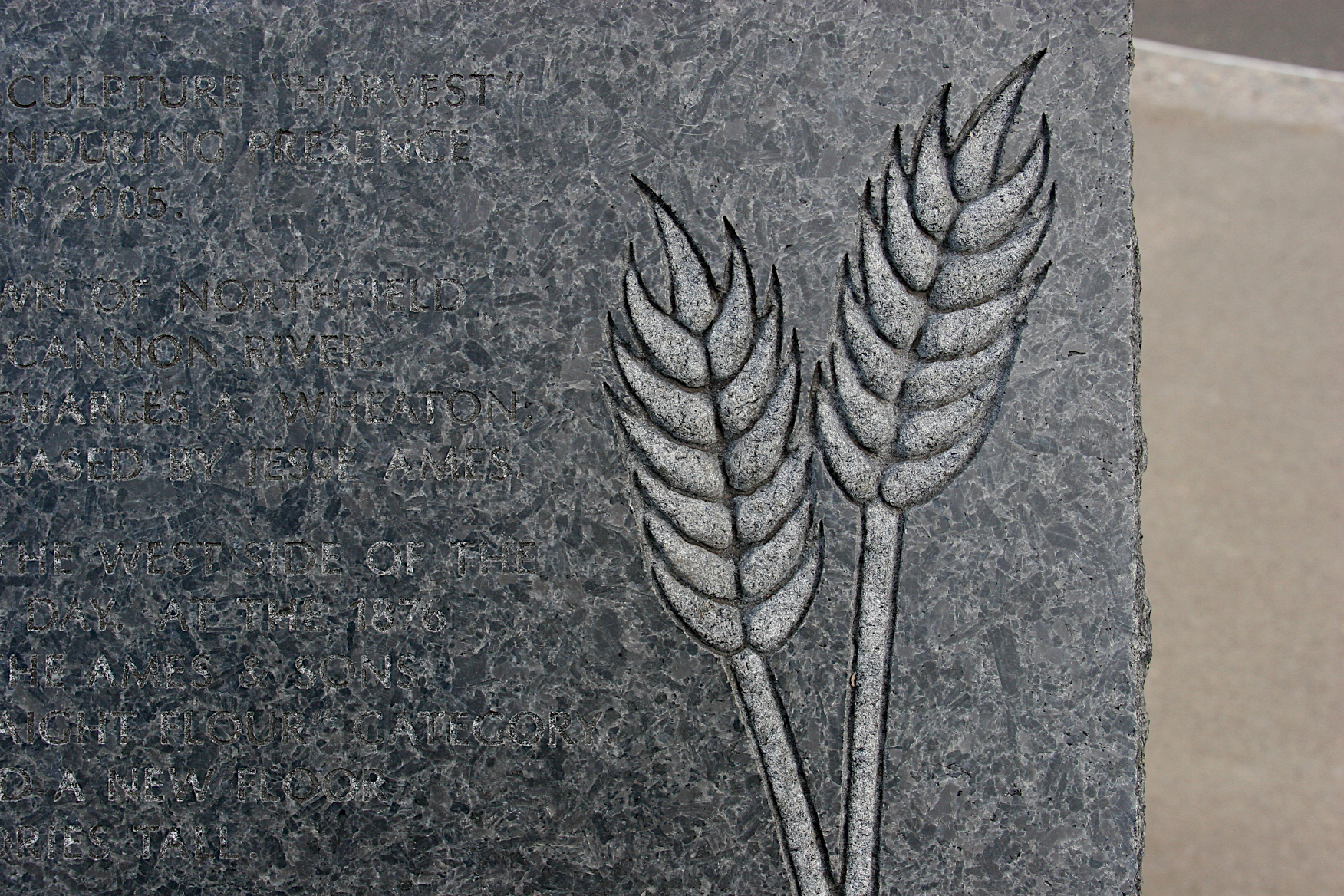
Wheat stalk details on an informational plaque which is nearly impossible to read due to weathering of the writing. (Minnesota Prairie Roots copyrighted photo October 2022)
That this season of harvest is honored in a “Harvest” sculpture shows a deep appreciation for history, heritage and agriculture in Northfield. The public art gives me pause to reflect on inspiration in creativity. Today I celebrate the artistic interpretation of harvest displayed along the banks of the Cannon River.
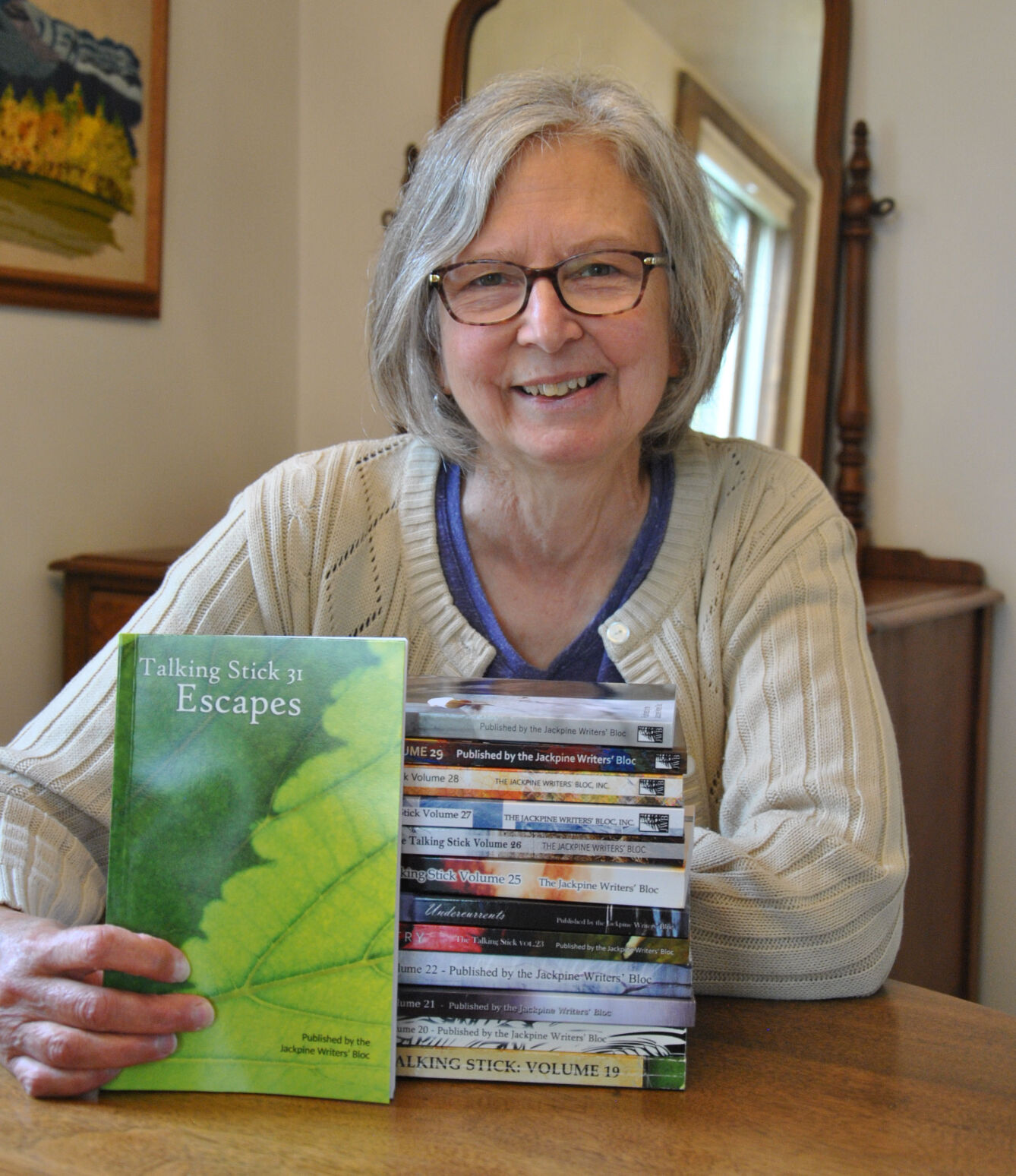
I’ve been published in 13 volumes of “The Talking Stick,” most recently In “Volume 31, Escapes.”(Photo by Colton Kemp)
AS A WRITER, getting published adds to the joy of the craft. I write because it’s my passion, one which I want to share.
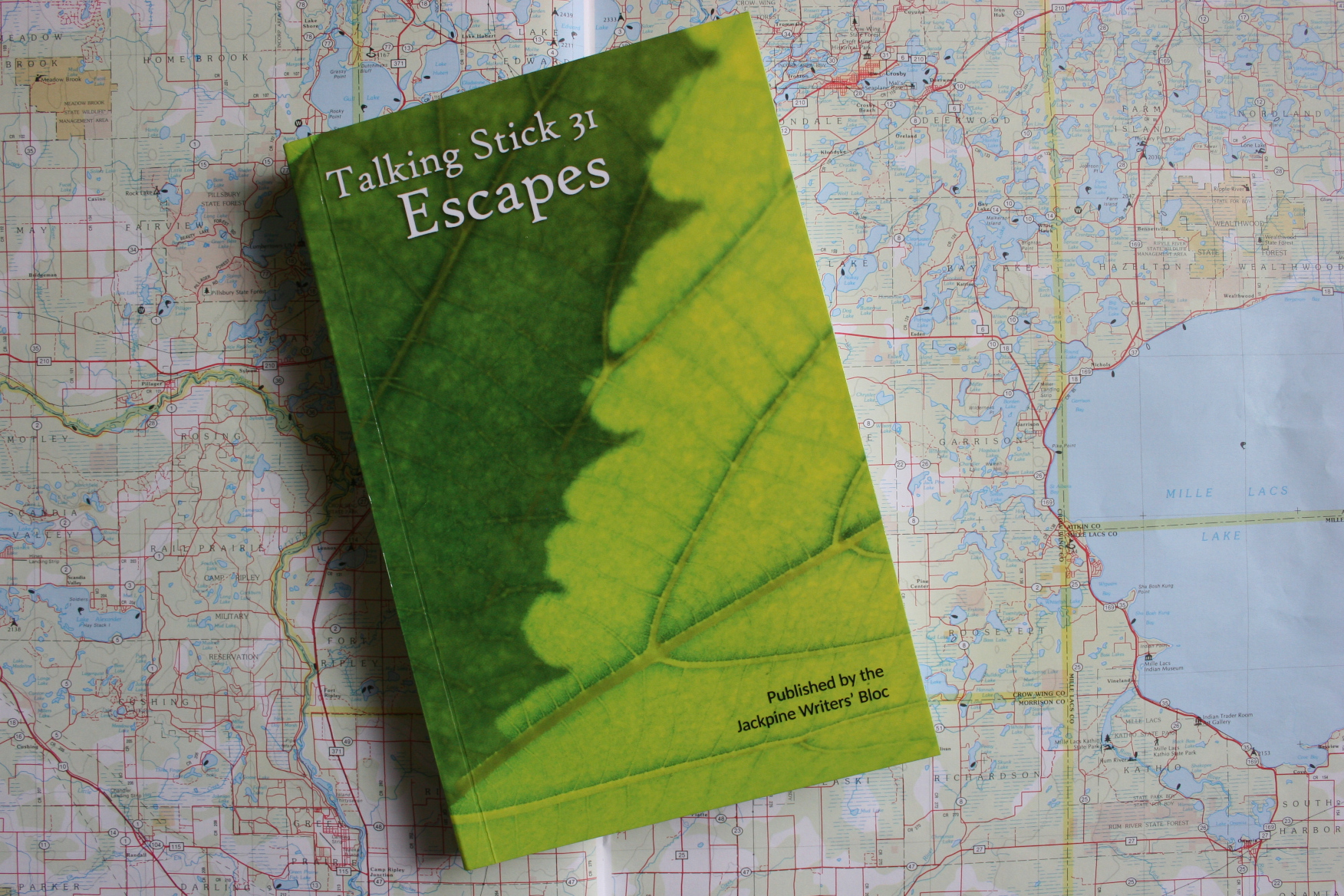
I laid the latest copy of The Talking Stick atop a page in a Minnesota atlas to represent escape in a sense of place. Reading and writing also provide an escape. (Minnesota Prairie Roots copyrighted photo October 2022)
The newest opportunity to share comes via The Talking Stick 31—Escapes, the latest anthology released in September by Park Rapids area-based The Jackpine Writers’ Bloc. The Talking Stick, published now for 31 years, features a collection of creative nonfiction, fiction and poetry by Minnesota writers or those with a connection to our state. This year, editors chose 83 poems, 28 creative nonfiction stories and 18 fiction stories for publication from 82 writers. More than 300 submissions came from 140 writers.
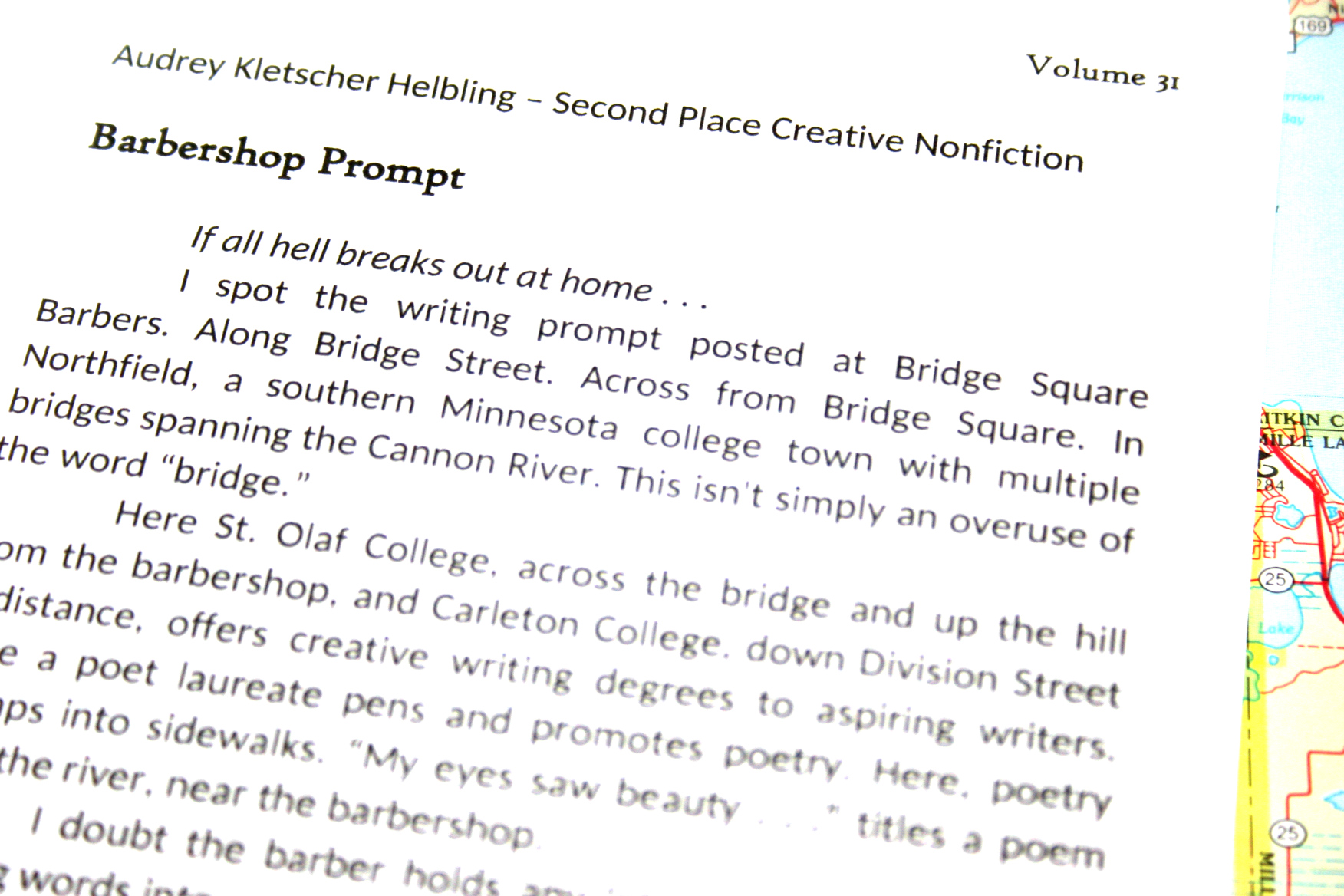
The beginning of my story, “Barbershop Prompt.” (Minnesota Prairie Roots edited and copyrighted photo October 2022)
I’m delighted to announce that three of my submissions are included in Escapes. My story, “Barbershop Prompt,” won second place and a cash prize in creative nonfiction. “Plans” earned honorable mention in fiction. And my second fictional piece, “Between Sisters,” simply published.
My writing has published in all 13 of these “The Talking Stick” volumes. (Minnesota Prairie Roots copyrighted photo October 2022)
To have my work selected and honored by peers is, for me, reaffirming. This marks the 13th year my writing—a total of 13 poems, eight creative nonfiction stories and nine fiction stories—have published in The Talking Stick. I’ve earned seven honorable mentions and two second placings through the years. Every year I’ve entered this competition, my writing has published. That proves personally validating.
When I first ventured into penning fiction, I did so with hesitancy. My journalism education, background and experience rooted me in gathering information and reporting the facts with no bend to fictionalize. I didn’t know I could write fiction until I tried. And I found I rather enjoy this type of writing. It stretches my creativity in a way that traditional factual writing doesn’t. Yet, even when I write fiction, there is some truth within. I weave into my writing (often in subtle ways) that which I know or care about or which has touched me. I expect most fiction writers would say the same.
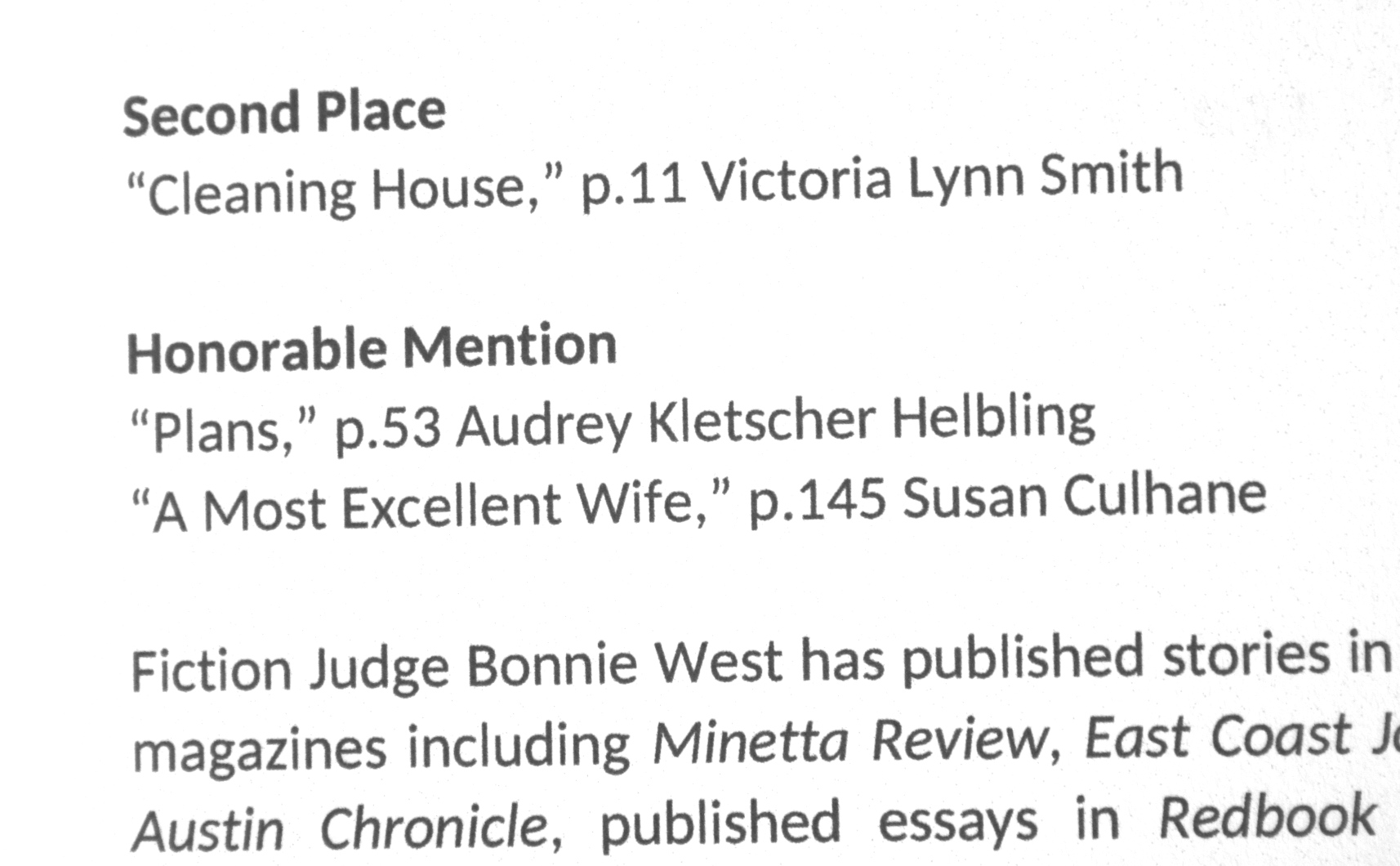
Partial winning credits in fiction and the judge’s bio. (Minnesota Prairie Roots edited and copyrighted photo October 2022)
My award-winning short story, “Plans,” focuses on abuse within a family. Abuse has not been my personal experience. But it runs rampant in society. “Plans” focuses on abuse from the perspective of Henrietta, or Henri as her father calls her. He wanted a son, not a daughter. I’m not revealing more except to say the story leaves the reader wondering. And that’s exactly as The Talking Stick editors intend. Submission guidelines call for focusing on short forms, on compressed creations which hint of a longer, more complex story. You get that in my 457-word “Plans.”
Here’s, in part, what fiction judge Bonnie West said about my short story:
What a good story. Very clever, but also very poignant and surprising! Thanks for this delightful and entertaining revenge story!
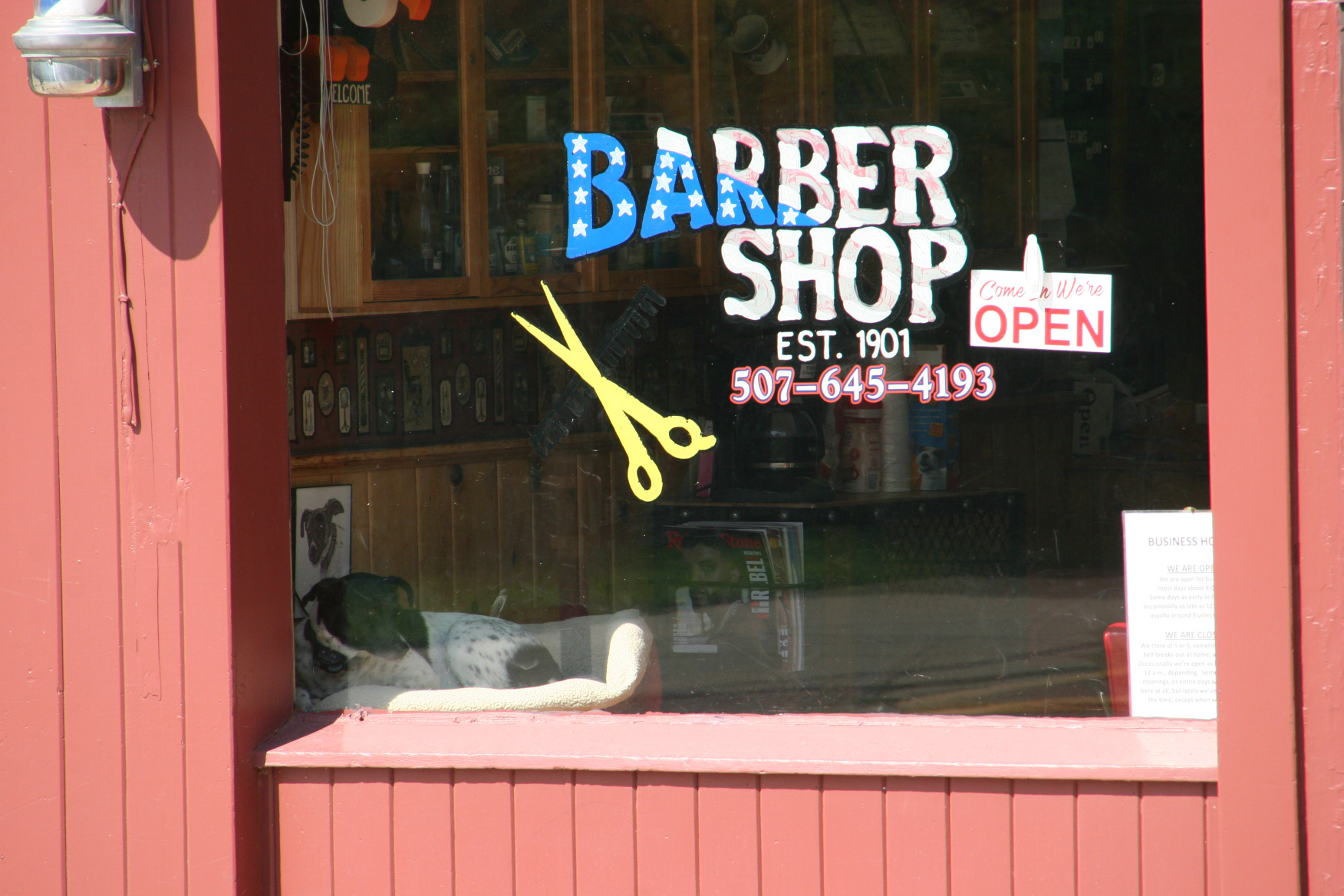
Bridge Square Barbers, the inspiration for my award-winning story. (Minnesota Prairie Roots copyrighted file photo August 2022)
I definitely appreciate West’s comment and that of creative nonfiction judge Marge Barrett. She evaluated “Barbershop Prompt,” praising the energy and cleverness of my story. A sign I spotted in the front window of Bridge Square Barbers by Bridge Square in Northfield prompted me to write this. I am an observer, someone who notices details. That often inspires. Like my winning fiction story, this fact-based story leaves the reader wondering, wanting more. The same can be said for “Between Sisters.”
The Talking Stick is an incredible collection of outstanding writing and I’m honored to be included with so much other Minnesota talent. Each year I see familiar names repeated, but then new voices, too. The small editorial team from the Jackpine Writers’ Bloc deserves recognition also for their hard work. This anthology truly is a labor of love. I’m grateful for their appreciation of Minnesota writers and for their dedication to the craft of writing.
Colton Kemp, a reporter for the Faribault Daily News, wrote a feature on me which published in the Saturday, October 8, edition. I encourage you to read that also by clicking here. I am grateful for Colton sharing my story and for the opportunity to connect with him, another individual passionate about writing.
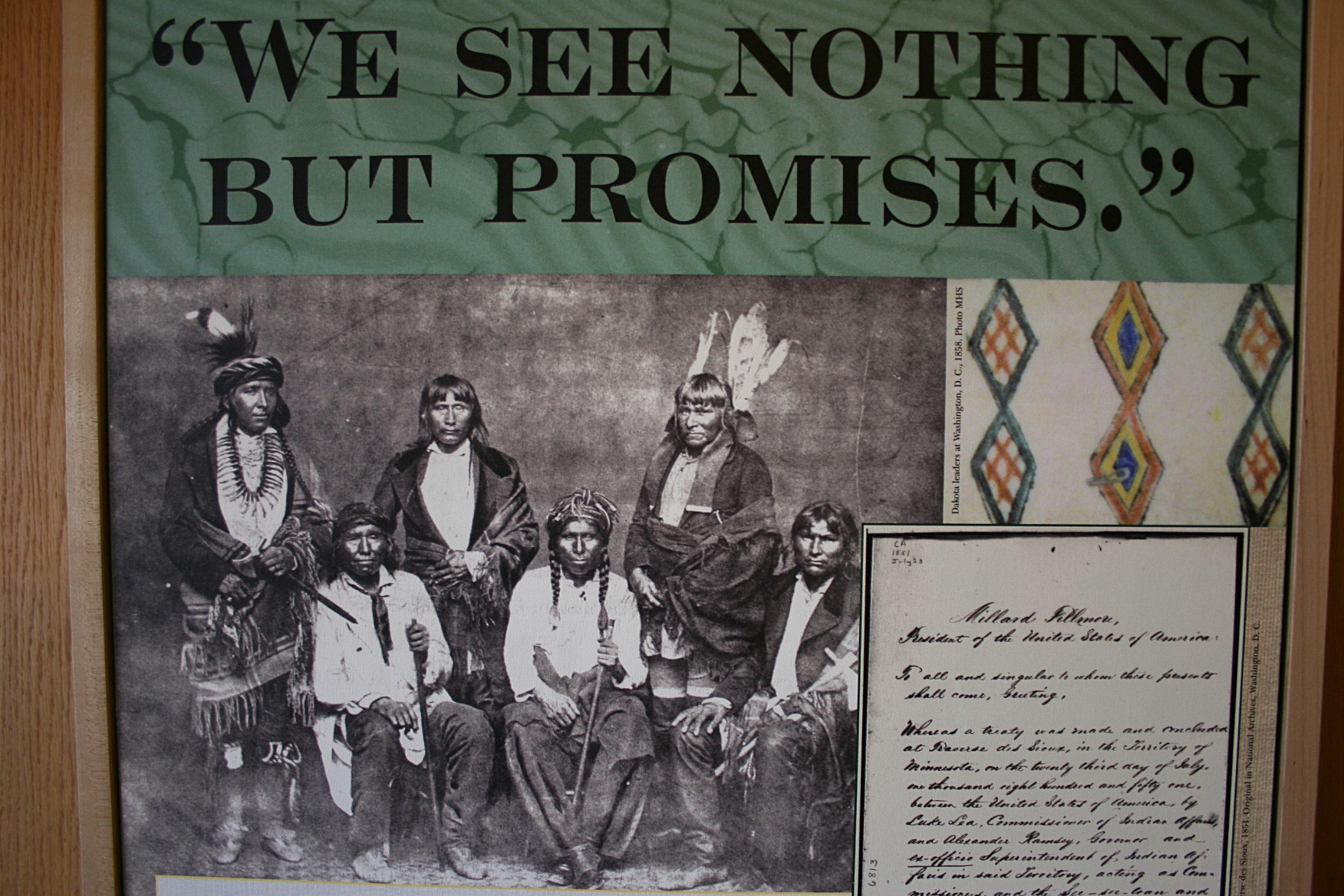
A photo panel at the Traverse des Sioux Treaty Center in St. Peter shows Dakota leaders photographed in Washington D.C. in 1858. The photo is from the Minnesota Historical Society. Broken promises led to the 1862 war.(Minnesota Prairie Roots file photo)
TODAY, INDIGENOUS PEOPLES’ DAY, I think of the US-Dakota War of 1862. When as a high school student I studied that war, I felt an immediate connection to the event which occurred in my home county and neighboring counties in southwestern Minnesota. My interest sparked because this happened in my backyard. Today I have a much better understanding of the 1862 conflict among the native Dakota peoples, the settlers and the government. My learned “white” perspective has shifted, my viewpoint has broadened. That has come through listening, reading, educating myself.
A public art installation at Northfield’s 2022 Earth Day celebration. Northfield has a Land Acknowledgement Agreement. (Minnesota Prairie Roots copyrighted file photo April 2022)
I see the same shift in attitudes throughout our nation, state and communities today. Land acknowledgment agreements are being written. There’s an awareness that indigenous peoples are the original inhabitants of the land, including in my home county of Redwood and my home of the past 40 years, Rice County.
I recently learned that the Wahpekute, part of the Dakota Nation, placed their dead on scaffolding on land just up the hill from my Faribault home. Land that is now a city park. After a year, the bones of the deceased were moved a few blocks away to a permanent burial grounds. That cemetery is not marked as such. Up until a presentation by Susan Garwood, director of the Rice County Historical Society, I was unaware that Peace Park was a sacred place, not simply a triangle of land with a WW II memorial along busy streets. Efforts are underway in Faribault to landmark such places of importance, to honor the Dakota.
A must-read novel based on fact.
It starts at a grassroots level, this unraveling of the truth, this recognition, this acknowledgment. I’ve toured museum exhibits, read books, attended presentations and more to assure that I am informed. I highly-recommend reading the award-winning book, The Seed Keeper by Diane Wilson. (Click here to read my review.)
I value that awareness of Indigenous Peoples’ food, culture, history and more is growing. In Minneapolis, diners can enjoy North American traditional indigenous food at award-winning Owamni by The Sioux Chef, for example.
Back in my home county, the Lower Sioux Indian Community is working hard to assure its culture remains strong through ongoing traditional events and teaching of the Dakota language.
A bison herd has been reintroduced to the prairie at Minneopa State Park near Mankato. (Minnesota Prairie Roots copyrighted file photo 2019)
I still have much to learn about the Indigenous Peoples of Minnesota. That I admit. Perhaps much of it is really unlearning. Today I pause to honor those who called this place, this southern Minnesota, home first, back when prairie grasses stretched high, bison roamed and the land was respected.
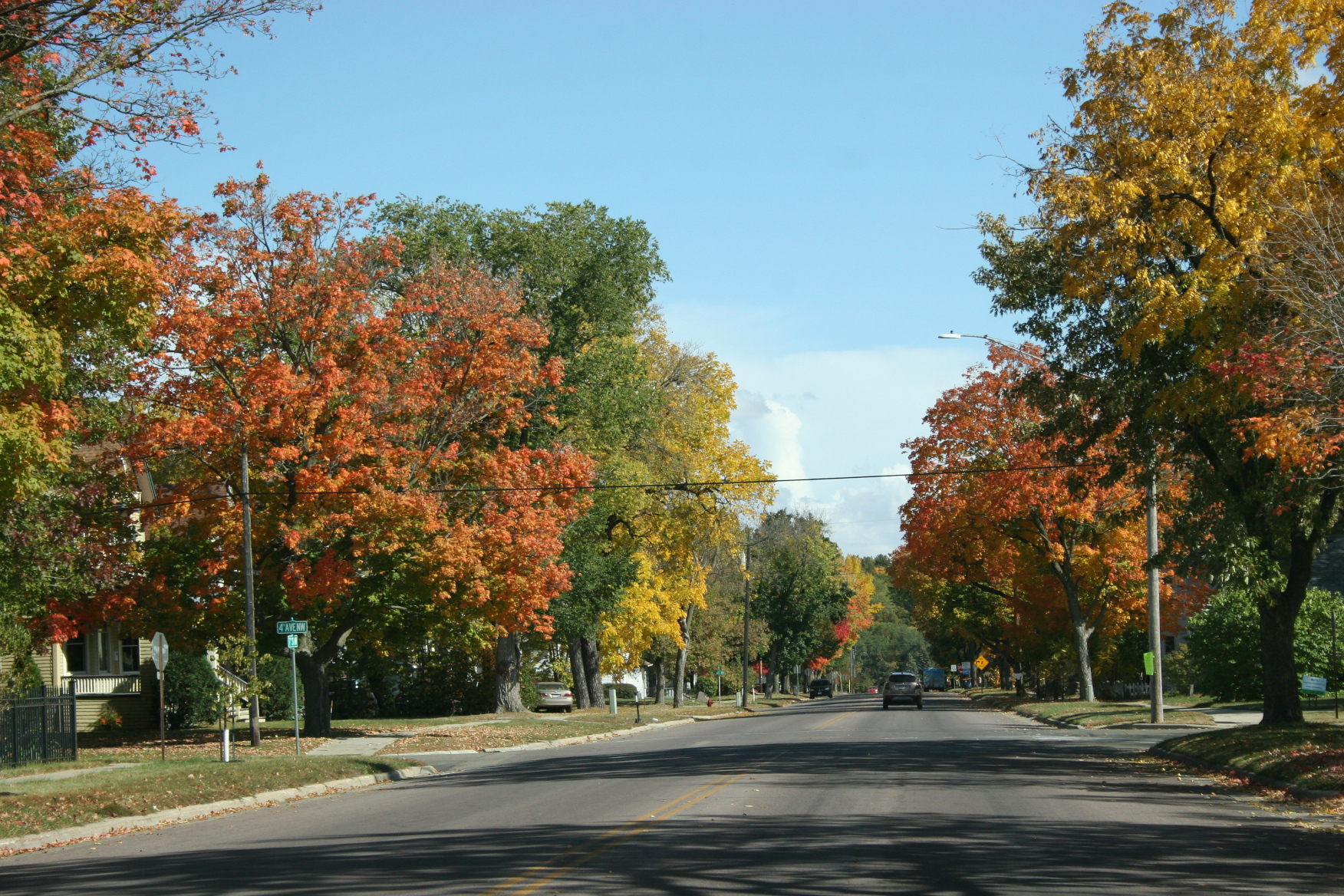
A view of the colorful foliage along Seventh Street in Faribault. (Minnesota Prairie Roots copyrighted photo October 2022)
ON THE THIRD CONSECUTIVE DAY of viewing fall colors in southern Minnesota, Randy and I headed northwest of Faribault to area lakes. But even before we got out of town, we drove along two city streets—Second Avenue by Bethlehem Academy north to Seventh Street and then Seventh Street—which are particularly beautiful in autumn. There’s no need to leave Faribault to see stunning trees of orange, red and yellow mixed with brown and green.
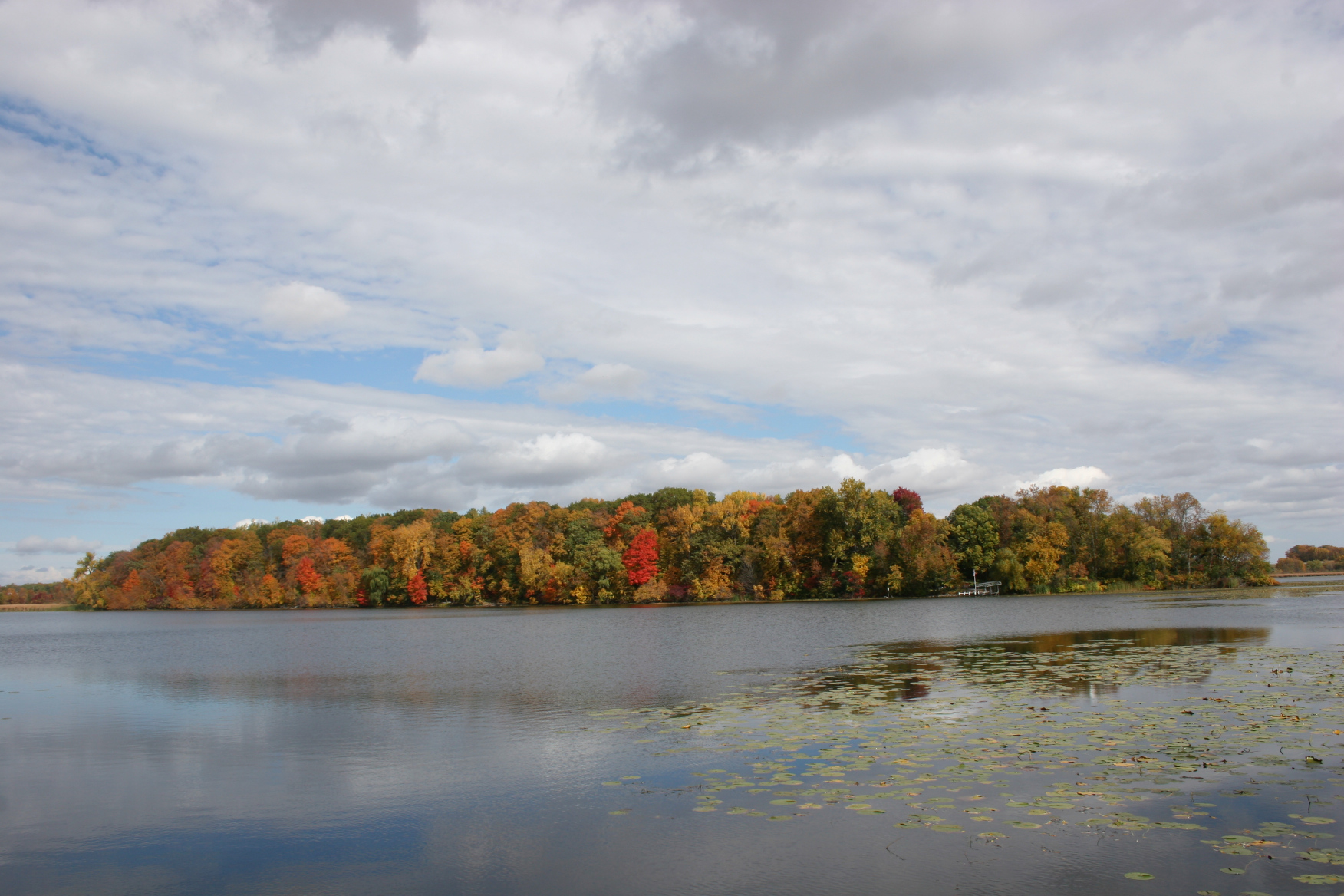
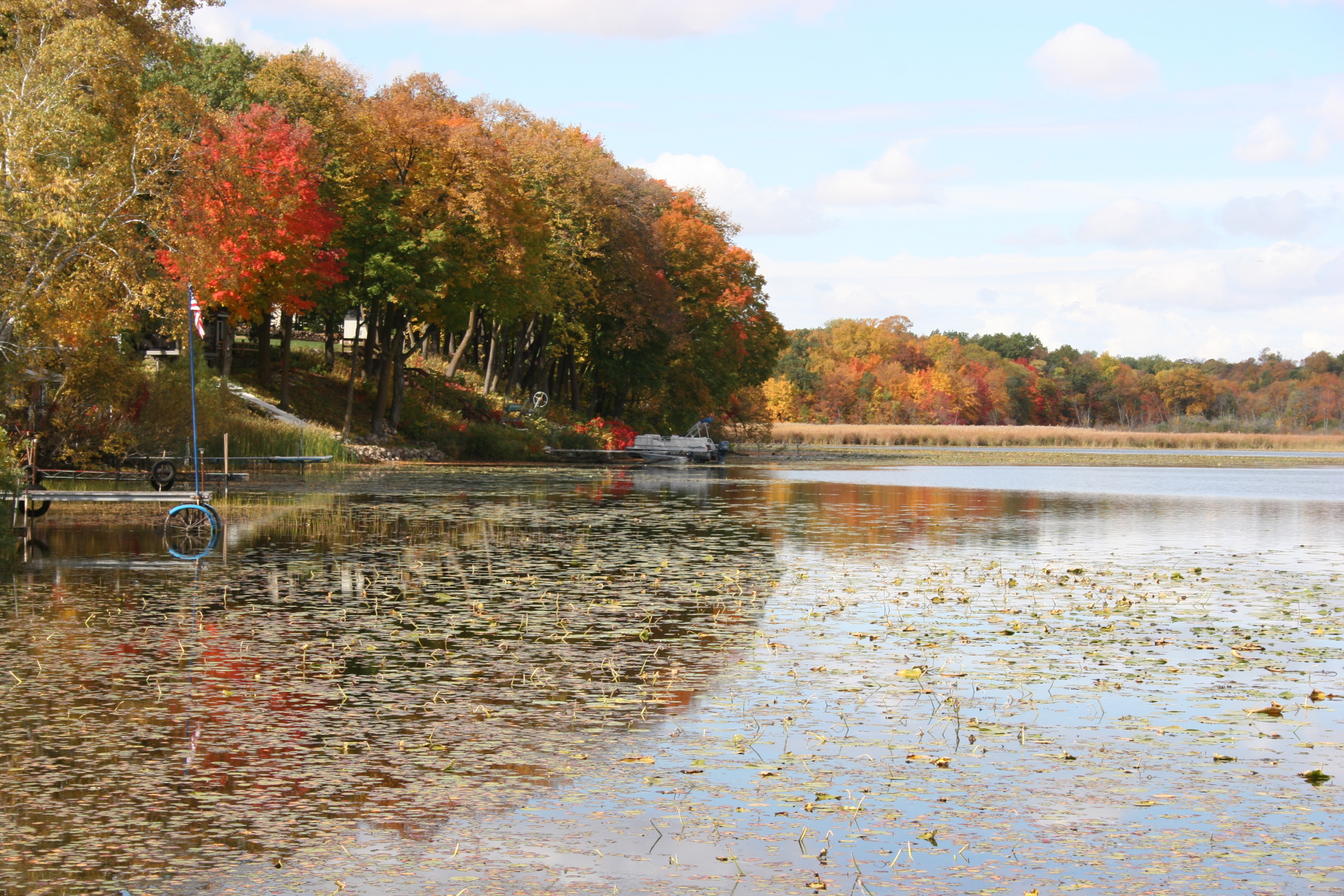
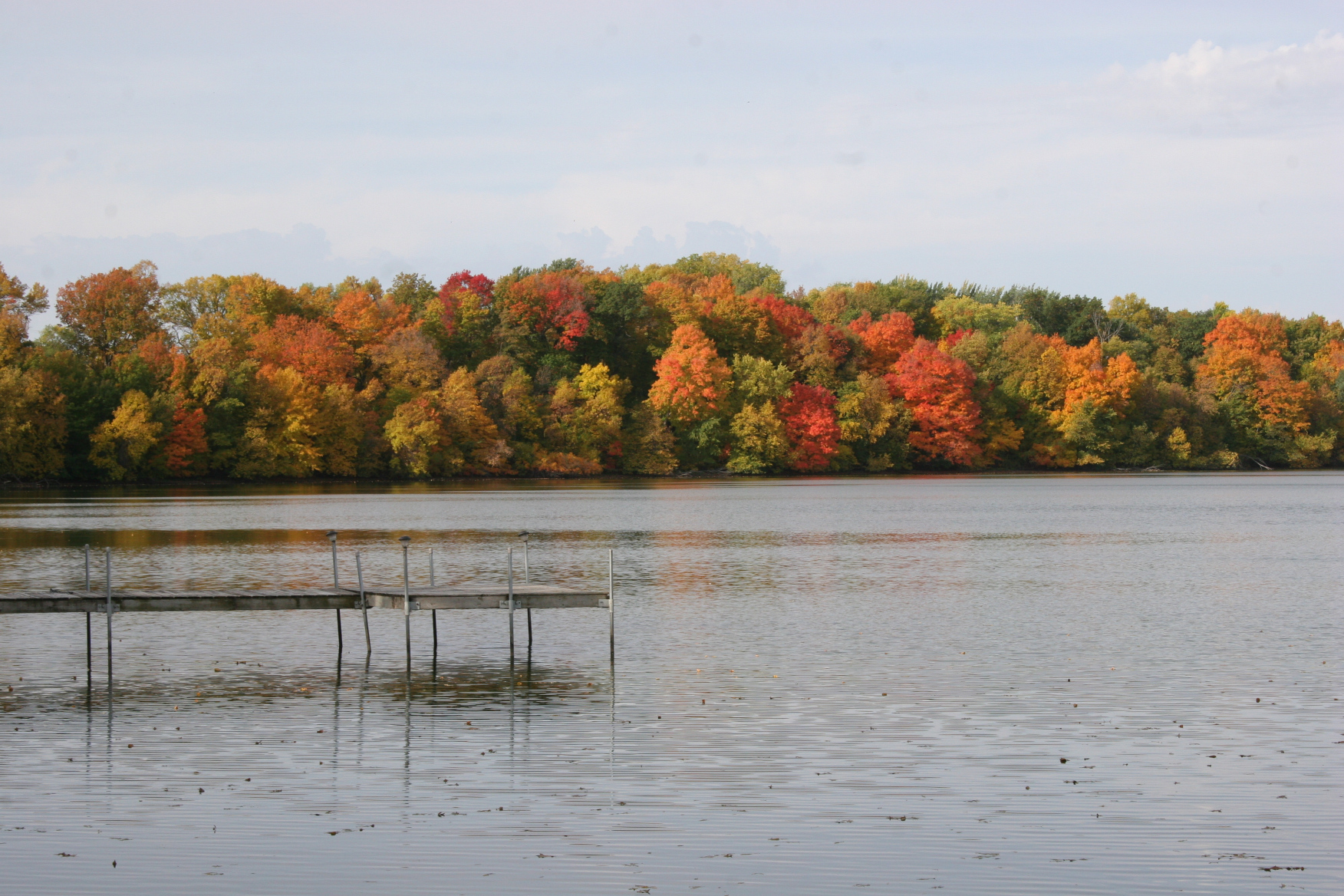
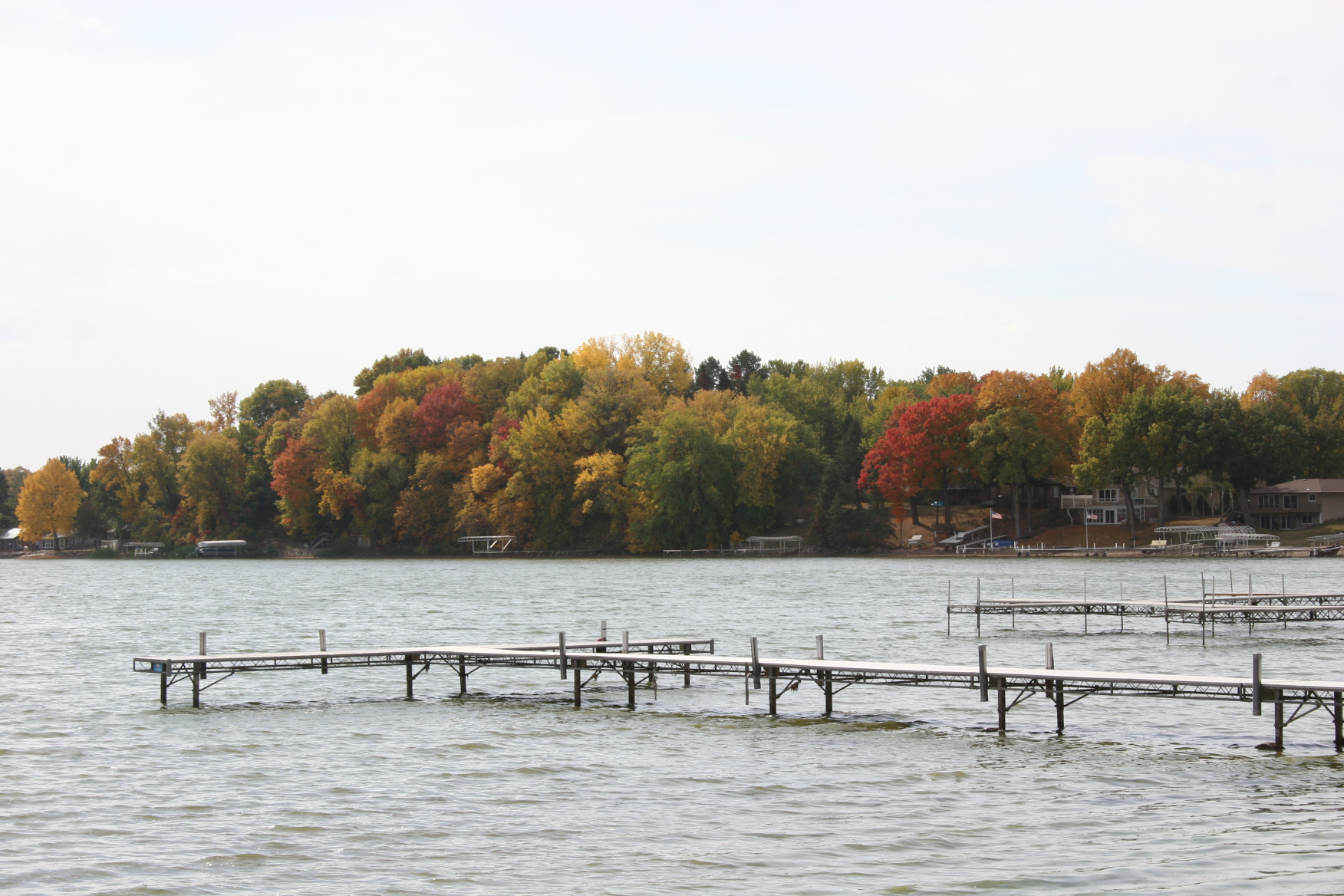
A sweeping view of Kelly Lake and the colorful treeline. (Minnesota Prairie Roots copyrighted photo October 2022)
Yet, there’s something about a colorful lakeshore treeline against the October sky that is particularly lovely. Thus I suggest a country drive. Perhaps my favorite area autumn color viewing spot is at the public boat landing on Kelly Lake. We return there each fall and Randy joked that I could just use the same photos taken last year. I didn’t.
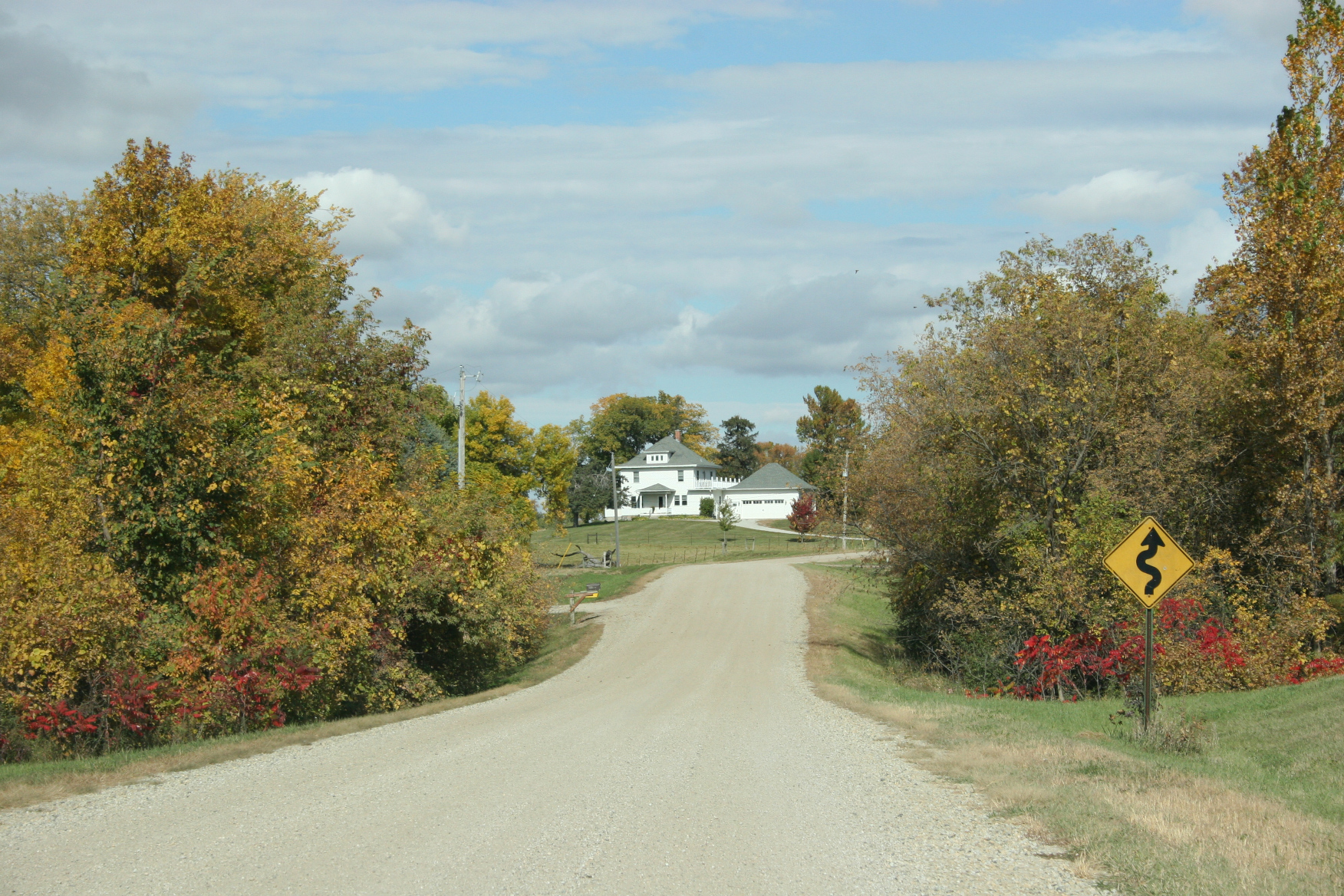
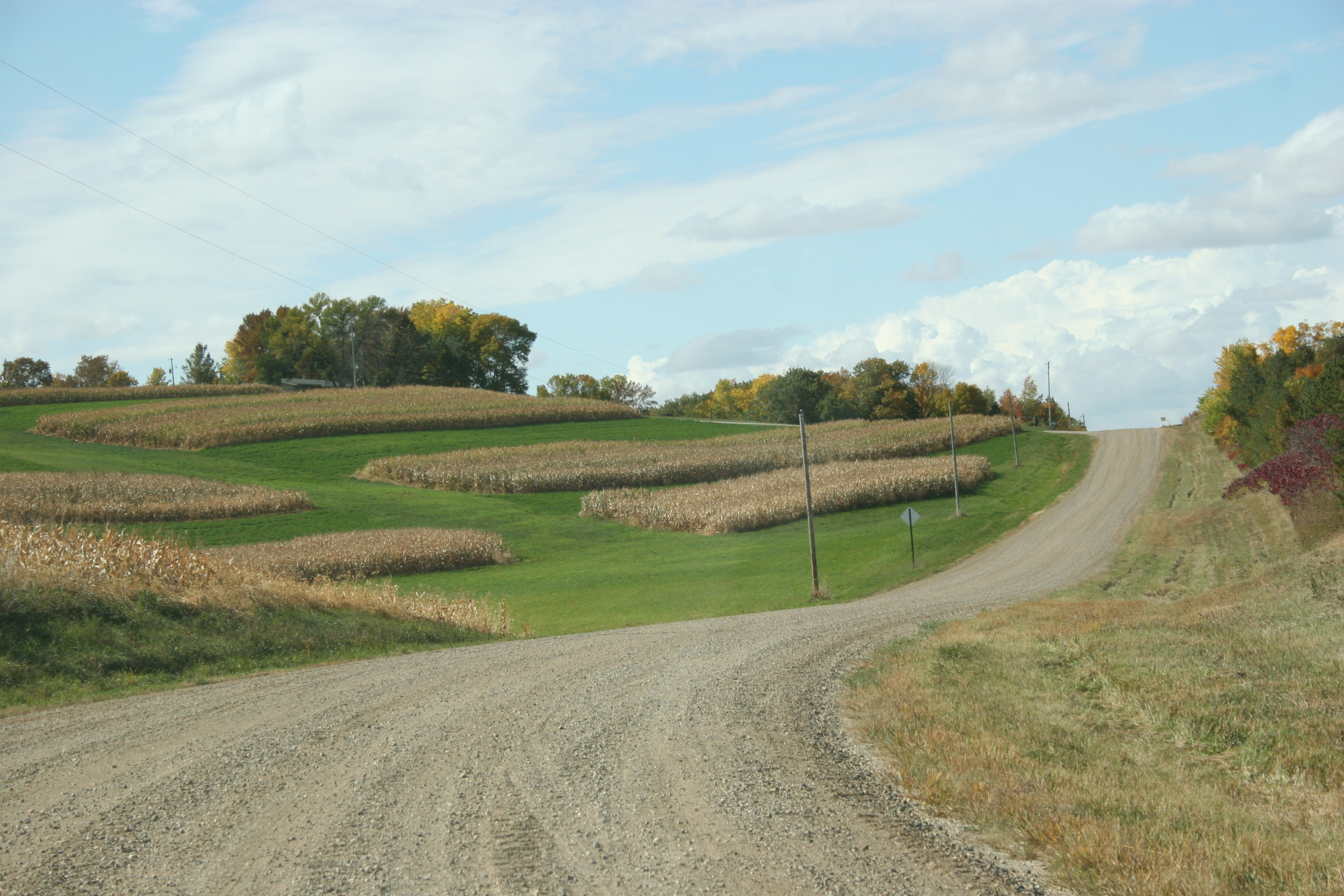
Belview Trail just outside Faribault winds past farm sites. (Minnesota Prairie Roots copyrighted photo October 2022)
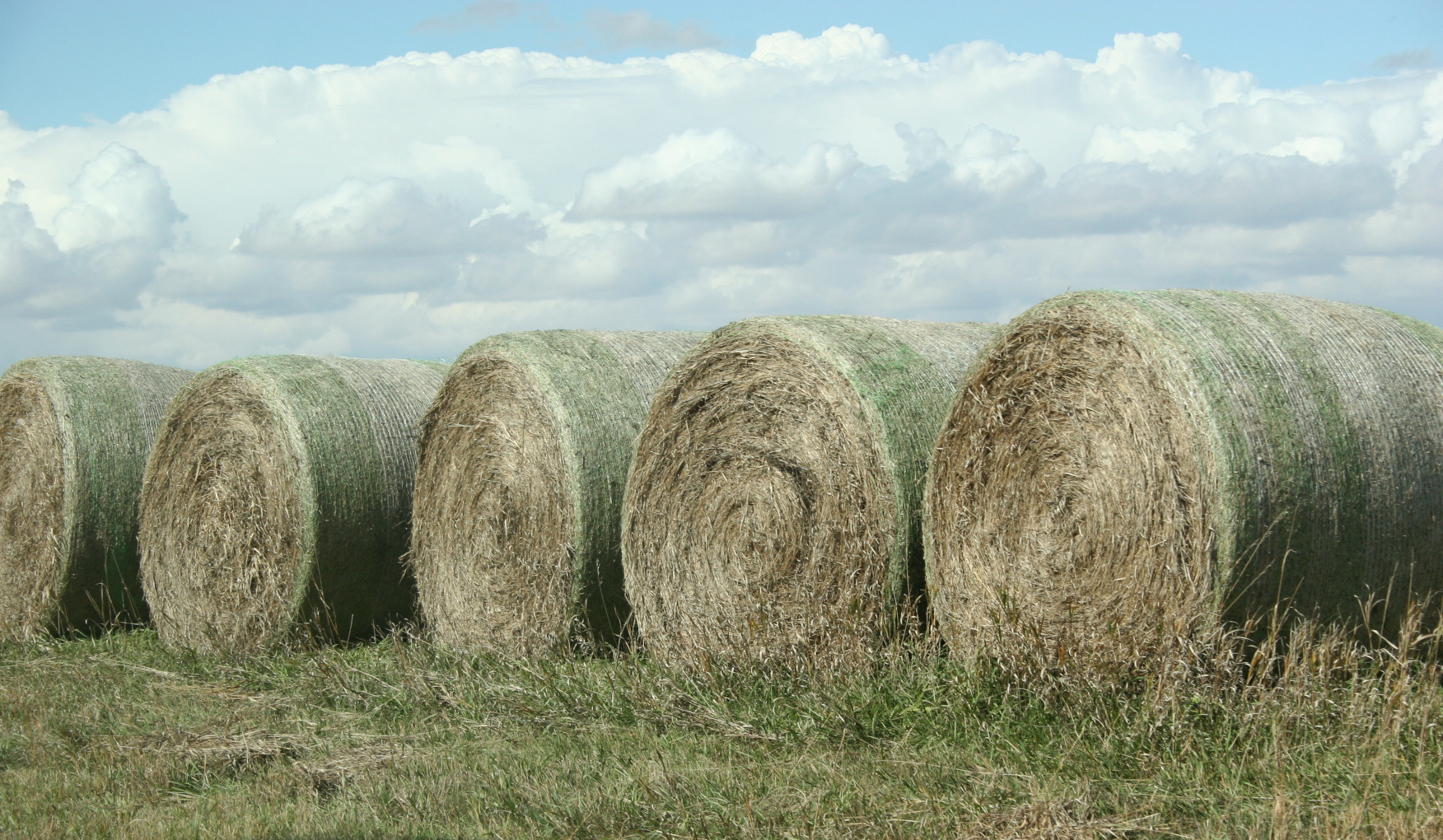
Hay bales line a hillside along CR 64. (Minnesota Prairie Roots copyrighted photo October 2022)
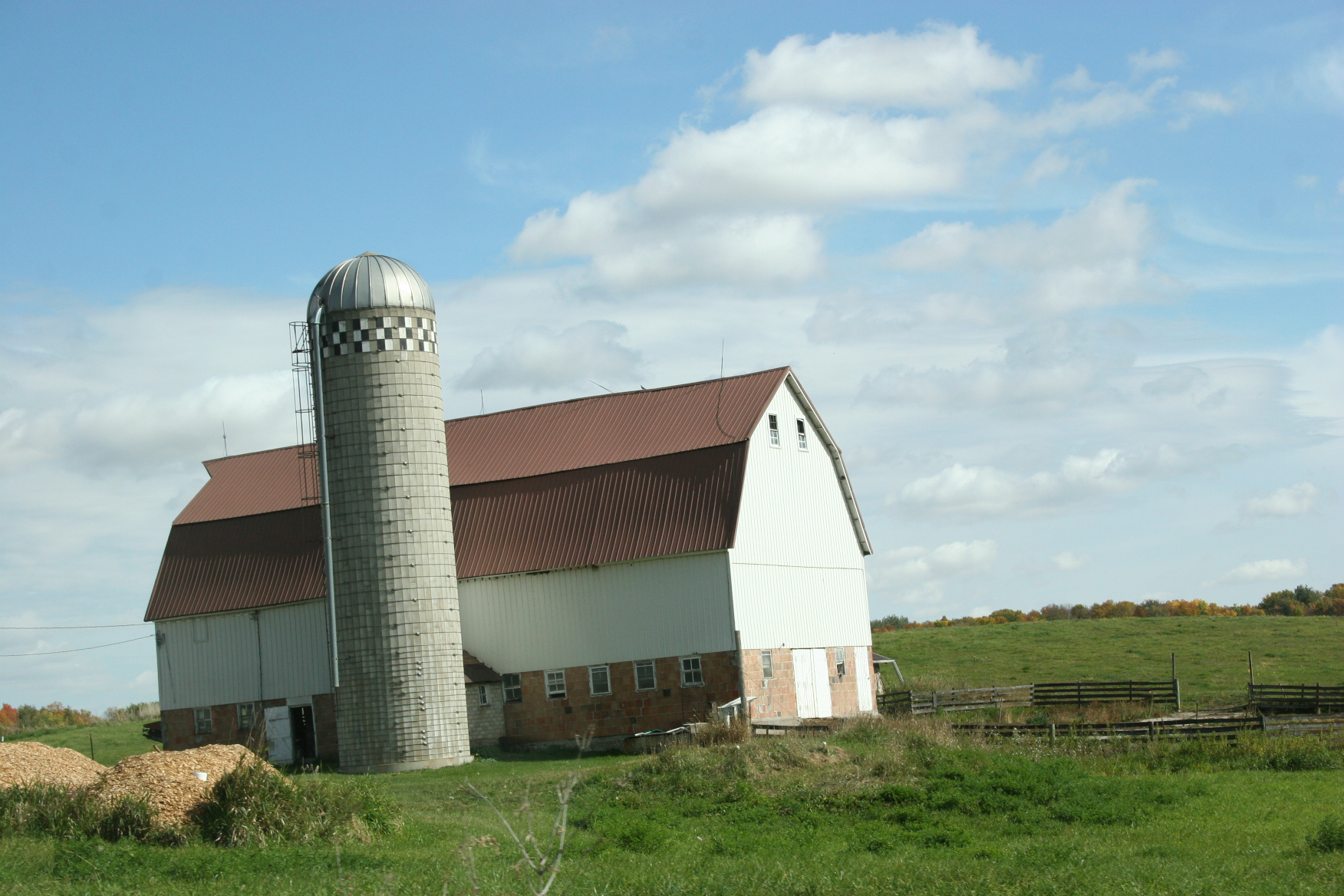
A well-kept barn near Roberds Lake. (Minnesota Prairie Roots copyrighted photo October 2022)
We edged Roberds Lake after trailing a winding gravel road past farm sites. Country drives are, by definition, about immersing ourselves in the country. Appreciating ripening corn and soybean fields, stately barns, ginormous round hay bales staged in a field… And then hugging the side of the road upon meeting a massive combine.
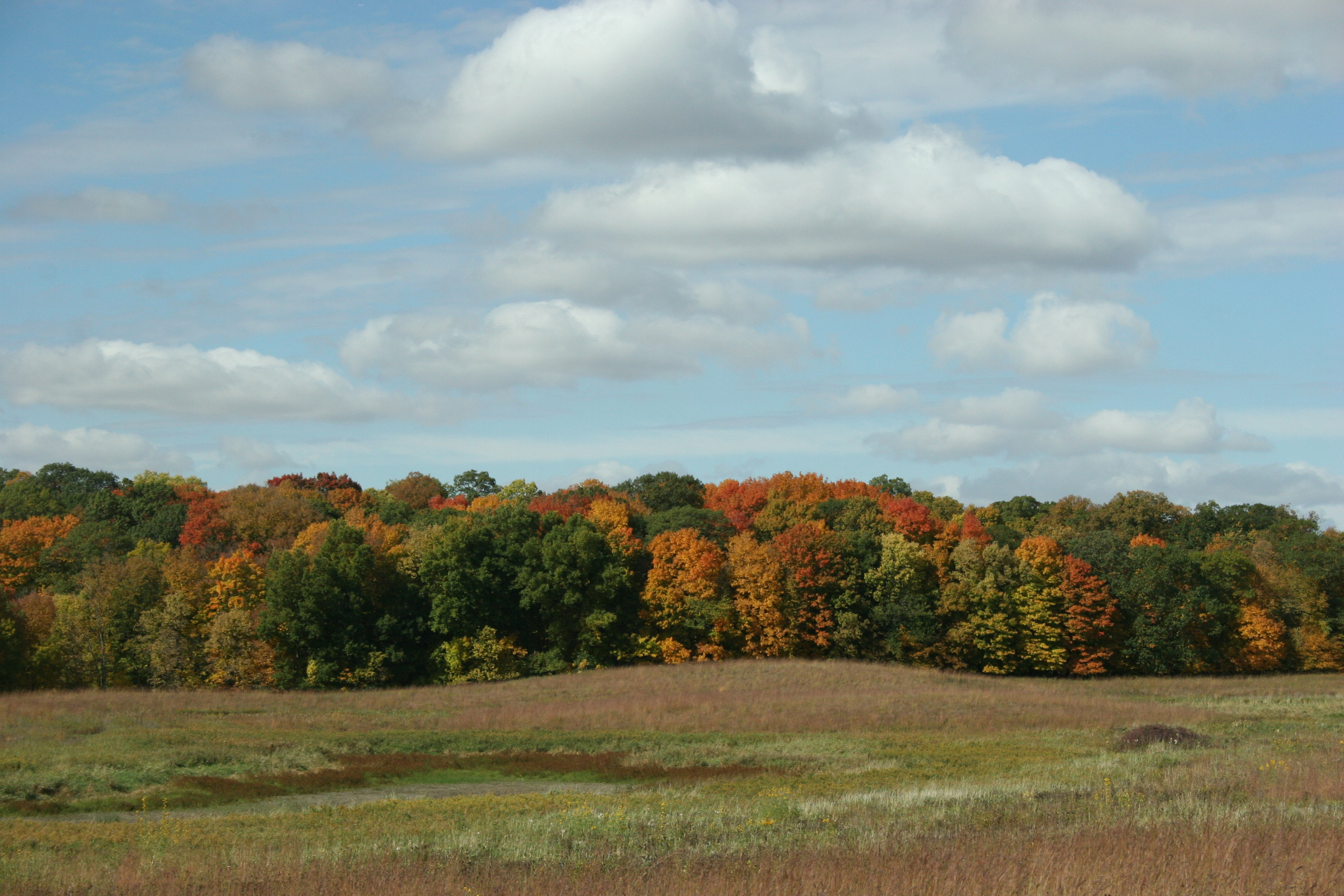
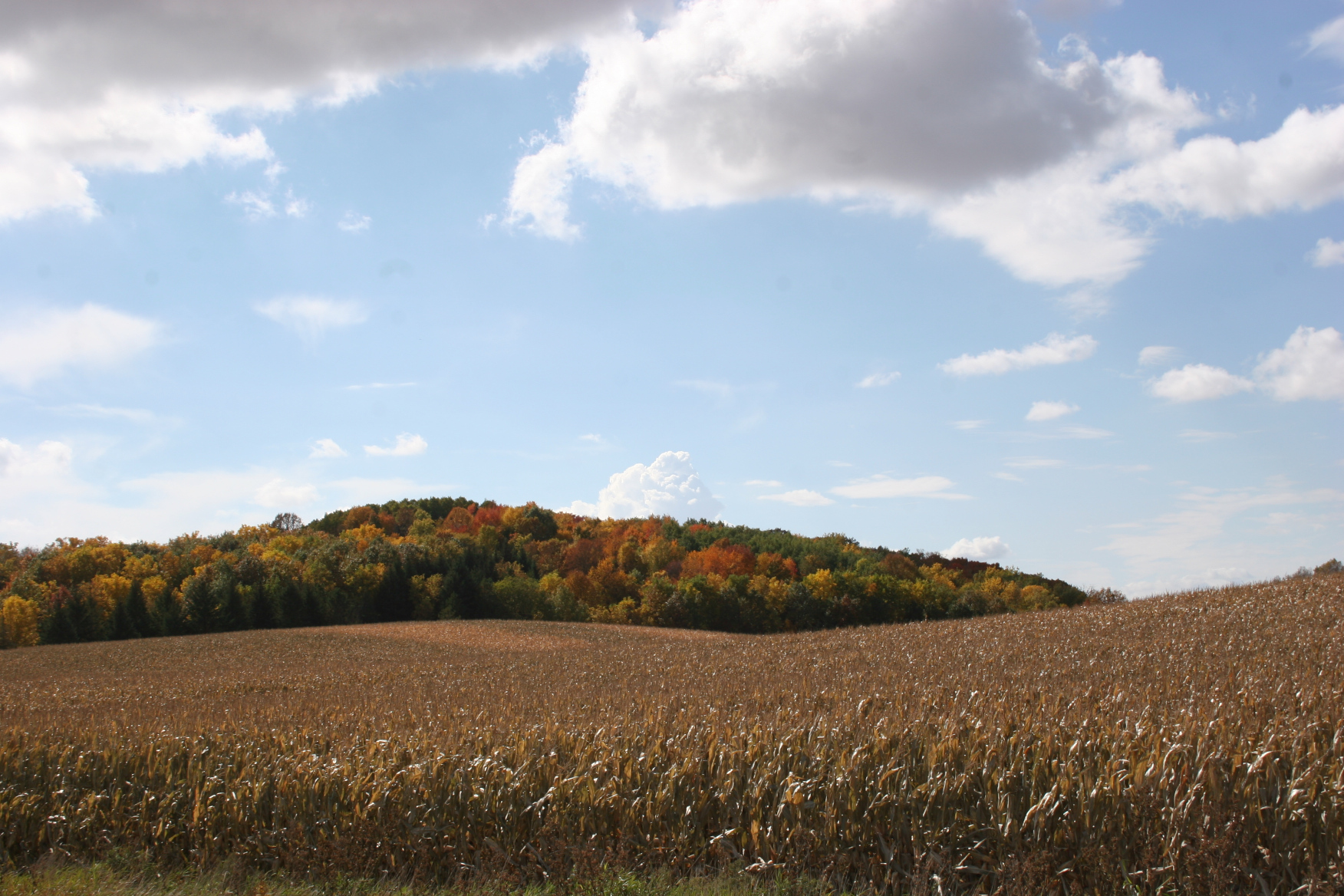
Sun and clouds mix over colorful woods near Roberds Lake. (Minnesota Prairie Roots copyrighted photo October 2022)
Mostly, I take in the landscape, this October day set against moody clouds on blue sky. Clouds create interest, depth, interesting patterns to backdrop fields and trees.
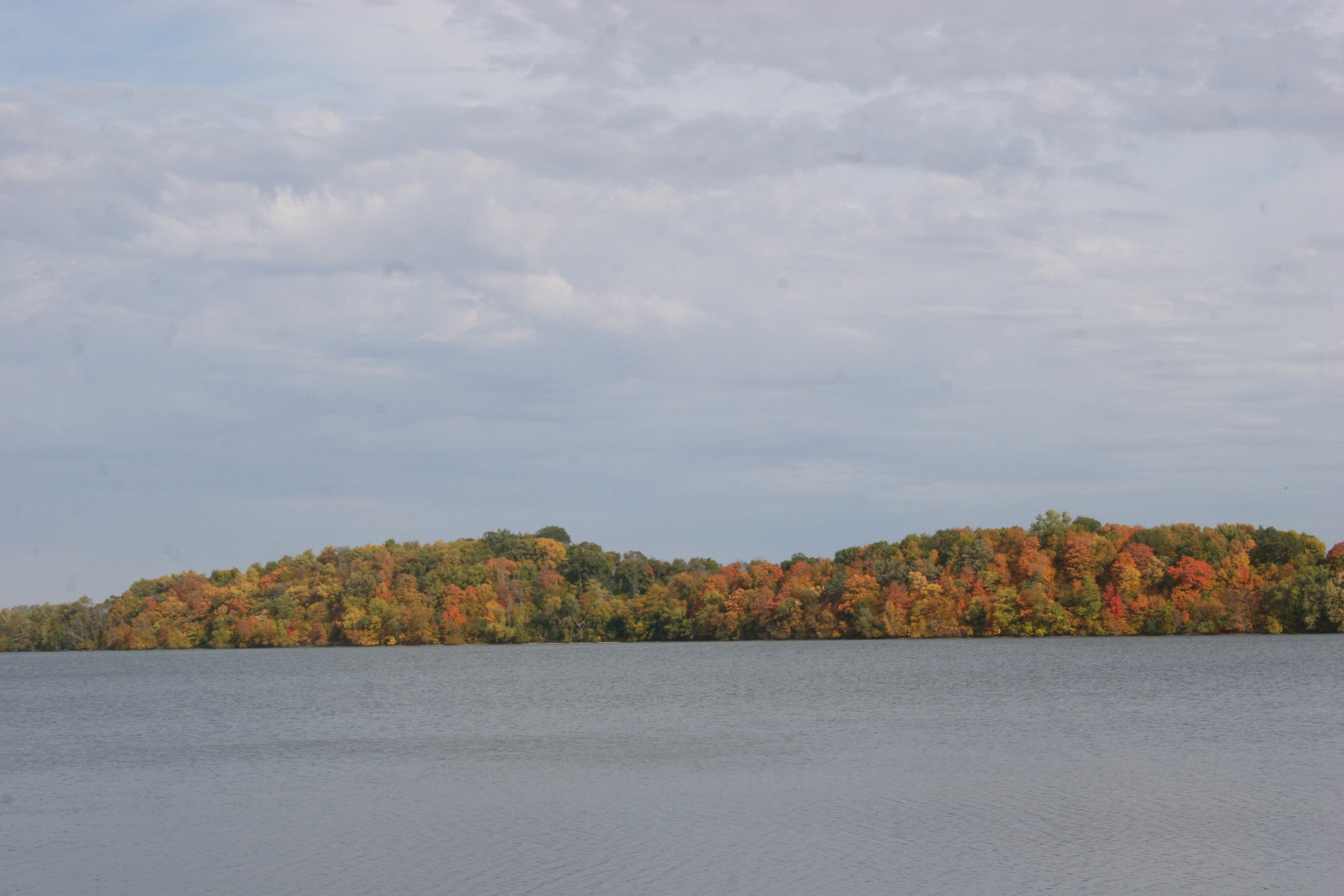
Shoreline and lake merge to create a “painting” of Kelly Lake. (Minnesota Prairie Roots copyrighted photo October 2022)
I see curves and lines and the way everything flows, first with my eyes, then through the viewfinder of my aged Canon EOS 20-D camera. Water flows into trees, trees into sky. It all comes together to create this scene, this autumn.
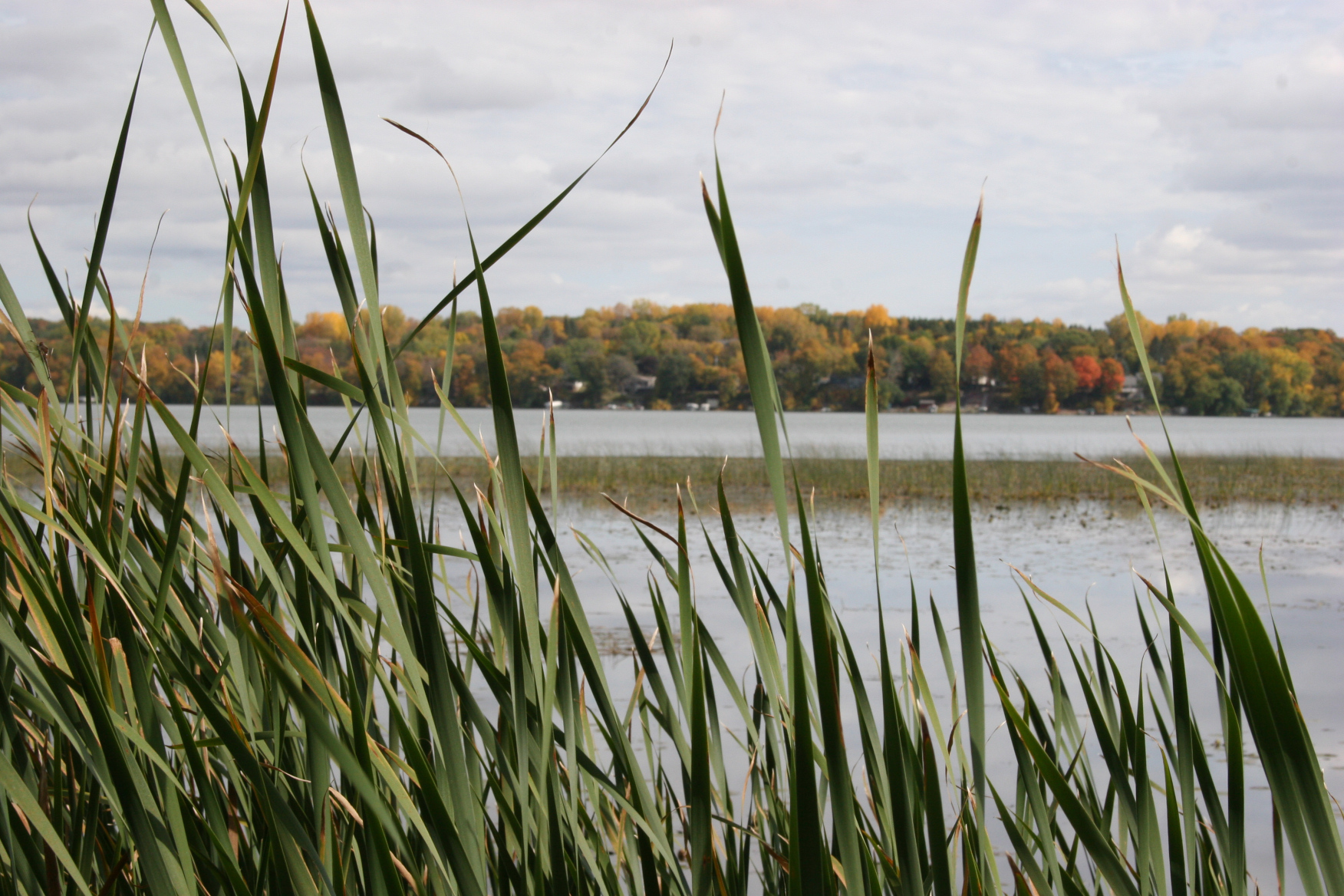
A view of Lake Mazaska through the shoreline grasses.(Minnesota Prairie Roots copyrighted photo October 2022)
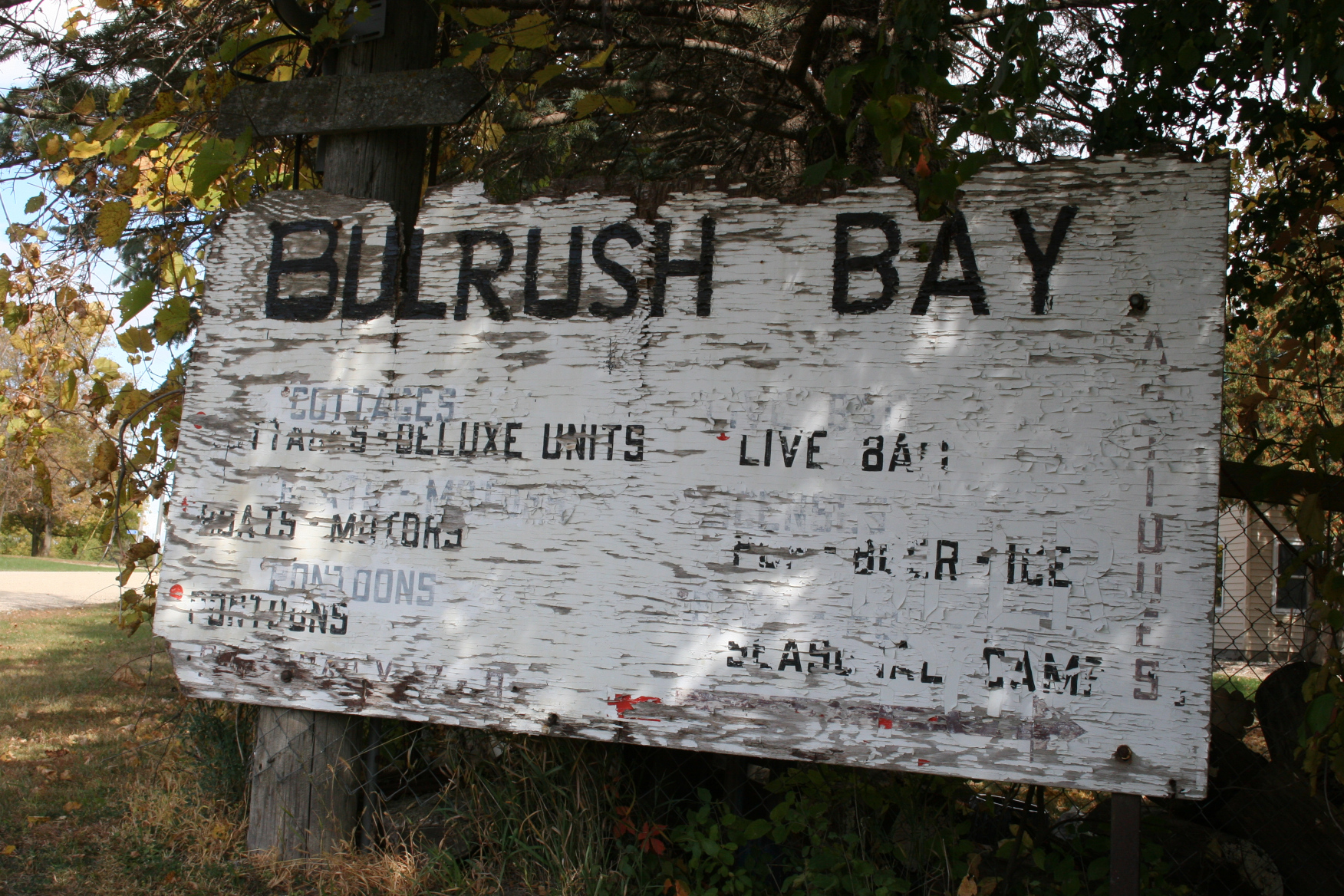
At the west-side boat landing in Shieldsville, Randy noted the low water level of Lake Mazaska. It would be impossible to launch a boat here. I photographed the lake through a stand of grass, perhaps bulrushes. A peeling, aged sign a block away landmarked Bulrush Bay.
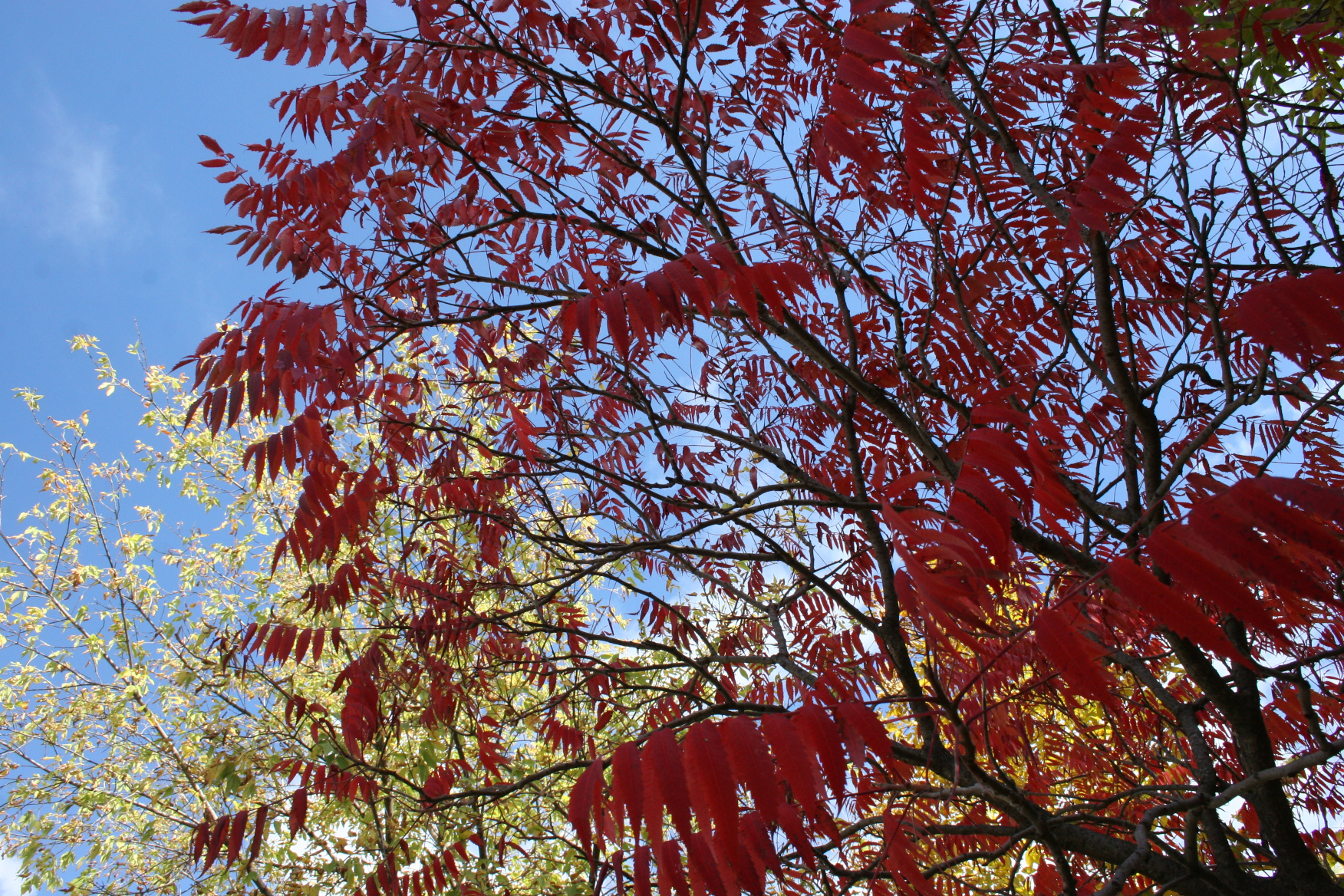
Brilliant sumac by Kelly Lake. (Minnesota Prairie Roots copyrighted photo October 2022)
Individual leaves and stems of grass don’t go unnoticed. The singleness merges into the whole. This whole of autumn in Rice County.
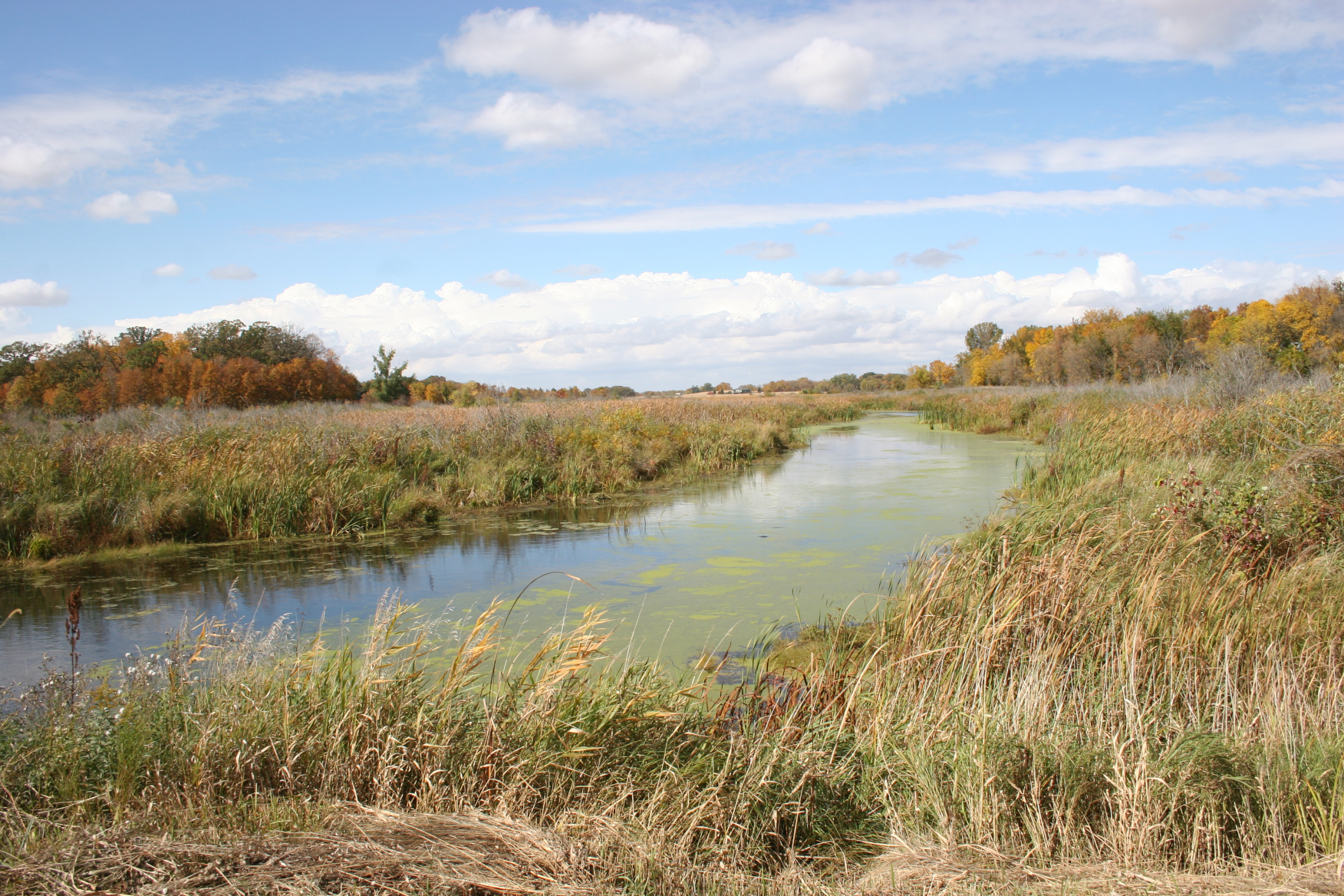
A picturesque creek along County Road 64/Irwin Trail. (Minnesota Prairie Roots copyrighted photo October 2022)
We lunched at McCullough County Park on Shields Lake, swatting bees and beetles, before continuing our drive along County Road 64/Irwin Trail. An especially picturesque creek cutting through the land called for a stop, a photo.
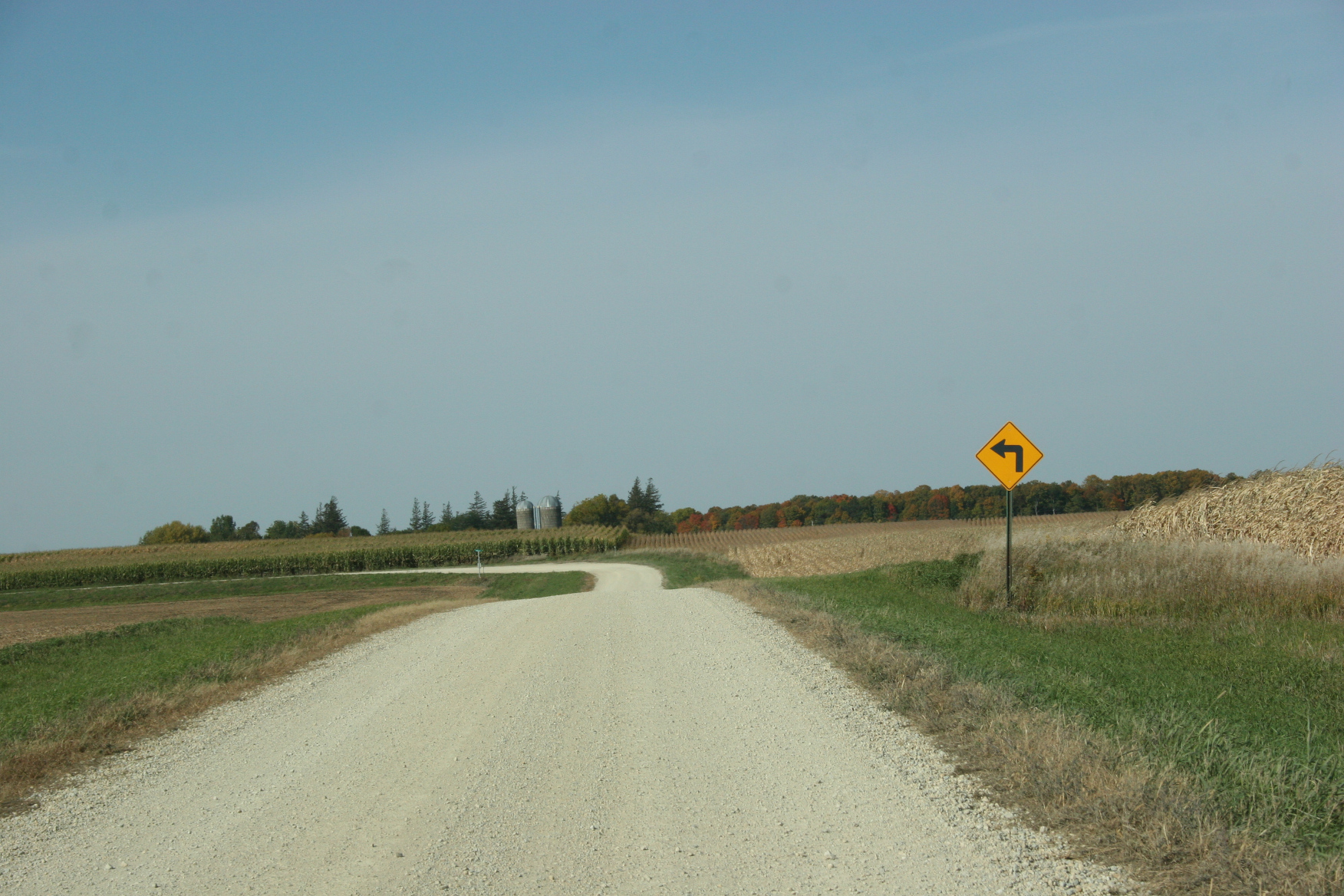
One of many winding gravel roads we followed through the countryside, around lakes… (Minnesota Prairie Roots copyrighted photo October 2022)
And then onward we drove, up and down and all around on gravel roads, the van kicking dust.
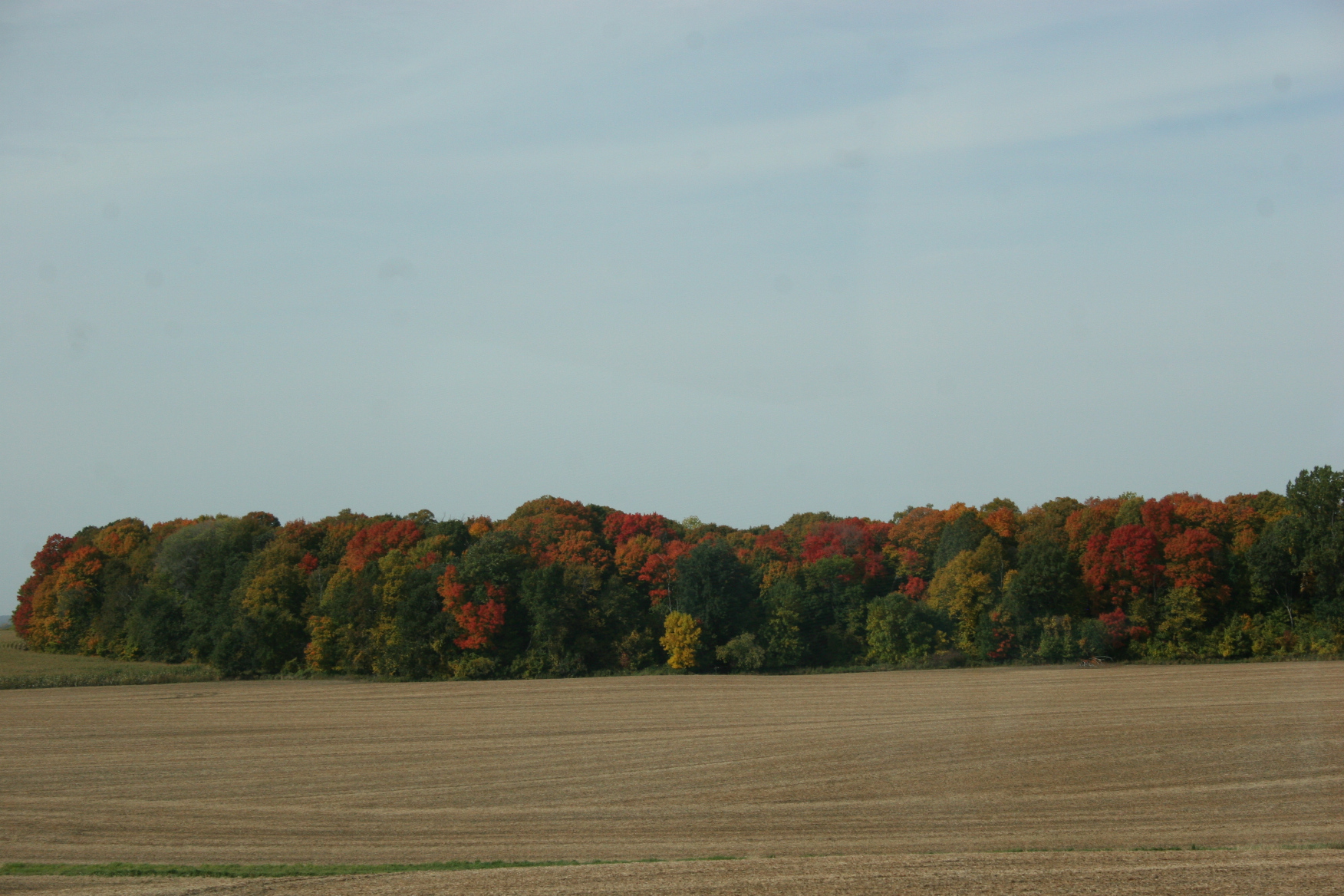
Among the many wooded hillside ablaze in color. (Minnesota Prairie Roots copyrighted photo October 2022)
Traveling at a slower pace allows for taking in the unfolding landscape. Cornfield nudging a clump of colored trees. So much to see if only we look.
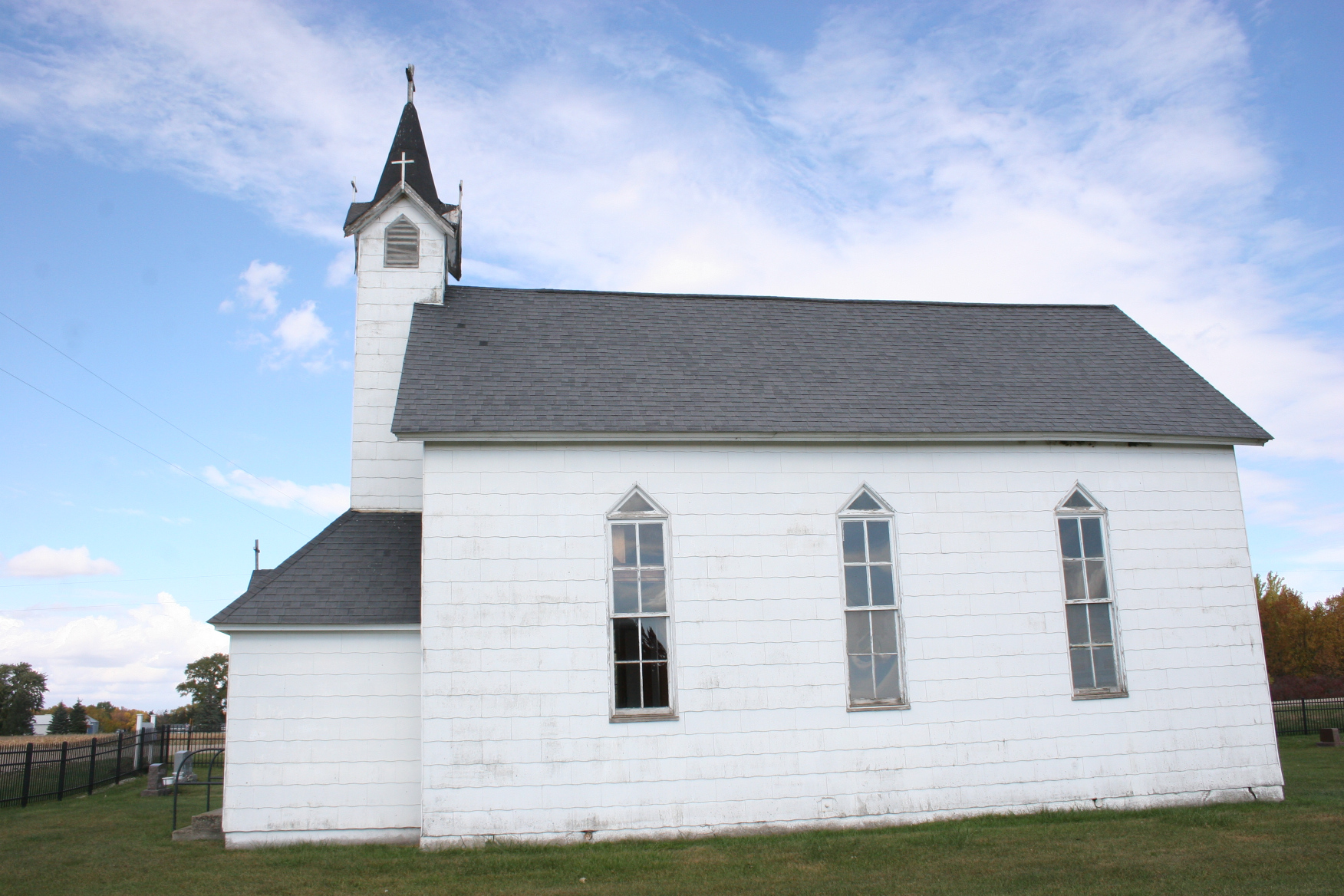
The historic Czech church and surrounding cemetery in Shieldsville Township. (Minnesota Prairie Roots copyrighted photo October 2022)
And then a stop, an opportunity to stretch our legs and explore Trebon Cemetery surrounding an historic Czech church, the Immaculate Conception of the Virgin Mary, established in 1886. We discovered this sacred place at the intersection of County Road 63/Kanabec Avenue and County Road 37/160th Street West several years ago. Like last visit, I wished I could get inside the church, but had to settle for peering through windows. The view of the countryside from the cemetery grounds is stunning.
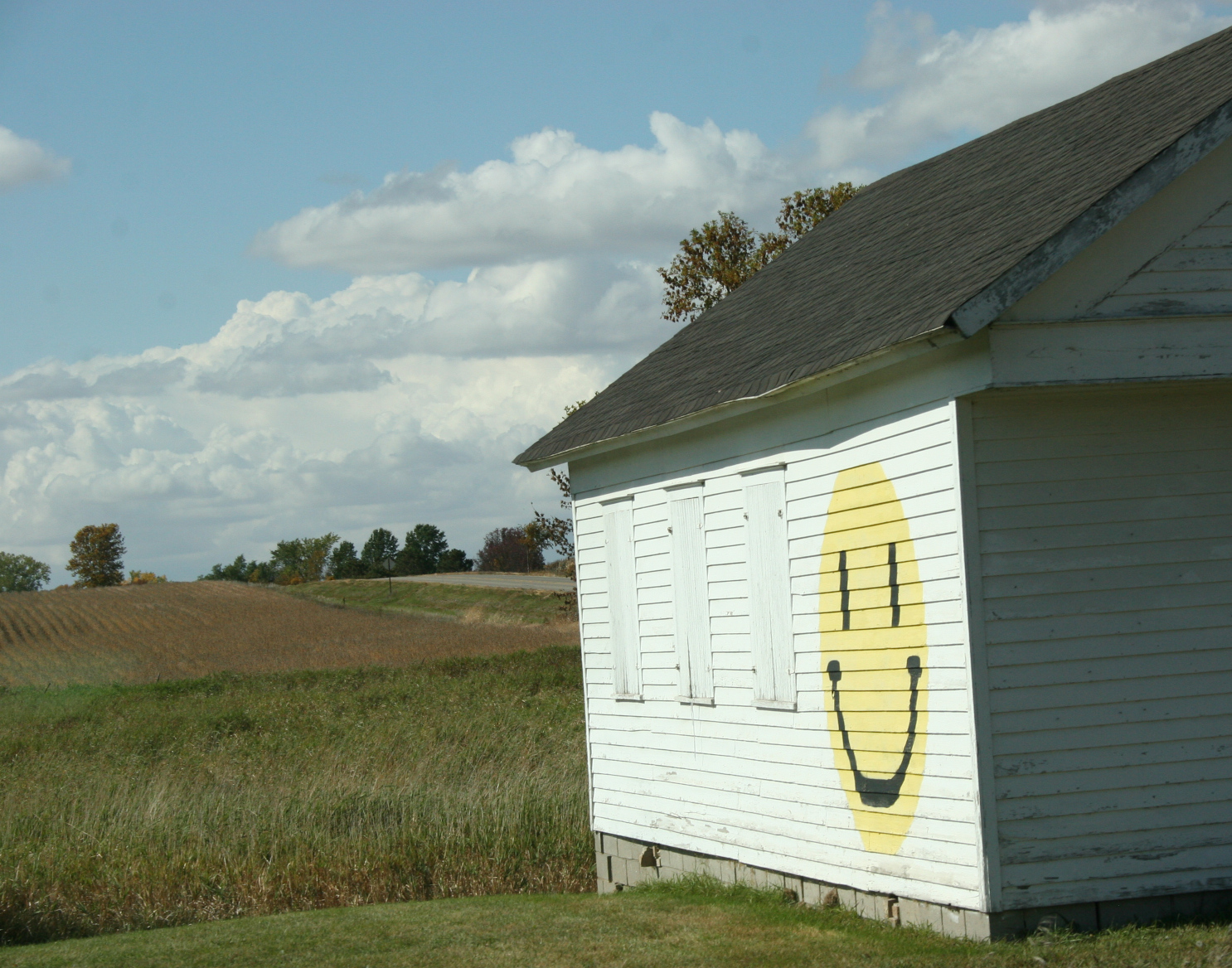
This smiley face is a local landmark along Roberds Lake Boulevard. (Minnesota Prairie Roots copyrighted photo October 2022)
Aiming back toward Faribault, we passed the smiley face painted on the side of a building at the intersection of Roberds Lake Boulevard and County Road 37/West 185th Street. It’s been there forever, a rural landmark that makes me smile every time I see that happiness icon.
I appreciate homemade signage, including this well-worn sign by Lake Mazaska. (Minnesota Prairie Roots copyrighted photo October 2022)
Several hours in the rural Rice County countryside filled my spirit with happiness. Autumn has a way of weaving joy into my life with her color, her last hurrah before winter arrives. So I say, get out there. Take a country drive. Slow down. Pause. Delight in these October days.
Seeking help in Monticello. (Minnesota Prairie Roots copyrighted photo September 2022)
THIS MORNING IN READING one of two daily devotionals, I was reminded of the need to help others. The referenced scripture, Leviticus 25: 35-37, published with the October 6 Our Daily Bread devotion, brought back a scene which unfolded recently in Monticello.
On our way home from a short stay at a family member’s central Minnesota lake cabin, I spotted a woman holding a sign along State Highway 25 just before the Interstate 94 overpass. She stood in a center island, at a stoplight, traffic swarming around her. Her sign, with many misspellings, requested help for her and her three children. Help to pay for food and rent. Basic needs.
I felt in that moment a sense of compassion, yet an inability to aid this woman. And, I admit, I also felt a bit of uncertainty, a hesitancy, a questioning of whether she truly was in need. That reaction bothers me. Why couldn’t I simply trust the truthfulness of her request?
That brings me back to Leviticus, chapter 25, verse 35:
If one of your countrymen becomes poor and is unable to support himself among you, help him as you would an alien or a temporary resident, so he can continue to live among you.
That’s a powerful directive. Help him, or in the case of the woman in Monticello, her. Whether you are a person of faith or not, the Bible holds important messages that today fit the definition of “social justice.” Compassion. Mercy. Grace.
Not all of us are in a financial position to assist with gifts of money. But there are many other ways to help our friends, family, neighbors and, yes, even strangers. Encourage via kind and supportive words—written or spoken. I like to send uplifting cards with handwritten notes of encouragement. Pray. Engage in conversation, mostly listening. It’s about taking the focus off ourselves and placing it on others. Educate yourself via reading, attending community events that enlighten and more. Volunteer.
The woman in Monticello, even though I couldn’t aid her, gives me pause to reflect. So many people are struggling. With health issues, relationships, finances, simply trying to meet basic needs. Throw in the current divisiveness in this country, an ongoing pandemic, worldwide threats and conflicts, and the situation can feel overwhelming. Yet, we are all capable of doing something. Of reaching out with compassion and care. Of connecting. Of encouraging, supporting, uplifting in some way, large or small, that shows our humanity.
TELL ME: In what ways have you helped others, whether family, friends or strangers? Specifics are especially welcome.
A stunning treeline along Cannon City Boulevard just outside Faribault city limits. (Minnesota Prairie Roots copyrighted photo October 2022)
ANOTHER DAY OF SUNSHINE and unseasonably warm temps here in southern Minnesota prompted Randy and me to once again hit the road in search of fall colors. This time we headed into eastern Rice County, following backroads in the Cannon City and Nerstrand areas with a lengthy stop at Valley Grove Churches.
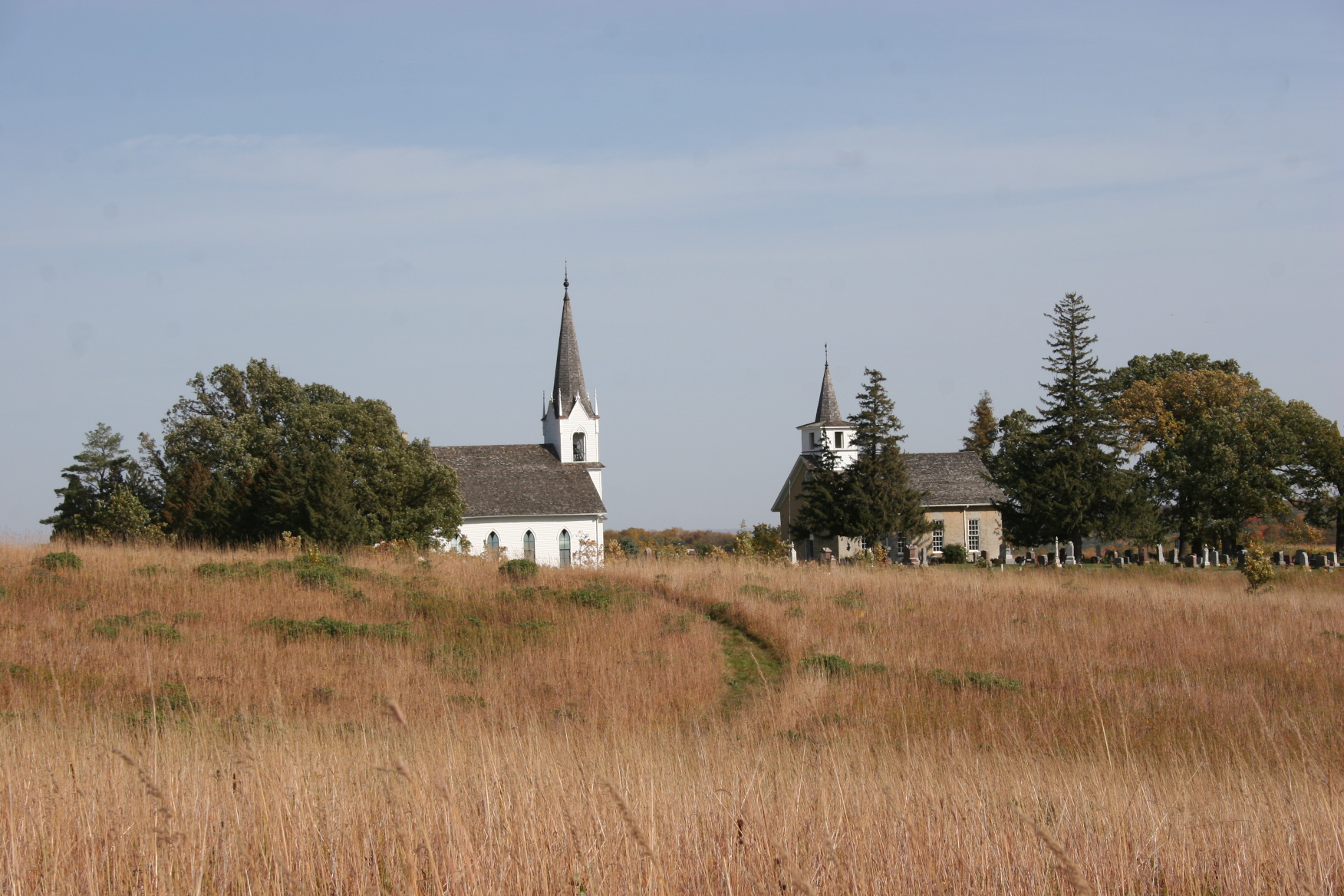
The historic Valley Grove churches,rural Nerstrand, photographed from the prairie. (Minnesota Prairie Roots copyrighted photo October 2022)
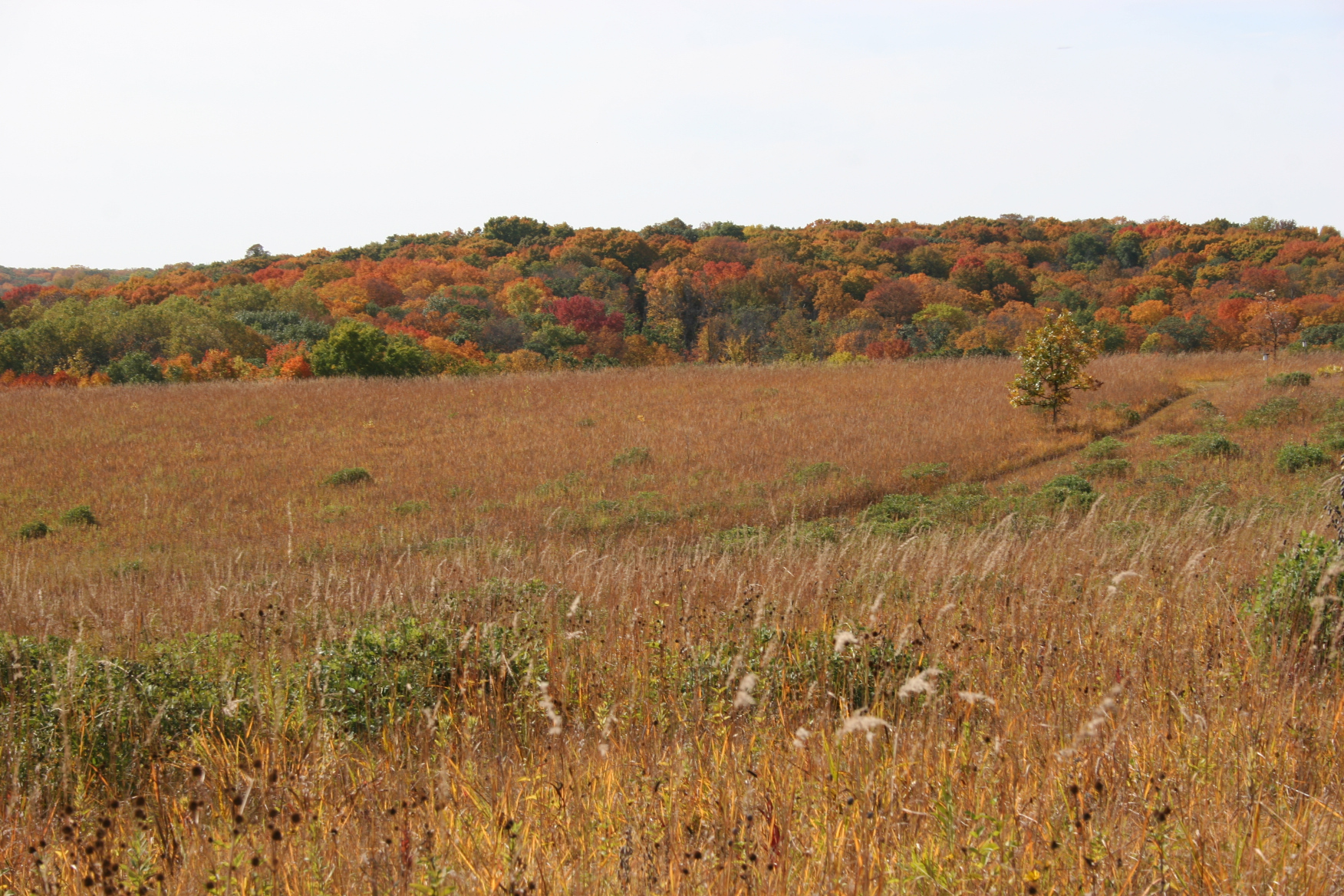
Immersed in the Valley Grove prairie, I viewed the Big Woods. (Minnesota Prairie Roots copyrighted photo October 2022)
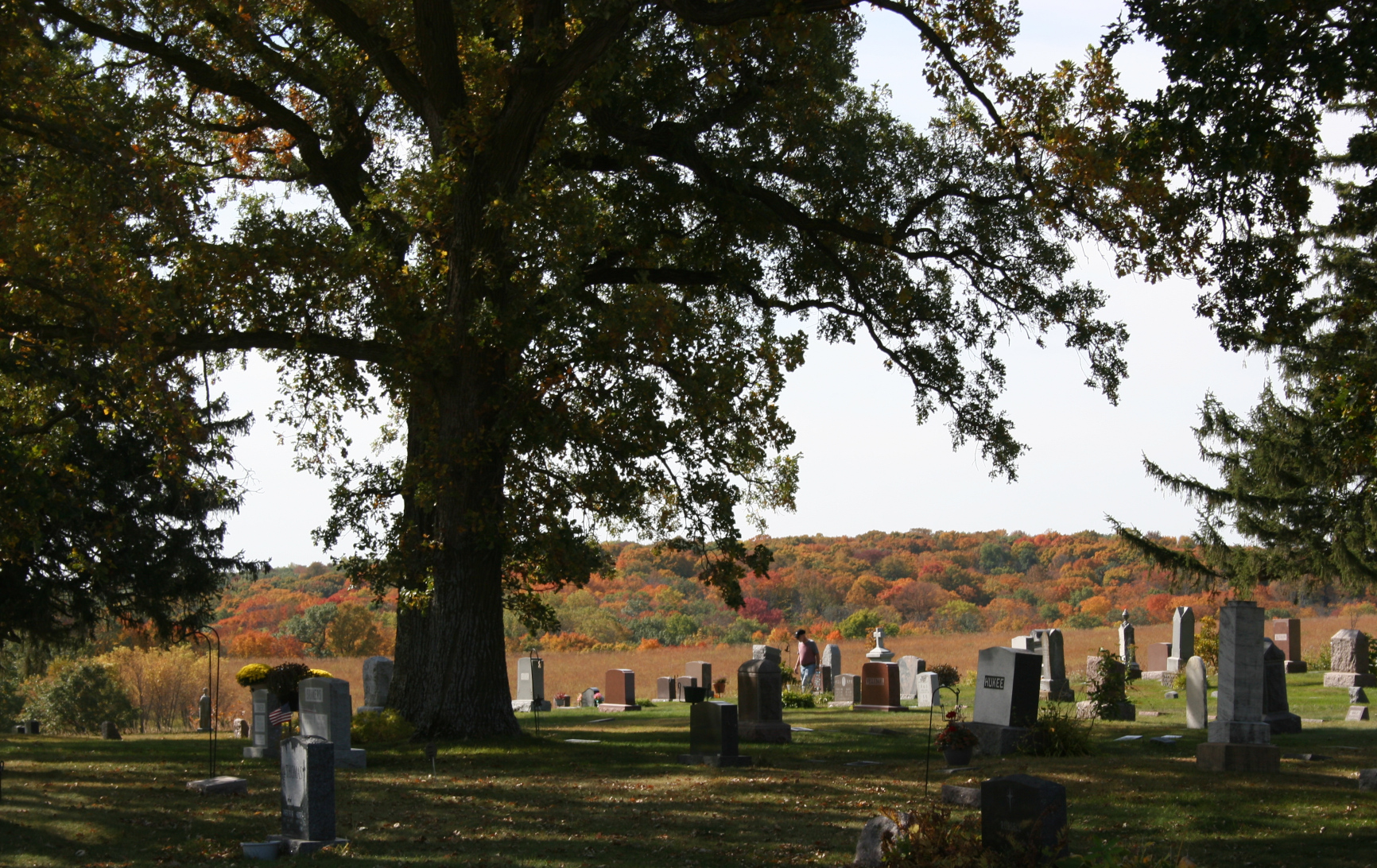
A spectacular view from the Valley Grove Cemetery right next to the churches. (Minnesota Prairie Roots copyrighted photo October 2022)
At those historic hilltop churches, we followed prairie trails until we reached the highest point. There we stood, impressed by the distant Big Woods treeline colored in the hues of autumn. Valley Grove is one of our favorite spots in any season, but especially when the leaves are morphing color.
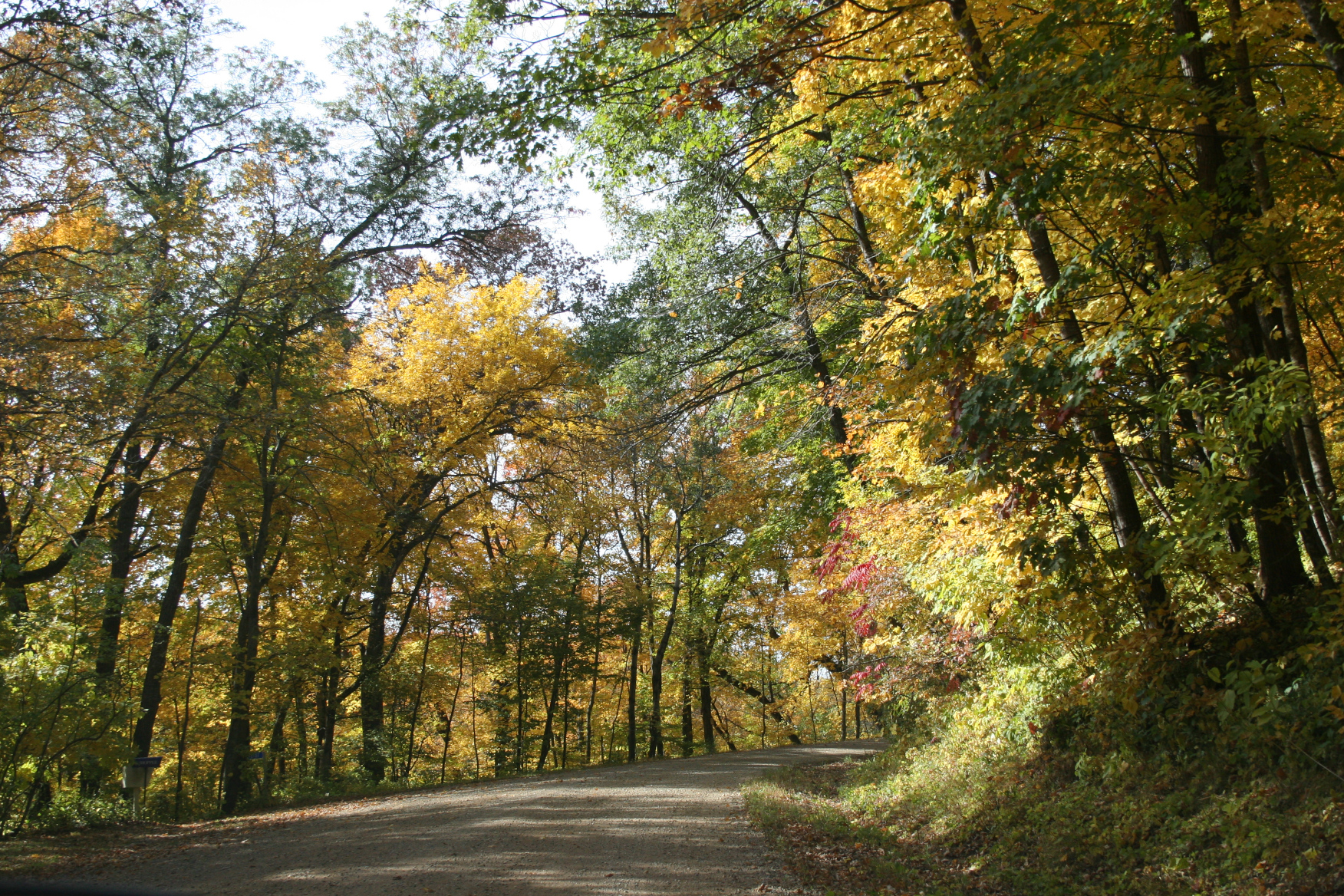
Driving through Nerstrand Big Woods. (Minnesota Prairie Roots copyrighted photo October 2022)
Our drive also took us on the road slicing through Nerstrand Big Woods State Park. We didn’t stop, simply enjoyed driving under a canopy of trees evolving in color. They have not yet reached their prime.
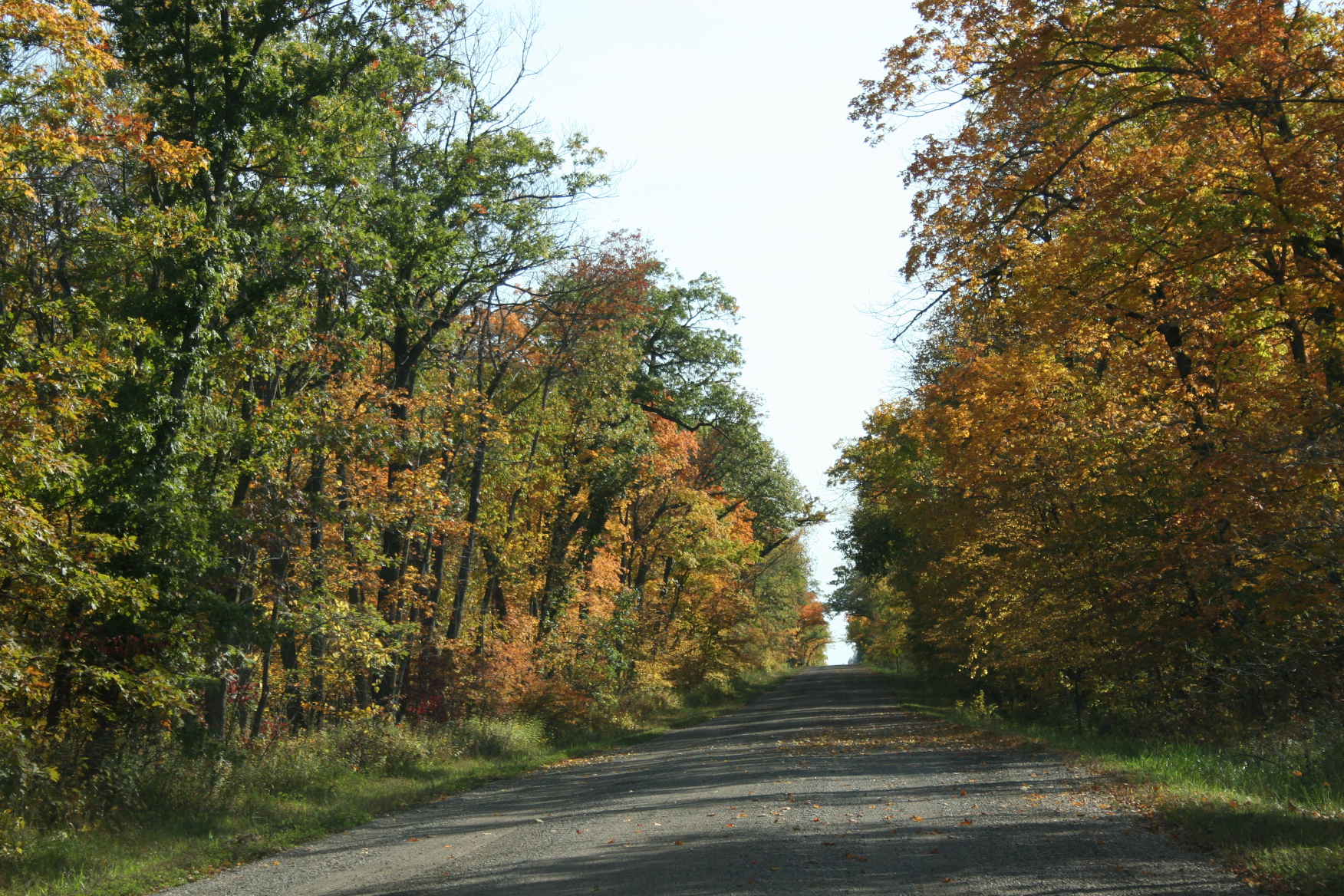
Driving through the woods on Farmer Trail. (Minnesota Prairie Roots copyrighted photo October 2022)
As always, Farmer Trail (off Falk Avenue) drew us in. This secluded road twists and turns among the maples and seems a well-kept secret. Thick woods edge the gravel road on both sides. I feel sheltered here, as if I’ve briefly entered some magical place.
The rolling hills around Valley Grove are especially colorful. (Minnesota Prairie Roots copyrighted photo October 2022)
This time of year in southern Minnesota truly feels magical given the remarkable beauty found in trees shifting from green to yellows, reds, oranges and browns.
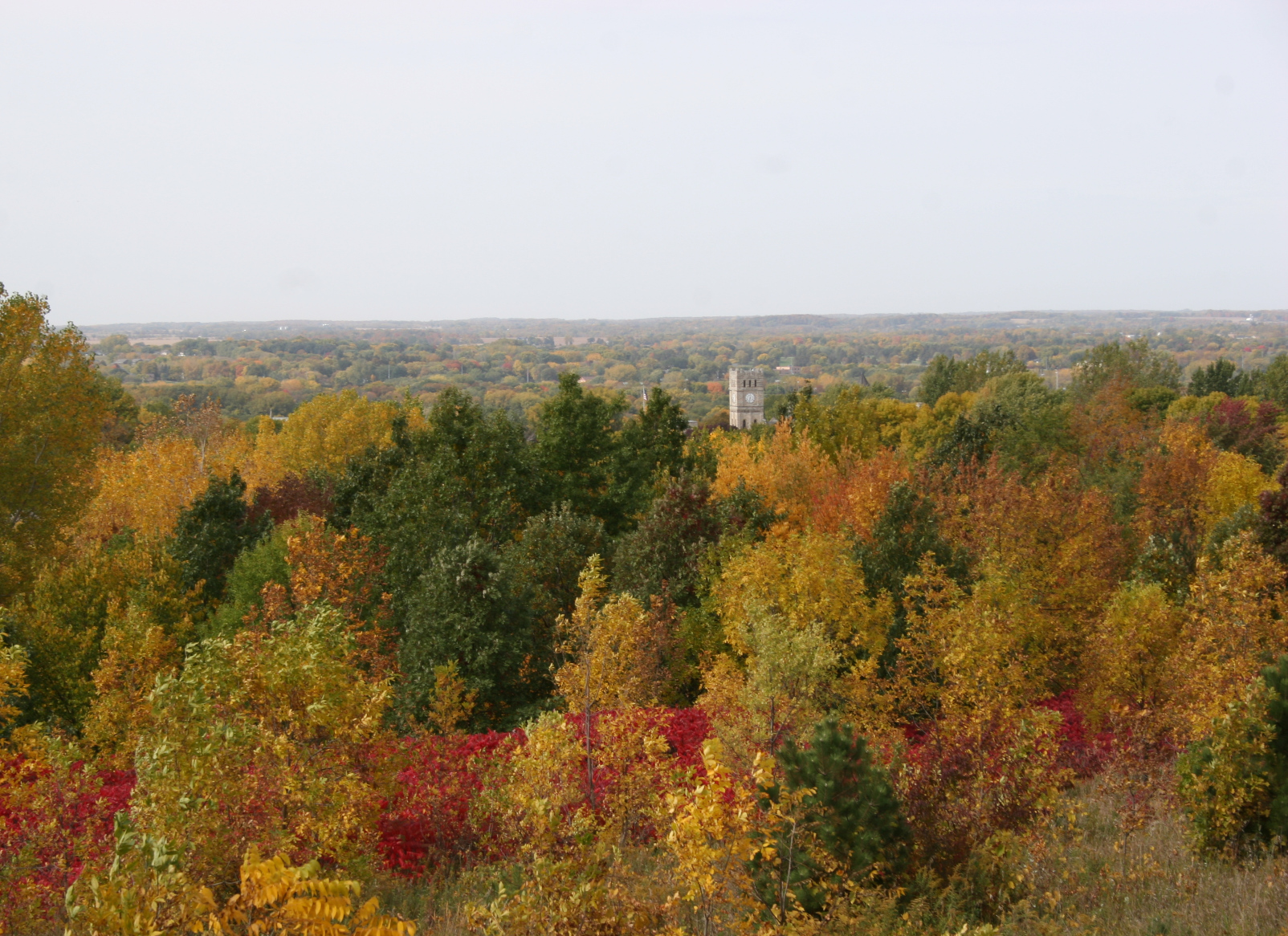
The view from City View Park is breath-taking. (Minnesota Prairie Roots copyrighted photo October 2022)
My community of Faribault is ablaze and still erupting with color. City View Park on the east side overlooks the city, offering a vista view. The Shattuck-St. Mary’s clock tower always focuses my eye when taking in the city below and beyond.
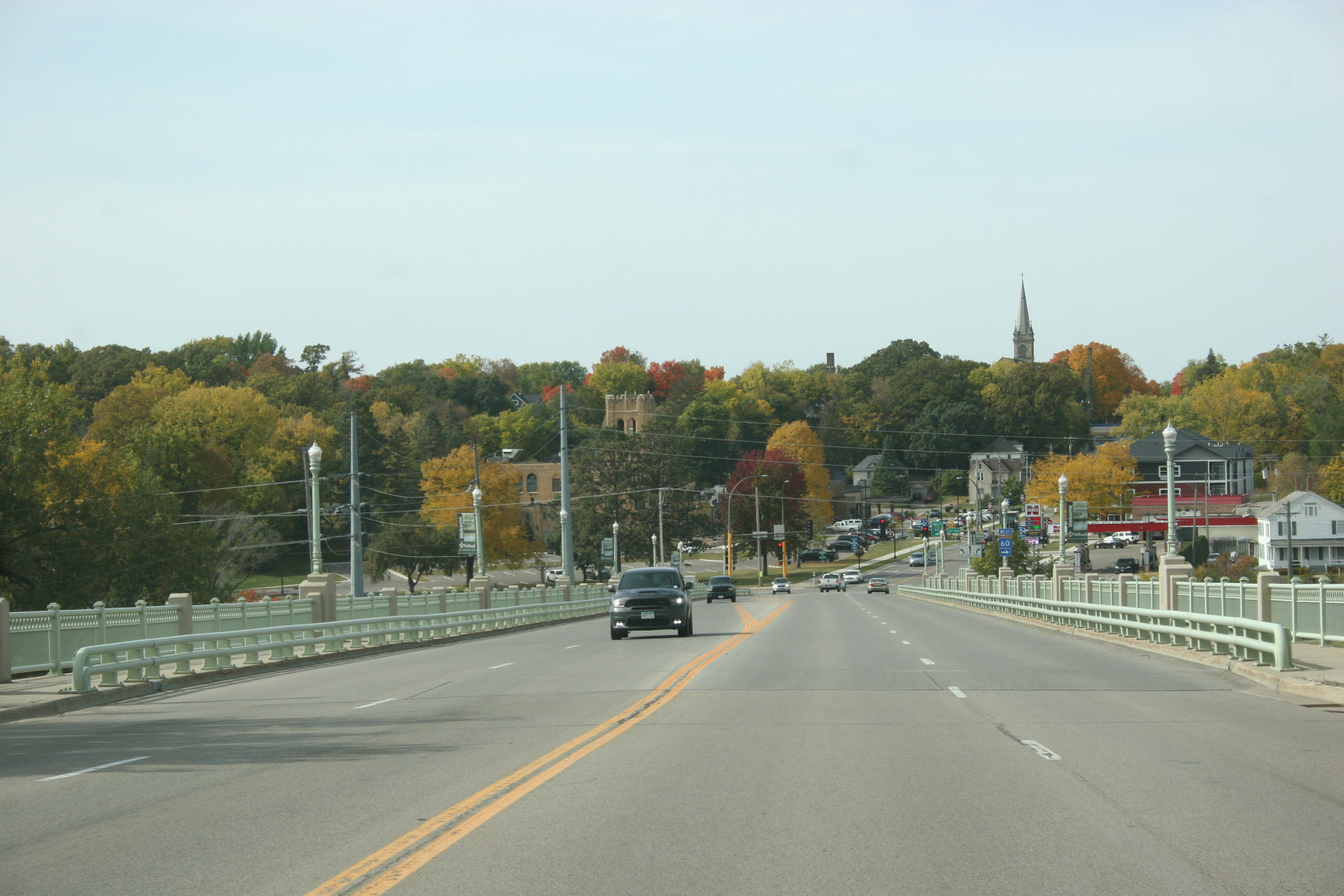
Crossing the viaductfrom Faribault’s east side, fall colors splash into the city landscape. (Minnesota Prairie Roots copyrighted photo October 2022)
Even traveling down the viaduct into downtown impresses in the autumn. There’s so much to see locally in autumn colors whether along a city street, an area lake, a back country road.
If there’s anything I want to impress, it’s that all of this—this autumn color spreading across the landscape—is right here in Faribault, in Rice County, in our backyard. I don’t know if everyone realizes that. I also want to impress that the days of autumn are fleeting. A cold front is moving in along with wind. Now is the time to get out there and view the fall colors, at least locally.
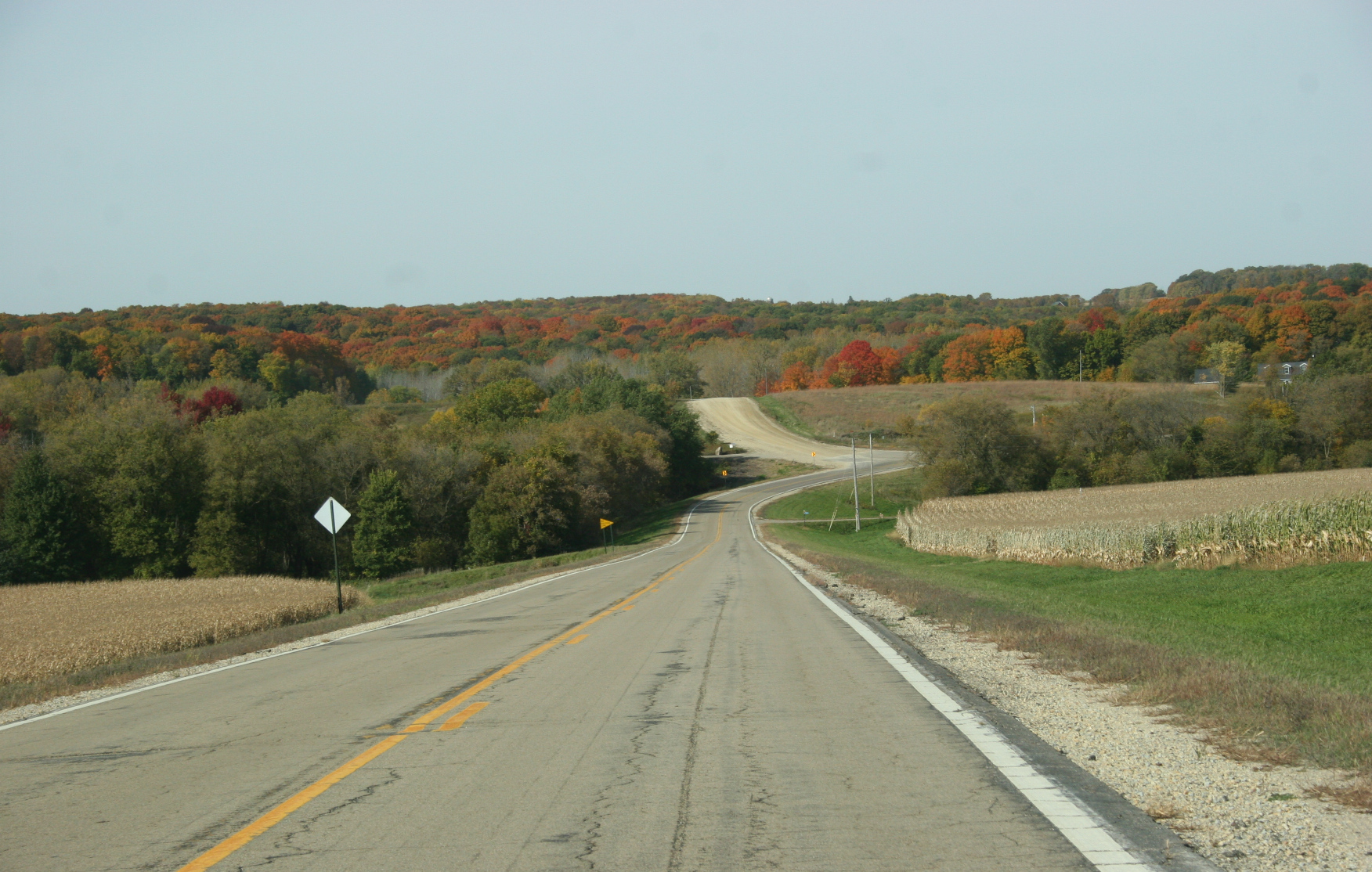
The beginning of our day trip took us west out of Faribault along back county roads. (Minnesota Prairie Roots copyrighted photo October 2022)
AUTUMN POPPED COLOR—brilliant oranges, reds, yellows—into the landscape on an October day as beautiful as they come here in southern Minnesota.
Harvesting beans along Le Sueur County Road 12. (Minnesota Prairie Roots copyrighted photo October 2022)
Throughout Rice, Le Sueur and Nicollet counties, leaves are rapidly changing, splashing hillsides, groves, shorelines and other stands of trees in spectacular seasonal hues.
Photographed at the public boat landing on Horseshoe Lake just off Rice County Road 14 by Camp Omega. (Minnesota Prairie Roots copyrighted photo October 2022)
Randy and I headed on a fall color drive Monday morning, referencing the DNR Fall Color Finder guide promising plenty of colorful leaves to the west. Hours of traveling mostly county roads (including gravel) through the southern Minnesota countryside on our day-long drive provided incredible leaf viewing.
The distant shoreline of Horseshoe Lake blazes fiery colors. (Minnesota Prairie Roots copyrighted photo October 2022)
Retracing our exact route through Rice and Le Sueur counties and a small section of Nicollet County would be nearly impossible. But we started out by heading west on Rice County Road 12, eventually following CR 14 to Horseshoe Lake by Camp Omega. The public boat landing there was our first stop to view a lakeside treeline ablaze in fiery hues.
Crops ripen against a farm site backdrop in Le Sueur County. (Minnesota Prairie Roots copyrighted photo October 2022)
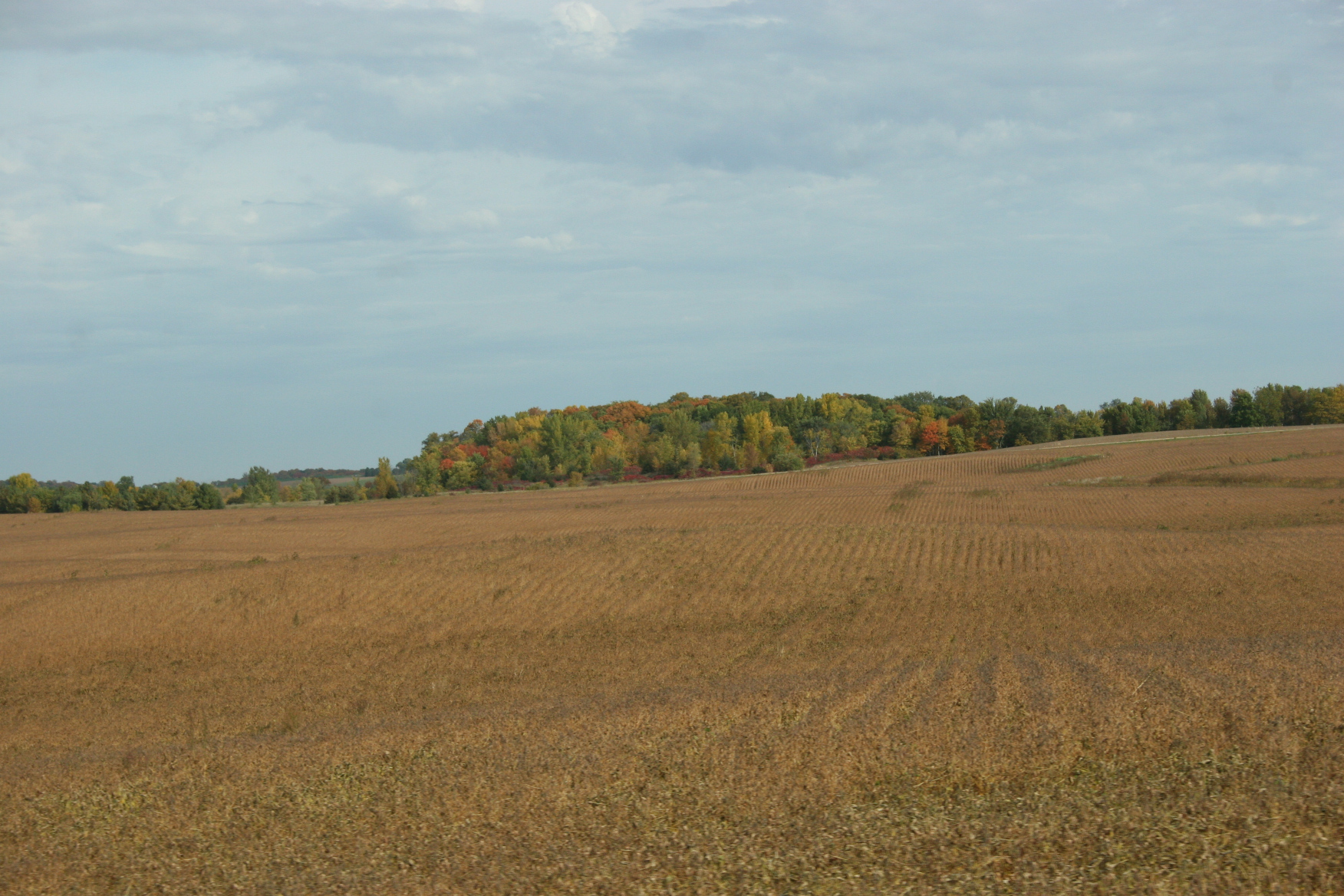
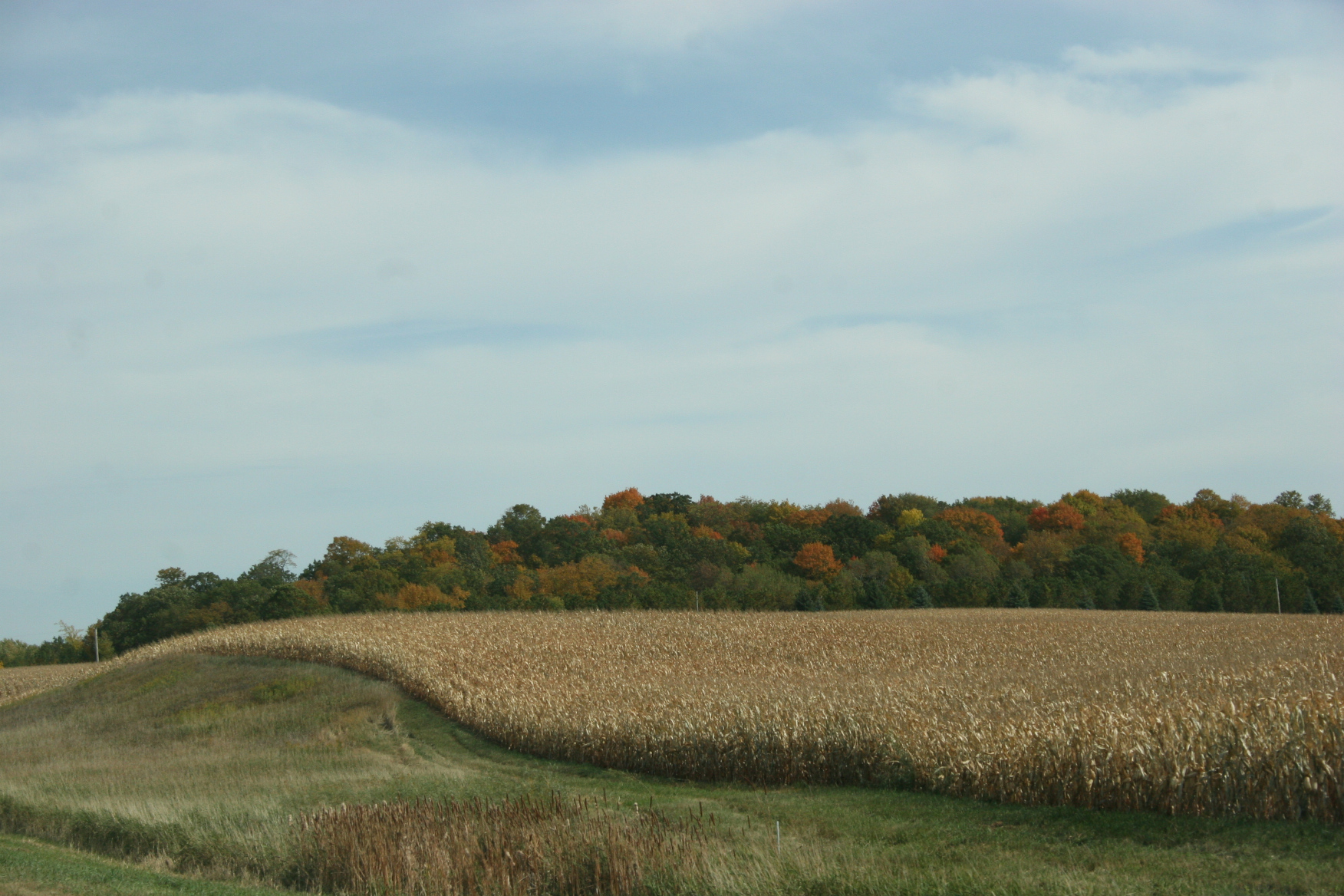
It wasn’t just the trees that drew my eye. I love, too, the acres of corn and soybeans drying under the autumn sun. The muted gold of corn leaves adds to the sense of seasons shifting.
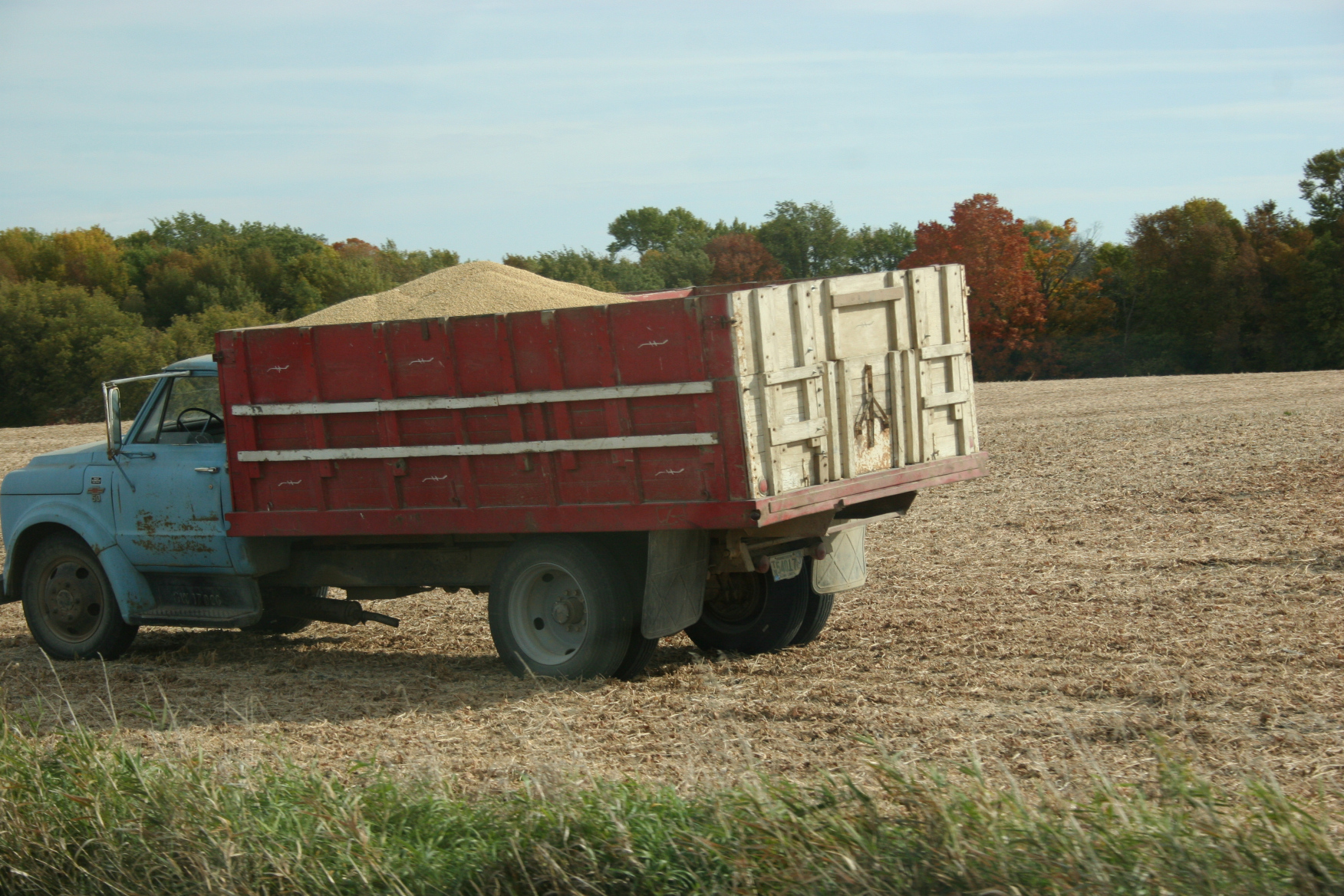
A grain truck holds the harvest along Le Sueur County Road 12. (Minnesota Prairie Roots copyrighted photo October 2022)
Harvest is well underway with combines and grain trucks in fields. I appreciate the rural landscape any time of year, but especially now as farmers bring in the crops.
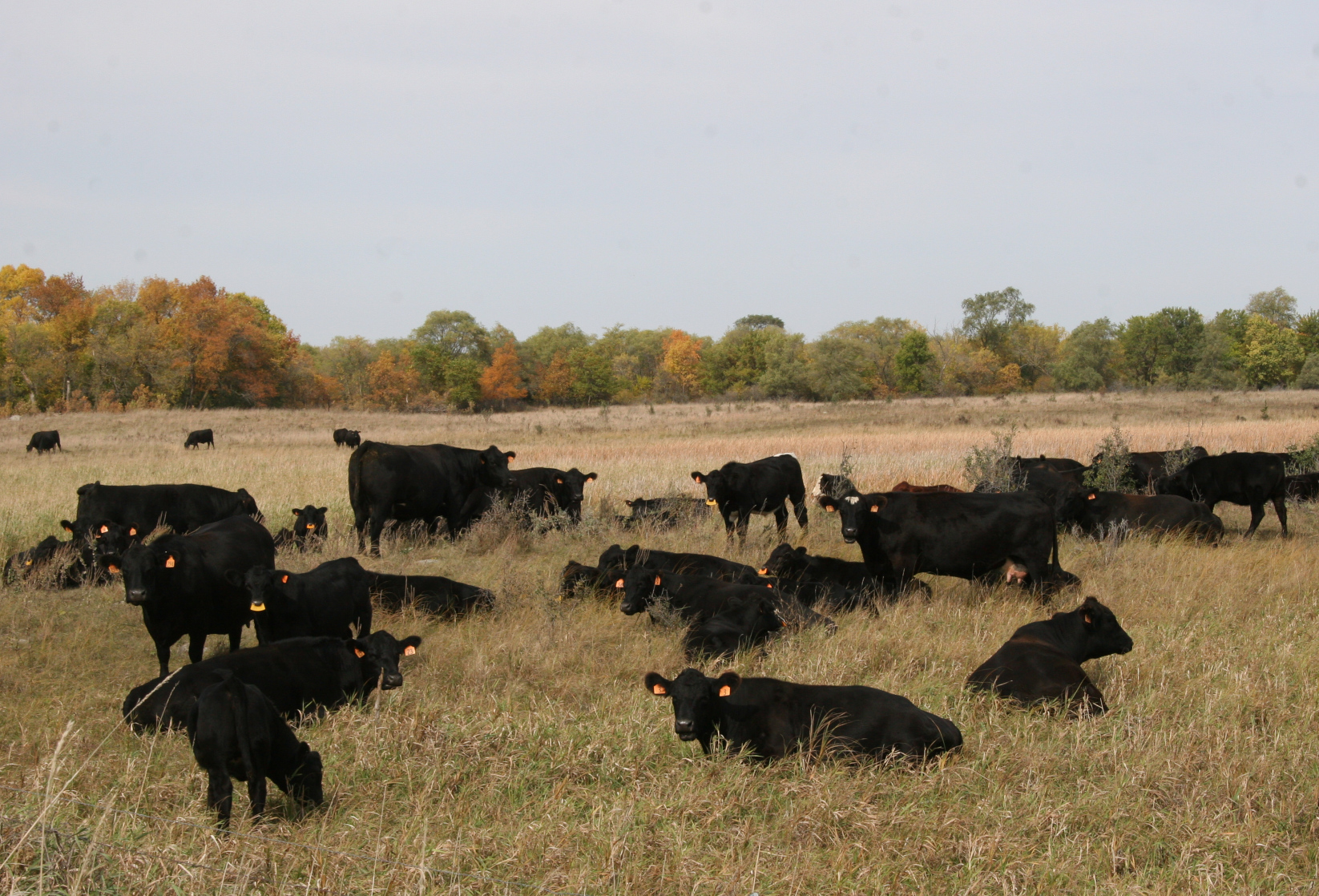
Cattle in a pasture along CR 101 on the way to the Kasota Prairie. (Minnesota Prairie Roots copyrighted photo October 2022)
From fields to farm sites (especially barns) to roadside vegetable stands to cattle in pastures, I found myself reconnecting with my agrarian roots, my prairie roots, while on this day trip.
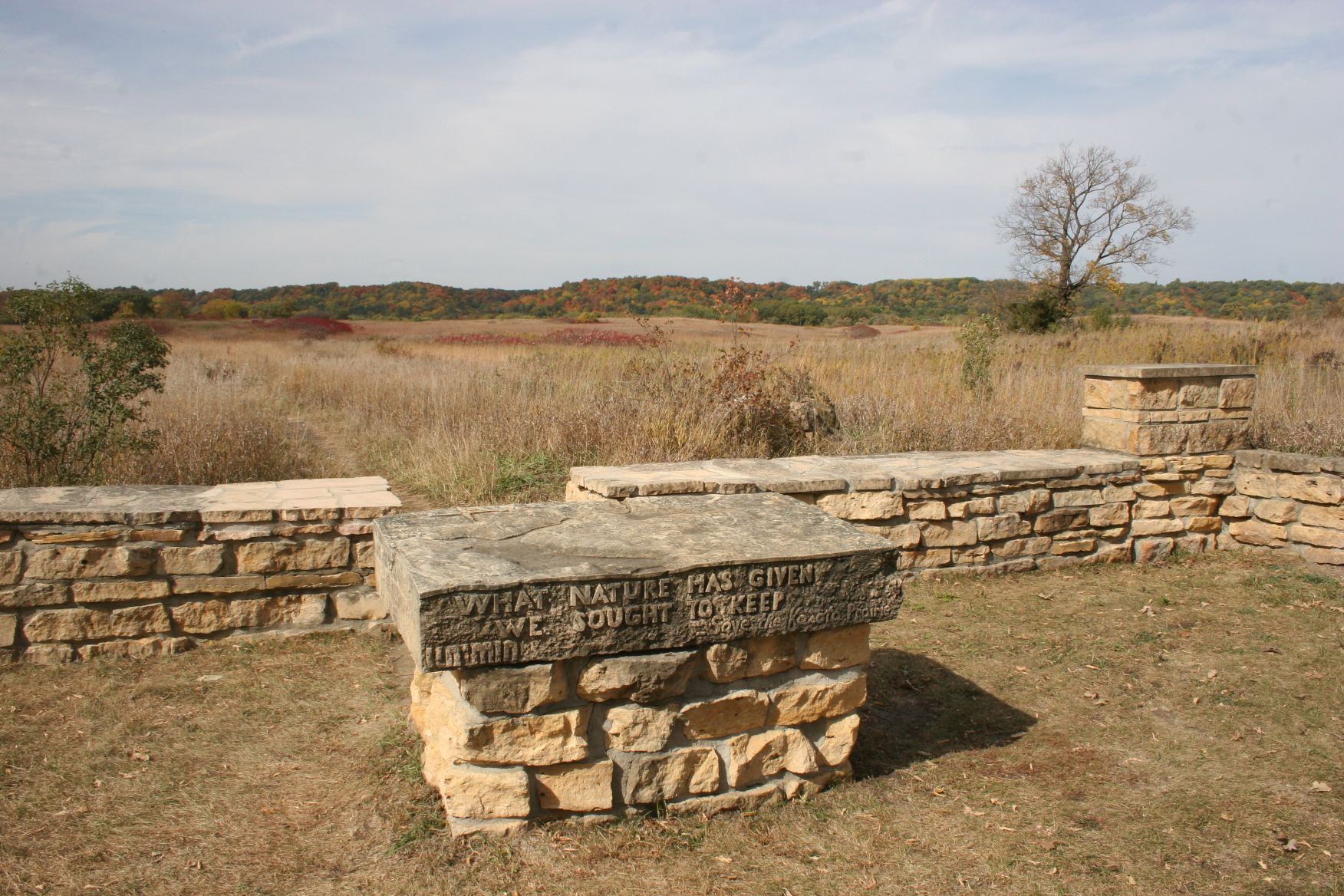
A memorable message marks the entrance to the Kasota Prairie. (Minnesota Prairie Roots copyrighted photo October 2022)
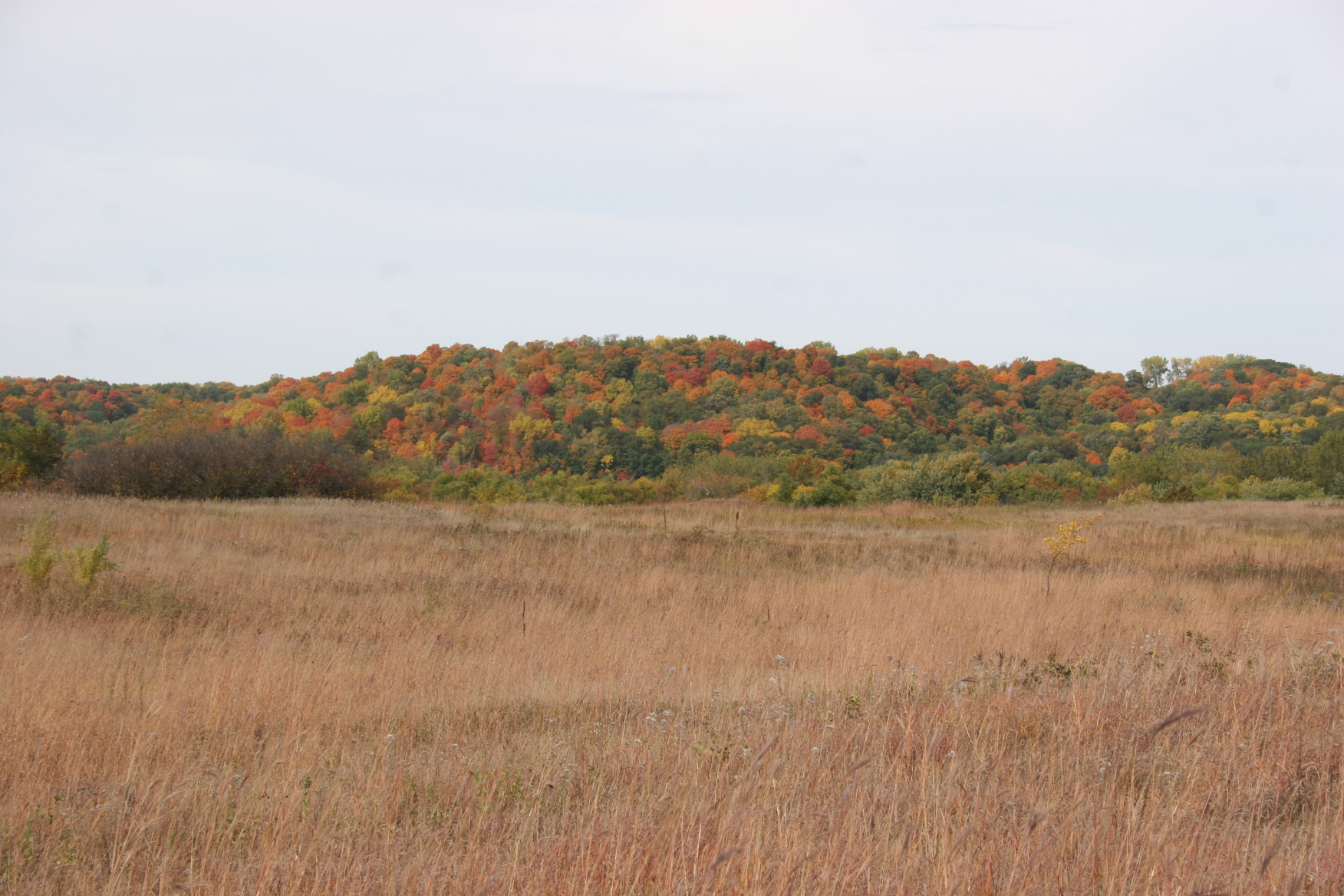
Fiery hillsides of trees edge the Kasota Prairie in the distance. (Minnesota Prairie Roots copyrighted photo October 2022)
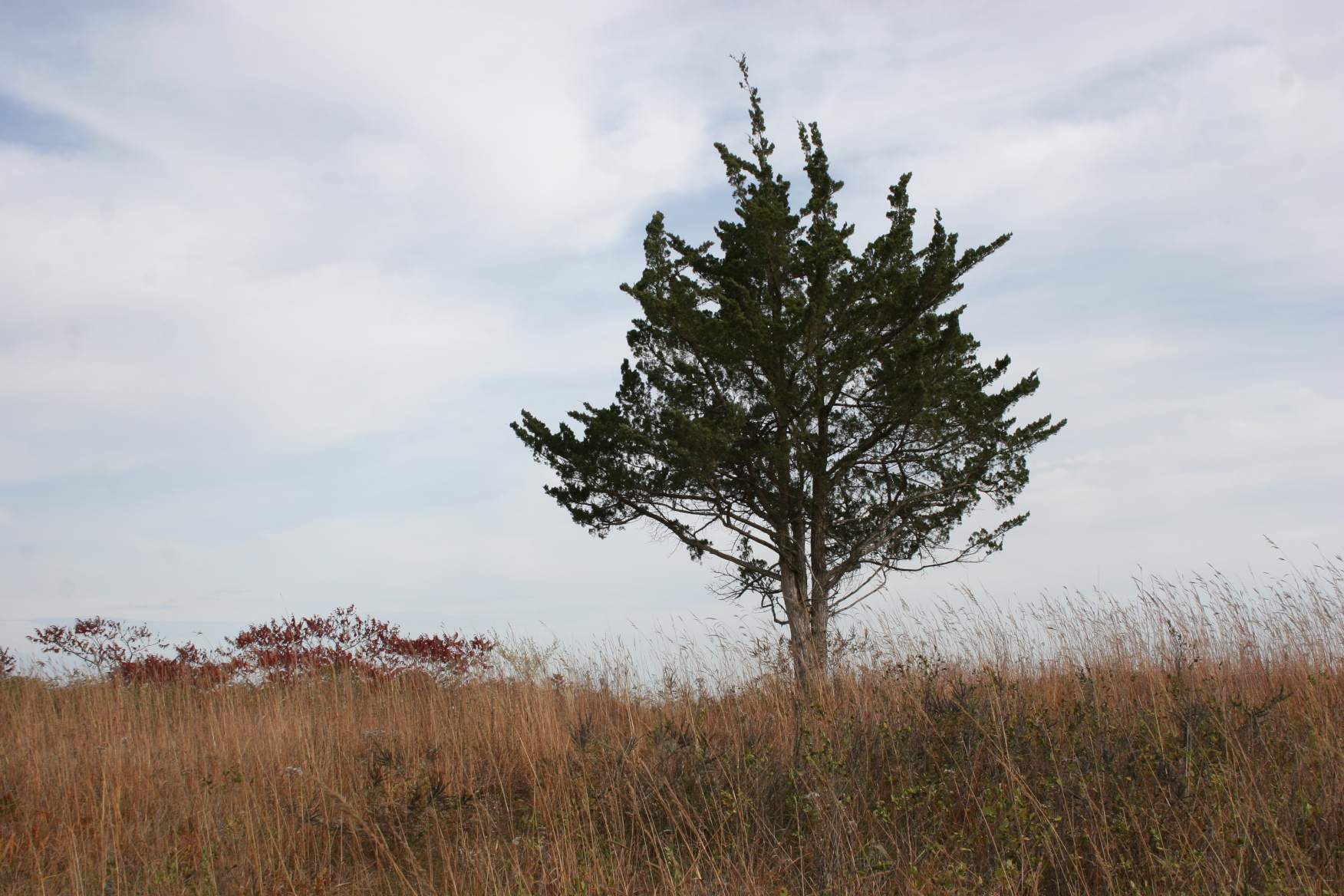
A lone cedar stands atop a hill on the Kasota Prairie. (Minnesota Prairie Roots copyrighted photo October 2022)
Near Kasota, we turned onto Le Sueur County Road 101 off CR 21 and took a winding gravel road about five miles to the Kasota Prairie. It was worth the dusty road, the meandering drive, to reach this grassland. As we pulled into the parking lot and hiked an uneven dirt trail into the prairie, I stopped multiple times to photograph the distant treeline painted in shades of mostly orange, red, brown… This prairie is a must-see, oh, so lovely, showcasing backdrop trees that hug the Minnesota River.
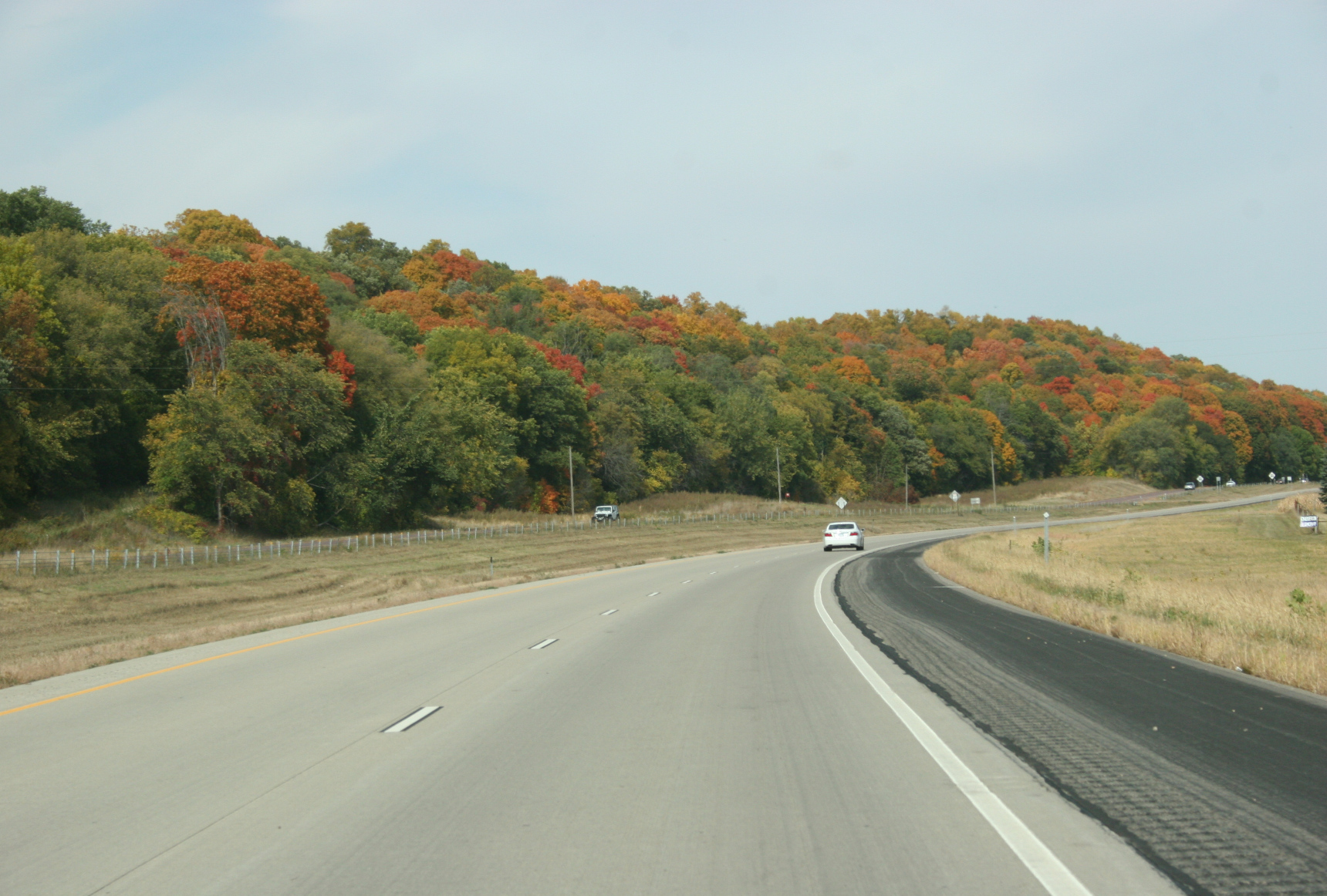
Colorful treelines can be seen along both sides of US Highway 169. Stunning. (Minnesota Prairie Roots copyrighted photo October 2022)
Color in the Minnesota River Valley is near-prime. Originally, we’d intended to tour Mankato, but shifted gears when I learned that my poem, “The Mighty Tatanka,” is not yet posted as part of The Mankato Poetry Walk & Ride. Instead, we drove to St. Peter and took US Highway 169 north out of town. And wow, oh, wow. The colors along the stretch of highway from St. Peter to Le Sueur, especially, are spectacular. This is a must-drive right now. Don’t wait. Not one day. Not two days. Go now.
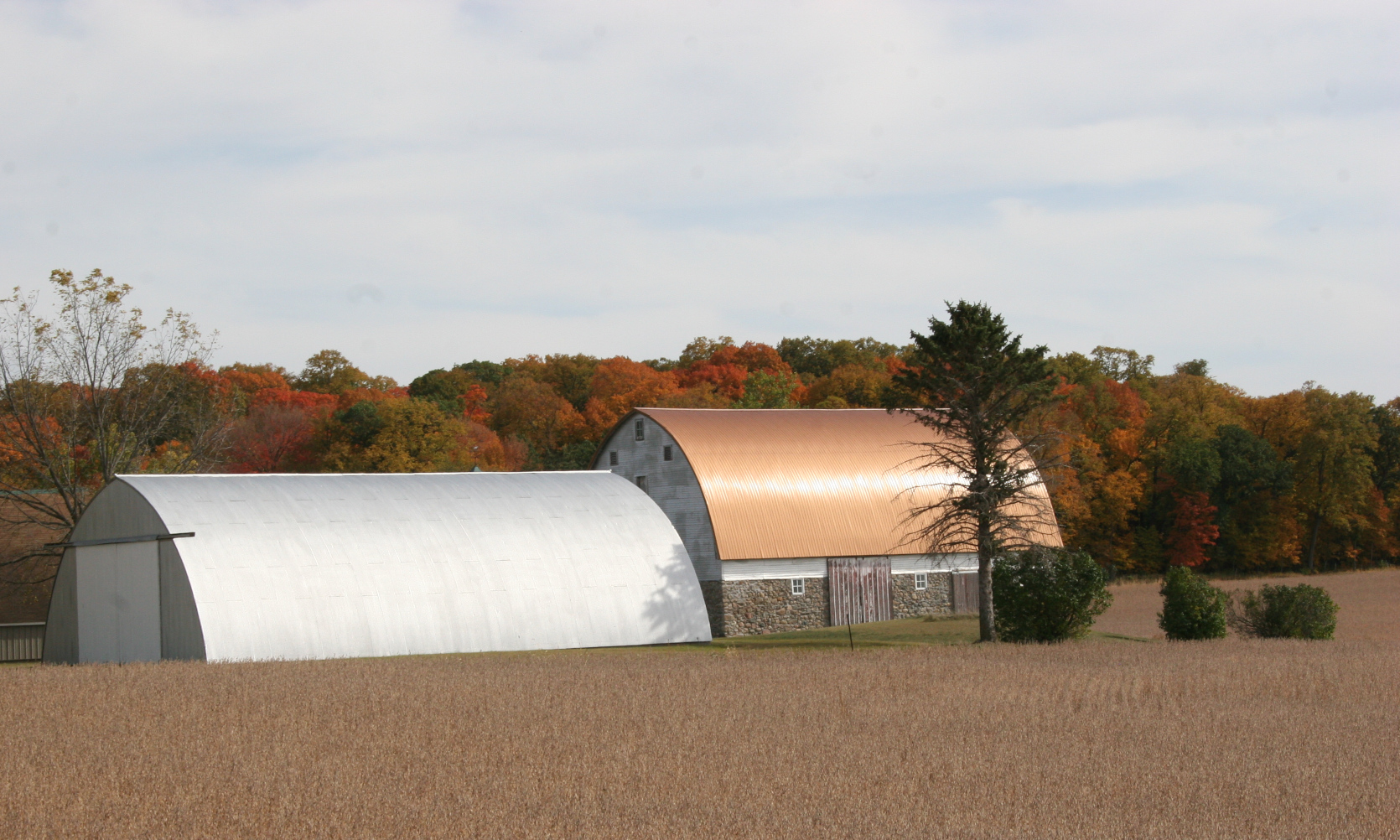
A memorable barn because of its copper-hued roof. (Minnesota Prairie Roots copyrighted photo October 2022)
Heading east on Minnesota State Highway 19 toward New Prague, we turned south at Union Hill and shortly thereafter took a gravel road to State Highway 13, then turned onto Le Sueur County Road 145, landmarked by a barn roof the color of copper set against an autumn backdrop of trees.
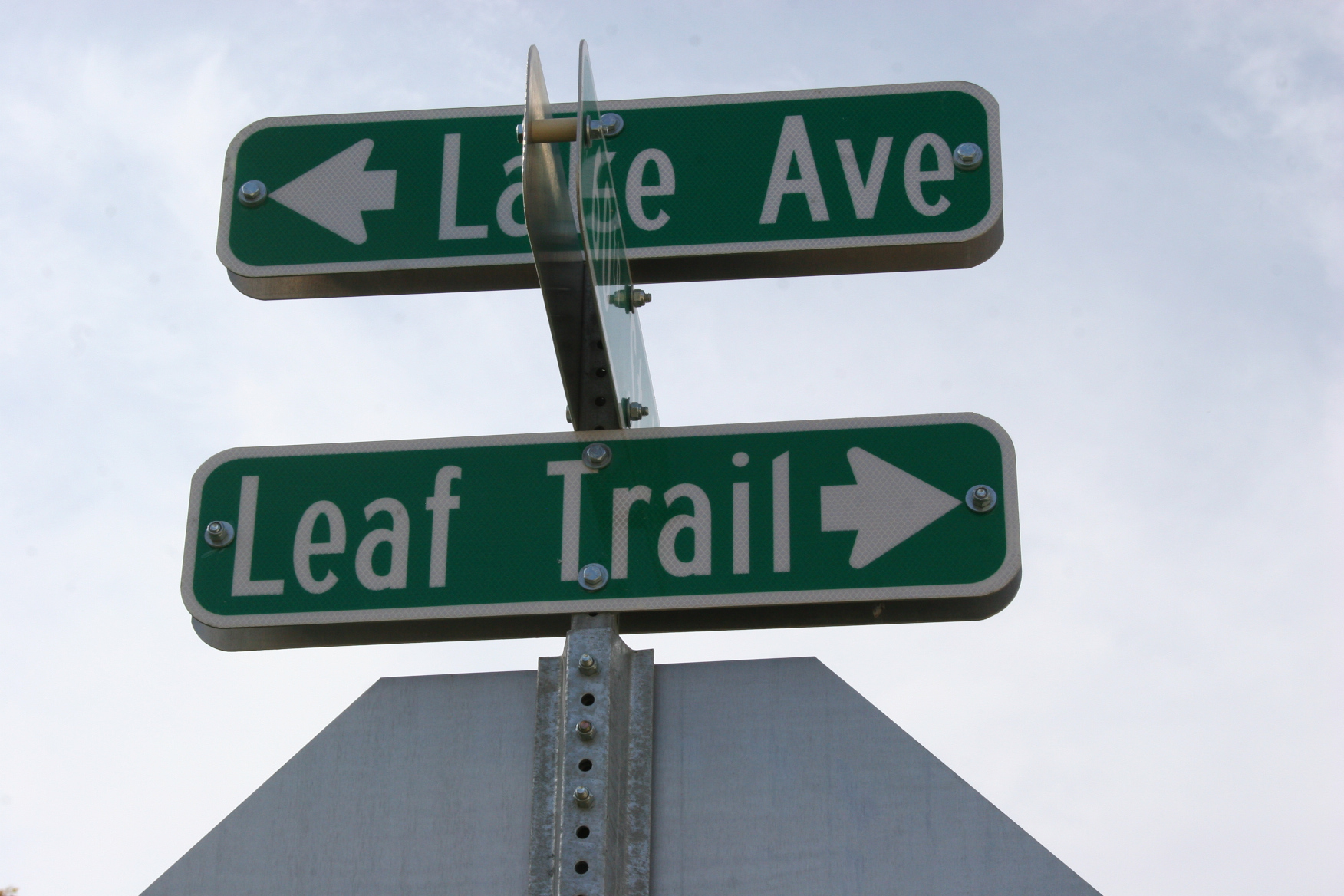
A road sign that fit the day’s purpose, to view leaves. (Minnesota Prairie Roots copyrighted photo October 2022)
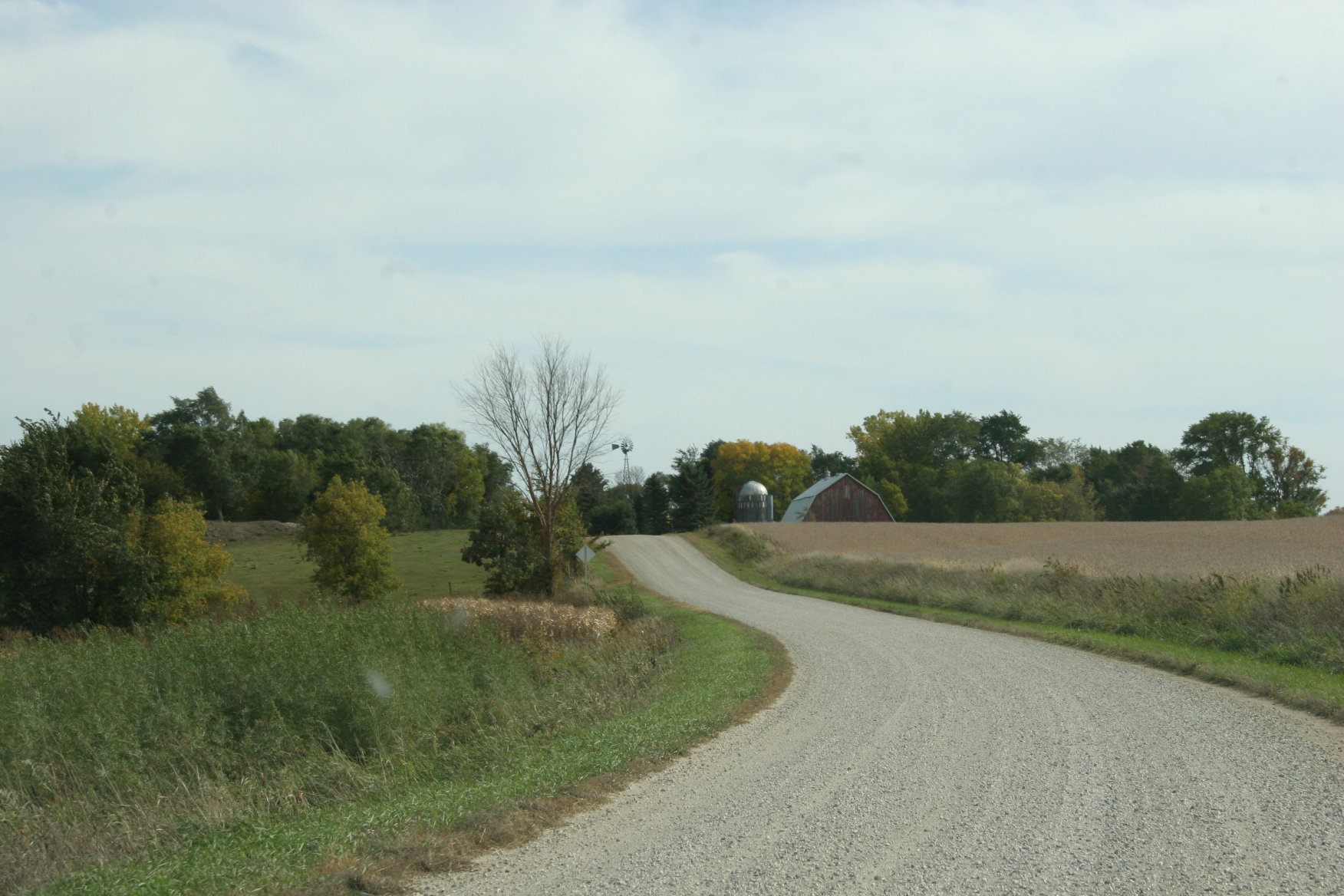
If I remember correctly, this farm site is along Leaf Trail. (Minnesota Prairie Roots copyrighted photo October 2022)
Heading back toward Faribault, another stunning treeline next to a cornfield. (Minnesota Prairie Roots copyrighted photo October 2022)
More gravel roads, including one appropriately named Leaf Trail, and blacktop eventually led us to Millersburg and aiming home to Faribault mostly along CR 46. Interstate 35 may have been a better choice for fall colors based on the colorful trees spotted there on Sunday between Faribault and the first Lakeville exit.
A view of Lake Washington from the public boat landing. (Minnesota Prairie Roots copyrighted photo October 2022)
But by then it was late afternoon, many road miles later with stops at lakes and the prairie and a park for a picnic lunch. We’d had a full day. A day full of autumn in Minnesota at its best. Warm. Mostly sunny. And ablaze in colors, the reason I so love this season.













 Minnesota Prairie Roots
A commentary: Called to help others
Tags: care, commentary, compassion, devotion, faith, helping others, Leviticus, Minnesota, Monticello
THIS MORNING IN READING one of two daily devotionals, I was reminded of the need to help others. The referenced scripture, Leviticus 25: 35-37, published with the October 6 Our Daily Bread devotion, brought back a scene which unfolded recently in Monticello.
On our way home from a short stay at a family member’s central Minnesota lake cabin, I spotted a woman holding a sign along State Highway 25 just before the Interstate 94 overpass. She stood in a center island, at a stoplight, traffic swarming around her. Her sign, with many misspellings, requested help for her and her three children. Help to pay for food and rent. Basic needs.
I felt in that moment a sense of compassion, yet an inability to aid this woman. And, I admit, I also felt a bit of uncertainty, a hesitancy, a questioning of whether she truly was in need. That reaction bothers me. Why couldn’t I simply trust the truthfulness of her request?
That brings me back to Leviticus, chapter 25, verse 35:
If one of your countrymen becomes poor and is unable to support himself among you, help him as you would an alien or a temporary resident, so he can continue to live among you.
That’s a powerful directive. Help him, or in the case of the woman in Monticello, her. Whether you are a person of faith or not, the Bible holds important messages that today fit the definition of “social justice.” Compassion. Mercy. Grace.
Not all of us are in a financial position to assist with gifts of money. But there are many other ways to help our friends, family, neighbors and, yes, even strangers. Encourage via kind and supportive words—written or spoken. I like to send uplifting cards with handwritten notes of encouragement. Pray. Engage in conversation, mostly listening. It’s about taking the focus off ourselves and placing it on others. Educate yourself via reading, attending community events that enlighten and more. Volunteer.
The woman in Monticello, even though I couldn’t aid her, gives me pause to reflect. So many people are struggling. With health issues, relationships, finances, simply trying to meet basic needs. Throw in the current divisiveness in this country, an ongoing pandemic, worldwide threats and conflicts, and the situation can feel overwhelming. Yet, we are all capable of doing something. Of reaching out with compassion and care. Of connecting. Of encouraging, supporting, uplifting in some way, large or small, that shows our humanity.
TELL ME: In what ways have you helped others, whether family, friends or strangers? Specifics are especially welcome.
© Copyright 2022 Audrey Kletscher Helbling