Minnesota Prairie Roots

Writing and photography by Audrey Kletscher Helbling

For the love of reading April 20, 2011

I’VE ALWAYS LOVED to read.

And I’ve passed that love of reading on to my three children, two of whom are now adults and one who is 17. They are all readers.

Even before my girls started school, I read the Little House books by Laura Ingalls Wilder to them.

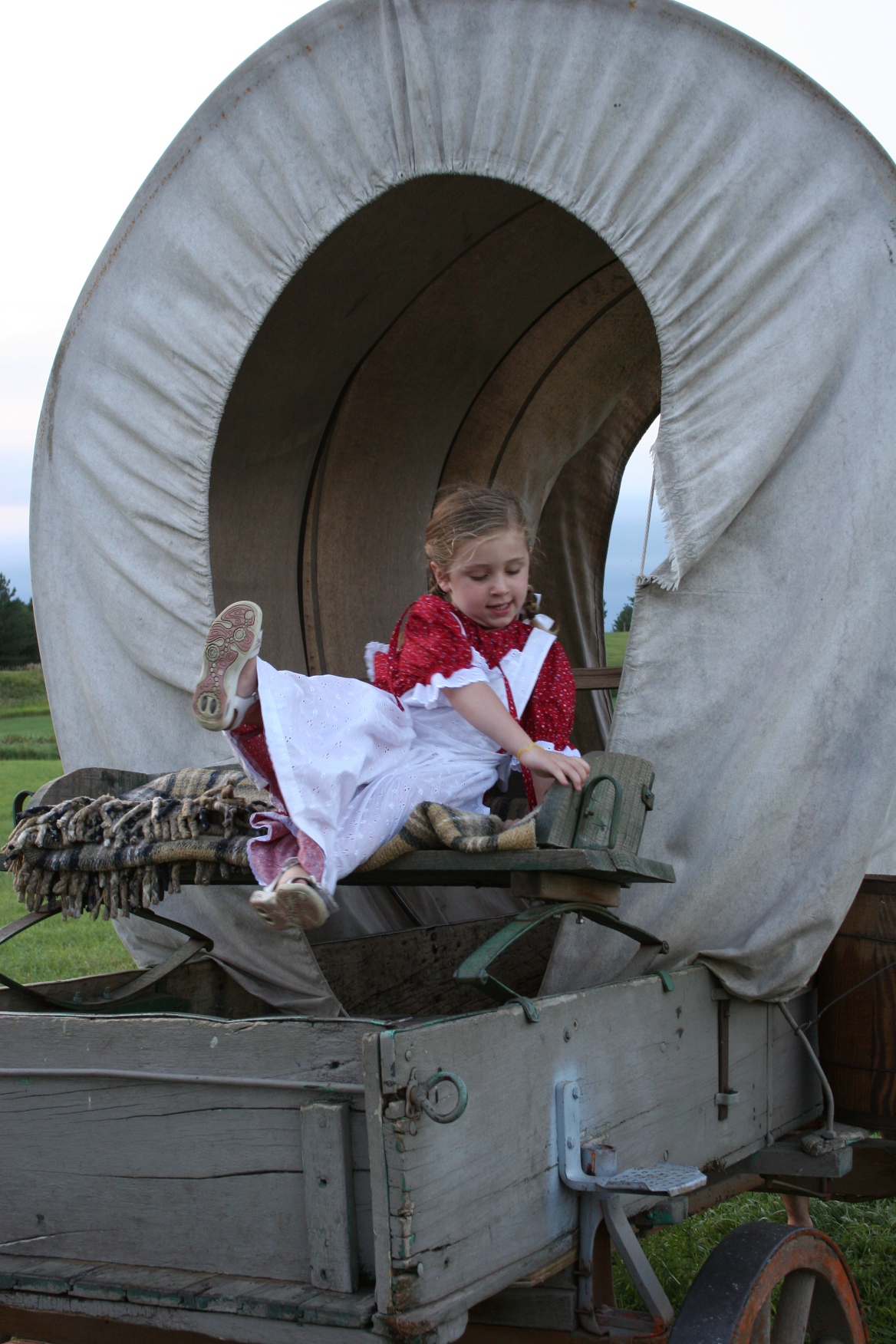
Every summer, the folks of Walnut Grove, Minnesota, produce an outdoor pageant based on Laura Ingalls Wilder's Little House books. Many pageant attendees arrive at the show site dressed in period attire and then climb aboard a covered wagon prop there.

Then I read the Betsy-Tacy book series by Maud Hart Lovelace to my girls. I even nicknamed my second daughter Tib, after the curly-haired, fun-loving Tib in Lovelace’s books. To this day, our family occasionally, fondly, calls her Tib.

A snippet of a mural by artist Marian Anderson in the Maud Hart Lovelace Children's Wing at the Blue Earth County Library in Mankato, Minnesota. The painting depicts the main characters in Lovelace's books, from left, friends Tib, Tacy and Betsy.

Now that I think back on those days of snuggling on the couch with my two girls and later with my son, I am impressed that these preschoolers would sit still for long chapter books. But they did. Of course, I also read picture books and easy-reader books to them.

Long after my trio stopped sitting on my lap or leaning into my shoulders, listening to the stories I read, they continued reading.

Even my boy, my teen. This surprises me. At 17, he still pops out the leg rest on the reclining couch, stretches out his lanky body, grabs a book and reads. For hours. He also reads in bed when he should be sleeping.

There was a time, during his elementary and middle school years, when I checked under his bed for a flashlight and books. He got smart to that and simply hid them elsewhere. So I stopped searching, not wanting to squelch his love of reading even if it meant he wasn’t getting enough sleep.

Today he still reads when he should be sleeping. While I encourage him not to read into the wee hours of the morning, I can’t exactly stop him.

Right now he has two dozen science fiction books stacked in the middle of his bedroom floor: I, Robot and Second Foundation by Isaac Asimov, The Invisible Man and The War of the Worlds by H.G. Wells, Ringworld by Larry Niven, 1984 by George Orwell, Stranger in a Strange Land by Robert A. Heinlein…

Science fiction books stacked on my teen's bedroom floor.

Some of the books have copyrights nearly as old as me.

My son found these books at a used book sale sponsored by the local branch of the American Association of University Women. The AAUW holds the sale annually to raise funds for local reading projects. It’s a worthy cause.

Well, Saturday, we “donated” $25 to the cause, dropping that amount for a box full of two dozen science fiction books, a Star Wars video, two Bach CDs, a nonfiction book about Iowa and a vintage elementary school textbook. The last two items on that list were my selections. I seldom buy books for myself, preferring to check them out from the library because I’ll read a book only once. My teen will read a volume multiple times.

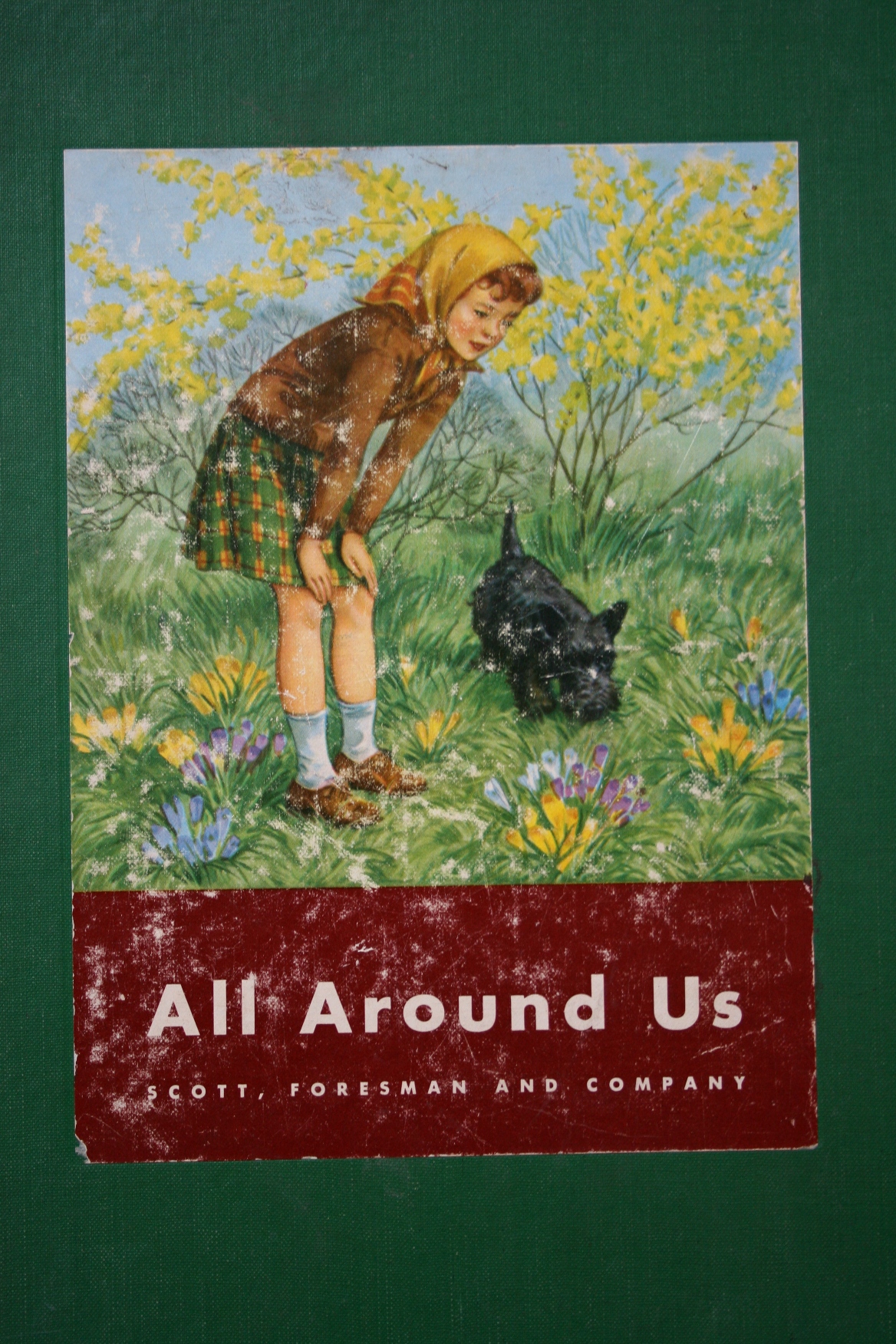
I picked up a 1951 edition of this children's textbook at the used book sale. One of the women working the sale said she used it in her classroom and really liked the book. So did I. But I purchased it for the beautiful vintage art.

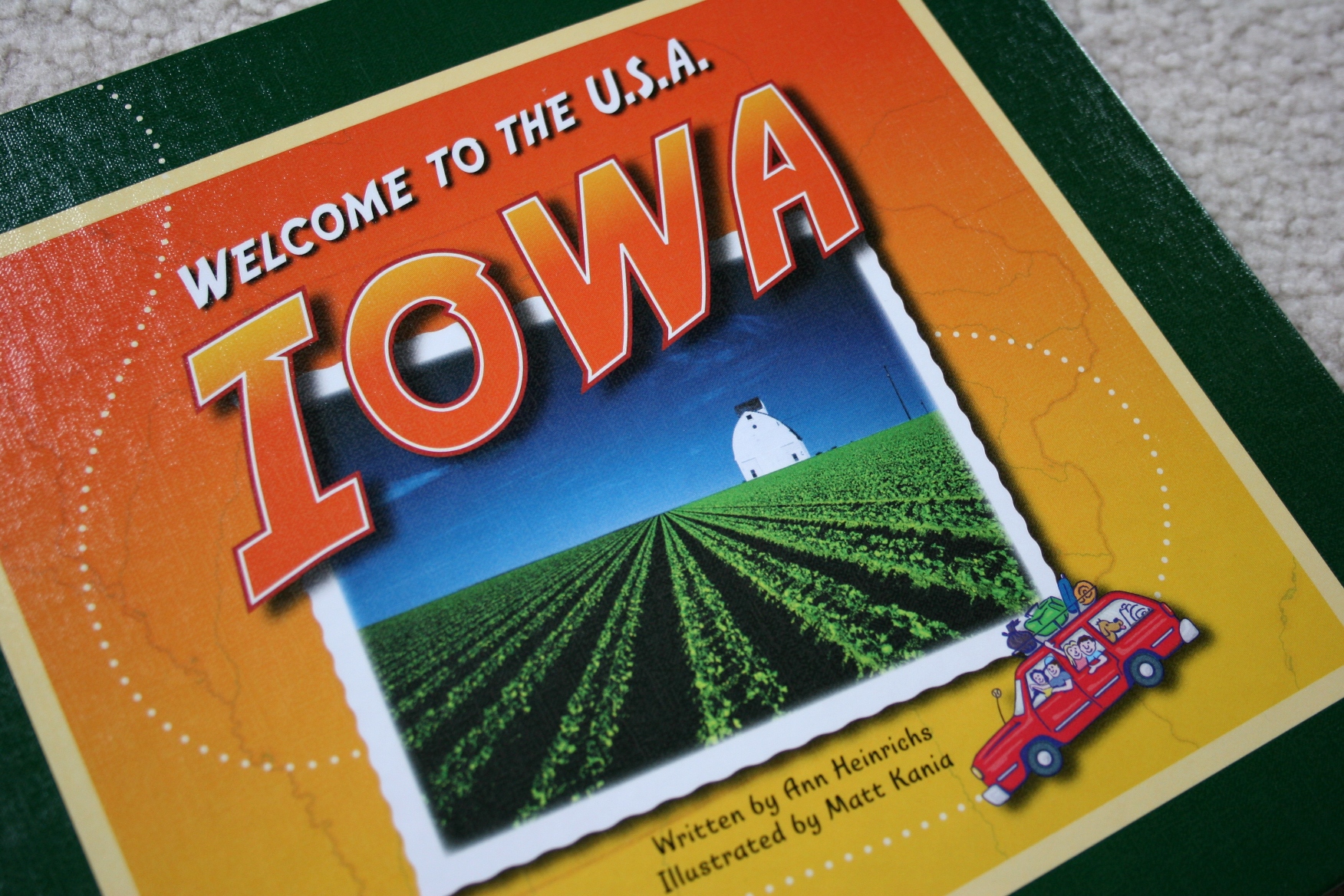
I found this brand new book for my niece, who will graduate from high school in about a month. She will attend an Iowa university. I thought she might enjoy this children's nonfiction book that will introduce her to her new home state. Either that or she'll think her aunt (me) is crazy for giving her such an unusual gift. If anyone else wants an Iowa book, you'll find a box full at the sale.

Typically I would not pay $25 for nearly 30 used books, some of them well-used. But how could I deny these books to my teen, who said he can’t even find some of the older books in the library system? Yes, he has a well-used library card.

The older women working the book sale seemed impressed with my gangly teen who managed to fill an entire cardboard box with books. They even offered him a several-dollar discount when I told him he would need to pay half the cost of the books. I only thought it fair. I’ve never been the type of mom to buy my kids something simply because they want it. The son didn’t argue.

I had to restrain myself from buying an armful of children’s picture books. For years I bought used books for the library at the Christian day school my children attended. After I stopped volunteering a dozen years later, breaking that buying habit took a bit of resolve.

Since I passed on the many fabulous children’s books, I did the next best thing. I e-mailed two friends with young children and encouraged them to shop at the sale.

HOW ABOUT YOU, do you buy books at used book sales, garage or rummage sales or elsewhere? Have you always loved to read? And, if you have children, do they also love being read to or reading on their own?

FOR ANYONE WHO lives in the Faribault area, today, April 20, is the final day of the book sale, which runs from 3 p.m. – 7 p.m. in the old Hallmark store at the Faribo West Mall. I’m pretty certain you’ll find plenty of deals on books as the AAUW will just want “to get rid of” their remaining inventory.

© Copyright 2011 Audrey Kletscher Helbling


I’ll skip the sushi April 18, 2011

WHAT FOOD IMAGES pop into your mind when I say “Japanese restaurant?”

Rice? Vegetables? Sushi?

That’s the extent of my Japanese culinary knowledge.

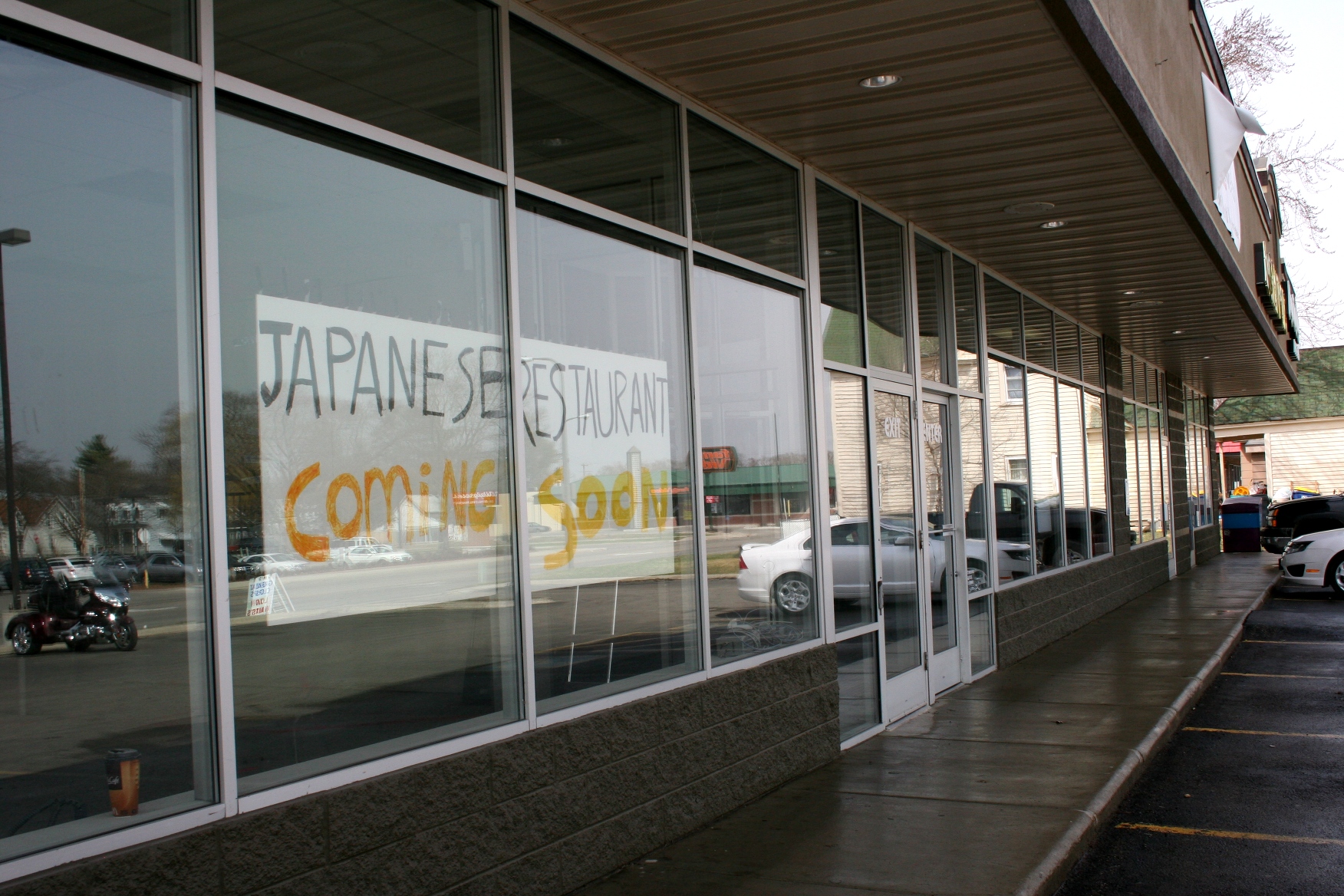
But that will change with the opening of a Japanese restaurant in my mid-sized Minnesota town. I noticed a sign last week in an empty strip mall space along State Highway 60 in Faribault advertising this new restaurant.

A Japanese restaurant is opening in the strip mall in the 600 block of Fourth Street/Highway 60 in Faribault.

Although I don’t eat out all that often and once tried homemade sushi, promptly spitting out the wrapped raw fish and rice, I appreciate another dining option in my community.

We have plenty of fast food and pizza places and restaurants that serve traditional American fare.

We have several Mexican restaurants (like Gran Plaza Mexican Grill and El Tequilla Family Mexican Restaurant) and a Mexican bakery.

Baked goods at a Mexican bakery (once at the center of controversy because of its exterior paint color) in downtown Faribault. The bakery has changed ownership since I took this photo.

Faribault also has three Chinese restaurants, a Somali eatery and a recently-opened Thai restaurant (that I have yet to patronize, but about which I’ve heard rave reviews).

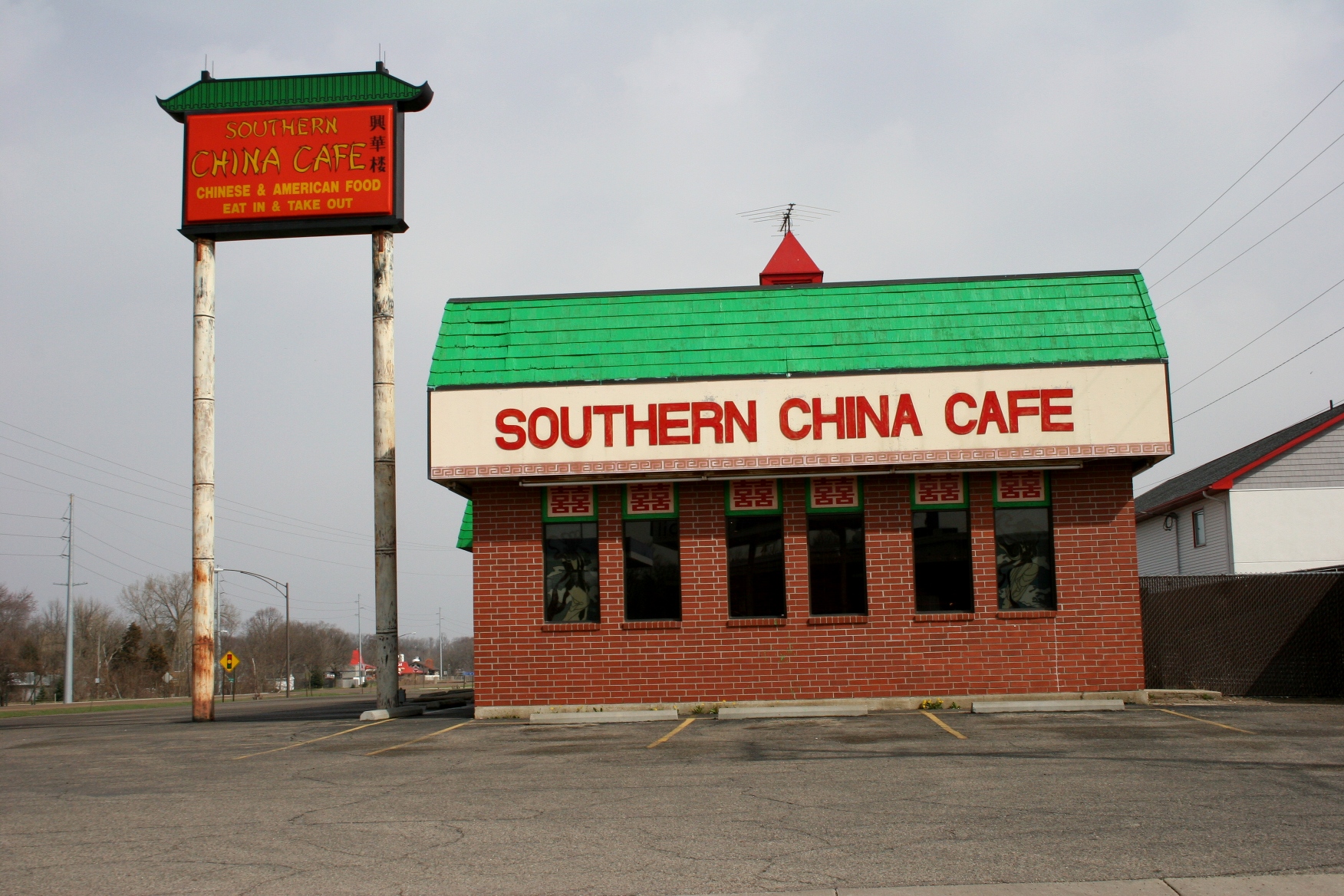
The Southern China Cafe is among four restaurants in town serving Chinese food.

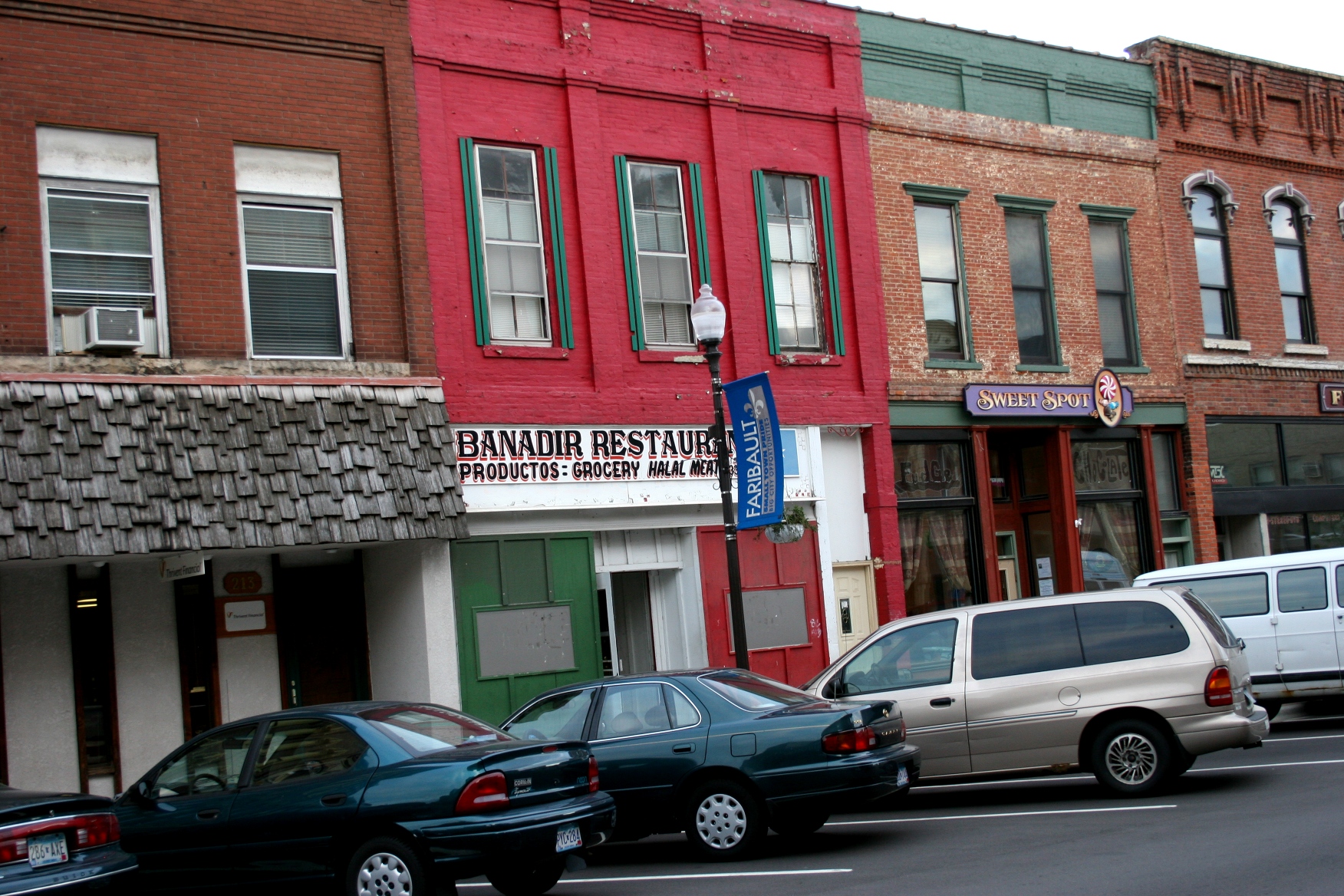
Banadir, a Somali restaurant, is located in historic downtown Faribault.

Now we’ll soon have Japanese cuisine to throw into the cultural mix.

To those of you who live in larger metropolitan areas, the opening of a Japanese restaurant may not seem like a big deal. But in outstate Minnesota, where our dining choices are more limited and where getting the locals to try something new, like God forbid sushi, this ethnic restaurant opening is worth noting.

I have no idea whether the new Japanese restaurant will serve sushi. But I expect it will.

I hope Faribault area residents are daring enough to step outside of their safe pizza, burgers and fries, steak, batter-fried walleye, enchilada, lutefisk comfort zones to try Japanese food. Count me in the door to sample Japanese food, just not the raw fish sushi.

© Copyright 2011 Audrey Kletscher Helbling
 

In pursuit of Bambi April 16, 2011

Filed under: Uncategorized — Audrey Kletscher Helbling @ 7:56 AM
Tags: , , , , , , , , ,

OH, FOR A TELEPHOTO lens on my camera…

Since that is not in the cards, the budget or the plan, I find myself often lamenting missed nature shots. It’s not like I can holler to Bambi, “Hey, hold still, will you, so I can take your picture! Move that way a little bit. Just one more shot.”

Nope, can’t do that.

So I shoot anyway, firing my camera in the hopes that once, maybe once, I’ll get something decent on my CF card.

So…, Wednesday evening my husband and I are checking out the rivers in Faribault. We are driving toward Teepee Tonka Park from the viaduct that crosses the Straight River and railroad tracks. And there they are. Four deer. Standing. In a yard.

I am so excited. But already the deer are fleeing, alert to the danger of our approaching van and a car driving up the hill toward them. My only thought is to photograph this quartet.

But I am frustrated because the lollygagging car is in my way. Can’t the driver see that I have a camera? Probably not.

Oh, well, I try anyway, shooting seven frames through the van’s windshield.

And although the results are not stunning or fantastic or overly-impressive, I’ve managed to capture at least one photo that is good enough to show you. And that, folks, is all I can ask for without a telephoto lens to shoot Bambi.

EDITOR’S NOTE: Those of you who live in southeastern Minnesota are probably wondering, “How did she shoot these photos on Wednesday when we didn’t have snow on the ground?” You would be correct in questioning that.  I wrote this three weeks ago and forgot about it in my post drafts. However, since we got snow overnight here in Minnesota, I thought it appropriate to publish today.

© Copyright 2011 Audrey Kletscher Helbling

 

Serving up history and pie in Faribault April 12, 2011


I EXPECT YOU have no clue what you are viewing above. Perhaps you think this is a piece of art in a gallery exhibit.

You would be wrong. Way wrong.

Rather, this shows a portion of a Civil War battle flag that I’ve switched up with some photo editing tools to emphasize the stars and letters and numbers in the upper left corner.

Lighting conditions weren’t ideal for photographing this flag Saturday afternoon in the Guild House at the Cathedral of Our Merciful Saviour in Faribault.

Honestly, I hadn’t even expected to photograph this flag sewn by a group of women in Fairmont and carried by Company C, 6th Minnesota Volunteer Infantry. The last time I asked to photograph the flag at the Rice County Museum of History, my request was denied by director Susan Garwood.

She didn’t know me from Adam, or Eve, although I gave her my business card and explained that I was a writer and blogger. That didn’t matter.

Thankfully, Garwood changed her mind and I got the go-ahead-and-shoot-but-without-flash OK.

Garwood has reason to be cautious. This battle flag is rare, among about a half dozen in Minnesota. Recent restoration cost nearly $7,300.

Here's how the flag really looks. Faded. The company which carried this flag was comprised of men primarily from Bridgewater Township in Rice County, Minnesota. On the back side of the flag 34 stars are sewn representing the number of states in 1862. You are seeing reflections here on the glass encasing the flag.


Just another, upside down, view of the flag and the reflections of visitors viewing it.

I don’t know the value of the restored flag. But it is valuable enough that a Faribault police officer was guarding the flag Saturday afternoon during “Recognition of the Fall of Fort Sumter–The Beginning of the Civil War” sponsored by the Rice County Historical Society and the Cannon Valley Civil War Roundtable.

Likewise a collector of Civil War era artifacts was standing guard over his tables full of treasures. He had, among Civil War uniform buttons and other items, an original Lincoln photo engraving (used on the $50 bill) and signature. I didn’t ask the values. Sometimes it’s better not to know these things.


A slightly out of focus photo that I took of an original Lincoln photo engraving for a $50 bill on display Saturday.

The last time I photographed parts of his collection at a 2009 Cannon Valley Civil War Roundtable meeting, he made me promise not to reveal his name. I agreed. I didn’t want to go missing and have my family looking for me under a stadium. That’s an exaggeration, but this collector was serious. My lips are sealed.

I did ask him, though, why he didn’t bring his slave bills, which were advertised as being at the event and one of the key reasons I attended. He simply said he didn’t know he was supposed to bring them. He gave the same answer 1 1/2 years ago at the Roundtable meeting. I had gone to the session then specifically to see the slave documents.

But on Saturday I perused a few other artifacts I hadn’t seen before like…

these old bullets


and two Civil War era muzzleloaders which I was allowed to pick up and which were heavy at 18 and 21 pounds.

I also saw…

these costumed reenactors pull up in a pick-up truck

and this unidentified reenactor, left, posing for photos with Sharon and Richard G. Krom of Rochester. Richard is the great grandson of a Civil War soldier and has written a book, The 1st MN Second to None.

Finally, I sat down with friends and family to enjoy…

a piece of delicious homemade pie made by Rice County Historical Society President Jason Reher. He baked 16 pies for the event. (Jason could be a professional baker; his pie is that good.)

Fortunately for me, Jason had baked my favorite pie and apparently a favorite of many as everyone sitting at my table chose blueberry pie over apple, pumpkin or pecan. Most of us wondered if the blueberries were wild, yet never bothered to walk over and ask the pie-maker.

Jason wondered why I was photographing his pie. I just handed him a business card and figured he’d figure it out.

Copyright 2011 Audrey Kletscher Helbling


Remembering the start of the Civil War April 8, 2011

THE FIRST AND LAST TIME I attended a Cannon Valley Civil War Roundtable meeting, I was impressed by the collective knowledge this Faribault-based organization possesses of the Civil War. The session opened with each member sharing a historical snippet about the conflict.

Even guests like me were expected to offer something, anything. I was getting nervous as my turn neared and I couldn’t think of anything intellectually impressive to share. I had come solely because I wanted to see the slave documents that a guest speaker was bringing to the gathering. I didn’t expect this.

But then I remembered my tour of the Minnesota State Capitol months earlier. I could tell them, although I’m sure they knew, that a Howard Pyle painting, The Battle of Nashville, hangs in the Governor’s Reception Room. The artwork, according to the Capitol tour guide, is among the most noted of the Civil War and depicts the bloody conflict at Shy’s Hill, often defined as the war’s decisive battle.

And just to make sure the Roundtable members understood that I wasn’t completely Civil War illiterate, I also told them that the inclusion of white Georgia marble in Capitol construction drew the ire of Civil War veterans. The marble comprises much of the building’s exterior.


Georgia marble graces the exterior of the Minnesota State Capitol.

I doubt my tidbit facts impressed them, but I tried.

If you’re like me, not well-versed on the details of the Civil War, this year—the 150th anniversary of that conflict—offers the perfect opportunity to learn more. The Minnesota Historical Society has a lengthy list of educational activities planned to commemorate the anniversary.

This Saturday, April 9, for example, is “Civil War Flag Day at the Capitol” featuring three recently-conserved Minnesota Civil War flags and one from the Spanish-American War. The 11 a.m. – 4 p.m. event, with a 1 p.m. program, also includes Civil War artifacts, reenactors, children’s activities and more.

I won’t be at the State Capitol on Saturday because I’ll be attending “Recognition of the Fall of Fort Sumter—The Beginning of the Civil War” hosted by the Cannon Valley Civil War Roundtable and the Rice County Historical Society from 1 p.m. – 4 p.m. in Faribault. On April 12, 1861, the Confederates fired on Fort Sumter, starting the Civil War. Saturday’s event will be held at the Guild House of the 1862 historic Cathedral of Our Merciful Saviour, 101 NW Sixth Street.


The Guild House is attached to the historic Cathedral of Our Merciful Saviour across from Central Park in Faribault.

I expect that some of the items on display at the Guild House will be artifacts—Abraham Lincoln photos and postcards, Civil War uniform buttons—I saw at the 2009 Roundtable meeting. Back then the presenter failed to bring his slave documents. Slave bills will be displayed on Saturday. There’ll also be weapons and money, buckles and bonds, and more.


Civil War uniform buttons and insignias displayed at a 2009 Cannon Valley Civil War Roundtable meeting.

This Civil War postcard was among the items a collector brought to a Cannon Valley Civil War Roundtable meeting.

An 1840 Philadelphia Derringer, like the pistol used to assassinate President Abraham Lincoln. A collector brought the pistol to the Roundtable meeting I attended in 2009.

Jan Stevens, an area Civil War enthusiast who creates replica historical clothing will dress in period clothing and greet visitors. Another reenactor will recruit visitors to join the cause.

Civil War music will fill the Guild House. Author Richard G. Krom, great grandson of a Civil War soldier from nearby Morristown, will sign and sell copies of his book, The 1st MN Second to None.

Finally, I’m looking forward to once again examining the recently-restored Rice County Civil War battle flag of Company C, Sixth Minnesota Volunteer Infantry. I’ve seen the flag only once before, viewing it at the county historical society under the watchful eye of Director Susan Garwood.

I was disappointed then that Garwood wouldn’t allow me to photograph the flag, even when I promised to turn off the flash on my camera. She wouldn’t be swayed.

But I’ll have my camera with me on Saturday and I’ll try again.

I expect the Civil War artifact collector whom I first met at the 2009 Roundtable meeting will be there too. He, thankfully, allowed me to photograph his historical pieces. But he wouldn’t allow me to publish his name in a blog post I wrote then. He looked me directly in the eye and demanded anonymity to protect his substantial investment. He wasn’t joking when he told me he knew where he could find me.

FYI: This weekend’s activities at the Capitol and in Faribault are free and open to the public. However, donations to the Rice County Historical Society will be accepted at the Faribault event where homemade pie and coffee will be served.

© Copyright 2011 Audrey Kletscher Helbling
 

Stitches of love April 6, 2011

Handmade quilts drape across pews at St. John's United Church of Christ.

INSIDE THE LIMESTONE CHURCH, patchwork quilts drape across the backs of pews, spilling onto cushy red seat cushions.

Only hours earlier during the Sunday morning church service, worshippers settled onto the quilts handmade by St. John’s United Church of Christ members.

On a Saturday in February, members of the Women’s Guild, and a few husbands, gathered at this country church in Wheeling Township in southeastern Rice County to stuff the quilts with batting, add backings and tie together the layers with snippets of yarn.


St. John's old stone church has been in continuous use for more than 150 years. German settlers founded the congregation in 1856.

This year, according to church member and quilter Kim Keller, the quilters made 13 baby quilts and 13 big quilts.

The handmade blankets will go to graduating high school seniors—two at St. John’s this spring—and to missions, mostly local.


One of the many handmade quilts that will be given away.

As I perused the quilts, I considered the devotion of those who piece together the swatches of fabric, tie together the layers and knot the strands of yarn. These quilts represent gifts that touch the recipients physically, but, more importantly, emotionally and perhaps spiritually.

Stroke the fabric and you can almost feel the love stitched into each quilt.

That these blankets are then displayed for worshippers to see, and sit upon, adds another dimension to the project. As I photographed the quilts, as the sun streamed through the church’s restored stained glass windows, I thought of the blessings received by both the givers and the receivers. Joy that comes in selfless giving. Joy that comes in knowing someone cares enough about you and your needs to stitch a quilt.

“It is more blessed to give than to receive.” Acts 20:35

The stained glass windows at St. John's were restored between 2004 - 2006 at a cost of more than $30,000.


A view from the St. John's balcony of the church interior and the quilts.

TEN MILES AWAY in Faribault, about a dozen women at my church, Trinity Lutheran, meet every Wednesday morning from September through May to finish quilts that are donated to those in need. Seamstresses sew the quilt tops at home and then bring them, along with the backings, to church where the Trinity Quilters add the batting and then tie together the layers with yarn.

For 60-plus years now, the women of Trinity have been stitching quilts. “It’s a mission project,”  says long-time quilter Betty Gudknecht. “I want to help other people. You want to do things for the Lord because you want to do it (not because you’re paid).”

With that spirit of giving and serving, the Trinity quilters make about 200 quilts annually. They donate them to places like Minnesota Teen Challenge, the Orphan Grain Train, the Red Cross, Burdens to Blessings, Lutheran World Relief, Lutheran Association of Missionaries and Pilots, and to others in need. Trinity’s graduating high school seniors also receive quilts.

This week the Trinity Quilters are auctioning off three quilts in a silent auction that ends mid-morning on Sunday, April 10. They need the auction money to purchase batting for their 60 x 80-inch quilts. A single roll of recently-purchased cotton batting, which will make 16 quilts, cost $90, and that was at 50 percent off.

In the past, the quilters have gotten creative, using old blankets, mattress pads and even the outsides of electric blankets, as “batting.” They still plan to use those resources, but would also like to use the softer, purchased cotton batting.

While the quilt-makers sometimes buy fabric, most often it is donated.

If you’re interested in bidding on one of the quilts at Trinity Lutheran Church—and I’m sorry, I don’t have photos of the quilts—get your bids in this week.

Cash donations are also being accepted to help the quilters purchase batting.

“It is more blessed to give than to receive.”


The steeple of St. John's United Church of Christ, Wheeling Township, Rice County, Minnesota.

© Copyright 2011 Audrey Kletscher Helbling
 

A lesson in Minnesota sales taxes April 4, 2011

Filed under: Uncategorized — Audrey Kletscher Helbling @ 7:09 AM
Tags: , , , , , , , , ,

How much does your community tax purchases?

“ARE YOU A SEVEN?” she asked.

“What?” I asked her to repeat what she’d just told me over the phone.

“Are you a seven?” she repeated.

Still, I didn’t understand. Then she—the saleswoman at J.C. Penney in the Burnsville Shopping Center—explained that sales tax rates vary, depending on where you live in Minnesota. She wondered if I lived in an area with a seven percent rate.

Huh? I had no idea, about the rate or that such differences existed.

I live in Faribault. Is that a “seven,” or some other number?

The helpful saleswoman, who was trying to calculate the cost of pleated shades (which I’m not buying because they are way too costly at nearly $400 for two windows, but which I really, really want), was confusing me. Apparently orders shipped to my home would be taxed based on where I live, or something like that.

Not one to simply let this piece of information slip through the recesses of my brain, I googled “Minnesota sales tax” and ended up on the Minnesota Department of Revenue sales tax rate calculator website. It’s an easy-to-use site where I could type in Minnesota zip codes, a dollar amount and, zip, the sales tax rate appeared. The calculator covers Minnesota and local general sales and use taxes. Any other special taxes, such as those on entertainment, liquor, dining and lodging, are not figured into the totals.

First, I needed the nine-digit zip codes for my sample towns. Once I had those zip codes from a U.S. Postal Service link, I typed the numbers and my sample dollar amount of $10 into the tax calculator website.

I quickly discovered that Faribault is not a seven. Our sales tax rate, like that of my brother who lives in Redwood County in rural southwestern Minnesota, is 6.875 percent. We would each pay 69 cents in sales tax on a qualifying $10 purchase in our parts of Minnesota. We have no extra taxes, just the 6.875 state-wide basic sales tax levied by the state.

My daughter who lives an hour away from me in south Minneapolis, however, will pay more for purchases made in her area. The sales tax rate for her address is 7.775 percent. That breaks down to the standard state sales tax rate, plus an additional 0.15 percent levied by Hennepin County, 0.5 percent by the city of Minneapolis and 0.25 percent for Transit Improvement. She would pay 78 cents in taxes on a $10 purchase.

In Woodbury, where my youngest brother and his family live, a 0.25 percent Transit Improvement levy is also in place. It’s the only extra sales tax in that city, so tax on a $10 purchase there would be 71 cents.

I was surprised to learn that St. Cloud also has an extra tax, of 0.5 percent, pushing the sales tax rate there to 7.375 percent. That helped pay for an airport and other projects. You’d pay 74 cents sales tax on a $10 purchase.

But my biggest surprise came when I typed in a friends’ nine-digit zip code up in Duluth. There the local government has imposed a one percent additional general sales tax, pushing the sales tax in that port city to 7.875 percent. The tax on a $10 purchase is 79 cents. Authorized in 1973, that special tax “may be used for any city purpose, as determined by the city council.” It has no expiration date and is the longest-running local sales tax listed on a September 2010 document from the Minnesota House of Representatives Research Department.

Now, if you’re like me, you’ve just gotten a good basic education on sales tax rates in Minnesota.

Funny, isn’t it, how that J.C. Penney employee’s seemingly simple question—“Are you a seven?”—educated me about sales tax rates in Minnesota.

THE MINNESOTA LEGISLATURE is considering legislation that would loosen current restrictions on local sales taxes. Under the proposal, cities or groups of cities could impose local sales taxes with local voter approval. Twenty-two Minnesota cities currently have a local option sales tax.

© Copyright 2011 Audrey Kletscher Helbling


Grassroots dining: Church dinners are the best March 28, 2011

GIVEN A CHOICE of eating at a church dinner or dining at a restaurant, I’ll choose the holy place. I appreciate the good home cooking and fellowship that comprise church dinners.

So Sunday my husband and I headed to St. John’s United Church of Christ in Wheeling Township, about a 15-minute drive from Faribault, for a Lenten Soup Luncheon.


St. John's United Church of Christ is northeast of Faribault about two miles off State Highway 60 on Rice County Road 24 near Nerstrand Big Woods State Park.

As soon as I stepped inside the fellowship hall attached to the old stone church and saw the spread, I regretted that I’d snacked on a doughnut at my church only an hour earlier.

This luncheon offered soups, salads, sandwiches and bars. A regular smorgasbord with nine salad and three soup options and, well, I didn’t count the varieties of bars but suffice to say any chocolate lover would have been happy.


Some of the bars offered for dessert. I tried the bar with the marshmallow topping on the back left.

Salads like tuna pasta, tangy rhubarb squares and 3-bean, and the spinach-strawberry I chose, awaited diners who could select plated salads and/or build their own.


Even the salad bar sign grabbed my attention. How cute and eye-catching and kitschy.

The plated and build-your-own salad bar fills two tables in the dining hall.

A few of the salad bar choices, including a tangy rhubarb square on the right in this photo.

After I’d selected my salad and placed it on a fancy silver tray, I headed to the kitchen where cooks were ladling potato-bacon chowder, hamburger vegetable soup and chicken noodle with dumpling soup from large roasting pans into hefty bowls.


The busy-as-a-beehive kitchen crew at St. John's United Church of Christ.

Volunteers were ready with roasters full of soups in the kitchen.

I started with the potato and eventually sampled the other two. The creamy and savory potato was my hands-down favorite, although I also appreciated the spicy kick to the hamburger veggie. I’ve never been big on chicken noodle soup or dumplings. The chicken soup is served at every Lenten Soup Luncheon the church hosts. Oyster stew and chili will be the other featured soups at the last luncheon from 11:30 a.m. – 12:30 p.m. on Sunday, April 10.


The Lenten Soup Luncheon sign posted by the kitchen. The final luncheon is from 11:30 a.m. - 12:30 p.m. on Sunday, April 10.

A diner's tray (not mine) that includes a bowl of chicken noodle soup with dumplings.

Church dinners are all about food and fellowship. I scored an invitation to visit a farm with a robotic milking operation while visiting with church members at my table.

Of course, no church dinner is complete without bread, so diners were offered an array of sandwiches. I inquired about the ground concoction on an open-faced sandwich, was told it was bologna and pickles, paused, thought, and picked it up. And you know, for someone who doesn’t really care for bologna, I liked the spread.


Plenty of sandwich choices like ham, tuna and, yes, even ground bologna and pickles were offered.

Except for lutefisk, I’ve never tasted a church dinner I didn’t like.

I notice and appreciate details like the lovely floral dishware. My husband and I learned that once you carry your food to your table on the fancy silver tray, you're supposed to take your plates and bowls off the tray and servers will pick it up for others to use. We even had big, hefty soup spoons for eating our soups. Now that impressed me.


There's no specific cost for the St. John's Lenten Soup Luncheon, which benefits the youth fellowship group, helping members finance mission trips and more. Cost for the meal is whatever you choose to donate. Just drop your money in the bucket before picking up a fancy silver tray at the salad bar.

FYI: Click here for more information about St. John’s United Church of Christ, 19086 Jacobs Avenue, located near Nerstrand Big Woods State Park, rural Faribault. Watch for a future post featuring photos of the church interior and exterior.

PLEASE SUBMIT A COMMENT and tell me about a church dinner you enjoy and why.

© Copyright 2011 Audrey Kletscher Helbling

 

Traveling photo shoots March 26, 2011

BOY, WAS I HAPPY to meet photographer Loretta M. Verbout of Rochester during an opening night gallery reception recently at the Paradise Center for the Arts in downtown Faribault. She is among three photographers and a painter currently exhibiting at the center.

Although I enjoyed all of the art, I was particularly drawn to Loretta’s photos because she photographs the same types of subjects I like photographing. Flowers. Rural scenes. Everyday objects. Her images have a certain down-home quality that appeals to me.

I was especially drawn to her photo of a country church barely visible behind a field of ripened corn. I wanted to know more about the church and where it was located. I enjoy discovering rural churches, then photographing them.

“It’s somewhere between Dubuque and the Minnesota border,” Loretta said.

Then Loretta explained that she shot the image through the passenger window of a moving vehicle.

I didn’t expect that answer.


Loretta shot this rural church scene while driving roads along the Mississippi River somewhere between Dubuque, Iowa, and the Minnesota border. It's in her gallery exhibit at The Paradise.

Instantly, I bonded with this photographer. I do the exact same thing—set my EOS 20D SLR digital Canon camera on a fast shutter speed and click, click, click while traveling. Loretta also uses mainly Canons.

I called my husband over. He needed to hear this, to confirm that I’m not the only crazy photographer who shoots while riding shotgun.

But apparently I’m not to Loretta’s level of commitment yet. She’s worn out the motor on her vehicle’s automatic window. Typically, I shoot through the window given I don’t want to risk dust filtering into my camera and landing on my sensor, plus sometimes the weather is just too cold for an open car window.

Here are two more drive-by images from Loretta’s Mississippi River road drive:

FYI: Loretta’s gallery show, “The beauty in everyday things,” and exhibits by photographers Laura Schenck of Northfield and Catherine Michele Adams of St. Paul will run through April 23 at the Paradise’s Carlander Family Gallery, 321 Central Avenue, in downtown Faribault. Minneapolis artisit Lauren S. Strom’s paintings are also on display in the Lois Vranesh Boardroom Gallery. Paradise hours are 10 a.m. – 5 p.m. Tuesday – Friday and from noon to 5 p.m. on Saturday.

CHECK BACK for a trio of on-the-road farm place photos I shot recently while traveling through southwestern Minnesota.

© Copyright 2011 Audrey Kletscher Helbling

 

Preparing for the floods, which haven’t arrived, yet, anyway March 25, 2011

Xcel Energy sandbagged its electrical substation near the Straight River in preparation for spring flooding. See the green, fenced enclosures next to the building. Last fall this substation flooded during a flash flood.

UNLESS THE NATIONAL WEATHER SERVICE changes its forecast, a flood warning that covers Rice County expires at 3:30 p.m. Friday.

That’s good news for Faribault, where residents and officials have been nervously watching the rising, and now receding, Cannon and Straight Rivers that run through town.

Six months ago, those rivers rushed over their banks during a September flash flood, threatening homes and businesses and actually flooding some. Sewage also backed up in to homes and the city’s wastewater treatment plant was compromised. Because of the sudden nature of that flood, my community was not fully prepared.

This spring, though, following a winter of heavy snowfall and then a quick snow melt, officials had emergency plans in place to deal with possible flooding. They had even recruited students to fill sandbags, stockpiled at a local park for residential use.

They were ready. Ready is good.

Better to be safe than sorry.

Here’s a look at some river and preparedness scenes I shot near the Cannon and Straight Rivers Wednesday evening.

If we don’t get another major storm—rain or snow— and the weather stays cold, slowing the snow melt, I think we should be OK here in Faribault, meaning no need to worry about flooding.

But then that can change on a dime, and I’ve heard predictions of another possible river crest next week.

And so we wait…prepared.

Student volunteers and others filled sandbags, available to residents who needed them. These were stockpiled at South Alexander Park by the Cannon River when I shot this image Wednesday evening.

River waters rise close to Faribault Foods. Last fall floodwaters reached as far as the overhead doors.

The Straight River encroaches on Faribault's Water Reclamation Plant, which now appears "safe" from floodwaters.

A sandbagged utility area along the Straight River by the viaduct and Teepee Tonka Park on Faribault's east side.

CLICK HERE to view images from last September’s flash flood in Faribault, comparing the situation then to today. River levels are much lower than six months ago.

© Copyright 2011 Audrey Kletscher Helbling