Minnesota Prairie Roots

Writing and photography by Audrey Kletscher Helbling
Even scarier than Halloween October 31, 2024

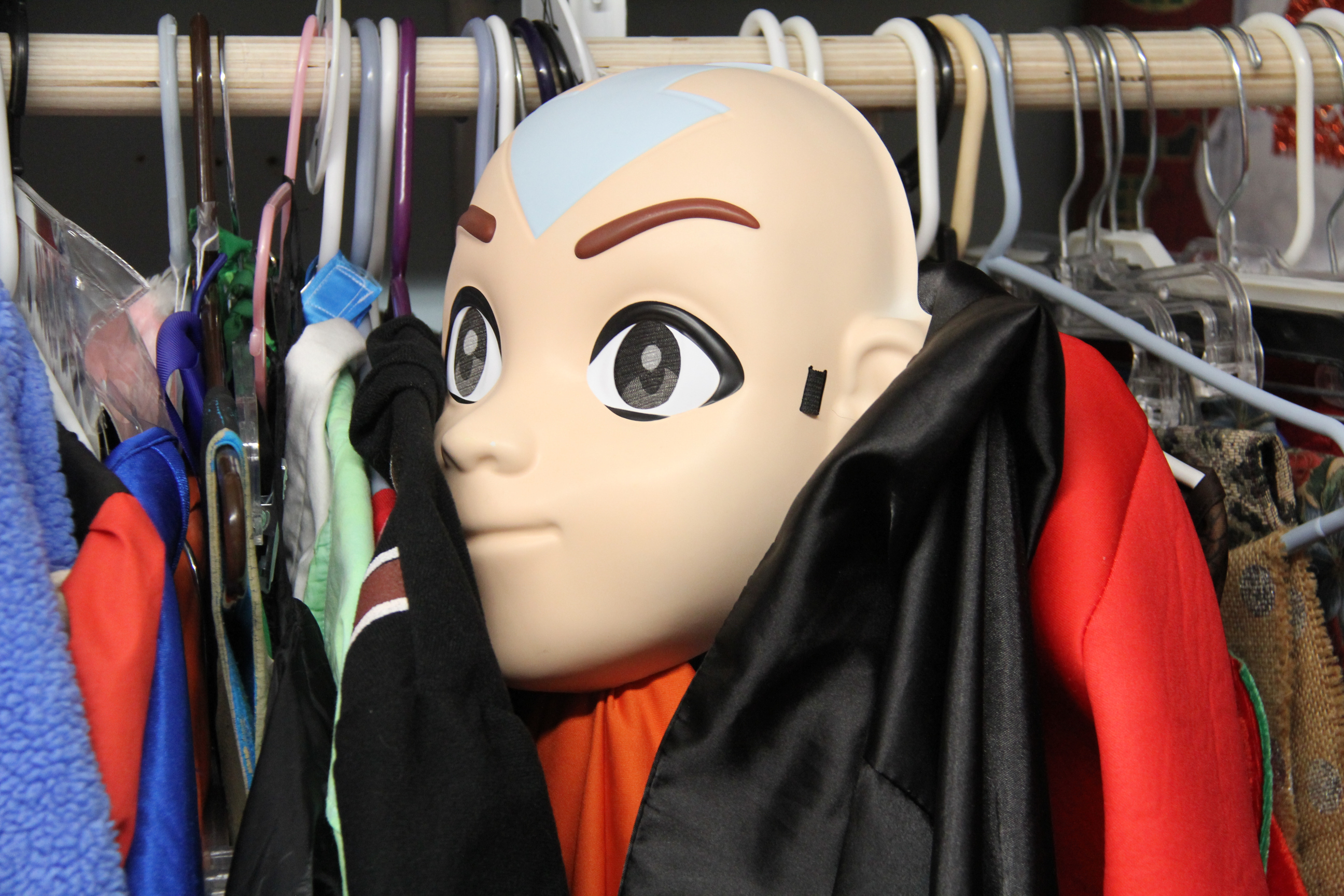
A Halloween mask and costumes for sale at Something for All, a thrift shop in Lonsdale, MN. (Minnesota Prairie Roots copyrighted photo October 2024)

OCTOBER 31. Halloween, the one day when scary is celebrated in a big way. But October 31 also marks another notable day, the final day in Domestic Violence Awareness Month. Domestic violence is far scarier than any ghoulish, frightening, unsettling costume or event. Domestic violence and abuse are real. Real scary.

Warning signs of relationship abuse from an event held in Faribault many years ago.

Abuse can be physical, psychological/mental and/or emotional. Death, injuries, scars, trauma and so much more result from abuse which is, at its core, all about manipulation, power and control. Those can be insidious or blatant.

My fictional story, “Evidence,” is published in this anthology.

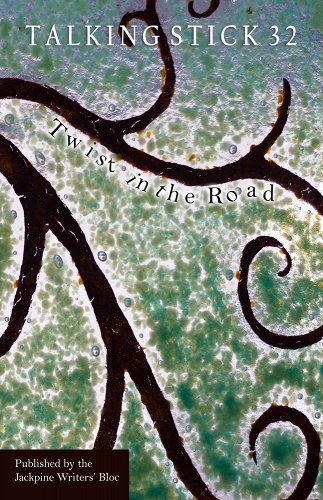
With that brief background, I am sharing a fictional story printed in Talking Stick 32—Twist in the Road, a literary anthology published by northern Minnesota based Jackpine Writers’ Bloc. I wrote “Evidence,” which won an honorable mention in the 2023 Talking Stick writing competition. Please read my story and then my comments following.

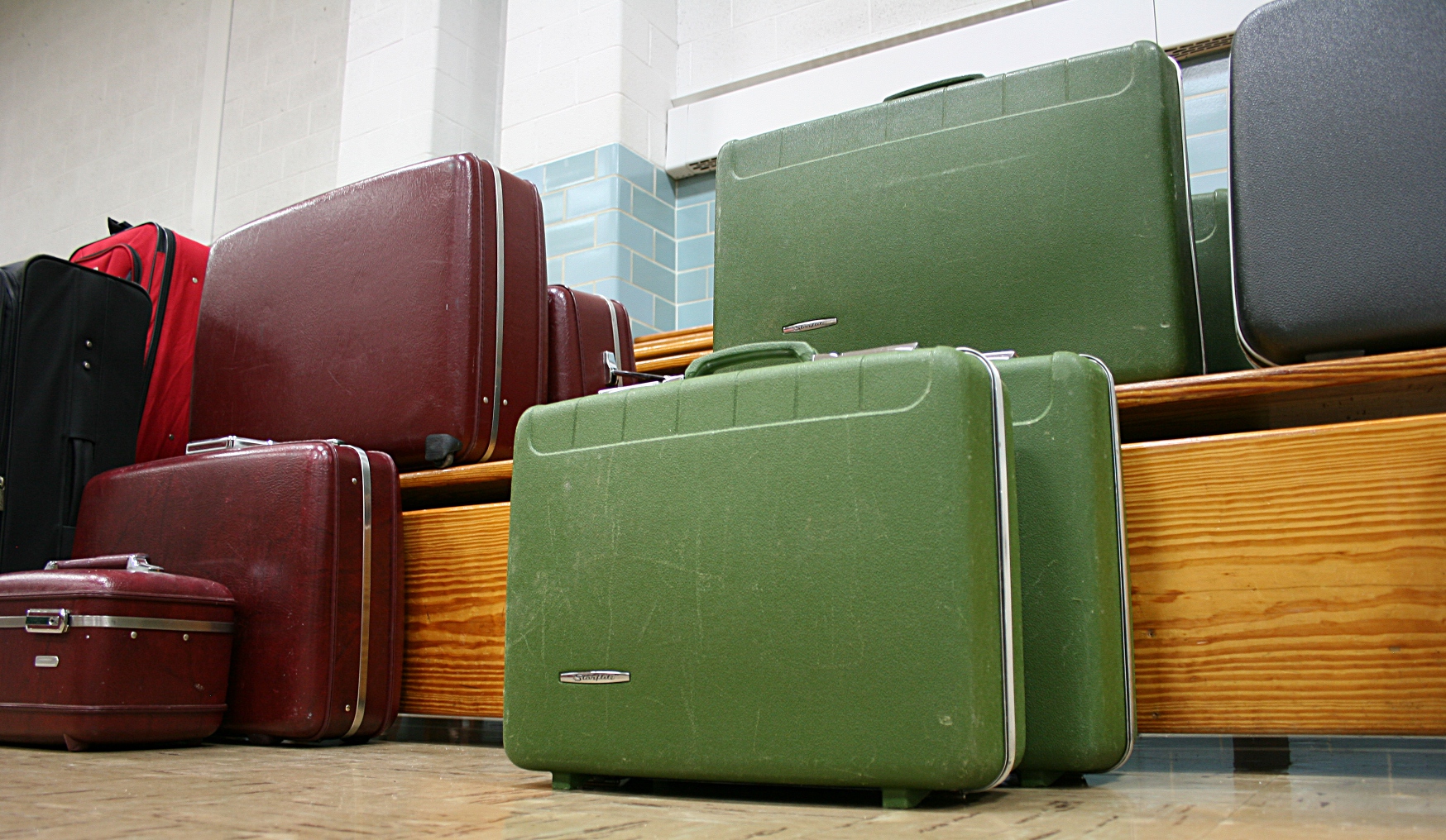
Some victims of domestic abuse/violence flee with minimal belongings in a single bag or suitcase. Some leave with nothing at all. Leaving marks the most dangerous time period when exiting an abusive relationship. (Minnesota Prairie Roots copyrighted file photo)

Evidence

She waited inside the bus station, body molded into a hard plastic chair, battered suitcase at her feet nudging shoes that needed a good polishing. Beverly felt restless, lost, as if at any moment she would awaken from her nightmare of a life. She pressed her right thumb into her sweaty left palm, a soothing habit that sometimes helped calm her. But not today.

Only hours earlier she’d fled to this place after tossing several changes of clothing alongside her diary in the bag now resting on the sticky, worn floor soiled by a thousand feet, a thousand stories. Today her story.

Her mind drifted to those first years when she wrote in flowery script, embellishing her writing with hearts. Love, so much love. He cherished her, loved her, embraced her with words and flowers and praise. Until he didn’t.

It was all so subtle, how Thomas, not Tom, chose to slip hurtful words into conversations, wearing her down. Day by day. Complaints of undone laundry and cold dinner and dirty dishes. And then the accusations flew. Where were you? Why were you speaking to him? Why can’t you ever do anything right? Then he slapped her. Repeatedly. Often.

She felt beaten. Weak. Exhausted. Trapped. Her writing reflected that, emotional words looping across the lined paper. Uneven and running together and sometimes nearly unreadable. Tears traced through the ink and wrinkled the pages.

For the longest time, she endured, pulled inside herself, determined she could do better, be better, love him more. Yet, it was never enough. Thomas continued to berate her, to find fault in everything she said and did. And she recorded it all in the journal zippered inside the suitcase stuffed in the back of their closet, the suitcase now at her feet. Evidence.

Beverly pulled herself back to reality, checked the time on the massive clock inside the bus station. Soon the Greyhound would roll in. She grabbed the worn handle of the battered bag, rose from the uncomfortable chair, and headed toward the boarding area. The momentum of hurrying passengers, their shoes slapping against the speckled linoleum, carried her. The bus doors pulsed open. Beverly stepped inside, handing her ticket to the driver. Her mood shifted, lightened with each step down the aisle until she saw him through the window, face flashing anger, fists clenched at his sides.

#

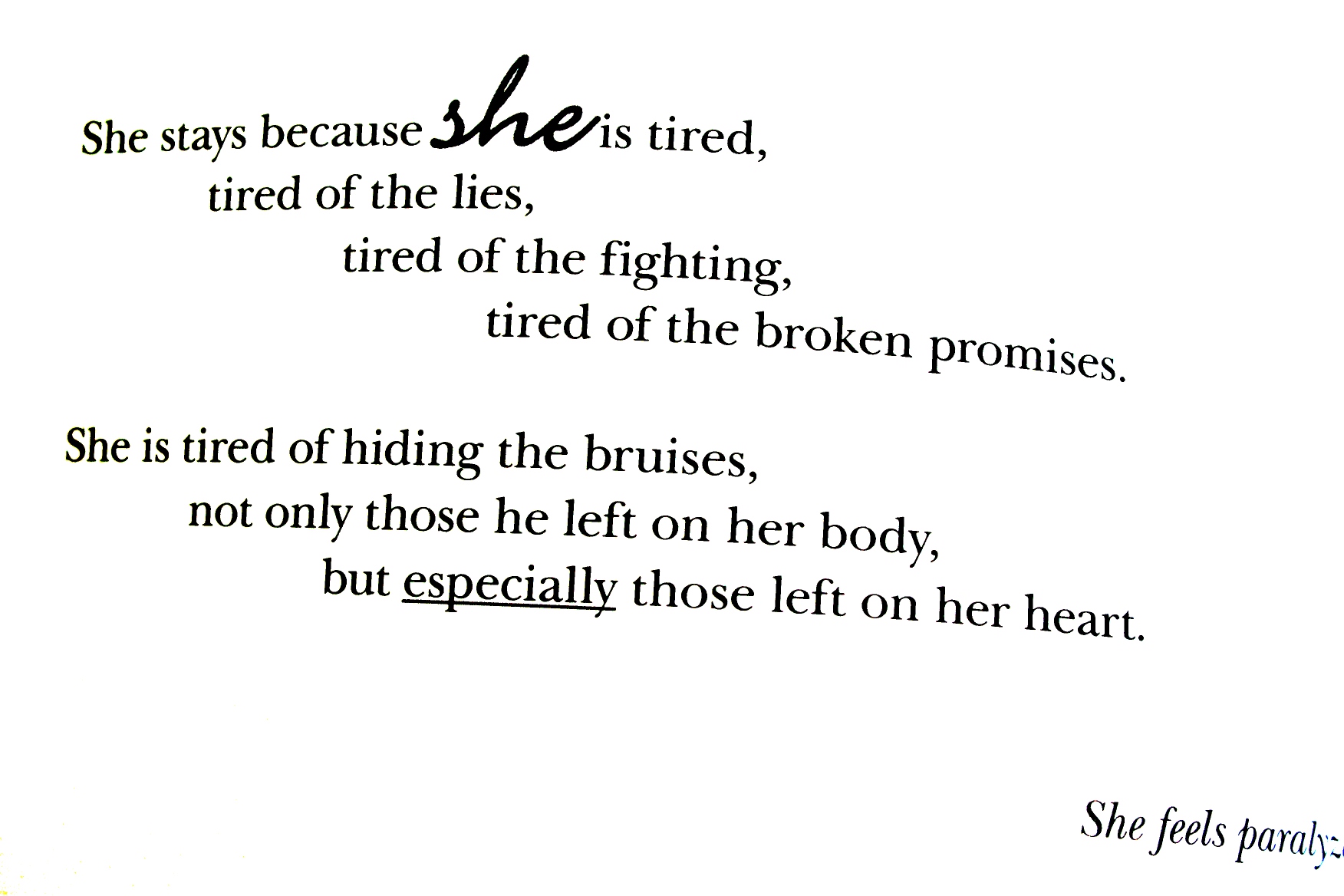
This text was published in a book, “She Stays,” by Eric Staab-Absher, director of HOPE Center in Faribault. (Text copyright of Erica Staab-Absher)

COMMENTS: If you recognize yourself or someone you love in my fictional story, first know that you are not alone. Help is available through organizations that will support you and/or your family. That may be a shelter or an advocacy/outreach organization focused on preventing domestic violence, providing education and resources, and simply being there for you. If you’re not ready for that step, talk to a trusted friend or family member. Seek help.

Leaving an abuser is not easy. It’s scary and difficult. Even dangerous. But you (or someone you love) are so worth living a life free from manipulation, control, abuse and/or violence.

VIOLENCE FREE MINNESOTA has released its “2023 Homicide Report: Relationship Abuse in Minnesota.” In 2023, there were 40 confirmed victims of intimate partner and domestic violence-related homicides in the state. That’s the highest number since tracking began in 1989. Gunshot is the leading cause of deaths. This report honors victims across Minnesota with photos and information. It’s packed with statistics and other valuable information and is well worth your read. Click here to read the full report or a summary of it.

To learn more, start by clicking here to reach the National Domestic Violence Hotline.

© Copyright 2024 Audrey Kletscher Helbling


Celebrating community journalism during National Newspaper Week & my backstory October 8, 2024

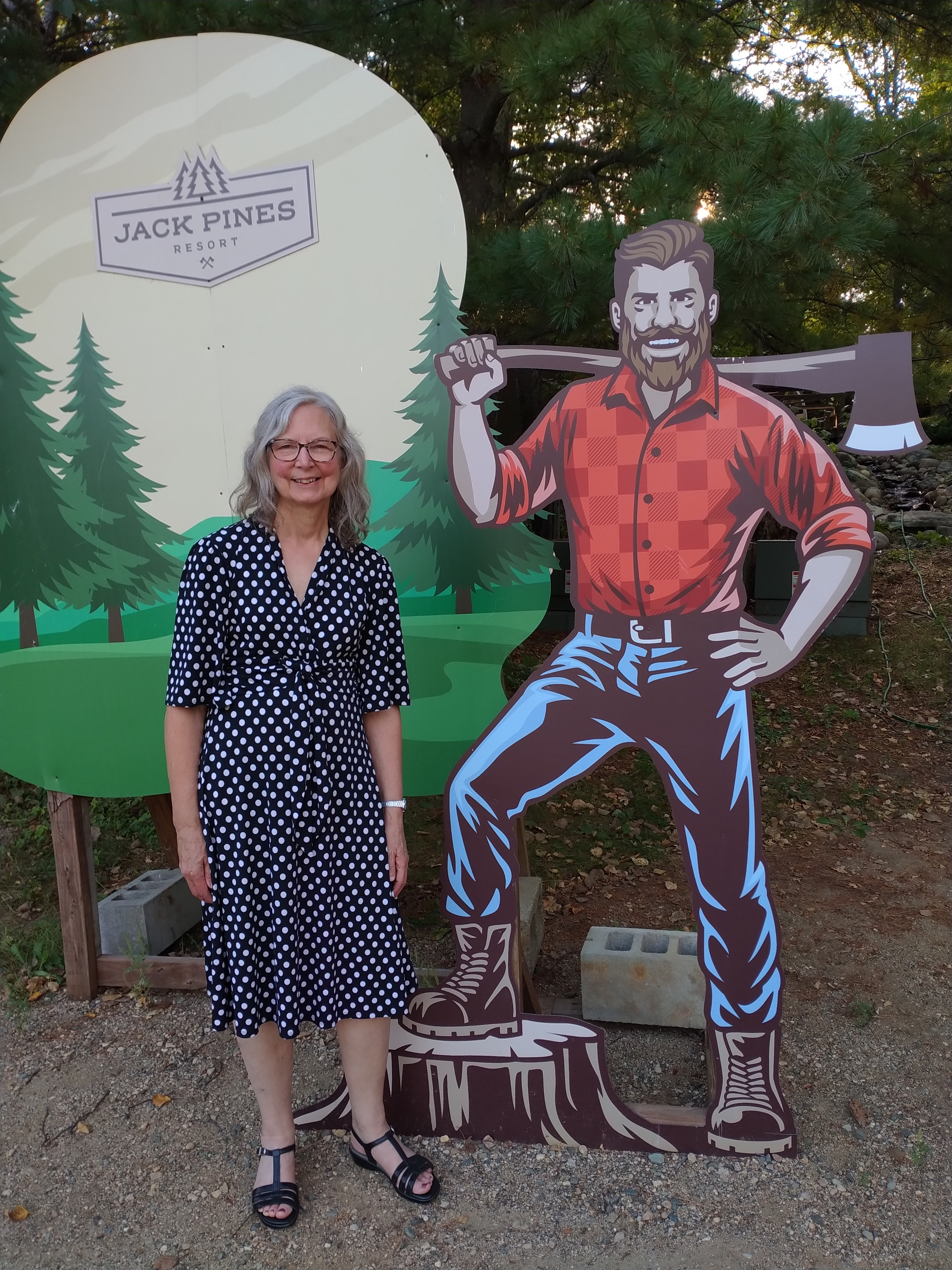
I am a down-to-earth writer who focuses on writing about people, places and events primarily in Minnesota. Here I’m pictured outside Jack Pines Resort, rural Osage. I was there attending a book launch party for an anthology in which my writing published. (Minnesota Prairie Roots copyrighted file photo by Randy Helbling, September 2024)

I’VE ALWAYS LOVED WRITING. From early on, my love of language, of words, of grammar, of, yes, even spelling, defined me. Give me a book to read. Give me a spelling test. Give me a pen and a notebook. And then a computer. Words, words and more words. I will find them, use them, create stories with them.

At one time, I wanted to pursue a degree in German. But, after a year in college, I changed direction because I didn’t want to teach. I decided to study journalism. It was absolutely the right decision for me, my interests and my skills.

With that intro, I join the many writers who are celebrating National Newspaper Week October 6-12. That includes journalists from my local paper, The Faribault Daily News, in which my writing publishes each weekend and sometimes more. I no longer consider myself a full-fledged journalist as much as a writer. These days I write from a personal perspective, more as a columnist, rather than as an objective reporter. I write fiction, creative nonfiction and poetry, too.

MY JOURNALISM EXPERIENCE

But I did work as a full-time newspaper reporter and photographer after graduating with a mass communications degree (news/editorial emphasis) in 1978 from Minnesota State University, Mankato. I worked for newspapers in Gaylord, Sleepy Eye, Mankato, Owatonna and Northfield. Eventually I gave up journalism when I started a family. The long and odd hours are not conducive to family life.

Today my three kids are long grown and gone, and I’ve found my way back to writing with an added focus on photography. What makes a good writer, a good newspaper reporter? Topping my list are the abilities to listen and focus on detail. I’ve always considered myself a good listener, a necessity for any newspaper reporter. I developed the skill of taking notes while actively listening. Organization also factors in. There’s always a bit of homework involved in prepping for an interview. Research the subject. Prepare questions, but be open to asking more as the interview progresses. Focus on details. Tell a story.

I worked in journalism before the days of cellphones, so I filled notebooks with pages of notes. I also studied and worked in the profession before computers and digital cameras. My first job out of college, I typed all of my stories on a manual typewriter, shot all my photos on film. I would never want to go back to either. Give me a computer and a digital camera. It’s much easier to create with those.

FOCUS ON LOCAL STORIES

I love sharing stories and photos of people, places and events that weave into my life, that I discover. I find joy in following a gravel road, in discovering interesting signage, in exploring small towns, in meeting ordinary people following their passions… People often tell me I find the most interesting things. I agree. And then I tell them it’s right here in their own backyard if only they pause to look, and see.

Therein lies the value of community journalism, which I want to highlight and honor during National Newspaper Week. Our local newspapers are all about local. Local reporters cover and write about the people, places and events that are happening locally. They write stories ranging from features to hard news. I covered all of those, too, while working as a full-time reporter. It’s not an easy job. People are quick to criticize, slow to praise. So I want to state right now that I appreciate our local news team. They work long, odd hours, just as I did, to gather and write the news. They care.

Everyone ought to care that freedom of the press thrives, that these journalists are covering our government meetings, writing about our neighbors, highlighting ordinary people who do extraordinary things and much more. We need newspapers as much today as ever before, perhaps even more.

Please, support your local newspaper by subscribing. And thank a newspaper reporter for their dedication to the profession. They deserve to be recognized, especially during National Newspaper Week.

© Copyright 2024 Audrey Kletscher Helbling


Latest “Talking Stick” anthology publishes & I’m in, again September 19, 2024

I couldn’t resist posing with Paul Bunyan at Jack Pines Resort following a book launch party there on September 14. (Photo credit: Randy Helbling)

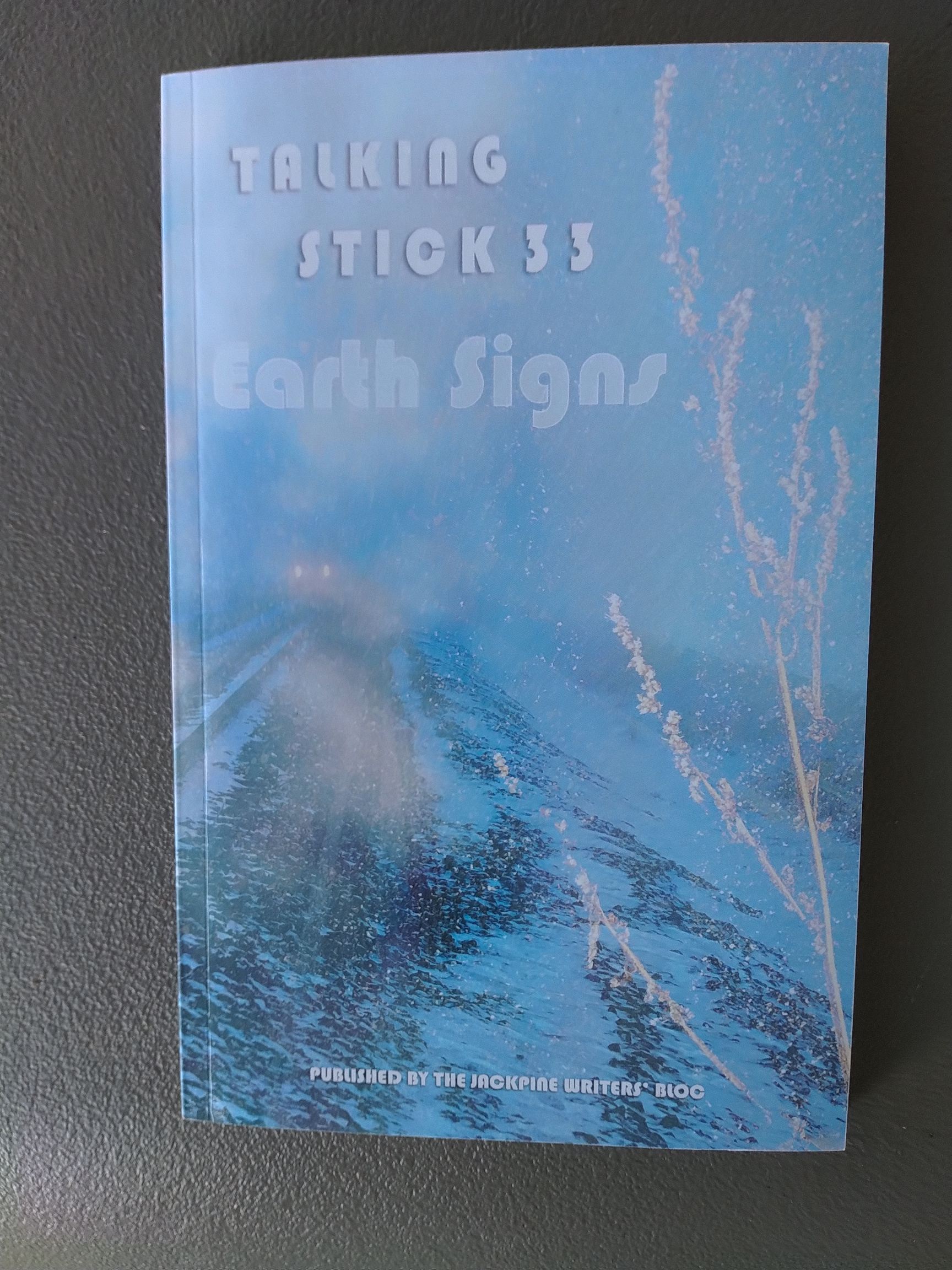
FOR 33 YEARS NOW, a writing group in northern Minnesota has published Talking Stick, a literary anthology packed with poetry, fiction and creative nonfiction. It features not only the writing of well-known Minnesota writers, but also that of emerging writers. And that says a lot about this book published by the Jackpine Writers’ Bloc based in the Park Rapids area.

Getting published in this anthology is a competitive process with blind-judging. The judges—this year a university English professor and writer, a writer who moved to Minnesota for a rural artist-in-residency, and the author of a cozy mystery series—have no idea whose work they are considering for honors. The Jackpine editorial team chooses their top pieces to pass along to the judges for review and awards.

There were 280 submissions from 121 Minnesota writers or writers with a strong connection to our state in the 2024 writing competition. Of those, 113 works from 72 writers were published. That includes 63 poems, 22 creative twist pieces, 15 creative nonfiction stories and 13 fictional stories.

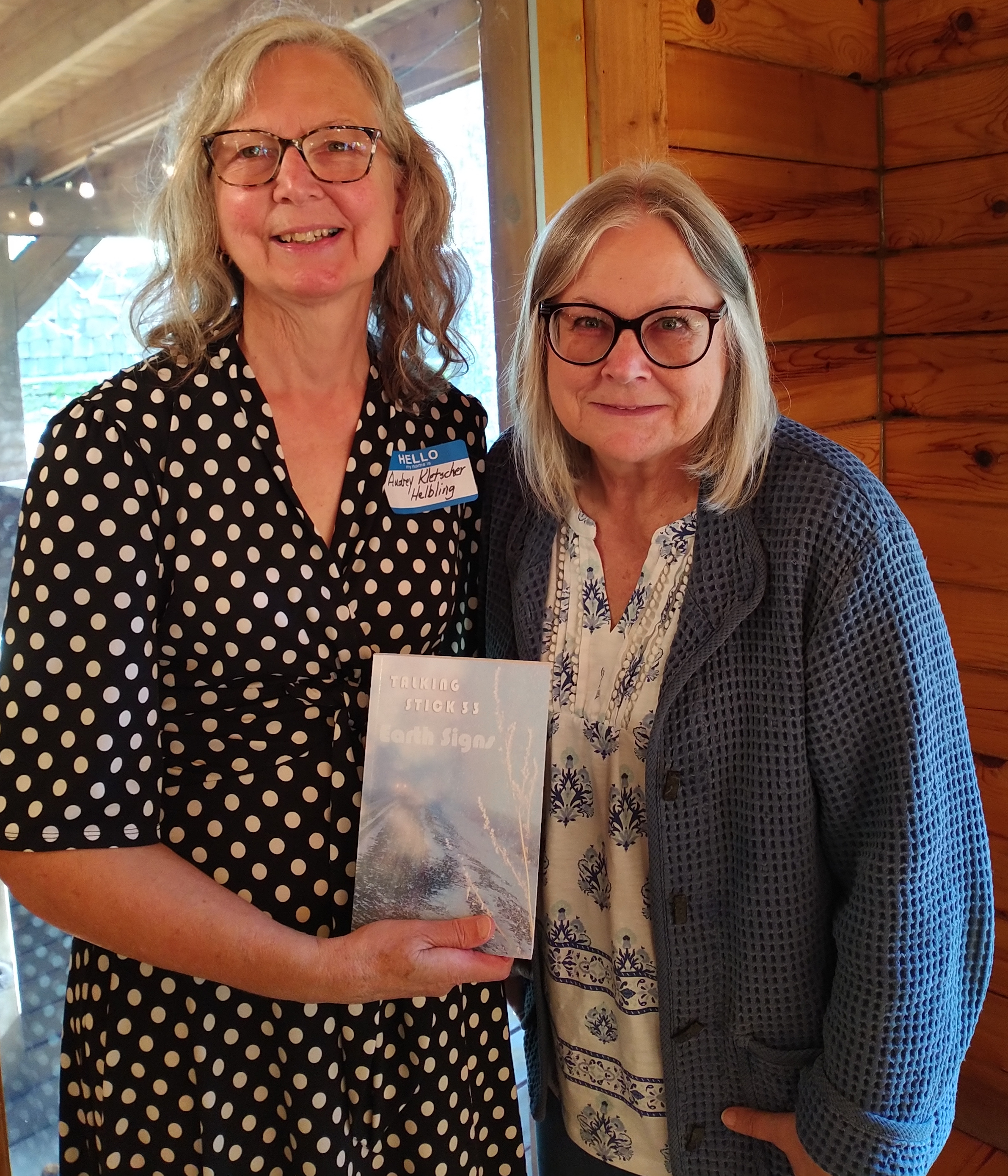
Me with author and fiction judge Jeanne Cooney, right. (Photo credit: Randy Helbling)

My short story, “Dear Mother,” earned second place in fiction as decided by author Jeanne Cooney. She’s written “A Hot Dish Heaven Mystery” series and has launched a new “It’s Murder” series. Did my mention of Hamburger Noodle Hotdish and red Jell-O salad in my story influence Cooney’s decision? I’d like to think not, but I suppose subconsciously it could have. When I wrote my short story, though, I had no idea who would be judging the fiction category. Hotdish simply fit into the storyline.

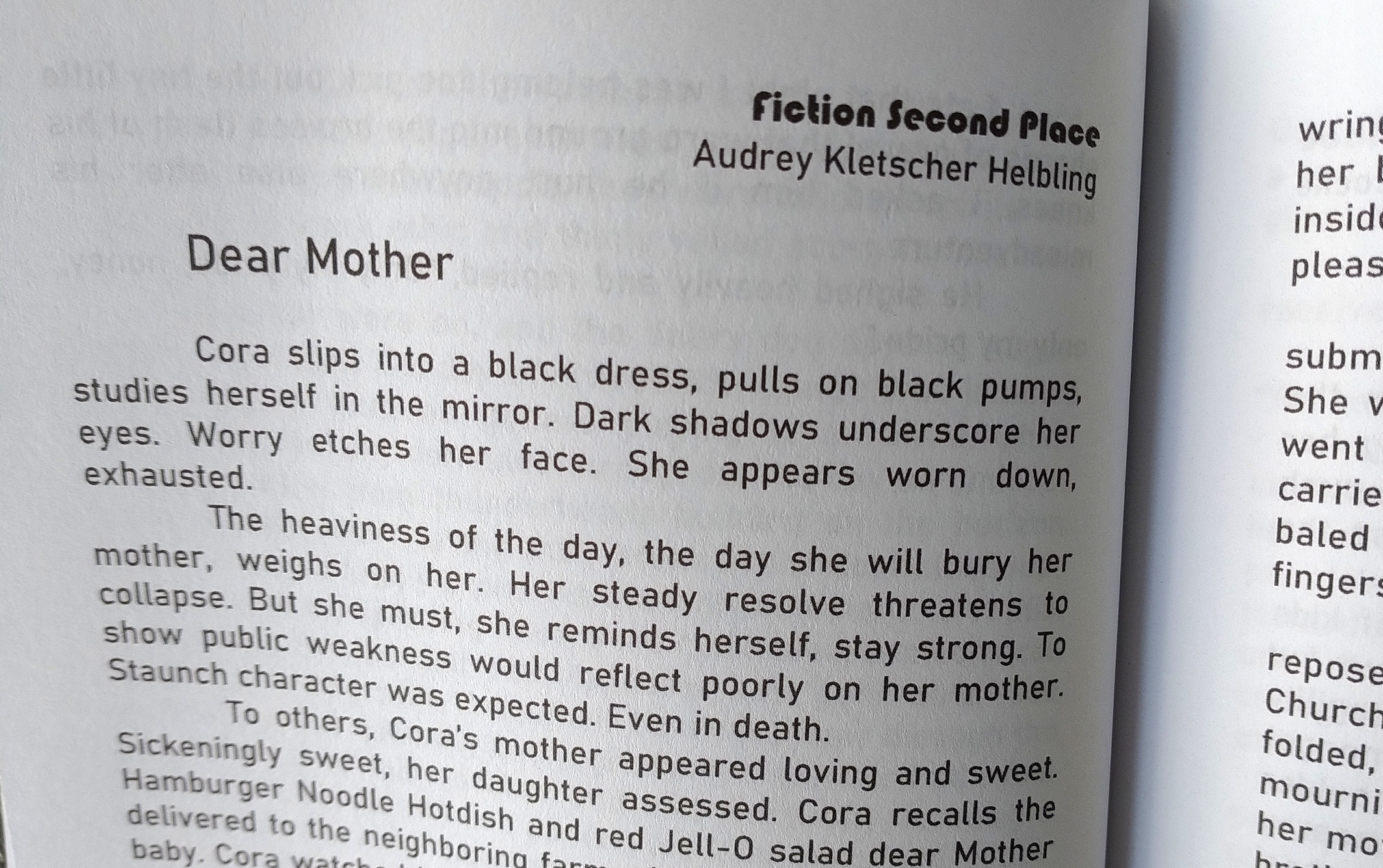
The beginning of my prize-winning fictional story, “Dear Mother.” (Minnesota Prairie Roots copyrighted photo September 2024)

Cooney called “Dear Mother” a “Very good story. But needs to be clearer.” She was right. Her comments helped me shape a stronger, better piece of writing. Dark writing. Mine is a story that begins seemingly ordinary enough, wrapping up in a surprise ending. Or rather an inferred dark ending.

Congratulations to everyone whose work published in “Talking Stick 33.” Those include readers of this blog. Thanks also to Managing Editors Sharon Harris and Tarah L. Wolff for their ongoing dedication to the craft of writing. (Minnesota Prairie Roots copyrighted photo September 2024)

Last Saturday afternoon, I gathered with other writers and supporters for a party launching publication of Talking Stick 33—Earth Signs at Jack Pines Resort (no connection to the writers’ group) in rural Osage, a four-hour drive from Faribault. The event included a writing workshop (which I did not attend), book reading and socializing.

I’m not especially comfortable reading to a roomful of people, even though I’ve done so many times. But I practiced and then read “Dear Mother” with dramatic inflections and soft tones in just the right spots, managing to convey exactly what I wrote. There’s something to be said for hearing a poem or story read aloud. The piece comes alive via the voice of the writer.

As I listened to all these writers, I felt a strong sense of community. I felt encircled by a group of incredibly talented and supportive creatives. People who care about language and emotion and damn good writing.

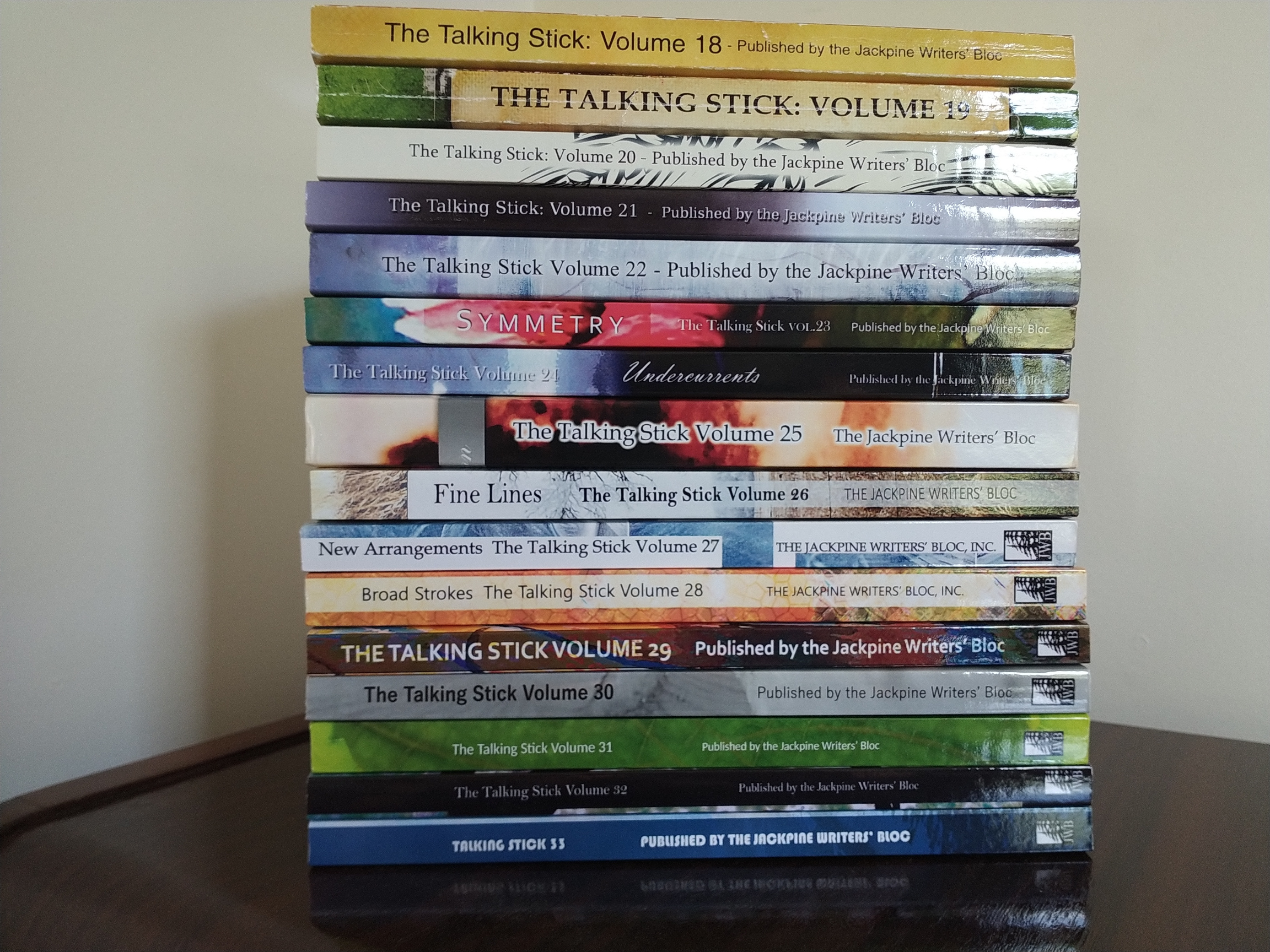
My collection of “Talking Stick” books. I’ve been published in 15 of these 16 volumes. (Minnesota Prairie Roots copyrighted photo September 2024)

This marks the 15th consecutive year my writing has published in Talking Stick. A poem, “Misunderstood,” and a work of creative nonfiction, “Lessons Inside the Dome,” were also selected for publication in the 2024 volume. Both are Faribault-rooted. My poem focuses on the connection between the Wahpekute and today’s homeless population living in woods along the Straight River. In “Lessons,” I write about walking inside the Shattuck-St. Mary’s School dome during the winter and lessons I learned there.

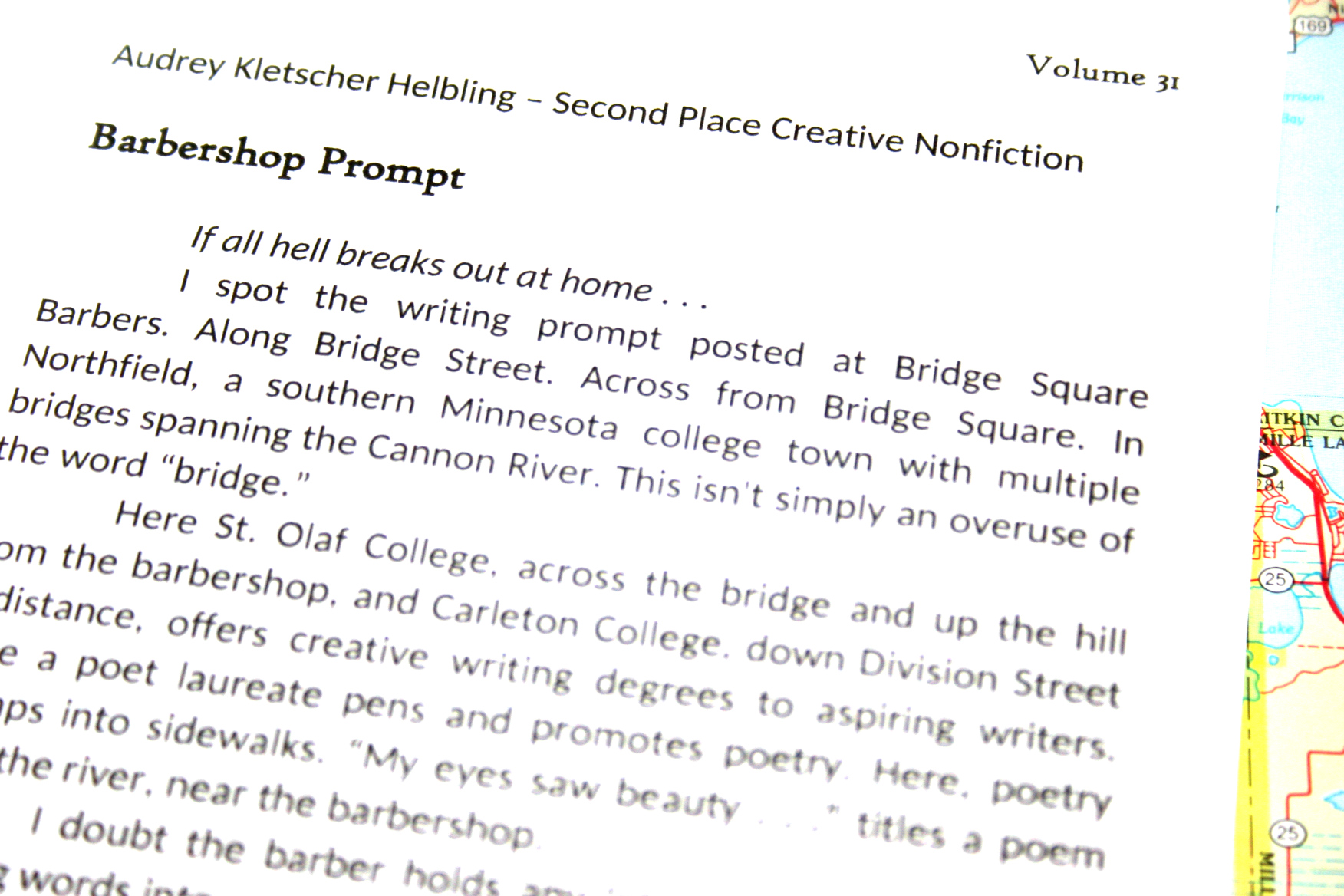
My writing is often rooted in experiences, in observations, in overheard conversations, in memories. I’ve covered everything from farming, to aging to domestic abuse, trauma, Minnesota Nice and more. Writing prompts have come from a vintage family photo, a sign on a barbershop window in Northfield, a painting by Andy Warhol… There are stories everywhere.

I’m grateful to the Jackpine Writers’ Bloc for repeatedly choosing my work for publication in Talking Stick. That includes 15 poems, 10 short stories, nine creative nonfiction stories and two creative twist stories (written using a list of pre-selected words). I’ve thrice been awarded second place (poetry, fiction and creative nonfiction). I’ve also earned eight honorable mentions (four for fiction, two for creative nonfiction, and one each in poetry and creative twist). Winning those awards is validating to me as a writer.

But just as validating is being among other writers. Writers who appreciate the craft of writing and the hard work it takes to shape a poem or a short story. Writers who understand the importance of word choice. Writers who recognize the power of words. Writers who don’t settle for the mundane, the cliché, the everyday. Writers who will spend several hours together on a glorious September afternoon in the northwoods celebrating the release of Talking Stick, a stellar literary anthology. We have much to celebrate in Minnesota, in this place that produces a remarkable number of talented writers.

FYI: To purchase a copy of “Talking Stick,” click here. Thank you for supporting Minnesota writers.

© Copyright 2024 Audrey Kletscher Helbling


Look to Books on Central as “We Look West” September 3, 2024

(Minnesota Prairie Roots copyrighted file photo 2024)

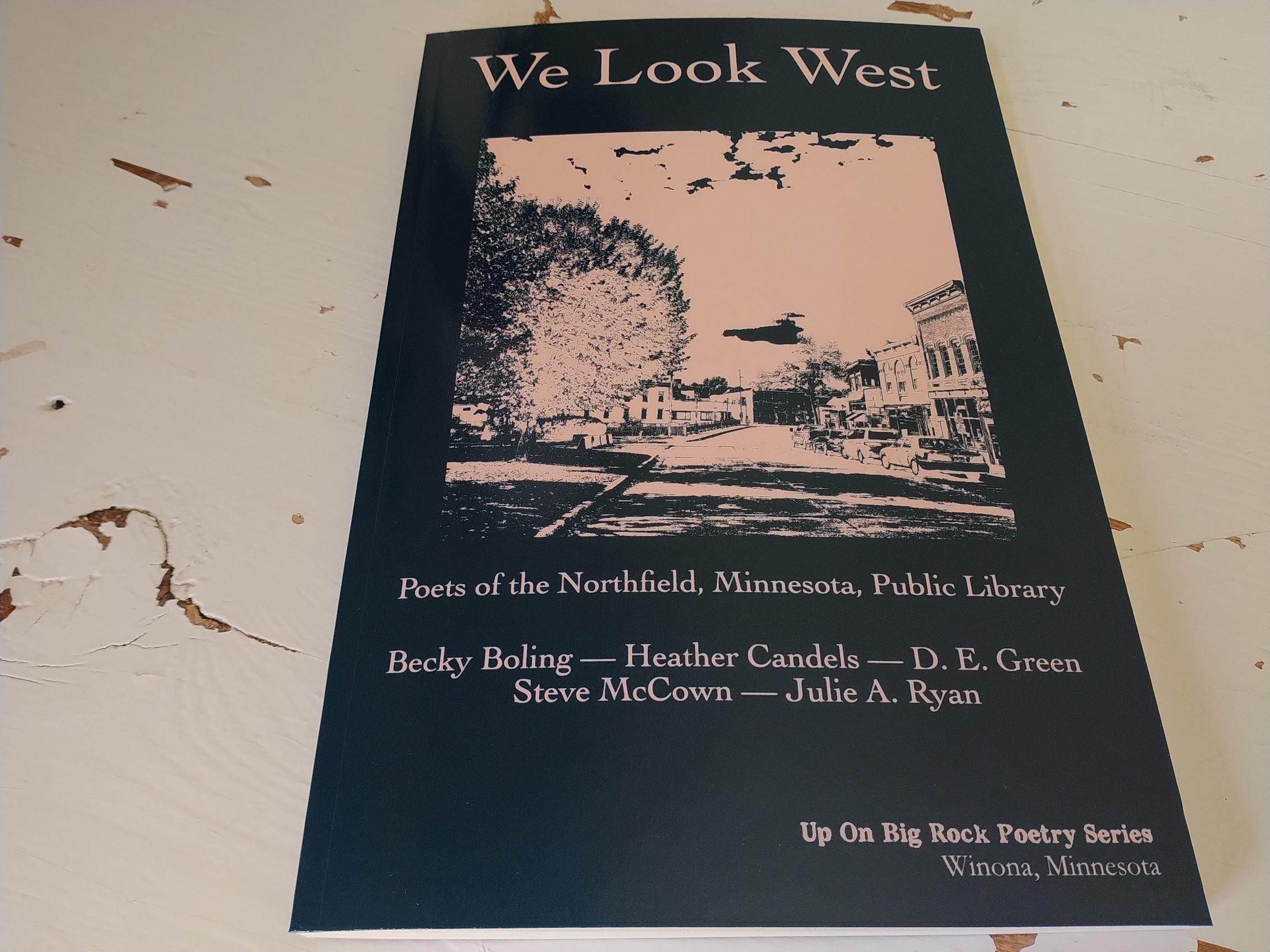
THEY ARE SEASONED WRITERS, also well-seasoned in life. They are Becky Boling, Heather Candels, D.E. Green, Steve McCown and Julie A. Ryan, collectively The Poets of the Northfield Public Library. And at 6 p.m. Thursday, September 5, they will gather at Books on Central, 227 Central Avenue North, Faribault for a poetry reading followed by a Q & A.

If you happen to be one of those people who claim a dislike of poetry, I encourage you to reconsider and come to this literary event. The poetry this group will read comes from their recently-published anthology, We Look West. Their poems are down-to-earth relatable. Trust me. I’ve read this 116-page book, loved it and reviewed it. (Click here to read my review.)

The writing within the pages of this volume are stories of life, in poetry form. Poems that transition from east to west, from the sunrise to the sunset of our lives.

They’re written by poets with extensive publishing credentials. Four have taught at the high school or college level. The fifth comes from a strong literary and visual arts background. Two are Pushcart nominees.

I’ve met Boling and Green and read poetry with them at an event at Mercado Local in Northfield. They are a wonderful married couple, comfortable and friendly. No stuffy poets here. And no stuffy poems. Just plain good writing that moves the spirit, fills the soul, imprints upon the heart.

I look forward to hearing The Poets of the Northfield Public Library read selected poems and then share the stories behind their poetry. As a poet, I’m always interested in learning what inspired a particular poem.

And if you have questions, ask away. Writers welcome engagement as they share their passion for poetry, the craft of writing.

FYI: Books on Central is a second-hand book shop run by the Rice County Area United Way and staffed by volunteers. Proceeds from the bookstore benefit organizations and nonprofits throughout the county.


Crafting an obituary: Emmett “breathed John Deere” March 5, 2024

A row of John Deere tractors at the 2022 Rice County Steam & Gas Engines Show, rural Dundas. (Minnesota Prairie Roots copyrighted file photo September 2022)

AS A WRITER, a storyteller, I read obituaries. Doesn’t matter if the deceased is known to me or not. I find obits interesting for the stories therein.

Stories weren’t always part of obituary writing. Obit style has evolved since I graduated in 1978 with a journalism degree from Minnesota State University, Mankato. And that is a good thing. Today’s death notices are not just summaries of facts, but rather personalized in a way that helps the reader understand the person as a person. That holds value to those who are grieving and to those of us who hold no connection to the individual.

I need to backtrack for a moment and share that writing an obituary was my first writing assignment in Reporting 101. Although I’ve forgotten details about that long ago college course, I remember the professor stressing the importance of spelling names correctly. That carried through to all types of newspaper reporting. First reporting job out of college, I learned a source was Dayle, not Dale.

Emmett Haala (Photo source: Sturm Funeral Home)

That MSU instructor also imprinted upon me the importance of obituaries. As I age, I find myself drawn more and more to reading obits. Too often now, I know the deceased. Recently, I found a gem in the obituary of Emmett Haala, 87, of Springfield (that would be Springfield, Minnesota), who died on February 28. His funeral is today.

Hanging out by a John Deere tractor at the Rice County Steam & Gas Engines Show. (Minnesota Prairie Roots copyrighted file photo September 2022)

It wasn’t the basic facts about Emmett that captivated me, but rather his interest in John Deere tractors. He, according to his obit, “lived and breathed John Deere.” Now to anyone with a rural connection, the idea of fierce tractor brand loyalty is familiar. This retired mechanic began his career at age 14 at Runck Hardware and Implement in Springfield, eventually opening Emmett’s Shop in 1970. He was a trusted mechanic who serviced all machinery brands, but favored John Deere.

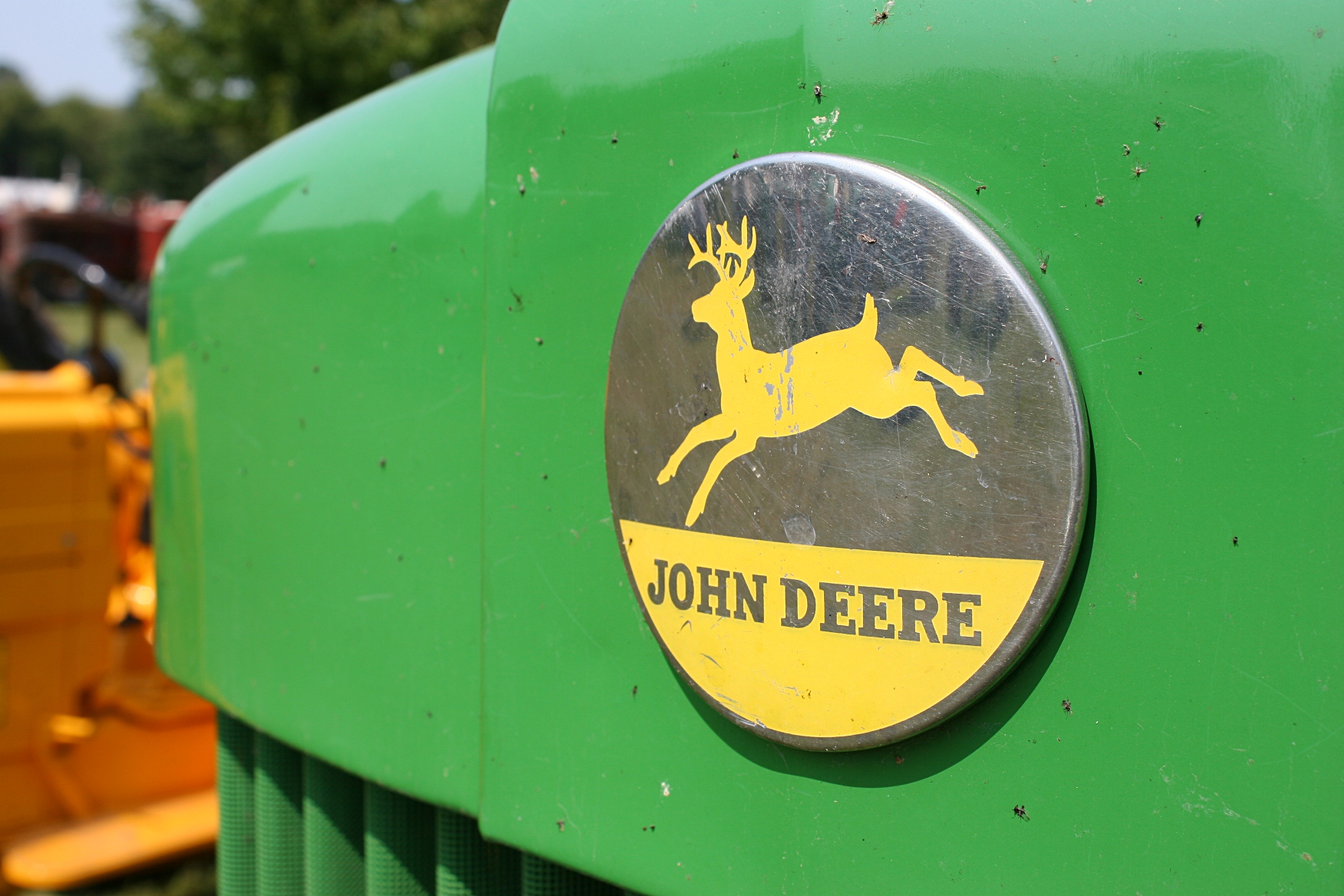
“Nothing runs like a Deere” is the John Deere slogan. (Minnesota Prairie Roots copyrighted file photo September 2017)

That tidbit got me reminiscing and also contemplating the importance of open houses in rural Minnesota. Events that continue today. Emmett, his death notice read, shared many memories of John Deere Days at Runck Hardware and Implement. He “…enjoyed making hot dogs and coffee for the throngs of people attending and showing the newest John Deere movie.”

To this day, I remain a fan of John Deere. Here Randy and I pose aside a vintage John Deere at Bridgewater Farm, rural Northfield in October 2023. (Photo credit: Amber Schmidt)

That was it. I was hooked. I attended John Deere Day at a farm implement dealership while growing up in southwestern Minnesota. While the event was a way for machinery dealers to get farmers inside their shops, the open houses were also a social gathering for rural folks. My siblings and I piled into the Chevy aside Dad and Mom for the 20-mile drive to Redwood Falls and John Deere Day.

Free food—usually BBQs, baked beans, chips and vanilla ice cream packaged in little plastic cups and eaten with a wooden spoon—comprised dinner (not lunch to us farm types). Maybe there were hot dogs, too, like at Emmett’s place of employment. Memories fade over the decades.

A worn vintage John Deere emblem. (Minnesota Prairie Roots copyrighted file photo September 2017)

But I do recall the John Deere movies shown post meal at the theater in Redwood Falls. Sure, they were nothing but advertisements for “the long green line” of farm machinery. But to a kid who seldom set foot in a theater, the promotional films held all the appeal of a box office hit. Plus, there were door prizes like bags of seed corn and silver dollars. I never won anything. A cousin did.

At the Rice County Steam & Gas Engines Show. (Minnesota Prairie Roots copyrighted file photo September 2017)

And so all those John Deere memories and more—including the distinct pop of my dad’s 1950s John Deere tractor—rushed back. Putt, putt, putt. Emmett belonged to the Prairieland Two Cylinder Club. Nostalgia is powerful. So is the art of crafting an obituary. Many of today’s obituaries feature detailed personal stories, not simply superlatives. Stories that reveal something about the individual who lived and breathed and loved. Stories well beyond life-line basics. Stories of life. Stories that resonate, that connect us to each other. Stories like those of Emmett, who “lived and breathed John Deere.”

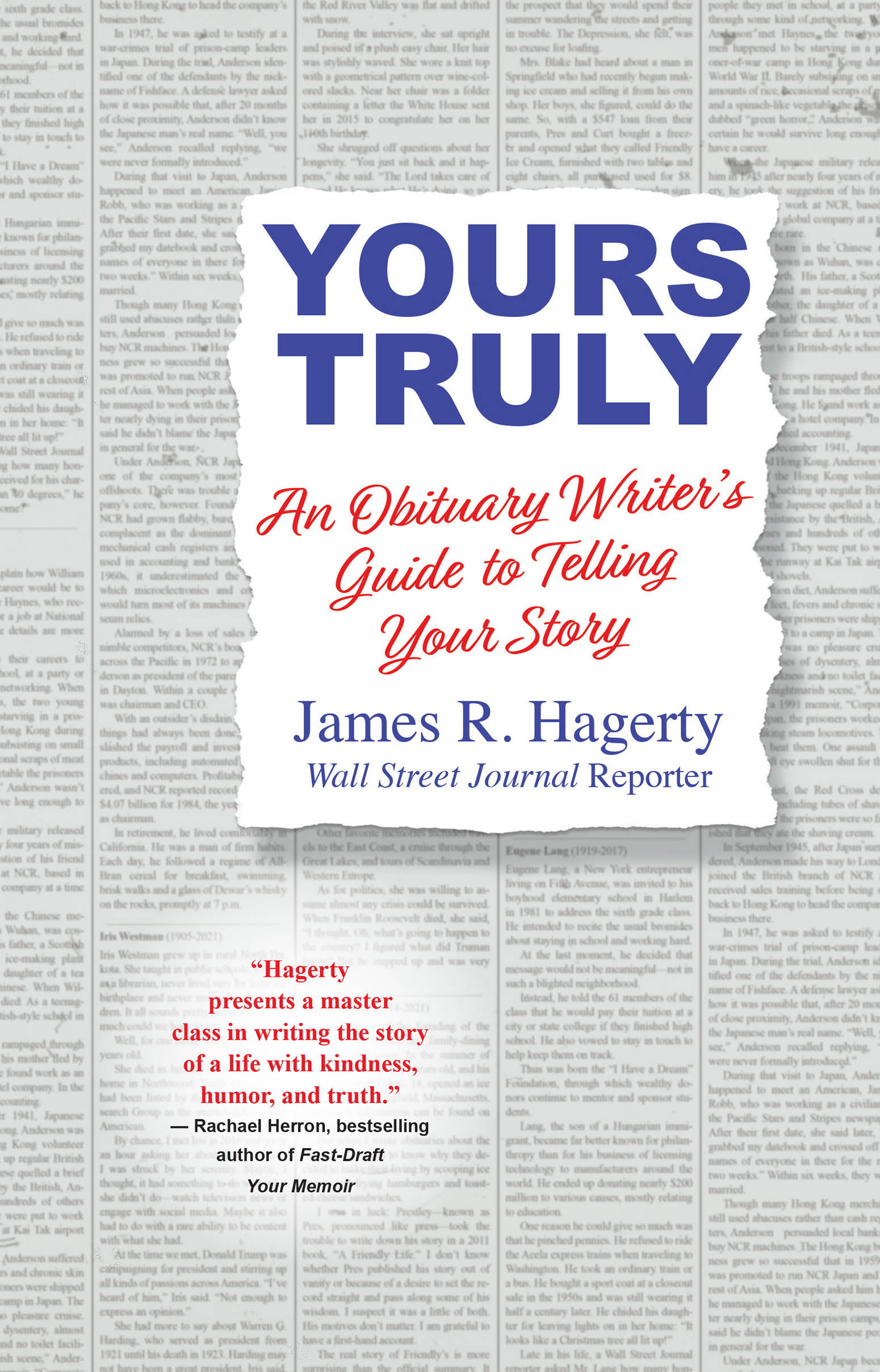
(Book cover image sourced online)

FYI: I recommend reading this guidebook to obituary writing by retired The Wall Street Journal obit writer James R. Hagerty: Yours Truly: An Obituary Writer’s Guide to Telling Your Story. Hagerty is the son of Marilyn Hagerty, columnist for The Grand Forks Herald. In a March 2012 “Eatbeat” column, Marilyn reviewed her local Olive Garden and gained instant internet fame.


Two Minnesota authors talk craft, share insights in Faribault November 3, 2023

Buckham Memorial Library, Faribault. (Minnesota Prairie Roots copyrighted file photo December 2022)

I DIDN’T INTEND to write a follow-up about an author event Thursday evening at my local library. So I didn’t take notes initially. I planned to just sit back, listen and maybe ask a few questions. Turns out I asked a lot of questions of Jess Lourey and Nicole Kronzer. About then I decided I best start taking notes.

I found kindred spirits in Jess Lourey and Nicole Kronzer, in the commonality of needing to write. (Minnesota Prairie Roots copyrighted file photo 2012)

What energy, knowledge and passion these writers brought to the Buckham Memorial Library Great Hall. It’s clear they love the craft of writing. I could feel, as much as hear, their passion.

To be in their presence, to recognize that I was among wordsmiths who deeply love the written word, writing and reading, energized me.

The promo for Thursday’s event. Author John Lee Clark was unable to attend.

I actually pulled myself away from Lourey’s riveting crime thriller/mystery The Taken Ones to attend the author event, Moving Words: Writers Across Minnesota. It’s part of The Friends of the Saint Paul Public Library’s program to bring Minnesota Book Award-winning authors to communities like Faribault. I, for one, appreciate this programming, which included a Friends moderator. She asked questions of Lourey and Kronzer and invited the seven audience members to do the same.

Lourey has 28 books to her credit, mostly fiction, but also nonfiction and children’s books. Kronzer has published two young adult novels. I’ve read many of Lourey’s books and will soon read Kronzer’s. She’s a relatively-new author.

Yet, they share similar experiences and didn’t sugarcoat the difficult process to publication, which starts first with an idea, then outlining, then writing and research and rewriting and rewriting some more and editing and… They struggled to find agents, had their queries and manuscripts rejected by publishers, Lourey some 400 times. But she persisted. And today she’s an accomplished award-winning author. Kronzer holds the same determination to get her work in print. Her best work. They both acknowledged some of their writing hasn’t been all that good. Lourey even went so far as to steal her master’s thesis from her university’s library…until her Minnesota guilt kicked in and she returned it.

Book cover sourced online. This is Kronzer’s second young adult novel, published in January.

Both have taught/teach writing. Kronzer draws on her interactions with teens as a high school English teacher and her theatrical experience in shaping her books. She enthuses about today’s teens, noting she feels hopeful in this generation. In response to a question, Kronzer said the take-away from her books is a sense of belonging, the theme in Unscripted and The Roof Over Our Heads. She was, she said, bullied. I can relate. We write what we know.

Book cover sourced online. The cover is similar to the real-life scene of abandoned bikes found in a rural road ditch at the site of Jacob Wetterling’s abduction.

Lourey, who is inspired by dark true crime, centers her fictional books on secrets. She grew up in Paynesville in central Minnesota, where eight boys were attacked and assaulted in the late 1980s. (Secrets.) Authorities investigated a suspect who later pled guilty to the 1989 kidnapping, assault and murder of Jacob Wetterling in nearby St. Jospeh. Lourey’s fictional book, Unspeakable Things, is based on what happened in Paynesville. Her experiences as a pre-teen and teen at the time weave into Unspeakable. Write what you know.

Even though her books theme around secrets, Lourey wants readers to take away the importance of community. “Find your people and tell your truth,” she said.

This was posted in a recent display on banned books at my library. (Minnesota Prairie Roots copyrighted photo September 2023)

And for Kronzer, her stand-out statement of the evening, at least for me, was this: “Reading makes you nicer.” In saying that, she referenced the diversity of characters found in books. (Both authors emphasized character development in their writing.) Kronzer’s statement really resonated with me as I thought of a recent banned books display in my library. Not books banned from Buckham Memorial Library, but rather books that have been banned elsewhere. I chose one from the shelf, Lawn Boy by Jonathan Evison, and read it. It’s not a book I would otherwise have chosen. But I needed to read it, to learn, to widen my world, to put myself in the shoes of others.

We can learn so much by reading, by writing, by asking, by listening. And sometimes we are validated. When I asked Lourey and Kronzer whether they eavesdrop (specifically in grocery stores), they admit they do. Some of what they’ve overheard has made it into their books. Just as some of what I’ve overheard has woven into my writing. Write what you know. And sometimes, write what you hear.

Book cover sourced online.

FYI: Lourey and Kronzer suggested two must-read books on the craft of writing: Save the Cat! Writes a Novel—The Last Book on Novel Writing You’ll Ever Need by Jessica Brody and Stephen King’s On Writing—A Memoir of the Craft. I’ve read King’s writing guide and highly-recommend it. I also highly-recommend attending author events, whether you’re a writer, a reader or both.

© Copyright 2023 Audrey Kletscher Helbling
 

A look back, a look ahead: How school shapes us, expands our world September 6, 2023

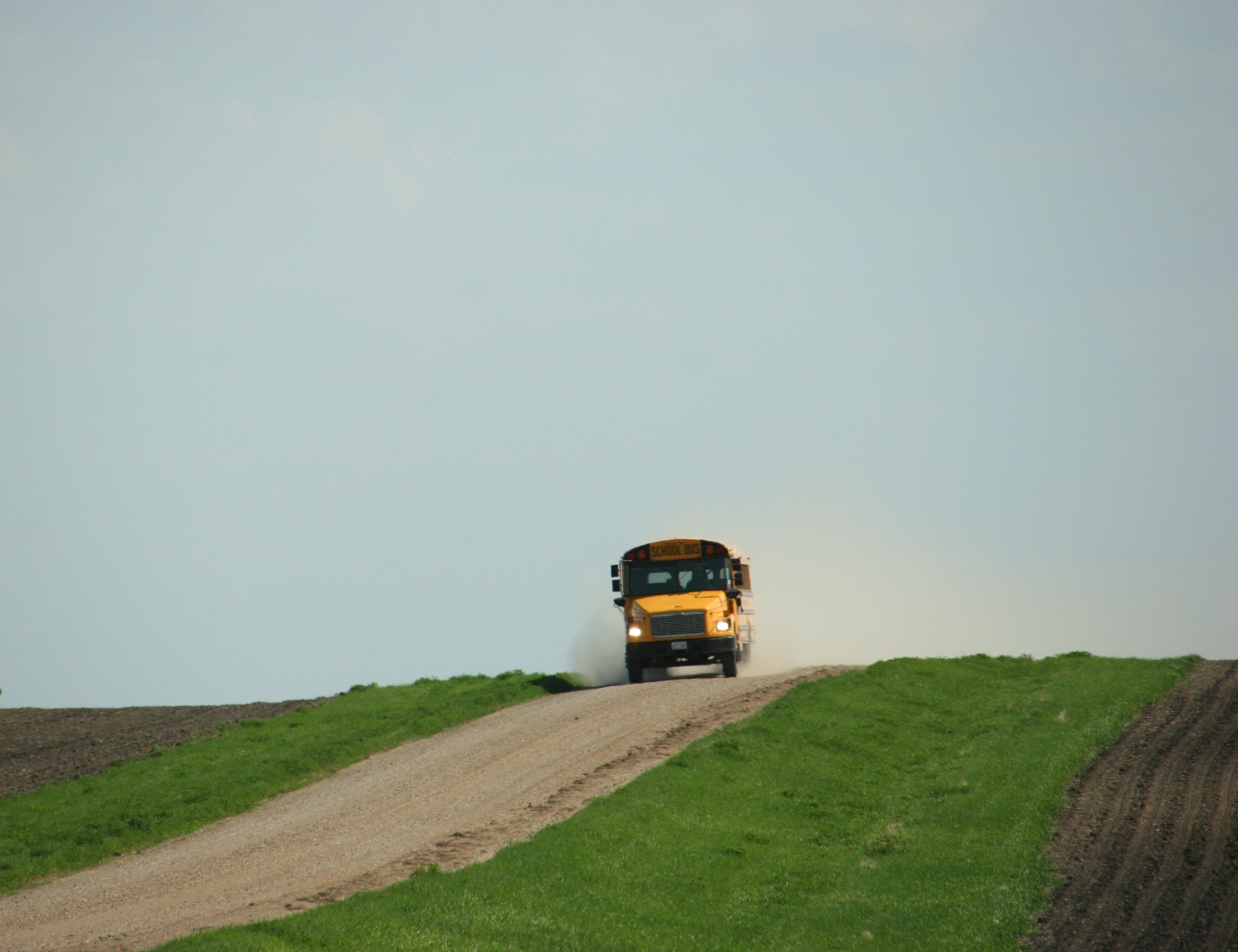
A bus follows a back country road near Morgan in southwestern Minnesota. (Minnesota Prairie Roots copyrighted file photo May 2018)

SHE WANTS TO SAVE the earth. It’s a lofty and noble goal for my granddaughter, who started second grade on Tuesday. Each year, on the first day of school, her mom documents basics about Isabelle on a small chalkboard. That includes a response to “What I want to be when I grow up.” This year Izzy aims to be an environmentalist. As a first grader, her professional goal was becoming a game designer. And on the first day of kindergarten, she wanted to own a toy store and also be a mom.

It’s interesting how Izzy’s interests evolve as she ages, as she grows her world and knowledge and connections with others. The possibilities are endless for her generation. I hold such hope in these young people, just beginning their formal educations.

And I hold hope, too, when I see a photo of Izzy and three neighborhood friends waiting at their urban bus stop. “Smart, Brave, Beautiful” banners Bethel’s tee. What a reaffirming message. For all of them. And how reaffirming that they are of differing ethnicity, their skin tones varied and, indeed, beautiful.

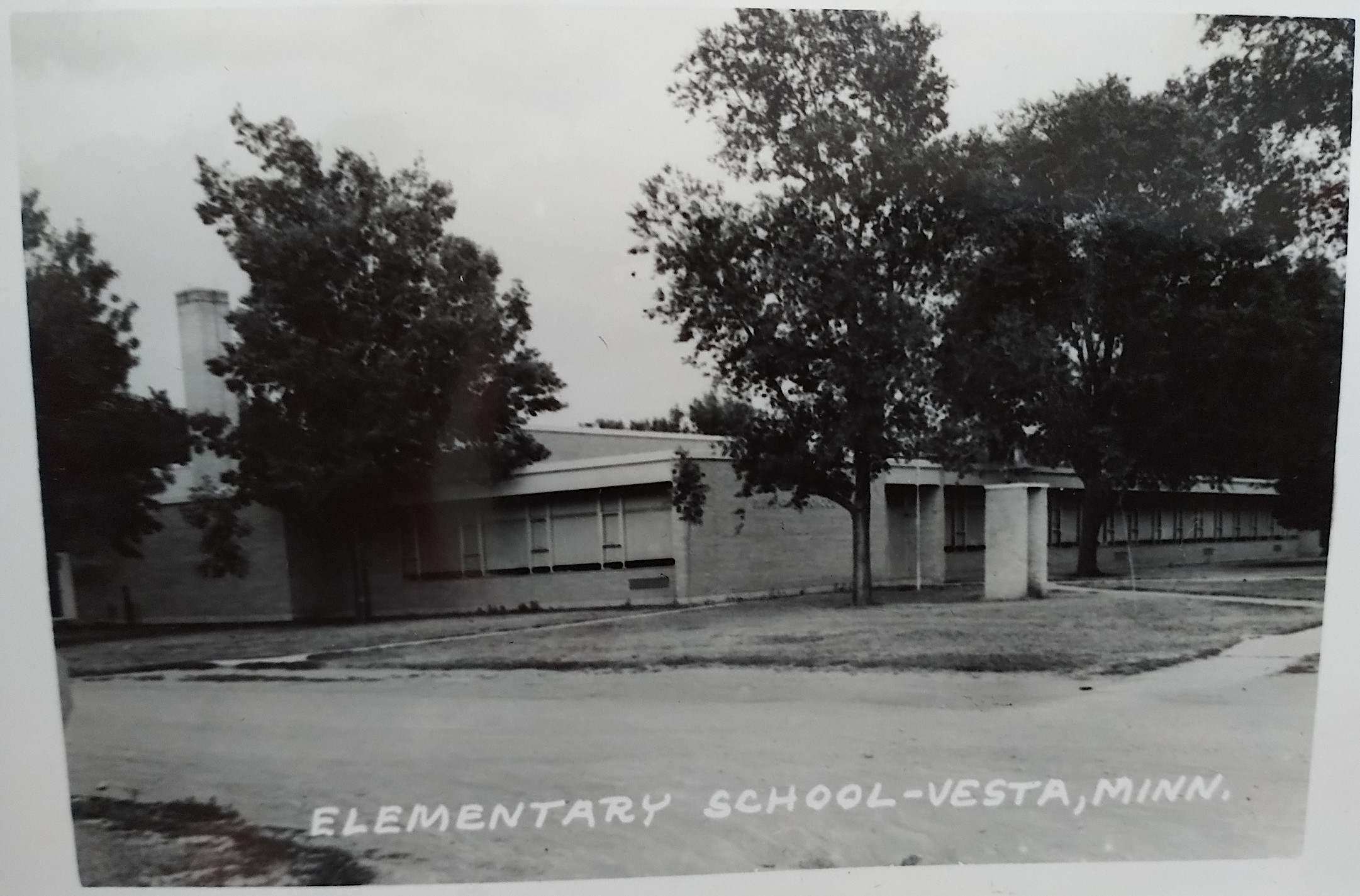
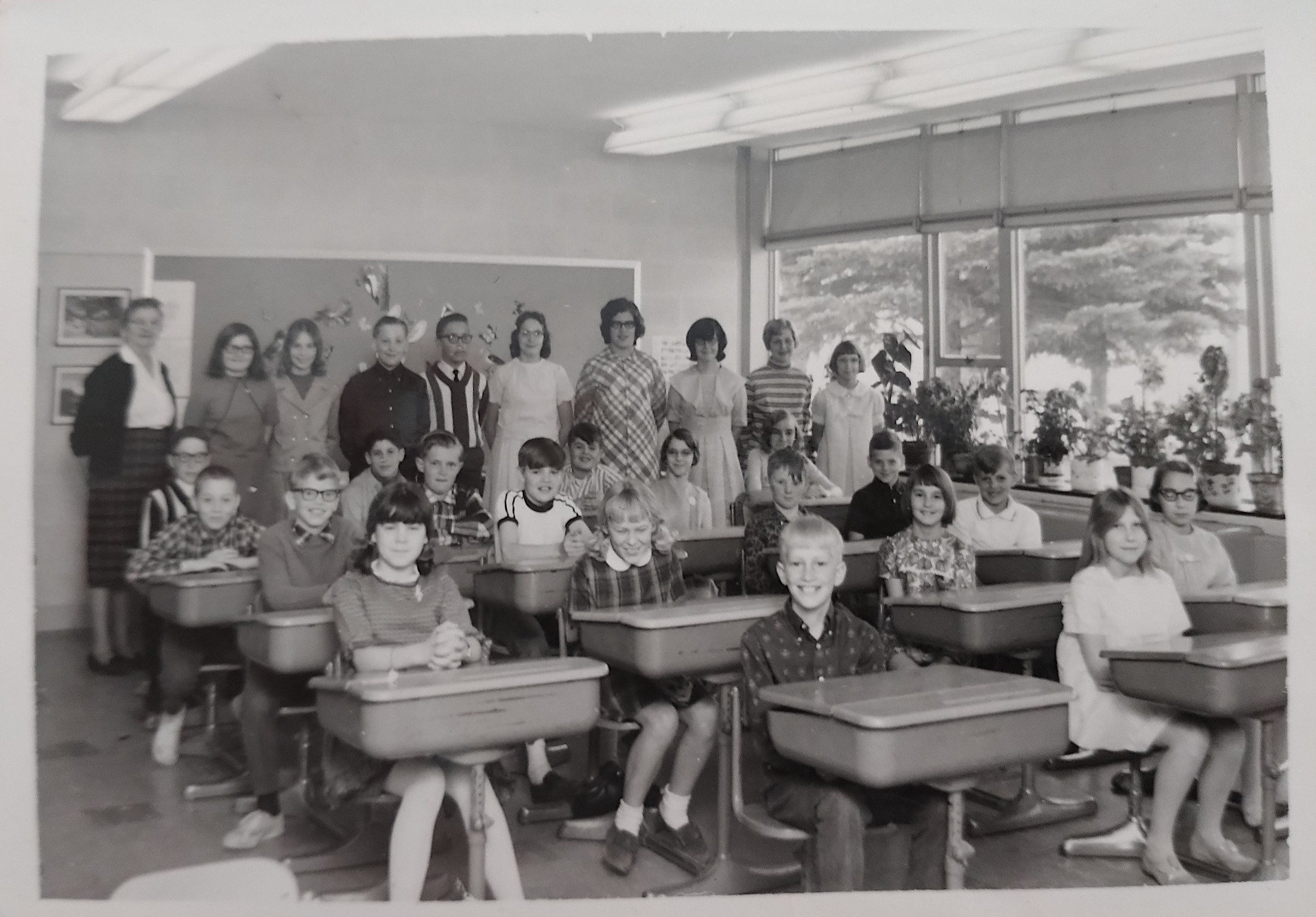
My elementary school, circa 1960s, located in Vesta in Redwood County. The school closed decades ago. (Photographer unknown; photo sourced from my personal photo album)

Sixty years have passed since I was a second grader in a small southwestern Minnesota elementary school, where my paternal grandfather served on the school board. My classmates and I were mostly farm kids, all white. We wrote in “Big Chief” lined tablets which today would not, should not, fly. Attitudes differed in the 1960s. Words like diversity, respect and environmentalist were not part of our everyday vocabulary.

A serene country scene just north of Lamberton in southern Redwood County. (Minnesota Prairie Roots copyrighted file photo September 2013)

But words, overall, held my interest all those decades ago. I have Mrs. Kotval to thank for sparking my love of words, of reading, and eventually of writing. Each day after lunch, she read to her third and fourth graders from “The Little House” and other chapter books. Through the writing of Laura Ingalls Wilder, who lived many years earlier in nearby Walnut Grove, I began to appreciate the nuances of the prairie. And I learned the importance of descriptive, detailed writing. Wilder engaged all of her senses to describe the prairie and life thereon in her series of wildly popular books. With her love of the natural world, this writer unknowingly documented the environment for me, my children and for my second grade granddaughter, today an aspiring environmentalist.

Early on, I aspired to be an elementary school teacher. But that changed as I grew my world, my knowledge, my connections. Words focused my passion. Unlike most of my elementary school classmates, I loved penmanship—letters and words flowing in script across the pages of my penmanship book. I loved spelling. I loved reading, even in a school and town without a library and thus with limited access to books. And by high school, that love of words expanded to writing.

Fifth and sixth graders at Vesta Elementary School in the late 1960s. I’m in the back row, far right, next to the windows. (Photographer unknown; photo sourced from my personal photo album)

I want to pause here and stress the importance of passionate teachers in fostering students’ interests. From Mrs. Kotval reading to her students after lunch to junior high English teacher Mrs. Sales teaching me all the parts of grammar to high school teacher Mr. Skogen requiring students to keep journals, their influence on me and my eventual career was profound. I would go on to earn a college degree in mass communications, leading to a career as a journalist, writer, poet and photographer.

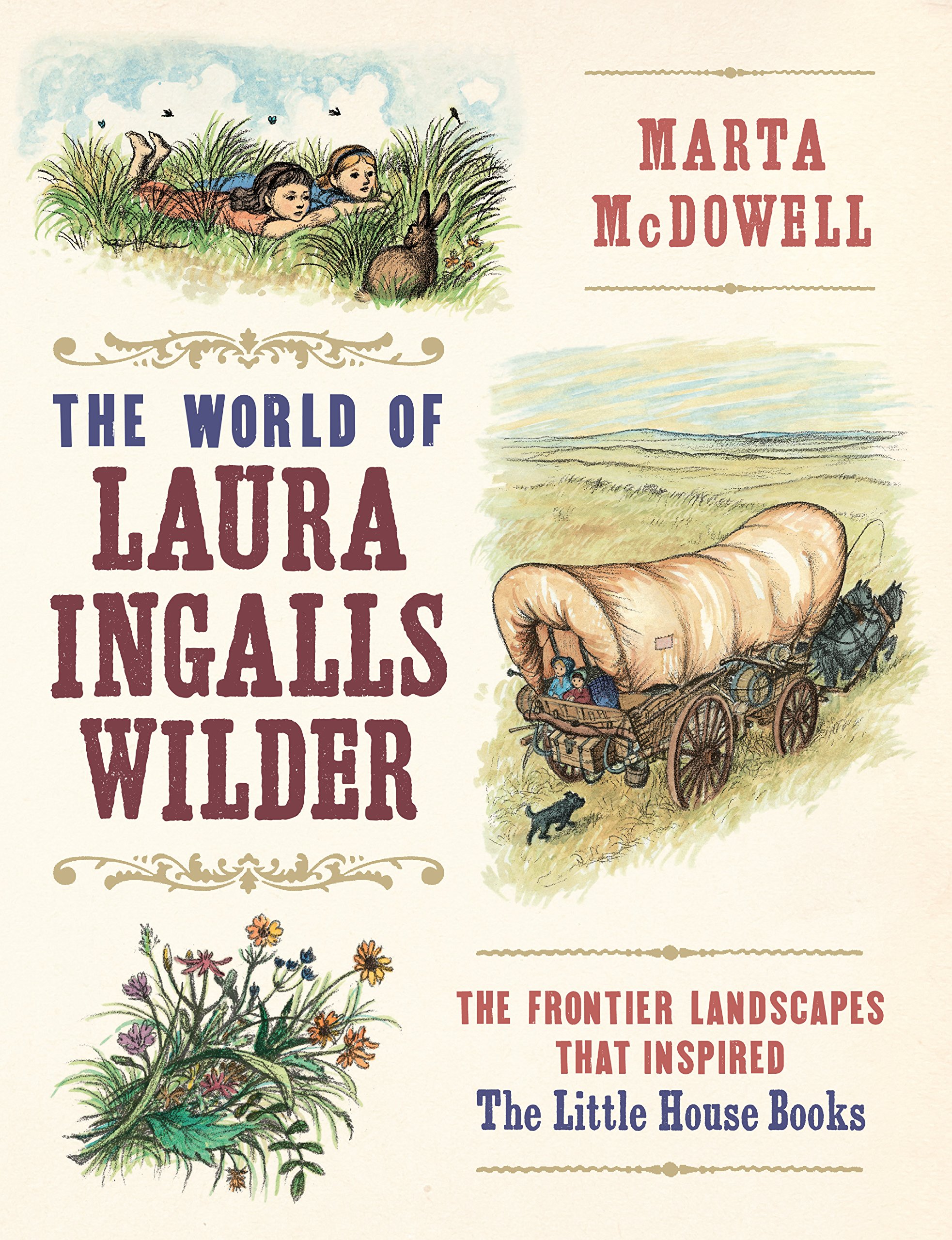
That brings me full circle back to Laura Ingalls Wilder, who early on influenced my detail-rich writing and photographic styles. In 2017, I became professionally connected to the author via “The World of Laura Ingalls Wilder—The Frontier Landscapes That Inspired The Little House Books.” Author Marta McDowell chose three of my photos (including one of prairie grasses at sunset) to illustrate her 396-page book documenting Wilder’s life and relationship to her environment. Perhaps some day my granddaughter will open the pages of McDowell’s book and find the photos taken by her grandmother. Whether Isabelle becomes an environmentalist or something vastly different, I expect she will always care about the earth and her role in saving it.

© Copyright 2023 Audrey Kletscher Helbling


About greeting cards & why I value them May 17, 2023

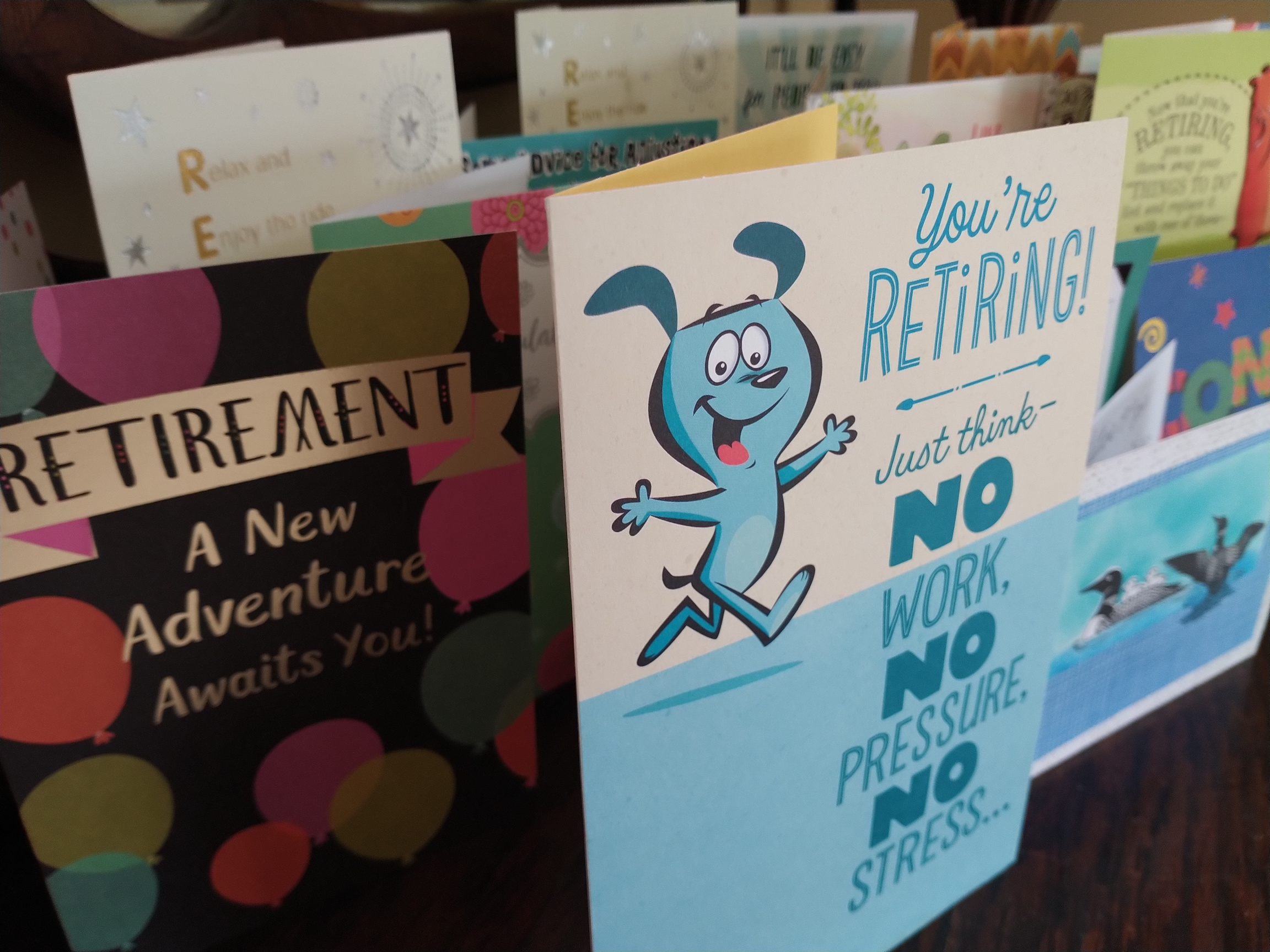
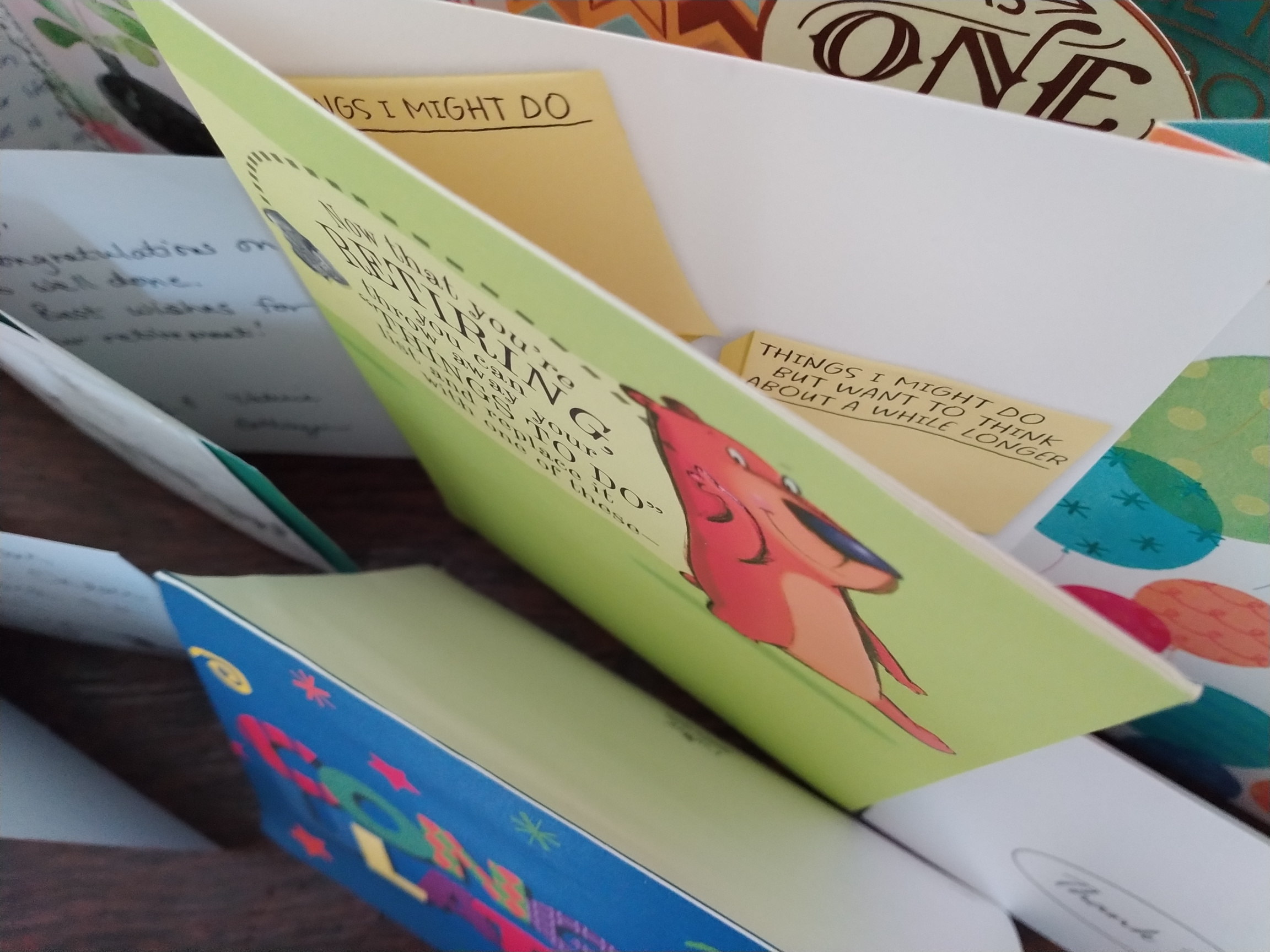
Among the many retirement cards Randy recently received. (Minnesota Prairie Roots copyrighted photo May 2023)

I’M OLD SCHOOL. I like to give and receive greeting cards. Why? It’s personal. Much more personal than anything sent electronically.

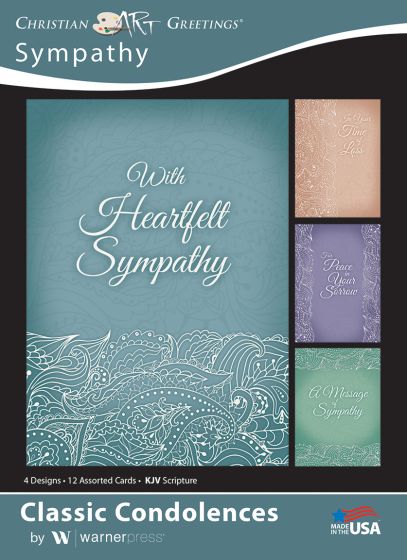
All of the cards in this boxed set are verses I wrote. (Source: Warner Christian Resources)

I also happen to write freelance greeting card verses for a faith-based publishing company in Anderson, Indiana. I’ve done that for years, so long I can’t recall when I started. But I appreciate that Warner Christian Resources (formerly Warner Press) prints the writer’s name on the back of each card. Currently, all the cards in the boxed set, “Sympathy—Classic Condolences,” are printed with verses I penned. Order a box of these 12 cards, four designs (click here), and you’ll read my verses and see my name on the backs of the cards. I have one other card in a 2023 get well collection.

Typically I sell a handful of verses during each annual submission period. So while not particularly lucrative, writing greeting card verses for Warner challenges me. It’s not easy coming up with new ways of delivering a message. Kind of like writing poetry, every creative word counts.

Now back to greeting cards in general. I value them. They require time to choose or craft. They require putting pen to paper to sign and/or add a personal note. They require a stop at the post office or a mailbox if mailed. In other words, greeting cards take time and effort to send or give. And to me, that says something. That someone is thinking about me or I of them. That they care, that I care.

A downward view of some of Randy’s retirement cards. (Minnesota Prairie Roots copyrighted photo May 2023)

Recently, we’ve received an influx of greeting cards, starting with congratulatory wishes for Randy upon his recent retirement (well, sort of retirement as he eases into it by working fewer days each week). When I posted about his retirement, I encouraged you, my readers, to send cards. The many greetings that filled our mailbox humbled us. For Randy to receive cards from blog followers who took the time to choose or craft, sign and send greetings shows me what kind and caring hearts you have. Thank you.

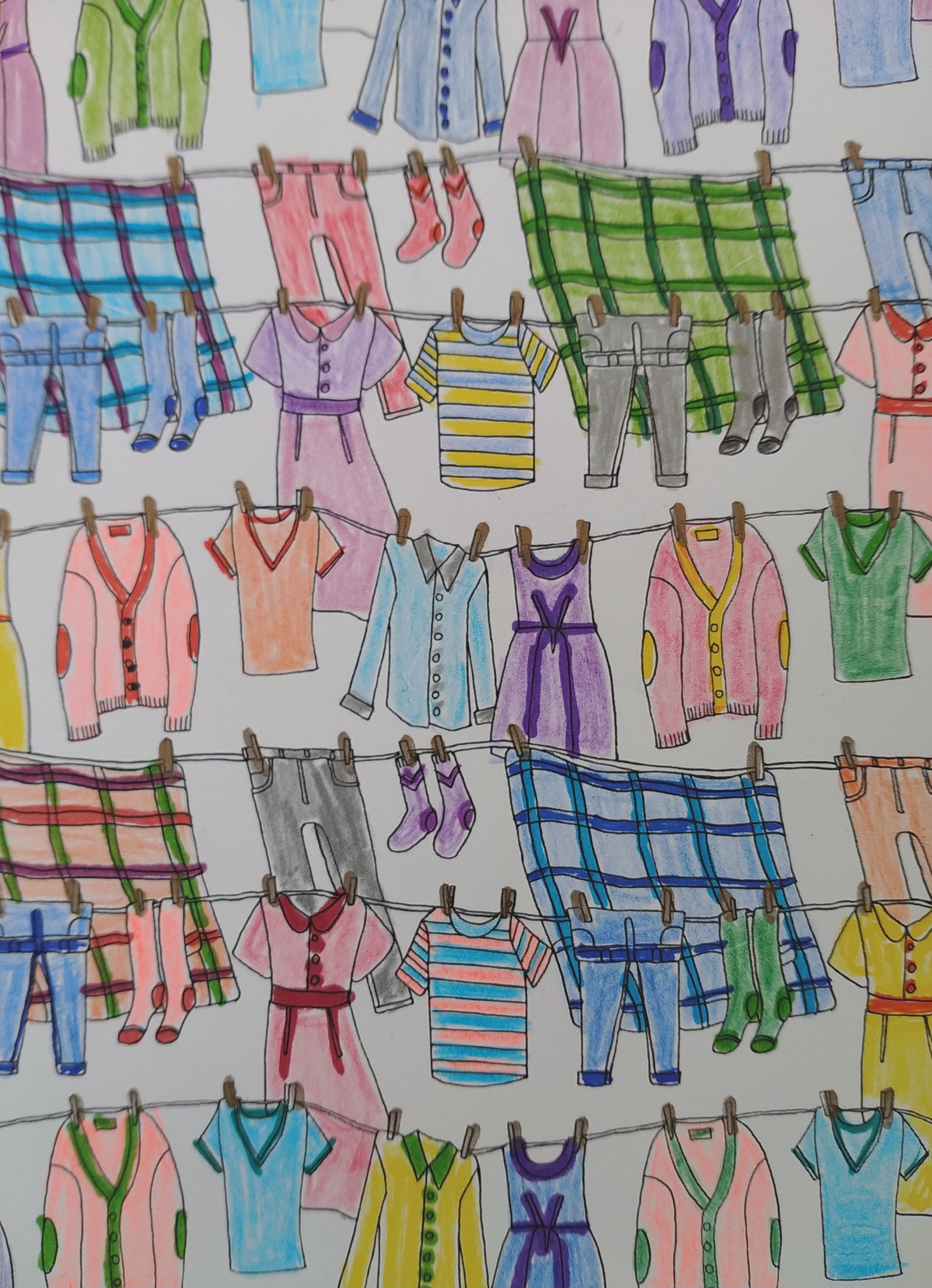
My friend Valerie colored this postcard for me and wrote a get well message on the back. She knows how much I like to hang laundry on the line and how I colored when my vestibular symptoms were the worst. (Minnesota Prairie Roots copyrighted photo May 2023)

Recently, I’ve also received get well cards as I deal with the difficult symptoms of vestibular neuronitis. Anyone who’s ever faced a health challenge understands just how much a card means when you’re not feeling well. Such cards uplift, encourage, show that someone cares about how you’re doing, how you’re feeling. I understand that and try to always mail cards to friends and family who need encouragement.

Lastly, Randy and I celebrated our 41st wedding anniversary on Monday. We’ve received a few cards. Early on in our marriage, we got lots of anniversary cards every May. Now? Not many. Maybe after you’ve been married for as long as us, the thought is not even there to send a card. I have a sister-in-law who considered it weird that I would mail an anniversary card to her and her husband. No matter her opinion, I still send them a card each year.

How about you? Are you old school like me and still appreciate greeting cards? Do you send them, receive them? Or do you prefer to convey wishes in another way, or not at all? I’d like to hear.

© Copyright 2023 Audrey Kletscher Helbling


The Weekly Phone Call May 11, 2023

My sweet mom, featured on the Parkview Facebook page, Mother’s Day 2020. (Photo credit: Parkview Senior Living)

IN EVERYTHING I WRITE, truth rests. In creative nonfiction, more than any other genre, truth writes the story. In poetry and fiction, life experiences, observations and emotions weave into poems and stories. Not necessarily the full truth, but based on reality. The adage “write what you know” rings true for me.

In 2017, I wrote a short story, “The Weekly Phone Call,” and entered it in the Jackpine Writers’ Bloc annual competition. That work of creative nonfiction along with two poems, two fictional short stories and another piece of creative nonfiction were chosen for publication in Fine Lines, The Talking Stick Volume 26. It marked my most successful year with TS, an annual anthology featuring work by Minnesota writers or those with a connection to Minnesota.

Five of my works (poetry, fiction and creative nonfiction) published in Fine Lines. (Minnesota Prairie Roots copyrighted file photo 2017)

The book title, Fine Lines fits my selected entry, a story about the Sunday evening phone calls I made to my mom. Every. Week. I looked forward to them, as did Mom. My short story is one of raw emotions, of grief and pain. And today, days before Mother’s Day, seems an appropriate time to share this piece of my writing.

I hope it sparks an understanding that simple connections linking us to those we love are to be valued. When Mom could no longer hold or talk on a phone in the years before her January 2022 death, I felt a deep loss. I missed her voice. I missed her stories. I missed sharing my life with her. And today, I miss her, as I try to recall her voice, the words she spoke, yet always remembering the love we shared.

Parkview Senior Living in Belview, where my mom lived for many years. While 120 miles separated us, Mom and I remained connected via our weekly calls. (Minnesota Prairie Roots copyrighted file photo)

The Weekly Phone Call

It’s 6:30 p.m. on Sunday when I punch the green phone icon.

“Hello, Arlene speaking,” she answers, the indiscernible dialogue of a television blaring in the background.

“Hi, this is Audrey,” I say, then wait while she turns off her TV. “How are you doing?”

Her answer never deviates. She is tired and blames the weather. Already sadness threads through my thoughts. Inside the sheltered walls of a care center, she can’t feel the bite of a winter prairie wind, the drench of rainfall, the smothering humidity of a July afternoon. She feels only artificial heat and cold while sequestered in her over-sized dorm style room.

My mind drifts as Mom laments an in-house obsession with BINGO, recounts an escape attempt by a friend—big and exciting news—and complains of failed jets in the whirlpool tub. I listen, insert appropriate responses, and await the usual repetition of information.

When she repeats herself, I say nothing. There is no point. My love prevails in silence. But inside, my anger rises at her declining memory. I want the mom who never forgot a birthday, who remembered what she ate for lunch, who knew names. I miss her undeniably kind and positive spirit. I am grieving.

But I tell her none of this. Instead, I end our conversation with “I love you” and a promise to call her next Sunday, at 6:30 p.m.

© Copyright 2023 Audrey Kletscher Helbling

Original 2017 publication credit: Fine Lines, The Talking Stick Volume 26


Mother’s Day gratitude: In her words, my mom’s gift to me May 10, 2023

Filed under: Uncategorized — Audrey Kletscher Helbling @ 5:00 AM
Tags: , , , , , , , , ,
Mom’s journals stacked in a tote. (Minnesota Prairie Roots copyrighted file photo)

DAYS BEFORE MOTHER’S DAY, I slide a clear plastic tote from a closet in the bedroom where my daughters once slept. I unlatch the lid. An overwhelming musty odor rises from the spiral-bound notebooks layered inside.

These are my mom’s journals. The story of her life recorded on paper from 1947 until her final entry on March 4, 2014, with a few years missing.

Mom died in January 2022. She left this handwritten documentation of an ordinary, yet extraordinary, life. As her oldest daughter and as a writer, I cherish the words she penned. They are not flowery poetic or personal entries, but rather a record of life as a farm wife and mother to six. Days that revolved around family, faith and farm life.

The only photo I have of my mom, Arlene, holding me. My dad is holding my brother, Doug.

With Mother’s Day only days away, I chose Mom’s 1955 journal, the year she became a mother, to begin reading. Mom invited her parents over for a Mother’s Day goose dinner that May, about two months before she gave birth to my oldest brother. I flipped ahead to July, reading her entries in the days right before Doug was born. Even at full-term, she kept working as hard as ever, freezing 24 boxes of green beans, canning a crate of cherries, pulling weeds in the garden and ironing clothes within days of delivering an 8-pound baby.
A page in an altered book crafted by my friend Kathleen. This page honors me and my mom. (Minnesota Prairie Roots copyrighted file photo)

Fast forward to May 1956. Mom notes in her Mother’s Day and subsequent entries that her mom went to the “Heart Hospital” on May 10 and came home May 17. Some six months later, Josephine died of a heart attack. She was only 48. And I was only two months old. I cannot imagine the grief my mom felt in the unexpected death of her mother. But she never put those emotions on paper. Rather her diary entries are straight forward, almost of journalistic detachment. Notations of her mom’s December 1 death, a funeral and writing thank yous.

My mom saved everything, including this Mother’s Day card I made for her in elementary school. I cut a flower from a seed catalog to create the front of this card. (Minnesota Prairie Roots copyrighted file photo)

On the next Mother’s Day in May 1957 and through 1961, there are no references to any special way in which my mom was honored. No gifts. No special meal. Only that I had a bad case of the measles as a nine-month-old. In May 1962, my brother had the mumps. But I did give Mom a paper flower at a school Mother’s Day program.

In entries in the years that followed, Mom always wrote of attending the Mother’s Day programs at Vesta Elementary School. I hold vague memories of standing on the stage, reading a poem about lavenders blue dilly dilly in verse that now eludes me.

And although I don’t remember, I gave Mom plants and, in 1967, “a fancy flower,” whatever that means. But most meaningful to me, a writer, was the gift of a writing pad to Mom in 1964. Now, in return, I have the gift of her words written in perfect, flowing penmanship.

In May 1963, Mom got a Whirlpool dishwasher. In May 1968, she redeemed Green Stamps for two lamps. She also got an automatic Maytag washing machine with suds saver for $300 from Quesenberry’s Appliance in Redwood Falls. I can only imagine how these Mother’s Day gifts of dishwasher and automatic washer eased her workload.

A section of a family-themed photo board I created for Mom’s January 2022 funeral. (Minnesota Prairie Roots copyrighted file photo 2022)

I wish I’d realized while growing up on the farm just how hard my mother worked. That would come later in life, when I became a mom in 1986, raising three kids, not six like her. In her final years, I thanked Mom many times for loving and caring for me, for raising me to be kind, compassionate, caring and a woman of faith. I hugged her and held her hand and cried whenever I left her care center, each time wondering if it would be the last time I would see Mom.

One of my favorite later photos with Mom, taken in 2017. (Photo credit: Randy Helbling)

Now, as I mark my second Mother’s Day without the mom I loved, still love, tears edge my eyes. I read page after page after page of her writing. Gratitude rises for this legacy she’s left, this story of her ordinary life on a southwestern Minnesota farm, this story of a mother who loved, labored, and lived a full and beautiful life.

© Copyright 2023 Audrey Kletscher Helbling